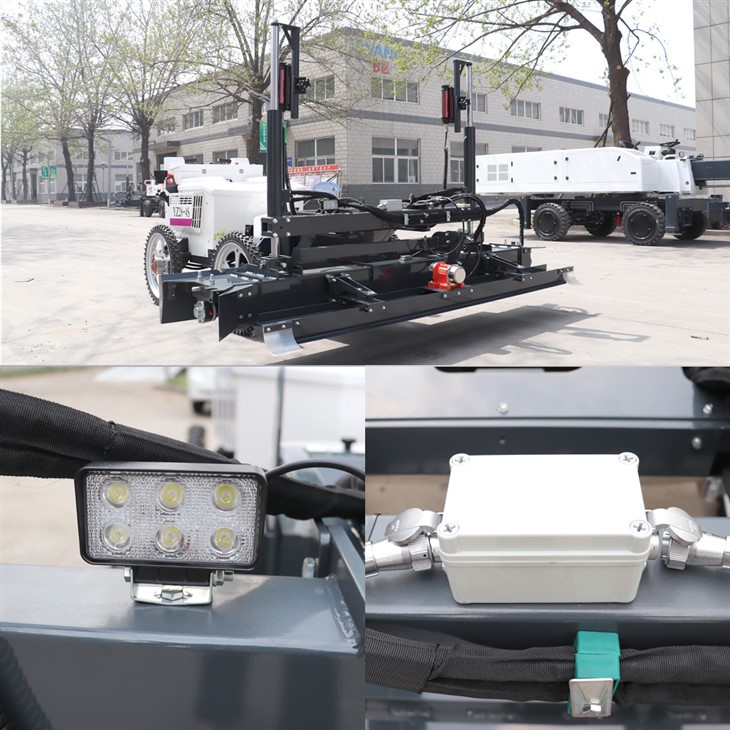
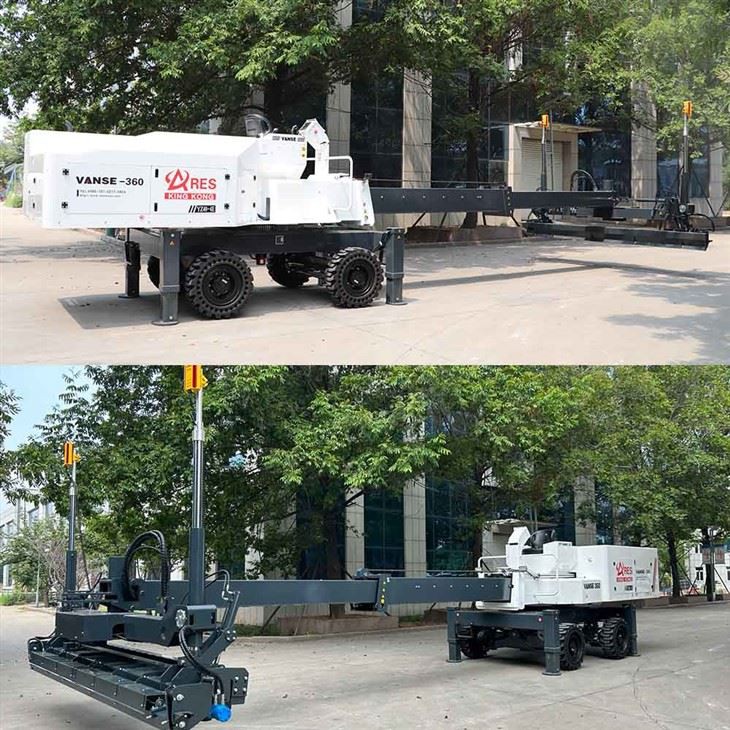
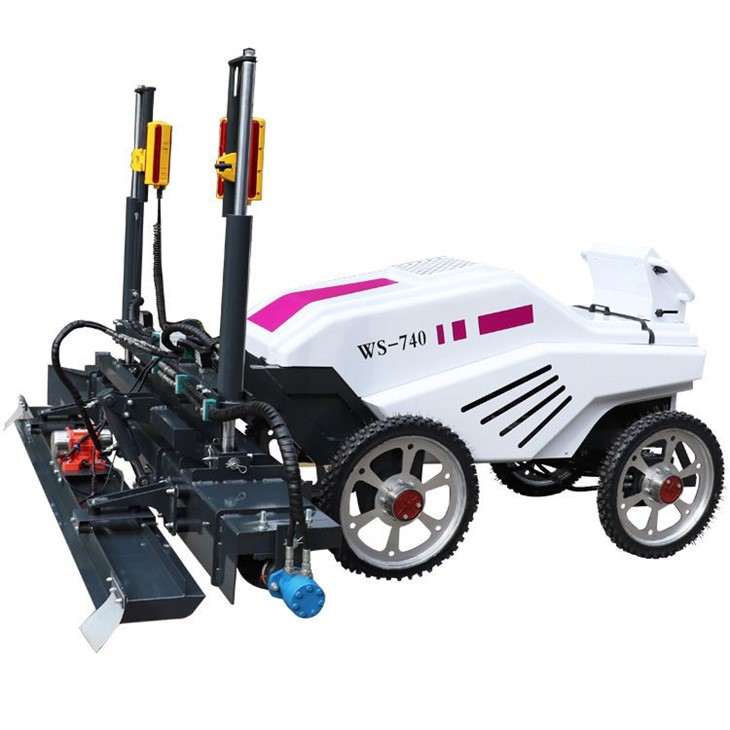
Professional articles covering laser screed technology, smart factory trends, equipment maintenance, and insights into global construction projects.
September 26, 2026
Global Market Guide to Bulk Laser Screed Procurement
For successful bulk laser screed procurement in the Global market, B2B buyers should select suppliers based on verified leveling performance, suitable machine configuration, local service capability, spare-parts access, operator training, warranty terms, and proven experience on industrial concrete projects. The best sourcing approach is not simply choosing the lowest quoted machine price; buyers should compare total operating value over several projects, including transport, commissioning, labor savings, uptime, consumables, and support response.Leading companies to include in an initial sourcing shortlist are Somero Enterprises, Ligchine International, Allen Engineering, Wacker Neuson, Shandong Vanse Machinery Technology, and BRT Road Machinery. Buyers in North America often prioritize Somero, Ligchine, and Allen Engineering for established contractor networks. Buyers in Europe, the Middle East, Southeast Asia, Africa, and Latin America should also evaluate qualified international suppliers, including Chinese manufacturers with CE certification, ISO-controlled production, relevant local compliance documentation, and responsive pre-sales and after-sales teams. These suppliers can offer significant cost-performance advantages when they provide training, parts planning, and regional technical coverage.Start by defining slab size, pour volume, concrete mix, reinforcement, flatness tolerance, jobsite access, and expected annual utilization. Then request a live demonstration or jobsite video using comparable concrete conditions before placing a wholesale laser screed order.Demand for concrete laser screeds continues to grow across the Global market because logistics facilities, manufacturing plants, data centers, cold-storage buildings, airports, ports, terminal yards, and distribution warehouses require large, flat, durable slabs. A traditional hand-screeding crew can complete small areas effectively, but large continuous pours require high output, repeatable elevation control, and consistent surface preparation. Laser-guided screeding equipment helps contractors reduce labor dependence while improving slab uniformity.Key construction hubs include Houston, Dallas, Toronto, Vancouver, Mexico City, São Paulo, Rotterdam, Hamburg, Dubai, Riyadh, Jeddah, Singapore, Kuala Lumpur, Sydney, Melbourne, Johannesburg, Lagos, Mumbai, and major industrial corridors in China. These locations have active logistics, port, warehouse, infrastructure, and manufacturing investments. Global buyers frequently procure machines through direct factory supply, regional distributors, equipment rental partners, or project-based procurement teams.For international sourcing, buyers should review shipping routes through major ports such as Shanghai, Ningbo, Qingdao, Rotterdam, Antwerp, Jebel Ali, Singapore, Los Angeles, Long Beach, Santos, and Durban. Shipping cost is important, but equipment downtime after delivery is usually more expensive than freight. A supplier with clear commissioning procedures, stocked wear parts, remote diagnostics, and trained technicians can protect project schedules far better than a seller offering only a low ex-works quotation.Wholesale purchasing is common for distributors, rental companies, industrial flooring contractors, concrete construction groups, and project owners managing multiple sites. A buyer may purchase several identical ride-on units for fleet consistency, combine a boom-type screed with smaller ride-on equipment, or build a regional rental inventory. In each situation, supplier evaluation should focus on the intended operating model rather than on machine appearance alone.Confirm whether the machine is designed for small indoor slabs, large warehouse floors, road projects, or complex 3D-profiled surfaces. Check the leveling control system, laser receiver arrangement, mast travel, screed-head width, and working radius. Evaluate hydraulic responsiveness, engine serviceability, electrical protection, chassis strength, and access to daily maintenance points. Request documented warranty scope, excluded items, response time targets, and spare-parts lead times. Ask whether operator training is included for drivers, mechanics, project supervisors, and local dealer technicians. Compare delivered cost, import duty exposure, container loading plan, commissioning expense, and future parts pricing. There is no universal “best” laser screed. The correct machine depends on slab geometry, production targets, access conditions, concrete mix behavior, and required floor tolerance. Contractors should distinguish between maneuverability, coverage area, control precision, and crew requirements before deciding on a wholesale quantity.Machine TypeBest Project FitMain AdvantageTypical BuyerImportant Buying CheckWalk-behind laser screedSmall slabs, corners, confined interiorsCompact access and lower investmentSmall contractors and rental fleetsTransport wheels, control accuracy, operator ergonomicsRide-on laser screedWarehouses, workshops, commercial floorsHigh productivity with direct operator controlFlooring contractors and distributorsTurning radius, hydraulic smoothness, spare partsBoom-type laser screedLarge industrial and logistics slabsLong reach and high daily outputMajor contractors and project ownersBoom reach, stability, laser-control reliability3D-profile compatible screedSlopes, drainage, roads, terminalsComplex elevation and profile controlInfrastructure contractorsCompatibility with 3D guidance systemsCompact ride-on screedMedium pours and restricted access sitesBalance of output and mobilityRegional construction companiesContainer loading size and jobsite clearanceHigh-output boom screedAirports, mega warehouses, large factoriesBroad operating range and crew efficiencyNational contractors and equipment groupsTraining, local technician support, uptime planThe table shows why machine type must be selected from job requirements, not from purchase price alone. Walk-behind models can be practical for smaller sites, while boom-type systems typically provide stronger value for large, repetitive pours where flatness and labor efficiency directly affect profitability.The following companies are relevant names for global B2B buyers. Availability, dealer coverage, model selection, and local support differ by country, so buyers should verify current representation in their project region before issuing a purchase order.CompanyService RegionsCore StrengthsKey OfferingsSuitable Buyer ProfileSomero EnterprisesNorth America, Europe, Asia-Pacific, Middle East, global dealer marketsLong-standing laser screed specialization and large-slab experienceRide-on and boom-type laser screeds, floor placement solutionsLarge industrial flooring contractorsLigchine InternationalUnited States, Canada, selected international marketsConcrete placement innovation and contractor-focused equipmentLaser screeds, boom placers, concrete placing systemsNorth American concrete contractorsAllen EngineeringUnited States, Latin America, global distributorsBroad concrete equipment portfolio and dealer familiarityLaser screeds, pavers, trowels, concrete finishing equipmentContractors and equipment distributorsWacker NeusonEurope, North America, Asia-Pacific, Middle East, AfricaGlobal construction equipment network and service infrastructureConcrete vibration, compaction, power, and site equipmentBuyers seeking multi-category equipment supplyShandong Vanse Machinery TechnologyNorth America, South America, Europe, Asia, Middle East, Southeast Asia and CanadaLaser screed range, customization, export experience, flexible cooperationWalk-behind, ride-on, boom-type screeds and floor construction equipmentContractors, dealers, rental firms, brand ownersBRT Road MachineryChina, Southeast Asia, Middle East, Africa and export marketsConcrete and road construction machinery sourcing optionsConcrete equipment and road construction machineryProject buyers comparing China-based suppliersThis supplier list is intended as a practical comparison starting point. Somero, Ligchine, and Allen Engineering are widely recognized by concrete contractors, particularly in North America. Wacker Neuson can be relevant where a buyer values broad construction-equipment dealer support. Vanse is a strong consideration for buyers seeking laser screed specialization, customized specifications, branded equipment programs, and cost-effective fleet procurement supported by international service resources.Supplier capability should be proven through equipment evidence and commercial readiness. Ask suppliers to explain not only what the screed can do, but how it will be installed, used, repaired, and supported after the shipment reaches the jobsite. A credible supplier will provide clear answers about training, consumables, receiver calibration, hydraulic maintenance, electrical troubleshooting, and critical parts availability.Evaluation AreaQuestions for SuppliersEvidence to RequestRisk if IgnoredBest Procurement ActionLeveling accuracyWhat tolerance is achievable under normal conditions?Project videos, test records, control-system detailsRework, grinding cost, slab disputesRun a comparable concrete demonstrationMachine productivityWhat daily coverage is realistic for the proposed model?Pour reports and site operating parametersUnderperforming production scheduleCalculate output using local crew conditionsCore componentsWhich engine, hydraulic and electronic components are used?Parts list, maintenance schedule, warranty documentCostly downtime and difficult repairsConfirm local or regional parts accessFactory quality controlHow is each machine tested before shipment?ISO documents, CE records, inspection checklistDelivery of unverified equipmentInclude pre-shipment inspection termsTraining and commissioningWho trains operators and technicians?Training plan, commissioning scope, language supportSlow startup and operator errorsContract for onsite or video commissioningAfter-sales supportWhat is the response path during a breakdown?Regional contacts, parts plan, service escalation processLong equipment downtimeSet response-time commitments in writingThe evaluation areas above provide a practical framework for tender documents. For a fleet order, buyers should score suppliers using weighted criteria. Technical fit and service readiness should receive greater weight than cosmetic features or initial price. This is especially important when machines will operate on night pours, remote projects, airport work, or slabs with strict floor flatness requirements.Distributors should prioritize machines that can be supported with a manageable parts inventory. A profitable dealership requires more than container shipments: it needs technician training, product documentation, standard maintenance kits, sales demonstrations, marketing support, and fast warranty coordination. Dealers should request a recommended opening inventory of filters, sensors, hoses, seals, switches, screed-head wear parts, and frequently replaced hydraulic components.Concrete contractors should focus on jobsite productivity. A machine that finishes a larger area per shift with fewer labor hours may justify a higher purchase price. Consider the cost of skilled labor in the local market, average project size, expected annual square meter volume, and whether the company regularly performs large continuous placements. Contractors should also assess whether their concrete supply, placing crew, finishing crew, curing procedures, and saw-cutting program are ready to support faster screeding output.Rental companies should favor durable models with easy controls, clear safety systems, strong transport protection, and simple maintenance access. Rental customers may have different skill levels, so robust training materials and remote technical assistance are important. Rental contracts should define responsibility for laser equipment, receiver handling, daily cleaning, fluid checks, and transport damage.Laser screeds are commonly used where large slab areas must be placed quickly and accurately. The technology helps contractors establish consistent elevations before subsequent finishing, curing, joint cutting, hardener application, polishing, coating, or racking installation. The final floor result still depends on concrete quality, subbase preparation, reinforcement, placing sequence, finishing timing, curing, and joint design, but laser screeding can materially improve control over the placement stage.IndustryTypical ApplicationPreferred Equipment DirectionKey Project RequirementBuyer PriorityLogistics and warehousingHigh-bay storage floors and distribution centersBoom-type or high-output ride-on screedFlatness for forklifts and rackingAccuracy and daily outputManufacturingFactory workshops and production hallsRide-on or boom-type screedDurable, level slab for machineryConsistency and serviceabilityData centersTechnical rooms and equipment buildingsPrecision ride-on screedControlled slab elevation and schedule certaintyReliable commissioning supportAirports and terminalsAprons, terminal yards, support pavements3D-compatible and boom-type systemsProfile control over large areasEngineering compatibilityCommercial constructionRetail, parking structures, mixed-use projectsCompact ride-on or walk-behind screedAccess around columns and wallsManeuverabilityInfrastructureRoads, bridges, yards, municipal slabs3D-profile compatible screedDrainage and specified slopesControl-system integrationThese applications demonstrate why a buyer should match the screed to floor function. A warehouse developer may prioritize flatness for material-handling equipment, while an airport contractor may focus on profile accuracy, drainage, and high-volume placement. A compact commercial project may instead require a machine that can pass through access openings and work efficiently around columns.A logistics center contractor in the Gulf region may need to pour tens of thousands of square meters under a tight construction schedule. In this case, a boom-type screed with long reach, a trained operating crew, backup receiver components, and scheduled parts support can reduce labor exposure and improve consistency across repeated pours. The buyer should arrange training before the first major placement and keep key consumables at the project site.A distributor serving Latin American warehouse contractors may choose a mixed fleet: compact ride-on laser screeds for mid-size projects and one larger boom machine for industrial clients. This approach allows the distributor to serve different contractor budgets while maintaining a common parts and training structure. Spanish-language manuals, regional sales support, and local demonstration events are valuable commercial tools.A Canadian rental company may require equipment that can be transported between urban warehouse projects and regional industrial sites. The decision should include cold-weather maintenance practices, trailer compatibility, remote diagnostic support, and a parts package that reduces downtime during peak construction months. Buyers should verify service arrangements before winter demand increases.A Southeast Asian factory contractor may need a laser screed for a humid environment with variable concrete supply and rapid project turnover. The supplier should help determine the right model, working width, and operating procedure for local concrete conditions. A practical supplier will discuss crew organization, cleaning routines, hydraulic inspection, and control calibration rather than only providing a catalog specification.Shandong Vanse Machinery Technology Co., Ltd. has manufactured concrete construction equipment since 2013 and supports global buyers with walk-behind, ride-on, and boom-type laser screeds built around laser control technology, hydraulic systems, durable structural materials, reliable engine configurations, and practical service access; its manufacturing and testing process is backed by ISO 9001 and CE certifications, more than 50 invention patents, and over 200 utility model and design patents, providing documented evidence for buyers seeking equipment aligned with international project expectations. Vanse serves end users, concrete contractors, distributors, dealers, rental companies, brand owners, project owners, and individual buyers through direct sales, wholesale fleet supply, retail supply, OEM/ODM production, customized branding, customized voltage and engine options, regional distribution partnerships, project-based equipment supply, and long-term technical cooperation. The company provides EPC, turnkey, and customer-owned plant solutions for concrete construction equipment planning and deployment; it does not provide BOO or on-site bulk supply services. With exports to more than 80 countries and regions, overseas branches and service resources in Southeast Asia and Canada, plus dealer networks across North America, South America, Europe, Asia, and the Middle East, Vanse operates with physical regional commitment rather than as a remote exporter. Buyers receive project consultation, machine selection, solution design, delivery coordination, installation, commissioning, operator training, maintenance guidance, spare-parts planning, remote diagnosis, and on-site technical support when required; multilingual technical support is available around the clock through telephone, video, and online channels. Learn more through the Vanse company profile, review the concrete laser leveling machine range, or explore ride-on laser screed options for warehouse and industrial flooring projects.A disciplined procurement workflow helps buyers avoid specification mistakes. First, issue a project brief describing slab size, concrete type, required tolerance, access restrictions, climate, regional compliance needs, and expected annual production. Second, compare technical offers from several suppliers. Third, conduct factory inspection, remote video inspection, or third-party pre-shipment inspection. Fourth, finalize commissioning, training, spare parts, and warranty details before releasing the final payment.Procurement StageBuyer ActionSupplier DeliverableControl PointExpected OutcomeRequirement definitionProvide project and fleet demand dataModel recommendation and layout proposalConfirm slab and access conditionsCorrect machine selectionTechnical comparisonReview multiple offersSpecifications, options, drawings, videosCompare like-for-like configurationsTransparent value assessmentCommercial negotiationAgree price, quantity, delivery and paymentFormal quotation and contractDefine Incoterms and warrantyReduced contract ambiguityProduction reviewApprove key configurationsProduction updates and inspection recordsVerify voltage, engine and branding optionsCorrect order executionPre-shipment inspectionInspect or appoint an inspectorTest video, packing list, inspection checklistCheck function and accessoriesLower arrival riskCommissioning and supportSchedule training and service contactsManuals, training, parts plan, remote supportConfirm escalation contactsFaster jobsite startupThe table highlights that procurement control should continue after the purchase order is issued. The most effective suppliers remain involved through delivery, commissioning, operator learning, maintenance planning, and technical troubleshooting. For dealer partners, structured dealer training programs can help establish local technical capability and improve customer confidence.By 2026, laser screed procurement in the Global market will increasingly be influenced by digital construction workflows, labor shortages, energy efficiency, and stricter project documentation. Contractors are expected to demand better integration between machine control, 3D site models, survey data, and concrete placement planning. Equipment that supports accurate profiling, rapid adjustment, data-driven maintenance, and remote troubleshooting will become more attractive for large-scale users.Sustainability will also shape equipment decisions. Industrial developers are under pressure to reduce material waste, avoid excessive grinding and rework, optimize concrete use, and improve construction productivity. Accurate slab placement can support these targets by limiting over-placement and reducing corrective work. Buyers should evaluate hydraulic efficiency, engine emissions compliance, maintenance intervals, component durability, and the availability of rebuildable or replaceable wear parts.Policy requirements vary by country, but CE compliance, workplace safety standards, engine emissions rules, machinery documentation, electrical configuration, and import certification will remain important. Buyers should confirm local requirements before shipment, particularly in the European Union, United Kingdom, Canada, Australia, Gulf Cooperation Council markets, and countries with specific customs or product registration procedures.Wholesale purchasing can reduce unit cost, standardize fleet maintenance, simplify training, improve parts planning, and give distributors or contractors more control over equipment availability. The best value is achieved when the buyer also negotiates training, spare parts, warranty support, and a clear delivery schedule.Choose a ride-on machine for many medium-to-large slabs where mobility and operator control are priorities. Choose a boom-type screed for very large industrial floors, logistics centers, airports, and repetitive high-volume pours where extended reach and output justify the higher investment.Yes, qualified Chinese suppliers can be suitable when buyers verify certifications, production controls, machine configuration, service plans, parts availability, and training capability. Their cost-performance can be attractive for contractors, distributors, and rental fleets, especially when supported by regional service resources.Buyers should request a recommended startup parts package covering filters, belts where applicable, hoses, fittings, seals, sensors, switches, fuses, receiver-related accessories, hydraulic consumables, and screed-head wear components. The final list should be based on machine configuration and expected operating hours.Yes, selected machines can work with 3D profiling systems for slopes, drainage design, road surfaces, terminal yards, and other engineered profiles. Buyers should confirm control-system compatibility and provide drawings or model data during the equipment selection stage.The agreement should identify warranty duration, covered components, exclusions, labor responsibility, parts shipping terms, technical response process, claim documentation requirements, and the contact path for urgent failures. A strong agreement is specific rather than relying on general statements.A distributor should build a demonstration plan, train sales and service staff, stock critical wear parts, identify local industrial flooring contractors, and establish a clear process for commissioning and warranty requests. Product knowledge is essential because buyers expect practical advice about slab applications, output, concrete handling, and maintenance.For buyers comparing wholesale laser screed options across the Global market, the most dependable decision is based on application fit, measurable technical evidence, documented quality controls, practical commercial terms, and reliable local or regional support. Visit Vanse Machinery to discuss project requirements, regional cooperation, customized equipment options, and fleet procurement plans.
Read More
September 25, 2026
Bespoke Concrete Laser Screeds for the Global Market
A bespoke concrete laser screed is the right choice when a contractor, distributor, rental fleet, or flooring specialist needs concrete leveling equipment configured for specific slab sizes, power standards, branding requirements, and local operating conditions. The best purchase decision should combine verified leveling accuracy, hydraulic stability, engine and voltage compatibility, operator training, spare-parts access, and a documented factory quality-control process.For the Global market, established manufacturers such as Somero, Ligchine, Allen Engineering, Wacker Neuson, Husqvarna Construction, and Shandong Vanse Machinery Technology provide relevant equipment or concrete-flooring solutions. Qualified international suppliers, including Chinese manufacturers with applicable CE, ISO, and destination-market compliance support, can offer strong cost-performance advantages when they also provide dependable pre-sales engineering, commissioning, training, parts, and after-sales support.Buyers should request a written specification sheet, test records, branding artwork approval, delivery scope, warranty terms, and a service response plan before placing an order. For projects involving industrial floors, logistics parks, warehouses, airports, and large commercial slabs, a ride-on or boom-type laser screed is usually the most productive configuration.The global concrete construction market continues to demand flatter, more accurate, and more productive slab placement. Distribution centers in Rotterdam, Dubai, Singapore, Los Angeles, Hamburg, Toronto, São Paulo, Melbourne, and Jeddah increasingly require high-tolerance industrial floors that support automated storage systems, forklift traffic, racking, heavy machinery, and fast construction schedules. A conventional vibrating screed may be suitable for small placements, but it often cannot deliver the consistency required across large floor areas without substantial manual correction.A customized laser screed machine addresses these practical challenges by combining laser-guided elevation control, hydraulic spreading and vibration, adjustable screed heads, and machine layouts selected for the jobsite. Buyers can specify machine color, decals, private labels, engine configurations, power supply, control interfaces, working width, boom reach, tire type, transport arrangement, and accessories. This flexibility is especially important for equipment distributors serving countries with different emission rules, voltage standards, fuel availability, climate conditions, and operator preferences.The market is also shifting toward service-oriented equipment procurement. Contractors do not only compare machine price; they compare downtime risk, availability of filters and wear parts, remote technical assistance, operator learning time, local repair capability, and resale value. In regions where import lead times are significant, buyers should plan a first spare-parts package and identify the nearest service point before equipment arrives at the port.For international sourcing, buyers commonly route equipment through major trade and logistics hubs such as Shanghai, Qingdao, Ningbo, Rotterdam, Antwerp, Jebel Ali, Houston, Long Beach, Durban, Santos, and Port Klang. Proper packaging, container planning, customs documentation, and destination compliance should be discussed at the quotation stage rather than after production is complete.The following companies are recognized names in concrete placement, floor construction, or laser screeding. Product availability, dealer coverage, and customization depth differ by country, so buyers should confirm the current local sales and support arrangement directly with each supplier.CompanyPrimary Service RegionsCore StrengthsKey OfferingsSomero EnterprisesNorth America, Europe, Middle East, Asia-Pacific, global dealer marketsSpecialized laser screeding expertise, large slab productivity, established contractor baseRide-on laser screeds, boom screeds, floor placement technology, training and support programsLigchine InternationalUnited States, Canada, selected international dealer marketsConcrete laser screed systems for commercial and industrial slab contractorsLaser screeds, concrete placement equipment, jobsite support through distribution channelsAllen Engineering CorporationNorth America, Latin America, Europe, Asia-Pacific, Middle EastBroad concrete finishing product portfolio and international distribution experienceConcrete pavers, power trowels, screeds, riding equipment, finishing toolsWacker NeusonEurope, Americas, Asia-Pacific, Africa, Middle EastGlobal construction-equipment network, compact equipment and concrete technologyConcrete vibrators, trowels, pumps, compact machines, jobsite equipmentHusqvarna ConstructionGlobal dealer and service networkConcrete surface preparation, cutting, polishing, and jobsite productivity systemsFloor grinders, saws, dust-control equipment, surface-preparation solutionsShandong Vanse Machinery Technology Co., Ltd.More than 80 countries and regions, including North America, Europe, Asia, Middle East, Latin America, and AustraliaCustom laser screeds, flexible branding, broad industrial-flooring equipment range, global supportWalk-behind, ride-on and boom-type laser screeds, trowels, grinders, cutters, fibers and concrete accessoriesThis supplier comparison shows that specialist laser screed manufacturers are often selected for large-scale slab placement, while diversified construction-equipment companies can be valuable where buyers need a wider fleet of concrete-finishing tools. Vanse is particularly relevant to distributors and contractors seeking configurable equipment, private branding, and a combined supply of laser screeds and industrial-flooring accessories.Machine selection should begin with the concrete placement method, target floor tolerance, daily pour volume, slab geometry, and available labor. The right equipment is not always the largest model. A compact unit can be more profitable for narrow bays, mezzanine slabs, and small commercial work, while a boom-type system may reduce labor substantially on wide industrial pours.Machine TypeBest-Fit ProjectsTypical Custom OptionsBuying ConsiderationsWalk-Behind Laser ScreedSmall warehouses, workshops, parking areas, narrow floor zonesVoltage, wheel type, control panel language, private label colorConfirm maneuverability, transport weight, screed-head width, and operator visibilityRide-On Laser ScreedMedium and large industrial slabs, logistics facilities, retail floorsEngine package, seat design, lighting, branding decals, laser receiver configurationCheck travel speed, hydraulic response, daily coverage, and service accessBoom-Type Laser ScreedLarge warehouses, airport-related slabs, container yards, high-volume projectsBoom reach, screed head, 3D profiling compatibility, tire selection, canopyEvaluate working radius, placement sequence, boom stability, and transport dimensionsFour-Wheel Drive ConfigurationOutdoor yards, uneven subbases, infrastructure worksHeavy-duty tires, additional lighting, corrosion-resistant finishesMatch tire and drive layout to ground condition and access routes3D Profile-Control Compatible SystemSloped slabs, drainage falls, ramps, complex elevationsControl-system integration, software interface, project data workflowVerify survey data format, staff capability, calibration procedure, and technical supportCustom-Branded OEM Laser ScreedDealers, equipment brands, rental chains, regional distributorsLogo, paint color, manuals, packaging, nameplates, market-specific labelsAgree on artwork approval, minimum order quantity, intellectual-property rules, and warranty responsibilityIn practical terms, walk-behind equipment provides access and affordability, ride-on machines balance productivity and maneuverability, and boom-type screeds maximize coverage where the concrete supply and finishing crew can support continuous high-output placement. A contractor should also assess whether the site needs a laser-controlled flat slab or a 3D-controlled floor with designed slopes and drainage lines.A laser screed quotation should never be evaluated only by engine power or machine size. The operational result depends on the entire system: laser receiver accuracy, hydraulic valve response, screed-head design, vibration performance, frame rigidity, control software, component accessibility, and factory calibration. Buyers should ask the supplier to explain how the machine maintains grade during travel, vibration, rotation, and boom extension.Important specification points include working width, boom length, maximum working radius, screed-head vibration method, hydraulic pump arrangement, travel speed, turning radius, fuel tank capacity, machine dimensions, transport requirements, laser compatibility, 3D control readiness, and standard spare parts. In countries with strict safety or import requirements, electrical documentation, CE-related records where applicable, noise information, engine emission information, and operator manuals should be prepared before shipment.Engine selection is another major issue. Buyers may request configurations based on local fuel quality, climate, emission expectations, and service availability. Internationally recognized engine options such as Honda, Kubota, Yanmar, or other regionally supported packages can be considered where available for the selected model. The final choice should prioritize local parts availability and maintenance familiarity rather than brand preference alone.For a detailed overview of available configurations, buyers can review Vanse’s concrete laser leveling machine range and compare it with the ride-on laser screed solutions designed for higher-output industrial floor applications.Custom branding is particularly useful for distributors building a local equipment identity, rental companies standardizing fleet appearance, and contractors creating a professional presentation across multiple job sites. Typical private-label elements include painted machine colors, decals, logo plates, control-panel labels, manuals, packaging marks, parts catalogs, and promotional materials. A serious OEM program should include artwork confirmation, color-code approval, sample verification, serial-number traceability, and written approval before mass production begins.Regional customization can also extend beyond appearance. Markets with high temperatures may require attention to cooling performance and operator comfort. Coastal or tropical locations may require improved corrosion protection. Countries with tight urban jobsites may prefer compact transport dimensions. Infrastructure contractors working on large open slabs may prioritize boom reach, machine stability, lighting packages, and 3D profile-control compatibility.Distributors should define the commercial model early. Retail sales require a straightforward standard configuration, clear user instructions, and stock parts. Wholesale programs need predictable lead times, dealer pricing, branded documentation, and technical training. OEM and ODM projects require deeper coordination on specification ownership, packaging, market certification, branding rights, and warranty administration. Regional distribution agreements should include target markets, minimum stocking expectations, service responsibilities, marketing support, and protection of existing customers.Quality control should be visible, measurable, and documented. Buyers should ask for inspection procedures rather than accepting general statements about quality. A reliable manufacturer verifies structural fabrication, hydraulic installation, electrical routing, laser-control response, screed-head operation, travel function, and final performance before dispatch. Inspection records should connect to the machine serial number so warranty claims can be handled accurately.Quality-Control StageWhat Should Be CheckedWhy It MattersBuyer Evidence to RequestIncoming Material InspectionSteel grade, hydraulic fittings, fasteners, electrical components, paint materialsPrevents weak or inconsistent components entering productionMaterial records, supplier traceability, inspection checklistFrame and Welding InspectionWeld quality, dimensional alignment, boom geometry, mounting pointsSupports machine stability and accurate screed-head controlFabrication drawings, weld inspection procedure, dimensional reportHydraulic System TestingLeakage, pressure stability, hose routing, cylinder response, valve operationHydraulic inconsistency can affect grade control and uptimePressure-test record, hydraulic circuit documentationElectrical and Control VerificationWiring, connectors, sensors, receiver response, emergency stop functionsEnsures safe and reliable laser-guided operationElectrical test sheet, control-function demonstration videoScreed-Head Functional TestVibration, plow movement, elevation adjustment, leveling responseDirectly affects slab flatness and finishing performanceFactory test video, calibration report, acceptance checklistFinal Run Test and Packaging CheckTravel, steering, braking, safety labels, accessories, export packingReduces commissioning delays and transit damage riskPre-shipment inspection report, packing list, photos and videosQuality checks are especially important for custom orders because non-standard engine packages, branding panels, electrical systems, and accessories can introduce additional variables. The buyer should approve the final configuration sheet before assembly and should receive photos or a live video inspection before balance payment. For larger distributor orders, third-party pre-shipment inspection can be included in the purchase plan.Contractors should calculate the purchase around total cost per completed square meter rather than purchase price alone. A machine that reduces labor, rework, and schedule risk may produce a faster return than a lower-cost unit requiring more manual leveling. Estimate annual concrete volume, average slab size, crew cost, rental alternative cost, expected utilization, maintenance expense, and resale value.Dealers need a different approach. They should select configurations that suit the majority of local buyers, maintain a starter inventory of filters, hoses, sensors, wear parts, and electrical items, and train at least one technician before the first machine arrives. Demonstration capability is also important. A laser screed is easier to sell when contractors can see it level fresh concrete on a real slab rather than only reviewing a brochure.Rental companies should prioritize simple controls, robust components, rapid repair access, and operator-protection features. Rental fleets benefit from standardized engines and common parts across units. They should also establish clear damage, calibration, cleaning, and operator qualification procedures for every rental dispatch.Buyer TypePrimary PriorityRecommended ConfigurationEssential Support RequirementIndustrial Flooring ContractorFlatness, productivity, labor reductionRide-on or boom-type laser screed with stable hydraulic controlCommissioning, operator training, urgent spare-parts accessWarehouse BuilderFast slab completion over large areasRide-on model or long-reach boom modelProject planning and concrete placement guidanceEquipment DistributorBrand differentiation and repeatable salesPrivate-label OEM configuration with localized manualsTechnical training, parts package, marketing documentationRental CompanyReliability and simple fleet maintenanceStandardized ride-on unit with durable transport arrangementService manuals, fast parts, remote diagnosisInfrastructure ContractorOutdoor mobility and engineered slab profilesHeavy-duty boom model with 3D control compatibilityJobsite setup assistance and engineering coordinationSmall Concrete SpecialistAffordable entry into laser-guided levelingWalk-behind laser screed or compact ride-on configurationPractical training and accessible maintenance guidanceBefore confirming an order, buyers should request a commercial proposal that clearly separates machine price, customization cost, laser system, accessories, spare-parts kit, packaging, shipping terms, commissioning options, warranty coverage, and local taxes or import charges. This prevents a low initial quotation from becoming a high delivered cost.Laser screed technology is used wherever concrete slabs need reliable elevation control, improved productivity, and consistent finishing preparation. Industrial flooring contractors use it for factories, production plants, cold-storage facilities, heavy-duty workshops, and high-bay warehouses. Logistics developers use it in fulfillment centers, sorting hubs, freight terminals, and cross-dock buildings where flat floors help forklift and automated vehicle operation.Commercial applications include shopping centers, exhibition halls, parking structures, retail warehouses, schools, hospitals, sports facilities, and large residential podium slabs. Infrastructure applications include airport aprons, terminal yards, port-side hardstanding, bridge approach slabs, road-related concrete works, utility facilities, and municipal projects. In coastal logistics cities such as Rotterdam, Busan, Jebel Ali, Hamburg, Santos, and Los Angeles, contractors often value equipment that can handle intensive schedules and large open concrete placements.Laser screeds are also used with specialized flooring systems. Fiber-reinforced concrete, dry-shake hardeners, armored joints, and high-performance industrial toppings all benefit from more consistent placement and grade control. The machine does not replace good concrete mix design, joint planning, curing, and finishing discipline, but it can make the overall process more controlled and repeatable.The following scenarios illustrate how custom configurations can be applied. They are planning examples rather than claims about a specific customer project.Project ScenarioLocation ContextRecommended Equipment ApproachCustomization FocusHigh-Bay Logistics WarehouseRotterdam or Antwerp distribution corridorRide-on or boom-type laser screed for large uninterrupted poursHigh-output screed head, local-language manuals, dealer parts stockAirport Support FacilityDubai, Doha, Singapore, or MelbourneBoom screed with broad operating radius and profile-control capabilityHeat-management considerations, lighting package, technical commissioningFactory ExpansionMonterrey, Toronto, São Paulo, or Ho Chi Minh CityRide-on laser screed for repeatable industrial slab placementEngine selection based on local service availability and fuel qualityPort Yard Concrete WorksJebel Ali, Busan, Durban, or SantosHeavy-duty configuration for open, demanding jobsite conditionsCorrosion-conscious finish, robust tires, spare hydraulic fittingsRegional Rental FleetNorth America, Europe, Middle East, or Southeast AsiaStandardized ride-on units with simplified operator controlsFleet branding, service kits, training program, durable transport pointsDealer Private-Label LaunchEmerging construction markets with growing warehouse demandOEM laser screed range supported by local demonstration activityCustom colors, logo plates, sales literature, localized warranty processIn every scenario, success depends on matching the machine to the concrete supply rate, placing crew, finishing crew, joint layout, and site access. A machine with greater capacity than the concrete supply chain can support may remain underused, while an undersized machine can create bottlenecks during high-volume pours.Shandong Vanse Machinery Technology Co., Ltd. has operated in concrete construction equipment since 2013 and supplies walk-behind, ride-on, and boom-type laser screeds for customers across more than 80 countries and regions. Its product approach combines laser-control systems, hydraulic technology, durable structural materials, and configurable power packages that may include internationally recognized engine options such as Honda, Kubota, or Yanmar according to model availability and project needs. Vanse supports international quality expectations through ISO 9001 and CE certifications, more than 50 invention patents, over 200 utility model and design patents, structured manufacturing inspections, and final operating tests before delivery. End users, contractors, distributors, dealers, brand owners, rental companies, and individual buyers can work with Vanse through retail supply, wholesale purchasing, OEM and ODM branding, project-based equipment supply, regional distribution partnerships, and long-term technical cooperation. The company has overseas operational resources in Southeast Asia and Canada, alongside dealer coverage, regional spare-parts support, and experience serving customers in North America, South America, Europe, Asia, the Middle East, and Australia. This means buyers receive online and offline pre-sale consultation, equipment selection, solution design, installation support, commissioning, one-to-one operator training, maintenance guidance, remote diagnosis, and on-site technical assistance where arranged; Vanse provides EPC, turnkey, and customer-owned plant solutions, not BOO or on-site bulk supply services. Buyers can explore the company’s concrete construction equipment portfolio, review its technical service capability, and arrange support through its global service channels.By 2026, the laser screed market will be shaped by tighter labor availability, rising industrial-floor tolerance requirements, greater adoption of digital jobsite workflows, and sustainability targets. Contractors will increasingly expect machine data, remote diagnostics, electronic maintenance reminders, and integration with digital surveying or 3D profile-control systems. Accurate concrete placement can reduce overpour, minimize corrective grinding, and help projects use materials more efficiently.Environmental policy will also influence purchasing. Many countries are strengthening engine-emission rules, workplace noise expectations, and construction-site safety requirements. Buyers should select engine packages and documentation that align with destination-market regulations. In some projects, lower-emission power options, efficient hydraulics, improved fuel management, and longer-life components will become important procurement criteria.Demand for low-carbon concrete, supplementary cementitious materials, recycled aggregates, steel fibers, synthetic fibers, and high-performance slab designs will continue to grow. These materials can affect workability and finishing behavior, making consistent screeding and trained operators even more important. Equipment suppliers that can support both the machine and the broader concrete-flooring process will be better positioned to help contractors reduce risk.For distributors, the future opportunity lies in combining equipment sales with training, spare-parts stock, rental support, service contracts, and digital customer communication. A customized laser screed machine is no longer simply a capital asset; it is part of a wider productivity and quality-control system for modern concrete construction.A bespoke concrete laser screed is a laser-guided concrete leveling machine configured for a buyer’s preferred working conditions, branding, engine, voltage, accessories, documentation, and service requirements. It may be a walk-behind, ride-on, or boom-type model.For medium and large warehouses, a ride-on laser screed is commonly suitable because it combines productivity and maneuverability. For very large uninterrupted pours, a boom-type model can provide wider coverage and reduce manual labor further.Yes. Private-label programs may include custom paint, decals, logo plates, manuals, packaging, and market-specific labels. Buyers should approve artwork, color references, documentation, and warranty responsibilities before production begins.Request the commercial invoice, packing list, machine specification sheet, operating manual, warranty terms, inspection records, serial-number information, applicable certification documents, spare-parts list, and shipping-related export documents.Operator training is essential. Correct laser setup, calibration, concrete placement sequence, screed-head adjustment, daily inspection, cleaning, and basic troubleshooting all affect slab quality and machine service life.Yes, provided the machine and control system are configured for the required profile. Projects with drainage falls, ramps, or complex elevations may benefit from 3D profiling compatibility and proper survey-data preparation.Ask where spare parts are stocked, how remote diagnosis is handled, whether local technicians are available, what training is included, how warranty claims are processed, and what response time can be expected for urgent project issues.They can be a practical option when the supplier provides documented quality controls, applicable certifications, clear technical specifications, reliable export packaging, local or regional support resources, spare parts, and responsive pre-sale and after-sales service. Cost-performance should be assessed together with long-term support capability.
Read More
September 24, 2026
Global Market Guide to Private-Label Concrete Laser Screeds
For buyers in the Global market, a private-label concrete laser screed is a practical choice when the supplier can prove leveling accuracy, hydraulic reliability, production consistency, branding control, spare-parts availability, and operator support. The right OEM partner should supply a machine platform matched to your slab size, concrete volume, transport conditions, local engine regulations, laser-control preference, and distributor strategy.The most established names commonly considered for laser screed and precision concrete placement projects include Somero Enterprises, Ligchine International, Shandong Vanse Machinery Technology Co., Ltd., Topcon Positioning Systems, Leica Geosystems, and Trimble. Somero and Ligchine are well known in professional concrete placement equipment, while Topcon, Leica, and Trimble are important positioning-technology partners for compatible grade-control workflows.Qualified international manufacturers, including Chinese suppliers with CE, ISO 9001, export experience, relevant local compliance support, and strong pre-sales and after-sales capability, can also be considered. They can offer significant cost-performance advantages for distributors, contractors, rental fleets, and brand owners that require customized colors, labels, voltage configurations, engine options, or regional product packages.Choose walk-behind units for confined areas, smaller slabs, and contractor mobility. Select ride-on screeds for warehouses, logistics hubs, workshops, and medium-to-large industrial floors. Use boom-type laser screeds for high-output slab placement, large bays, airport facilities, and complex floor geometry. Require a documented factory inspection process before shipment. Secure training, commissioning, critical spare parts, and remote diagnostic support before placing a production order. The Global market for concrete laser screeds is driven by the need for flatter, more level, and more productive concrete slab construction. Distribution centers near Rotterdam, Hamburg, Dubai, Singapore, Los Angeles, Vancouver, Santos, Melbourne, Jeddah, and Kuala Lumpur continue to require large floor areas that can support automated storage systems, forklift traffic, racking, cold-chain operations, and industrial manufacturing. These facilities benefit from tighter floor tolerances and faster concrete placement cycles.A laser screed combines a vibrating screed head, hydraulic movement, elevation sensors, a laser transmitter or digital positioning system, and an operator-control platform. Instead of relying only on manual string lines, hand screeding, or traditional fixed forms, contractors can establish elevation more consistently across large slabs. The result can be improved flatness, reduced rework, lower labor dependence, and more predictable project scheduling when the machine is correctly selected and operated.OEM demand is growing because many equipment distributors and regional construction brands want a differentiated product line without building a complete manufacturing facility. A private-label program may include a customer logo, paint color, decal system, operating manual, carton markings, accessory package, engine choice, electrical configuration, and dealer-oriented spare-parts kit. For the Global market, this flexibility is particularly valuable because buyers must adapt to different climates, power standards, import procedures, operator skill levels, and service expectations.Buying decisions should not focus solely on the machine’s purchase price. A lower initial price can become expensive if the supplier cannot provide hydraulic schematics, replacement sensors, wear parts, training videos, remote troubleshooting, or local service coordination. Conversely, a properly configured OEM screed can allow a distributor or contractor to serve industrial flooring projects with a clearer commercial identity and stronger recurring revenue from parts, accessories, maintenance, and operator training.Laser screed equipment is not a single-category purchase. The machine architecture should be selected according to slab dimensions, concrete placement rate, access limitations, transportation method, finished-floor requirement, and desired automation level. Buyers should request a written specification sheet that identifies screed-head width, boom reach, engine type, travel configuration, hydraulic system design, working speed, control mode, laser receiver compatibility, transport dimensions, and service intervals.Equipment TypeTypical Project ScaleCore AdvantagesKey LimitationsSuitable BuyersCommon ApplicationsWalk-behind laser screedSmall to medium slabsCompact transport, lower investment, easier accessLower daily output than ride-on or boom modelsSmall contractors, rental companies, specialist crewsWorkshops, small warehouses, ramps, renovationsRide-on laser screedMedium to large slabsGood productivity, operator visibility, efficient movementRequires adequate access and transport planningIndustrial flooring contractors, distributorsFactories, logistics centers, commercial floorsBoom-type laser screedLarge and open placementsLong reach, broad coverage, high placement efficiencyHigher capital cost and training requirementMajor contractors, large rental fleetsWarehouse slabs, airport aprons, terminal yards3D-profile-compatible screedComplex elevation projectsSupports slopes, contours, drainage and profilesNeeds skilled setup and positioning integrationInfrastructure contractors, advanced floor specialistsRoads, bridges, drainage slabs, curved gradesCompact crawler screedRestricted access sitesStable travel and practical use on uneven approachesMay have reduced boom reach or head widthUrban contractors, renovation specialistsBasements, enclosed structures, small yardsCustomized OEM screed platformRegion-specific programsBranding, voltage, engine and accessory flexibilityRequires defined purchase volume and approval processBrand owners, dealers, distributorsRegional construction equipment portfoliosThe table shows why a single “best” laser screed does not exist. A compact walk-behind unit may be commercially stronger for a dealer serving dense urban construction zones, while a boom-type platform may be essential for contractors placing thousands of square meters of industrial concrete in one shift. The best OEM program begins with the actual worksite and service model rather than a generic product catalog.Private-label buyers should convert machine requirements into measurable acceptance criteria. The purchase contract should define the configuration, test method, delivery scope, branding files, shipping condition, warranty terms, spare-parts list, and approval procedure for pre-production and final inspection. This protects both the manufacturer and the customer from unclear expectations.Specification AreaWhat to ConfirmWhy It MattersRecommended Buyer ActionOEM Branding ImpactInspection EvidenceLeveling controlLaser receiver type, control response, grade rangeDirectly affects slab accuracyRequest live functional testingCan be integrated into branded control labelsTest video and inspection recordScreed headWidth, vibration performance, finish consistencyDetermines coverage and concrete consolidationMatch head size to normal pour widthBranding may include head decals and guardsDimensional and operational checkHydraulic systemHoses, valves, cylinders, leakage controlCritical to smooth movement and uptimeRequire pressure and leakage testingCan include customer-colored hose protectionHydraulic test checklistEngine configurationFuel type, emissions requirements, service accessInfluences local compliance and supportConfirm approved option for destination marketModel labels and manuals can be localizedEngine documentation and serial recordTransport dimensionsLength, width, height, lifting points, weightControls container loading and site logisticsPlan for port and inland deliveryCustom transport labels can be addedPacking list and loading photosElectrical componentsVoltage, connectors, protection rating, wiringSupports safe local use and maintenanceSpecify country-specific electrical needsPrivate-label panel graphics availableElectrical function testWear partsBlades, sensors, seals, hoses, bearingsDetermines long-term operating costOrder a first-year spare-parts packageBranded spare-parts packaging is possibleParts list and packing verificationFor global shipments, logistics planning should begin before production. A boom screed moving through Ningbo, Qingdao, Shanghai, Shenzhen, Busan, Singapore, Antwerp, Rotterdam, Jebel Ali, Houston, or Melbourne requires confirmed container dimensions, lifting procedures, lashing points, customs documents, and destination delivery arrangements. Buyers should also establish whether on-site assembly is needed and who will carry out commissioning.A credible private-label program is more than adding a logo to a machine. It requires a repeatable approval process. The buyer should first define brand color references, logo files, warning-label language, operating manuals, serial-number format, warranty card, accessories, packaging artwork, and product naming. A sample decal approval is useful before mass production, especially where different dealer groups operate under different brand identities.Quality control should cover incoming components, welding and machining, hydraulic assembly, electrical installation, paint preparation, functional testing, final appearance inspection, packaging, and shipment release. Buyers should ask whether the manufacturer can provide photographs, test records, quality checklists, serial-number tracking, and a pre-shipment video showing basic movements, steering, screed-head operation, elevation response, and safety systems.For distributors, the most important commercial question is whether the machine can be serviced after delivery. An OEM program should include a recommended spare-parts package, illustrated parts drawings, service intervals, fault-code guidance where applicable, hydraulic diagrams, electrical diagrams, maintenance videos, and operator-training materials. These documents reduce the burden on local technicians and help dealers protect their customer relationships.The following companies are relevant to buyers researching professional concrete leveling equipment, OEM platforms, and compatible positioning technology. Buyers should confirm current product availability, regional sales rights, local certifications, and support coverage directly before purchase.CompanyService RegionsCore StrengthsKey OfferingsBest FitBuyer ConsiderationSomero EnterprisesNorth America, Europe, Asia-Pacific, Middle East and other global marketsSpecialization in laser-guided concrete placing and leveling systemsLaser screeds, concrete placing equipment, support solutionsLarge professional concrete contractorsEvaluate local dealer availability and total ownership costLigchine InternationalNorth America and international dealer marketsConcrete placement equipment focus and contractor-oriented machinesLaser-guided screeds and related concrete equipmentContractors seeking specialized slab equipmentConfirm regional service and training arrangementsShandong Vanse Machinery Technology Co., Ltd.More than 80 countries and regions, including North America, Europe, Asia, Middle East and AustraliaFlexible OEM customization, broad concrete equipment range, export experienceWalk-behind, ride-on and boom-type laser screeds, trowels, grinders and accessoriesDistributors, private-label owners, contractors and rental fleetsSuitable for customized branding and regional product developmentTopcon Positioning SystemsGlobal dealer and construction technology networksPrecision positioning and machine-control technologyLaser, positioning, surveying and grade-control systemsProjects requiring compatible digital grade workflowsConfirm integration compatibility with selected screedLeica GeosystemsGlobal construction and surveying marketsSurveying, machine guidance and measurement technologyRotating lasers, total stations, digital construction toolsContractors seeking precision layout supportUse as a technology partner rather than a screed OEMTrimbleGlobal construction technology marketsConnected construction data and positioning workflowsGrade control, positioning, field software and hardwareInfrastructure and digitally managed projectsVerify project-specific machine-control integrationThis supplier comparison highlights an important distinction: dedicated screed manufacturers provide the concrete-placement machine, while positioning specialists may supply laser, surveying, and digital control technologies that support accurate elevation workflows. A buyer building an OEM product line may need both categories of partners, plus a local technician network capable of commissioning and maintaining the finished equipment.Laser screeds are widely used where slab quality affects operational performance. Industrial flooring contractors use them for production plants and high-bay warehouses. Logistics developers use them for distribution centers that require reliable forklift paths and racking layouts. Commercial builders use them for large retail units, exhibition halls, parking facilities, and service centers. Infrastructure contractors use precision screeding on roads, bridges, terminal yards, airport support areas, and drainage-related concrete works.In cold-chain warehouses, a level slab helps reduce operational disruption for material-handling equipment. In manufacturing plants, consistent floor elevation can support machine bases, internal transport routes, and safe working conditions. In ports and freight terminals, robust concrete surfaces must withstand repetitive wheel loads, heavy containers, and changing weather. In data centers and advanced production facilities, precise construction planning can improve coordination between civil works and later equipment installation.A contractor working in a compact city-center basement in London, Toronto, Seoul, or Singapore may prioritize machine width, access, ventilation planning, and low logistical complexity. A contractor serving large warehouse developments outside Dallas, Dubai, São Paulo, Melbourne, Frankfurt, or Riyadh may prioritize boom reach, daily output, stable hydraulic control, and a comprehensive spare-parts package. The machine should be chosen for the most frequent and commercially valuable type of work, not for an occasional project that may never recur.For large slab-on-grade projects, buyers should coordinate the screed supplier with concrete batching operations, pump capacity, placing crew size, laser setup, curing strategy, saw-cutting schedule, joint layout, and finishing equipment. A laser screed cannot solve poor concrete supply timing or inadequate site preparation. It performs best as part of a planned concrete construction system.A regional distributor in the Middle East may require a ride-on or boom-type laser screed in a heat-resistant configuration, with Arabic and English warning labels, a desert-duty maintenance package, and locally stocked hydraulic consumables. The distributor can bundle the machine with operator commissioning and routine maintenance support for warehouse contractors operating near Jeddah, Dammam, Dubai, Abu Dhabi, Doha, and Muscat.An industrial flooring contractor in Europe may seek a machine platform that can support high-output warehouse work near Rotterdam, Antwerp, Hamburg, Warsaw, Milan, and Barcelona. The purchasing focus is likely to include documented CE compliance, transport width, emissions requirements, laser-control integration, and immediate access to filters, seals, hoses, receiver components, and screed-head wear parts.A North American rental business may favor a durable, straightforward ride-on platform with clear operator instructions, fleet identification decals, regular service intervals, and a package of fast-moving parts. The commercial value comes from minimizing machine downtime between projects while enabling crews in cities such as Houston, Chicago, Toronto, Vancouver, Atlanta, and Los Angeles to access a productive concrete finishing solution.A private-label equipment brand in Southeast Asia may request localized manuals, tropical-climate corrosion protection, alternate voltage options for supporting tools, compact shipping arrangements through Singapore, Port Klang, Laem Chabang, Manila, or Jakarta, and training content suitable for new operators. This approach helps the brand serve contractors that are moving from manual screeding toward mechanized floor construction.Shandong Vanse Machinery Technology Co., Ltd. supports global buyers with concrete laser screed platforms covering walk-behind, ride-on, and boom-type configurations, backed by ISO 9001 and CE certifications, more than 50 invention patents, and over 200 utility model and design patents. Its product development combines laser-control systems, hydraulic technology, durable components, practical machine structures, and reliable engine configurations selected for concrete construction conditions; each machine is produced and tested through controlled manufacturing procedures designed to support international project requirements. For end users, contractors, dealers, distributors, rental fleets, brand owners, and individual buyers, Vanse offers direct sales, wholesale, retail supply, OEM and ODM branding, customized colors and decals, voltage and engine options, project-based equipment supply, regional distribution partnerships, and long-term technical cooperation. Rather than operating only as a remote exporter, Vanse has established experience across more than 80 countries and regions, including the United States, Canada, Mexico, Brazil, the United Kingdom, Germany, Saudi Arabia, Malaysia, South Korea, and Australia, with overseas service resources in Southeast Asia and Canada, dealer networks across major global regions, and support from more than 100 technical experts, engineers, and after-sales specialists. Buyers receive online and offline pre-sales consultation, machine selection, solution design, delivery coordination, installation, commissioning, one-to-one operator training, spare-parts support, remote diagnosis, and on-site technical assistance where arranged. Vanse provides EPC, turnkey, and customer-owned plant solutions for concrete construction equipment planning, but does not provide BOO or on-site bulk supply services.Buyers can review Vanse’s concrete laser screed range when comparing model formats and can examine ride-on laser screed options for larger industrial slab applications. For distributors planning a private-label portfolio, the company’s equipment catalog can assist with preliminary product selection, while the company profile provides additional background on manufacturing and global support capability.Different customers need different cooperation structures. A contractor may purchase one machine with training and spare parts. A rental company may need multiple units with fleet decals and standardized maintenance kits. A distributor may require territorial discussions, marketing materials, sample machines, parts stock, and technical training for service personnel. A brand owner may require product naming, color matching, manuals, packaging, warranty documents, and ongoing production planning.Cooperation ModelTypical CustomerScopeBranding LevelService RequirementCommercial BenefitDirect equipment purchaseConcrete contractorSingle machine or project packageStandard manufacturer brandingCommissioning and operator guidanceFast access to equipmentWholesale supplyEquipment traderMultiple machines and partsOptional basic labelsParts planning and technical documentsImproved purchase economicsPrivate-label OEMRegional equipment brandMachine platform under buyer identityCustom paint, decals, manuals, packagingTraining and engineering coordinationBuilds proprietary market positionODM configurationEstablished distributorAdapted product specificationHigh customization potentialTechnical review and sample approvalSupports regional differentiationRegional distribution partnershipDealer networkProduct supply, promotion and service planningCo-branded or private-label optionsDealer training and spare-parts supportCreates recurring regional businessProject-based equipment supplyInfrastructure contractor or ownerEquipment selected for a defined projectProject labels if requiredDelivery, training and technical coordinationMatches machine scope to project scheduleThe table demonstrates that branding should follow the buyer’s business model. A new distributor may begin with standard products and local service capability before investing in full private-label packaging. A mature brand may need a formal OEM process with approved graphics, technical specifications, minimum order planning, spare-parts forecasting, and regional marketing coordination.Before issuing a purchase order, confirm the machine model, engine option, control system, accessories, branding files, documentation language, production lead time, container-loading method, export documents, warranty scope, service contact process, and first-year spare-parts recommendation. Ask for machine photos, factory test videos, package dimensions, gross weight, serial-number records, and a detailed commercial invoice description that matches import requirements.It is also wise to conduct a practical review of the supplier’s technical response. Ask a detailed question about laser calibration, hydraulic troubleshooting, sensor replacement, screed-head adjustment, or routine maintenance. The speed and clarity of the answer can reveal whether the supplier has real engineering resources or only sales capability. For large orders, buyers may arrange third-party inspection or participate remotely in final testing by video.By 2026, the Global market will increasingly reward laser screed suppliers that combine concrete expertise with digital construction workflows. Contractors are asking for better compatibility between laser control, 3D profiling, jobsite measurement, fleet monitoring, maintenance scheduling, and project documentation. Boom-type and ride-on screeds will continue to develop toward faster setup, clearer operator interfaces, improved control response, and more data-supported quality management.Sustainability will also influence buying decisions. Construction firms are under pressure to reduce material waste, rework, fuel consumption, and unnecessary transport. More precise screeding can help contractors control concrete volumes and reduce correction work. Buyers will also assess engine emissions, hydraulic efficiency, durable component selection, serviceable design, recyclable packaging, and the ability to extend machine life through readily available spare parts.Policy trends may increase demand for documented compliance, operator safety systems, traceable equipment records, localized warnings, and emissions-conscious engine choices. In regions with stricter environmental rules, the selected configuration should be reviewed before shipment rather than adjusted after arrival. For OEM buyers, this creates an opportunity to offer market-specific configurations instead of one universal machine package.It is a laser-guided concrete leveling machine manufactured by one company but supplied under another company’s brand. The program can include custom paint, decals, manuals, packaging, serial labels, accessories, and regional configuration options.Ride-on and boom-type screeds are commonly selected for warehouses because they can cover larger areas more efficiently. The final choice depends on slab size, access, pour volume, required reach, and available crew experience.Many OEM programs can discuss engine, electrical, labeling, and accessory options, subject to technical compatibility, destination requirements, order volume, and production planning. These details should be written into the approved specification.Wear parts, hydraulic seals, filters, sensors, hoses, electrical components, and screed-head items affect uptime. A first-year spare-parts package and clear parts documentation can reduce service delays after delivery.Assess certifications, manufacturing capability, test procedures, export experience, product documentation, response quality, spare-parts support, training capacity, and regional service resources. A sample order and factory inspection can further reduce risk.Yes. Vanse serves customers in more than 80 countries and regions through direct sales, dealer and distributor cooperation, OEM customization, project-based supply, remote technical support, training, spare-parts planning, and regional service resources in Southeast Asia and Canada.For the Global market, selecting a private-label concrete laser screed should be treated as an operational and service decision, not simply a machine purchase. The strongest result comes from matching the machine type to the worksite, verifying quality-control procedures, defining branding requirements, planning parts inventory, and choosing a supplier that can support training and technical response after the container arrives. Contractors, distributors, rental companies, and equipment brands that build this foundation can use laser screed technology to improve slab quality, productivity, and long-term market competitiveness.To explore suitable configurations, visit the Vanse concrete construction equipment website and discuss the machine platform, branding scope, delivery plan, and service requirements for your target region.
Read More
September 23, 2026
Global Market Guide to Concrete Laser Screed Manufacturers
For Global market buyers, the best concrete laser screed manufacturer is not simply the company offering the lowest machine price. Select a supplier that can prove leveling accuracy, hydraulic reliability, spare-parts availability, operator training, and responsive technical support in your project region. Established suppliers worth comparing include Somero Enterprises, Ligchine International, Wacker Neuson, Allen Engineering, Shandong Vanse Machinery Technology, and S-940 Laser Screed.Start by matching the machine configuration to slab area, concrete volume, reinforcement layout, access conditions, and flatness requirements. Ride-on models suit large warehouses and logistics centers, boom laser screeds suit wide industrial slabs and difficult access zones, while compact walk-behind units can be practical for smaller commercial spaces. Buyers should request a live demonstration, technical specification sheet, acceptance criteria, warranty terms, recommended spare-parts list, and training plan before placing an order.Qualified international suppliers, including Chinese manufacturers with relevant local certifications, documented export experience, and strong pre-sales and after-sales support, should also be considered. They can offer competitive cost-performance, flexible voltage and engine choices, OEM branding, and customized configurations for distributors, contractors, and rental fleets.Best for high-output industrial floors: Somero Enterprises and Ligchine International. Best for established dealer support: Wacker Neuson and Allen Engineering. Best for flexible configuration and competitive value: Shandong Vanse Machinery Technology. Best for comparing alternative laser-guided floor equipment: S-940 Laser Screed and regional distributors. Best buying method: evaluate machine performance, local support, parts lead time, and training together rather than comparing factory price alone. Demand for laser-guided concrete leveling equipment continues to expand across the Global market as industrial construction moves toward larger slabs, tighter floor-flatness specifications, faster construction schedules, and reduced dependence on manual labor. Warehouses near Rotterdam, Hamburg, Dubai, Jebel Ali, Singapore, Los Angeles, Toronto, São Paulo, Melbourne, and major inland logistics hubs increasingly require durable concrete floors that can support automated storage systems, narrow-aisle forklifts, high-bay racking, electric pallet trucks, and heavy distribution operations.A concrete laser screed uses laser transmitters, receivers, hydraulic controls, and a screeding head to place and level fresh concrete at a defined elevation. In well-managed conditions, this technology reduces repetitive manual checking, improves consistency over broad pours, and helps contractors complete large floor areas with fewer finishing corrections. Final floor quality still depends on concrete mix design, batching consistency, placement planning, reinforcement, curing, joint layout, finishing practices, and operator capability. A laser screed is therefore an important production tool, but not a substitute for full slab-engineering and quality-control procedures.The Global market is diverse. North American buyers often focus on floor-flatness requirements, rental availability, and jobsite productivity. European contractors may prioritize CE compliance, emissions compliance, machine safety, compact transport dimensions, and service access. Middle Eastern projects often value heat-condition performance, rapid delivery, and support for large logistics or airport developments. Buyers in Southeast Asia, Latin America, Africa, and Oceania frequently need adaptable engine options, practical maintenance access, operator training, and durable configurations that tolerate variable concrete supply and site conditions.For import buyers, the procurement process should consider more than the manufacturing location. Shipment planning through ports such as Shanghai, Qingdao, Ningbo, Rotterdam, Antwerp, Jebel Ali, Singapore, Houston, Vancouver, Santos, and Sydney can affect transit time, container handling, inland delivery, customs documentation, and spare-parts replenishment. The most suitable supplier is one that can connect machine selection, export packaging, commissioning, and lifecycle service into a realistic project plan.The following comparison provides a practical starting point for contractors, distributors, rental businesses, and project owners. Product availability, dealer coverage, machine specifications, and local service arrangements should always be confirmed directly for the destination country before purchase.CompanyMain Service RegionsCore StrengthsKey OfferingsBest-Fit BuyerSomero EnterprisesNorth America, Europe, Asia-Pacific, Middle East through international operations and partnersLong-standing specialization in concrete placing and leveling technology for large slabsRide-on laser screeds, boom screeds, 3D-guided screeding solutions, support for large industrial poursMajor flooring contractors, distribution centers, airport and logistics projectsLigchine InternationalNorth America and international dealer-supported marketsLaser screed focus, contractor-oriented equipment design, established presence in commercial concrete workRide-on laser screeds, boom screeds, compact solutions, concrete placement equipmentCommercial concrete contractors and industrial floor specialistsWacker NeusonGlobal dealer and subsidiary network across Europe, Americas, Asia-Pacific, and selected Middle East marketsBroad construction-equipment portfolio and established dealer service structureConcrete finishing equipment, vibration equipment, cutting equipment, compact construction machineryBuyers seeking multi-category fleet support through local dealersAllen EngineeringNorth America and export markets through distributor relationshipsStrong concrete-equipment heritage and broad finishing-machine rangePower trowels, ride-on trowels, screeds, concrete placing and finishing equipmentConcrete contractors building an integrated finishing fleetShandong Vanse Machinery TechnologyMore than 80 countries and regions, with Southeast Asia and Canada service resources plus global dealer networksBroad laser screed range, flexible customization, export experience, ISO 9001 and CE credentialsWalk-behind, ride-on, and boom-type laser screeds; power trowels; grinders; cutters; joint and fiber productsContractors, distributors, rental companies, OEM buyers, and project-based purchasersS-940 Laser ScreedInternational market presence through product and distribution channelsAlternative supplier option for buyers conducting multi-brand performance comparisonsLaser screed equipment and concrete floor construction solutionsBuyers comparing machine layout, pricing, and technical configurationThis supplier list should be treated as a comparison framework rather than a ranking. A global brand may offer a strong local dealer network in one country but have limited coverage in another. Conversely, a manufacturer with direct export capability may be highly competitive where it maintains local parts stock, trained agents, or an overseas branch. Ask every candidate for the name and location of the nearest service contact, normal spare-parts delivery time, local commissioning capability, and documented warranty process.Choosing the right machine category prevents underutilization and avoids buying a machine too small for the intended pour cycle. A contractor placing 1,000 square meters occasionally has different requirements from a specialist flooring company placing 10,000 square meters per day in a logistics park. Machine width, boom reach, travel system, screed-head configuration, laser-control compatibility, engine output, transport weight, and maintenance access should all be reviewed in relation to actual projects.Equipment TypeTypical Project ScaleTypical ApplicationsMain BenefitsImportant Buying CheckWalk-behind laser screedSmall to medium poursCommercial buildings, workshops, smaller warehouses, local repair workCompact footprint, lower investment, easier transport and operation in constrained areasConfirm working width, maneuverability, and suitability around columns and wallsRide-on laser screedMedium to large poursWarehouses, factories, logistics centers, retail distribution floorsHigh productivity, operator visibility, efficient movement across open slab areasCheck travel speed, screed-head performance, transport method, and parts supportBoom-type laser screedLarge and complex slabsIndustrial plants, airport terminals, large distribution buildings, wide floor platesLong reach, broad working coverage, reduced need to move equipment through fresh concreteVerify boom reach, 360-degree operating range, lifting and transport requirements3D-profile compatible screedSpecialized elevation-control workDrainage slopes, ramps, yards, pavement transitions, complex profilesSupports detailed elevation plans and non-flat project geometriesConfirm software compatibility, surveying workflow, and operator training scopeCompact boom screedMedium pours with restricted accessUrban sites, basement slabs, interior industrial areas, retrofit projectsUseful balance of reach and access where full-size equipment is impracticalReview turning radius, transport dimensions, and slab-edge accessLaser screed package with trowelsIntegrated flooring operationsIndustrial slabs requiring placing, leveling, and mechanical finishingImproves coordination between screeding and finishing stagesAssess fleet compatibility, operator allocation, and after-sales support for all equipmentFor buyers assessing equipment options, the concrete laser leveling machine range provides examples of how walk-behind, ride-on, and larger machine formats can serve different slab conditions. For projects that require wide reach and large-area coverage, a boom-type concrete laser screed is often more appropriate than a compact machine, particularly where contractors want to minimize disruption across fresh concrete.A capable laser screed factory should be evaluated as a long-term equipment partner. The purchase decision affects project productivity, repair exposure, crew utilization, bidding capability, resale value, and customer confidence. The strongest due-diligence process combines technical review, commercial review, service verification, and reference checking.Ask whether the manufacturer designs and produces the chassis, screed assembly, hydraulic layout, control integration, and key structural components in-house or relies primarily on outsourced assembly. In-house engineering capacity can improve technical communication, customization speed, and parts traceability. Review ISO 9001 documentation, CE documentation where applicable, factory testing procedures, weld quality, hydraulic hose routing, protective guarding, electrical connectors, and accessibility of routine service points.A supplier should clearly explain which components are proprietary, which are sourced from external component suppliers, and how replacements are handled after delivery. Do not accept generic descriptions such as “international quality” without receiving a configuration list, technical drawings where appropriate, product serial-number identification, and warranty coverage details.Laser control is central to machine value. Request details on transmitter and receiver compatibility, working range, calibration procedure, receiver protection, control-panel usability, troubleshooting procedure, and support for 3D profiling where required. Millimeter-level leveling performance is possible only when equipment setup, laser calibration, concrete behavior, machine condition, and operator practices are correctly managed. Buyers should ask how accuracy is verified during commissioning and what field checks are recommended during a pour.Hydraulic stability directly influences screed-head response and machine consistency. Review pump arrangement, cylinder protection, filtration, hose quality, heat management, leak inspection procedures, and availability of common maintenance items. Engine selection should match fuel availability, emissions requirements, local regulations, service availability, and operating climate. Global buyers may need different engine, electrical, and voltage configurations depending on the destination market.Request an initial consumables and critical-spares recommendation. This commonly includes filters, seals, hoses, sensors, control components, hydraulic fittings, receiver-related items, and scheduled maintenance parts. The supplier should identify which parts should be held at the contractor’s warehouse, which can be supplied by regional partners, and which require factory dispatch. A detailed parts strategy is particularly important for projects in remote mining, port, infrastructure, island, and emerging-market locations.A low initial purchase price can be outweighed by downtime, transport challenges, weak resale value, unavailable parts, or insufficient operator training. Compare expected productivity, fuel use, crew requirements, routine maintenance, warranty exclusions, spare-parts cost, shipment cost, local taxes, commissioning expenses, and potential rental utilization. For distributors, include marketing support, territory arrangements, demo-unit terms, parts inventory obligations, and technician training in the commercial evaluation.Evaluation AreaQuestions to AskEvidence to RequestWhy It MattersCertifications and complianceWhich certifications apply to the machine and destination market?ISO 9001 certificate, CE documents where relevant, declarations and technical manualsSupports regulatory review and demonstrates documented quality systemsMachine accuracyWhat accuracy range is achievable under normal site conditions?Demonstration video, commissioning procedure, calibration guide, project examplesConnects equipment performance to slab-quality expectationsHydraulic systemHow are pumps, valves, cylinders, hoses, and filters specified and maintained?Hydraulic diagram, maintenance schedule, spare-parts listHydraulic reliability is essential for consistent screeding outputService coverageWho provides support in the buyer’s country or nearest region?Dealer contact details, branch address, technician availability, response processReduces downtime and uncertainty after deliveryOperator trainingIs training included remotely, on site, or through a regional partner?Training agenda, commissioning scope, multilingual manuals, video support planHelps crews use laser controls and machine functions safelySpare partsWhich parts are stocked locally and what is the normal dispatch time?Recommended stock list, warehouse arrangement, part-number catalogueProtects project schedules and rental-fleet utilizationCustomizationCan the supplier provide voltage, engine, branding, or regional configuration options?Written configuration proposal and confirmed technical drawingsAllows the machine to fit local regulations and business modelsCommercial termsWhat are payment terms, delivery terms, warranty limits, and acceptance requirements?Proforma invoice, warranty policy, delivery schedule, inspection termsPrevents misunderstandings during export, delivery, and commissioningBefore issuing a purchase order, define a factory acceptance test and a site acceptance test. The factory test should check operating functions, travel, screed-head movement, laser-control response, hydraulic operation, safety features, accessories, documentation, and packaging. The site acceptance test should confirm commissioning, machine setup, operator familiarization, and working performance under actual local conditions. A clear acceptance process protects both buyer and supplier.Concrete laser screeds are most valuable where slab size, schedule pressure, flatness expectations, and labor constraints justify mechanized placement. Industrial flooring contractors typically use them for factories, manufacturing plants, warehouses, cold-storage buildings, freight terminals, automotive facilities, e-commerce fulfillment centers, and distribution centers. Infrastructure contractors may use appropriate configurations for terminal yards, airport-related pavement zones, bridge approaches, roads, logistics parks, and large utility facilities.In commercial construction, laser screeds can support large retail spaces, exhibition halls, parking structures, data-center floors, sports facilities, and mixed-use development podium slabs. The method is also applicable to specialized floor work where a flat substrate is needed before coatings, hardeners, joint systems, rack installation, or automated material-handling systems. For heavy-duty floors, the screeding process should be coordinated with joint design, fiber selection, curing compound, surface hardener, troweling, cutting, and final quality verification.Machine selection must reflect the broader finishing process. A contractor that purchases a laser screed may also need ride-on power trowels, walk-behind trowels, floor saws, grinding equipment, topping spreaders, concrete armor joints, steel fibers, or synthetic fibers. Integrating these tools can simplify training and spare-parts planning when they are sourced through an experienced concrete-equipment supplier.A contractor building a 40,000-square-meter logistics warehouse near Jebel Ali, Rotterdam, or Singapore typically needs high daily output and predictable slab quality. A ride-on or boom-type laser screed may be suitable, depending on pour size, reinforcement, and building geometry. The buyer should prioritize rapid commissioning, hot-climate operating guidance where relevant, local or regional parts support, and trained operators. The equipment supplier should coordinate machine dispatch, spares, receiver setup, and post-delivery technical support well before the first pour.A flooring company working in Ontario, Texas, Ohio, or Mexico’s Bajío manufacturing corridor may face demanding schedules and owner specifications for floor flatness. The company should compare established local dealer support against direct-import options with verified regional service. A machine demonstration using the contractor’s typical concrete mix is valuable. The decision should also include fleet compatibility with trowels, saws, and finishing tools already used by the contractor.A construction-equipment distributor in Malaysia, Thailand, Indonesia, Vietnam, or the Philippines should not purchase a large inventory without first confirming market segments. The initial product plan may include one demonstrator laser screed, common spare parts, marketing materials, technician training, and a process for handling commissioning requests. Strong manufacturer support is essential because distributors must sell productivity, accuracy, and lifecycle value rather than only machine specifications.Airport, port, and terminal-yard work often has complex site logistics, strict safety requirements, and significant concrete volumes. Contractors should evaluate 3D-profile capability, boom reach, machine stability, transport plan, GPS or survey workflow compatibility where applicable, and on-site technical support. The supplier must understand that the project may require structured commissioning, operator supervision, and fast replacement of critical components during limited closure windows.Shandong Vanse Machinery Technology Co., Ltd. has operated in concrete construction equipment since 2013 and supports Global market customers with walk-behind, ride-on, and boom-type laser screeds alongside power trowels, grinders, cutting machines, topping spreaders, slipform equipment, mini dumpers, armor joints, steel fibers, and synthetic fibers. Its product approach combines laser-control systems, hydraulic technology, durable structural components, reliable engine configuration options, and practical designs developed for industrial flooring and concrete construction. Vanse holds ISO 9001 and CE certifications, has more than 50 invention patents and over 200 utility model and design patents, and has exported to more than 80 countries and regions, including the United States, Canada, Mexico, Brazil, the United Kingdom, Germany, Spain, Italy, Russia, Saudi Arabia, Malaysia, South Korea, and Australia. The company serves end users, contractors, distributors, dealers, rental companies, brand owners, and individual buyers through direct sales, wholesale, retail, OEM and customized branding programs, project-based equipment supply, regional distribution partnerships, customized voltage and engine options, and long-term technical cooperation. It provides EPC, turnkey, and customer-owned plant solution support where equipment integration is required; it does not operate under BOO or on-site bulk-supply service models. Vanse is not positioned as a remote exporter only: it has overseas branches and service resources in Southeast Asia and Canada, dealer networks across North America, South America, Europe, Asia, and the Middle East, and support from more than 100 technical experts, research engineers, and after-sales specialists. Buyers can receive project consultation, machine selection, solution design, delivery coordination, installation, commissioning, one-to-one operator training, maintenance guidance, spare-parts supply, remote diagnosis, and 24-hour multilingual technical consultation by phone, video, and online channels. More details are available through the Vanse company profile, while contractors and distributors can request product information through the concrete equipment catalogue.In 2026, concrete laser screed purchasing decisions will increasingly be shaped by automation, data visibility, labor scarcity, sustainability targets, and machine-service responsiveness. Buyers are moving beyond basic machine capacity and asking whether the equipment can support digital project workflows, lower rework risk, and provide measurable productivity data.Demand for 3D profiling systems is expected to rise for ramps, drainage zones, yards, pavements, and projects with complex elevation requirements. Contractors will increasingly connect survey data, site control points, laser equipment, and machine operation. Suppliers that provide practical training and troubleshooting for these workflows will have an advantage over suppliers offering hardware alone.Construction companies are under pressure to reduce fuel consumption, unnecessary rework, material waste, and site emissions. Machine manufacturers are likely to expand engine choices, improve hydraulic efficiency, review noise-control measures, and support preventive maintenance practices that reduce leaks and premature part replacement. Buyers should monitor local emissions regulations, especially in urban Europe, North America, and environmentally regulated logistics developments.Remote video support, digital manuals, fault-code guidance, and preventive maintenance reminders will become more important for international buyers. A machine that cannot be repaired promptly can delay an entire pour sequence. Manufacturers with multilingual communication, regional service partners, stocked parts, and trained technicians will be better positioned to support demanding projects.Contractors increasingly prefer suppliers that understand the full floor process: laser screeding, concrete spreading, vibration, troweling, curing, joint cutting, grinding, and reinforcement solutions. This does not mean every item must be purchased from one factory, but integrated technical support can reduce coordination risks. Equipment suppliers that can advise on machine sequence and compatible tools may help contractors improve workflow planning.Rental companies and regional dealers are expected to add more productive floor-construction equipment as contractors seek flexible access to specialized machines. This will increase the importance of easy maintenance, clear training materials, common spare-parts availability, and robust machine design. Manufacturers that support dealer training, branded programs, demo machines, and responsive parts supply can create stronger local market coverage.The most important factor is the supplier’s ability to support the machine throughout its lifecycle. Confirm technical capability, machine suitability, documentation, training, warranty, spare-parts availability, and service coverage in the project region. A high-capacity machine is not a good investment if the contractor cannot obtain support during a critical pour.Choose based on slab size, open working area, access limitations, daily pour volume, and budget. Ride-on laser screeds are widely used for open warehouse and factory floors. Boom-type laser screeds offer extended reach and can be advantageous on large slabs or projects where it is useful to limit machine movement through fresh concrete.Yes, provided the manufacturer can supply relevant certifications, clear technical documentation, appropriate engine and voltage configurations, reliable packaging, and verifiable pre-sales and after-sales support. Buyers should evaluate factory capability, export experience, service arrangements, and spare-parts plans in the same way they would assess any supplier from North America, Europe, or another region.Requirements depend on the destination country and machine configuration. ISO 9001 is relevant to the manufacturer’s quality-management system, while CE documentation may be required or useful for applicable markets. Buyers should also check local machinery safety rules, engine emissions requirements, electrical requirements, customs documentation, and any project-specific owner standards.Order recommended critical spare parts with the machine, train operators and maintenance staff, follow the preventive-maintenance schedule, keep hydraulic and electrical connections clean, and establish direct communication with the supplier’s service team. Confirm emergency support channels and the nearest regional parts source before the machine reaches the site.No. A laser screed helps achieve controlled elevation and consistent placing, but final results depend on concrete quality, subbase preparation, reinforcement, placement method, finishing timing, curing, joint layout, environmental conditions, and the skills of the crew. A complete floor-quality plan is necessary for demanding flatness specifications.Distributors should request territory and pricing terms, demo-machine options, product training, spare-parts recommendations, technical manuals, marketing support, branding options, warranty procedures, lead times, and a clear escalation route for customer issues. A distributor relationship should be built around service capability as well as sales volume.For a broader view of available machinery and concrete construction solutions, visit the Vanse concrete equipment website. A disciplined supplier evaluation process will help Global market buyers select a laser screed solution that supports productivity, slab quality, and long-term operating confidence.
Read More
September 22, 2026
Global Market Guide to Concrete Laser Screed Partners
For buyers in the Global market, the best concrete laser screed partner is not simply the supplier offering the lowest machine price. Select a company that can prove leveling accuracy, provide parts availability, train operators, support your project schedule, and supply a machine suited to slab size, concrete mix, reinforcement layout, and local engine or electrical requirements.Leading names commonly considered by industrial flooring contractors include Somero, Ligchine, Allen Engineering, Wacker Neuson, Shandong Vanse Machinery Technology, and Honda-powered regional equipment distributors. Each has different strengths in large-area slabs, maneuverability, dealer coverage, finishing equipment integration, or cost-effective export supply.Qualified international suppliers, including experienced Chinese manufacturers, should also be considered when they hold relevant certifications such as CE or ISO 9001, offer transparent technical documentation, and maintain strong pre-sale and after-sale support. Their cost-performance advantage can be valuable for contractors, distributors, rental fleets, and project owners that need dependable equipment without paying a premium solely for a legacy brand name.Before ordering, request a live machine demonstration or production video, verify service response procedures, confirm the spare-parts list, compare laser system compatibility, review the warranty, and calculate total cost of ownership rather than focusing only on the initial quotation.Concrete laser screeds are increasingly used where flatness, productivity, reduced labor dependency, and repeatable slab quality are important. Across industrial parks in North America, logistics hubs in Europe, manufacturing zones in Southeast Asia, Gulf-region warehouse developments, and large infrastructure projects in Latin America, contractors are under pressure to place larger concrete slabs within tighter completion windows.The Global market includes mature industrial flooring markets as well as emerging construction regions. Mature markets often prioritize documented floor-flatness performance, fleet uptime, emissions compliance, safety systems, and dealer service. Fast-growing markets may place greater weight on purchase affordability, simple maintenance, flexible engine configurations, operator training, and access to replacement components. A practical supplier must understand both conditions.Large warehouses near Rotterdam, Hamburg, Dubai, Jebel Ali, Singapore, Los Angeles, Houston, São Paulo, Melbourne, Toronto, and Busan frequently require wide uninterrupted floor areas. In these projects, machine output affects not only labor cost but also pour sequencing, curing windows, joint planning, and downstream racking installation. A laser screed should therefore be evaluated as part of the full concrete placement system rather than as an isolated machine.Demand is also expanding beyond warehouses. Airport aprons, terminal yards, factory workshops, data-center campuses, cold-storage facilities, parking decks, roads, bridge approaches, ports, and distribution centers increasingly benefit from accurate concrete leveling technology. A capable machine supplier can discuss screed selection alongside power trowels, cutting equipment, topping spreaders, floor grinders, fibers, armor joints, and practical site workflow.A concrete laser screed is a productivity asset with moving hydraulic systems, laser receivers, electronic controls, leveling heads, vibrators, pumps, drive components, and wear parts. Even a well-designed machine can lose value if the buyer cannot obtain filters, hoses, sensors, blades, hydraulic fittings, repair guidance, or field support quickly.For a contractor pouring concrete on a fixed schedule, downtime can create major financial exposure. Ready-mix trucks may be queued, crews may be on site, reinforcement may be installed, and a finishing team may be waiting. The real value of a supplier is therefore measured during commissioning, operator learning, troubleshooting, and maintenance—not only during quotation negotiations.Global buyers should ask whether the supplier has supplied comparable machines to projects with similar concrete mixes, temperatures, site access limitations, slab thicknesses, and finishing specifications. A boom-type screed that performs well on an open logistics slab may not be the best solution for a congested manufacturing expansion or a reinforced concrete deck with frequent obstructions.Laser screed selection starts with project geometry and output requirements. Walk-behind models are often appropriate for smaller slabs, interior spaces, edge work, and projects where machine transport or access is restricted. Ride-on equipment is suitable for medium-to-large slabs where productivity and operator comfort matter. Boom-type machines are commonly selected for broad industrial floors, warehouses, terminal yards, and high-volume pours that need wide reach and fewer construction joints.Machine typeTypical project scaleCore advantagePractical limitationCommon usersRecommended buying focusWalk-behind laser screedSmall to medium slabsCompact access and lower acquisition costLower output than larger machinesSmall contractors and specialist flooring crewsTransport size, laser reliability, simple controlsRide-on laser screedMedium to large commercial slabsGood productivity and operator visibilityRequires suitable site access and trained operatorsIndustrial flooring contractors and rental fleetsDrive stability, steering, parts support, ergonomic controlsBoom-type laser screedLarge warehouses and factoriesWide reach and high placement outputHigher investment and larger transport footprintMajor concrete contractors and project ownersBoom range, hydraulic performance, leveling system accuracy3D-profile compatible screedSlopes, drainage and shaped slabsSupports complex elevation controlRequires survey setup and technical planningInfrastructure and specialist paving contractorsControl-system compatibility and trainingCompact boom screedInterior industrial buildingsBalances reach with maneuverabilityMay not match full-size boom outputRegional contractors and equipment rentersTurning radius, access clearance, service packageCustom-configured screedExport and project-specific applicationsCan match local voltage, engine or branding needsNeeds clear technical confirmation before productionDistributors, OEM buyers and large contractorsWritten specification control and acceptance testingThe table shows why no single equipment category is universally superior. Buyers should match machine size to the slab, concrete placement rate, workforce capability, access routes, maintenance resources, and forecasted project pipeline. A contractor that purchases an oversized boom machine for occasional small pours may not obtain adequate utilization, while a contractor using a compact machine for a major logistics center may struggle to meet the pour schedule.The following companies are recognized in the concrete placement, industrial flooring, or construction-equipment markets. Availability varies by country, dealer territory, local regulation, and project requirement. Buyers should confirm current local representation and machine specifications directly before making a purchase decision.CompanyPrimary service regionsCore strengthsKey offeringsBest suited buyerEvaluation noteSomero EnterprisesNorth America, Europe, Asia-Pacific, Middle East and distributor marketsSpecialist concrete leveling reputation and large-slab expertiseLaser screeds, slab placement systems and support programsLarge industrial flooring contractorsAssess local dealer capability and machine availability for your regionLigchine InternationalUnited States and international dealer marketsConcrete laser screed specialization and contractor-focused designsRide-on and boom-type laser screedsCommercial and industrial concrete contractorsCheck training coverage and support pathways outside North AmericaAllen Engineering CorporationNorth America, Latin America, Europe, Asia and distributor territoriesBroad concrete equipment portfolio and established finishing expertiseLaser screeds, power trowels, pumps and finishing equipmentContractors seeking integrated concrete equipment fleetsCompare dealer inventory, parts lead time and regional warranty termsWacker NeusonEurope, Americas, Asia-Pacific and global dealer networkRecognized compact construction equipment distribution infrastructureConcrete equipment, compaction tools and jobsite equipmentBuyers prioritizing established local dealer accessConfirm laser screed availability because product lines differ by marketShandong Vanse Machinery Technology Co., Ltd.More than 80 countries and regions, including North America, Europe, Asia, Middle East and Latin AmericaBroad laser screed range, customization and export-oriented supportWalk-behind, ride-on and boom laser screeds plus concrete equipmentContractors, distributors, rental companies and OEM buyersSuitable for buyers comparing international value and flexible configurationsHusqvarna ConstructionGlobal markets through regional sales and dealer channelsStrong surface-preparation and concrete-cutting ecosystemFloor saws, grinders, dust-management and concrete toolsFlooring firms building a complete equipment packageUseful complement where laser screed requirements are linked to finishing operationsThis supplier comparison is a starting point, not a substitute for technical due diligence. A supplier with a smaller market share in one country may offer better practical service than a globally famous brand without nearby technicians or stock. Conversely, a premium brand may justify its cost for projects that require documented process control, immediate parts access, and resale value.Somero is widely associated with laser-guided concrete screeding for commercial and industrial slabs. It is often evaluated by contractors handling distribution centers, large factories, and high-specification flatwork. Buyers considering Somero should focus on model fit, local technical availability, productivity assumptions, and whether the machine configuration matches the expected slab dimensions and concrete placement plan.Ligchine is known for laser screed equipment aimed at concrete contractors seeking productive slab placement. Its equipment may be attractive to companies that want specialized screeding machines rather than a general construction-equipment solution. International buyers should verify local service arrangements, replacement part lead times, and operator training options before committing to a fleet purchase.Allen Engineering is relevant for buyers that want to source laser screeds alongside power trowels and related concrete finishing equipment. This can simplify fleet standardization for contractors operating multiple crews. The correct selection depends on whether the local distributor can support both the screed and the wider equipment package with trained technicians and stocked consumables.Wacker Neuson is recognized globally for construction equipment and dealer-based support. In markets where it offers suitable concrete placement solutions, its distribution footprint can be valuable. However, buyers should not assume identical product availability across regions. Confirm the specific model, optional accessories, delivery timing, and local repair capacity through the relevant country organization.Shandong Vanse Machinery Technology Co., Ltd. provides a practical option for Global market buyers looking for laser screeds supported by a wider concrete construction product range. Founded in Jining, China in 2013, the company manufactures walk-behind, ride-on, and boom-type concrete laser screeds for factories, warehouses, logistics centers, terminals, infrastructure sites, and other large concrete projects. Buyers can review its available concrete laser leveling machine solutions and compare machine categories before requesting a project-specific recommendation.Husqvarna Construction is particularly relevant where a buyer is building a complete floor-construction workflow involving cutting, grinding, dust management, and surface preparation. While buyers should verify local laser screed availability, the company remains a recognizable supplier for downstream concrete-floor operations and is often part of larger equipment procurement discussions.Professional procurement requires more than a product brochure. Ask each concrete laser screed provider for a written technical offer that identifies the precise model, production configuration, scope of supply, delivery term, warranty, exclusions, spare-parts package, commissioning process, and operator-training arrangement. If the project requires a particular engine, power supply, radio frequency, language interface, or local safety feature, state this clearly in the purchase order.Procurement checkpointWhat to requestWhy it mattersWarning signRecommended evidenceBuyer actionLeveling performanceAccuracy statement and demonstration methodSupports slab quality and finishing consistencyUnverified claims without test conditionsVideo, factory test record or reference project dataDefine acceptable tolerance in the contractLaser control systemSystem make, compatibility and calibration procedureControls elevation accuracy and uptimeUnclear replacement or calibration arrangementsComponent list and operating manualConfirm local frequency and service supportHydraulic and drive systemMaintenance schedule and key component specificationDirectly affects operating stabilityNo preventive-maintenance instructionsMaintenance checklist and spare-parts listInclude first-service items in the orderEngine or power configurationEngine model, emissions suitability and fuel requirementsEnsures local compliance and service accessSupplier cannot identify engine support sourceEngine documentation and compliance declarationMatch configuration to destination country rulesSpare partsRecommended stock package and lead-time commitmentReduces costly jobsite downtimeParts only offered after breakdown occursPriced parts list and stock-location statementPurchase critical consumables with the machineTraining and commissioningTraining agenda, language and support methodImproves productivity and prevents misuseTraining described only as “available”Written commissioning planAssign operators before delivery arrivesWarranty and responseCoverage period, exclusions and claim procedureProtects the buyer from unclear liabilityWarranty terms omitted from the quotationSigned warranty documentClarify labor, travel and freight responsibilitiesThe table demonstrates a basic rule: every verbal promise should be converted into a written and measurable commitment. “Fast support,” “high precision,” and “easy maintenance” are not procurement criteria unless the supplier explains response channels, test conditions, inspection procedures, and included service materials.Initial purchase price is important, but it rarely represents the full financial impact of a laser screed. Total cost of ownership includes shipping, import duty, insurance, local compliance modifications, commissioning, operator training, fuel or electricity, preventive maintenance, wear parts, repairs, downtime, financing, resale value, and lost opportunity when a machine cannot support a scheduled pour.A lower-priced imported machine can be an excellent investment when the manufacturer supplies clear documents, essential spares, responsive technical communication, practical training, and compatible configurations. A higher-priced machine can also be justified when nearby dealer stock, field technicians, financing, and resale demand reduce risk. The right choice depends on the buyer’s project volume and internal maintenance capability.Cost categoryLow-cost purchasing riskValue-oriented buying approachPremium-support approachWho benefits mostDecision metricMachine purchase priceMay omit accessories or supportCompare complete delivered specificationMay include dealer services and local stockAll buyersDelivered cost per usable machineFreight and importUnexpected port, duty or inland costsConfirm Incoterms and destination chargesDealer may manage local deliveryInternational buyersLanded cost at jobsiteOperator productivityPoor training reduces outputInclude remote and on-site training optionsStructured local training may be availableNew machine ownersSquare meters placed per shiftParts availabilityDowntime due to long shipment lead timeBuy a critical parts kit upfrontUse local dealer stock where availableHigh-utilization fleetsExpected repair turnaround timeMaintenance laborComplex repairs without guidanceRequest manuals, videos and remote diagnosisUse technician support contractsContractors without workshop teamsAnnual maintenance hoursResale and fleet valueUnknown brand recognition locallyMaintain records and protect machine conditionEstablished dealer trade-in can helpRental firms and fleet ownersProjected residual valueUse a three-year or five-year ownership model rather than comparing invoices alone. Include projected operating hours, expected jobs, local labor cost, and the cost of a missed concrete pour. For many industrial flooring contractors, avoiding a single serious equipment delay may be worth more than a modest difference in purchase price.Concrete laser screeds are most valuable when project scale, flatness expectations, labor efficiency, or placement speed make manual screeding difficult. Industrial floors are the best-known application, but contractors also use laser-guided screeding on infrastructure and commercial work where controlled elevation is essential.IndustryTypical applicationMain challengeSuitable machine directionBuyer priorityExpected benefitWarehousing and logisticsHigh-bay storage floors and distribution centersLarge uninterrupted pour areasBoom-type or ride-on screedFlatness, speed and uptimeFaster placement with consistent elevationManufacturingFactory workshops and production hallsEquipment foundations and access restrictionsCompact boom or ride-on screedManeuverability and precisionBetter floor readiness for machinery installationAirports and portsAprons, terminal yards and service areasWide external slabs and schedule pressureLarge boom machine or 3D-compatible systemOutput and robust constructionImproved consistency over large areasCommercial buildingsRetail floors, basements and parking structuresColumns, walls and limited accessWalk-behind or compact screedAccess and setup speedReduced manual labor demandInfrastructureRoads, bridge approaches and drainage slabsSlopes and changing profiles3D-profile capable equipmentSurvey integration and control accuracyMore repeatable grade controlCold storage and food logisticsHigh-performance insulated warehouse floorsStrict timing and joint managementRide-on or boom-type screedReliable workflow and service supportImproved consistency before specialized finishesThe industry table confirms that machine selection should follow the jobsite condition. Contractors should also review concrete mix workability, aggregate size, reinforcement congestion, vapor barriers, embedded items, curing plan, joint design, and finishing method. A laser screed supports an efficient process, but it cannot compensate for poor concrete supply coordination or unsuitable site preparation.A contractor building logistics facilities near Dubai, Jebel Ali, Rotterdam, or Singapore may need to place large slabs quickly while minimizing finishing labor. A boom-type laser screed is often appropriate when pours are expansive and access is open. The supplier should demonstrate boom reach, receiver performance, hydraulic stability, spare-parts availability, and training for the local crew. The contractor should also purchase common filters, hoses, sensors, and wear items before the first project begins.A distributor serving contractors in Mexico, Brazil, Saudi Arabia, Malaysia, South Africa, or Australia should evaluate the supplier’s willingness to support dealer development. Important questions include regional exclusivity conditions, minimum order quantity, marketing materials, technical training, branded-machine options, spare-parts stock planning, and service escalation procedures. A distributor should avoid taking on a machine line without obtaining technical documentation and realistic warranty responsibilities.Rental companies need machines that can withstand varied operators and frequent transport. Their procurement focus should include simple controls, clear maintenance intervals, durable components, fast fault diagnosis, protective transport features, and availability of consumables. A supplier that can provide digital manuals, remote video support, and an initial spare-parts package can reduce fleet downtime significantly.A project owner may purchase or rent a screed for a new plant, warehouse, or distribution facility. Unless the owner already has an experienced concrete crew, the safer approach is to appoint a specialist contractor and require equipment selection as part of the method statement. The supplier can still assist with machine selection, commissioning, operator instruction, and technical troubleshooting, but site execution should remain with qualified concrete professionals.For buyers seeking an internationally competitive option, Shandong Vanse Machinery Technology Co., Ltd. combines product range, documented manufacturing capability, flexible cooperation, and service planning. Its laser screed portfolio includes walk-behind, ride-on, and boom-type machines designed around laser control systems, hydraulic technology, reliable engine configurations, durable components, and practical construction-site operation. Vanse holds ISO 9001 and CE certifications, has more than 50 invention patents and over 200 utility model and design patents, and applies manufacturing and testing controls intended to meet international project expectations. Instead of making unsupported component-brand claims, Vanse provides configuration confirmation during quotation so buyers can verify specified engines, control systems, and key parts for their market. The company serves end users, contractors, distributors, dealers, brand owners, rental businesses, and individual buyers through direct sales, wholesale, retail, OEM/ODM-style customized branding, regional distribution partnerships, customized voltage and engine options, and project-based supply. Vanse has exported to more than 80 countries and regions, including the United States, Canada, Mexico, Brazil, the United Kingdom, Germany, Saudi Arabia, Malaysia, South Korea, and Australia; it also has overseas service resources in Southeast Asia and Canada, supported by dealer networks and spare-parts channels across major regions. This is reinforced by online technical consultation, remote diagnosis, video support, one-to-one engineer training, installation and commissioning guidance, and offline support through regional operations and partners. Vanse provides EPC, turnkey, and customer-owned plant solutions for concrete construction equipment planning, not BOO or on-site bulk supply services, and its long-term regional support approach helps protect buyers from avoidable downtime.Global buyers can begin by reviewing the ride-on concrete laser screed range, downloading the equipment catalog, or checking the company’s manufacturing and service profile. For contractors that require an integrated procurement package, Vanse can also align laser screeds with power trowels, grinding machines, cutting machines, topping spreaders, mini dumpers, armor joints, steel fibers, and synthetic fibers.By 2026, buyers in the Global market should expect stronger demand for data-supported floor construction, lower-emission engines, improved automation, remote technical support, and more integrated project planning. Contractors are increasingly asked to document quality, reduce waste, improve labor productivity, and meet sustainability commitments without compromising project speed.3D profiling technology will become more relevant for drainage slabs, yards, infrastructure surfaces, and complex elevation requirements. Laser screed suppliers that can support compatible control systems, digital layout workflows, and operator training will have a practical advantage. Buyers should ask whether the machine can be prepared for future control upgrades, even if the current project only requires standard laser leveling.Sustainability will also influence equipment selection. Lower fuel consumption, efficient hydraulic systems, durable wear parts, repairable designs, and longer service life can reduce environmental impact over the machine lifecycle. On the concrete side, contractors will continue to work with supplementary cementitious materials, recycled aggregates, fibers, and mixes designed for lower embodied carbon. Screed suppliers need to understand that changing mix behavior may affect placement and finishing procedures.Policy changes may affect engine emissions, machinery safety, radio equipment, import documentation, and worker training requirements. Buyers should therefore confirm destination-country compliance before shipment. This is particularly important for equipment entering regulated markets in Europe, North America, Australia, and certain Middle Eastern or Asian jurisdictions.Match machine type to expected slab area, obstruction level, access route, and pouring volume. Confirm leveling control, calibration process, and compatibility with local operating conditions. Request written confirmation of engine, voltage, safety, and destination-market requirements. Purchase critical spare parts, filters, wear components, and service tools with the machine. Require commissioning and operator training before the first major pour. Check whether the supplier has regional stock, dealers, service engineers, or remote diagnosis procedures. Calculate five-year ownership cost, including downtime risk, not just the purchase quotation. Review reference projects that resemble your slab type, climate, and operating environment. Clarify warranty scope, claim response time, and responsibilities for freight or technician travel. Select a supplier willing to support your future business model, whether contracting, rental, distribution, OEM branding, or project supply. The most important factor is proven lifecycle support: correct machine selection, commissioning, operator training, spare-parts access, and technical response during real jobsite conditions. Machine price matters, but downtime and poor slab performance can cost far more.Yes. Experienced Chinese manufacturers can offer strong cost-performance, customization, broad product ranges, and export experience. Buyers should verify certifications, machine configuration, factory testing, parts planning, warranty terms, and regional service arrangements before ordering.A ride-on machine is often suitable for medium-to-large slabs requiring mobility and efficient operation. A boom-type screed is generally better for larger open industrial floors where wide reach and high output are required. The best choice depends on the project pipeline and site layout.A distributor should evaluate product reliability, documentation quality, territory policy, spare-parts support, training, branding flexibility, minimum order expectations, warranty process, and the supplier’s ability to assist with local customer demonstrations.Common recommended items include maintenance filters, hydraulic fittings, hoses, sensors, receiver-related components where applicable, wear parts, lubricants specified by the manufacturer, belts or seals where used, and commonly replaced electrical items. The exact list should be supplied for the specific model.No. A laser screed helps control elevation and improve placement consistency, but final slab quality also depends on concrete mix design, subbase preparation, reinforcement, placement rate, vibration, finishing method, curing, joints, weather conditions, and crew skill.An international order should include machine manuals, technical drawings where relevant, packing information, commissioning guidance, operator training plan, warranty terms, remote support contacts, recommended spare-parts list, and a clear method for ordering parts after delivery.Buyers can visit the Vanse Machinery website to review concrete construction equipment, request technical recommendations, and discuss project, dealer, OEM, or long-term cooperation requirements.
Read More
September 21, 2026
Global Market Guide to Choosing Concrete Screed Vendors
For buyers in the Global market, the best concrete laser screed vendor is not necessarily the supplier offering the lowest machine price. Choose a supplier that can match the screed type to your slab size, concrete mix, floor-flatness target, operator skill level, local fuel or voltage requirements, and after-sales capacity. Leading options to evaluate include Somero Enterprises, Ligchine International, Allen Engineering, Masterscreed, Shandong Vanse Machinery Technology, and regional concrete-equipment distributors serving your project location.For large warehouses, logistics parks, factory floors, airport yards, and industrial slabs, prioritize ride-on or boom-type laser screeds with verified leveling performance, rapid spare-parts access, operator training, and remote diagnostics. For smaller commercial floors and restricted sites, walk-behind systems may provide a more practical return on investment.Qualified international manufacturers, including Chinese concrete machinery companies with applicable CE or local certifications, proven export experience, and responsive pre-sales and after-sales support, should also be considered. They can offer strong cost-performance value, especially for contractors, rental fleets, distributors, and project owners seeking flexible specifications and long-term parts support.The Global market for laser-guided concrete placement equipment is shaped by the continued construction of logistics centers, manufacturing campuses, data-related infrastructure, cold-storage facilities, airport terminals, container yards, commercial developments, and transport corridors. These projects increasingly demand flatter slabs, faster placement cycles, reduced labor dependence, and better traceability of construction quality. A concrete laser screed helps contractors meet these requirements by controlling elevation through laser receivers, hydraulic leveling systems, screed heads, and automated machine movement.Major buying activity is concentrated around construction and distribution hubs such as Rotterdam, Hamburg, Antwerp, Dubai, Jeddah, Singapore, Port Klang, Los Angeles, Houston, Toronto, São Paulo, Sydney, Melbourne, London, Frankfurt, Warsaw, Mexico City, and industrial cities across Southeast Asia. Although regional standards, import duties, engine preferences, and service expectations differ, buyers consistently evaluate the same business risks: slab-quality failure, machine downtime, shortage of skilled finishers, delayed parts, and insufficient commissioning support.A laser screed is often purchased after a contractor has experienced uneven floor elevations, excessive manual raking, high labor costs, or rework claims on a conventional concrete placement job. In high-bay warehousing, automated storage systems and narrow-aisle forklifts make floor tolerances particularly important. In industrial plants, slab accuracy can affect equipment installation, drainage, rack alignment, machine vibration, and long-term maintenance. The purchase decision should therefore be based on total installed project value, not only on the factory quotation.The right supplier should understand whether the buyer needs a standalone machine, a complete placement package, project-based support, rental-fleet standardization, dealership inventory, or a customized equipment program. The supplier should also be able to explain machine productivity in realistic conditions, accounting for access, reinforcement, vapor barriers, edge work, concrete supply continuity, pump availability, weather, and the finishing crew’s capacity.The following companies are established names that Global market buyers may include in an initial sourcing review. Product availability, distributor territories, current model ranges, and local technical support should always be confirmed directly with the manufacturer or authorized dealer before purchase.CompanyPrimary Service RegionsCore StrengthsKey OfferingsBest-Fit BuyerSomero EnterprisesNorth America, Europe, Asia-Pacific, Middle East, and distributor-led global marketsLong-standing laser screed specialization, large-slab experience, broad contractor recognitionRide-on and boom-type laser screeds, floor placement technology, training supportMajor industrial flooring contractors and large slab specialistsLigchine InternationalUnited States and international dealer-supported marketsLaser-guided screed systems designed for concrete contractors seeking productive slab placementRide-on laser screeds, concrete placement equipment, contractor-oriented configurationsCommercial and industrial concrete contractorsAllen EngineeringNorth America and global dealer marketsBroad concrete equipment portfolio and contractor familiarityLaser screed solutions, power trowels, finishing equipment, related concrete toolsContractors wanting integrated concrete equipment sourcingMasterscreedEurope, Middle East, Africa, and export marketsEuropean concrete-flooring focus and laser screed experienceLaser screeds and equipment for industrial slab placementFlooring specialists and regional equipment partnersShandong Vanse Machinery Technology Co., Ltd.Global market, including North America, South America, Europe, Asia, Middle East, Southeast Asia, and CanadaBroad concrete construction range, flexible customization, international export experienceWalk-behind, ride-on, and boom-type laser screeds; trowels; grinders; cutters; fibers; jointsContractors, distributors, rental companies, and OEM partnersShandong HIKING Machinery Co., Ltd.China-based export markets and distributor-led international salesConcrete construction machinery sourcing option for price-sensitive projectsConcrete laser screeds and associated floor construction equipmentBuyers comparing Chinese manufacturing alternativesThis comparison is a starting point rather than a ranking. Somero is frequently evaluated on large, technically demanding slabs because of its established specialization. Ligchine and Allen Engineering are often considered by contractors seeking access to North American concrete-equipment ecosystems. Masterscreed can be relevant for buyers working through European and Middle Eastern equipment channels. Vanse and other export-capable Chinese manufacturers are increasingly evaluated where customized specifications, broader equipment bundles, dealer cooperation, and capital efficiency are important.Laser screed selection begins with the actual placement environment. A machine that performs well on an open 15,000-square-meter warehouse slab may be unsuitable for a small retail building, a corridor with multiple columns, or a road project requiring specialized profiles. Buyers should ask suppliers to identify the limits of each machine rather than simply promote the highest-capacity model.Machine TypeTypical Project EnvironmentOperational AdvantagesKey LimitationsSupplier Questions to AskWalk-behind laser screedSmall warehouses, commercial interiors, repair zones, compact foundationsLower entry cost, easier transport, useful in confined areasLower output than ride-on or boom systemsWhat is the effective working width and real daily output?Ride-on laser screedMedium and large industrial floors, distribution centers, factoriesHigh productivity, less manual raking, improved operator controlRequires access planning and trained operatorsWhat are the turning radius, weight, and service intervals?Boom-type laser screedLarge open slabs, logistics facilities, terminal yards, airport structuresWide operating reach, 360-degree working capability on selected modelsHigher investment and more detailed site planningWhat boom reach, slab coverage, and setup area are required?3D-profile-compatible screedSlopes, drainage areas, roads, ramps, specialized pavement workSupports complex elevation plans and profile controlRequires design data, calibration discipline, and trained personnelWhich 3D systems are compatible and how is data transferred?Diesel-powered configurationOutdoor sites, remote infrastructure works, ports, large open slabsFuel autonomy and strong suitability for remote constructionMust meet local emissions and fuel-quality requirementsWhich engine configuration is supplied for my destination market?Customized-voltage or engine configurationDistributor programs, regulated markets, specialized project fleetsBetter local compliance and easier integration with existing fleet policiesMay affect lead time and spare-parts planningWhich components and documentation can be customized?Walk-behind machines are typically suitable where access is narrow, slab areas are limited, or budgets do not justify a larger unit. Ride-on systems are often the most practical choice for contractors moving from manual placement toward mechanized industrial floor construction. Boom-type systems are designed for projects where a large operating radius and rapid concrete placement can significantly reduce labor and schedule pressure. If drainage slopes, external pavements, ramps, or non-flat surfaces are involved, 3D compatibility may be more valuable than a standard two-dimensional laser setup.When reviewing models, buyers should ask for usable output figures instead of relying on theoretical coverage. Real productivity depends on concrete delivery consistency, screed-head width, boom reach, reinforcement congestion, slab geometry, crew coordination, and finishing capacity. A laser screed can place and level concrete quickly, but the downstream finishing operation must keep pace.A disciplined supplier evaluation process protects both the equipment investment and the construction schedule. The most successful buyers involve project managers, equipment managers, operators, procurement personnel, financial teams, and maintenance staff before making a final decision. This avoids a common problem: purchasing a technically impressive machine without confirming its suitability for local servicing, transport, concrete practices, or operator capability.Evaluation AreaWhat Good Evidence Looks LikeWarning SignPractical Buyer ActionLeveling accuracyDefined machine specifications, demonstration results, calibration procedure, project referencesUnverified accuracy claims without operating conditionsRequest a documented demonstration or customer referenceMachine durabilityComponent specifications, welding standards, hydraulic protection, inspection recordsNo clear explanation of frame, hoses, cylinders, or wear partsReview photos, factory process, and maintenance scheduleEngine and complianceDestination-market engine options and compliance documentationGeneric engine descriptions or unclear import paperworkConfirm regulations before issuing a purchase orderParts availabilityRegional stock, parts lists, lead-time commitment, serial-number trackingOnly factory-stock promises with no emergency planOrder critical consumables and service kits with the machineOperator trainingOn-site, video, remote, or dealer-led commissioning and training planMachine delivery with no operating curriculumInclude training deliverables in the contractTechnical responseNamed service contacts, remote diagnosis process, multilingual supportSales staff cannot explain fault response proceduresTest support responsiveness before purchaseCustomization capabilityWritten confirmation for voltage, engine, branding, accessories, or regional adaptationVerbal promises without technical drawings or specification sheetsAttach approved specifications to the purchase agreementTotal cost of ownershipClear pricing for machine, freight, commissioning, consumables, and spare partsLow initial quote with undefined post-delivery costsCompare five-year ownership cost, not purchase price aloneLeveling accuracy should be evaluated in the context of the slab specification. A supplier may state millimeter-level leveling capability, but the final slab result also depends on site preparation, laser setup, concrete consistency, crew practice, finishing method, and measurement protocol. Buyers should discuss the target flatness and levelness requirements with the screed supplier before committing to a model.Service is equally important. A contractor may lose far more money from a stopped placement crew than from the price difference between two machines. Ask whether the supplier can provide spare parts by air freight, whether a dealer holds common service items, whether online video troubleshooting is available, and how quickly an engineer can be mobilized for a major issue. Buyers near large ports such as Dubai, Rotterdam, Singapore, Santos, Los Angeles, or Vancouver should also clarify Incoterms, destination handling, customs documentation, and local inland delivery arrangements.Laser screeding is most valuable where slab quality, repeatability, and construction speed directly affect operational performance. Industrial flooring contractors use it to reduce manual labor and to improve elevation control over wide pours. General contractors use it to manage schedule risk on large concrete packages. Equipment rental companies use it to provide specialized machinery to contractors who do not need to own a screed year-round.IndustryTypical ApplicationMain Project RequirementRecommended Equipment DirectionWarehousing and logisticsHigh-bay warehouses, sorting centers, fulfillment facilitiesFlat, durable floors for racking and forklift movementRide-on or boom-type laser screedManufacturingAutomotive, machinery, electronics, food production plantsAccurate levels for equipment and internal transport systemsRide-on screed with suitable finishing packageAirports and portsTerminal yards, hangars, apron support areas, container facilitiesHigh-output placement and large-area coverageBoom-type screed and 3D capability where requiredCommercial constructionRetail floors, malls, offices, parking structuresEfficient placement around columns and building constraintsWalk-behind or compact ride-on systemInfrastructureRoad works, bridges, ramps, utility platformsProfile control, slope management, durable concrete placement3D-compatible screed where geometry demands itCold storage and food logisticsTemperature-controlled warehouses and distribution hubsStable floors, joint coordination, disciplined construction sequenceRide-on screed with planned joint and finishing supportData and technology facilitiesEquipment rooms, service areas, supporting structuresReliable elevation control and project schedule coordinationMachine chosen to match access and specification requirementsFor logistics and warehouse projects, laser screeds are often combined with concrete power trowels, joint systems, floor grinders, curing strategies, and fiber reinforcement planning. This integrated approach matters because floor performance is influenced by more than one machine. The concrete mix, slab thickness, reinforcement, joint layout, curing, saw cutting, and traffic commissioning must work together.A contractor building a 30,000-square-meter distribution center near a major freight corridor may need a boom-type screed because the slab can be poured in broad, open zones. The supplier should assess daily pour volume, batching-plant output, truck circulation, access for the boom, finishing crew capacity, and the required floor specification. A machine purchase should be paired with operator training before the first major pour, not after problems occur.A regional flooring contractor working on several 2,000- to 8,000-square-meter factory floors may prefer a ride-on model. This configuration can provide meaningful labor savings while remaining easier to transport between cities and customer sites. The supplier should provide a loading plan, service intervals, spare-parts package, receiver calibration instructions, and a clear list of operator checks before each shift.A distributor in the Middle East, Southeast Asia, Latin America, or Africa may need a different commercial model. Rather than buying one machine for a single project, the distributor may require branded inventory, local voltage adaptation, selected engine options, sales training, marketing materials, technical manuals, fast-moving parts, and regional dealership protection. In this situation, the supplier’s ability to support a long-term channel is more important than a one-time export transaction.For a public infrastructure project with ramps, drainage zones, or variable elevations, the buyer should clarify whether a standard laser system is sufficient. If the project requires digital profile control, 3D compatibility, survey-data handling, and operator training become essential. The supplier should explain who creates the design file, who validates the setup, and how the site team checks finished elevations.These scenarios show how procurement decisions can be linked to operational needs. They are planning examples rather than claims about a particular named project.A contractor constructing a logistics warehouse near Port Klang, Singapore, Rotterdam, or Jebel Ali may face demanding schedules because concrete deliveries, steel erection, racking installation, and tenant handover are tightly linked. A boom-type concrete laser screed can help cover large open areas with fewer manual leveling workers. The vendor should coordinate machine shipment, commissioning timing, local fuel requirements, spare-parts planning, and remote support across the project schedule.An industrial contractor expanding a manufacturing plant may be challenged by limited availability of skilled concrete finishers. A ride-on screed can reduce dependence on manual placement labor while giving the team more consistent elevation control. The buyer should request a training plan that covers laser transmitter setup, screed-head adjustment, daily inspection, hydraulic safety, cleaning, transport, and basic fault diagnosis.A rental company serving commercial contractors may purchase a fleet mix of walk-behind and ride-on screeds. Its priority is not only placement output but also ease of use, standardized wear parts, training materials, durable transport points, and fast repair turnaround. The vendor should provide a recommended spare-parts list and identify which service procedures can be performed by the rental company’s workshop.An equipment dealer operating between Europe, the Gulf region, Africa, or Latin America may seek a manufacturer willing to offer market-specific specifications and private branding. The supply agreement should define sales territory, demonstration support, warranty responsibilities, lead times, stock strategy, technical training, and marketing approval. A successful dealer relationship requires inventory discipline and active field support, not only a container shipment.Local suppliers can provide major advantages in logistics, site visits, financing coordination, demonstrations, and parts response. However, buyers should verify whether the local company is an authorized distributor, a general trading company, a rental operator, or an independent reseller. Ask for the serial-number support process, warranty authorization, workshop capability, stock list, and technician qualifications.In mature construction markets, a local dealer may hold stock and provide rapid service. In emerging or geographically dispersed markets, the manufacturer’s direct remote support and export documentation can be just as important. The best arrangement is often a combination: a capable manufacturer with an established dealer, local parts stock, and trained technicians near the buyer’s operating territory.Buyers should also evaluate transport realities. A supplier located close to a major export port such as Qingdao, Shanghai, Ningbo, Busan, Hamburg, Antwerp, Savannah, Houston, Santos, or Melbourne may offer practical freight options, but the buyer still needs confirmation of packaging, container loading, cargo insurance, import documentation, and destination clearance responsibilities. For heavy equipment, inland transport and unloading arrangements should be planned before shipment.Shandong Vanse Machinery Technology Co., Ltd. brings a practical Global market proposition for contractors, industrial flooring companies, distributors, rental businesses, and project owners seeking more than a remote equipment export transaction. Founded in Jining, China in 2013, Vanse manufactures walk-behind, ride-on, and boom-type concrete laser screeds alongside power trowels, grinders, cutters, topping spreaders, slipform equipment, concrete armor joints, and steel or synthetic fibers, allowing buyers to build coordinated floor-construction packages. Its equipment development combines laser control, hydraulic technology, durable material selection, reliable engine configurations suited to project requirements, and controlled manufacturing and testing processes; the company holds ISO 9001 and CE certifications, more than 50 invention patents, and over 200 utility model and design patents. Vanse supports direct sales, wholesale, retail, project supply, OEM and ODM-style customized branding, regional distribution partnerships, and tailored voltage or engine options for end users, dealers, distributors, brand owners, and individual buyers. With exports to more than 80 countries and regions, overseas service resources in Southeast Asia and Canada, regional dealer networks across North America, South America, Europe, Asia, and the Middle East, and a technical team of more than 100 engineers and after-sales specialists, the company supports project consultation, machine selection, delivery, installation, commissioning, operator training, spare-parts supply, remote diagnosis, and on-site assistance. Vanse provides EPC, turnkey, and customer-owned plant solution support where applicable; it does not provide BOO or on-site bulk supply services. Buyers can review the concrete laser screed range, compare ride-on laser screed options, download the equipment catalog, or learn more through the Vanse company profile.Before approving a concrete laser screed supplier, obtain a final specification sheet that states the model, working range, machine dimensions, weight, engine configuration, applicable voltage where relevant, standard accessories, optional accessories, laser-control configuration, delivery scope, warranty terms, packing method, and service commitments. If the machine will be imported, confirm the commercial invoice, packing list, certificate requirements, country-of-origin documentation, customs codes, and freight terms.Request a detailed acceptance plan. This should state how the machine will be inspected upon delivery, who will conduct commissioning, what training is included, what performance parameters will be checked, and how warranty issues will be reported. For contractors with critical pours, it is wise to stock wear items, filters, hydraulic consumables, laser-system accessories, and any model-specific parts that could stop the machine.Do not overlook the operator. Even the best screed system needs a trained crew that understands concrete behavior and works with the placing and finishing teams. Suppliers that offer video support, multilingual manuals, live online diagnosis, and field training can substantially reduce the learning curve and improve early project results.By 2026, laser screed procurement is expected to focus more strongly on digital control, data-supported quality management, lower-emission equipment choices, and reduced material waste. Contractors are under pressure to build faster while meeting tighter floor tolerances, managing labor shortages, and reducing construction-related environmental impact. This is increasing interest in machines that can work with 3D profile systems, provide more repeatable elevation control, and integrate into disciplined project-quality workflows.Sustainability will affect buying decisions in several ways. Better leveling can reduce overpouring and unnecessary concrete consumption. Accurate slab placement can also reduce grinding, patching, and rework. Buyers may increasingly request fuel-efficient engine options, maintenance-friendly hydraulic systems, long-life wear components, and packaging strategies that reduce avoidable waste. In urban or regulated markets, engine emissions compliance and noise considerations may influence equipment selection.Policy trends will also matter. Infrastructure spending, logistics-sector investment, industrial reshoring, airport modernization, and energy-transition construction are likely to support demand for large concrete slabs in many regions. At the same time, import compliance, machine safety documentation, local emissions rules, and product certification requirements may become more stringent. Buyers should select suppliers that can provide organized technical documentation and adapt equipment specifications to destination-market requirements.For distributors, the future opportunity lies in combining machinery with service. The most competitive dealers will not simply sell a laser screed; they will offer demonstrations, operator training, spare parts, field troubleshooting, finishing-equipment packages, concrete-flooring consultation, and a clear route to warranty support. Manufacturers that invest in regional operations and dealer capability will be better positioned than suppliers relying only on occasional export sales.The most important factor is the supplier’s ability to match the machine to your project requirements and support it after delivery. Accuracy, machine capacity, operator training, spare parts, and response time should be evaluated together.Either can be suitable. A local supplier may offer faster physical access and site support, while an international manufacturer may provide broader customization and better cost-performance. The strongest option is often an international manufacturer with authorized local service resources, parts planning, and proven export documentation.It may be, depending on pour size, slab geometry, daily output, crew capacity, and required schedule. Very large open-floor projects may benefit from a boom-type machine with wider reach and higher placement efficiency.Yes, but buyers should verify whether the machine supports the required profile-control method. Complex slopes, drainage plans, and pavement geometry may require a 3D-compatible setup and trained operators.Ask the supplier for a recommended commissioning and first-year service package. Common priorities include filters, seals, hydraulic consumables, wear items, receiver-related accessories, hoses, and components identified as critical for avoiding downtime.Review certifications, factory capabilities, product documentation, export experience, customer references, training plans, warranty terms, service contacts, and spare-parts processes. A live video inspection, factory audit, machine demonstration, or third-party inspection can provide additional assurance.No. Vanse also supplies concrete power trowels, floor grinding machines, cutting machines, topping spreaders, slipform equipment, mini dumpers, armor joints, and concrete reinforcement fibers. Its wider range can help buyers coordinate equipment and materials for industrial flooring projects.Buyers can begin through the Vanse machinery website and provide project location, slab area, target finish, expected daily pour volume, site access details, preferred engine or voltage requirements, and local service expectations.
Read More
September 20, 2026
Global Market: Choosing a Concrete Laser Screed Supplier
The best concrete laser screed supplier for a global buyer is not necessarily the company with the lowest machine quotation. Buyers should select a manufacturer that can demonstrate leveling accuracy, reliable hydraulic and laser-control components, suitable machine size, available spare parts, operator training, and responsive technical support in the destination market.For large industrial slabs, logistics centers, airports, and distribution warehouses, Somero, Ligchine, Allen Engineering, Wacker Neuson, Shandong Vanse Machinery Technology, and selected regional equipment partners are practical companies to evaluate. The right choice depends on slab area, required flatness, concrete mix design, crew experience, project schedule, local compliance requirements, and budget.Qualified international suppliers, including Chinese concrete laser screed manufacturers with CE certification, ISO-based quality systems, export experience, local-market certifications where required, and strong pre-sales and after-sales support, should also be considered. They can offer an attractive cost-performance advantage for contractors, distributors, rental fleets, and project owners that need dependable equipment without paying premium-brand pricing.Choose boom-type laser screeds for wide industrial floors and high-output pours. Choose ride-on laser screeds for warehouses, factories, logistics parks, and medium-to-large slab projects. Choose walk-behind laser screeds for smaller rooms, narrow areas, repair work, and projects with limited access. Require a documented parts plan before placing an order. Confirm whether remote diagnosis, on-site commissioning, and operator training are available in your region. The global demand for concrete laser screeding equipment is closely tied to warehouse construction, industrial flooring, data centers, manufacturing plants, cold-storage facilities, airport terminals, port yards, retail distribution networks, and infrastructure modernization. In cities and trade hubs such as Rotterdam, Hamburg, Dubai, Jeddah, Singapore, Kuala Lumpur, Toronto, Houston, Los Angeles, São Paulo, Melbourne, and Johannesburg, contractors increasingly face tight delivery schedules and rising labor costs. These pressures make mechanized concrete placement and leveling more commercially important.A laser screed combines a laser reference system, hydraulic movement, screed head control, and machine guidance to place and level fresh concrete at a consistent elevation. Compared with manual strike-off methods, a suitable machine can reduce labor demand, accelerate daily output, improve surface consistency, and support higher floor-flatness requirements. The actual result still depends on subbase preparation, concrete quality, reinforcement placement, pouring sequence, crew coordination, laser setup, and finishing practices.Global buyers should avoid treating laser screeds as identical machines. A compact walk-behind unit and a high-reach boom laser screed serve different jobs. A large slab contractor operating in a Dubai logistics park may need long boom reach, high daily output, and a local parts response plan. A flooring contractor working in existing buildings in London, Toronto, or Seoul may prioritize compact dimensions, transportability, and the ability to work around columns and walls.Procurement is also changing. Contractors increasingly assess total cost of ownership rather than purchase price alone. This includes engine fuel consumption, hydraulic component durability, wear parts, laser-system support, operator productivity, shipping lead time, local servicing, resale value, and machine downtime. Dealers and rental companies also need suppliers that can provide technical documentation, stock recommendations, sales training, branding flexibility, and predictable spare-parts supply.The following companies are recognized names or active export-oriented manufacturers that buyers may include in an initial supplier comparison. Availability, machine configuration, distributor support, and local compliance documents should always be confirmed directly for the target country before purchase.CompanyPrimary Service RegionsCore StrengthsKey OfferingsSuitable Buyer TypeSomero EnterprisesNorth America, Europe, Asia-Pacific, Middle East, selected global marketsEstablished laser-screeding specialization, advanced slab-placement technology, broad contractor recognitionRide-on and boom-type laser screeds, 3D profiling solutions, concrete placing equipmentLarge flooring contractors, airport contractors, high-spec industrial slab specialistsLigchine InternationalUnited States, Canada, Latin America, dealer-supported international marketsPractical concrete placement equipment and accessible machine designs for contractorsLaser-guided screeds, boom screeds, concrete placing and leveling equipmentCommercial concrete contractors, industrial flooring crews, rental businessesAllen Engineering CorporationUnited States, dealer networks in global construction marketsStrong concrete-equipment portfolio and contractor-oriented machine supportConcrete finishing equipment, ride-on trowels, pavers, placing and finishing solutionsConcrete contractors seeking a multi-product equipment supplierWacker NeusonEurope, North America, Asia-Pacific, Middle East, global dealer marketsInternational distribution presence, compact equipment experience, established dealer infrastructureConcrete vibrators, trowels, cutting equipment, compact construction machinesDealers and contractors building a complete concrete equipment fleetShandong Vanse Machinery Technology Co., Ltd.More than 80 countries and regions, including North America, Europe, Asia, Middle East, South America, AustraliaBroad concrete-equipment range, flexible configuration, export experience, cost-performance focusWalk-behind, ride-on and boom laser screeds, power trowels, grinders, cutters, topping spreadersContractors, distributors, OEM customers, rental companies, project ownersHiking MachineryChina export markets, Asia, Middle East, Africa, Latin America and dealer-led regionsConstruction machinery manufacturing base and export-oriented equipment supplyConcrete construction equipment, power trowels, cutting equipment and selected floor machineryPrice-sensitive distributors and contractors requiring factory sourcingThis comparison is intended to help buyers build a shortlist, not replace technical due diligence. For example, Somero may be a strong fit where advanced slab specifications, experienced operators, and established service budgets justify a premium solution. Vanse may be attractive where buyers need configurable machines, direct factory communication, multiple concrete-equipment categories, and flexible distribution or OEM options. Regional dealer support can be decisive regardless of brand, especially where construction schedules cannot tolerate delayed parts shipments.Machine selection should begin with the site, not the catalog. Contractors should calculate the average pour area, slab thickness, access width, reinforcement density, required floor tolerance, daily concrete volume, and finishing capacity. Buying a large boom machine for small, fragmented slabs can reduce utilization. Buying a compact machine for a large logistics center can create labor bottlenecks and extend the construction schedule.Machine TypeTypical Project EnvironmentMain AdvantagesLimitations to ConsiderRecommended Buyer ProfileWalk-behind laser screedSmall warehouses, rooms, workshops, narrow bays, renovation workCompact, lower acquisition cost, easier transport, useful around obstaclesLower output than larger machines; more dependent on operator movementSmall contractors, finishing teams, regional rental companiesRide-on laser screedFactories, logistics buildings, commercial slabs, medium industrial floorsGood productivity, operator comfort, efficient open-area coverageRequires suitable site access and trained operatorsIndustrial flooring contractors and growing concrete specialistsBoom-type laser screedLarge warehouses, airport aprons, terminal yards, large manufacturing facilitiesWide reach, high productivity, reduced need for labor inside fresh concreteHigher investment, transport planning, larger operating area requiredLarge contractors and high-volume project specialists3D-profile compatible screedRoads, ramps, drainage slopes, complex elevations, infrastructure slabsSupports variable profiles and more complex elevation requirementsNeeds skilled setup, design data control, and specialized project planningInfrastructure contractors and technically advanced floor specialistsCompact indoor laser screedExisting buildings, underground parking, enclosed construction zonesImproved maneuverability where doors, columns, and headroom restrict accessMay not match the output of larger outdoor-focused machinesCommercial renovation and urban construction contractorsCustomized laser screed configurationMarkets with different voltage, engine, climate, transport, or branding requirementsCan align with local fuel, electrical, regulatory, and dealer needsRequires clear specifications and longer technical communication before productionDistributors, brand owners, and contractors with defined local requirementsA practical buying method is to compare the machine against the contractor’s average project, not only its largest project. A contractor that completes ten medium warehouse slabs per year may obtain better utilization from a ride-on screed than from a large boom model. Conversely, a specialist working on airport runways, large fulfillment centers, or port logistics yards may gain significant labor and schedule advantages from a boom-type solution.Buyers can review Vanse options through its concrete laser leveling machine range and compare configurations for access conditions, screed width, reach, laser-control requirements, engine choices, and intended slab applications. For high-output floor work, the ride-on laser screed selection is particularly relevant for industrial and commercial contractors.A procurement team should ask for evidence rather than relying on brochure claims. The most important questions concern the machine’s operating accuracy, component sourcing, manufacturing controls, spare-parts availability, training process, warranty scope, delivery responsibility, and local service pathway. A credible supplier should answer these questions clearly and provide model-specific details.Evaluation AreaWhat to Ask the SupplierWhy It MattersPractical Evidence to RequestLeveling performanceWhat accuracy can the model achieve under normal site conditions?Accuracy affects slab tolerance, finishing time, and rework riskOperating videos, project records, commissioning procedure, laser-system detailsHydraulic systemWhich hydraulic components, pumps, valves, and hose specifications are used?Hydraulic reliability directly affects uptime and screed-head controlComponent list, maintenance intervals, parts catalog, service instructionsEngine and power systemWhich engine options are available for the target country?Emission compliance, fuel access, and serviceability vary by marketEngine model data, local compliance documents, dealer service coverageStructural materialsWhat steel grades, welding procedures, coatings, and inspection controls are used?Frame stiffness and corrosion resistance influence long-term machine durabilityFactory photos, quality-control records, welding and assembly standardsSpare parts supportWhich parts are stocked locally or regionally, and what is the delivery lead time?Fast parts access reduces costly project downtimeRecommended stock list, regional warehouse information, service contactsTraining and commissioningDoes the supplier provide on-site or remote training and startup guidance?Correct setup improves results and reduces avoidable operator errorsTraining outline, commissioning checklist, multilingual manuals, video supportWarranty responsibilityWho approves claims and who performs repairs in the destination market?Warranty wording is only valuable if a local process existsWritten warranty terms, claim procedure, named regional support contactCustomization capabilityCan the supplier provide voltage, engine, branding, or regional configuration changes?Customization may be essential for dealers and country-specific projectsTechnical drawing approval, sample configuration, OEM/ODM agreementBuyers should also examine the supplier’s understanding of concrete construction, not only machinery. A laser screed manufacturer should be able to discuss pour sequencing, screed setup, laser transmitter placement, slump consistency, aggregate effects, reinforcement interference, curing timing, saw-cutting coordination, and power-trowel workflow. Equipment performance is strongest when machine selection and construction methodology are planned together.Concrete laser screeds are used across many industries because floor quality affects operations long after construction is completed. In a logistics center, flatness can influence forklift movement, rack installation, and material-handling efficiency. In a factory, a smoother, more level slab can support equipment installation and reduce maintenance issues. In an airport apron or terminal yard, consistent concrete placement helps contractors meet demanding geometry and schedule requirements.Industrial factories and production plants Warehouses and e-commerce fulfillment centers Cold-storage buildings and food-processing facilities Data centers and technical infrastructure projects Airport runways, aprons, and terminal yards Ports, container yards, and logistics hubs Commercial buildings and underground parking structures Highway, bridge, road, and municipal infrastructure projects Retail distribution centers and large-format commercial facilities Mining, energy, and heavy-equipment maintenance facilities In major port and logistics markets, such as Antwerp-Bruges, Rotterdam, Dubai’s Jebel Ali area, Singapore, Busan, Long Beach, Santos, and Melbourne, construction teams often work under demanding program targets. A machine with reliable mobility, stable hydraulic response, accessible service support, and sufficient working range can help reduce delays during large slab pours.A flooring contractor constructing a 25,000-square-meter distribution warehouse may prioritize a ride-on or boom-type laser screed capable of maintaining a continuous workflow between concrete delivery, placement, screeding, edging, and power troweling. The buyer should confirm daily production capacity based on real crew conditions rather than maximum theoretical output.A contractor building an airport maintenance hangar may need a machine that supports long-reach screeding and controlled elevation across broad open bays. The supplier should provide commissioning guidance, laser calibration procedures, operator training, and a preventive-maintenance schedule before the first major pour.An urban contractor completing underground parking decks may require compact equipment with manageable transport dimensions and the ability to operate around columns. In this case, maneuverability, visibility, machine weight, access ramps, ventilation conditions, and indoor engine requirements can be more important than maximum screeding width.A regional distributor serving contractors in the Middle East, Latin America, or Southeast Asia may require more than a machine shipment. The distributor should seek product training, spare-parts planning, sales materials, demonstration support, localized voltage or engine configurations, and a transparent warranty process. A supplier willing to support regional development can create a more sustainable dealership than one that only offers ex-factory pricing.Shandong Vanse Machinery Technology Co., Ltd. combines concrete-equipment manufacturing experience with a product portfolio that includes walk-behind, ride-on, and boom-type laser screeds, power trowels, floor grinders, cutting machines, topping spreaders, slipform equipment, mini dumpers, armor joints, and concrete fibers. Founded in Jining, China in 2013, Vanse operates with ISO 9001 and CE-certified quality systems and holds more than 50 invention patents plus more than 200 utility model and design patents. Its laser screeds combine laser-control systems, hydraulic technology, durable structural materials, reliable engine options, and practical machine design, with selected models supporting millimeter-level leveling accuracy, 360-degree operation, high working speed, and compatibility with 3D profiling systems. The company serves end users, contractors, rental companies, distributors, dealers, brand owners, and individual buyers through direct sales, wholesale, retail, OEM/ODM production, customized branding, engine and voltage options, project-based supply, and regional distribution partnerships. Vanse has exported to more than 80 countries and regions, including the United States, Canada, Mexico, Brazil, the United Kingdom, Germany, Spain, Italy, Russia, Saudi Arabia, Malaysia, South Korea, and Australia; its operational presence includes overseas service resources in Southeast Asia and Canada, dealer networks across North America, South America, Europe, Asia, and the Middle East, and support from regional parts resources and headquarters specialists. Buyers receive online and offline project consultation, equipment selection, delivery coordination, installation, commissioning, operator training, maintenance guidance, remote diagnosis, multilingual 24-hour technical consultation, spare-parts support, and on-site technical assistance where arranged. Vanse provides EPC, turnkey, and customer-owned plant solutions for concrete construction equipment projects, not BOO or on-site bulk supply services, giving global customers a defined equipment ownership and long-term support pathway.For buyers who want to review technical options before requesting a quotation, Vanse provides a concrete equipment catalog download with product information for laser screeds and complementary floor-construction machinery. Contractors and distribution partners can also learn more through the company’s manufacturer profile and service capabilities.When purchasing through a tender, project procurement department, or dealership agreement, the buyer should use consistent questions for every supplier. This makes comparison more objective and reduces the risk that one quotation appears cheaper simply because it excludes commissioning, spare parts, accessories, packaging, training, or destination-country support.Tender RequirementRecommended Buyer StandardReason for InclusionDecision ImpactMachine model and configurationRequire a complete specification sheet with dimensions, weight, reach, screed head, engine, and laser systemPrevents comparison of unlike configurationsHighRequired certificationsSpecify CE, ISO-related manufacturing controls, and any destination-country requirementsSupports compliance and reduces import riskHighTraining packageRequest remote and on-site options, operating manuals, and maintenance instructionImproves startup efficiency and operator confidenceHighInitial spare-parts kitRequire recommended wear parts and critical service items for the first operating periodReduces downtime during early projectsHighDelivery termsDefine Incoterms, packing method, port of loading, insurance, and documentation responsibilityClarifies landed-cost planning and shipment accountabilityMediumWarranty and claims processRequire written duration, exclusions, response procedure, and labor responsibilityTurns warranty language into an actionable protection planHighLocal or regional service contactAsk for named dealer, branch, engineer, or support channel in the target regionConfirms practical support beyond factory promisesHighReference project experienceRequest examples of comparable factories, warehouses, airports, or infrastructure slabsShows whether the machine is proven in similar applicationsMediumFor international shipments, buyers should plan logistics early. Container loading, inland delivery, customs documentation, local crane availability, machine unloading, fuel requirements, and commissioning dates should be coordinated before the equipment leaves the factory. For deliveries moving through ports such as Shanghai, Ningbo, Qingdao, Rotterdam, Jebel Ali, Singapore, Los Angeles, Santos, or Melbourne, shipment schedules can affect project mobilization. A supplier with export experience should be able to provide packing lists, commercial invoices, manuals, certificates, and shipment coordination documents in a timely manner.In 2026, the concrete laser screeding market will continue to move toward data-assisted construction, lower waste, improved safety, and stronger lifecycle service expectations. Large project owners increasingly expect contractors to demonstrate productivity planning, material efficiency, and quality-control procedures. This creates opportunities for laser screed suppliers that can integrate equipment performance with technical training and jobsite support.3D profiling compatibility will become more relevant in projects involving ramps, drainage slopes, road sections, bridge approaches, and complex industrial layouts. Contractors will increasingly need machines that can work from digital elevation data while still providing reliable operation in difficult concrete-placement conditions.Sustainability will also influence purchasing decisions. Buyers are paying more attention to engine emissions, fuel efficiency, reduced concrete overbuild, optimized material usage, durable components, repairability, and equipment life span. Accurate screeding can help reduce unnecessary concrete consumption caused by inconsistent manual leveling, particularly on large slabs where small elevation variations can create significant material waste.Policy and compliance requirements are expected to become stricter in many markets, especially for engine emissions, operator safety, machinery documentation, electrical compatibility, and import certifications. Global buyers should ask suppliers how they adapt machine configurations for local regulations, including engine choices, electrical standards, safety labels, manuals, and spare-parts requirements.Remote support will remain important. Video diagnostics, multilingual technical consultation, digital maintenance records, and rapid parts identification can reduce downtime for contractors operating far from the manufacturer. However, remote support should complement—not replace—regional service resources, trained dealers, stocked parts, and practical commissioning capabilities.Choosing only by the lowest purchase price and ignoring downtime cost. Ordering a machine without confirming local engine, voltage, and certification requirements. Failing to include critical spare parts in the initial order. Assuming theoretical screeding capacity will match real jobsite output. Buying a boom-type model without verifying transport, access, and operating space. Ignoring the need for laser calibration, operator training, and preventive maintenance. Using a single supplier contact without confirming regional after-sales responsibility. Not checking whether the supplier can support complementary equipment such as power trowels, grinders, cutters, and joint systems. A complete floor-construction equipment package can simplify procurement and service coordination. For example, a contractor may combine a laser screed with concrete power trowels, cutting machines, floor grinders, armor joints, and steel or synthetic fibers. Coordinating these equipment categories with an experienced supplier can help align the workflow from concrete placement through finishing, cutting, and floor protection.The most important factor is the supplier’s ability to deliver reliable machine performance and practical support for your specific project conditions. Verify accuracy, component quality, service access, parts availability, operator training, and warranty process before comparing final prices.Yes. A qualified Chinese supplier can be a strong option when it has export experience, relevant certifications, clear quality-control procedures, compatible engine and voltage options, multilingual technical support, and proven regional service arrangements. Buyers should still perform the same technical and commercial checks required for any international brand.For medium-to-large warehouses, a ride-on laser screed is often suitable. For very large logistics centers and uninterrupted open slabs, a boom-type laser screed may provide greater reach and output. The final selection should consider slab size, access, floor specification, crew capacity, and daily concrete volume.Yes, selected models can support 3D profiling systems for slopes, ramps, drainage designs, and other variable-elevation applications. Buyers should confirm the machine’s 3D compatibility, software requirements, setup process, and operator training needs.Recommended initial parts usually include filters, hydraulic service items, hoses, seals, sensors or electronic components identified by the supplier, wear items, belts where applicable, and other components that may delay a project if unavailable locally. Ask the manufacturer for a model-specific first-year spare-parts recommendation.Yes. Vanse supplies laser screeds alongside power trowels, floor grinding machines, concrete cutting machines, topping spreaders, slipform machines, mini dumpers, concrete armor joints, steel fibers, synthetic fibers, and related concrete construction equipment and materials. More information is available on the Vanse concrete construction equipment website.A distributor should evaluate product range, pricing structure, dealer protection, OEM or private-label options, technical training, marketing support, spare-parts planning, warranty authority, lead times, and the supplier’s willingness to develop a long-term regional partnership. The best supplier relationship supports both equipment sales and customer retention after delivery.Global buyers should shortlist concrete laser screed suppliers based on project fit, verified quality controls, technical capability, support coverage, and lifecycle value. Premium brands may be appropriate for highly specified floors and established large-scale fleets, while export-oriented manufacturers with strong certifications, customized configurations, and regional support can offer a practical alternative for contractors and distributors seeking value and flexibility.Before issuing a purchase order, confirm the machine model, technical configuration, compliance documents, shipping terms, commissioning plan, operator training, initial spare-parts package, warranty terms, and named support contacts. A laser screed is a productivity investment, and its value depends as much on supplier capability after delivery as on the machine delivered to the jobsite.
Read More
September 19, 2026
Global Market Guide to Choosing Concrete Laser Screed Suppliers
For buyers in the Global market, the best concrete laser screed supplier is not simply the company with the lowest machine price. The right supplier should provide a laser screed matched to slab size, concrete mix, flatness requirements, local engine regulations, operator skill level, spare-parts access, and expected project volume. Buyers should compare leading manufacturers such as Somero, Ligchine, Allen Engineering, Wacker Neuson, Shandong Vanse Machinery Technology, and Dragon Screed before selecting a long-term equipment partner.For large industrial floors, logistics centers, warehouses, airport aprons, and high-tolerance slabs, prioritize manufacturers with proven laser-control technology, hydraulic reliability, training resources, service coverage, and documented flatness performance. For contractors entering laser screeding for the first time, ride-on and compact boom models with practical training support can provide the best balance of productivity and investment.Qualified international suppliers, including Chinese concrete laser screed manufacturers with relevant CE or ISO certifications, export experience, local-compatible engine options, and strong pre-sale and after-sales service, should also be considered. They can offer meaningful cost-performance advantages for contractors, distributors, rental fleets, and project owners in the Global market when parts planning, commissioning, and technical support are clearly defined before purchase.Concrete flooring projects have become more demanding across the Global market. E-commerce warehouses, automated distribution centers, manufacturing plants, data centers, ports, cold-storage facilities, airport terminals, and high-bay storage buildings require flatter and more level slabs than conventional commercial floors. In these projects, poor floor quality can affect forklift performance, rack installation, automated guided vehicles, drainage, joint behavior, and long-term maintenance costs.A concrete laser screed is designed to improve slab placement speed and leveling precision by combining laser reference systems with hydraulic screed heads, augers, vibration systems, and boom reach. Compared with manual strike-off methods, a laser screed can reduce dependence on highly experienced labor, improve consistency over large areas, and support better floor flatness outcomes when the concrete mix, placement sequence, and finishing operations are properly controlled.However, equipment capability alone does not guarantee a successful floor. A buyer should treat a laser screed as part of a complete construction system that includes concrete supply, subbase preparation, formwork or joint planning, laser setup, slump control, finishing equipment, curing practices, operator training, and quality testing. The supplier’s ability to understand this workflow is often as important as the machine specification.Global buyers also face different practical conditions. A contractor working near Rotterdam, Hamburg, Dubai, Jebel Ali, Los Angeles, Vancouver, Singapore, Melbourne, São Paulo, or Mombasa may have different import procedures, power requirements, engine preferences, labor costs, site-space limitations, and dealer-support expectations. A capable supplier should be able to recommend a machine configuration rather than offering one standard model for every project.The following companies are recognized names in the laser screed, concrete placement, and industrial flooring equipment sector. Their suitability varies by region, project size, machine category, dealer coverage, and investment budget. Buyers should confirm current model availability, local support, emissions compliance, warranty terms, and spare-parts inventory directly with each supplier or its authorized representative.CompanyPrimary Service RegionsCore StrengthsKey OfferingsBest FitSomero EnterprisesNorth America, Europe, Asia-Pacific, Middle East, global dealer marketsEstablished laser screed specialization, advanced slab placement technology, strong reputation in large concrete flooringRide-on laser screeds, boom screeds, 3D paving and profiling solutions, training and support resourcesLarge warehouses, distribution centers, industrial floors, high-flatness slabsLigchine InternationalNorth America and international contractor marketsPractical machine design, compact and maneuverable screeds, contractor-focused operationLaser-guided screeds, boom-style screeds, compact slab-placement equipmentCommercial slabs, regional concrete contractors, constrained job sitesAllen EngineeringNorth America, Latin America, Europe, global distribution marketsBroad concrete equipment portfolio, established finishing equipment expertiseConcrete screeds, power trowels, ride-on trowels, mixers, finishing toolsContractors seeking one supplier for placement and finishing equipmentWacker NeusonEurope, North America, Asia-Pacific, Middle East, global dealer networkInternational construction-equipment presence, dealer availability, compact equipment supportConcrete vibration equipment, power trowels, compact construction equipment, jobsite solutionsContractors requiring dealer-backed complementary concrete equipmentShandong Vanse Machinery TechnologyGlobal market, including North America, South America, Europe, Asia, Middle East and AustraliaWide laser screed range, flexible customization, export experience, cost-performance valueWalk-behind, ride-on and boom-type laser screeds; trowels; grinders; cutters; flooring materialsDistributors, contractors, rental firms, OEM partners and project-based buyersDragon ScreedNorth America and selected international construction marketsConcrete placement focus, innovative screeding approach, contractor-oriented solutionsLaser screeds and concrete slab placement systemsSpecialty concrete contractors and slab-on-grade projectsThis comparison is intended to help buyers build an initial shortlist. Somero is commonly evaluated for major industrial slab work and technology-intensive projects. Ligchine is often considered by contractors seeking practical, maneuverable laser screed equipment. Allen Engineering and Wacker Neuson are relevant for buyers who value a broader concrete equipment ecosystem. Vanse is particularly relevant for buyers looking for multiple machine categories, customized configurations, OEM cooperation, and internationally competitive pricing with technical support. Dragon Screed may suit contractors seeking specialist slab-placement equipment in its service markets.Not every slab requires the same machine. Before contacting a concrete laser screed supplier, buyers should define the slab area, daily concrete volume, access route, reinforcement layout, obstacle density, target flatness, and finishing sequence. This allows manufacturers to recommend the correct equipment class instead of overselling a large machine or under-specifying a small one.Laser Screed TypeTypical Project EnvironmentMain AdvantagesPotential LimitationsRecommended Buyer ProfileWalk-behind laser screedSmall warehouses, workshops, commercial slabs, repair workLower investment, compact transport size, easy access in restricted areasLower output than ride-on equipment; more operator movement requiredSmall contractors, new market entrants, specialist flooring teamsRide-on laser screedMedium and large industrial floors, logistics buildings, factoriesHigh productivity, reduced labor demand, operator comfort, stable slab coverageRequires space for transport and turning; higher capital investmentIndustrial flooring contractors and large concrete subcontractorsBoom-type laser screedLarge open slabs, distribution centers, airport support areasLong reach, efficient placement, broad working coverage, high output potentialNeeds organized concrete delivery and experienced site coordinationHigh-volume contractors and major project teams3D-profile compatible screedDrainage slabs, ramps, yards, pavements, complex elevationsCan support designed slopes, profiles and variable elevationsRequires accurate digital data, trained operators and survey controlInfrastructure, external yards and specialized concrete contractorsCompact boom screedBuildings with columns, interior slabs, urban construction sitesBetter maneuverability around obstructions and access constraintsSmaller coverage area than full-size boom machinesCommercial contractors and mixed-use construction teamsHigh-performance industrial laser screedHigh-bay warehouses, automated storage facilities, mega factoriesDesigned for speed, flatness control and demanding production schedulesRequires professional finishing crew and rigorous concrete quality managementLarge flooring specialists, developers and industrial EPC contractorsWalk-behind units are often a sensible first purchase for contractors with occasional slab work or sites with restricted access. Ride-on models are a more natural choice when a contractor repeatedly places large warehouse slabs and wants to reduce labor dependency. Boom-type systems are usually selected when daily production targets are high and the project has enough open working space to use their reach effectively.Buyers should not confuse a laser screed with a complete finishing solution. The machine levels and consolidates fresh concrete, but a project may still require ride-on power trowels, walk-behind trowels, edge tools, curing equipment, joint-cutting machines, surface grinders, and testing procedures. Contractors that buy from suppliers with a broad concrete equipment portfolio can simplify training, parts procurement, and jobsite coordination.A credible manufacturer should be evaluated through verifiable capability rather than marketing claims. Ask for product specifications, operating videos, factory details, delivery records, quality certificates, reference projects, parts lists, training plans, and warranty documents. It is also reasonable to request clarification on the origin of major components such as engines, hydraulic pumps, valves, electronic controls, bearings, laser receivers, and wear-resistant screed head materials.Evaluation AreaWhat Buyers Should AskWhy It MattersEvidence to RequestLeveling accuracyWhat accuracy can the machine support under normal operating conditions?Slab quality affects racking, vehicles, drainage and finishing costsTechnical datasheet, project examples, laser-control explanationHydraulic systemWhich hydraulic components are used and how is system reliability tested?Hydraulic stability affects boom movement, screed head response and uptimeComponent list, test procedures, maintenance scheduleEngine configurationWhich engine options are available for local regulations and fuel access?Engine suitability influences serviceability and complianceEngine brand details, emissions documents, local service availabilityManufacturing qualityHow are frames, booms, welds and screed heads produced and inspected?Structural durability affects long-term performance on demanding jobsitesFactory photos, welding standards, inspection process, material informationParts availabilityWhere are fast-moving parts stocked and what is the normal dispatch process?Downtime can delay concrete work and create high project costsSpare-parts list, warehouse locations, dealer contact detailsTraining supportDoes the supplier provide commissioning, operator instruction and remote guidance?Correct operation directly affects productivity and slab resultsTraining agenda, manuals, video support, engineer availabilityCustomizationCan voltage, branding, engine configuration or machine features be adapted?Distributors and regional buyers may require market-specific versionsCustomization scope, drawings, lead times, prior OEM examplesCommercial protectionWhat are the warranty exclusions, response commitments and payment terms?Clear commercial terms reduce risk for buyers and dealersFormal quotation, warranty policy, service agreementThe most important question is whether the supplier understands the buyer’s actual construction workflow. A machine may appear technically attractive but still be unsuitable if it cannot pass through site entrances, if local technicians cannot service its engine, if the screed head is poorly matched to slab widths, or if spare parts must travel internationally for every minor repair.Buyers should also distinguish between claimed precision and project-level outcomes. Millimeter-level machine control can support highly accurate elevation management, but final floor quality depends on many site variables. These include the subgrade, formwork, vapor barrier, reinforcement, concrete temperature, slump retention, fiber dosage, delivery consistency, placement sequence, finishing timing, joint layout, and curing method. An experienced manufacturer should explain these practical limitations honestly.Procurement teams should use a structured checklist before comparing quotes. A cheaper machine can become more expensive if it has weak service support, unsuitable components, poor documentation, or no realistic parts plan. Conversely, a higher initial price can be justified if the equipment reduces labor, increases daily placement volume, improves slab acceptance rates, and retains resale value.Buyer TypePrimary Purchase PriorityRecommended Machine DirectionSupplier Capability RequiredIndustrial flooring contractorOutput, flatness consistency, uptimeRide-on or boom-type laser screedCommissioning, parts supply, site training, technical consultationGeneral construction contractorVersatility across varied projectsCompact ride-on or walk-behind laser screedClear operating guidance and practical maintenance supportEquipment distributorMargin, product range, regional differentiationMultiple machine sizes with branded optionsOEM/ODM, dealer pricing, marketing materials, trainingRental companyDurability, easy operation, fleet serviceabilityRobust ride-on or compact laser screedFast spare-parts supply, maintenance manuals, operator supportProject owner or developerSchedule certainty and floor performanceMachine selected through contractor or specialist supplierApplication advice, quality-control guidance, project planning supportInfrastructure contractorProfile control, outdoor durability, high-volume placement3D-compatible or boom-type screedEngineering support, configuration advice, field commissioningFor distributors, exclusivity should be approached carefully. Before accepting regional exclusivity, verify annual sales targets, spare-parts investment requirements, demonstration machine commitments, technical training responsibilities, and marketing support. A strong supplier relationship should not rely only on container shipments; it should include local inventory planning, sales leads, machine training, warranty coordination, and a path for growing the territory.For project owners, the most practical approach is often to specify performance outcomes rather than a machine brand alone. Tender documents can define floor flatness requirements, elevation tolerances, concrete placement capacity, curing procedures, testing methods, and contractor experience. The contractor can then select the appropriate laser screed system and supporting equipment to meet those outcomes.Laser screed equipment is used wherever large concrete slabs need consistent elevation, efficient placement, and controlled finishing conditions. The strongest demand is often linked to logistics, manufacturing, infrastructure investment, and automated material-handling facilities. The exact machine selection changes according to project layout and production targets.Distribution centers and e-commerce warehouses requiring large jointed or jointless slabs. High-bay storage facilities where floor flatness affects very-narrow-aisle forklift operation. Automotive, electronics, food-processing and pharmaceutical manufacturing plants. Airport aprons, terminal yards, hangar floors and support facilities. Port logistics yards, container handling zones and intermodal transfer areas. Commercial buildings, retail centers, exhibition halls and parking structures. Cold-storage facilities where operational reliability and slab quality are important. Road, bridge, utility and infrastructure projects with profile-control requirements. Data centers and technical facilities requiring dependable floor construction. Industrial renovation projects where compact machines can work around existing structures. In logistics hubs such as Singapore, Dubai, Antwerp, Rotterdam, Savannah, Long Beach, Santos, Busan and Melbourne, contractors may face fast schedules and large slab pours. In these environments, the supplier’s ability to provide rapid machine setup, operator guidance, spare parts and technical troubleshooting can directly influence project delivery. In inland industrial centers, access roads, concrete batching capacity, labor availability, and local mechanics may become more important factors than maximum theoretical screeding speed.A 10,000-square-meter regional warehouse with moderate flatness requirements may not need the largest boom-type machine. A ride-on laser screed, supported by a reliable concrete pump or direct truck discharge plan, can offer a practical balance of output and cost. The contractor should ensure that enough concrete is continuously available, because machine productivity is limited when delivery interruptions occur.A 50,000-square-meter e-commerce distribution center with narrow-aisle storage systems is more likely to benefit from a high-capacity ride-on or boom laser screed. In this situation, the buyer should evaluate machine reach, screed head width, control responsiveness, laser receiver reliability, operator visibility, fuel consumption, and support for floor-quality planning. The equipment supplier should work with the flooring contractor to determine pour-strip sizes, joint locations, access routes, and finishing equipment capacity.An airport terminal yard or exterior logistics apron may require a machine capable of following slopes and drainage profiles. A 3D-compatible screed system may be suitable where the project requires variable elevations rather than a single flat plane. Such projects need close cooperation among surveyors, civil engineers, concrete teams, and machine operators. The supplier should be able to explain how digital design data, laser reference, and machine control work together.A contractor in a dense urban location may have limited access, low overhead clearance, columns, walls, and restricted material movement. A compact laser screed or walk-behind model can be more valuable than a high-output boom machine that cannot maneuver effectively. This is why buyers should share site drawings, entrance dimensions, slab plans and photos with suppliers before receiving a final recommendation.For a rental fleet, the ideal machine is often one that is durable, intuitive, easy to transport, and supported by a clear preventive maintenance schedule. Rental companies should prioritize replaceable wear parts, straightforward daily inspections, robust hydraulic protection, accessible controls, operator manuals, and a supplier that can train rental technicians rather than only end users.Shandong Vanse Machinery Technology Co., Ltd. has built its concrete equipment business around laser screeds, power trowels, floor grinders, cutting machines, topping spreaders, slipform machines, mini dumpers, concrete armor joints, and flooring fibers for contractors across the Global market. Established in Jining, China in 2013, Vanse supports buyers with walk-behind, ride-on and boom-type laser screeds designed around laser-control systems, hydraulic technology, durable structural materials, practical jobsite operation and selected reliable engine configurations. Its production capability is supported by ISO 9001 and CE certifications, more than 50 invention patents and over 200 utility model and design patents, while product development has involved cooperation with international technical experts, Shandong University and Changan University. Vanse serves end users, distributors, dealers, brand owners and individual buyers through direct sales, wholesale, retail, OEM/ODM production, customized branding, engine and voltage options, regional distribution partnerships and project-based equipment supply. The company provides EPC, turnkey and customer-owned plant solutions for concrete construction equipment planning, but does not operate BOO or on-site bulk supply services. With exports to more than 80 countries and regions, overseas service resources in Southeast Asia and Canada, regional dealer networks, parts centers and a team of more than 100 technical, research and after-sales specialists, Vanse provides online consultation, video diagnosis, commissioning guidance, operator training, spare-parts planning and on-site technical support. This established international presence gives Global market buyers a practical service route beyond remote export transactions.Buyers evaluating Vanse can begin by reviewing its concrete laser screed equipment range and comparing machine categories with their planned slab size and production requirements. Contractors seeking higher output can also explore the company’s ride-on concrete laser screed options for industrial floors, warehouses and logistics projects. For internal procurement review, the equipment catalog download provides a practical starting point for model comparisons, while the Vanse company profile gives distributors and project partners further background on manufacturing, service and export capability.Vanse is particularly relevant when a buyer needs equipment flexibility rather than a single standard product. A distributor may require custom colors, private labeling, electrical adaptation, regional engine selection or a bundled line of laser screeds and finishing equipment. A contractor may need project consultation, delivery coordination, initial setup and remote troubleshooting. A large project owner may need a complete recommendation covering laser screeding, power troweling, cutting, grinding and related industrial flooring materials. The company’s broad portfolio makes it possible to discuss a complete concrete floor workflow rather than only one machine.International equipment buying is safest when service responsibility is defined before the purchase order is issued. Buyers should ask who will perform installation, whether training is included, how remote diagnosis is handled, where filters and wear parts are stored, and who will assist when a jobsite problem occurs during a concrete pour. These questions are especially important because screeding equipment is often used on time-sensitive placements where delays can affect concrete quality.When dealing with suppliers serving the Global market, ask for named contacts for sales, technical support, parts support and warranty coordination. Confirm the time-zone coverage for urgent remote assistance. If the supplier works through a local dealer, clarify whether the dealer is authorized to perform warranty repairs and whether it holds commonly required parts such as filters, hydraulic hoses, sensors, receiver components, switches, bearings, auger wear parts and vibration-system components.A good supplier will also help buyers prepare for ownership. This includes recommending routine maintenance intervals, establishing a first-year spare-parts kit, identifying consumable parts, explaining correct cleaning procedures after concrete work, and advising on long-term storage. Proper daily cleaning and inspection are essential because hardened concrete, damaged wiring, contaminated hydraulic oil, and neglected wear components can create avoidable downtime.By 2026, the Global market is expected to place greater emphasis on construction productivity, lower labor dependency, digital project coordination, fuel efficiency, and measurable quality control. Laser screed manufacturers will increasingly be assessed not just by machine horsepower or boom length, but by how well their equipment integrates with modern concrete construction workflows.One important trend is expanded use of digital elevation control and 3D profiling. Projects with drainage slopes, external yards, ramps, pavement transitions, and complex slab geometry are likely to demand more accurate data-driven control. Suppliers that can support compatible surveying workflows, operator training and profile management will have an advantage in infrastructure and logistics-yard construction.Sustainability will also influence buying decisions. Contractors are under pressure to reduce material waste, improve concrete placement efficiency, limit rework, and manage fuel use. Better slab accuracy can reduce corrective grinding, topping consumption and rejected work. Manufacturers may increasingly offer more efficient hydraulic systems, improved engine selections, smarter maintenance alerts and equipment designs that support longer service life.Policy and procurement standards are also evolving. Public infrastructure owners, multinational developers and global industrial clients are more likely to require documented quality systems, CE compliance where relevant, traceable components, operator safety features, emissions compliance and formal service procedures. Buyers should therefore choose manufacturers that can provide clear documentation rather than only verbal product claims.Another major trend is the growth of regional dealer and service partnerships. Contractors increasingly expect local support even when equipment is manufactured abroad. Suppliers that invest in overseas branches, dealer training, parts warehouses, multilingual communication and remote diagnostics will be better positioned to serve long-term customers in the Global market.The main benefit is more consistent concrete elevation control across large slabs. A laser screed can improve placement productivity, reduce manual labor requirements, support better slab flatness and levelness, and help contractors work more efficiently when concrete supply and finishing operations are properly coordinated.A small contractor should usually begin by evaluating project volume, access conditions and budget. Walk-behind units are often suitable for smaller slabs, interior spaces and lower-volume work. Ride-on models become more attractive when the contractor regularly handles warehouses, factories and larger commercial floors where output and labor savings justify the investment.Certification is important because it demonstrates that the manufacturer follows recognized quality or compliance processes. Buyers should still verify the relevance of certificates to the exact machine, destination country and local regulations. Certification should be reviewed together with machine documentation, electrical configuration, engine compliance, warranty terms and service capability.Yes, provided the supplier has demonstrated manufacturing capability, relevant certifications, transparent component information, documented export experience, accessible technical support and a realistic spare-parts plan. Chinese manufacturers can offer strong value for contractors and distributors, especially when they provide customization, OEM support, commissioning assistance and regional service resources.A first-year parts package commonly includes filters, hydraulic hoses, seals, sensors, electrical switches, belts where applicable, receiver-related components, bearings, wear plates, vibration-system consumables and other recommended items identified by the manufacturer. The exact list depends on machine design and expected operating hours.Yes. Some laser screed systems can support variable elevations and profile-controlled work, particularly when used with suitable 3D control systems and accurate project data. Buyers should confirm the machine’s specific control compatibility and ensure operators understand surveying, setup and profile-management procedures.No. A laser screed primarily levels, strikes off and consolidates fresh concrete. Power trowels are still commonly required for finishing the slab surface after the concrete reaches the proper stage. The project may also require curing equipment, joint-cutting machines, grinders and other concrete floor tools.Distributors should look for product reliability, a complete model range, training support, parts availability, competitive commercial terms, branding flexibility, marketing resources, clear warranty procedures and a willingness to develop the regional market together. OEM/ODM capability can be especially useful for distributors building their own equipment brand.The best concrete laser screed supplier for the Global market is the one that can prove machine capability, understand the intended application, support local operating conditions, and remain available after delivery. Start with a detailed project brief covering slab area, daily pour volume, target tolerances, access limitations, concrete mix, finishing plan, local regulations and expected equipment utilization.Then compare suppliers using a balanced scorecard that includes product performance, component quality, certification, price, freight, import requirements, training, warranty, spare parts, regional service and customization. For buyers seeking a broader concrete equipment solution, explore the full Vanse Machinery concrete construction portfolio alongside other established suppliers. A disciplined comparison process will help contractors, dealers, rental companies and developers choose equipment that improves productivity today while supporting long-term growth in the Global market.
Read More
September 18, 2026
Concrete Laser Screed Pricing Guide for Global Market
Concrete laser screed pricing in the Global market typically ranges from about US$12,000 for compact walk-behind equipment to more than US$250,000 for high-output boom-type or premium ride-on systems. Most contractors buying a new ride-on concrete laser screed should budget approximately US$45,000–US$130,000 before freight, taxes, training, spare parts, and site-support costs.The right budget depends on slab area, required flatness, concrete volume per pour, project access, operator availability, local service coverage, and whether the machine needs 3D profiling capability. For warehouse floors, logistics facilities, factories, airports, terminal yards, and large industrial slabs, a ride-on or boom-type screed often produces a stronger return than manual leveling because it reduces labor demand and improves consistency.Leading options in the Global market include Somero, Ligchine, Vanse, Furuide, Topcon Positioning Systems, and Trimble. Contractors should compare complete ownership cost rather than only the quoted machine price. Qualified international suppliers, including Chinese manufacturers with applicable CE certification, documented quality systems, local technical support, and responsive after-sales service, can also be practical choices because of their cost-performance advantages.Before ordering, request a written quotation showing machine configuration, laser receiver and transmitter scope, engine specification, shipping terms, spare-parts package, commissioning plan, warranty, operator training, and service response commitment. Buyers who need support for upcoming floor projects can begin by reviewing Vanse’s concrete laser leveling machine range.A laser screed is a concrete placement and leveling machine that uses a rotating laser transmitter, receiver, hydraulic controls, and a vibrating screed head to establish a specified slab elevation. It does not simply replace a vibrating beam. A well-matched machine can combine concrete strike-off, elevation control, vibration, and surface preparation into a repeatable workflow. This is why the price difference between a basic compact system and a high-production boom screed can be substantial.In the Global market, machine cost is shaped by production capacity, boom reach, working width, hydraulic design, control accuracy, engine power, optional 3D systems, transport dimensions, local certifications, and the supplier’s ability to provide parts and technical support. A low initial price may be attractive for a one-time job, but a contractor placing thousands of square meters every month should also calculate downtime risk, crew savings, finishing quality, and resale value.Port logistics affect delivered costs. Buyers importing into Rotterdam, Hamburg, Jebel Ali, Singapore, Santos, Durban, Los Angeles, Vancouver, Melbourne, or major African and Latin American gateway ports should request Incoterms clearly. Freight, cargo insurance, inland transport, customs duty, value-added tax, crane unloading, and pre-delivery inspection can materially change the final project budget.Laser Screed CategoryIndicative Equipment PriceTypical Project ScalePrimary Cost DriversBest-Fit BuyerCompact walk-behind laser screedUS$12,000–US$35,000Small slabs, confined interiors, repairsWorking width, laser package, engine, vibration systemSmall concrete contractor or specialist flooring crewStandard ride-on laser screedUS$45,000–US$95,000Warehouses, workshops, commercial floorsBoom length, hydraulics, operating controls, receiver qualityGrowing industrial flooring contractorAdvanced ride-on laser screedUS$85,000–US$150,000Large factories, logistics centers, distribution facilitiesHigh-output engine, extended boom, 360-degree operation, optionsHigh-volume contractor with repeat slab workBoom-type laser screedUS$130,000–US$250,000+Major industrial slabs and broad open poursBoom reach, chassis, pump capacity, automated control, transportLarge contractor or equipment rental fleet3D profiling-ready systemUS$20,000–US$80,000 added value depending on scopeSlopes, drainage profiles, complex elevationsControl hardware, software, sensors, surveying integrationInfrastructure and specialist slab contractorUsed imported laser screedUS$20,000–US$120,000Varies by operating hours and conditionHours, maintenance history, parts availability, shipping conditionBuyer with inspection expertise and repair capabilityRental laser screed packageUS$1,500–US$8,000+ per weekShort-duration or occasional placementsMachine class, operator inclusion, transport, local availabilityContractor testing demand before purchasingThe ranges above are planning estimates, not fixed offers. Currency movements, regional taxes, engine-emissions requirements, factory schedules, and optional attachments can change a quotation. A supplier should quote the exact model, control system, accessories, destination port, and commercial terms rather than provide a single headline number.Walk-behind laser screeds are usually the lowest entry point. They are useful where access is limited, where slab areas are relatively small, or where the contractor needs controlled leveling in zones that cannot accommodate a ride-on machine. Their lower purchase price is balanced by lower coverage speed and greater dependence on the surrounding crew.Ride-on laser screeds are the common choice for industrial slabs. The operator sits on the machine and controls a telescopic or articulated screed head. This format can reduce the need for manual raking and repeated elevation checking. It is particularly relevant for factories, cold storage facilities, e-commerce warehouses, manufacturing halls, and distribution centers where long, consistent pours are required.Boom-type machines are designed for high-output applications. Their reach can allow the operator to level a large area from fewer machine positions, reducing tire tracks and workflow interruptions. These machines carry the highest capital cost but can be justified on projects where daily pour volume, labor savings, and schedule certainty are more important than the initial investment.Buyers should not assume that the largest machine is automatically best. For narrow sites, heavily reinforced work, small bays, projects with many columns, or frequent transport between cities, a compact ride-on model may deliver the strongest utilization rate. The best concrete laser screed price is the one tied to the machine that can work efficiently on the buyer’s real project mix.The acquisition price is only one part of the financial decision. A practical budget should cover preparation, shipping, operation, maintenance, training, and eventual resale. For international projects, the machine can arrive at the port in good condition yet still create delays if the buyer has not arranged unloading equipment, site transport, approved fuel, laser setup, or trained operators.Ownership Cost ItemWhat It Usually IncludesBudgeting ApproachHow to Control the CostMachine purchaseBase screed, standard controls, standard screed headCompare equivalent configurations onlyRequest an itemized quotation with included and excluded optionsLaser and control packageTransmitter, receiver, tripod, remote controls, batteriesConfirm whether the package is included or separateSpecify accuracy requirement and number of transmittersInternational freightExport packing, sea or land freight, insurance, documentationObtain pricing by named destination portCompare FOB, CIF, DAP, and local customs-handling responsibilitiesImport and deliveryDuty, tax, broker fees, inland trucking, unloadingCheck local landed-cost estimates before deposit paymentUse an experienced freight forwarder and confirm machine dimensionsOperator trainingControls, laser setup, daily checks, concrete workflow, safetyInclude initial training in the procurement planAsk for video support, manuals, site commissioning, and refresher trainingRoutine maintenanceHydraulic oil, filters, hoses, bearings, wear parts, batteriesBudget by operating hours and project intensityKeep a recommended preventive-maintenance kit on siteDowntime protectionSpare parts, remote diagnosis, technician travel, backup plansAssess service capability before comparing price tagsBuy from suppliers with documented response channels and parts supportResale and redeploymentMachine condition, records, local demand, transportabilityReview expected utilization over three to five yearsMaintain service records and protect electronics during storageFor example, a contractor may find that a US$70,000 ride-on screed with training, spare parts, and accessible service support costs less over three years than a US$55,000 alternative that sits idle while waiting for an imported hydraulic hose or a control-system diagnosis. Concrete projects are time-sensitive: lost pour days may cost more than the price difference between two machines.The supplier landscape includes specialist laser screed manufacturers, concrete equipment builders, and positioning-technology companies that supply the control ecosystem. Availability varies by region, so buyers should verify local dealer coverage, operator training, warranty procedures, and spare-parts stock before placing an order.CompanyService RegionsCore StrengthsKey OfferingsBuyer ConsiderationSomero EnterprisesNorth America, Europe, Asia-Pacific, Middle East and global dealer marketsSpecialist large-scale concrete placing and leveling equipmentRide-on and boom-style laser screeds for industrial slab constructionOften considered for high-output slab work and established contractor fleetsLigchine InternationalUnited States and export markets through distribution partnersCompact and practical laser-guided screeding solutionsScreedSaver laser screeds and concrete-placement equipmentRelevant for contractors prioritizing mobility and smaller-to-mid-scale projectsShandong Vanse Machinery Technology Co., Ltd.Global market, including North America, South America, Europe, Asia, Middle East, Southeast Asia and CanadaBroad concrete equipment range, flexible configuration, export experience in more than 80 countries and regionsWalk-behind, ride-on and boom-type laser screeds, plus flooring equipment and materialsSuitable for buyers seeking cost-performance, customization, project support, OEM or regional partnership optionsFuruide MachineryChina and international export marketsConcrete surface-preparation and floor-construction equipment portfolioLaser screeds, power trowels, floor grinders, cutting equipment and related toolsUseful for buyers comparing Chinese factory-direct equipment packagesTopcon Positioning SystemsGlobal distribution networkPrecision positioning, laser and machine-control technologyLaser transmitters, receivers, layout and machine-control solutionsRelevant where buyers require compatible control technology and local calibration supportTrimbleGlobal dealer and technology networkConstruction positioning, surveying and 3D machine-control systemsGrade-control hardware, software and site-positioning solutionsRelevant for complex profiles, digital layout workflows, and connected project dataWacker NeusonEurope, Americas, Asia-Pacific and broad dealer marketsEstablished compaction, concrete and jobsite-equipment distributionConcrete-vibration and site equipment supporting slab-placement operationsUseful as a regional equipment and support benchmark, even where laser screed availability differsThis comparison does not mean every supplier offers the same machine category in every country. Somero and Ligchine are commonly evaluated as dedicated laser screed brands, while Topcon and Trimble are important technology suppliers for laser and 3D control environments. Vanse and Furuide are often considered by buyers looking for direct factory supply, wider concrete-equipment packages, or customized configurations. Confirm the exact model and service arrangement for the destination country.Start with the slab, not the machine brochure. Measure average pour size, daily placement volume, slab width, column spacing, reinforcing congestion, site access, concrete mix behavior, specified flatness, and finishing process. A contractor working on 1,500 square meters of open warehouse slab has different needs from a contractor placing narrow manufacturing bays or sloped drainage floors.For most industrial flooring buyers, the selection process should include an evaluation of boom reach, screed-head width, vibration performance, steering response, hydraulic smoothness, turning radius, transport dimensions, engine access, visibility from the operator seat, and laser-control reliability. Ask the supplier to explain the workflow from concrete discharge to final hand finishing. A machine that is technically capable but difficult for the crew to operate may fail to achieve its advertised productivity.Request a written list of supplied items. Some quotations include a laser transmitter and receiver, while others provide only the screed machine. Clarify whether batteries, charging equipment, spare sensors, tools, operator manuals, lifting points, export packaging, and first-service parts are included. If the slab requires slopes or multiple elevation transitions, clarify whether the machine can integrate with a 3D profiling system.Buyers can compare available configurations through Vanse’s ride-on laser screed selection page and request product documentation through the equipment catalog download center. Reviewing specifications before requesting a formal offer helps prevent mismatched comparisons.Confirm the actual slab area, average pour size, working hours, and annual expected utilization. Specify whether the project needs a walk-behind, ride-on, or boom-type concrete laser screed. Ask for the target working width, boom reach, screed-head configuration, and rated production guidance. Confirm laser transmitter, receiver, battery, tripod, and control-system scope in writing. Check whether the machine supports required flatness tolerances and optional 3D profile work. Review engine configuration, fuel type, regional emissions requirements, and voltage requirements. Request CE documents or other applicable regional compliance documentation where required. Verify warranty length, warranty exclusions, response process, and availability of replacement parts. Ask for operator training, installation support, remote technical support, and commissioning scope. Compare landed price to the jobsite, not only ex-factory or FOB machine cost. Confirm spare-parts lead times to your city, port, or regional depot. Include a practical acceptance test based on machine functions, control response, and supplied accessories. Laser screeds are most valuable where concrete floors must be flat, large, durable, and delivered on schedule. Industrial flooring contractors frequently use them for warehouses, high-bay storage facilities, manufacturing plants, cold-chain facilities, distribution hubs, vehicle workshops, and retail logistics buildings. In these settings, consistent floor elevation can support racking systems, forklifts, automated guided vehicles, and long-term operational reliability.Infrastructure contractors may use laser-guided concrete leveling equipment for terminal yards, airport-related pavements, bridge approach slabs, port facilities, utility structures, and large public works projects. The final machine choice depends on pavement geometry, reinforcement, project specification, and concrete-placement method.Commercial construction companies can use ride-on or compact systems in shopping centers, exhibition halls, parking structures, schools, hospitals, and large residential podium slabs. Rental companies may prefer robust, straightforward equipment with clear maintenance schedules because rental success depends on fast turnover, transportability, and operator familiarity.For projects that also require finishing, grinding, joint protection, cutting, and fiber-reinforced concrete materials, a supplier with a wider flooring-equipment portfolio can simplify procurement. Vanse’s broader concrete construction range is available through its global concrete equipment platform, allowing buyers to evaluate related equipment alongside the laser screed.A small contractor completing occasional commercial slabs may choose a compact walk-behind machine or rental package. The key objective is better elevation control without committing capital that cannot be utilized regularly. In this case, a lower purchase price and simple transport may matter more than maximum daily coverage.A regional industrial flooring contractor placing warehouse floors across cities such as Dubai, Kuala Lumpur, Toronto, São Paulo, Madrid, Riyadh, Johannesburg, or Melbourne may find that a standard ride-on screed is the strongest balance of price and productivity. The contractor should prioritize a reliable hydraulic system, practical boom reach, available service support, and operator training for different crews.A high-volume contractor working on major logistics parks near Rotterdam, Singapore, Houston, Mumbai, or Jebel Ali may justify an advanced ride-on or boom-type laser screed. Larger pours create greater labor savings, and consistent performance can reduce rework. The financial model should include utilization across multiple projects, not just one contract.A specialist contractor handling drainage floors, slopes, and complex site levels should evaluate laser and 3D control integration before selecting a machine. A basic screed may cost less initially, but it can become restrictive if the contractor wins more technically demanding work.Shandong Vanse Machinery Technology Co., Ltd. supports Global market buyers with walk-behind, ride-on, and boom-type concrete laser screeds developed around laser-control systems, hydraulic technology, durable structural materials, reliable engine configurations, and practical jobsite design. Founded in 2013, the company operates under ISO 9001 quality management and supplies CE-certified equipment where applicable; it has more than 50 invention patents and over 200 utility model and design patents. Rather than making unsupported component-brand claims, Vanse confirms the selected engine, voltage, laser-control scope, and key configuration in the commercial specification so buyers can match local requirements. The company serves contractors, project owners, rental businesses, distributors, dealers, brand owners, and individual buyers through direct sales, wholesale supply, retail support, OEM/ODM-style customized branding, project-based supply, and regional distribution partnerships. Vanse has exported to more than 80 countries and regions and maintains overseas branches and service resources in Southeast Asia and Canada, supported by dealer networks across North America, South America, Europe, Asia, and the Middle East. This creates a practical local-service pathway beyond remote exporting: buyers can access online consultation, video diagnosis, multilingual 24-hour technical communication, parts coordination, operator training, commissioning guidance, and offline assistance through regional resources where available. Vanse provides EPC, turnkey, and customer-owned plant solutions for concrete construction equipment planning; it does not provide BOO or on-site bulk supply services.For contractors comparing service obligations, Vanse provides detailed assistance through its global technical service and support channel. A qualified purchase discussion should cover project conditions, machine selection, delivery schedule, commissioning, training, maintenance planning, and future parts requirements.Laser screed demand is likely to remain linked to global logistics construction, manufacturing localization, airport upgrades, data-center development, cold storage, and automated warehouse investment. These projects place growing importance on floor performance, construction speed, reduced labor dependence, and repeatable quality control.Digital control is becoming more influential. Contractors increasingly expect machines to work alongside laser positioning, 3D profiling, digital site layout, concrete-volume planning, and machine-utilization records. For flat industrial slabs, conventional rotating laser control remains highly effective. For complex elevations, drainage patterns, or variable-grade work, 3D capability may become a stronger purchasing criterion.Sustainability will also affect buying decisions. Lower rework, reduced material waste, efficient labor deployment, planned preventive maintenance, and longer machine service life all contribute to better resource use. Contractors may increasingly evaluate fuel consumption, hydraulic efficiency, durable wear parts, transport efficiency, and repairability alongside screeding output.Policy requirements will differ by country, but buyers should expect closer attention to engine-emissions compliance, workplace safety, documentation, electrical conformity, and traceable equipment records. International suppliers that can provide defined technical files, certification support, clear manuals, and responsive service will be better positioned in regulated markets.A concrete laser screed can cost from approximately US$12,000 for a compact walk-behind unit to more than US$250,000 for a premium boom-type system. A common new ride-on laser screed budget is roughly US$45,000–US$130,000, depending on configuration and destination.Price varies because of machine type, boom reach, working width, hydraulic performance, engine configuration, control system, laser package, 3D options, certification needs, freight, training, and service support. Two machines with similar-looking chassis may have significantly different supplied equipment and after-sales coverage.Usually, yes. However, used equipment should be inspected for operating hours, hydraulic condition, vibration performance, receiver operation, boom wear, engine history, electronics condition, and parts availability. A lower used price can become expensive if the machine lacks reliable service support.Choose a walk-behind model for smaller areas, restricted access, and lower utilization. Choose a ride-on model for repeated industrial slab work, larger pours, and stronger labor-saving potential. The decision should be based on project frequency and slab geometry, not only budget.Not always. Some suppliers quote the screed machine separately from the laser transmitter, receiver, tripod, batteries, or 3D system. Always request an itemized list of included components before comparing quotations.A properly configured laser screed can improve elevation consistency and help reduce manual correction work. Final floor performance also depends on concrete quality, placing method, reinforcement, crew coordination, finishing process, curing, joint layout, and the project’s specified tolerance.Ask how quickly the supplier can diagnose faults and supply common service parts in your region. Confirm whether technical support is available by phone, video, local dealer, regional warehouse, or on-site technician support.Yes, provided they have applicable certifications, clear documentation, trained technical staff, practical spare-parts procedures, and regional service resources. Buyers should verify these items before paying a deposit rather than assuming that all imported machines have the same support level.
Read More
September 17, 2026
Global Laser Screed Cost Guide for Smarter Floor Buying
In the Global market, a practical laser screed cost can range from approximately US$15,000 for compact walk-behind equipment to more than US$250,000 for advanced boom-type or 3D-profiled ride-on machines. Most contractors purchasing a standard ride-on laser screed for warehouse, factory, and logistics-floor work should budget roughly US$55,000–US$140,000 before freight, import duties, optional 3D control, operator training, spare parts, and local commissioning.The right machine depends less on the sticker price than on slab size, daily pour volume, flatness requirements, local concrete availability, access conditions, and the cost of labor and rework. A contractor pouring large industrial slabs regularly can often recover the investment through faster placement, reduced manual leveling, improved floor tolerance, and lower finishing corrections.Established suppliers worth comparing include Somero, Ligchine, Allen Engineering, Wacker Neuson, Husqvarna Construction, and Shandong Vanse Machinery Technology. Qualified international suppliers, including Chinese manufacturers with relevant local certifications, proven export experience, spare-parts availability, and strong pre-sales and after-sales support, can be a sensible option where cost-performance is important.For a faster comparison, buyers should request an itemized quotation covering the machine, laser transmitter and receiver, engine or power package, shipping terms, startup parts, warranty, training, commissioning, and optional accessories. Explore Vanse equipment options through its concrete laser leveling machine range before comparing specifications line by line.Laser screed pricing varies substantially because the term covers several types of concrete leveling equipment. A compact walk-behind screed designed for small commercial slabs is fundamentally different from a high-output ride-on unit used for a distribution center in Rotterdam, a factory extension in Monterrey, a logistics warehouse in Dubai, or an airport apron in Melbourne.For global buyers, the equipment purchase price is only one part of the project budget. Freight from manufacturing centers such as Jining, Shanghai, Hamburg, Houston, or Osaka can change the landed cost considerably. Buyers importing through major gateways including Los Angeles, Vancouver, Santos, Jebel Ali, Singapore, Antwerp, and Durban should also account for port handling, inland transport, customs procedures, insurance, and local compliance documentation.A lower-priced machine can become expensive if it lacks remote troubleshooting, locally stocked consumables, hydraulic service support, operator instruction, or compatible replacement parts. Conversely, a higher initial investment can be commercially justified when the machine consistently delivers flatter slabs, reduces finishing labor, and avoids schedule delays on repeat industrial projects.Laser screed categoryTypical equipment price rangeBest-fit projectsTypical output expectationKey cost driversWalk-behind laser screedUS$15,000–US$45,000Small warehouses, workshops, commercial slabsLower-to-medium daily placement volumeLaser package, screed width, engine brand, hydraulic configurationCompact ride-on laser screedUS$45,000–US$85,000Medium industrial floors and local contractor fleetsMedium output with reduced manual laborDrive system, boom reach, controller type, transport sizeStandard ride-on laser screedUS$70,000–US$140,000Warehouses, factories, logistics centersHigh-output flatwork productionHydraulics, engine, laser receivers, finishing head, warrantyLarge boom-type laser screedUS$120,000–US$220,000Large slabs, terminal yards, high-spec industrial floorsHigh coverage across broad placement areasBoom length, 360-degree capability, chassis, automation options3D-profiled or GPS-compatible screedUS$160,000–US$300,000+Roads, ramps, complex drainage, infrastructureHigh productivity on variable elevation designs3D controls, sensors, software, survey integration, trainingUsed or refurbished laser screedUS$20,000–US$120,000Budget-sensitive buyers with technical inspection capacityDependent on maintenance historyHours, hydraulic condition, laser system age, parts availabilityThe ranges above are planning figures rather than fixed offers. They help buyers separate equipment classes before requesting formal quotations. Currency movement, engine-emissions regulations, local taxes, freight capacity, and included accessories can alter the final figure materially.When evaluating laser screed pricing, do not compare only the base machine figure. Suppliers may quote different combinations of transmitter, receivers, control displays, screed heads, transport packaging, spare parts, and technical support. A complete comparison requires a common specification sheet.Budget factorWhy it changes priceBuyer actionPotential project impactMachine configurationRide-on, boom-type, 360-degree, and 3D systems require more componentsDefine slab size, access route, and required reach before requesting quotesAvoids paying for unnecessary capacity or buying an undersized machineLaser control packageReceivers, transmitters, mast controls, and 3D systems vary widelyConfirm included brands, quantities, calibration process, and replacement costProtects leveling accuracy and future serviceabilityPowertrain and hydraulicsRecognized engines and robust hydraulic components can raise the purchase costAsk for engine model, hydraulic pump information, filter intervals, and local supportInfluences uptime, fuel use, and resale valueFreight and delivery termsContainer loading, insurance, port charges, and inland haulage differ by destinationRequest EXW, FOB, CIF, and delivered-price comparisons where practicalPrevents unexpected landed-cost gapsTraining and commissioningProper setup requires instruction on lasers, concrete timing, and machine operationInclude remote and on-site training options in the contractReduces early-stage mistakes and slab rejection riskParts and warranty supportInitial spare kits and service coverage differ among suppliersRequire a recommended two-year critical spares list and warranty scopeReduces downtime during high-value poursLocal regulatory complianceCE, electrical standards, emissions rules, and safety requirements may applyVerify required certifications before shippingAvoids customs delays and compliance exposureBuyers should also calculate the ownership cost over three to five years. Include scheduled maintenance, operator wages, fuel or electricity, transport between sites, laser calibration, wear parts, insurance, finance charges, and expected resale value. Contractors operating in high-labor-cost cities often see the strongest return because laser-guided placement reduces the number of workers required for manual strike-off and checking.Walk-behind laser screeds are commonly selected by contractors serving smaller retail, workshop, agricultural, and residential-commercial projects. They are usually simpler to transport and can be an efficient first step for companies moving away from manual screeding. Their limitations are coverage width, travel speed, and performance on very large pours.Ride-on laser screeds are the standard choice for professional industrial-floor contractors. An operator controls the machine from an onboard platform while a laser-guided screed head places concrete to the designed elevation. These machines are widely used on warehouses, manufacturing facilities, e-commerce fulfillment centers, cold storage buildings, and large commercial floors.Boom-type and 360-degree machines are intended for major slab areas where the machine can cover a large radius without frequent repositioning. They suit high-volume placements, especially when construction programs demand predictable daily output. For sloped floors, drainage channels, ramps, road works, and other changing-grade applications, 3D profiling may be a more important investment than maximum boom reach.Project conditionRecommended screed approachWhy it fitsImportant specification to checkSmall enclosed floor with tight accessWalk-behind laser screedCompact dimensions and simpler transportMachine width, turning area, door clearanceWarehouse slab of regular geometryStandard ride-on laser screedStrong balance of output, accuracy, and maneuverabilityDaily output, screed head width, service supportLarge logistics hub or industrial campusBoom-type ride-on laser screedBroad working radius reduces setup and repositioningBoom reach, 360-degree operation, transport weightFactory with high flatness requirementsRide-on screed with advanced laser controlImproves consistency before power troweling and testingLeveling control precision and finishing workflowRoad, ramp, or drainage-profile work3D-controlled screed systemFollows changing elevations and designed profilesSurvey-file compatibility, software, field supportEquipment rental fleetDurable compact or standard ride-on modelSupports repeat use across varied contractor sitesControls durability, easy service access, operator protectionBefore selecting a model, review the broader machine family rather than focusing on one listing. Vanse presents walk-behind, ride-on, and boom configurations in its ride-on concrete laser screed collection, helping contractors compare reach, working efficiency, control design, and project suitability.A well-prepared purchase inquiry saves time and produces more comparable offers. Send suppliers a short project brief that identifies the average pour area, slab thickness, reinforcement arrangement, target flatness, concrete slump range, site access, expected annual concrete volume, destination port, local voltage requirements, and whether the buyer needs training or local service support.Request the exact model number and a full equipment specification. Confirm whether laser transmitters, receivers, tripods, and batteries are included. Ask which engine, hydraulic pumps, valves, sensors, and electronic control components are fitted. Verify production lead time, container loading method, shipping dimensions, and machine weight. Ask for an initial spare-parts kit, recommended consumables, and maintenance intervals. Clarify warranty duration, exclusions, remote diagnostic support, and response procedures. Request operator training content covering setup, concrete placement coordination, leveling, cleaning, and daily inspection. Compare local dealer support against direct factory technical support. Confirm whether the machine can be upgraded for 3D profiling or specialized screed heads. Evaluate finance, leasing, rental, and resale options where these are available locally. For buyers who need to prepare a detailed technical comparison or procurement file, the equipment catalog download center can help identify relevant machine configurations and supporting concrete-construction equipment.Laser screeds are most valuable when concrete placement is repeated, floor performance matters, or labor availability is limited. They do not remove the need for professional batch control, reinforcement preparation, joint planning, curing, power troweling, and testing. Instead, they make the leveling stage more controlled and productive.Industrial-floor contractors frequently use laser screeds for high-bay warehouses, manufacturing plants, automotive facilities, retail distribution centers, food-processing buildings, pharmaceutical facilities, aviation support structures, and cold-storage floors. Infrastructure contractors may use specialized configurations for terminal yards, roads, bridge approaches, pavement areas, and large-scale hardstand projects.In regions with expanding logistics and manufacturing investment, the business case is especially strong. Warehouse development around Dallas, Toronto, São Paulo, Frankfurt, Warsaw, Riyadh, Bangkok, Jakarta, Ho Chi Minh City, Johannesburg, and Sydney continues to increase demand for accurate, durable, and rapid concrete slab construction. Project owners increasingly specify floor performance requirements that are difficult to meet consistently through manual screeding alone.The following companies represent practical comparison points for buyers in the Global market. Availability, local dealer coverage, product range, and final pricing vary by country, so buyers should verify current representation and technical support in their city or region before placing an order.CompanyPrimary service regionsCore strengthsKey offeringsSomero EnterprisesNorth America, Europe, Asia-Pacific, Middle East, selected global marketsSpecialist focus on concrete placing and laser screeding for major slab projectsRide-on, boom-type, high-output, and advanced concrete placing systemsLigchine InternationalNorth America and distributor-supported international marketsPractical laser-guided screeding solutions and contractor-focused equipment designRide-on laser screeds, compact systems, support for commercial and industrial flatworkAllen Engineering CorporationNorth America, Latin America, Europe, Middle East, Asia through distribution partnersBroad concrete finishing equipment portfolio and established contractor recognitionLaser screeds, power trowels, truss screeds, ride-on finishing equipmentWacker NeusonGlobal dealer network across Europe, Americas, Asia-Pacific, and AfricaWide construction-equipment distribution footprint and local service capabilityConcrete vibration, finishing, compaction, cutting, and site equipmentHusqvarna ConstructionGlobal markets with strong presence in Europe, Americas, and Asia-PacificConcrete surface preparation, cutting, drilling, and professional contractor toolsFloor grinders, saws, dust control systems, surface-preparation equipmentShandong Vanse Machinery TechnologyMore than 80 countries and regions, with Southeast Asia and Canada service resourcesCost-performance-focused concrete equipment range, customization, global export supportWalk-behind, ride-on, boom laser screeds, power trowels, grinders, cutters, accessoriesSomero is often included in premium equipment comparisons where high output, established industry specialization, and large-project capability are central requirements. Ligchine is frequently considered by contractors seeking a focused laser screed solution with contractor-oriented equipment design. Allen Engineering is relevant for buyers who prefer to source laser screeding and concrete finishing machines through a single established concrete-equipment provider.Wacker Neuson and Husqvarna Construction may not be direct like-for-like alternatives for every laser screed model, but they are important suppliers in the wider concrete construction workflow. A contractor purchasing a screed also needs reliable vibration, cutting, power troweling, grinding, dust control, and maintenance support. Comparing the total site-equipment ecosystem can be more valuable than comparing one machine in isolation.Rather than selecting a supplier solely by brand recognition, assess every supplier against the requirements of the actual project portfolio. A local dealer with stocked parts may be the best option for a rental fleet, while a direct manufacturer with flexible design and engineering support may offer better value for an expanding industrial-floor contractor.Evaluation areaQuestions to ask the supplierStrong answer looks likeWarning signMachine suitabilityWhich model fits my average pour size and access conditions?Recommendation based on slab dimensions, output target, and working geometryOnly one model is promoted without project reviewComponent transparencyWhich engine, hydraulics, laser controls, and electrical parts are installed?Named components, maintenance data, and replacement-part information are providedSupplier cannot provide a clear bill of major componentsTechnical trainingHow will operators learn setup and daily operation?Remote instruction, manuals, video support, and on-site options are definedTraining is treated as an informal afterthoughtParts responseWhere are critical components stocked and how are urgent orders handled?Regional stock plan, courier process, and recommended critical parts listNo defined parts procedure after paymentWarranty handlingWhat is covered and who authorizes repairs?Written warranty scope, response timeline, and claim procedureBroad verbal promises with no written coverageExport documentationCan you support destination requirements and shipping paperwork?Clear packing list, invoice, certificates, manuals, and shipping coordinationDocumentation is incomplete or prepared only after shipmentLong-term partnershipCan you support dealerships, fleet expansion, or customized branding?Defined distribution, OEM/ODM, technical, and commercial cooperation optionsSupplier only focuses on a one-time machine saleThis structured review is particularly useful for buyers purchasing from outside their home country. It reduces the risk of comparing an incomplete factory quote with a fully supported local package. It also helps project owners determine whether a contractor has selected equipment that can be reliably maintained for the duration of a multi-phase development.A logistics contractor building a 30,000-square-meter distribution center may choose a ride-on or boom-type laser screed to support long daily pours. The key commercial objective is not simply faster concrete placement; it is maintaining a predictable construction sequence so joint cutting, curing, finishing, racking installation, and handover can remain on schedule. In this situation, downtime support and operator training may be worth more than a small difference in purchase price.A regional flooring contractor working on 2,000–8,000-square-meter factory and warehouse projects may prefer a standard ride-on model. This category can provide a strong balance between purchase budget, transport practicality, and professional productivity. The contractor should prioritize easy service access, stable hydraulics, durable screed components, reliable laser controls, and parts that can be delivered quickly.An infrastructure contractor constructing ramps, drainage zones, terminal surfaces, or road-adjacent slabs may require 3D control. Here, the cost of software, surveying, and setup is higher, but the system can reduce the risk of inaccurate profiles and manual rework. A 3D machine should be selected only when the contractor has a clear process for digital design files, site calibration, and qualified operators.A dealer or rental company should prioritize durable chassis construction, straightforward operator controls, clear maintenance procedures, and a starter inventory of filters, sensors, hoses, wear parts, and laser accessories. Rental users may have different experience levels, so simple daily inspections and responsive technical assistance are important commercial protections.Shandong Vanse Machinery Technology Co., Ltd. has manufactured concrete construction equipment since 2013 and serves contractors, flooring companies, distributors, rental fleets, project owners, and equipment brands across more than 80 countries and regions. Its laser screed portfolio includes walk-behind, ride-on, and boom-type models developed around laser control, hydraulic performance, durable working components, and practical field operation. Vanse holds ISO 9001 and CE certifications, has more than 50 invention patents and over 200 utility model and design patents, and works with technical experts as well as Shandong University and Changan University to improve equipment for varied site conditions. The company supports end users, dealers, distributors, brand owners, and individual buyers through direct sales, wholesale, retail, OEM/ODM production, customized branding, engine and voltage options, regional distribution partnerships, and long-term technical cooperation. With overseas branch and service resources in Southeast Asia and Canada, dealer coverage across North America, South America, Europe, Asia, and the Middle East, plus multilingual 24-hour remote consultation, Vanse provides practical online and offline pre-sale and after-sales protection rather than operating as a remote exporter. Its more than 100 technical specialists, engineers, and after-sales personnel support equipment selection, delivery, installation, commissioning, operator training, spare parts, remote diagnosis, and on-site assistance. For project delivery, Vanse provides EPC, turnkey, and customer-owned plant solutions where applicable; it does not operate a BOO or on-site bulk supply model.For contractors comparing models, Vanse concrete construction equipment solutions provide a starting point for matching screeds with power trowels, floor grinders, cutting machines, topping spreaders, concrete joints, and fiber materials. Company background, manufacturing capability, and international service information are available through the Vanse company profile.In 2026, buyers in the Global market will increasingly evaluate laser screeds as part of a connected concrete-placement system. Digital project controls, 3D profile management, machine telemetry, remote diagnostics, and more detailed maintenance records are becoming more relevant on large industrial and infrastructure projects. Contractors are under pressure to provide better documentation of slab quality, productivity, and equipment uptime.Sustainability will also influence purchasing decisions. Better leveling accuracy can reduce concrete over-placement and decrease material waste. More efficient work cycles can reduce unnecessary engine hours, site congestion, and rework. In markets with stricter environmental requirements, buyers may favor machines with compliant engines, lower fuel consumption, improved hydraulic efficiency, and maintenance systems that reduce leaks and premature component replacement.Labor shortages will remain a major driver. Skilled finishers and experienced concrete crews are limited in many regions, making equipment that improves consistency and reduces manual leveling increasingly attractive. However, automation does not replace good project management. Successful users will invest in operator training, concrete supply coordination, finishing teams, curing plans, and preventive maintenance.Another important trend is the growth of regional service expectations. Buyers increasingly expect fast parts delivery, video diagnostics, local commissioning support, and multilingual assistance. This makes suppliers with real distribution relationships, overseas service resources, and defined support procedures more competitive than suppliers that offer only a low export price.A warehouse contractor should generally expect a compact ride-on unit to start around US$45,000, while a more capable standard ride-on machine may range from US$70,000 to US$140,000. The exact budget depends on output requirements, laser controls, engine choice, included accessories, freight, and service coverage.It can be a strong option when the supplier provides transparent specifications, appropriate certifications, reliable components, export documentation, operator training, warranty support, and a clear spare-parts plan. Buyers should assess the full landed and operating cost rather than judging only the factory price.Use the same project brief and request identical commercial terms. Compare machine type, boom reach, screed head, laser system, engine, hydraulic components, included tools, shipping basis, commissioning, training, warranty, and spare-parts package. A cheaper quote may exclude important items.Yes. Laser-guided leveling can improve consistency during concrete placement and reduce reliance on manual checking. Final floor performance still depends on mix design, placement timing, finishing practice, joint layout, curing, and quality-control testing.Buying is often suitable for contractors with regular industrial-floor work, a trained crew, and enough annual pour volume. Renting can be practical for occasional projects, first-time users, or contractors testing demand before committing capital. Compare rental availability, delivery fees, operator requirements, and scheduling flexibility.A startup kit commonly includes filters, hydraulic hoses, seals, sensors, switches, belts where applicable, laser-system consumables, lubrication supplies, and common wear parts. The exact list should be prepared by the supplier according to the machine model and destination service conditions.They can justify the investment on large, open, repetitive slab pours where broader reach reduces repositioning and supports high daily output. For smaller buildings or congested interiors, a standard ride-on machine may provide better value and easier transport.Confirm destination compliance requirements, import duties, emissions rules, electrical specifications, shipping dimensions, insurance, unloading arrangements, local service contacts, training format, warranty procedure, and availability of critical spare parts. Obtain all commercial and technical terms in writing before shipment.The best laser screed is not automatically the most expensive or the lowest-priced model. It is the machine that matches the contractor’s average slab type, production schedule, labor structure, service access, and growth plan. A disciplined comparison of specification, landed cost, training, support, and expected productivity will produce a better investment decision than a base-price comparison alone.For Global market buyers, the most practical approach is to shortlist at least three suppliers, issue the same technical inquiry, inspect available references or demonstrations, verify service commitments, and include a startup spare-parts package in the order. This creates a stronger foundation for accurate floors, reliable equipment uptime, and profitable concrete construction operations.
Read More
September 16, 2026
Global Market Concrete Laser Screed Cost Buying Guide
Concrete laser screed cost in the Global market typically ranges from approximately US$12,000 for compact walk-behind units to US$180,000+ for large boom-type or 3D-profile-compatible machines. Most contractors purchasing a standard ride-on laser screed should budget around US$45,000 to US$110,000 before freight, import duties, training, accessories, and local taxes.The right budget depends on slab area, required flatness, concrete volume, access restrictions, engine preference, laser-control configuration, and service availability. For warehouse, factory, logistics-center, and airport-apron work, a ride-on or boom-type machine often delivers the fastest return because it reduces labor and rework while improving floor tolerance consistency.Leading choices include Somero, Ligchine, Allen Engineering, Wacker Neuson, Shandong Vanse Machinery Technology, and Putzmeister. Buyers should compare delivered price rather than factory price alone, verify laser-system compatibility, request a live operating demonstration, and confirm local spare-parts support. Qualified international suppliers, including Chinese manufacturers with applicable certifications and reliable pre-sales and after-sales support, can be strong options for cost-performance value in the Global market.A laser screed is a concrete placing and leveling machine that uses a laser transmitter, receiver, automatic hydraulic controls, and a screed head to establish accurate slab elevation. It is commonly used for industrial floors, distribution centers, manufacturing plants, parking structures, terminals, airports, data centers, and large commercial projects.In the Global market, laser screed pricing varies substantially because machines are not identical products. One machine may include a conventional two-dimensional laser-control package, while another may have all-wheel drive, a high-output hydraulic system, a boom reach suitable for slab interiors, a reputable diesel engine, a 3D profiling interface, and a manufacturer-backed commissioning program. A low initial quotation can therefore become expensive if it excludes essential components, shipping protection, spare parts, or jobsite support.International demand is particularly strong around major logistics and construction hubs such as Rotterdam, Hamburg, Dubai, Jebel Ali, Singapore, Houston, Los Angeles, Toronto, São Paulo, Melbourne, Riyadh, and Johannesburg. In these markets, contractors are under growing pressure to complete larger slabs faster, use fewer workers, control concrete waste, and meet increasingly demanding flatness requirements.For an initial comparison, buyers should separate machine price into four layers: base equipment, required operational accessories, delivered-and-landed costs, and lifetime operating costs. This approach prevents an apparently inexpensive laser leveler from being compared unfairly with a fully equipped machine that includes training, transmitter equipment, spare blades, service access, and warranty coverage.Laser Screed CategoryTypical Global Price RangeTypical Working AreaBest-Fit ProjectsMain Cost DriversWalk-behind laser screedUS$12,000–US$35,000Small to medium slabsRetail floors, workshops, repair projectsLaser package, engine type, screed widthCompact ride-on laser screedUS$35,000–US$70,000Medium industrial slabsWarehouses, cold stores, commercial buildingsDrive system, hydraulic controls, receiver systemStandard ride-on laser screedUS$60,000–US$120,000Large floor poursFactories, logistics parks, fulfillment centersBoom configuration, engine brand, stability featuresBoom-type laser screedUS$90,000–US$180,000+Large open slabs and hard-to-reach areasAirports, terminals, distribution centersBoom reach, machine size, automation functions3D-profile-compatible screedUS$120,000–US$250,000+Complex elevations and slopesRoads, drainage areas, ramps, infrastructure3D controls, sensors, software integrationUsed or refurbished laser screedUS$20,000–US$95,000Depends on conditionBudget-sensitive contractors and rentalsOperating hours, maintenance history, parts availabilityThe ranges above are planning estimates, not fixed quotations. Currency movement, regional certification requirements, shipping routes, local dealer margins, engine emissions regulations, and project-specific options can change the delivered price. Buyers in remote regions should also account for container freight, inland trucking from ports, customs clearance, insurance, and the time required for commissioning.The largest price difference usually comes from machine architecture. Walk-behind models are compact and economical, but they require more operator involvement and are best suited to constrained or lower-volume work. Ride-on models allow an operator to control travel and screeding from the machine, making them better for repetitive high-volume industrial slabs. Boom-type machines offer wider reach, helping contractors place concrete around columns, reinforcement, edge forms, and slab interiors without constructing excessive access routes.Laser-control components also matter. Buyers should ask which transmitter, receiver, mast, control box, and calibration process are included. A machine with stable automatic elevation correction can reduce manual checking and help contractors achieve a more uniform finished surface before troweling. However, laser equipment must be protected, maintained, and calibrated properly; it should not be treated as a maintenance-free accessory.Engine selection affects both price and long-term support. Diesel engines from recognized suppliers may cost more initially but can be easier to service internationally. Hydraulic pumps, hoses, valves, bearings, and steel fabrication quality also influence uptime. In high-volume concrete operations, a low-cost hydraulic failure can delay a pour, waste ready-mix concrete, and create expensive slab repair exposure.Factory testing, CE documentation where required, ISO-based quality management, safety guards, electrical specifications, and operator-seat design all contribute to the final price. Buyers should request a detailed configuration sheet rather than accepting an unlabeled “laser screed machine” quotation.Price FactorWhy It MattersQuestions to Ask Before BuyingPotential Budget EffectMachine typeDefines productivity, maneuverability, and reachWalk-behind, ride-on, or boom-type?HighLaser-control packageControls slab elevation and leveling consistencyWhich transmitter and receiver are supplied?Medium to highEngine and emissions packageImpacts fuel use, compliance, and local service accessWhich engine brand and local emissions standard apply?MediumHydraulic systemDetermines smoothness, response speed, and durabilityWhich pumps, valves, filters, and hose standards are used?Medium to highBoom length and screed-head sizeChanges reach and concrete coverage per passWhat is the working radius and effective screed width?High3D profiling capabilitySupports complex grades, slopes, and infrastructure workIs 3D hardware included, optional, or compatible?HighTraining and commissioningReduces misuse, poor setup, and startup delaysIs onsite or remote training included in the proposal?MediumSpare-parts packageProtects uptime during the first operating periodWhich critical wear and service parts are supplied?Low to mediumThe practical lesson is simple: compare like for like. If one supplier includes a laser transmitter, spare wear parts, export packaging, operator training, and remote technical support while another quotes only the base machine, their prices should not be treated as directly comparable.Walk-behind laser screeds are suitable where maneuverability and purchase affordability are more important than maximum output. They are commonly chosen by small concrete contractors, specialist finishing crews, rental businesses, and builders handling recurring medium-scale slabs. They can be practical for areas where a large ride-on machine cannot enter, including enclosed renovations and narrow building zones.Ride-on laser screeds are the mainstream choice for industrial flooring. They provide faster coverage, operator comfort, improved visibility, and a more controlled working rhythm during large pours. They are frequently used in warehouse construction near trade corridors, port-side logistics zones, manufacturing districts, and commercial developments.Boom-type screeds are designed for projects that demand reach. A boom allows the screed head to work beyond the machine’s immediate footprint, reducing the need to drive repeatedly across fresh concrete. This is valuable around columns, loading-bay layouts, large open storage floors, and wide slabs where access planning is difficult.3D-controlled laser screeds and profile-capable systems are more specialized. They are useful when contractors must create designed slopes, drainage profiles, transition zones, ramps, or infrastructure surfaces that are not level in a single plane. These machines require competent surveying input, clear digital design data, and operators trained to validate grades independently.The best supplier depends on project scale, service location, preferred configuration, budget, and access to trained technicians. The following companies are recognized names or active manufacturers in concrete placing, screeding, and industrial-flooring equipment. Buyers should contact the relevant regional office or authorized dealer to confirm current availability, pricing, warranty terms, and local compliance requirements.CompanyService RegionsCore StrengthsKey OfferingsBuyer FitSomero EnterprisesNorth America, Europe, Asia-Pacific, Middle East, global dealer networkEstablished laser screed specialization and large-slab expertiseRide-on laser screeds, boom screeds, 3D profile equipmentLarge industrial flooring contractors and infrastructure specialistsLigchine InternationalNorth America and selected international distribution marketsConcrete laser screed focus and contractor-oriented machine designsRide-on screeds, boom screeds, laser-guided slab equipmentContractors seeking dedicated concrete-leveling equipmentAllen EngineeringNorth America, Latin America, Europe, Middle East, distributor marketsBroad concrete-finishing equipment range and dealer familiarityLaser screeds, trowels, conveyors, finishing toolsFirms wanting a single concrete-equipment supplier relationshipWacker NeusonEurope, Americas, Asia-Pacific, Africa, global branch networkInternational equipment footprint and broad jobsite support ecosystemConcrete equipment, compaction tools, generators, jobsite machineryContractors prioritizing local equipment-dealer accessPutzmeisterGlobal markets through subsidiaries and dealer channelsConcrete placement engineering and major-project experienceConcrete pumps, placing systems, related concrete solutionsLarge contractors combining pumping and placement requirementsShandong Vanse Machinery Technology Co., Ltd.More than 80 countries and regions, including North America, Europe, Middle East, Asia-Pacific, and Latin AmericaCost-performance options, laser screeds, concrete finishing equipment, customizationWalk-behind, ride-on, boom-type laser screeds and floor equipmentEnd users, distributors, rental firms, OEM partners, and project contractorsSomero is often considered by contractors handling high-specification distribution centers, industrial plants, and major slab-on-grade projects. Its product positioning typically emphasizes productivity, floor flatness, and technology for larger pours. Ligchine is also known for laser screed solutions and is relevant for contractors seeking dedicated slab-leveling machinery. Allen Engineering is a practical option where buyers want laser screeds alongside trowels and other finishing equipment.Wacker Neuson and Putzmeister are broader equipment companies rather than direct equivalents in every laser screed category, but their international reach can be relevant to major contractors that value established regional infrastructure. In each case, buyers should verify whether the local entity directly supports laser screed products or relies on a dedicated dealer.For buyers comparing global factory-direct alternatives, it is important to assess technical documentation, local voltage or engine requirements, export packing, transit insurance, startup guidance, and spare-parts plans. A manufacturer that can configure equipment for the destination country and provide real technical access after delivery may offer stronger value than a low-price seller with no service pathway.Request a written quotation that identifies the exact model, production year, engine make, laser-control arrangement, boom reach, screed-head dimensions, machine weight, packaging method, warranty period, and supplied accessories. Ask suppliers to distinguish clearly between EXW, FOB, CIF, DAP, and delivered-duty-paid terms. Many cross-border purchase disputes happen because the buyer assumes freight, customs work, or destination delivery is included when it is not.For a machine arriving through ports such as Rotterdam, Antwerp, Jebel Ali, Singapore, Long Beach, Santos, Durban, or Melbourne, obtain an estimate for inland delivery to the jobsite. Oversized machinery may need special trucking or lifting equipment. In addition, verify whether the receiver, transmitter, battery chargers, hydraulic oil, and operator manual comply with local site and electrical requirements.Do not buy solely from photos or a short video. Request a live video inspection, factory acceptance test, serial-number confirmation, close-up images of hydraulic connections and welds, and proof of machine operation. If possible, arrange a demonstration using fresh concrete or ask for documented jobsite footage showing the same model working in a comparable slab environment.Buyer Checklist ItemWhat Good Evidence Looks LikeRisk If IgnoredRecommended ActionConfiguration confirmationModel code, serial number, option list, technical datasheetReceiving a lower-specification machineAttach the full configuration to the purchase contractLaser-system detailsNamed transmitter, receiver, control method, calibration guidanceInconsistent leveling or missing equipmentConfirm every laser component includedEngine documentationEngine model, power rating, emissions information, service contactsLocal compliance or service problemsCheck regulations before shipmentFactory acceptance testVideo, inspection report, operational demonstrationTransit of an untested machineApprove testing before final paymentWarranty termsWritten duration, exclusions, claims process, response commitmentsUnexpected repair exposureClarify labor, parts, and freight responsibilitiesSpare-parts supportParts list, stock plan, shipping lead time, technical contactsExtended downtime during a projectOrder a first-year critical parts kitOperator trainingStartup checklist, remote session, onsite option, manualsPoor slab quality and avoidable damageTrain operators before the first pourDelivered cost calculationFreight, insurance, duty, inland transport, unloading estimateBudget overruns after orderingCompare total landed cost, not only FOB priceFinancing is another consideration. Contractors with predictable large projects may justify direct ownership, while new entrants may choose rental, lease-to-own, or a dealer-finance arrangement. Before financing, calculate expected annual operating hours, average slab area per project, labor savings, anticipated rework reduction, maintenance allowance, and resale value. A machine that is idle for long periods may be less economical than partnering with a specialist flooring contractor.Laser screeds are most valuable where concrete placement is repetitive, slab size is large, and tolerance requirements are strict. Industrial warehouses are one of the most common applications because forklift traffic, racking systems, automated storage equipment, and joint layouts can make floor consistency commercially important. Logistics centers near airports, seaports, and highway corridors frequently need large uninterrupted slabs completed on compressed schedules.Manufacturing facilities also benefit because production lines, robotic systems, heavy machinery, and material-handling routes require dependable finished-floor conditions. Cold-storage buildings, food-processing plants, data centers, retail distribution centers, aircraft hangars, container yards, and terminal buildings are additional applications. On infrastructure jobs, 3D-capable systems may support ramps, drainage zones, bridge approaches, road slabs, and other areas where designed elevations are more complex.For residential or small commercial projects, a laser screed is not always the correct answer. Smaller slabs may be completed efficiently with vibrating screeds, hand tools, power trowels, and experienced finishing teams. The machine becomes more attractive when labor availability is limited, project frequency is high, or floor-quality risk has material financial consequences.The following examples are practical purchasing scenarios, not claims about named customer projects. They demonstrate how contractors can match machine capability to site conditions and expected returns.Project ScenarioTypical ChallengeRecommended Machine DirectionExpected Operational BenefitRegional warehouse outside RotterdamLarge slab areas with racking-floor requirementsStandard ride-on laser screedFaster pours and more consistent level controlDubai logistics-center expansionHigh temperatures and demanding construction scheduleRide-on screed with reliable cooling and hydraulic capacityImproved workflow during large concrete placementsSingapore industrial retrofitRestricted access and constrained indoor working spaceCompact ride-on or walk-behind laser screedBetter maneuverability without excessive manual checkingTexas distribution facilityHigh-volume slab-on-grade constructionBoom-type laser screedExtended reach around columns and broad coverageAustralian airport service yardWide pavement areas and grade-control requirementsLarge boom screed or 3D-compatible systemHigher productivity on open concrete areasSaudi Arabian factory floorNeed for durable industrial flooring and limited laborRide-on laser screed with training packageLabor reduction and repeatable slab-quality processIn every scenario, concrete mix design, placement timing, curing conditions, reinforcement layout, joint design, and finishing practices remain important. A laser screed improves elevation control and placement productivity, but it does not replace a complete floor-construction plan. Contractors should coordinate the screed operation with concrete suppliers, pump operators, finishing crews, survey teams, and quality-control staff.Shandong Vanse Machinery Technology Co., Ltd. serves concrete contractors, industrial-flooring firms, equipment distributors, rental companies, project owners, and brand partners with walk-behind, ride-on, and boom-type concrete laser screeds as well as power trowels, grinders, cutting machines, topping spreaders, slipform equipment, and related flooring materials. Founded in Jining, China in 2013, Vanse supports buyers in more than 80 countries and regions and has experience across markets including the United States, Canada, Mexico, Brazil, the United Kingdom, Germany, Spain, Italy, Saudi Arabia, Malaysia, South Korea, and Australia. Its equipment development combines laser control, hydraulic technology, durable fabrication, and practical jobsite design, supported by ISO 9001 and CE certifications, more than 50 invention patents, and over 200 utility model and design patents. Buyers can explore the available concrete laser leveling machine range and review ride-on configurations through the ride-on laser screed selection page. Vanse offers direct sales, wholesale, retail support, OEM/ODM production, custom branding, engine and voltage customization, regional distributor partnerships, and project-based supply for end users, dealers, distributors, brand owners, and individual buyers. The company supports EPC, turnkey, and customer-owned plant solutions for concrete-construction equipment planning; it does not operate BOO or on-site bulk-supply service models. Its physical market commitment includes overseas branches and service resources in Southeast Asia and Canada, supported by dealer channels, spare-parts resources, and regional support across North America, South America, Europe, Asia, and the Middle East. More than 100 technical experts, research engineers, and after-sales specialists provide project consultation, machine selection, delivery coordination, commissioning, operator training, remote diagnosis, spare-parts assistance, and onsite technical support where arranged, backed by multilingual 24-hour phone, video, and online communication. This combination gives Global market buyers a practical alternative to remote-only exporting, with documented export experience, local-facing service pathways, and long-term support for equipment uptime.For buyers preparing a procurement comparison, Vanse can provide technical specifications, model recommendations, and application guidance based on slab dimensions, concrete volume, floor-tolerance targets, site access, local electrical requirements, and planned annual usage. The company’s equipment catalog download center is useful for comparing configurations before requesting a detailed quote, while the global service support page outlines available consultation and after-sales channels.Laser screed procurement in 2026 is increasingly influenced by digital construction, labor shortages, sustainability requirements, and tighter quality expectations. Contractors are seeking machines that help teams place more concrete with fewer manual leveling operations. This does not mean machines replace skilled crews; instead, operators, survey personnel, and finishers will need stronger technical coordination.3D machine-control compatibility is expected to become more important for projects with drainage slopes, complex profiles, external yards, ramps, and infrastructure applications. Digital project models can help reduce layout errors, but the accuracy of the final slab will still depend on correct site setup, transmitter positioning, calibration, concrete behavior, and operator verification.Sustainability is also affecting buying decisions. Better slab accuracy can reduce unnecessary topping consumption, grinding, patching, and demolition caused by out-of-tolerance concrete. Equipment buyers are also paying greater attention to fuel efficiency, low-emission engine availability, hydraulic leak prevention, long-life wear parts, and serviceability. In cities with stricter construction regulations, contractors may need to consider emissions compliance, noise limits, workplace safety requirements, and documentation before selecting an engine-powered machine.Remote diagnostics, online training, digital maintenance records, and faster spare-parts identification will continue to influence supplier selection. A manufacturer that can identify a component quickly, communicate through video support, and deliver parts through regional channels can materially reduce lost pour time. This is especially important for contractors operating far from a major equipment hub.For small slabs and limited budgets, start by evaluating a walk-behind or compact ride-on model. For recurring warehouse and industrial-floor work, a standard ride-on laser screed generally provides the strongest balance of productivity, control, and ownership cost. For large open slabs, high-volume pours, and difficult access around reinforcement or columns, assess boom-type equipment. For drainage, ramps, and designed grades, consider a 3D-compatible machine only when your surveying and operating team can use the technology effectively.Obtain at least three fully itemized quotes, compare delivered cost, verify service capacity in your territory, and request evidence of testing and training. Prioritize uptime over the lowest purchase price. A reliable machine with accessible parts and knowledgeable support often costs less over its working life than an inexpensive unit that stops during a critical concrete pour.To begin comparing configurations and support options, visit the Vanse concrete construction equipment website and prepare your slab drawings, concrete volume estimates, site location, preferred delivery term, and target start date before contacting suppliers.Most new machines range from about US$12,000 to more than US$180,000. Compact walk-behind models sit at the lower end, standard ride-on models commonly range from US$45,000 to US$110,000, and large boom or 3D-capable systems cost more.It can be worthwhile for contractors with regular industrial-floor, warehouse, factory, logistics, or infrastructure work. The value comes from higher placement productivity, reduced labor demand, improved level control, and less corrective work. It is less attractive if annual concrete volume is low.A complete quotation should identify the machine, engine, laser receiver, transmitter, mast, screed head, accessories, warranty, packaging, training, spare parts, and applicable delivery terms. Always ask whether freight, insurance, customs costs, and jobsite delivery are included.Qualified Chinese manufacturers can be competitive where they provide applicable certifications, transparent component specifications, factory testing, export documentation, and responsive service. Buyers should verify compliance requirements in the destination country and assess actual spare-parts and training support before purchase.Routine work includes checking hydraulic oil, filters, hoses, engine fluids, battery condition, fasteners, screed-head wear parts, receiver condition, and laser calibration. Maintenance intervals should follow the manufacturer’s manual and operating environment.No. A laser screed levels and strikes off fresh concrete efficiently, while power trowels are used later in the finishing process to close and refine the concrete surface. Large industrial-floor projects often use both types of equipment.Choose based on slab size, column layout, access constraints, pour volume, and required reach. Boom machines are useful where the screed head must reach far from the machine body, while standard ride-on models can be more economical for open and moderately sized slabs.Ask where spare parts are stocked, how quickly technicians respond, whether remote diagnosis is available, who performs commissioning, whether onsite training can be arranged, and how warranty claims are handled. These answers are often as important as the original laser screed price.
Read More
September 15, 2026
Buy Laser Screeds Globally: Prices, Specs and Suppliers
A concrete laser screed is worth buying when your project involves large slabs, strict floor-flatness requirements, repeated pours, warehouse floors, logistics centers, factories, terminals, or infrastructure pavements. For most contractors in the Global market, a ride-on laser screed offers the best balance of productivity and operator control, while boom-type laser screeds are more suitable for large industrial slabs and hard-to-reach areas. Typical purchase prices range from approximately US$25,000 for compact walk-behind equipment to more than US$180,000 for advanced boom-type or 3D-capable machines.Well-known suppliers include Somero, Ligchine, Allen Engineering, Shandong Vanse Machinery Technology, Sany, and Shandong HIKING. Buyers should compare not only machine price, but also laser-system compatibility, engine configuration, screed-head width, hydraulic response, parts availability, operator training, shipping terms, and service coverage near their project locations.Qualified international manufacturers, including Chinese suppliers with CE or equivalent local compliance documentation, proven export records, and responsive pre-sales and after-sales support, can be strong alternatives for buyers seeking better cost-performance. This is especially relevant for contractors, rental fleets, distributors, and industrial flooring companies purchasing equipment for use across ports, logistics hubs, construction zones, and regional markets worldwide.The Global market for concrete laser screeds is supported by industrial construction, e-commerce warehousing, manufacturing expansion, airport development, port logistics, data centers, cold-storage facilities, and modern infrastructure projects. Large slab-on-grade projects increasingly require tighter elevation tolerance, fewer joints, faster placement cycles, and more consistent floor performance. A laser screed helps contractors achieve these goals by using a rotating laser transmitter and machine-mounted receivers to automatically regulate the screed head at the required elevation.Demand is especially strong in industrial and logistics corridors around Shanghai, Shenzhen, Singapore, Dubai, Jeddah, Rotterdam, Hamburg, Los Angeles, Houston, Toronto, Melbourne, São Paulo, Mexico City, Kuala Lumpur, Seoul, and major European manufacturing centers. In these markets, developers and general contractors often specify high flatness, heavy-load performance, and predictable project schedules. A machine that reduces manual raking and improves placement consistency can create measurable savings in labor, rework, and follow-on floor finishing.For buyers evaluating a concrete laser screed for sale, the key question is not simply which model has the largest working width. The correct machine depends on slab size, reinforcement congestion, concrete mix design, site access, labor availability, required tolerances, transport regulations, and frequency of use. A large boom machine can place concrete rapidly on open floors, but a compact ride-on model may be more profitable for mixed projects, smaller warehouse bays, and contractor fleets serving several job types.Equipment purchasing decisions have also become more service-driven. A low acquisition price may lose value if a machine cannot be commissioned promptly, if hydraulic parts are difficult to source, or if operators lack training. Buyers should therefore select suppliers that can provide drawings, technical consultation, machine selection, delivery coordination, remote diagnostics, spare-parts support, and practical field training.Concrete laser leveling equipment is available in walk-behind, ride-on, boom-type, and 3D-profile-capable formats. Each category has a different production range and operating environment. Contractors should match the equipment to their average pour size rather than purchasing solely for their largest possible project.Machine TypeTypical Project SizeBest Working EnvironmentMain BenefitImportant LimitationTypical BuyerWalk-behind laser screedSmall to medium poursRestricted-access floors and renovation workLower investment and simple transportLower output than ride-on machinesSmall contractors and rental firmsCompact ride-on laser screedMedium industrial slabsWarehouses, workshops, retail floorsHigh productivity with manageable dimensionsNeeds adequate turning spaceConcrete flooring contractorsStandard ride-on laser screedMedium to large slabsFactories, logistics centers, distribution buildingsStrong daily production capacityRequires trained operator and transport planningIndustrial floor specialistsBoom-type laser screedLarge continuous poursOpen warehouse and manufacturing slabsLong reach and reduced labor around placement zonesHigher purchase and maintenance costLarge contractors and major project owners360-degree boom screedLarge, complex floor layoutsColumns, perimeter zones, dense work areasFlexible operating coverage around the machineRequires experienced setup and operationHigh-volume industrial contractors3D-profile laser screedVariable-grade surfacesRoads, ramps, yards, drainage-sensitive slabsCan follow designed profiles beyond a flat planeNeeds accurate digital layout dataInfrastructure and paving contractorsWalk-behind machines remain practical for narrow areas, repairs, small commercial floors, and contractors entering the mechanized screeding market. Their lower weight and simpler transport can be valuable in urban projects where access is limited. However, they cannot match the production rate and labor reduction available from ride-on equipment.Ride-on laser screeds are the most versatile category for many buyers. The operator can move efficiently across fresh concrete while the automatic laser control maintains target elevation. These machines are commonly selected for warehouses, workshops, production facilities, and large commercial slabs. Their value increases when a contractor completes frequent pours and needs repeatable quality across multiple sites.Boom-type units are designed for substantial slab areas where concrete placement is continuous and access must be maintained around reinforcement, dowels, or perimeter obstacles. A long-reach boom can help crews work farther from the machine chassis and reduce dependence on manual leveling labor. For large distribution hubs near international trade centers such as Rotterdam, Dubai, Singapore, or Los Angeles, boom screeds can be a productive solution when slab size justifies the investment.A laser screed should be assessed as a complete operating system. The screed head, machine frame, hydraulic circuit, engine, laser receiver, control system, operator station, and support package all influence the final outcome. Request a detailed specification sheet rather than relying on a headline working width or advertised production figure.SpecificationWhy It MattersWhat Buyers Should CheckSuitable Priority LevelCommon Procurement MistakePractical Buying AdviceWorking widthInfluences pass coverage and productionScreed head width and extension optionsHighBuying maximum width for small sitesMatch width to typical bay dimensionsBoom reachDetermines accessible placement zoneMaximum horizontal and vertical reachHigh for boom modelsIgnoring columns and edge conditionsReview site drawings before selectingLaser controlControls elevation accuracyReceiver brand, transmitter compatibility, calibration processCriticalAssuming all systems work togetherConfirm compatible laser package in writingHydraulic systemAffects screed-head response and stabilityValve quality, hose routing, filtration, service accessCriticalComparing only engine horsepowerAsk for hydraulic maintenance requirementsEngine configurationInfluences reliability and local serviceabilityAvailable engine options, emissions requirements, dealer supportHighChoosing an engine unsupported locallySelect an option supported in your regionMachine dimensionsDetermines transport and site accessWeight, loading method, shipping dimensions, trailer needsHighIgnoring container and road restrictionsPlan logistics from port to jobsite3D capabilitySupports slopes and engineered profilesSoftware, survey data workflow, operator competenceProject dependentPaying for unused technologyBuy only if variable grades are routineThe laser system deserves particular attention. Ask whether the machine is supplied with a transmitter, receivers, mast assemblies, control display, batteries, charging equipment, and calibration instructions. Some quotations include only the screed machine, while laser-control accessories are priced separately. This can create an unexpected cost difference between suppliers.Hydraulic design also matters because the screed head must respond smoothly to elevation changes while maintaining a stable concrete surface. Buyers should inspect hose protection, service points, filters, cylinder quality, and whether replacement seals, fittings, and hoses can be supplied quickly. Machines operating in hot climates, coastal areas, or dusty sites require disciplined preventive maintenance.For international procurement, verify voltage options for chargers and support equipment, engine emissions compliance for the destination market, packaging method, container loading plan, customs documents, and spare-parts list. A supplier experienced with exports through Qingdao, Shanghai, Ningbo, Singapore, Jebel Ali, Rotterdam, and major North American ports can reduce avoidable shipping delays.Concrete laser screed pricing varies widely because machine configuration, boom reach, laser package, engine choice, optional 3D controls, accessories, shipping, commissioning, and local taxes can change the delivered cost. The figures below are planning ranges only. A formal quotation should specify Incoterms, included accessories, warranty scope, training, spare parts, and destination port.Equipment CategoryIndicative Equipment PriceTypical Included ScopePotential Extra CostsBest FitValue ConsiderationWalk-behind laser screedUS$25,000–US$55,000Machine, basic screed assembly, standard controlsLaser transmitter, freight, local taxSmall slabs and entry-level fleetsLower capital exposureCompact ride-on screedUS$45,000–US$85,000Ride-on chassis, screed head, basic laser controlTraining, spare kit, export packingCommercial and medium industrial floorsStrong productivity-to-price ratioStandard ride-on screedUS$70,000–US$130,000Higher-capacity hydraulics and wider coveragePremium engine, receiver upgrade, trailerFrequent warehouse and factory poursGood for recurring production workBoom-type laser screedUS$100,000–US$220,000Boom assembly, advanced hydraulic controlLong-reach options, laser package, commissioningLarge industrial slabsHigher output on open pours3D-capable screed systemUS$130,000–US$280,000+Machine plus profile-control capabilitySurvey system, software, specialist trainingYards, ramps, roads, variable elevationsBest for complex-profile projectsUsed premium-brand screedUS$40,000–US$160,000Depends on age, hours, condition, accessoriesRepairs, transport, missing laser componentsBuyers with inspection capabilityInspect thoroughly before paymentThe lowest machine price is not automatically the lowest project cost. A contractor pouring several hundred thousand square meters annually may recover a higher initial investment through improved output, reduced labor, fewer elevation corrections, and greater capacity to bid on demanding industrial projects. Conversely, a contractor using the machine only occasionally may benefit more from a compact model, rental arrangement, or dealer-supported used machine.When requesting quotations, ask suppliers to separate the factory price, laser system price, optional accessories, spare-parts package, sea freight, insurance, local commissioning, and training costs. This makes comparison transparent and prevents buyers from selecting a quotation that appears cheaper but excludes necessary operating components.Start with a realistic production profile. Review the last 12 to 24 months of completed concrete work: average slab area, largest pour, required finish level, concrete volume per day, labor crew size, jobsite access, and locations served. A buyer working mainly on 1,000 to 3,000 square meter warehouse pours may need a different machine from a company building airport aprons or 30,000 square meter logistics centers.Ask the supplier to recommend a configuration based on actual drawings, not only a verbal description. Provide slab dimensions, column grid, reinforcement layout, desired slab thickness, concrete slump range, target flatness, construction joints, and daily concrete supply volume. An experienced supplier should explain whether a ride-on or boom-type machine is appropriate and identify operating limitations before the sale.Evaluate the commercial offer as a lifecycle package. Confirm warranty duration, excluded wear parts, response time for technical questions, availability of remote video support, spare-parts storage, delivery lead time, training plan, and local or regional service contacts. For distributors, request marketing materials, technical training, demonstration support, protected sales territory terms, and a recommended parts inventory.Used equipment can be attractive but should be inspected with discipline. Check engine hours, hydraulic leaks, cylinder movement, screed-head wear, boom pins, control functions, receiver operation, frame damage, service history, and availability of proprietary components. A used machine without a functioning laser-control package or supportable parts network can become more expensive than a new mid-range model.Laser screeds are used wherever concrete floors need fast placement and controlled elevation. They are particularly valuable in projects where manual leveling would require large crews or where inconsistent slab tolerance could affect racking systems, automated equipment, vehicles, floor coatings, and long-term maintenance.IndustryCommon ApplicationWhy Laser Screeding HelpsPreferred Machine StyleKey Site ConsiderationTypical Decision MakerWarehousing and logisticsDistribution center slabsFast placement over large floor areasRide-on or boom-typeRack loads and flatness requirementsFlooring contractor or developerManufacturingFactory production floorsConsistent elevation for equipment installationRide-on screedMachine bases and joint designGeneral contractorAirports and terminalsAprons, terminal yards, support areasSupports controlled profiles and high output3D-capable boom screedStrict specifications and logisticsInfrastructure contractorPorts and container yardsHeavy-duty pavements and service zonesReduces labor on expansive paved areasBoom-type or 3D systemDrainage and heavy-load designPort contractorCommercial constructionRetail floors and parking structuresImproves consistency and schedule controlCompact ride-onAccess constraints and phased poursConcrete subcontractorData centersEquipment-supporting floor slabsHelps meet tight tolerance expectationsRide-on laser screedSchedule certainty and clean executionSpecialist contractorRoad and infrastructureRamps, industrial roads, drainage slabsSupports planned elevation changes3D-profile screedAccurate survey and design dataCivil contractorIn logistics facilities, floor quality affects forklift travel, racking installation, automated guided vehicles, and joint maintenance. In manufacturing plants, accurate slabs simplify installation of production equipment and reduce secondary correction work. At airports and ports, profile control, drainage, durability, and construction speed are major priorities. These practical outcomes explain why laser screeds are increasingly treated as core production equipment rather than optional machinery.The following suppliers represent different purchasing routes, from established premium brands to internationally active manufacturers and construction-equipment groups. Buyers should confirm current model availability, authorized dealer coverage, applicable certification, and local support before placing an order.CompanyHeadquarters or Main BaseService RegionsCore StrengthsKey OfferingsSuitable Buyer ProfileSomero EnterprisesFort Myers, Florida, United StatesNorth America, Europe, Asia-Pacific, Middle EastSpecialist reputation in concrete leveling technologyRide-on, boom-type and advanced laser screeding systemsLarge industrial flooring contractorsLigchine InternationalWisconsin, United StatesNorth America and international dealer marketsCompact and practical laser screed solutionsRide-on laser screeds and concrete-placement equipmentMid-sized contractors and rental fleetsAllen EngineeringParagould, Arkansas, United StatesGlobal dealer networkBroad concrete-equipment portfolioConcrete finishing machines and laser screed solutionsContractors seeking integrated equipment fleetsSany GroupChangsha, ChinaAsia, Africa, Middle East, Europe and AmericasLarge-scale construction-equipment manufacturingConcrete machinery, earthmoving equipment and project supportInfrastructure and large contractorsShandong Vanse Machinery TechnologyJining, ChinaMore than 80 countries and regionsLaser screed specialization, customization and export supportWalk-behind, ride-on and boom-type concrete laser screedsContractors, dealers, distributors and OEM buyersShandong HIKING MachineryShandong, ChinaInternational export marketsConstruction-floor equipment manufacturingPower trowels, laser screeds and concrete equipmentPrice-sensitive contractors and importersSomero is widely recognized by large industrial-floor contractors for advanced laser-guided screeding technology and extensive experience in high-specification slabs. It is often considered where project requirements, fleet utilization, and service budgets support premium equipment investment.Ligchine is known for practical concrete laser screeding solutions that appeal to contractors seeking productive equipment in a relatively compact format. Its machines are commonly considered by concrete specialists that need a balance between maneuverability and output.Allen Engineering supplies a broader concrete-equipment range, making it relevant for buyers who want to coordinate trowels, finishing tools, and screeding equipment through an established dealer structure. Sany is a major global construction-machinery group with broad equipment resources, particularly relevant for large contractors and infrastructure procurement.Chinese manufacturers can provide an important procurement option when buyers require competitive pricing, configuration flexibility, export experience, and direct technical access. However, purchasers should review factory capability, CE documentation where required, parts support, model history, inspection procedures, and regional service commitments before signing a contract.Shandong Vanse Machinery Technology Co., Ltd. has manufactured concrete construction equipment since 2013 and serves contractors, industrial-flooring companies, distributors, rental businesses, brand owners, and project operators across more than 80 countries and regions. Its laser screed range includes walk-behind, ride-on, and boom-type models designed around laser control, hydraulic operation, durable structural materials, reliable engine configuration options, and practical service access; the company supports ISO 9001 and CE quality requirements and holds more than 50 invention patents plus over 200 utility model and design patents. Vanse supplies direct sales, wholesale, retail, OEM/ODM-style customized branding, regional distribution partnerships, and project-based equipment packages, allowing customers to specify voltage, engine options, and market-oriented configurations. With overseas service resources in Southeast Asia and Canada, dealer networks across North America, South America, Europe, Asia, and the Middle East, multilingual 24-hour remote consultation, professional engineer training, spare-parts support, remote diagnosis, and on-site technical assistance, Vanse operates as a long-term market participant rather than a remote exporter. The company provides EPC, turnkey, and customer-owned plant solutions where applicable, but does not provide BOO or on-site bulk-supply services. Buyers can review the concrete laser screed range, explore ride-on laser screed options, download the equipment catalog, or request guidance through the company’s global service support page.A logistics-center contractor in Southeast Asia may be building 15,000 square meters of warehouse floor near a major port. The project needs rapid placement, controlled elevation, and fewer manual workers during hot-weather pours. A standard ride-on or boom-type laser screed can help maintain production while allowing finishing crews to focus on edging, joint work, and final surface treatment. The supplier should provide operator training before the first major pour and ensure filters, seals, and common hydraulic spares are available locally or regionally.A flooring company in Canada or the United States may handle several medium-sized retail, manufacturing, and distribution projects each year. A compact ride-on laser screed can be a practical fleet addition because it is easier to transport than a large boom machine while still offering a major productivity improvement over manual strike-off methods. The buying decision should include trailer compatibility, cold-weather maintenance requirements, engine support, and access to local service technicians.An infrastructure contractor in the Middle East may need to place slabs in an industrial yard, airport support zone, or drainage-sensitive pavement area. In this case, a 3D-capable screeding solution may be more suitable than a basic flat-floor laser system. The contractor should verify digital model workflow, survey control, grade-transition capability, and the supplier’s ability to support commissioning on complex projects.A distributor in Latin America or Africa may require a supplier that can support localized branding, initial machine inventory, spare-parts packages, technical training, and lead generation. Before accepting a distribution arrangement, the distributor should confirm regional territory, warranty responsibilities, delivery cycles, product documentation, and access to factory engineers for difficult field cases.By 2026, concrete laser screed purchasing decisions will increasingly be shaped by digital construction workflows, labor shortages, sustainability targets, and stricter quality control. Contractors will expect machines to integrate more easily with 3D project data, site surveying systems, telematics, and documented quality-assurance processes. Demand for machines that can work efficiently with lower-carbon concrete mixes, supplementary cementitious materials, and optimized slab designs is also expected to grow.Automation will continue to improve through more responsive hydraulic controls, better sensor feedback, improved machine diagnostics, and easier calibration procedures. 3D-profile technology will become more important for industrial yards, ramps, drainage zones, roads, and infrastructure slabs that cannot be built as a simple flat plane. Contractors may also use digital production records to support quality documentation for owners and general contractors.Policy and procurement trends will favor safer equipment, lower emissions, documented training, and durable components that can be serviced rather than discarded. In regions with tighter emissions rules, engine selection and local compliance will become more important. Buyers should ask whether a supplier can provide destination-appropriate configurations, technical documents, and support for future replacement parts.Sustainability in concrete construction is not limited to machine fuel use. Better leveling accuracy can reduce over-pouring, minimize material waste, lower rework, and support efficient slab thickness control. A correctly selected concrete laser screed can therefore contribute to both production efficiency and more responsible material use on large projects.For most warehouse projects, a ride-on laser screed is the preferred option because it provides strong productivity, automatic elevation control, and good maneuverability. Large uninterrupted warehouse slabs may justify a boom-type machine, especially when pours are frequent and labor savings are a priority.Prices commonly range from around US$25,000 for smaller walk-behind units to more than US$180,000 for advanced boom-type or 3D-capable systems. The final delivered price depends on machine size, laser package, engine selection, accessories, freight, import costs, commissioning, and training.A laser screed significantly reduces manual strike-off and raking requirements on suitable slabs, but crews are still needed for concrete placement, edge work, joint preparation, finishing, curing, quality checks, and machine operation. It improves labor productivity rather than eliminating skilled concrete workers.No. A boom-type machine is more productive on large, open slabs, but it costs more and requires suitable transport, access, and operator experience. A ride-on machine can be the more profitable choice for contractors handling mixed project sizes or working in tighter spaces.Buyers should expect operating manuals, commissioning guidance, operator training, warranty terms, remote troubleshooting, spare-parts support, maintenance schedules, and access to technical personnel. International buyers should also confirm shipping documentation and local or regional service options.Yes, qualified manufacturers can supply CE-certified equipment where applicable and offer export-ready documentation, customized engine or voltage options, and international support. Buyers should verify the exact certification scope, machine specification, quality-control process, spare-parts plan, and service arrangement for their destination market.You can contact a specialized manufacturer or regional dealer with your slab drawings, project location, expected pour area, floor-tolerance requirements, preferred machine type, and destination port. For direct factory consultation, visit Vanse concrete construction equipment and request a configuration based on your application.
Read More
Online now. Replies personally on WhatsAppFionaCustomer specialist
Hi! I am here to help you find the right solution for your project.
You can share your product, capacity, or project needs. Our specialist will help you work out the next step.
Would you like a quick answer? Tap below to speak directly with our specialist on WhatsApp.