Insight blog
Global Market Guide to Calibrating Laser Screed Receivers
Global Market Guide to Calibrating Laser Screed Receivers
Quick Answer

Laser screed receiver calibration is the process of confirming that the receiver detects a rotating laser plane at the correct elevation and sends an accurate grade signal to the screed control system. For reliable concrete slab results, inspect the mast and receiver mount, level the laser transmitter, establish a benchmark, verify receiver centerline response at multiple positions, compare readings against a known elevation, and perform a controlled test pass before production placement.
The practical rule is simple: if the receiver does not repeatedly identify the same laser elevation within the manufacturer’s stated tolerance, do not begin a high-specification pour. Clean the receiver window, replace weak batteries, check cable connections, inspect hydraulic and mast movement, and repeat the verification process. Receiver calibration should be checked at the beginning of each shift, after impact or transport, after replacing a receiver or control cable, and whenever slab elevations appear inconsistent.
For Global Market buyers, common equipment and laser-control providers include Leica Geosystems, Topcon Positioning Systems, Trimble, Spectra Precision, and Shandong Vanse Machinery Technology Co., Ltd. Qualified international manufacturers, including Chinese suppliers with applicable CE or local compliance documentation, commissioning capability, and responsive pre-sales and after-sales support, can also be a practical choice where cost-performance, spare-parts access, and training matter.
Why Receiver Accuracy Matters for Concrete Laser Screeding

A concrete laser screed does not create floor flatness by itself. It follows a control reference. The laser transmitter produces a level or sloped reference plane, while the receiver detects that plane and communicates elevation information to the machine’s controller. The controller then commands the boom, screed head, hydraulic cylinders, or mast system to raise or lower the finishing head. If the receiver is misaligned, dirty, damaged, mounted at the wrong height, or incorrectly configured, the machine can place concrete above or below the intended grade even though the operator believes the system is working normally.
For warehouse floors in Rotterdam, distribution hubs in Dubai, manufacturing plants in Toronto, airport apron projects in Sydney, logistics facilities in São Paulo, and industrial developments near ports such as Los Angeles, Hamburg, Singapore, and Jebel Ali, elevation consistency affects far more than appearance. Errors can influence slab thickness, drainage, rack installation, automated guided vehicle routes, joint performance, floor flatness targets, and concrete consumption. On large-area pours, a small grade error repeated across hundreds or thousands of square meters can become a major material and rework cost.
Calibration is especially important on projects using narrow-tolerance floors, defined floor flatness and levelness requirements, rack-supported warehouse slabs, high-bay storage facilities, aircraft service areas, cold-storage floors, and slabs designed for automated logistics systems. A laser screed receiver should therefore be treated as a measurement component, not merely as an accessory attached to the mast.
How a Laser Screed Receiver Works

A rotating laser transmitter projects a horizontal plane of laser light across the work area. In dual-slope or 3D applications, the reference plane may include a designed slope, contour, or digital profile. The laser receiver contains photo sensors that detect the beam. When the beam reaches the receiver’s center reference point, the receiver reports an on-grade condition. When the beam strikes above or below that point, it sends a high or low signal to the machine control system.
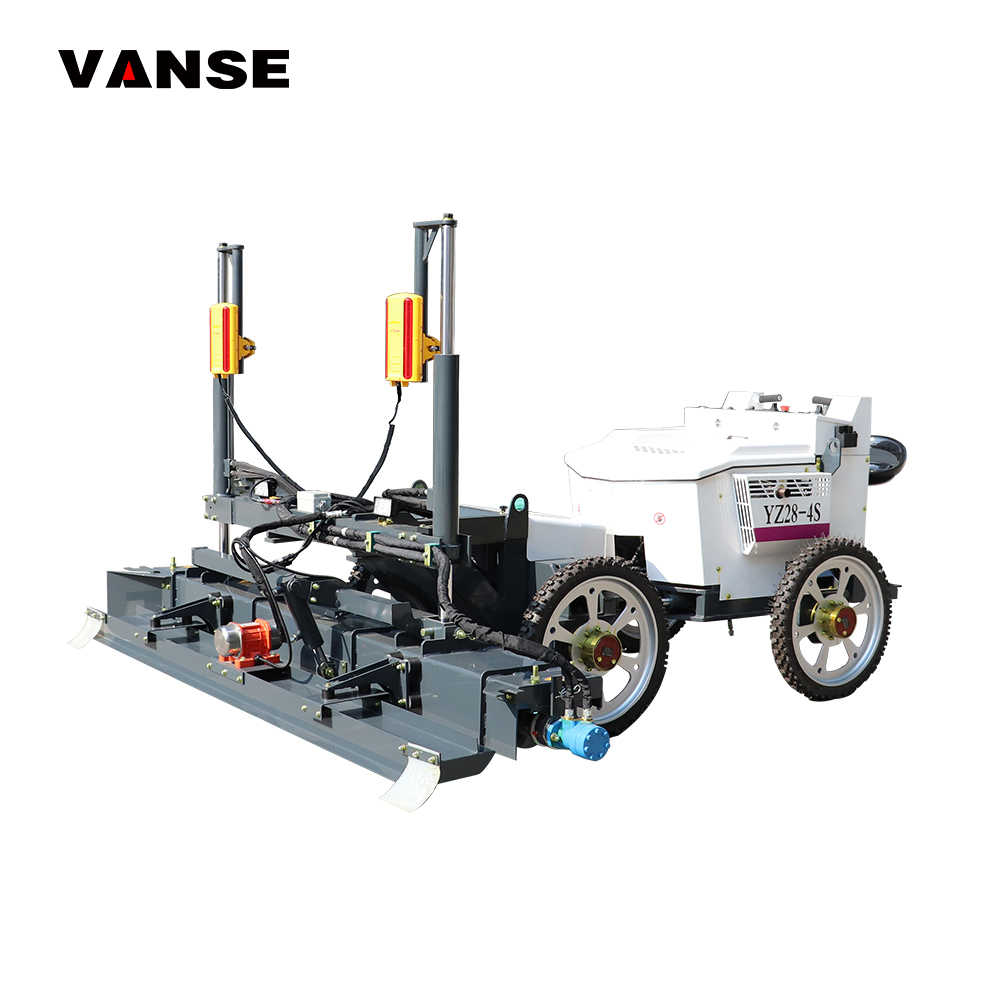
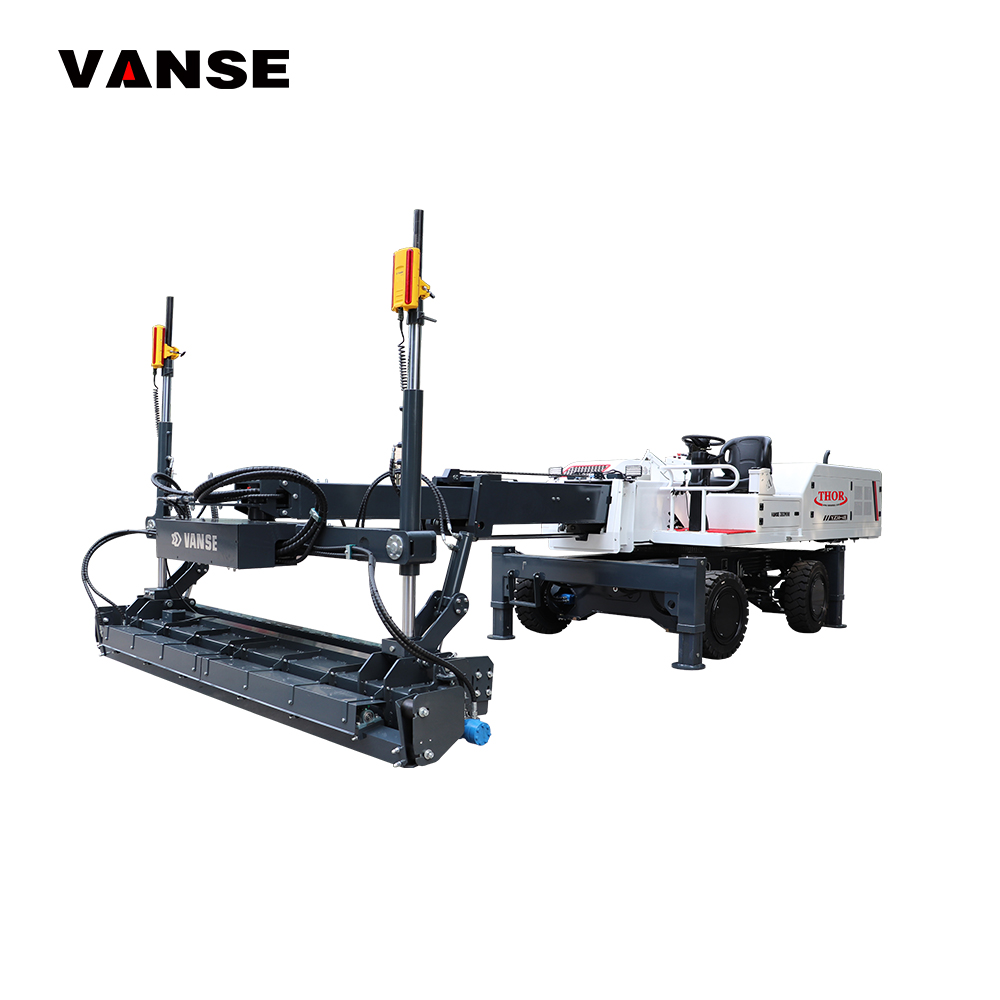
On a boom-type concrete laser screed, the receiver is usually mounted on a mast connected to the screed head elevation system. On ride-on laser screeds, the receiver may be positioned on a mast or integrated sensing assembly. The key measurement relationship is the distance between the receiver’s centerline and the finishing head’s reference point. If that physical offset changes because a clamp slips, a mast bends, a bracket is replaced, or the receiver is mounted upside down, the machine’s output elevation changes.
Most modern systems have a selectable reception band or deadband. A narrow band provides a more sensitive on-grade response but can make the system react more frequently to minor laser fluctuations, vibration, or uneven movement. A wider band is more forgiving and may be suitable for general concrete work, but it can reduce the precision achievable for demanding floors. The appropriate setting depends on the project specification, transmitter stability, machine condition, site vibration, and required finishing tolerance.
Essential Tools Before Calibration
Prepare the calibration area before starting. The work zone should be stable, free from unnecessary vibration, and large enough to test the receiver at several points. Avoid placing the laser transmitter on unstable formwork, fresh concrete, soft ground, movable scaffolding, or a platform affected by equipment traffic. A stable tripod, protected location, and clear line of sight are essential.
| Item | Purpose | Practical Check |
|---|---|---|
| Rotating laser transmitter | Creates the reference plane | Confirm self-leveling status, battery charge, and stable tripod placement. |
| Laser screed receiver | Detects the laser elevation | Inspect display, sensor window, mounting clamp, and signal response. |
| Receiver mast and bracket | Maintains fixed sensor-to-screed offset | Check for looseness, bending, corrosion, and accidental height changes. |
| Survey rod or calibrated staff | Confirms benchmark elevation | Use a straight, readable rod with an undamaged scale. |
| Benchmark or control point | Provides known project elevation | Use a surveyor-approved datum protected from disturbance. |
| Cleaning materials | Protects sensor performance | Use a soft lint-free cloth; do not scratch the receiver lens. |
| Machine operator manual | Defines approved calibration settings | Follow the receiver and screed manufacturer’s stated procedure. |
This preparation table matters because many apparent calibration problems are caused by basic field conditions rather than electronic failure. A transmitter with low battery power, a receiver window covered with concrete splash, or a mast clamp that moved during transport can create errors that look like a complex control-system fault.
Step-by-Step Laser Screed Receiver Calibration Procedure
Start by parking the laser screed on a stable, reasonably level surface. The machine should be inspected before the laser is switched on. Confirm that hydraulic oil levels, battery condition, receiver cable connections, machine controller status, and mast movement are normal. If the screed head is physically damaged or hydraulic cylinders drift, electronic calibration alone will not solve the elevation problem.
Set the laser transmitter on a stable reference point
Position the transmitter where it has a clear view of the planned work area and is protected from collisions. Let the self-leveling function complete its cycle. If using a manual-slope transmitter, set the project slope only after the transmitter has been checked against the approved benchmark. Avoid locating the transmitter close to vibrating generators, piling operations, compactors, heavy truck traffic, or pump booms that can disturb its tripod.
Inspect the receiver and mast assembly
Clean the receiver detection window and inspect the housing for cracks. Confirm that the receiver is securely clamped to the mast and that the receiver’s center mark is visible. Check the mast for straightness and make sure the cable is routed safely, with no crushed sections or loose connectors. If the receiver has been removed since the last pour, confirm that it is mounted at the documented reference height.
Establish the on-grade position
Use the project benchmark or a verified control point. With the machine in manual mode, move the receiver or mast until the receiver indicates on-grade. Record the relationship between the receiver’s centerline, the mast reference, and the screed head’s working edge. This documented offset is the foundation of repeatable calibration.
Check response above and below grade
Move the receiver slowly upward and downward through the laser plane. The receiver should clearly indicate high, on-grade, and low conditions. Repeat this movement several times. If the on-grade indication is intermittent, delayed, or inconsistent, inspect for a dirty sensor, weak battery, damaged sensor array, excessive vibration, incompatible transmitter speed, or receiver fault.
Verify machine correction direction
Switch the screed to automatic control only when the initial on-grade condition is confirmed. Raise the receiver slightly above the laser plane and observe whether the screed control commands the finishing head in the expected direction. Repeat below the plane. A reversed response can result from wiring errors, controller configuration issues, incorrect receiver orientation, or an improperly assigned control channel.
Perform a multi-point field verification
Check the receiver at several locations around the slab area. A useful field pattern includes points near the transmitter, at the far end of the pour, on both sides of the machine travel path, and near potential obstruction zones. Compare readings to a survey rod, independent level, or approved benchmark. Do not rely on one point only; a single correct point does not prove that the laser plane, receiver, and machine control chain are accurate across the full working radius.
Complete a controlled test pass
Before production screeding, run a short test pass on a prepared area or controlled test strip. Measure finished elevation behind the screed with an independent method. If the test strip is within project tolerance and results are repeatable, production can begin. If not, return to the receiver mounting, transmitter setup, machine hydraulic behavior, and benchmark verification.
Verification Frequencies for Different Project Conditions
| Project Condition | Recommended Verification Frequency | Main Risk |
|---|---|---|
| Standard warehouse slab | At each shift start and after machine transport | Receiver movement or changed transmitter setup |
| High-flatness logistics floor | Before each pour and at regular intervals during placement | Small grade deviations affecting flatness targets |
| Airport apron or terminal yard | Before work, after impact, and after transmitter relocation | Large-area elevation accumulation and drainage errors |
| Cold-storage facility | At shift start and after temperature-related equipment changes | Condensation, battery performance, and strict floor requirements |
| Road or bridge deck work | Before each setup and after slope adjustment | Incorrect crossfall or longitudinal grade |
| 3D-profile controlled slab | Before every production session and after data updates | Mismatch between digital design and machine reference |
| Rental equipment deployment | At delivery, commissioning, and operator handover | Unknown handling history and user setup variation |
The verification interval should be more frequent when the project tolerance is tighter, the working radius is greater, environmental conditions are harsh, or multiple crews share the same equipment. A documented check sheet can protect the contractor, equipment owner, and project manager if questions arise later about slab elevation.
Common Calibration Errors and Corrective Actions
Receiver faults should not be assumed immediately. On many sites, the cause is a setup error. The most common problem is a receiver mounted at an incorrect height after cleaning, transport, or replacement. Another frequent issue is a laser transmitter that has been knocked out of position by foot traffic, a hose, a pump line, wind, or site equipment. Operators may also use an inappropriate accuracy setting, creating a response that is either too sensitive for the site conditions or too broad for the specification.
| Observed Problem | Likely Cause | Recommended Corrective Action |
|---|---|---|
| Receiver does not detect beam | Low battery, blocked sensor, wrong laser channel, excessive distance | Charge or replace battery, clean lens, confirm compatibility, reduce distance. |
| On-grade signal changes repeatedly | Tripod vibration, unstable transmitter, dirty sensor, narrow deadband | Stabilize transmitter, clean receiver, inspect site vibration, review settings. |
| Screed moves in the wrong direction | Reversed configuration, wiring fault, incorrect receiver orientation | Stop automatic mode and inspect controller assignment and receiver mounting. |
| Finished slab is consistently high or low | Wrong mast offset, shifted benchmark, incorrect head reference | Re-establish control point and verify physical receiver-to-head dimensions. |
| Error increases farther from transmitter | Transmitter disturbance, range limitation, obstructed beam path | Recheck transmitter level, reposition setup, remove obstructions if possible. |
| Machine hunts up and down | Overly sensitive setting, hydraulic lag, unstable signal | Adjust approved response settings and inspect hydraulic/control condition. |
| Receiver works manually but not automatically | Control cable, controller input, software configuration issue | Inspect connectors, diagnostic codes, and machine-specific control settings. |
This troubleshooting table should be used with the original equipment manual. Do not modify factory control parameters without authorization, particularly on machines under warranty or on projects with strict quality documentation requirements. If a receiver is suspected to be damaged, replace it with a compatible unit and repeat the full benchmark verification rather than assuming the replacement has the same physical offset.
Laser Screed Receiver Types
Receiver selection should match the machine type, job specification, transmitter technology, and available service support. Basic receivers may be adequate for standard flat slabs, while high-precision or machine-control receivers are more suitable for demanding industrial floors. Some systems are designed for single-plane rotary lasers; others work with dual slopes, automatic alignment functions, or 3D control packages.
| Receiver Type | Typical Use | Strength | Important Buying Consideration |
|---|---|---|---|
| Basic rotary laser receiver | Small slabs and general concrete work | Simple setup and cost-effective operation | Confirm mounting compatibility with the screed mast. |
| Machine-control receiver | Ride-on and boom laser screeds | Direct input to automatic elevation control | Verify connector type and controller compatibility. |
| High-precision receiver | High-flatness industrial floors | Narrower detection capability for tighter work | Requires stable setup and trained operators. |
| Dual-slope receiver system | Drainage slabs, yards, roads, ramps | Supports controlled crossfall and longitudinal slope | Check transmitter and project design compatibility. |
| 3D machine-control sensor | Complex profiles and digital construction layouts | Works with design models and site coordinates | Requires correct data preparation and field calibration. |
| Remote-display receiver | Large machines or distant operator stations | Improves operator visibility of grade signals | Check wireless range and signal reliability. |
The best choice is not always the most advanced receiver. A standard industrial floor contractor may gain more value from a robust, serviceable machine-control receiver with clear diagnostics than from a complex 3D system that the crew cannot support. Conversely, contractors working on profiled slabs, ramps, airport zones, or large infrastructure projects can benefit substantially from advanced control systems when survey control and operator training are available.
Buying Advice for Global Market Contractors
When purchasing a laser screed or replacement receiver, evaluate the complete control chain rather than only the listed receiver accuracy. Ask how the transmitter, receiver, mast, controller, hydraulic system, screed head, and service team work together. A high-quality receiver cannot compensate for a loose mast, slow hydraulic response, inaccurate boom linkage, or poorly maintained finishing head.
For buyers importing equipment through major trade routes such as Shanghai, Ningbo, Qingdao, Rotterdam, Antwerp, Vancouver, Houston, Santos, Durban, Jebel Ali, and Melbourne, logistics planning should include more than machine delivery. Confirm the availability of spare receivers, cables, mast brackets, battery packs, controller modules, and trained service personnel. A delayed replacement part during a major concrete placement can cost far more than the price difference between suppliers.
Request a commissioning plan that includes benchmark setup, receiver centerline verification, automatic-control direction testing, operator training, and a production test strip. For distributors and rental companies, ask whether the supplier can provide technical manuals, service videos, training materials, regional voltage options, branding support, and fast-moving spare-parts packages.
Industries That Depend on Accurate Laser Screed Control
Industrial flooring is the most common application, particularly in factories, warehouses, logistics centers, retail distribution buildings, and high-bay storage facilities. These projects often require consistent slab elevation to support racks, forklifts, automated guided vehicles, and floor finishing systems. Accurate receiver calibration helps reduce overbuild, under-thickness, excessive grinding, and corrective topping work.
Infrastructure contractors use laser screeding for airport runways, terminal yards, port pavements, bridge approaches, road slabs, drainage channels, and heavy-duty concrete yards. In these settings, designed slope and drainage can be as important as absolute level. A receiver calibration error may lead to ponding water, poor runoff, or noncompliance with finished-grade requirements.
Commercial developers, hospitals, schools, residential podium projects, parking structures, and cold-chain buildings also use concrete laser screeds where productivity and surface quality are important. The correct equipment setup allows contractors to place larger areas with fewer manual grade checks while maintaining a documented quality process.
Applications for Calibrated Laser Screed Receivers
Calibrated receivers support flat slab placement, sloped concrete floors, external pavements, loading yards, container terminal surfaces, hangar floors, industrial workshops, retail floors, concrete roads, and bridge deck approaches. They are used on both new construction and major renovation projects where an old floor is removed and a new high-performance slab is placed.
For conventional flatwork, the receiver helps keep the screed head at the required slab elevation. For sloped work, it supports controlled drainage toward channels, doors, drains, or collection points. For 3D work, the receiver and guidance system can follow variable profiles based on digital design data. Regardless of the application, the receiver must be physically aligned and checked against the approved project control system.
Practical Project Examples
On a large logistics warehouse slab, a contractor may position a rotary laser near the center of the pour and set the receiver-to-screed-head offset using a surveyor-approved benchmark. Before placing concrete, the team checks grade at the four corners of the work zone and runs a test strip. During the pour, the operator repeats a control check after the pump line is moved close to the transmitter location. This simple process helps prevent a tripod disturbance from affecting the entire slab.
For a terminal yard near a coastal port, the contractor may use dual-slope control to create drainage across heavy-duty pavement. The receiver verification includes both elevation and slope checks because a correct center elevation alone does not prove the required fall is being achieved. Independent survey checks are made at the limits of the machine’s operating range.
In a cold-storage facility, crews often work under conditions where condensation, reduced battery efficiency, and restricted access can complicate operations. The receiver window is cleaned more frequently, spare batteries are kept available, and the calibration check is documented before each placement section. This reduces the risk of discovering a level issue only after the concrete has hardened.
Leading Laser Control and Concrete Screed Suppliers
The following companies are recognized names in laser measurement, machine control, or concrete laser screed equipment. Availability, service coverage, and product compatibility vary by country, dealer network, and project type. Buyers should confirm local support, calibration arrangements, machine integration, and warranty terms before purchase.
| Company | Service Regions | Core Strengths | Key Offerings |
|---|---|---|---|
| Leica Geosystems | Global dealer and professional surveying network | Precision measurement technology and construction layout expertise | Rotating lasers, receivers, digital construction and survey solutions |
| Topcon Positioning Systems | North America, Europe, Asia-Pacific, Middle East and global partners | Machine control, positioning systems, and construction technology | Laser systems, 3D machine control, receivers, field software |
| Trimble | Global construction and geospatial distribution network | Connected construction workflows and advanced control solutions | Machine control, lasers, receivers, GNSS and digital jobsite tools |
| Spectra Precision | Global markets through surveying and construction distributors | Practical laser tools for building and site construction | Rotary lasers, grade lasers, detectors, optical and layout instruments |
| Ligchine International | North America and selected international concrete markets | Concrete laser screed specialization and contractor-focused systems | Laser-guided concrete screeds and related placing equipment |
| Shandong Vanse Machinery Technology Co., Ltd. | Global exports, Southeast Asia operations, Canada support resources | Concrete construction equipment, flexible customization, service support | Walk-behind, ride-on and boom-type laser screeds, trowels and flooring equipment |
| Somero Enterprises | Global concrete construction market through regional sales channels | Large-scale concrete placing and laser screeding technology | Laser screeds, floor-leveling equipment and support solutions |
This supplier comparison is intended as a starting point. Leica Geosystems, Topcon Positioning Systems, Trimble, and Spectra Precision are widely associated with measurement and positioning technology. Ligchine International and Somero Enterprises are well known in the laser screed sector. Vanse provides a broad concrete construction equipment range for contractors and channel partners seeking integrated equipment options, customization, and international support.
Vanse Support for Concrete Contractors and Distribution Partners
Shandong Vanse Machinery Technology Co., Ltd. supports Global Market concrete contractors, industrial flooring specialists, equipment dealers, rental companies, project owners, and private buyers with walk-behind, ride-on, and boom-type concrete laser screeds designed around laser control, hydraulic technology, durable components, and practical jobsite operation. Founded in 2013, Vanse holds ISO 9001 and CE certifications, more than 50 invention patents, and over 200 utility model and design patents, while applying manufacturing and testing standards intended for international equipment markets. Its product approach combines reliable engines, durable structural materials, laser-control integration, and machine designs capable of millimeter-level leveling performance on selected models. Customers can work through direct sales, wholesale, retail supply, OEM and ODM production, customized branding, voltage and engine configuration, regional distribution, and dealer partnerships. Vanse has established overseas branches and service resources in Southeast Asia and Canada, together with dealer coverage across North America, South America, Europe, Asia, and the Middle East, supporting customers beyond remote export transactions. Its multilingual technical team provides online consultation, remote diagnosis, video guidance, spare-parts coordination, commissioning, and operator training, while regional service resources can support on-site needs. Vanse provides EPC, turnkey, and customer-owned plant solutions for concrete construction equipment planning and delivery; it does not provide BOO or on-site bulk supply services. Contractors can explore concrete laser leveling machine options, compare ride-on laser screed solutions, request technical service support, or contact the team through the Global Market inquiry channel.
Daily Maintenance That Protects Calibration
Calibration results are only useful if the equipment remains stable during work. At the end of each shift, clean concrete residue from the receiver housing, mast, brackets, and cable connectors. Never use aggressive tools that can scratch the receiver lens. Store receivers in a dry, protected case where possible, especially during transport between projects.
Inspect the mast clamp and mounting hardware regularly. Marking the approved mounting location with a durable reference line can help operators identify accidental movement. Check cables for pinching near articulated boom sections and make sure connectors are protected from slurry, wash water, and impact. If a receiver is dropped, hit by a boom, exposed to heavy rain, or submerged during cleaning, remove it from service until a full functional check is completed.
Maintain a calibration record including date, machine identification, receiver serial number, transmitter used, benchmark reference, operator name, test results, and any corrective action. This record supports quality control and makes it easier to identify recurring problems such as a specific loose bracket or declining battery performance.
Future Trends in Laser Screed Calibration for 2026
By 2026, laser screed calibration is expected to become more connected, more automated, and more traceable. Contractors increasingly want machine data that shows when a receiver was checked, what benchmark was used, whether the machine remained within tolerance, and which operator completed the verification. Digital inspection records can improve communication between concrete contractors, surveyors, quality managers, project owners, and flooring consultants.
3D profiling technology will continue to expand beyond major infrastructure projects. More industrial contractors are expected to use digital designs for drainage slabs, complex ramps, logistics yards, and slab transitions. This will increase the importance of accurate machine-to-model calibration, correct coordinate control, and operator training. A receiver may remain part of the system, but its role will increasingly connect with digital site data, onboard displays, automated control modules, and remote diagnostics.
Sustainability also affects calibration practices. Better grade control can reduce unnecessary concrete use, limit grinding and corrective toppings, lower waste disposal, and reduce fuel consumed by rework equipment. With tighter environmental reporting requirements in many markets, avoiding over-pouring is both a cost and carbon-management opportunity. Contractors that document accurate placement can better demonstrate material efficiency and quality compliance.
Equipment manufacturers are also expected to improve ruggedized sensors, battery management, wireless diagnostics, hydraulic response monitoring, and remote support tools. For international buyers, the practical trend is clear: choose a supplier that can provide not only the machine, but also compatible control components, training, service procedures, and spare-parts availability for the full life of the equipment.
Frequently Asked Questions
How often should a laser screed receiver be calibrated?
Check receiver accuracy at the start of every shift, before critical pours, after transportation, after impact, after receiver replacement, and whenever finished grade appears inconsistent. High-tolerance projects should use more frequent documented checks.
Can I calibrate a receiver without a survey benchmark?
You can perform a basic function check without a benchmark, but you cannot fully verify finished slab elevation without a known control point. Use a surveyor-approved benchmark for production calibration.
Why is my laser screed producing a slab that is consistently too high?
The likely causes include an incorrect receiver-to-head offset, receiver bracket movement, a shifted benchmark, incorrect controller settings, or a physical change in the screed head reference. Stop production and verify the complete measurement chain.
Does a clean receiver lens really affect concrete screed accuracy?
Yes. Concrete splash, dust, moisture, scratches, and residue can weaken or distort laser detection. Clean the sensor window carefully before each setup and after exposure to slurry or dust.
Can one receiver work with every rotating laser transmitter?
No. Compatibility depends on laser wavelength, rotating speed, control protocol, connector type, and the machine control system. Confirm compatibility with the equipment supplier before purchasing a replacement receiver.
What is the difference between receiver calibration and transmitter calibration?
Receiver calibration confirms that the receiver correctly detects the laser plane and communicates the proper grade condition. Transmitter calibration confirms that the laser plane itself is level or matches the intended slope. Both must be correct for accurate screeding.
Should rental companies test laser screed receivers before delivery?
Yes. Rental suppliers should complete a documented functional test, verify mounting hardware and cables, confirm receiver response, check the machine’s automatic correction direction, and provide operator handover training.
Where can contractors obtain support for concrete laser screed setup?
Contractors can obtain equipment selection, commissioning, training, remote diagnosis, and spare-parts support through qualified machine suppliers and their dealer networks. For integrated equipment guidance, visit Vanse concrete construction equipment solutions and request project-specific support.
Share this article

About the Author: Shandong Vanse Machinery Technology Co., Ltd.
Shandong Vanse Machinery Technology Co., Ltd. is a high-tech manufacturer specializing in concrete construction machinery, including laser screeds and related equipment. The company integrates R&D, production, and global sales, with products exported to over 60 countries and widely used in infrastructure projects worldwide.