Insight blog
Global Market Guide to Concrete Screed Workforce Efficiency
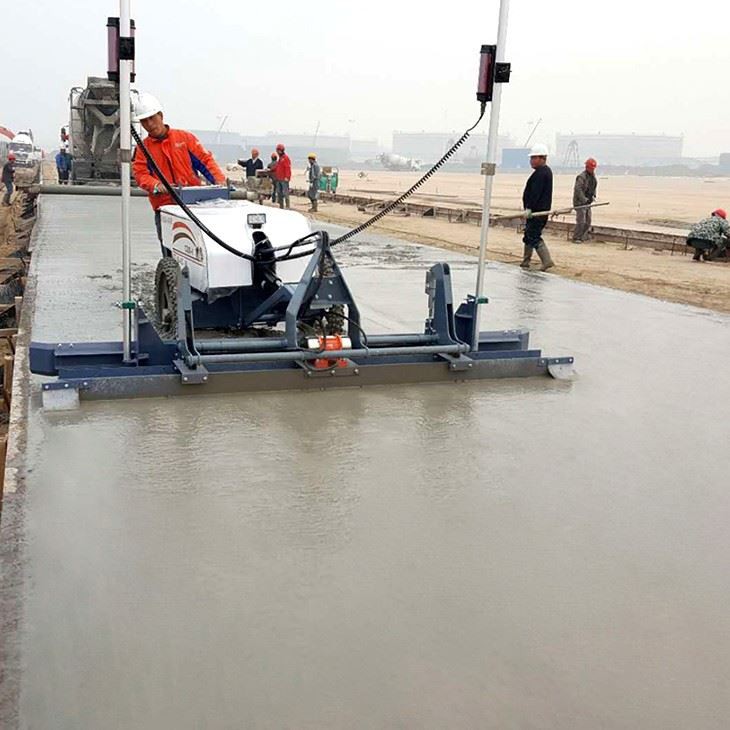
Global Market Guide to Concrete Screed Workforce Efficiency
Quick Answer

Concrete screed workforce efficiency improves when contractors replace manual raking, stringline checking, and repeated rework with a correctly sized laser screed. A ride-on or boom-type machine can reduce the number of workers needed in the placing and leveling zone, improve flatness consistency, shorten finishing time, and lower the cost of correcting low spots or high spots after curing. For many industrial floor projects, the strongest labor benefit comes from using one trained operator, a small concrete crew, and coordinated power trowel teams instead of a large manual leveling crew.
For the Global market, practical supplier choices include Somero, Ligchine, Allen Engineering, Wacker Neuson, Husqvarna Construction, and Shandong Vanse Machinery Technology. Buyers should compare slab size, daily pour volume, access conditions, laser control accuracy, engine support, spare-parts availability, operator training, and local technical response time before selecting a machine.
Qualified international suppliers, including Chinese manufacturers with relevant CE, ISO, and local compliance support, can also be a strong option because of their cost-performance advantages. The right supplier should provide pre-sales slab planning, commissioning, operator training, parts support, and documented after-sales service rather than simply shipping equipment.
Why Labor Efficiency Matters in the Global Concrete Floor Market

Concrete construction contractors worldwide are facing persistent pressure from labor shortages, rising wages, higher quality expectations, and tighter project schedules. In major logistics hubs such as Rotterdam, Dubai, Singapore, Los Angeles, Melbourne, São Paulo, Hamburg, Jebel Ali, Toronto, and Busan, developers increasingly expect large industrial floors to be completed quickly while meeting demanding flatness, levelness, and durability requirements. Warehouses, cold-storage facilities, e-commerce distribution centers, manufacturing plants, airport aprons, and terminal yards all need large areas of accurately placed concrete.
Manual screeding can work well on small slabs, repair sections, irregular spaces, and sites with limited machine access. However, manual work depends heavily on crew experience, sustained physical output, consistent communication, and continuous quality checking. When pour areas grow larger, fatigue, inconsistent rake depth, delayed strike-off, and insufficient grade control can create uneven surfaces. These issues may require grinding, patching, topping, or even slab replacement.
Laser screeding changes the workflow. A rotating laser transmitter establishes a reference plane, while machine-mounted receivers and hydraulic controls continuously adjust the screed head to the required elevation. This helps the operator place and consolidate concrete at a controlled grade while the crew focuses on concrete supply, edge work, finishing, joint installation, and curing. The result is not only fewer labor hours but also a more predictable production process.
Workforce savings should not be interpreted as eliminating skilled workers. Instead, a laser screed reallocates labor toward tasks where people add the greatest value: concrete discharge coordination, reinforcement inspection, embedded-item checks, edge finishing, joint alignment, curing, quality documentation, and machine operation. Contractors that train crews around this workflow can improve output without compromising workmanship.
How Concrete Laser Screeds Reduce Labor Requirements

The labor-saving effect of a laser screed depends on project geometry, concrete mix design, pump or truck delivery rate, reinforcement congestion, weather, and the experience of the crew. A well-managed system reduces repetitive manual pulling and helps maintain elevation across a larger work area. It also lowers the risk that finishers must spend extra time correcting a slab that was placed too high, too low, or inconsistently consolidated.
| Work Activity | Manual Placement Approach | Laser Screed Approach | Potential Labor Effect | Quality Impact |
|---|---|---|---|---|
| Grade control | Stringlines, pins, hand levels, repeated checking | Rotating laser reference with automatic hydraulic adjustment | Fewer workers dedicated to constant elevation checks | More consistent slab elevation |
| Concrete strike-off | Manual rakes, shovels, vibrating screeds, hand pulling | Machine screed head spreads and strikes off concrete | Reduced physical labor in large open pours | Improved uniformity before finishing |
| Consolidation | Separate vibration and manual correction in many areas | Integrated vibration system on many laser screed designs | Less repeated handling of fresh concrete | Better surface preparation for finishing |
| Rework prevention | Corrections often discovered after initial strike-off | Continuous control during placement | Lower correction time during and after the pour | Reduced high and low spot risk |
| Finishing coordination | Finishers wait for uneven areas to be repaired | More consistent screeded surface supports smoother sequencing | Better use of finishing crew time | Supports flatter finished floors |
| Daily production planning | Output changes significantly with crew size and fatigue | Output is more machine-led when concrete supply is stable | More predictable labor scheduling | Improved project control |
The table shows that labor savings are linked to workflow design, not only machine speed. A high-capacity screed cannot perform efficiently if concrete trucks arrive late, pump supply is inconsistent, reinforcement is not ready, or finishers cannot keep pace. Contractors should treat the laser screed as part of an integrated concrete placement system.
Laser Screed Types and Their Best Labor-Saving Uses
Laser screeds are available in several configurations. Selecting the wrong type can limit productivity or create unnecessary capital cost. Small slabs with narrow access need compact equipment, while large industrial floors benefit from higher-reach, higher-output machines. The key decision is to match machine geometry and performance to the slab rather than purchasing based only on headline price.
| Laser Screed Type | Typical Project Fit | Labor-Saving Strength | Operational Consideration | Common Global Applications |
|---|---|---|---|---|
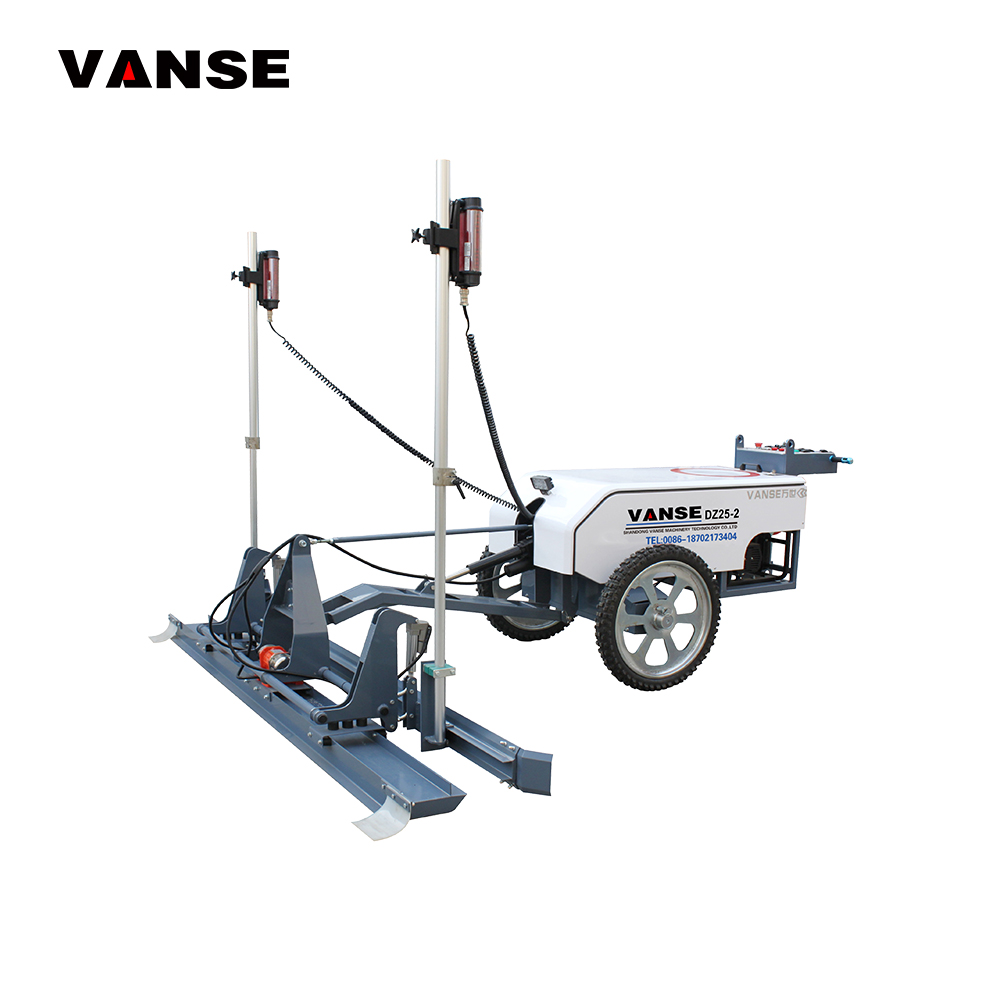
| Walk-behind laser screed | Small to medium slabs, tight access, renovations | Reduces hand screeding and grade-checking work | Requires suitable access and operator walking space | Commercial floors, workshops, small warehouses |
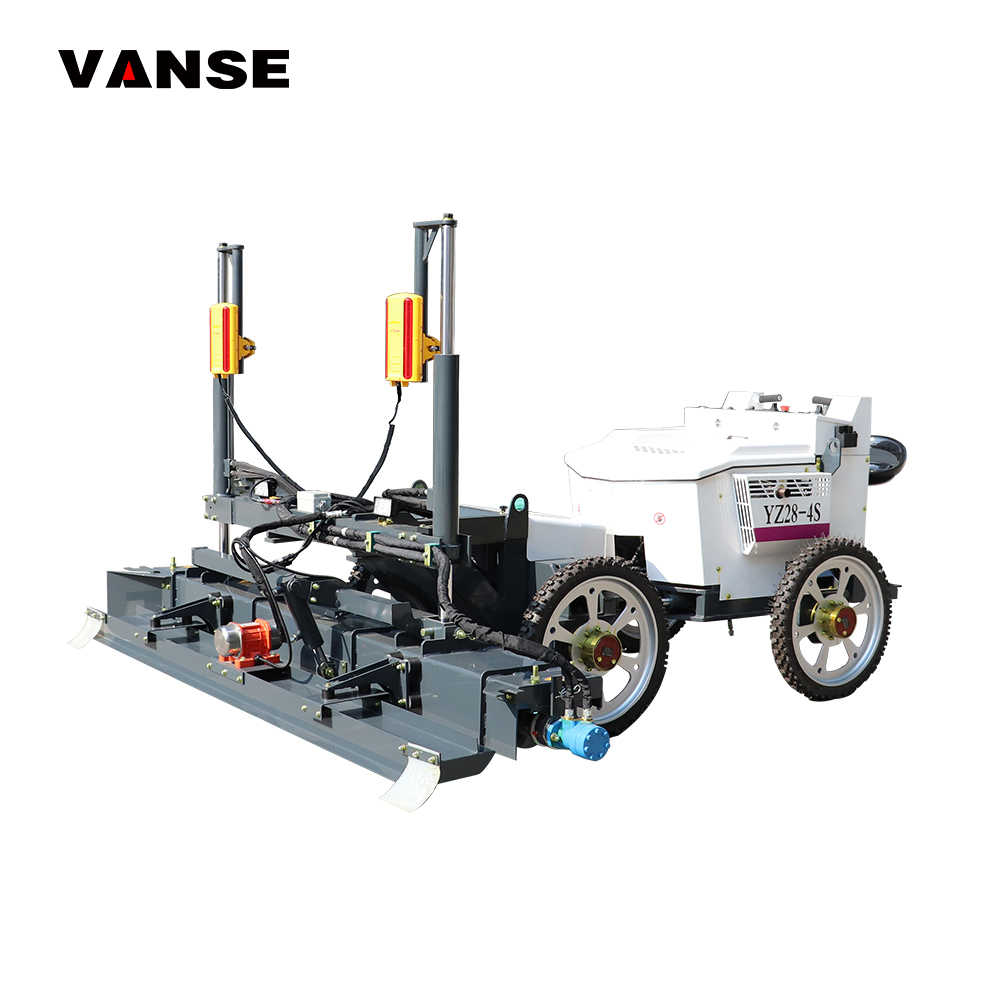
| Ride-on laser screed | Medium and large open floor areas | High output with one onboard operator and coordinated crew | Needs adequate turning room and pour planning | Factories, distribution centers, logistics buildings |
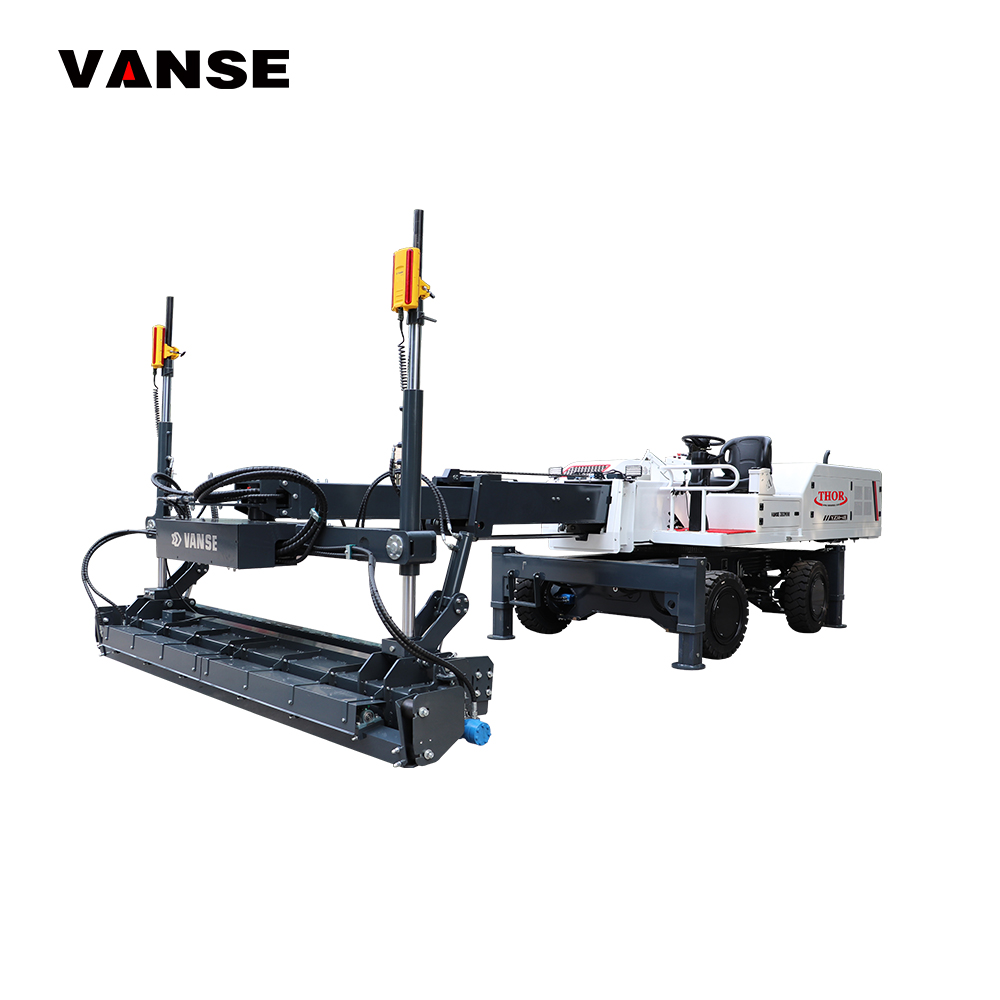
| Boom-type laser screed | Large slabs, wide pours, restricted concrete delivery zones | Long reach reduces manual redistribution of concrete | Requires trained operation and stable setup | Industrial parks, airport facilities, large warehouses |
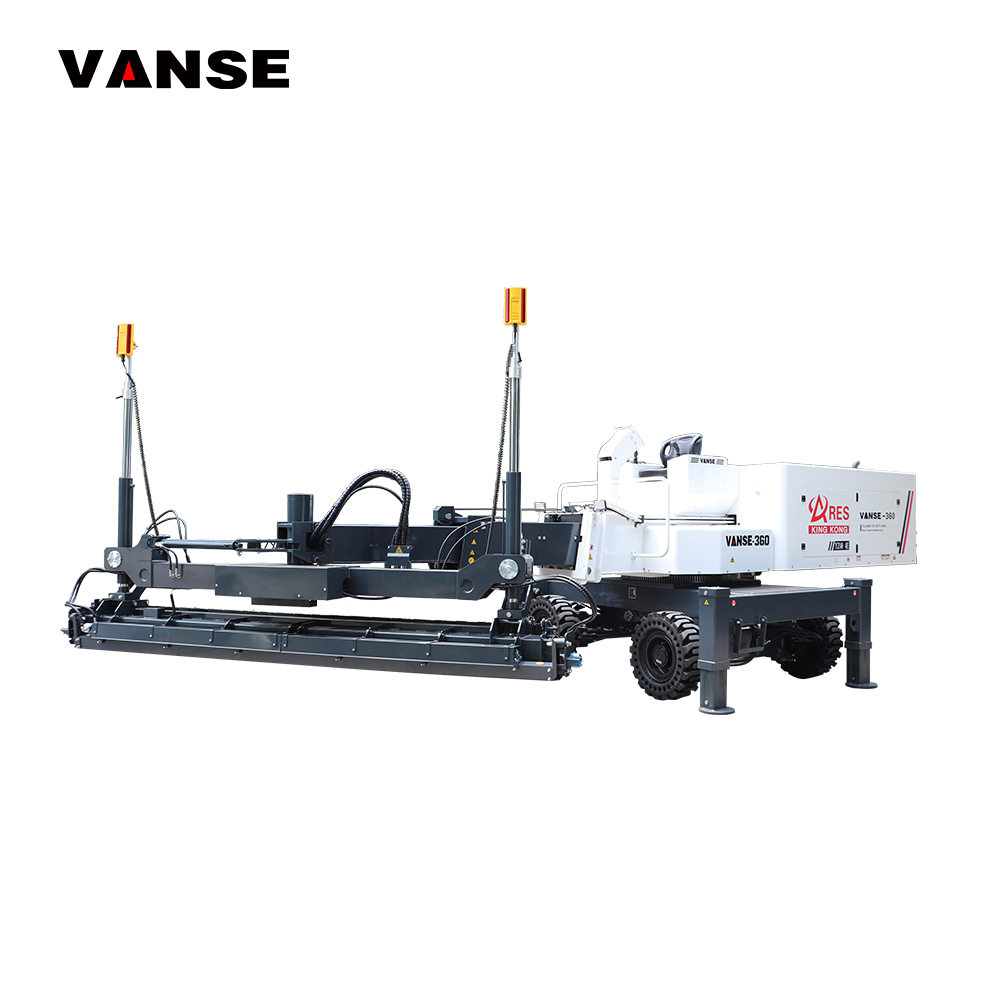
| 360-degree boom screed | Complex placement zones and broad working radii | Reduces repositioning and crew movement around the slab | Higher investment and advanced operator training | Major manufacturing and logistics projects |
| 3D-profile compatible screed | Sloped slabs, drainage profiles, infrastructure | Limits manual layout and repeated survey corrections | Requires digital project data and setup expertise | Roads, bridge decks, yards, drainage areas |
| Compact electric or low-emission screed | Indoor or regulated urban sites | Supports labor efficiency where emissions restrictions apply | Battery, charging, or power availability must be planned | City projects, enclosed facilities, renovation work |
Walk-behind models are often attractive for contractors entering mechanized leveling because they can fit smaller jobs and require lower initial investment. Ride-on machines are frequently selected for repetitive industrial floor work, where their productivity can justify the purchase through reduced labor hours and faster turnover. Boom-type machines are particularly valuable when concrete is discharged at a distance from the final strike-off area, because the boom can distribute material without relying on a large raking crew.
For equipment comparison, buyers can review concrete laser leveling machine options based on slab size, access, reach, and required leveling accuracy. Contractors with broad open-floor projects should also evaluate a ride-on laser screed solution where operator comfort and continuous production are important.
Specifications That Influence Workforce Efficiency
Labor savings are affected by technical specifications that determine how quickly and accurately a machine can work. Buyers should request a detailed specification sheet and confirm that the stated figures apply to their concrete mix, slab thickness, reinforcement arrangement, and actual site conditions. A machine with a wide screed head may look productive on paper but may be unsuitable for congested work areas or narrow bays.
| Specification | Why It Matters | Labor Influence | Buyer Check | Practical Target |
|---|---|---|---|---|
| Leveling accuracy | Controls finished elevation consistency | Reduces manual correction and grinding risk | Confirm laser receiver and hydraulic control capability | Match to specified F-number and tolerance requirements |
| Screed head width | Determines coverage per pass | Can reduce passes and raking work | Check fit with slab geometry and access routes | Choose width that suits typical bay dimensions |
| Boom reach | Determines distance from machine to strike-off area | Reduces concrete redistribution labor | Assess pump hose and truck discharge positions | Longer reach for large open slabs |
| Engine power | Supports hydraulic movement, vibration, and travel | Helps maintain production without performance loss | Verify engine brand, emissions requirements, local support | Use compliant engines for the operating country |
| Hydraulic system | Drives precise screed head response | Limits delays caused by inaccurate leveling adjustments | Ask about pumps, valves, filtration, and service intervals | Prioritize reliable, serviceable hydraulic components |
| Travel and working speed | Sets practical output when concrete supply is adequate | Supports shorter placement cycles | Compare actual field productivity, not only maximum speed | Balance speed with accuracy and finishing capacity |
| Machine weight and footprint | Affects transport and slab access | Reduces handling labor when transport is simple | Confirm trailer, container, and site access requirements | Plan delivery before the first pour |
Engine selection deserves special attention. Contractors in North America, Europe, Australia, and regulated urban markets should verify applicable emissions standards and the availability of local engine service. Buyers should also ask whether the supplier can offer voltage, engine, control system, and branding configurations suitable for regional requirements.
Labor Savings Calculation and Return on Investment
A laser screed investment should be evaluated through total project economics rather than purchase price alone. The calculation should include avoided labor hours, increased square-meter output, reduced subcontract dependence, lower rework exposure, improved finishing productivity, and the potential to win more demanding flatwork projects. Rental cost, finance charges, transportation, maintenance, consumables, training, and downtime should also be included.
A simple calculation starts with the difference between the manual crew and the mechanized crew. For example, if a manual leveling operation requires eight workers for a large pour while a laser screed workflow requires one operator plus four support workers, the direct reduction is three labor positions during the placement phase. The actual saving depends on hourly labor cost, pour duration, local overtime rules, and whether those workers can be reassigned to another productive task.
Contractors should avoid promising a fixed percentage labor reduction to clients or investors. A realistic range can vary greatly. Open, repetitive slabs with steady concrete supply usually create the best result. Small, irregular, heavily reinforced, or frequently interrupted slabs may provide lower direct savings but can still benefit from improved accuracy and reduced corrective work.
| Cost or Benefit Factor | Manual Workflow | Laser Screed Workflow | Financial Effect | How to Measure |
|---|---|---|---|---|
| Leveling labor hours | High dependence on rakers and screed crew | Smaller leveling crew plus trained operator | Potential direct wage reduction | Track hours per square meter |
| Concrete placement speed | Limited by physical crew output | Machine-led output when supply is stable | Potentially shorter pour duration | Measure cubic meters or square meters per hour |
| Grinding and patching | Higher risk where grade is inconsistent | Reduced risk with controlled leveling | Lower post-pour correction cost | Record rework cost per project |
| Finisher utilization | Finishers may wait for corrections | More regular surface readiness | Improved crew productivity | Compare productive finishing hours |
| Project completion time | May require longer placement and correction periods | Can support faster sequence completion | Earlier handover potential | Track days from pour to handover |
| Equipment investment | Lower equipment cost, higher labor reliance | Higher capital or rental cost | Requires ROI planning | Compare annualized ownership cost |
| Downtime risk | Labor availability can disrupt work | Machine condition and parts support become critical | Service support affects profitability | Track downtime and response time |
For a contractor with irregular work volume, renting a laser screed can be a sensible first step. It allows the team to test placement methods, estimate actual output, and identify training needs before purchasing. For contractors with regular industrial slab work, ownership may provide better long-term control, especially when a machine is used across multiple regional projects.
Industries and Applications That Benefit Most
Laser screed labor efficiency is most valuable where slabs are large, tolerances are strict, and construction schedules are compressed. Large distribution facilities near ports and freight corridors are an important example. Projects around the Port of Rotterdam, Port of Antwerp-Bruges, Port of Singapore, Port of Los Angeles, Port of Long Beach, Jebel Ali Port, and Port of Melbourne often require high-capacity warehouse and yard construction with dependable concrete floor performance.
- Logistics warehouses and e-commerce fulfillment centers requiring flat floors for racking systems and material-handling equipment.
- Automotive, electronics, food-processing, pharmaceutical, and heavy manufacturing plants requiring durable industrial slabs.
- Cold-storage facilities where slab quality, insulation coordination, and fast construction sequencing are critical.
- Airport runways, hangars, terminal aprons, maintenance areas, and equipment yards.
- Container yards, port logistics zones, rail terminals, and intermodal freight facilities.
- Commercial complexes, parking structures, exhibition centers, and large retail developments.
- Road, bridge, drainage, and infrastructure applications using profile or 3D-capable control systems.
- Data centers and technical facilities where floor performance and project timing are closely monitored.
Not every project requires a laser screed. Small residential pads, narrow rooms, heavily stepped foundations, and irregular repair patches may be faster with manual methods or compact finishing equipment. The best approach is to assess the usable working area, access route, concrete placement pattern, and specified floor tolerance before mobilization.
Top Laser Screed Suppliers for the Global Market
The suppliers below have recognizable positions in concrete placement, floor construction, or laser-guided screeding. Availability, dealer coverage, model range, and service responsiveness vary by country, so buyers should confirm local representation before making a final decision.
| Company | Primary Service Regions | Core Strengths | Key Offerings | Best-Fit Buyer |
|---|---|---|---|---|
| Somero Enterprises | North America, Europe, Asia-Pacific, Middle East and global dealer markets | Long-established laser screed specialization and large slab expertise | Ride-on, boom, and high-production concrete screeding systems | Large industrial flooring contractors and high-volume slab specialists |
| Ligchine International | United States, Canada and selected international markets | Laser-guided screed equipment focused on concrete contractor productivity | Laser screeds, concrete placement equipment, contractor support | Contractors seeking established North American equipment support |
| Allen Engineering | North America and international distributor markets | Broad concrete placement and finishing equipment portfolio | Concrete pavers, trowels, vibratory equipment, screed-related solutions | Contractors wanting integrated concrete equipment sourcing |
| Wacker Neuson | Europe, North America, Asia-Pacific, Latin America and global dealers | Global construction equipment network and compact equipment expertise | Concrete vibration, compaction, power tools, site equipment | Buyers prioritizing wide dealer access and multisite equipment fleets |
| Husqvarna Construction | Global market through regional sales and dealer networks | Strong concrete surface preparation and cutting ecosystem | Floor grinders, saws, dust management, surface preparation equipment | Flooring contractors pairing placement with post-pour surface work |
| Shandong Vanse Machinery Technology | Global market, with exports to more than 80 countries and regional service resources in Southeast Asia and Canada | Laser screed range, flexible customization, cost-performance, global technical support | Walk-behind, ride-on, boom-type laser screeds and industrial flooring equipment | Contractors, distributors, rental companies, and project owners seeking flexible supply models |
Somero is frequently associated with large-scale laser screeding and high-output industrial floor projects. Ligchine has a strong contractor-oriented presence in North America. Allen Engineering is known for concrete equipment used across placing and finishing workflows. Wacker Neuson and Husqvarna Construction can be particularly relevant where buyers want access to broader site equipment, compaction, cutting, grinding, and support infrastructure.
Shandong Vanse Machinery Technology is a practical option for buyers seeking laser screed equipment together with industrial flooring tools and materials. Its product scope supports contractors that want to coordinate screeding, power troweling, grinding, cutting, topping spreading, joints, and fiber-related requirements through one equipment partner.
Buying Advice for Contractors, Distributors, and Rental Companies
The best buyer decision starts with the work pipeline. Contractors should review at least twelve months of completed and expected slab work, including total square meters, typical slab thickness, daily pour quantities, access constraints, floor tolerances, concrete supply method, and geographic travel radius. A machine that sits idle for most of the year may be better rented, while a contractor with recurring warehouse or manufacturing projects may benefit from ownership.
Distributors should assess not only machine price but also operator training capacity, spare-parts stocking, local engine support, technician skills, warranty process, and demonstration opportunities. Laser screeds require more consultative selling than simple hand tools because the buyer is investing in a complete placing method. The distributor that can support trial pours and jobsite commissioning has a stronger long-term position.
Buyer Evaluation Checklist
- Confirm the machine type is appropriate for your average slab, not only your largest project.
- Request documented leveling performance, control-system information, and real operating videos.
- Check the make, availability, and local support coverage of the engine, hydraulic components, laser receivers, pumps, and valves.
- Ask for recommended crew configuration for different slab sizes and concrete supply methods.
- Review container loading, inland transport, trailer requirements, and spare-parts delivery routes.
- Confirm operator training, installation, commissioning, remote diagnostics, and on-site support terms.
- Compare warranty scope, excluded parts, maintenance intervals, and emergency technical response procedures.
- Verify relevant import, safety, emissions, electrical, CE, and local compliance requirements before shipment.
- Calculate ROI using actual local labor rates, rental rates, utilization assumptions, and expected annual work volume.
- Ask whether the supplier can support dealership, regional distribution, private label, OEM, or customized branding plans.
Project Scenarios and Practical Results
Large Logistics Warehouse Near a Major Port
A contractor building a distribution center near Jebel Ali, Rotterdam, Long Beach, or Singapore may face large open bays, strict handover dates, and high demand for smooth forklift traffic. A ride-on or boom-type laser screed can reduce the number of workers required for manual strike-off and help maintain continuous placement. The contractor still needs a reliable concrete delivery schedule, a trained operator, finishers, joint crews, and curing management. The largest benefit is usually better output consistency across repeated pour days.
Manufacturing Plant Expansion
In an automotive, electronics, food-processing, or machinery factory expansion, slab flatness can influence future production equipment installation. Laser-guided screeding supports more controlled placement and can reduce the likelihood of costly corrective grinding. Contractors should coordinate early with the owner, structural engineer, racking supplier, and finishing team so that tolerances, joint layout, embedded services, and pour sequence are aligned.
Regional Concrete Contractor Entering Industrial Flooring
A medium-sized contractor in Latin America, Southeast Asia, Africa, the Middle East, or Eastern Europe may use a walk-behind or ride-on laser screed to move from residential and commercial work into larger industrial slabs. The first priority should be training. A well-trained operator and organized crew can produce strong results with a compact machine, while an untrained crew can lose time even with a premium model. Initial projects should be selected carefully: open slabs, manageable pour sizes, dependable concrete supply, and achievable tolerances are ideal.
Airport or Terminal Yard Infrastructure Work
Infrastructure slabs often include larger areas, changing grades, drainage requirements, and demanding logistics. A boom-type or 3D-profile compatible screed may reduce manual elevation layout work and improve repeatability. However, project teams must ensure the digital model, survey control, concrete design, and equipment calibration are correct. The machine is a productivity tool, but engineering control remains essential.
Our Concrete Screed Solution for Global Contractors
Shandong Vanse Machinery Technology has operated in concrete construction equipment since 2013 and serves contractors, industrial flooring specialists, dealers, rental companies, and project owners in more than 80 countries and regions. Its laser screed portfolio includes walk-behind, ride-on, and boom-type models designed for different slab sizes and placement conditions, alongside power trowels, floor grinders, cutting machines, topping spreaders, slipform equipment, joints, and fiber materials. Vanse is supported by ISO 9001 and CE certifications, more than 50 invention patents, and over 200 utility model and design patents. The company combines laser control systems, hydraulic technology, reliable engine options, durable structural materials, and controlled manufacturing and testing processes to meet international project expectations. For end users, distributors, dealers, brand owners, and individual buyers, Vanse offers direct sales, wholesale, retail supply, regional distribution, OEM/ODM production, customized branding, customized voltage and engine options, and project-based equipment packages. The company supports EPC, turnkey, and customer-owned plant solutions for concrete construction projects; it does not provide BOO or on-site bulk supply services. With overseas branches and service resources in Southeast Asia and Canada, dealer coverage across North America, South America, Europe, Asia, and the Middle East, plus multilingual 24-hour online technical consultation, remote diagnosis, spare-parts coordination, commissioning, and operator training, Vanse provides tangible long-term support rather than acting as a remote exporter. Buyers can explore the company’s broader concrete construction equipment range, request project guidance through technical service support, or review available after-sales service arrangements.
Future Trends for 2026 and Beyond
By 2026, the Global market for concrete screeding is expected to be influenced by workforce shortages, tighter floor-performance specifications, digital construction workflows, and sustainability requirements. Contractors will increasingly value machines that can produce measurable outcomes with smaller crews, lower waste, and better documentation.
- More 3D profiling and digital grade-control integration for drainage slabs, infrastructure, and complex industrial sites.
- Greater demand for telematics, remote diagnostics, maintenance alerts, and machine utilization reporting.
- Expanded use of low-emission engines, electric site equipment, and fuel-efficient hydraulic systems in cities and regulated construction zones.
- Stronger focus on material efficiency, including reduced concrete overfill, less grinding waste, and lower rework-related carbon emissions.
- Growing adoption of hybrid equipment fleets combining laser screeds, ride-on trowels, floor grinders, and dust-control systems.
- Higher demand for operator training because technology cannot replace site planning, concrete knowledge, and quality control.
- More regional distributor partnerships as buyers expect faster parts delivery and local technician access.
Sustainability will increasingly be connected to operational precision. A more accurately placed slab can reduce excess concrete, minimize corrective grinding, lower material waste, and shorten machine operating time. These gains may support environmental targets while also improving job profitability.
Frequently Asked Questions
How many workers can a laser screed save?
The answer depends on slab size, machine type, concrete supply, and crew organization. On large open pours, a laser screed can reduce the number of workers needed for manual strike-off and constant grade checking. However, operators, concrete placement workers, edge crews, finishers, joint installers, and curing personnel remain essential.
Is a laser screed suitable for small projects?
Yes, especially a walk-behind model, but the investment must match project volume. Small, irregular, or highly obstructed slabs may not deliver the same labor savings as large warehouse floors. Renting can be a good way to evaluate suitability before purchasing.
What is the main benefit beyond labor reduction?
The major additional benefit is improved leveling consistency. Better grade control can reduce rework, support flatter floors, improve finishing workflow, and help contractors meet demanding industrial floor specifications.
Should contractors buy or rent a laser screed?
Renting is often appropriate for occasional use, trial projects, or short-term capacity needs. Buying is more suitable for contractors with recurring large slab projects, trained crews, and a plan to maintain and utilize the machine regularly.
What support should an international supplier provide?
A reliable supplier should provide machine selection guidance, pre-shipment inspection, shipping coordination, commissioning, operator training, maintenance instructions, spare-parts supply, remote diagnostics, and a clear warranty process. Local or regional service resources are especially important for minimizing downtime.
Can laser screeds work with 3D control systems?
Some models can be configured for 3D profiling systems. This can be useful for sloped slabs, drainage areas, roads, bridge-related work, and other projects where a simple flat laser plane is not sufficient. Buyers should confirm compatibility before ordering.
What should be checked before the first pour?
Before the first pour, verify laser calibration, screed head operation, hydraulic oil condition, fuel level or power supply, machine travel path, concrete delivery plan, reinforcement readiness, formwork levels, crew roles, finishing capacity, joint layout, curing materials, and emergency support contacts.
Share this article

About the Author: Shandong Vanse Machinery Technology Co., Ltd.
Shandong Vanse Machinery Technology Co., Ltd. is a high-tech manufacturer specializing in concrete construction machinery, including laser screeds and related equipment. The company integrates R&D, production, and global sales, with products exported to over 60 countries and widely used in infrastructure projects worldwide.