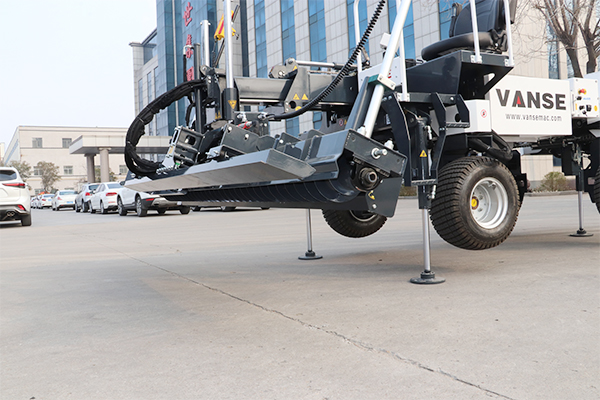
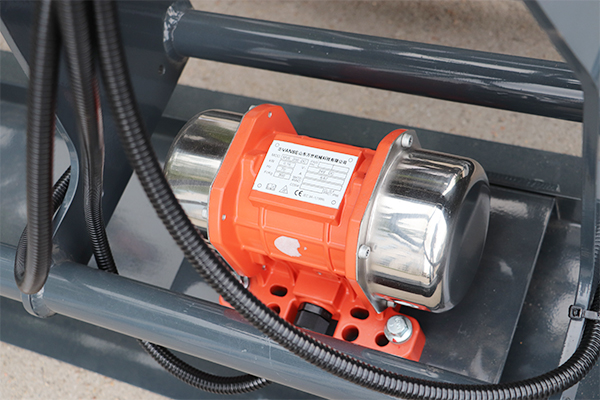
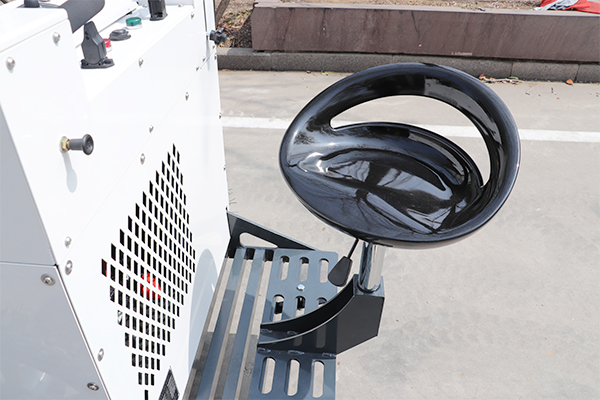
مقالات احترافية تغطي تقنية التسوية بالليزر، واتجاهات المصانع الذكية، وصيانة المعدات، ورؤى حول مشاريع البناء العالمية.
2026-09-05
Global Market Guide to Industrial Concrete Laser Screeding
An industrial concrete laser screed is a precision concrete-placement machine that uses laser-guided elevation control, hydraulic screed heads, and automated grade correction to produce flatter slabs faster than conventional manual striking methods. For the Global market, it is most valuable on warehouses, factories, logistics parks, airport pavements, port yards, data centers, and large commercial floors where flatness, labor availability, and schedule certainty matter.For most contractors, the practical selection path is simple: choose a walk-behind unit for confined or medium-size slabs, a ride-on model for open warehouse and factory floors, and a boom-type laser screed for high-output industrial work with difficult access or large daily pours. Buyers should evaluate machine coverage, laser compatibility, engine configuration, hydraulic stability, local parts access, operator training, and expected slab flatness rather than purchasing on headline price alone.Common companies to shortlist include Somero Enterprises, Ligchine International, Allen Engineering Corporation, Topcon Positioning Systems, Shandong Vanse Machinery Technology Co., Ltd., and Shandong HIK Machinery Co., Ltd. Qualified international suppliers, including Chinese manufacturers with relevant CE or local compliance documentation, proven export records, and strong pre-sales and after-sales support, can also offer attractive cost-performance advantages for Global market contractors.For contractors comparing machine formats, Vanse provides a practical starting point through its concrete laser leveling machine range, including solutions for industrial slabs, distribution centers, concrete yards, and large construction projects.The Global market for industrial concrete laser screeding is shaped by a broad shift toward larger floor plates, tighter quality specifications, higher labor costs, and demand for reliable project schedules. Warehouses near Rotterdam, Hamburg, Dubai, Singapore, Vancouver, Los Angeles, Santos, Jebel Ali, and Melbourne increasingly require slabs that can support racking systems, high-bay forklifts, automated guided vehicles, cold-storage operations, and rapid construction cycles. These requirements are pushing contractors to replace labor-intensive traditional strike-off methods with controlled concrete placement equipment.Industrial concrete floors are no longer treated as simple structural surfaces. In modern logistics facilities, a slab may directly influence forklift vibration, rack alignment, maintenance costs, automated vehicle performance, drainage behavior, joint durability, and tenant acceptance. A laser screeding system helps the placing team maintain design elevation while reducing dependence on string lines, guide rails, and repeated manual checks. The result is not automatically a perfect floor; mix design, reinforcement, subbase preparation, crew coordination, finishing timing, curing, joints, and quality verification remain essential. However, the machine provides a consistent grade-control platform that can significantly improve the process.Demand is especially strong in regions with expanding e-commerce fulfillment capacity, manufacturing relocation, port modernization, airport upgrades, renewable-energy factories, food-processing facilities, and public infrastructure investment. North America remains a mature market for ride-on and boom screeds. Europe focuses heavily on documented floor tolerances, sustainability, and reduced rework. The Middle East continues to invest in airports, logistics corridors, industrial cities, and large commercial developments. Southeast Asia, India, Latin America, and Africa are expanding their industrial and warehousing footprints, where equipment availability, training, and spare-parts planning can be as important as initial machine cost.For international procurement, buyers should consider freight routes and service practicality. Equipment shipped from China may move through Qingdao, Shanghai, Ningbo, or Shenzhen, while regional deliveries may connect through Singapore, Dubai, Rotterdam, Durban, Vancouver, or Santos. The lowest freight quotation is not always the lowest operational cost. A machine with available wear parts, remote diagnostics, documented commissioning, and trained local support can protect a contractor from costly downtime during a major pour.A laser screed system generally combines a rotating laser transmitter, a machine-mounted receiver, an electronic control unit, hydraulic valves, a screed head, and a propulsion system. The laser transmitter establishes a reference plane across the slab area. As the machine travels, the receiver detects whether the screed head is above or below the target elevation. The control system sends instructions to the hydraulics, which adjust the screed head to remove excess concrete or maintain the required grade.On a flat warehouse floor, the laser reference may be set to a constant elevation. On a slab requiring slopes, drainage falls, crowns, or more complex profiles, the crew may use dual-slope laser systems or 3D control technology. The quality of the outcome depends on establishing reliable control points before the pour. Survey errors, unstable laser setup, a disturbed transmitter, or poor benchmark discipline can transfer directly into the slab.The screed head typically spreads, augers, vibrates, trims, and consolidates the concrete surface in one coordinated pass. Vibration assists aggregate settlement and mortar distribution, while the auger or plow system manages material in front of the head. The machine then leaves a surface that is ready for follow-on bull floating, edging, jointing, curing, and power trowel finishing, depending on the specified floor system.For a closer look at ride-on formats used on broad floor plates, contractors can review Vanse’s ride-on concrete laser screed solutions. Ride-on equipment is often selected when travel efficiency, operator visibility, and daily placement output are more important than compact access.Machine selection should begin with the slab geometry, access conditions, pour volume, reinforcement arrangement, desired output, and finishing sequence. The categories below help contractors identify an appropriate starting point. Actual productivity varies materially with concrete supply, slab thickness, obstacles, crew capability, weather, reinforcement congestion, and finishing requirements.Machine TypeBest-Fit ProjectsTypical Operating AdvantageAccess RequirementPrimary Buyer ProfileWalk-behind laser screedSmall warehouses, workshops, ramps, retail slabs, repair zonesCompact footprint and lower acquisition costDoorways, tight bays, restricted indoor areasSmall contractors and specialist flooring crewsRide-on laser screedFactories, logistics centers, large retail floors, distribution buildingsEfficient coverage and reduced operator fatigueOpen slab areas with adequate turning roomIndustrial flooring contractors and rental fleetsBoom-type laser screedLarge industrial floors, ports, terminals, airport support facilitiesLong reach over reinforcement and difficult placement areasBroad access around slab perimeterHigh-volume concrete contractorsFour-wheel-drive laser screedOutdoor yards, variable subgrade conditions, infrastructure slabsImproved mobility on demanding site surfacesStable but potentially uneven construction accessInfrastructure and civil contractors3D profile-compatible screedDrainage floors, slopes, ramps, complex industrial layoutsSupports controlled elevation changes and profile workRequires survey preparation and control dataSpecialist contractors and engineering-led projectsCompact remote-control screedConfined interiors, equipment pads, difficult-to-reach sectionsReduced operator exposure and targeted placementNarrow zones, low-clearance or restricted areasRenovation, maintenance, and specialty concrete teamsThe table shows why “bigger” is not always “better.” A boom screed may be the right investment for a contractor routinely placing large warehouse slabs, but it can be inefficient on small interior pours where maneuvering space is limited. Conversely, a compact machine can provide strong utilization for a flooring business that works across many medium-sized projects and repair packages.Global buyers should compare manufacturers and technology providers based on more than machine appearance. Evaluate documented product scope, regional service coverage, component availability, operator training, technical documentation, control-system support, engine emissions suitability, and the supplier’s ability to assist before and after delivery. The companies below represent practical names that may be relevant to different procurement strategies.CompanyService RegionsCore StrengthsKey OfferingsBest ConsiderationSomero EnterprisesNorth America, Europe, Asia-Pacific, Middle East, global dealer networksLong-standing specialization in laser-guided concrete placing technologyRide-on screeds, boom screeds, specialty placing systemsLarge contractors prioritizing established laser screed expertiseLigchine InternationalUnited States and international contractor marketsPractical laser screed designs and contractor-oriented equipment supportLaser screeds, concrete placing and finishing equipmentConcrete contractors seeking equipment focused on floor placementAllen Engineering CorporationNorth America, Latin America, Europe, Middle East, dealer-supported marketsBroad concrete equipment portfolio and finishing expertiseConcrete placing equipment, power trowels, vibratory systemsBuyers wanting coordinated placement and finishing equipmentTopcon Positioning SystemsGlobal survey, construction, and machine-control networkMachine control, laser technology, 3D positioning, digital workflow toolsRotating lasers, sensors, 3D control and site positioning systemsProjects requiring advanced grade-control integrationShandong Vanse Machinery Technology Co., Ltd.More than 80 countries and regions, including North America, Europe, Asia, Middle East, Latin America and AustraliaLaser screed range, concrete equipment breadth, flexible customization, global supportWalk-behind, ride-on and boom laser screeds; trowels; grinders; cutting machinesContractors and distributors seeking cost-performance and flexible cooperationShandong HIK Machinery Co., Ltd.China export markets and international concrete equipment buyersConcrete construction machinery production and export supplyLaser screeds, power trowels, floor preparation equipmentBuyers comparing Chinese manufacturing optionsThis comparison is not a substitute for technical due diligence. Buyers should request configuration sheets, machine dimensions, screed-head coverage, shipping dimensions, applicable certification documents, recommended spare-parts lists, control-system details, training scope, warranty terms, and references from comparable projects. For projects in the European Union, CE documentation and country-specific safety obligations should be reviewed. For North America, engine compliance, electrical arrangements, local safety practice, and dealer service distance may be equally important.A laser screed purchase should be treated as a production-system decision, not just a machinery transaction. The screed must match concrete supply capacity, placing boom or pump logistics, batch plant performance, finishing crew size, and quality-control procedures. A high-capacity screed cannot deliver its potential when trucks arrive inconsistently or when the finishing team cannot keep up with the placed area.Evaluation AreaQuestions to AskWhy It MattersEvidence to RequestSlab specificationWhat FF/FL, elevation tolerance, drainage, and joint requirements apply?Determines whether basic laser control or 3D profiling is neededFloor specification, drawings, survey benchmarksDaily pour planHow many square meters or square feet will be placed per shift?Prevents under-sizing or costly over-capacityPour sequence, truck schedule, crew planMachine reachCan the screed head reach around columns, rebar, and obstacles?Directly affects coverage and handwork requirementsMachine working envelope and site layout reviewControl systemIs standard laser control enough, or is 3D guidance required?Controls accuracy for flat, sloped, and complex surfacesLaser specification, receiver information, 3D compatibilityService readinessWhere are technicians and spare parts located?Reduces risk during active project schedulesService map, response process, recommended parts packageOperator trainingWho commissions the unit and trains the crew?Improves safety, accuracy, and machine utilizationTraining agenda, commissioning checklist, manualsThe table highlights a frequent procurement mistake: selecting a machine before the contractor has mapped the full concrete-placement workflow. The better approach is to review floor drawings, truck access, pump position, reinforcement sequence, target output, and finishing resources with the supplier before ordering. This is particularly important for projects in remote industrial parks, island markets, mining locations, or fast-track logistics developments where replacement equipment may not be readily available.Successful laser screeding depends on disciplined preparation. The machine is one important part of an integrated slab-construction process. Site teams should assign clear responsibility for survey control, subbase acceptance, reinforcement inspection, concrete supply coordination, machine operation, finishing, curing, and final flatness testing.Project StageCritical ActionCommon RiskRecommended ControlSubbase preparationConfirm compaction, elevation, vapor barrier, and bearing conditionSettlement or uneven slab supportSurvey checks and documented subgrade acceptanceSurvey setupEstablish reliable control points and laser positionsIncorrect finished-floor elevationIndependent benchmark verification before pouringConcrete supplyCoordinate slump, temperature, discharge timing, and truck flowInconsistent workability and finishing delaysBatch plant communication and delivery sequencingInitial placementPlace concrete evenly ahead of the screed headExcessive material peaks or shortagesExperienced placing crew and controlled discharge patternLaser screedingMaintain stable travel, head response, and reference controlLoss of laser signal or poor material managementOperator monitoring and backup laser proceduresFinishing and curingFollow correct timing for bull floating, troweling, joints, and curingDusting, cracking, curl, or surface defectsWritten finishing plan and curing verificationBefore a major pour, conduct a trial run that includes laser setup, machine travel, material flow, screed-head response, crew communication, and finishing handover. This rehearsal is particularly valuable when a contractor is using a newly delivered machine, working with a new concrete mix, or placing a slab with steel fibers, synthetic fibers, armored joints, drainage channels, or embedded services.Industrial concrete laser screeds are used where slab size, tolerance requirements, or labor efficiency justify mechanized grade control. Warehouses and distribution centers are among the most common applications because large uninterrupted areas favor ride-on and boom screed productivity. High-bay storage buildings require carefully managed slab performance to support narrow-aisle forklifts, very narrow aisle systems, and heavy racking loads.Manufacturing facilities use laser screeding for automotive plants, battery factories, electronics workshops, steel-processing facilities, food plants, pharmaceutical areas, and machinery workshops. Depending on the project, the slab may later receive dry-shake hardener, epoxy coating, polyurethane cement, polished concrete treatment, or specialized chemical-resistant topping. The concrete placement stage must therefore support the required finish and flatness standard.Infrastructure applications include airport support pavements, terminal yards, container logistics areas, bridge approach slabs, road bases, port storage zones, rail-related facilities, and municipal service yards. These areas may require heavier slab thickness, stronger subbases, more challenging access, and slope control for drainage. Four-wheel-drive or boom-type systems can be useful when work extends beyond enclosed buildings.Commercial projects such as retail centers, exhibition halls, hospitals, schools, and parking structures may use compact laser screeds or ride-on machines depending on access and slab size. In data centers, flatness, equipment loading, construction sequencing, and schedule reliability make carefully planned slab placement particularly important. In cold-storage buildings, the contractor must coordinate slab construction with insulation systems, vapor barriers, joint design, and temperature-sensitive curing procedures.The return on investment from an industrial concrete laser screed is usually created through labor reduction, faster placement, lower rework exposure, better schedule certainty, increased bid capacity, and improved consistency. The strongest business case occurs when a contractor has recurring slab work and can keep the machine utilized across multiple projects. A contractor placing only occasional small slabs may obtain better value through rental, subcontracting, or a compact unit rather than purchasing a large boom machine.ROI DriverPotential BenefitHow to Measure ItPlanning CautionLabor efficiencyFewer workers required for repetitive strike-off workLabor hours per square meter or square foot placedKeep sufficient finishing and quality-control laborPlacement speedMore area completed within the available concrete windowAverage placed area per shiftTruck supply and pump capacity can limit outputReduced reworkLower corrective grinding, patching, and leveling expenseRework cost per project and acceptance recordsMachine control does not replace curing or joint managementHigher bid capacityAbility to pursue larger or faster-track projectsAnnual slab volume and project win rateRequires experienced operators and planned logisticsQuality reputationImproved competitiveness for demanding industrial clientsRepeat customers and floor-test resultsDocument results rather than relying on claimsRental incomePotential utilization through rental or shared fleet useRental days, transport cost, maintenance recoveryConfirm insurance, operator responsibility, and support capacityA practical ROI model should include purchase price, shipping, import duties, commissioning, initial spare parts, insurance, finance cost, fuel, maintenance, transport, operator wages, laser calibration, expected annual utilization, and residual value. It should also compare the machine option with the current cost of manual screeding, subcontracted screeding, or rental. Buyers should avoid basing a decision on a single ideal productivity figure. Use conservative and expected-case scenarios, then include a contingency for weather, delayed concrete, crew learning time, and project mobilization.By 2026, industrial concrete laser screeding is expected to become more connected, data-driven, and sustainability-focused. Contractors increasingly want equipment that can document operating hours, location, maintenance needs, hydraulic status, and production performance. Telematics can support preventive maintenance planning, reduce unexpected downtime, and give fleet managers better visibility across projects in different countries.3D control integration will continue to expand beyond specialty work. Warehouses with drainage requirements, ramps, outdoor hardstands, industrial yards, and complex floor profiles benefit from digital design data and controlled elevation changes. This trend will increase the importance of survey coordination, model verification, and operator training. The screed becomes part of a digital construction workflow rather than an isolated machine.Sustainability will also affect equipment decisions. Clients are seeking lower-carbon concrete strategies, optimized slab thickness, reduced material waste, improved durability, and less corrective grinding. Laser screeding can contribute by helping contractors manage grade accurately and reduce over-placement, although sustainability outcomes depend on the complete slab design and supply chain. Electrification may expand in compact equipment categories, while diesel-powered large machines will continue to require compliance with evolving regional emissions requirements.Policy and procurement standards are becoming more demanding in many markets. Public infrastructure owners, international developers, and multinational manufacturers increasingly ask for documented quality systems, safety procedures, machine compliance records, traceable maintenance, and responsible sourcing. Contractors should choose suppliers that can provide practical documentation, training records, parts support, and clear technical communication throughout the project lifecycle.Shandong Vanse Machinery Technology Co., Ltd. supports industrial flooring contractors, construction companies, rental firms, distributors, brand owners, and individual buyers with walk-behind, ride-on, and boom-type concrete laser screeds alongside power trowels, grinders, cutting machines, topping spreaders, slipform equipment, concrete armor joints, and steel or synthetic fibers. Founded in Jining, China in 2013, Vanse operates as a national high-tech enterprise with ISO 9001 and CE certifications, more than 50 invention patents, and more than 200 utility model and design patents. Its equipment development combines laser control systems, hydraulic technology, reliable engine options, durable components, and manufacturing and testing practices designed for demanding concrete projects. For customers requiring flexible procurement, Vanse supports direct sales, wholesale, retail supply, OEM/ODM production, customized branding, voltage and engine options, dealer partnerships, regional distribution, project-based equipment supply, and long-term technical cooperation. The company provides EPC, turnkey, and customer-owned plant solutions; it does not provide BOO or on-site bulk supply services. Vanse has supplied customers in more than 80 countries and regions, including the United States, Canada, Mexico, Brazil, the United Kingdom, Germany, Spain, Italy, Russia, Saudi Arabia, Malaysia, South Korea, and Australia. Its Southeast Asia and Canada branches, dealer networks, regional service resources, spare-parts support, multilingual 24-hour consultation, remote diagnosis, commissioning assistance, and engineer-led operator training demonstrate long-term physical and operational commitment beyond remote export sales. Buyers can learn more through the company’s international company profile and review completed applications in its global project cases.Purchasing is usually appropriate for contractors with dependable annual slab volume, a trained operating team, and the ability to maintain the machine between projects. Ownership gives the contractor scheduling control and reduces dependence on third-party availability during peak construction periods. It can also support a broader business strategy in industrial flooring, logistics construction, and concrete subcontracting.Rental can make sense for occasional projects, first-time laser screed users, and contractors testing market demand. Before renting, verify whether the provider includes a trained operator, laser system, delivery, fuel arrangements, maintenance support, and breakdown response. A low daily rental rate can become expensive if the machine arrives without proper setup support or the crew loses time learning controls during the pour.Distribution partnerships are suitable for equipment businesses that understand local construction practice and can provide sales support, demonstrations, parts stocking, and first-line technical assistance. A strong distributor should have access to concrete contractors, rental fleets, industrial developers, and infrastructure companies. It should also be prepared to coordinate import documentation, local certification requirements, machine handover, warranty communication, and operator training.For companies exploring a distribution or equipment supply relationship, the Vanse concrete construction equipment platform presents a wider product range that can support bundled sales to flooring contractors, including screeds, finishing equipment, cutting machines, grinding equipment, and joint-related materials.The main benefit is controlled concrete elevation across a large slab area. This can improve placement consistency, reduce reliance on manual strike-off labor, support faster pours, and help contractors meet demanding floor specifications when the full construction process is properly managed.No. A laser screed is an important grade-control tool, but final floor performance also depends on subbase preparation, concrete mix consistency, reinforcement placement, machine operation, finishing timing, joint layout, curing, environmental conditions, and testing procedures.A ride-on or boom-type laser screed is commonly considered for large open warehouse slabs. The best choice depends on daily placement volume, slab geometry, access, column layout, concrete delivery capacity, and the contractor’s crew structure.They can be used with steel-fiber or synthetic-fiber concrete when the mix design, workability, placing procedure, and finishing process are properly planned. Contractors should conduct trials because fiber dosage and mix behavior can influence spreading, vibration, and finishing.No. Standard rotating laser control is often sufficient for flat industrial floors. Three-dimensional control becomes more valuable for slopes, drainage patterns, ramps, crowns, curved profiles, and engineered elevation changes that require digital design data.A practical package often includes routine filters, hydraulic consumables, belts where applicable, wear parts for the screed head, electrical protection items, fasteners, laser-related accessories, and components recommended by the manufacturer based on the machine model and project location.Basic familiarization may be completed quickly, but competent production use requires practical training under project conditions. Operators should understand laser setup, daily inspection, hydraulic controls, concrete behavior, safe travel, machine cleaning, troubleshooting, and coordination with the placing and finishing crews.Yes, but buyers should verify the support structure before ordering. Look for overseas branches, regional dealers, parts centers, multilingual remote support, commissioning capability, and a defined process for dispatching technical assistance when required.Provide slab drawings, dimensions, thickness, reinforcement details, target tolerance, project location, access constraints, expected daily pour volume, concrete supply method, preferred engine or voltage requirements, and whether the floor includes slopes, drains, joints, or special finishes.
اقرأ المزيد
2026-09-04
Global Market Guide to High-Capacity Concrete Laser Screeds
A high-capacity concrete laser screed is the preferred machine for large, flat concrete slabs in factories, warehouses, logistics parks, airport aprons, terminal yards, and distribution centers. It uses laser-guided or 3D machine-control systems to control elevation while a hydraulic screed head spreads, vibrates, trims, and levels fresh concrete. For most large projects, ride-on or boom-type models provide faster placement, fewer manual workers, and more consistent flatness than traditional vibrating beams and hand screeding.Buyers in the Global market should select the machine according to slab size, required flatness, concrete mix, daily output, site access, local service availability, and operator capability. Leading options include Somero, Ligchine, Wirtgen, Allen Engineering, Shandong Vanse Machinery Technology, and Husqvarna Construction. Qualified international suppliers, including Chinese manufacturers with applicable CE or local compliance documentation, proven export experience, and strong pre-sales and after-sales support, can also offer significant cost-performance advantages for contractors, distributors, and rental fleets.For large industrial floors, a boom-type laser screed with long reach and 360-degree coverage is usually the most productive choice. For medium-sized warehouses, narrow buildings, and frequent relocations, a compact ride-on or walk-behind laser leveling machine may offer a better return on investment.The Global market for large concrete laser screeds is closely linked to investment in industrial construction, e-commerce logistics, manufacturing upgrades, aviation infrastructure, cold-chain facilities, data centers, ports, and transport corridors. Demand remains particularly active around major trade and construction hubs such as Rotterdam, Hamburg, Dubai, Jeddah, Singapore, Melbourne, Toronto, Los Angeles, São Paulo, Mexico City, Johannesburg, and Kuala Lumpur. These locations require extensive slab-on-grade construction for high-rack warehouses, automated sorting centers, industrial plants, container support areas, and transport-related facilities.Large-format concrete slabs are increasingly specified with tighter surface-tolerance requirements. A floor that looks level is not necessarily suitable for very-narrow-aisle warehouse trucks, automated guided vehicles, robotics, high-bay racking, or precision manufacturing equipment. Laser-guided screeding helps contractors control slab elevation more consistently, reduce dependence on scarce skilled labor, and improve production planning during continuous pours.The machine does not replace good concrete practice. Successful outcomes still depend on subbase preparation, formwork control, mix design, slump retention, fiber dosage, delivery scheduling, joint layout, curing, and final measurement. However, a properly selected concrete laser screed can make these processes more repeatable across large placements. It is especially valuable where contractors must complete thousands of square meters per shift while maintaining defined flatness and levelness targets.In markets where capital equipment is expensive or labor availability is unstable, contractors often compare machine purchase with rental, joint ventures, subcontracting, or distributor-supported financing. The decision should focus on annual concrete volume rather than the price of one project. A contractor with recurring warehouse, factory, and logistics-floor work may recover the investment quickly through reduced labor, shorter pour cycles, lower rework, and improved competitiveness during tendering.A concrete laser screed combines a rotating laser transmitter, a receiver mounted on the screed mast, hydraulic controls, a machine chassis, and a vibrating screed head. The transmitter establishes a reference plane. The receiver detects whether the screed head is above or below the target elevation, and the hydraulic system automatically adjusts the head position. In 3D applications, total stations, digital terrain models, or GNSS-related workflows may supplement or replace conventional single-plane laser control.During operation, the machine typically moves over or beside the fresh concrete. The auger or plow distributes material, the screed head trims excess concrete, and vibration consolidates the surface. Operators then coordinate with concrete pump teams, rakers, finishers, and curing crews. Boom-type models can place the machine outside the slab area and reach across reinforcement, embedded items, and difficult zones. This reduces track marks and can improve access in large, open-floor pours.Accuracy depends on calibration, transmitter setup, clean receiver signals, hydraulic condition, screed-head maintenance, and correct operating technique. Before a major pour, the team should inspect the laser system, check head response, verify machine stability, establish benchmark points, and conduct a trial pass. For specified floors, independent floor testing should follow the project’s defined standard, such as local flatness criteria or project-specific FF/FL requirements.Different screed configurations address different site conditions. Choosing solely by maximum boom length can result in unnecessary cost, difficult transportation, or poor maneuverability. The best machine matches the actual pour geometry, access constraints, expected production rate, and required surface standard.Machine TypeTypical Working EnvironmentMain BenefitsCommon LimitationsBest Buyer ProfileWalk-behind laser screedSmall slabs, repair areas, narrow workshops, residential or light commercial sitesLower purchase cost, compact transport, simple access through doorsLower daily output and shorter reach than ride-on or boom modelsSmall contractors and concrete repair teamsRide-on laser screedMedium warehouses, workshops, retail floors, parking structuresHigher productivity, improved operator comfort, good maneuverabilityMay require the machine to travel within the pour areaRegional industrial-floor contractors and rental companiesBoom-type laser screedLarge distribution centers, factories, terminal yards, large slab-on-grade workLong reach, 360-degree operation, reduced need to enter fresh concreteHigher investment, more complex transport and operator trainingLarge contractors and specialist flooring companiesTelescopic boom laser screedWide bays, obstructions, reinforced slabs, complex industrial layoutsFlexible reach and access around columns or embedded elementsRequires careful maintenance of boom and hydraulic systemsContractors handling varied industrial projects3D-profile controlled screedSlopes, drainage areas, pavements, airport and infrastructure surfacesSupports complex profiles, variable elevations, digital jobsite workflowsNeeds survey data, trained operators, and precise setupInfrastructure contractors and advanced paving teamsHybrid laser and 3D-ready machineProjects ranging from flat industrial slabs to shaped surfacesFlexible control options and future upgrade potentialHigher initial integration and software costsGrowing contractors seeking long-term equipment flexibilityThe table shows why boom-type screeds dominate high-volume industrial flooring while compact equipment remains relevant for urban sites, refurbishment contracts, and projects with limited access. Buyers should request a live demonstration using a comparable concrete mix and project layout whenever possible.Manufacturers may advertise different machine dimensions, engine ratings, boom lengths, screed-head widths, and coverage areas. Those figures should be reviewed in context. A wider screed head does not automatically mean better productivity if the concrete supply is inconsistent, the operator lacks experience, or the floor has many columns and penetrations. Likewise, a long boom is only useful when site access and pour sequencing allow the machine to use it efficiently.SpecificationWhy It MattersWhat to Verify Before PurchasePractical Buyer GuidanceBoom reach and rotationDetermines coverage area and access across a slabMaximum reach, 360-degree rotation, transport dimensionsMatch reach to bay spacing, pour width, and column layoutScreed-head widthInfluences trimming width and surface consolidationHead dimensions, vibration system, wear-part availabilityChoose a head suited to mix design and target outputLaser-control systemControls elevation accuracy during screedingReceiver brand, transmitter compatibility, calibration processConfirm local support for laser and electronic componentsHydraulic systemDrives boom movement, head adjustment, steering, and vibrationPump and valve quality, filtration, hose protection, service intervalsAsk for hydraulic diagrams and recommended maintenance stockEngine and powertrainInfluences reliability, fuel use, and emissions complianceEngine brand, regional emissions standard, local parts accessSelect an engine supported in your operating countryMachine weight and ground pressureAffects transport, access, and stability near reinforcement or subbaseOperating weight, tire or track configuration, lifting pointsPlan trailers, cranes, ramps, and site movement in advanceControl modeAffects training time and operator precisionJoystick layout, display language, remote diagnostics, automation optionsTest controls with the actual operators who will run the machine3D-control readinessAllows work on variable profiles and digital construction modelsSoftware compatibility, sensor package, survey workflowUseful for infrastructure and future diversification beyond flat slabsThis specification comparison is intended to guide technical discussions, not substitute for a model-specific quotation. Buyers should ask suppliers for documented working range, engine information, hydraulic component lists, spare-parts packages, electrical diagrams, and commissioning procedures. A reliable supplier will clarify which options are standard, which are optional, and which local compliance requirements remain the buyer’s responsibility.Start with the work rather than the machine. Review the expected square meters per year, average pour size, slab thickness, reinforcement density, concrete delivery rate, finishing crew capacity, access route, and local climate. A screed can only operate at high output when concrete supply, labor, and finishing activities keep pace with it. For example, a large boom screed may be underutilized if ready-mix trucks arrive inconsistently or if the curing team cannot protect the completed surface quickly enough.Next, establish the project’s required floor tolerances. Conventional warehouse slabs, superflat floors, external hardstands, and sloped drainage slabs have very different performance criteria. Discuss floor-testing methods before signing a machine contract. A laser screed improves placement consistency, but flatness results are influenced by placement strategy, strike-off process, finishing timing, joints, curling control, and curing discipline.Buyers should also assess service response. A lower-priced machine can become expensive if hydraulic seals, sensors, control boards, laser receivers, or wear parts cannot be delivered rapidly. Request a recommended spare-parts list for the first year, response procedures for remote diagnosis, training scope, warranty conditions, and named local or regional contacts. This is particularly important for contractors operating far from major logistics centers or in regions where import clearance takes time.Before importing equipment through global hubs such as Shanghai, Ningbo, Qingdao, Singapore, Jebel Ali, Rotterdam, Antwerp, Long Beach, Santos, Durban, or Melbourne, confirm shipping dimensions, container or flat-rack requirements, customs classification, destination-country electrical rules, emissions requirements, and availability of qualified unloading equipment. Procurement teams should include freight, insurance, taxes, training, spare parts, commissioning, and downtime risk in their total cost of ownership calculation.Purchase QuestionWhy It Is ImportantEvidence to RequestDecision ImpactWhat is the average and maximum pour size?Defines required reach, capacity, and transport planProject drawings and annual pour schedulePrevents oversizing or undersizing the machineWhat floor tolerance is specified?Determines control technology and operator requirementsSpecification, testing method, benchmark requirementsSupports correct machine and process selectionWhich concrete mix will be used?Mix behavior affects vibration, trimming, and finishingMix design, slump range, fiber details, admixture dataHelps configure screed head and operating methodCan local service support the machine?Reduces downtime and protects project schedulesDealer contacts, spare-parts locations, response policyCritical for remote and high-output projectsIs training included?Operator skill strongly affects final floor qualityTraining agenda, duration, language, commissioning planReduces early operating mistakesAre components locally recognizable?Familiar parts can simplify maintenance and troubleshootingComponent brand list and maintenance manualImproves long-term ownership confidenceWhat is included in the quotation?Optional items can significantly change final costDetailed commercial offer and option listAllows accurate supplier comparisonCan the supplier provide project references?Shows relevant experience in similar applicationsCase descriptions, video demonstrations, buyer contacts where permittedHelps verify productivity claimsThis checklist should be used during technical clarification meetings. It is also useful for distributors evaluating a new product line, because distributor success depends on stocking the right spare parts, training technicians, and selecting models suited to local construction practices.The following companies are established names or active suppliers in the concrete placement and laser-screeding sector. Availability, model range, local dealer coverage, certification requirements, and support capability vary by country. Buyers should confirm current regional representation before purchase.CompanyService RegionsCore StrengthsKey OfferingsBest FitSomero EnterprisesNorth America, Europe, Asia-Pacific, Middle East, Latin America through direct and dealer channelsSpecialist focus on concrete placing and leveling technology; broad industry recognition in large slab workBoom screeds, ride-on screeds, laser-guided concrete placing systemsProfessional industrial flooring contractors requiring established specialist equipmentLigchine InternationalNorth America and selected international distributor marketsStrong presence in compact and mid-range laser screed applicationsLaser screeds for commercial slabs, warehouse floors, and contractor fleetsContractors seeking maneuverable equipment for varied projectsWirtgen GroupGlobal dealer and service network across infrastructure marketsStrong construction-equipment distribution and concrete paving expertiseConcrete paving and slipform-related solutions, supported through regional dealersInfrastructure contractors with broad fleet and service requirementsAllen EngineeringNorth America and international construction-equipment channelsLong-standing concrete finishing and placing equipment portfolioPower trowels, concrete finishing equipment, selected screeding solutionsContractors wanting related finishing equipment from one supplier familyHusqvarna ConstructionGlobal, with extensive distribution in Europe, North America, Asia-Pacific, and other regionsEstablished support in concrete cutting, grinding, surface preparation, and jobsite equipmentConcrete saws, floor grinders, dust-management systems, surface-preparation equipmentBuyers building integrated concrete flooring equipment fleetsShandong Vanse Machinery Technology Co., Ltd.More than 80 countries and regions, including North America, Europe, Middle East, Asia-Pacific, and Latin AmericaLaser screed specialization, flexible customization, broad concrete-equipment range, cost-performance focusWalk-behind, ride-on, boom-type laser screeds, power trowels, grinders, cutters, toppings spreaders, fibers, jointsContractors, distributors, rental companies, and brand owners seeking flexible supply modelsThis supplier overview demonstrates that the market includes specialist laser-screed manufacturers, concrete-finish equipment brands, and broader construction-machinery groups. The right choice depends on whether the buyer values specialist slab-placement expertise, local dealer proximity, fleet integration, customization, or a lower acquisition cost with structured overseas support.High-capacity concrete laser screeds are used wherever large slabs require consistent elevation, efficient placement, and dependable surface preparation for subsequent finishing. Industrial flooring remains the core application, but the technology also supports infrastructure and external concrete works when the control system and screed configuration are matched to the design profile.High-bay warehouses and automated fulfillment centers requiring stable floors for racking and material-handling systems. Manufacturing plants, assembly facilities, battery factories, food-processing buildings, and clean industrial environments. Cold-storage and refrigerated logistics facilities where slab planning and joint performance are essential. Airport hangars, apron zones, terminal support areas, maintenance buildings, and logistics platforms. Container yards, port storage areas, intermodal terminals, and heavy-duty pavement support slabs. Retail distribution centers, commercial buildings, exhibition halls, and large parking structures. Road projects, bridge approach slabs, drainage channels, hardstands, and other shaped concrete surfaces using 3D control. Data centers and technical facilities where flatness and reliable construction sequencing support sensitive equipment installation. For each application, the contractor should coordinate laser screeding with reinforcement installation, embedded sleeves, dowels, vapor barriers, concrete-pump positioning, joint cutting, curing compound application, and final testing. The machine is one important part of a broader floor-construction system.Large logistics warehouse: A contractor pouring a multi-bay distribution center may use a boom-type screed to cover wide areas from a position outside the fresh slab. The key success factors are a steady ready-mix supply, planned pump coverage, accurate benchmark control, and enough finishers to close the slab behind the screed. Long-reach equipment can reduce manual raking, but it must be supported by disciplined pour sequencing.Automated warehouse floor: Facilities using very-narrow-aisle trucks or automated guided vehicles may require tighter floor performance than conventional storage buildings. The screed selection should be coordinated with slab design, joint strategy, concrete mix, finishing method, and testing requirements. A contractor should not promise a superflat result based on machine selection alone; the entire placement process must be qualified.Airport maintenance hangar: Hangars often combine large uninterrupted slabs with complex door interfaces, drainage details, embedded anchors, and strict completion schedules. A machine with precise elevation control and adequate reach can improve consistency, while compact supporting equipment may be needed around perimeter details. Transport planning is especially important when equipment enters secure airport facilities.Port and terminal hardstand: Heavy-duty external slabs face drainage requirements, variable weather, and demanding subbase conditions. A 3D-ready screed can support designed falls and transitions, but surveying and digital model preparation become critical. Contractors should verify that the machine’s control platform, sensors, and operator training are appropriate for variable-grade work.Urban factory expansion: In dense industrial zones near cities such as Manchester, Chicago, Dubai, Singapore, Shenzhen, São Paulo, or Toronto, site access may limit the use of very large equipment. A ride-on screed or compact boom model can be more practical than the longest-reach machine. Buyers should inspect gate widths, floor loading, turning areas, delivery restrictions, and available lifting capacity before finalizing the order.Shandong Vanse Machinery Technology Co., Ltd. has operated in concrete construction equipment since 2013 and serves customers in more than 80 countries and regions, including the United States, Canada, Mexico, Brazil, the United Kingdom, Germany, Spain, Italy, Russia, Saudi Arabia, Malaysia, South Korea, and Australia. Its laser screed portfolio includes walk-behind, ride-on, and boom-type models designed around laser-control systems, hydraulic technology, reliable engines, durable components, and practical service access; the company supports ISO 9001 and CE-certified manufacturing and holds more than 50 invention patents plus over 200 utility model and design patents. For end users, distributors, dealers, brand owners, rental companies, and individual buyers, Vanse supports direct sales, wholesale, retail, OEM/ODM production, customized branding, voltage and engine options, regional distribution partnerships, and project-based equipment supply. Its overseas operational resources in Southeast Asia and Canada, together with dealer coverage, spare-parts support, multilingual 24-hour technical consultation, remote diagnosis, engineer-led training, commissioning, and on-site support, provide a concrete service structure for international buyers rather than a remote-export-only arrangement. Vanse provides EPC, turnkey, and customer-owned plant solutions where applicable, not BOO or on-site bulk supply services, and its equipment-selection process can be supported through its concrete laser leveling machine range and dedicated technical service resources.For a large slab project, buyers can examine Vanse boom configurations through the boom-type laser screed product category. Contractors seeking a complete package can also coordinate screeding equipment with power trowels, floor grinders, cutting machines, topping spreaders, concrete armor joints, steel fibers, and synthetic fibers. This can simplify communication between equipment and flooring-material procurement teams, especially on industrial projects where pour planning, joint protection, surface finishing, and maintenance must be coordinated.Vanse’s approach is particularly relevant for buyers who need flexible equipment customization without losing access to technical support. Before purchase, the buyer should define local engine requirements, electrical standards, transport limitations, preferred control language, spare-parts stock, operator training needs, and planned project types. The company’s service support process can be used to discuss commissioning, maintenance guidance, and remote troubleshooting, while the main Vanse Machinery website provides access to its broader concrete construction equipment range.The price of a large concrete laser screed varies substantially by configuration. Key price drivers include machine type, boom reach, engine selection, laser-control package, 3D-control capability, hydraulic component specification, transport frame, spare-parts kit, optional accessories, and destination logistics. A compact walk-behind unit may suit limited-volume work, while a fully equipped boom-type machine for major industrial slabs represents a significantly higher capital investment.Instead of comparing invoice price alone, buyers should calculate total cost of ownership over three to five years. Include acquisition cost, transport, import duties, insurance, operator training, fuel, preventive maintenance, wear parts, calibration, financing, resale value, and expected downtime. Then compare these costs against saved labor hours, higher daily production, reduced corrective work, shorter project duration, and improved ability to bid on large slab packages.Rental companies should consider fleet utilization and transport efficiency. A machine that is highly productive but too large for common customer sites may sit idle. Conversely, a versatile ride-on screed may achieve higher annual utilization, even if its maximum output is lower. Distributors should assess technician training, first-year spare-parts inventory, demonstration capability, and lead conversion from contractors who want to see actual floor results before purchasing.By 2026, the large concrete laser screed market is expected to become more connected, more data-driven, and more focused on labor efficiency. Contractors increasingly want digital records of machine setup, slab elevation, maintenance schedules, and completed pours. Integration with 3D project models, total-station workflows, cloud-based diagnostics, and remote technical support will become more important, particularly for infrastructure and complex industrial sites.Labor shortages will continue to support automation. Machines that reduce repetitive manual raking, improve operator visibility, and simplify calibration can help contractors maintain output with smaller crews. However, automation will increase the importance of operator training, because digital control systems require correct setup, reliable benchmarks, and disciplined inspection routines.Sustainability requirements will also influence equipment decisions. Project owners are increasingly evaluating embodied carbon in concrete, waste reduction, fuel use, maintenance life, and construction productivity. Accurate screeding can support material efficiency by reducing unnecessary overbuild, excess grinding, and corrective topping. Equipment buyers may also prioritize lower-emission engines, efficient hydraulics, durable replaceable wear components, and service plans that extend useful machine life.Policy changes will vary by country, but buyers should expect increasing attention to engine emissions, workplace safety, machinery documentation, operator competence, electronic controls, and responsible disposal of oils and consumables. For imported equipment, verifying compliance before shipment is more cost-effective than correcting documentation or component issues after arrival at the destination port.A laser screed automatically controls screed-head elevation using a laser reference or compatible digital control system. A conventional vibrating screed generally depends more heavily on manual setup, guide rails, and operator judgment. Laser systems can improve consistency and productivity on large slabs, particularly when properly calibrated and operated.No. The machine is an important tool, but superflat performance depends on slab design, concrete behavior, placing sequence, finishing, joint layout, curing, measurement, and skilled management. The required standard should be agreed before construction begins.A boom-type machine is generally better for very large, open warehouse slabs because it can reach across broad areas and reduce travel on fresh concrete. A ride-on model can be more economical and maneuverable for medium-sized warehouses, constrained sites, and projects with frequent relocation.Calibration and functional checks should be completed according to the manufacturer’s instructions, before critical pours, after transport incidents, after sensor or hydraulic repairs, and whenever floor results indicate potential control deviation. The laser transmitter and receiver should also be inspected as part of routine setup.Recommended stock typically includes filters, hydraulic hoses or repair materials, seals, receiver-related consumables where applicable, screed-head wear parts, electrical fuses, belts if used, lubricants, and commonly replaced fittings. The final list should be based on the machine model and local delivery lead times.Yes, provided the supplier can demonstrate appropriate certifications, documented component specifications, export experience, clear warranty terms, spare-parts planning, multilingual technical support, and practical training arrangements. Buyers should evaluate service capacity and compliance evidence with the same care used for any international supplier.Not always. Conventional laser control is often sufficient for flat slabs with a consistent elevation plane. 3D control becomes more valuable where the project includes slopes, drainage profiles, changing elevations, complex geometry, or integration with digital survey models.Provide slab drawings, planned annual concrete volume, maximum pour area, slab thickness, reinforcement details, required floor tolerance, concrete mix information, site access constraints, destination country, desired engine or voltage specifications, and service expectations. This allows the supplier to recommend an appropriate configuration rather than quoting only by machine category.For large industrial slabs in the Global market, select a high-capacity concrete laser screed based on actual project geometry, required floor performance, support coverage, and long-term utilization. Boom-type machines are usually the strongest choice for large warehouses, manufacturing plants, airport facilities, and logistics centers, while ride-on and walk-behind models remain valuable for smaller or access-restricted work.Shortlist suppliers with proven machine-control capability, documented quality systems, available parts, realistic commissioning plans, and clear service channels. Compare leading international brands alongside qualified global manufacturers such as Vanse, particularly where customized configurations, flexible cooperation models, and cost-performance are important. The best purchase is not simply the lowest-priced machine; it is the equipment and support package that helps the contractor place more concrete accurately, safely, and profitably over many projects.
اقرأ المزيد
2026-09-03
Global Market Guide to Compact Laser Screed Equipment
A compact laser screed is a concrete leveling machine designed for small-to-medium slabs, confined work areas, warehouses, workshops, parking structures, commercial floors, and repair projects where a large boom screed is impractical. It uses a laser transmitter and receiver to automatically control screed-head elevation, helping contractors place concrete closer to target grade with reduced manual checking, faster finishing preparation, and more consistent flatness.For Global Market buyers, the best choice depends on slab area, access width, concrete mix, target floor tolerance, operator skill, local service availability, and budget. Walk-behind compact units are usually the most economical option for narrow zones and smaller pours; ride-on compact models are better for larger daily output; and small boom-type units offer improved reach around columns and obstructions. Qualified international suppliers, including Chinese manufacturers with relevant CE, ISO, electrical, and local compliance documentation, can also be considered because they often provide strong cost-performance, customization, spare-parts support, and pre-sales and after-sales assistance.Leading suppliers worth evaluating include Somero, Ligchine, Wacker Neuson, Shandong Vanse Machinery Technology Co., Ltd., Allen Engineering, and Boren. Compare a machine’s working width, engine or power system, hydraulic configuration, laser-control compatibility, transport dimensions, dealer support, warranty terms, and availability of wear parts before purchasing.The Global Market for compact concrete laser screeding equipment is being shaped by rising demand for industrial flooring, logistics warehouses, cold-storage facilities, data centers, manufacturing plants, retail developments, airport support buildings, and municipal infrastructure. In major trade and construction hubs such as Rotterdam, Dubai, Singapore, Los Angeles, Toronto, São Paulo, Sydney, Jeddah, Hamburg, Kuala Lumpur, and Mexico City, project owners increasingly expect slab contractors to deliver predictable floor tolerances while controlling labor costs and schedule risk.Compact laser screeds occupy an important position between manual strike-off methods and large boom screeds. Manual leveling can remain suitable for very small pours, irregular repair work, or low-specification slabs. However, it depends heavily on experienced labor and frequent grade checks. Large boom systems can deliver very high production on expansive slabs, but their purchase cost, transport demands, turning radius, and setup requirements may not suit every contractor. A compact concrete leveling machine provides a practical middle option: more automation than hand screeding, but more accessible than a full-size high-production machine.Demand differs by region. North American contractors often emphasize FF/FL floor-number performance, dealer response time, rental availability, and engine compliance. European buyers focus on CE compliance, emission requirements, transport limits, operator safety, and integration with advanced surveying methods. Middle Eastern projects commonly prioritize reliability in heat and dust, rapid mobilization, and strong spare-parts access. Southeast Asian and Latin American contractors frequently seek flexible equipment that can move between factories, workshops, distribution centers, and commercial developments without excessive capital cost.For buyers importing equipment through ports such as Shanghai, Ningbo, Qingdao, Hamburg, Antwerp, Jebel Ali, Long Beach, Santos, Durban, and Melbourne, shipping dimensions and packing design matter as much as the base equipment price. Compact units can reduce container-loading complexity, inland freight costs, and site access limitations. Nevertheless, an imported machine should be evaluated as a total-cost decision rather than a low-price decision. Freight, customs duty, commissioning, operator training, spare parts, local repair resources, and downtime exposure must all be included.Compact laser screeds are available in several configurations. The correct design depends on the layout of the pour, the daily concrete volume, access conditions, and the required finish quality. Buyers should understand that working width alone does not define productivity. Concrete supply consistency, mix workability, reinforcement layout, operator competence, and finishing coordination all affect real output.Machine TypeTypical Working AreaBest UseMain AdvantagesLimitationsBuyer ProfileWalk-behind compact laser screedSmall to medium poursWorkshops, corridors, small warehousesLower cost, easy transport, simple operationLower output than ride-on modelsNew contractors and specialist flooring teamsRide-on compact laser screedMedium slab projectsDistribution centers, factory bays, parking decksBetter productivity and operator visibilityNeeds wider site access and more storage spaceGrowing concrete and industrial-floor contractorsCompact boom laser screedMedium pours with obstaclesColumn grids, wall edges, irregular layoutsExtended reach and reduced labor around obstructionsHigher investment and maintenance needsProfessional flooring contractorsElectric compact laser screedIndoor or emission-sensitive sitesFood facilities, basements, enclosed buildingsLow local emissions and reduced noiseBattery range or power availability must be plannedUrban and environmentally regulated projectsDiesel or gasoline compact screedGeneral outdoor and indoor work with ventilationIndustrial construction and infrastructure support slabsFamiliar power source and quick refuelingRequires fuel management and emission complianceMulti-project contractors and rental fleets3D-profile-ready laser screedVariable-grade slabsDrainage floors, ramps, yards, infrastructure workSupports complex elevations and slope controlRequires surveying data and trained operatorsInfrastructure and advanced concrete contractorsThe table shows that compact equipment is not a single category. A contractor handling flat warehouse slabs may prioritize a stable, simple walk-behind or ride-on unit. A contractor installing drainage falls, loading yards, or ramp transitions may benefit more from a 3D-capable configuration. In all cases, confirm whether the quoted machine includes a laser receiver, transmitter, control box, tripod, batteries, charging equipment, and operator training. Some quotations list the screed machine only, while laser-control accessories are offered separately.When comparing compact laser screed models, avoid selecting solely by advertised maximum output. Manufacturer production figures are often based on favorable site conditions: unrestricted access, continuous concrete delivery, prepared subbase, experienced operators, and minimal interruptions. A more useful approach is to compare the specification package against the actual project environment.SpecificationWhy It MattersTypical Buyer QuestionPractical Selection AdviceRisk if IgnoredVerification MethodWorking widthInfluences coverage per passCan it suit bay width and access routes?Match width to slab geometry, not only output claimsSlow progress or difficult maneuveringReview dimensional drawingScreed-head designAffects strike-off and consolidationDoes it work with the planned concrete mix?Check vibration, auger, plow, and finishing arrangementSurface defects or uneven material movementRequest operating videoLaser-control systemControls elevation accuracyWhich transmitter and receiver brands are compatible?Confirm included components and calibration processUnexpected accessory costsGet itemized quotationHydraulic systemDetermines smoothness and reliabilityWhat pumps, valves, hoses, and filters are used?Ask for maintenance intervals and parts availabilityDowntime from leaks or unstable movementReview service manualEngine or motorInfluences power, fuel use, and complianceIs the engine supported in my country?Choose a recognized brand with local parts supportLong repair delaysConfirm local dealer networkMachine weight and dimensionsDetermines transport and slab accessCan it enter elevators, doors, and loading areas?Measure site gates, ramps, and truck capacityCostly mobilization problemsCheck packed and operating dimensionsControl layoutInfluences training and daily accuracyCan operators learn it quickly?Use intuitive controls and multilingual documentationOperator errors and inconsistent gradesArrange live or remote demonstrationLaser-control accuracy should be discussed carefully. Millimeter-level control can be achievable under properly prepared conditions, but floor performance depends on the entire process: survey setup, base preparation, concrete consistency, reinforcement, placement sequence, screeding, bull floating, jointing, curing, and testing. A compact laser screed improves repeatability; it does not eliminate the need for professional site management.The price of a compact laser screed varies widely according to machine size, power source, laser package, hydraulic components, optional 3D control, country of origin, certification requirements, shipping route, and support level. Entry-level walk-behind systems generally cost substantially less than ride-on or boom units, while advanced models with premium engines, branded hydraulic components, 3D profiling capability, and local dealer commissioning command higher prices.Rather than relying on a single online price, request a written commercial proposal that separates the machine, laser equipment, optional accessories, packing, inland transport, ocean or air freight, insurance, customs documentation, commissioning, training, and spare-parts package. Buyers in the Global Market should also ask whether the quotation is EXW, FOB, CIF, DAP, or another Incoterms arrangement. A low EXW price can become expensive after export packing, port handling, shipping, duties, inland delivery, and local commissioning.Cost CategoryWhat It IncludesImpact on BudgetHow to Control ItRecommended Buyer ActionCommon OversightMachine base priceCore screed unitLargest initial capital itemCompare equivalent configurationsRequest detailed model specificationComparing different equipment packagesLaser packageTransmitter, receiver, tripod, controlsCan materially change the quoteConfirm brand and included quantityAsk for serial-number documentationAssuming it is includedFreight and packingCrating, container loading, shippingVaries by port and seasonUse optimized packing dimensionsCompare FOB and CIF optionsIgnoring destination chargesCustoms and taxesDuties, VAT, brokerage, clearanceRegion-specific and potentially significantCheck tariff classification earlyConsult a customs brokerUsing incorrect HS informationTraining and commissioningSetup, calibration, operator instructionProtects productivity and warrantyInclude it in purchase planningConfirm online and site support scopeTraining only one operatorWear parts and sparesHoses, sensors, filters, blades, sealsSmall cost with high downtime valueBuy a starter kit with the machineRequest recommended stock listWaiting for a failure before orderingFinancing and depreciationInterest, lease, utilization rateShapes real return on investmentMatch payment plan to project pipelineCalculate cost per square meterBuying capacity that remains idleA compact screed should be evaluated by its expected cost per square meter, not just purchase price. If the machine reduces grade-checking labor, accelerates placement, improves finishing readiness, minimizes rework, and helps a contractor win higher-specification slab work, it may provide a strong return. Conversely, a machine that is too large, unsupported locally, or unsuitable for the contractor’s normal slab size can become an underutilized asset.Compact laser screeding is widely used where concrete floors require controlled elevation, practical productivity, and repeatable finish preparation. Typical projects include factories, warehouses, logistics centers, workshops, retail back-of-house areas, cold rooms, loading platforms, car parks, aircraft support buildings, municipal depots, agricultural processing facilities, and commercial basements. The equipment is especially useful when the contractor needs to move regularly between sites with different access limitations.In logistics developments near ports and freight corridors, such as facilities serving Rotterdam, Jebel Ali, Singapore, Houston, Vancouver, Santos, and Sydney, flat slabs can support racking systems, forklift routes, automated storage equipment, and high-volume material handling. In manufacturing facilities, controlled slab elevation helps create a more reliable base for machinery installation, internal transport, and protective coating systems. In commercial projects, compact units can be beneficial for podium decks, parking levels, and enclosed slabs where a full-size boom screed cannot easily operate.For external applications, contractors should assess wind, sunlight, rain exposure, access for ready-mix trucks, and base stability. Laser transmitters require stable placement and protection from disturbance. On indoor projects, teams should confirm ventilation requirements for combustion engines, lighting conditions, floor access routes, and electrical supply if using electric equipment.The following companies are commonly considered by contractors and distributors evaluating concrete laser screeding equipment internationally. Product availability, dealer representation, model range, and certification requirements vary by country, so buyers should contact each manufacturer or authorized distributor for current regional support.CompanyService RegionsCore StrengthsKey OfferingsSuitable BuyersPractical Evaluation PointSomero EnterprisesNorth America, Europe, Asia-Pacific, Middle EastEstablished laser-screeding specialization and broad project experienceLaser screeds, boom screeds, slab-placement solutionsIndustrial flooring and high-output concrete contractorsCheck local dealer, training, and model availabilityLigchine InternationalNorth America and selected international marketsCompact laser screed focus and contractor-oriented equipmentScreedSaver compact and boom-style screeding systemsContractors seeking maneuverable laser screedsConfirm export support and local parts pathwayWacker NeusonGlobal dealer network across Europe, Americas, Asia-PacificConstruction-equipment distribution and service reachConcrete equipment, compaction, power, site equipmentBuyers prioritizing established dealer accessVerify laser screed product availability by countryAllen EngineeringAmericas and international distributor marketsConcrete finishing heritage and broad finishing rangePower trowels, pavers, concrete placing and finishing equipmentConcrete contractors building full equipment fleetsCompare screeding package with finishing workflowShandong Vanse Machinery Technology Co., Ltd.More than 80 countries, with Southeast Asia and Canada service resourcesWalk-behind, ride-on, and boom-type laser screed range with customizationLaser screeds, trowels, grinders, cutters, joints, fibersContractors, distributors, rental companies, OEM buyersAssess configuration, training, and regional parts planBoren MachineryChina and export marketsConcrete construction equipment and price-focused export supplyLaser screeds, power trowels, concrete equipmentImporters and cost-conscious contractorsConfirm certification and after-sales arrangementsHusqvarna ConstructionGlobal, with strong regional dealer presenceProfessional concrete processing and surface-preparation ecosystemCutting, drilling, grinding, demolition, floor preparationContractors combining screeding with surface workCheck exact compact screed availability locallyThis supplier comparison is intended as a starting point, not a substitute for a technical review. The right supplier is one that can demonstrate machine capability, provide traceable documentation, explain local compliance requirements, offer timely technical support, and maintain a realistic spare-parts route. For distributors, the supplier should also provide product training, marketing materials, warranty procedures, and clear territory policies.Shandong Vanse Machinery Technology Co., Ltd. supports Global Market contractors, distributors, rental fleets, brand owners, and individual equipment buyers with compact walk-behind, ride-on, and boom-type concrete laser screeds backed by ISO 9001 and CE certifications, more than 50 invention patents, and over 200 utility model and design patents. Founded in 2013, the company combines laser-control technology, hydraulic systems, reliable engine options, durable structural materials, and production testing practices developed for industrial concrete work; selected models support 360-degree operation, millimeter-level leveling control under suitable site conditions, and 3D profiling compatibility. Vanse serves end users through direct sales, retail and project supply, supports wholesale and regional distributor partnerships, and provides OEM/ODM-style customized branding, engine, voltage, and regional configuration options for dealers and brand owners. Its equipment has been exported to more than 80 countries and regions, including the United States, Canada, Mexico, Brazil, the United Kingdom, Germany, Saudi Arabia, Malaysia, South Korea, and Australia. With service resources and overseas operations in Southeast Asia and Canada, supported by dealer networks, spare-parts channels, multilingual 24-hour remote consultation, online diagnostics, commissioning, training, and on-site technical assistance, Vanse operates as a long-term market partner rather than a remote exporter. The company provides EPC, turnkey, and customer-owned plant solution support where relevant to concrete-construction projects; it does not provide BOO or on-site bulk supply services. Buyers can explore the concrete laser leveling machine range, review walk-behind laser screed options, and arrange project consultation through Vanse’s technical service team.Before placing an order, contractors should create a written project profile. Include average pour size, largest slab area, access restrictions, concrete mix design, reinforcement pattern, target tolerance, local power or fuel conditions, transport method, expected annual utilization, and available operators. This profile makes supplier comparisons more accurate and helps avoid buying a machine that is either undersized or unnecessarily complex.Measure all site entrances, ramps, elevators, internal doors, and truck loading points. Define whether the primary work is warehouse flooring, commercial slabs, parking decks, repair work, ramps, or external yards. Request videos showing the exact model placing concrete, not only promotional animation. Confirm the full laser-control package, included accessories, and calibration procedure. Ask which engine, pump, valve, sensor, and electrical component brands are installed. Request CE, ISO, electrical, safety, and emissions documents required in the destination market. Obtain a recommended two-year spare-parts list and delivery lead times. Clarify warranty coverage, exclusions, response channels, and who performs local repairs. Include operator training for multiple crew members, not only one supervisor. Calculate expected utilization and cost per square meter before financing the purchase. Buyers should also inspect the supplier’s communication quality. A capable partner can ask detailed questions about slab thickness, reinforcement, concrete slump, pour sequence, target flatness, project access, and finishing equipment. Generic answers may indicate that the supplier is selling a machine without understanding the complete concrete placement process. For additional support, contractors can review Vanse’s global equipment service options before finalizing a procurement plan.Warehouse expansion near Dubai: A flooring contractor is placing several medium-sized warehouse bays with frequent column lines and hot-weather scheduling pressure. A compact boom or ride-on laser screed can help reduce manual grade checks and improve consistency between bays. The contractor should prioritize dust-resistant protection, reliable hydraulic cooling, local parts access through Jebel Ali logistics channels, and training on managing concrete workability in high temperatures.Urban logistics facility in Toronto: A contractor needs to work inside an enclosed building with limited access and strict safety procedures. A compact walk-behind or electric-compatible machine may be easier to mobilize than a large boom screed. The purchase decision should consider door clearances, slab loading limits, indoor ventilation, winter delivery schedules, and availability of technical support in Canada.Manufacturing workshop in São Paulo: The project involves multiple smaller pour sections rather than one uninterrupted large slab. A maneuverable compact screed can be more productive than manual leveling while avoiding the expense of a large system. The buyer should evaluate local service partners, Portuguese-language training capability, replacement hose and filter lead times, and the machine’s ability to operate on varied subbase conditions.Cold-storage project in Southeast Asia: The contractor needs a consistent base for insulation, flooring systems, and high-frequency forklift traffic. A compact laser screed can support more controlled elevation before finishing and curing. Equipment selection should account for humidity, confined access, cleaning requirements, and the availability of regional technical resources for commissioning and future maintenance.In 2026, compact laser screed development will continue moving toward smarter control, lower environmental impact, and more connected service. Contractors are increasingly requesting machines that can record operating data, support remote diagnostics, integrate with digital project planning, and work with 3D survey information for drainage slopes, ramps, and variable elevations. This trend is particularly relevant for logistics hubs, infrastructure yards, large manufacturing facilities, and projects where owners require stronger quality documentation.Electrification will expand, especially in dense urban construction zones, enclosed buildings, food-processing facilities, and regions with stricter emissions policies. Battery-electric compact screeds may not immediately replace all diesel or gasoline units, but they will become more attractive where noise, ventilation, and local-emission restrictions are decisive. Hybrid hydraulic designs, efficient motors, lower-idle systems, and improved battery-management technology will also influence buying decisions.Sustainability is becoming a concrete-placement issue as well as an equipment issue. Contractors will face growing pressure to reduce material waste, improve placement accuracy, optimize labor, and support lower-carbon concrete mixes. Because supplementary cementitious materials and low-carbon mix designs can behave differently during placement, screed manufacturers and contractors will need to coordinate machine settings, vibration behavior, and finishing procedures more carefully.Policy and procurement trends will also favor documented compliance. Public infrastructure owners, multinational developers, and major industrial clients increasingly ask for CE documentation where applicable, safety information, emissions compliance, traceable component records, training evidence, and defined after-sales procedures. Suppliers that can provide clear technical files, responsive local support, and practical operator education will have an advantage over sellers competing only on initial price.A compact laser screed is used to strike off and level fresh concrete to a controlled elevation. It is commonly used for warehouses, factories, workshops, commercial floors, parking areas, logistics facilities, and smaller industrial slabs where manual screeding is slow or inconsistent.Neither is automatically better. Walk-behind models are usually easier to transport and more economical for smaller or restricted sites. Ride-on models are generally more productive for medium-sized slab areas and may reduce operator fatigue. Choose according to average pour size, site access, and planned utilization.It can support highly controlled elevation when the laser system is correctly set up and the entire concrete process is managed professionally. Final slab quality also depends on subbase preparation, concrete consistency, placement sequence, finishing, curing, jointing, and quality testing.A complete package commonly includes a rotating laser transmitter, receiver, control unit, tripod, batteries, charger, and relevant mounting hardware. Confirm the exact contents in writing because accessories may differ by supplier and model.Cost depends on the model, working width, power source, control system, component brands, certifications, options, freight, and destination country. Ask for an itemized quotation that includes equipment, laser package, packing, shipping terms, training, spare parts, and warranty information.Yes, provided the supplier can demonstrate relevant certifications, export experience, component quality, technical documentation, reliable communication, spare-parts planning, and after-sales capability. Buyers should evaluate support infrastructure as carefully as machine price.Routine maintenance generally includes checking hydraulic fluid, filters, hoses, fasteners, sensors, engine or motor systems, screed-head wear components, battery condition, and laser calibration. Follow the manufacturer’s maintenance schedule and keep critical consumables on site.Buying is often suitable when equipment utilization is regular, when the contractor wants greater schedule control, or when laser screeding is central to its service offering. Renting may suit occasional projects, market testing, or short-term workload peaks. Compare rental cost against expected annual machine hours and project margins.
اقرأ المزيد
2026-09-02
Global Market Guide to Four-Wheel Concrete Laser Screeds
A four-wheel concrete laser screed is a self-propelled concrete leveling machine that uses laser receivers, hydraulic controls, and a vibrating screed head to place, strike off, level, and compact large concrete slabs with high flatness and reduced labor. It is most suitable for warehouses, factories, logistics parks, airport aprons, port yards, retail buildings, and infrastructure slabs where production speed and floor tolerances matter.For the Global market, buyers should first match the machine to slab area, reinforcement density, concrete mix, required flatness, jobsite access, local fuel rules, and service availability. Large contractors commonly compare established manufacturers such as Somero, Ligchine, Shandong Vanse Machinery, Shantui, SANY, and local concrete-equipment dealers with documented spare-parts capability.Qualified international suppliers, including Chinese manufacturers with CE, ISO 9001, relevant local certifications, practical export experience, and strong pre-sales and after-sales support, can be a cost-effective option. The best choice is not simply the lowest purchase price: it is the machine with a suitable screed width, reliable laser-control components, available parts, trained technicians, and predictable operating cost in the buyer’s region.A four-wheel concrete laser screed is a ride-on or self-propelled concrete paving and leveling unit supported by four wheels. Unlike a manual vibrating screed or a conventional truss screed, it combines laser-guided elevation control with hydraulic steering, travel, screed-head movement, vibration, and auger or plow functions. The operator drives the machine over fresh concrete while the receiver detects the reference plane created by a rotating laser transmitter. The hydraulic system automatically adjusts the screed head to maintain the required elevation.The four-wheel configuration is valued for mobility, stable travel, simple access to large open slabs, and efficient movement between pours. Many machines use a telescopic boom or extendable screed head so that the machine can cover broad areas while keeping its wheels outside sensitive portions of fresh concrete. Depending on the model, the screed head may include a plow, auger, vibrating beam, rake, and finishing pan. These components spread concrete, remove excess material, consolidate the surface, and leave a level slab ready for subsequent power troweling or curing work.In the Global market, the term may refer to compact ride-on laser screeds, articulated boom laser screeds, or high-output four-wheel machines used on industrial floors. Buyers should therefore evaluate the complete working envelope rather than relying on the label alone. A machine with a longer boom, wider screed head, stable hydraulic system, and accurate laser receiver can significantly reduce the need for manual raking and repeated corrective passes.For project teams comparing equipment categories, Vanse provides a practical overview of concrete laser leveling machines, including equipment designed for industrial flooring and large-slab construction.Demand for four-wheel concrete laser screeds is linked closely to industrial construction, warehousing expansion, e-commerce distribution centers, manufacturing investment, airport modernization, data-center development, cold-storage facilities, and logistics infrastructure. Large slab-on-grade projects increasingly specify flatness, levelness, joint performance, and long-term abrasion resistance because uneven slabs can affect automated warehouse vehicles, high-bay racking, forklifts, robotic systems, and material-handling safety.Major purchasing activity is concentrated around industrial trade hubs and construction corridors. In North America, buyers frequently serve projects near Los Angeles, Houston, Chicago, Toronto, Vancouver, Monterrey, and Mexico City. In Europe, demand is supported by logistics and manufacturing markets around Rotterdam, Hamburg, Antwerp, Frankfurt, Barcelona, Milan, Warsaw, and Istanbul. In the Middle East, Dubai, Jeddah, Riyadh, Dammam, Doha, and Abu Dhabi remain important locations for warehouse, airport, port, and commercial slab construction. Asia-Pacific opportunities are strong around Singapore, Kuala Lumpur, Bangkok, Ho Chi Minh City, Seoul, Sydney, Melbourne, Shanghai, and Jakarta.Contractors are no longer buying a laser screed only for speed. They also assess concrete quality, labor availability, specification compliance, digital construction readiness, transport dimensions, diesel or gasoline engine support, remote troubleshooting, and resale value. Equipment rental businesses often prioritize easy training, durable wear parts, broad customer appeal, and fast field repairs. Flooring specialists may instead prioritize wide working coverage, high flatness results, repeatable laser performance, and compatibility with 3D profiling systems.The correct type depends on the geometry of the pour, the volume of concrete placed per day, access conditions, and required production rate. A compact model can be highly productive in medium-sized enclosed buildings, while a larger boom-type machine becomes more economical on broad, uninterrupted slabs. The following comparison explains the most common configurations encountered by contractors and distributors.Machine TypeTypical Working EnvironmentCore ConfigurationMain AdvantageKey LimitationBest Buyer ProfileCompact four-wheel ride-on screedWarehouses, workshops, retail slabs, enclosed buildingsFour-wheel drive or steering, short boom, laser receiver, vibrating screed headEasy maneuvering and lower transport requirementsSmaller daily output than large boom machinesFlooring contractors and regional rental companiesTelescopic boom laser screedLarge industrial floors and logistics centersFour-wheel chassis, telescopic boom, wide screed head, hydraulic controlsWide reach with fewer wheel tracks in fresh concreteRequires skilled operators and open working spaceIndustrial floor specialistsArticulated boom laser screedComplex layouts, columns, dock areas, irregular slabsArticulated arm, multi-directional screed-head positioningImproved access around obstacles and edgesHigher capital cost and more hydraulic componentsContractors handling varied project layoutsHigh-output large-slab screedAirports, terminals, distribution parks, major factoriesLong boom, high-capacity hydraulic system, broad screed coverageHigh daily placement potential and reduced labor demandNeeds organized concrete supply and experienced crewLarge infrastructure and industrial contractors3D-ready laser screedSloped slabs, drainage areas, ramps, pavement transitionsLaser control plus 3D profiling or total-station-ready interfaceCan handle complex elevation profilesHigher setup and calibration requirementsInfrastructure and specialty concrete contractorsRental-oriented four-wheel screedMixed commercial and industrial projectsDurable chassis, simplified controls, standard engine and common wear partsBroad usability and easier fleet maintenanceMay have fewer advanced automation featuresEquipment rental fleets and dealer networksThe table shows why “four-wheel” should not be treated as a complete specification. Two machines with the same wheel layout may have very different boom reach, screed-head width, engine power, travel speed, laser-control capability, and daily output. Buyers should request a machine drawing, working-range diagram, operating weight, transport dimensions, and hydraulic circuit information before issuing a purchase order.A productive machine is built around more than its engine size. Laser accuracy depends on stable receiver mounting, responsive hydraulic valves, correctly calibrated sensors, rigid boom construction, and a screed head that does not flex under load. Reliability also depends on hoses, seals, bearings, electrical connectors, control modules, steel thickness, weld quality, and the availability of replacement parts in the buyer’s service region.SpecificationWhy It MattersWhat Buyers Should VerifyTypical Project ImpactPractical Buying AdviceAcceptance CheckLaser leveling accuracyControls finished slab elevation and reduces reworkReceiver brand, calibration method, stated tolerance, field demonstrationBetter floor flatness and lower corrective grinding costRequest testing on a real concrete or simulated slabDocument elevation readings at multiple pointsScreed-head widthDetermines coverage per pass and productivityMinimum, maximum, and effective working widthInfluences daily pour capacity and crew sizeMatch width to bay size and concrete delivery rateMeasure actual extension and vibration performanceBoom reachAllows the machine to work away from wheel pathsHorizontal reach, vertical range, rotation angle, articulationImproves access around columns and slab edgesSelect enough reach for the project layout, not only open areasReview working envelope drawingHydraulic systemDrives travel, steering, boom movement, vibration, and leveling responsePump and valve brands, filtration, pressure rating, hose protectionAffects smoothness, uptime, and response speedAsk about maintenance intervals and spare hydraulic kitsCheck for leaks, abnormal heat, and response delayEngine and emissionsDetermines power, fuel use, and regulatory compatibilityEngine make, local emissions approval, service network, fuel typeImpacts operating cost and site-entry eligibilityChoose a locally supported engine where possibleConfirm engine serial number and compliance documentsMachine weight and tire loadingInfluences transport, slab access, and wheel marks near fresh concreteOperating weight, axle load, tire type, ground pressureChanges logistics and placement planningConfirm trailer, container, and site-access limitationsReview shipping drawing and loading planControl interfaceDetermines learning curve and operator consistencyJoystick layout, display language, alarms, diagnostic functionsReduces training time and operating mistakesRequire English manuals and remote support capabilityConduct operator familiarization before acceptanceIn many markets, a strong specification package should include CE documentation where applicable, ISO 9001 quality-system evidence, a detailed packing list, hydraulic and electrical schematics, engine documents, spare-parts list, operator manual, maintenance schedule, warranty terms, and commissioning support. For projects requiring precise tolerances, buyers should also define the target floor flatness and levelness requirements with the project engineer before selecting a model.Four-wheel concrete laser screed prices vary widely because the category includes compact machines, large articulated boom models, premium-brand equipment, Chinese export models, and customized units with different engines and control systems. As a general planning range, compact ride-on models may begin in the lower tens of thousands of US dollars, while advanced large-slab machines with long booms, extensive automation, premium engines, and 3D readiness can exceed several hundred thousand US dollars.Purchase price should be evaluated together with freight, insurance, import duty, local taxes, commissioning, operator training, spare parts, laser transmitter, tripods, receiver replacement cost, fuel, maintenance, and resale value. Buyers shipping through Shanghai, Qingdao, Ningbo, Tianjin, Los Angeles, Rotterdam, Jebel Ali, Singapore, Santos, or Melbourne should request Incoterms clearly. FOB, CIF, CFR, DAP, and DDP quotations can produce very different total landed costs.Price CategoryIndicative Equipment RangeTypical ConfigurationSuitable Project ScaleBuyer ConsiderationCost-Control MethodEntry-level compact machineApproximately US$35,000–US$70,000Short boom, standard laser system, compact chassisSmall to medium industrial slabsConfirm parts availability before choosing on price aloneBundle critical wear parts and training with the orderMid-range ride-on laser screedApproximately US$70,000–US$130,000Improved hydraulic system, wider screed head, stronger engineRegular warehouse and factory workCompare real working coverage and service responseRequest a project-specific configurationTelescopic boom machineApproximately US$110,000–US$220,000Longer boom, broad working range, advanced controlsLarge logistics and manufacturing slabsCheck shipping dimensions and operator training needsPlan container loading and commissioning earlyArticulated or high-output machineApproximately US$180,000–US$350,000+Long boom, articulated reach, higher production capacityMajor industrial and infrastructure projectsRequires dependable concrete supply and experienced crewCalculate cost per square meter over expected utilizationPremium established-brand equipmentOften US$200,000–US$500,000+Advanced automation, established dealer support, high resale valueLarge contractors and fleet ownersHigher capital expense may be offset by local supportCompare finance, warranty, and residual-value termsCustomized export packageVaries by engine, voltage, laser system, and attachmentsOEM branding, local engine option, spare-parts packageDistributors and regional contractorsVerify exact bill of materials and certification scopeLock specifications before production beginsThese ranges are planning estimates rather than fixed quotations. Steel prices, exchange rates, engine availability, shipping capacity, local certification requirements, and dealer margins can change the final figure. A serious supplier should provide a written quotation that identifies the machine model, laser equipment, engine model, included accessories, spare parts, packaging method, delivery period, warranty, and after-sales responsibilities.The highest return is normally achieved where slab areas are large, pour schedules are frequent, labor is expensive or scarce, flatness specifications are demanding, and concrete supply can keep pace with the machine. A four-wheel screed is not automatically economical for every small project. It becomes compelling when reduced labor, faster placing, lower rework, and better slab consistency outweigh the capital and operating costs.High-bay warehouses requiring smooth travel paths for forklifts, reach trucks, and automated guided vehicles. Manufacturing plants with heavy machinery foundations, assembly areas, and abrasion-resistant floors. Logistics centers near major freight hubs such as Rotterdam, Dubai, Singapore, Chicago, and Shanghai. Cold-storage and food-processing facilities where floor drainage, coating preparation, and joint quality are critical. Airport terminals, aircraft service areas, terminal yards, and pavement-adjacent concrete slabs. Commercial buildings, retail distribution facilities, parking structures, and large podium slabs. Port yards, container logistics areas, bridge approaches, road-related concrete works, and infrastructure platforms. Data centers where precise construction sequencing and long-term floor performance are closely monitored. For smaller enclosed rooms, narrow access routes, highly congested reinforcement, or projects with short pours, a walk-behind screed, vibrating beam, truss screed, or smaller ride-on unit may be more suitable. Buyers should discuss the actual pour plan with the supplier rather than selecting only from a catalog image.The following companies are recognized names or active suppliers in the concrete laser screed and related industrial-flooring equipment sector. Availability, local dealership coverage, product configuration, and service capacity differ by country, so buyers should verify current regional representation before purchase.CompanyService RegionsCore StrengthsKey OfferingsBest FitBuyer Verification PointSomero EnterprisesNorth America, Europe, Asia-Pacific, Middle East, selected global marketsLong-established laser screed specialization, large-slab experience, extensive product reputationLaser screeds, concrete placing and leveling solutions, training support through regional channelsLarge industrial-flooring contractors and fleet operatorsConfirm local dealer capacity, parts inventory, and machine availabilityLigchine InternationalNorth America and export markets through distributorsLaser-guided screed technology and contractor-focused equipmentLaser screeds, concrete placement equipment, support for slab contractorsContractors seeking specialized concrete-flooring equipmentCheck regional service coverage and current export supportShandong Vanse Machinery Technology Co., Ltd.More than 80 countries and regions, with operations and service resources in Southeast Asia and CanadaBroad concrete-equipment range, flexible customization, export experience, competitive cost-performanceRide-on, walk-behind, and boom-type laser screeds; power trowels; grinders; cutters; topping spreadersContractors, distributors, rental companies, and OEM brand ownersReview local certification needs, spare-parts plan, and technical-support arrangementShantui Construction MachineryChina, Asia, Africa, Middle East, Latin America, and export marketsLarge construction-equipment manufacturing base and international dealer networkConstruction machinery and selected concrete construction equipment through market channelsBuyers seeking a large Chinese equipment groupConfirm laser screed model availability in the target countrySANY GroupGlobal distribution footprint across Asia, Europe, Africa, Americas, and Middle EastLarge-scale engineering-equipment brand, dealer reach, financing options in many marketsConcrete machinery, construction equipment, and project equipment solutionsInfrastructure contractors using multi-category equipment fleetsVerify whether laser screed equipment is locally supplied or sourced separatelyAllen Engineering CorporationNorth America and international dealer marketsConcrete placing, finishing, and ride-on equipment expertisePower trowels, concrete finishing tools, pavers, and related equipmentContractors building integrated concrete-finishing fleetsConfirm whether a specific laser screed requirement is covered by local product linesThis comparison is intended to help buyers create a shortlist, not to declare one supplier universally superior. A concrete contractor in Canada may value immediate dealer support and local engine service. A distributor in Saudi Arabia may prioritize container loading, hot-climate hydraulic reliability, Arabic or English training, and parts stock near Jeddah or Dammam. A flooring company in Brazil may focus on import cost, voltage requirements, Portuguese documentation, and support around Santos or São Paulo. Each procurement decision should reflect local operating conditions.Start with the concrete placement plan. Estimate the average slab area per project, daily concrete volume, bay dimensions, column spacing, reinforcement congestion, slab thickness, target floor tolerance, and the number of projects expected each year. A supplier can then recommend a boom length, screed-head configuration, engine option, laser system, and accessory package that fits the actual work rather than an idealized maximum-output scenario.Next, assess concrete logistics. A high-output screed cannot compensate for irregular ready-mix delivery, inadequate pump capacity, poor slump control, insufficient labor at the discharge point, or weak finishing coordination. The machine works best when the concrete supplier, pump operator, placing crew, screed operator, finisher, and curing team follow a coordinated sequence. For very large pours, contractors should conduct a pre-pour meeting and trial setup before the first commercial slab.Then evaluate ownership cost. Include machine utilization, financing, insurance, transport, maintenance, fuel, operator wages, replacement parts, laser calibration, and downtime exposure. If a contractor completes only occasional large slabs, rental or subcontracting may offer better economics. If the company performs industrial floors continuously, owning a reliable four-wheel laser screed can protect project schedules and strengthen bidding capability.Before final payment, buyers should insist on technical clarity and practical proof. A factory video is useful, but a documented inspection, live test, or third-party pre-shipment check is more reliable. The purchase contract should state measurable acceptance conditions rather than broad phrases such as “good quality.”Confirm the exact model number, production year, serial number format, and complete bill of materials. Verify the laser receiver, transmitter compatibility, control console, and calibration procedure. Check boom reach, screed-head width, vibration function, steering response, travel operation, and emergency stop. Confirm engine brand, engine model, emissions documentation, local service availability, and spare filter requirements. Review hydraulic pump, valve, hose, seal, and filtration specifications. Request welding photos, paint-process information, steel material details, and factory quality-control records. Specify included wear parts, tool kit, manuals, electrical drawings, hydraulic diagrams, and remote-support process. Agree on warranty duration, excluded wear items, response time, spare-parts dispatch method, and training scope. Confirm packing dimensions, gross weight, container loading plan, shipping port, and cargo insurance responsibility. Arrange operator training and commissioning before the first large production pour. Shandong Vanse Machinery Technology Co., Ltd. supports Global market contractors, distributors, rental fleets, brand owners, and individual buyers with ride-on, walk-behind, and boom-type laser screeds designed for industrial concrete construction. Founded in Jining, China in 2013, Vanse combines laser control, hydraulic technology, durable machine structures, reliable engine options, and practical jobsite-focused design. Its manufacturing approach is supported by ISO 9001 and CE certifications, more than 50 invention patents, and over 200 utility model and design patents. Buyers can evaluate ride-on concrete laser screed options for warehouse, factory, logistics, and infrastructure slab applications where stable travel, wide coverage, and millimeter-level leveling capability are important.Vanse serves customers through direct equipment sales, wholesale supply, retail support, dealer and distributor partnerships, OEM and customized branding programs, project-based equipment supply, customized voltage and engine selection, and regional product-development cooperation. The company provides EPC, turnkey, and customer-owned plant solutions for suitable concrete construction equipment requirements; it does not provide BOO or on-site bulk supply services. Its product portfolio allows contractors to combine laser screeds with power trowels, floor grinders, cutting machines, topping spreaders, concrete armor joints, steel fibers, and synthetic fibers when planning a more complete industrial-floor system.For international buyers, local commitment matters as much as machine specifications. Vanse has exported equipment to more than 80 countries and regions, including the United States, Canada, Mexico, Brazil, the United Kingdom, Germany, Spain, Italy, Russia, Saudi Arabia, Malaysia, South Korea, and Australia. Its Southeast Asia and Canada branches, dealer network across North America, South America, Europe, Asia, and the Middle East, regional service resources, spare-parts support, and multilingual 24-hour technical consultation demonstrate that it is not operating merely as a remote exporter. More than 100 technical experts, research engineers, and after-sales specialists support project consultation, selection, delivery, commissioning, operator training, remote diagnosis, maintenance guidance, spare-parts supply, and on-site assistance. Buyers can review Vanse’s technical service capability when building a commissioning and maintenance plan, or learn more through the company’s international manufacturing profile.A logistics-center contractor in the Middle East may use a four-wheel boom laser screed for a large distribution slab near Jebel Ali, Dubai, where wide bays and high ambient temperatures require organized concrete delivery, continuous hydraulic performance, and efficient crew coordination. The contractor may select a machine with a long boom, easy-access filters, spare hose kits, and operator training before the first large pour.A Canadian industrial-flooring company working near Toronto or Vancouver may prioritize local parts support, cold-weather operating guidance, compatible engine service, and accurate floor tolerance for racking systems. In this case, the ideal package includes a laser screed, a calibrated rotating laser, replacement receivers, power trowels, curing-plan coordination, and access to fast technical support.A manufacturing project in Southeast Asia, such as near Kuala Lumpur, Bangkok, or Ho Chi Minh City, may need a compact but capable four-wheel machine because buildings can combine open factory bays with constrained access points. A telescopic or maneuverable ride-on model can reduce manual labor while retaining flexibility around columns, loading docks, and wall lines.A Latin American contractor serving projects around São Paulo, Monterrey, or Santiago may compare a premium local dealer machine with a customized Chinese export package. The decision may depend on landed cost, financing, shipping lead time, Spanish or Portuguese documentation, local certification, spare-parts commitment, and the supplier’s ability to train operators remotely and on site.By 2026, four-wheel concrete laser screed development is expected to focus on digital accuracy, lower operating cost, sustainability, machine connectivity, and faster service response. Contractors increasingly need equipment that works with digital project models, records operating data, and delivers repeatable elevation performance across larger slabs.More integration of 3D profiling, digital grade control, and data-assisted slab documentation for ramps, drainage zones, and complex elevation changes. Improved telematics and remote diagnostics to help dealers identify hydraulic, electrical, and sensor issues before a site visit is required. Greater demand for low-emission engines, fuel-efficient hydraulic systems, and regional compliance with evolving diesel-emission policies. Expansion of hybrid, electric-assist, and lower-noise equipment concepts for enclosed construction environments and urban projects. Use of durable wear materials, optimized steel structures, and longer-life components to reduce lifecycle resource consumption. Closer coordination between laser screeding, automated concrete placing, floor scanning, grinding, and joint-layout planning. Higher demand for training packages because advanced controls and flatness targets require consistent operator skill. Sustainability in concrete construction is not limited to the machine’s fuel consumption. Accurate screeding can reduce over-placement, minimize corrective grinding, lower material waste, and improve the efficiency of finishing operations. When a slab is placed correctly the first time, contractors may reduce labor, additional cementitious repair materials, equipment hours, and schedule disruption.A four-wheel laser screed describes the chassis arrangement, while a boom laser screed describes the working-arm arrangement. Many high-productivity machines combine both features: they travel on four wheels and use a telescopic or articulated boom to move the screed head across fresh concrete.Accuracy depends on laser setup, receiver calibration, hydraulic response, screed-head condition, operator practice, concrete consistency, and project procedures. Some advanced machines can achieve millimeter-level elevation control under suitable conditions, but final floor performance must be verified through the project’s specified testing method.One trained operator can normally drive the screed, but successful slab placement still requires a coordinated crew for concrete discharge, spreading, edge work, finishing, curing, joints, and quality checks. Large pours require a full placement plan rather than a machine-only approach.Yes. Warehouses are among the most common applications because they often contain large open slab areas and require consistent levels for forklifts, racks, conveyors, and automated logistics systems. The required boom reach and screed width should match the building grid and pour sequence.A practical opening package usually includes hydraulic filters, engine filters, belts where applicable, hoses, seals, receiver protection parts, electrical fuses, sensors recommended by the supplier, screed-head wear components, grease fittings, and basic tools. Buyers should also request a recommended two-year spare-parts list.Yes, provided the supplier can document applicable certification, component specifications, quality-control procedures, export experience, local compliance support, training, warranty, and spare-parts access. Buyers should verify the exact model and destination-country requirements rather than assuming that one certificate applies everywhere.The most important factor is the supplier’s ability to support the machine throughout its working life. This includes correct machine selection, transparent specifications, reliable components, responsive training, commissioning, accessible spare parts, technical diagnosis, and a clear warranty process.For Global market buyers, a four-wheel concrete laser screed is a strong investment when projects involve repeated large-area concrete pours, demanding slab tolerances, rising labor costs, and strict schedule requirements. Select a machine based on real working reach, laser-control accuracy, hydraulic quality, engine support, operator usability, parts availability, and total landed cost.Shortlist suppliers with proven industrial-floor experience, request clear technical documentation, inspect the machine before shipment, and include training and spare parts in the purchase package. For contractors and distributors seeking ride-on, boom-type, or customized concrete construction equipment, explore the product range and service options available through Vanse concrete construction equipment solutions.
اقرأ المزيد
2026-09-01
Hydraulic Laser Screed Guide for the Global Market 2026
A hydraulic laser screed is a concrete-leveling machine that uses hydraulic drive, a laser transmitter, receiver controls, and a vibrating screed head to place, spread, vibrate, and level fresh concrete with high flatness accuracy. For large slabs in warehouses, factories, logistics centers, airports, and commercial floors, a ride-on or boom-type hydraulic laser screed usually delivers the best productivity. For restricted-access slabs, smaller projects, and repair work, walk-behind models can be more economical.For buyers in the Global market, the practical choice depends on slab area, required F-number or tolerance, concrete mix, daily pour volume, access conditions, local operator availability, and parts support. Leading options include Somero, Ligchine, Allen Engineering, Shandong Vanse Machinery Technology, Shandong HIKING Machinery, and Wacker Neuson distributors that support related concrete-finishing fleets. Qualified international suppliers, including Chinese manufacturers with applicable CE certifications, export experience, and responsive pre-sales and after-sales support, can be highly competitive where cost-performance, customization, and delivery flexibility matter.For most industrial-floor contractors, compare boom reach, screed-head width, laser-control compatibility, engine package, hydraulic reliability, local service response, spare-parts availability, training, and total operating cost instead of purchasing only on machine price.A hydraulic laser screed is a purpose-built concrete construction machine designed to achieve a controlled final slab elevation during concrete placement. It typically combines a hydraulic boom or chassis, an operator station, laser receivers, electronic elevation control, a plow or auger system, a vibrating screed head, and a high-pressure hydraulic circuit. The laser transmitter creates a reference plane across the work area. Machine-mounted receivers detect the reference signal, while the automatic control system raises or lowers the screed head to maintain the specified level.Unlike manual straightedge work, a laser-controlled concrete screed can place large floor areas with fewer workers and more consistent results. Hydraulic actuation is particularly valuable because it gives smooth control over boom movement, screed-head elevation, steering, propulsion, and vibration. On large pours, this can reduce rework caused by low spots, high spots, inconsistent consolidation, or delayed finishing operations.The equipment is commonly used after concrete is discharged by ready-mix trucks, pumps, conveyor systems, or placing booms. Workers distribute concrete ahead of the machine, and the screed uses its plow, auger, and vibration assembly to strike off the surface. Finishers then follow with bull floats, power trowels, curing equipment, joint-cutting machines, and other slab-finishing tools.In major construction hubs such as Shanghai, Dubai, Rotterdam, Houston, Toronto, São Paulo, Melbourne, Jeddah, Kuala Lumpur, and Hamburg, hydraulic screed systems are increasingly selected for high-bay warehouses, cold-storage buildings, production plants, port logistics yards, e-commerce fulfillment centers, and transport infrastructure where floor tolerances affect long-term operating performance.The Global market for laser-guided concrete screeding is driven by industrial construction, warehouse automation, growth in third-party logistics, advanced manufacturing, data centers, airport expansion, cold-chain facilities, and infrastructure investment. A modern distribution center may require tens of thousands of square meters of slab-on-grade floor, often with defined flatness and levelness requirements for reach trucks, automated guided vehicles, very-narrow-aisle systems, pallet racking, and high-speed material handling.North America continues to be a major market because of mature industrial flooring specifications and widespread use of F-number testing. Europe emphasizes machine safety, CE compliance, productivity, energy efficiency, and traceable service support. Gulf Cooperation Council countries have strong demand linked to logistics parks, aviation infrastructure, industrial zones, and large commercial developments. Southeast Asia, India, Latin America, and Africa are expanding markets where buyers often seek robust machines that can operate reliably in hot, humid, dusty, or remote jobsite conditions.Purchase decisions differ by region. Contractors in the United States and Canada often prioritize proven flatwork results, financing, rental support, and rapid spare-parts access. Buyers in the Middle East may focus on heat performance, project delivery schedules, dealer availability, and machine durability. European contractors frequently require documented conformity, operator safety features, and sustainable fleet planning. In developing markets, equipment flexibility, accessible maintenance, economical consumables, and operator training can be more influential than the highest theoretical output figure.Hydraulic laser screeds are generally divided into walk-behind, ride-on, and boom-type configurations. The best category depends on floor area, required reach, obstruction density, access width, slab geometry, and concrete placement method. A buyer should also distinguish between simple 2D laser leveling and machines that can integrate 3D profiling or digital grade-control systems.Machine typeTypical job sizeWorking characteristicsMain advantagesLimitationsBest applicationsWalk-behind hydraulic laser screedSmall to medium slabsOperator walks behind or alongside the machineCompact transport, lower entry cost, suitable for tight accessLower output than ride-on unitsRetail floors, workshops, small warehouses, slab repairsRide-on laser screedMedium to large slabsSeated operator drives the machine across the pourHigh productivity, reduced labor demand, stable operationRequires more access and transport planningFactories, logistics centers, commercial slabsBoom-type hydraulic laser screedLarge open poursLong rotating boom with remote screed-head reachWide coverage, fewer cold joints, strong daily outputHigher investment and operator skill requirementDistribution hubs, airport buildings, industrial plantsFour-wheel-drive boom screedLarge or uneven worksitesMobile chassis with extended boom reachImproved traction and jobsite mobilityRequires planned routes on fresh concreteOutdoor slabs, terminals, large warehouses3D profile-compatible screedPrecision grade projectsUses digital design data alongside machine controlSupports slopes, crowns, drains, and complex elevationsNeeds survey preparation and trained staffRoads, ramps, drainage floors, infrastructureSpecial low-clearance screedRestricted-height projectsCompact mast and chassis designWorks in enclosed buildings and retrofit sitesUsually has reduced boom reachBasements, existing factories, parking structuresThe table shows why a boom-type hydraulic laser screed is usually preferred for large uninterrupted industrial floors: it can cover a broad radius from a single operating position, reducing the number of wheel tracks and unnecessary movement across fresh concrete. However, it is not automatically the best choice. A compact ride-on or walk-behind system can provide a stronger return on investment where floor areas are smaller, access is restricted, or projects are geographically dispersed.Specification sheets can be difficult to compare because suppliers use different measurement methods. Buyers should request a detailed configuration sheet and confirm whether quoted figures include the screed head, laser receivers, transmitter, transport trailer, optional plow, auger, 3D controls, lighting package, and commissioning support.SpecificationWhy it mattersWhat to verifyRecommended buyer questionRisk if overlookedTypical priorityBoom reachDetermines coverage from each machine positionMaximum usable reach with screed head installedWhat effective radius is available during production?More repositioning and slower pour cyclesHigh for large slabsScreed-head widthInfluences production rate and surface controlStandard and optional head sizesWhich width matches our slab design and mix?Reduced productivity or poor edge accessHighHydraulic systemControls reliability and response smoothnessPump type, hose protection, cooling, filtrationHow is hydraulic oil protected in hot or dusty work?Downtime, heat-related wear, leakageHighEngine configurationDetermines torque, fuel use, and serviceabilityEmissions level, local support, fuel typeWhich engine option is supported near our projects?Parts delays and regulatory issuesHighLaser control systemDirectly affects elevation accuracyReceiver count, control response, compatibilityCan it work with our preferred transmitter system?Inconsistent slab elevationHighMachine weight and dimensionsAffects transport and site accessShipping size, loading method, axle limitsCan our trucks and site entrances handle it?Unexpected logistics costsMediumDrive and steeringInfluences mobility around pours and obstaclesTraction, turning radius, steering modesHow does it perform on wet subbase conditions?Lost production time and access problemsMediumService diagnosticsReduces downtime during active projectsError display, remote support, spare-parts planWhat is the standard response time for breakdowns?Expensive project interruptionHighThis specification comparison should be treated as a procurement checklist, not merely a technical exercise. A contractor pouring slabs near a major port such as Long Beach, Antwerp, Jebel Ali, Santos, or Singapore may have good freight access but still lose valuable time if the supplier cannot provide commissioning support, local consumables, and hydraulic spare parts after delivery.Hydraulic laser screed prices vary significantly by size, automation level, engine package, electronics, origin, shipping route, certifications, and included service. A low equipment price can become expensive if it excludes essential controls, operator training, spare parts, installation, or local support. Conversely, a premium machine can be justified when continuous high-volume work, strict floor tolerances, and low downtime are central to the contractor’s business model.Equipment categoryIndicative price rangeCommon configurationTypical buyerAdditional cost itemsValue focusCompact walk-behind laser screedUS$15,000–US$45,000Basic laser receiver and hydraulic levelingSmall contractors and specialist finishersFreight, transmitter, trainingAccess and affordabilityEntry ride-on laser screedUS$45,000–US$90,000Hydraulic drive, seated operation, standard headRegional concrete contractorsTrailer, options, spare kitLabor reductionMid-range ride-on screedUS$90,000–US$160,000Enhanced controls and wider screed headIndustrial flooring companiesCommissioning and extended warrantyOutput and repeatabilityBoom-type laser screedUS$140,000–US$300,000+Long boom, hydraulic systems, advanced automationLarge slab contractorsTransport, jobsite setup, operator trainingLarge-area productivityPremium brand boom screedUS$250,000–US$500,000+Advanced controls, established dealer supportHigh-volume specialist contractorsFinance, service agreement, proprietary partsUptime and resale value3D-equipped specialty systemUS$220,000–US$550,000+Digital grade control and project-specific setupInfrastructure and precision-floor firmsSurvey integration and software supportComplex geometry controlThese are broad market indications rather than fixed quotations. Exchange rates, import duties, local emissions requirements, sea freight, inland delivery, and optional accessories can materially change the final landed cost. Buyers should request a quotation on a defined Incoterm basis, such as EXW, FOB, CIF, DAP, or DDP where available, and should calculate the full project-ready cost rather than comparing factory prices alone.For contractors working on recurring projects, calculate payback through reduced labor, improved output, lower repair work, shorter pour durations, and greater ability to bid on high-tolerance contracts. A machine that saves a crew of several workers on each pour can repay its cost substantially faster than a purchase decision based solely on initial capital expenditure suggests.The following companies are recognized names or active suppliers relevant to the international concrete-floor equipment market. Availability, product ranges, dealer coverage, and local support vary by country, so buyers should confirm the current regional representative before ordering.CompanyPrimary service regionsCore strengthsKey offeringsBest suited forBuyer considerationSomero EnterprisesNorth America, Europe, Asia-Pacific, Middle East and global dealer marketsEstablished laser screed specialization and high-output slab solutionsRide-on and boom laser screeds, slab placement technologyLarge industrial flooring and high-tolerance projectsConfirm local dealer, operator training, and parts agreementLigchine InternationalNorth America and international contractor marketsConcrete laser screed systems designed for productivity and contractor usabilityLaser-guided screeds and concrete placing equipmentCommercial floors and regional slab contractorsReview distributor coverage in your countryAllen Engineering CorporationUnited States, Canada, Latin America and global distributorsBroad concrete-finishing equipment experiencePower trowels, screeds, paving and concrete placement equipmentContractors building complete finishing fleetsUseful where a single-source fleet supplier is preferredShandong Vanse Machinery Technology Co., Ltd.More than 80 countries across North America, South America, Europe, Asia, Middle East and AustraliaLaser screeds, customization, concrete equipment range, international service capabilityWalk-behind, ride-on and boom concrete laser screedsContractors, distributors, rental firms, brand ownersSuitable for buyers seeking flexible configuration and cost-performanceShandong HIKING MachineryChina export markets, Asia, Middle East, Africa and international distributorsConcrete construction equipment manufacturing and export supplyLaser screeds, power trowels, concrete equipmentBudget-conscious equipment buyersVerify exact certifications, support scope, and local parts planWacker NeusonEurope, North America, Asia-Pacific and international dealer networksGlobal compaction and concrete-equipment distribution networkConcrete vibrators, finishing tools, compaction equipmentContractors requiring related site equipmentMay complement a screed fleet rather than replace a dedicated laser screed supplierThe supplier comparison is intended to help buyers create a shortlist. Somero is widely associated with dedicated laser screed technology and large-scale floor placement. Ligchine is known in contractor-focused laser screeding markets. Allen Engineering offers an extensive concrete finishing equipment ecosystem. Vanse provides a broad concrete construction equipment portfolio with flexible supply models for direct buyers, distributors, and private-label partners. HIKING is one of several Chinese equipment producers that may be considered where procurement teams require value-oriented sourcing. Wacker Neuson is relevant for complementary concrete and site equipment through its extensive distribution footprint.Start with the slab, not the machine. Define the largest typical pour area, slab thickness, reinforcement layout, joint pattern, concrete delivery method, specified floor tolerance, weather conditions, and working hours. A machine selected for a 3,000-square-meter retail floor may be unsuitable for a 30,000-square-meter logistics slab, even if both projects use conventional concrete.Next, evaluate the actual workflow. If ready-mix trucks discharge directly into the pour, the screed must work efficiently with the placement crew. If concrete is pumped, coordinate boom movement with hose routing and pump output. If the project includes fibers, evaluate how the screed head handles the mix and whether operators require different vibration or plow settings. Steel-fiber and synthetic-fiber reinforced slabs can be highly effective, but the concrete mix design, slump control, and finishing sequence must be planned together.Ask for evidence of real operating conditions. Request videos of similar projects, factory acceptance testing information, configuration drawings, export packing details, recommended spare parts, warranty terms, and an operator training plan. It is also prudent to request a list of wear parts and estimated replacement intervals. Hydraulic hoses, filters, seals, vibrators, laser receivers, control components, and screed-head wear plates should all be considered in the lifecycle budget.For major projects, consider a trial or technical consultation before placing a final order. The supplier should be capable of reviewing drawings, floor tolerances, access routes, concrete mix characteristics, and project schedule. A good consultation can prevent purchasing a machine with insufficient boom reach, an unsuitable head configuration, or an engine package that does not match local fuel and service conditions.Industrial flooring is the largest application area because floor accuracy has a direct influence on rack installation, forklift movement, equipment alignment, drainage, and long-term maintenance. Warehouses and fulfillment centers often need smooth, durable floors over very large areas. Manufacturing plants may require level foundations for automated lines, machine tools, and robotic systems. Cold-storage facilities need carefully designed floors that coordinate insulation, joints, vapor barriers, and traffic loads.Airports, terminal yards, port facilities, roads, bridges, and infrastructure projects may use advanced screeding equipment where large concrete surfaces and consistent elevation are required. Commercial buildings, shopping centers, parking structures, exhibition halls, hospitals, schools, and sports facilities also benefit when time, labor, and slab quality are critical.Hydraulic laser screeds are not limited to flat floors. With appropriate control systems and project planning, they can help construct drainage slopes, ramps, loading areas, exterior pavements, and special-profile slabs. For complex grades, 3D control integration and survey coordination become especially important.In a logistics warehouse project near a major trade corridor, a boom-type hydraulic laser screed can support continuous slab placement across wide rack-storage zones. The key lesson is to coordinate concrete supply, reinforcement installation, joint layout, and finishing crews so that the screed never waits for material. The machine’s output is only as effective as the overall pour logistics.For a factory expansion in a dense urban industrial district, a ride-on laser screed may be more appropriate when internal columns, limited entrances, and phased construction reduce the usable working radius. Here, machine maneuverability, transport dimensions, and the ability to work around embedded services can be more valuable than maximum boom length.On an airport-related apron, hangar, or terminal-yard project, the contractor must account for subbase condition, dowel assemblies, drainage design, weather exposure, concrete temperature, and high-strength mix behavior. A laser screed improves elevation control, but it does not replace disciplined quality control. Slump testing, batch consistency, curing methods, saw-cut timing, and joint protection remain essential.For a data center or automated warehouse, surface regularity may affect installation and operation of sensitive equipment. The project team should establish measurable acceptance standards before work begins and identify how verification will be performed. Laser screeding contributes to consistency, while testing, finishing practices, and curing protect the final result.Shandong Vanse Machinery Technology Co., Ltd. has operated in concrete construction equipment since 2013 and supplies walk-behind, ride-on, and boom-type laser screeds for contractors handling industrial floors, warehouse slabs, infrastructure work, terminal yards, and commercial projects. Its product approach combines laser control systems, hydraulic technology, durable machine structures, reliable engine configuration options, and practical designs developed for demanding field use; the company supports international quality expectations through ISO 9001 and CE certifications, more than 50 invention patents, and more than 200 utility model and design patents. Vanse works with end users, concrete contractors, rental companies, distributors, dealers, equipment brand owners, and individual buyers through direct sales, wholesale supply, retail equipment orders, OEM and customized-brand programs, regional distribution partnerships, customized voltage and engine options, and project-based supply. For Global market customers, Vanse is not positioned as a remote exporter only: it has exported to more than 80 countries and regions, maintains overseas branch and service resources in Southeast Asia and Canada, and supports customers through dealer networks across North America, South America, Europe, Asia, and the Middle East. Buyers can access project consultation, equipment selection, production coordination, delivery, commissioning, operator training, spare-parts support, remote diagnosis, and on-site technical assistance from a team of more than 100 technical experts, engineers, and after-sales specialists. Vanse provides EPC, turnkey, and customer-owned plant solutions where relevant to a customer’s concrete construction operation, rather than BOO or on-site bulk supply services. Learn more about Vanse concrete construction equipment, review its concrete laser leveling machine range, or explore ride-on laser screed options for industrial-floor applications.A hydraulic laser screed is a productive asset only when operators understand setup, calibration, daily inspection, safe movement, screed-head adjustment, laser-transmitter placement, concrete handling, and shutdown procedures. Before purchasing, identify who will train operators and whether the training is available on site, online, by video, or through a local dealer.Service planning should include a starter spare-parts package, hydraulic filters, engine filters, belts where applicable, seals, fittings, receiver protection, electrical fuses, vibration components, and recommended hydraulic oil. Contractors should also keep records of maintenance intervals, calibration checks, operating hours, and any recurring faults. This information improves machine uptime and supports warranty discussions.For international shipments, ask the supplier to provide packing lists, serial number records, operating manuals, electrical diagrams, hydraulic diagrams, spare-parts catalogues, and remote troubleshooting contacts. Vanse supports customers through technical service assistance and a broader global after-sales service process, including multilingual consultation, remote diagnosis, training guidance, and coordinated spare-parts support.In 2026, the most important trend is the wider integration of digital construction workflows. More contractors are connecting survey data, BIM-derived elevations, 3D grade-control systems, and quality records to the concrete-placement process. This is especially relevant for floors with drainage requirements, specialized traffic routes, automation zones, and complex elevation transitions.Automation is also advancing. Machine manufacturers are improving receiver response, diagnostic displays, hydraulic control precision, and remote technical support. While fully autonomous concrete screeding remains limited by variable jobsite conditions, automated elevation control and data-supported operation are becoming increasingly practical.Sustainability will shape buying decisions as fleet owners face tighter emissions requirements, fuel-cost pressure, and customer reporting obligations. Efficient engines, reduced rework, optimized concrete placement, longer component life, and better preventive maintenance all reduce the environmental impact of slab construction. Lower rework is particularly important because removing and replacing defective concrete consumes materials, transport capacity, labor, and energy.Policy and procurement trends also favor safer equipment, documented operator training, traceable maintenance, emissions compliance, and conformity with applicable local requirements. Buyers should verify country-specific import, safety, engine-emissions, electrical, and certification obligations before shipment rather than assuming that one configuration is suitable for every destination.A manual vibrating screed generally requires more labor and depends heavily on operator skill, guide rails, and repeated checking. A hydraulic laser screed uses automatic elevation feedback from a laser reference, hydraulic movement, and a controlled screed head to place and level larger areas more consistently.Yes. It can improve consistency and reduce elevation variation when the machine is correctly configured and operated. Final floor performance still depends on concrete quality, placement rate, finishing methods, curing, jointing, subbase preparation, and quality control.For large open warehouses, a boom-type or ride-on hydraulic laser screed is usually preferred. The best choice depends on slab size, columns, access points, tolerance requirements, and how concrete is delivered to the pour.The machine itself may require one trained operator, but the full pour crew also includes concrete placement workers, grade-control personnel, finishers, pump or truck coordination staff, and curing and jointing teams. Laser screeding reduces labor demand but does not eliminate the need for a well-organized crew.Yes, many projects use laser screeds with steel-fiber or synthetic-fiber reinforced concrete. The contractor should confirm mix workability, fiber dosage, vibration settings, screed-head behavior, and finishing requirements with the concrete supplier and equipment provider.The contract should identify the exact model, engine, laser-control package, options, warranty, delivery term, packing, commissioning scope, training, spare-parts package, manuals, response process, payment schedule, and responsibilities for import clearance and local service.It can be suitable when the manufacturer provides applicable certifications, a clear technical specification, reliable quality control, export-grade packing, operator support, spare-parts access, and responsive after-sales service. Evaluate the supplier’s regional experience and support capability, not only the quoted price.Follow the manufacturer’s operating manual, but routine inspections should include oil level, leaks, hose condition, filter intervals, cooling performance, fittings, and machine cleanliness. Dust, heat, and long operating hours may require more frequent checks.Choose a hydraulic laser screed based on the type of floors you build repeatedly, not only your next project. Large industrial contractors should prioritize boom reach, production capacity, control accuracy, service response, and parts availability. Regional contractors and rental businesses may gain more value from versatile ride-on machines that are easier to transport and deploy. Smaller specialist firms should consider compact models that can access restricted areas while still delivering laser-controlled accuracy.Build a shortlist of suppliers, compare complete landed costs, request technical documentation, confirm local service arrangements, and require practical training. For Global market buyers seeking a broad range of laser screeds, flexible OEM or distribution cooperation, and international technical support, Vanse offers an experienced option alongside established global equipment brands.
اقرأ المزيد
2026-08-31
Global Market Guide to Battery-Operated Concrete Laser Screeds
A battery-operated concrete laser screed is a laser-guided concrete leveling machine powered partly or fully by rechargeable electric batteries rather than a conventional diesel or gasoline engine. For the Global Market, it is most suitable for indoor industrial slabs, enclosed warehouses, food-processing facilities, logistics centers, data centers, clean construction sites, and projects where low noise, reduced local emissions, and precise floor flatness are priorities.Buyers should select the machine according to slab area, access width, required flatness, battery runtime, charging infrastructure, service availability, and local electrical standards. Walk-behind battery laser screeds are generally practical for smaller rooms and restricted zones, while ride-on and boom-type machines are better for large warehouses, factories, airport support buildings, and distribution hubs. A qualified international supplier, including Chinese manufacturers with applicable local certifications, proven export experience, and strong pre-sales and after-sales support, can be a competitive option because of its cost-performance advantage and customization flexibility.For most contractors, the best decision is not simply to purchase the lowest-priced electric screed. Confirm the laser system, hydraulic components, battery chemistry, charger type, spare-parts plan, operator training, and local technical response time before signing a purchase order.The Global Market for concrete floor construction equipment is being shaped by industrial expansion, urban logistics, e-commerce warehousing, advanced manufacturing, semiconductor facilities, cold-storage construction, port-area logistics buildings, and infrastructure modernization. Large slabs still require fast placement and accurate elevation control, but contractors increasingly face restrictions on noise, ventilation, fuel storage, indoor combustion emissions, and carbon reporting.Battery-powered and hybrid laser screed concepts are becoming more relevant in major construction hubs such as Dubai, Singapore, Toronto, Los Angeles, Rotterdam, Frankfurt, São Paulo, Melbourne, Riyadh, Kuala Lumpur, and Seoul. In these cities, contractors frequently work inside enclosed facilities where exhaust extraction is costly or impractical. Electric operation can reduce local operating emissions and noise, while laser control supports more consistent slab elevation than manual leveling methods.However, the battery-powered segment remains technically demanding. A laser screed requires sufficient energy for travel, hydraulic pumps, auger rotation, vibrating screed heads, laser receivers, control electronics, and boom movement. As a result, some machines are fully electric, while others use battery-electric auxiliary systems, hybrid drive arrangements, or grid-connected charging solutions. Buyers should request a written duty-cycle estimate based on real concrete placing conditions rather than relying only on a nominal battery capacity figure.Global buyers also need to consider freight and service realities. Equipment entering North America may move through Los Angeles, Long Beach, Houston, Vancouver, Toronto, or Savannah. European deliveries commonly route through Rotterdam, Antwerp, Hamburg, Barcelona, or Genoa. Middle East projects may use Jebel Ali, Dammam, or Jeddah, while Southeast Asian deliveries often move through Singapore, Port Klang, Jakarta, Ho Chi Minh City, or Laem Chabang. The best supplier is one that can match machine configuration, documentation, parts planning, and commissioning support to the destination market.A battery-operated concrete laser screed combines rechargeable power, electro-hydraulic motion, laser elevation control, and a leveling head to place freshly poured concrete at a specified height. A rotating laser transmitter establishes a reference plane. Receivers mounted on the screed mast detect deviations from the reference, and the controller automatically raises or lowers the screed head. The auger moves concrete into low areas, while the vibrating head consolidates and strikes off the surface.On modern projects, the system can work with one-dimensional slope control, dual-slope laser transmitters, or 3D profiling systems. A 3D configuration is useful for drainage slopes, ramps, loading zones, parking decks, aircraft apron areas, and complex industrial floors where elevation changes are designed into the slab. For conventional flat warehouse floors, a standard laser transmitter and receiver arrangement may be sufficient.Battery systems typically use lithium-ion battery packs, although chemistry and pack architecture vary by supplier. Important questions include usable energy capacity, battery protection rating, operating temperature range, charge cycles, charger compatibility, emergency isolation, thermal management, and replacement lead time. A practical machine must deliver stable hydraulic output through a full pour cycle, not merely travel between work areas.The right type depends on project size, concrete volume, internal access, edge work, and expected daily output. Buyers should compare not only machine dimensions but also screed-head reach, turning radius, operating weight, wheel or track loading, and the availability of remote technical support.Machine TypeTypical Project ScaleMain BenefitsCommon LimitationsBest-Fit ApplicationsWalk-behind electric laser screedSmall to medium slabsCompact, easy to transport, lower entry cost, suitable for enclosed roomsLower production capacity and shorter reach than ride-on unitsWorkshops, retail floors, basements, small warehousesRide-on battery laser screedMedium to large slabsHigher output, reduced operator walking, stronger leveling consistencyRequires more charging capacity and larger access routesDistribution centers, factories, cold stores, logistics buildingsBoom-type electric laser screedLarge open slabsLong reach, 360-degree coverage, fewer construction joints, high productivityHigher investment and specialized operator requirementsIndustrial plants, airport buildings, large warehouse slabsHybrid laser screedMixed indoor and outdoor workBalances extended runtime with lower-emission operationNot fully zero-emission during all operating modesProjects with variable access and long working shiftsBattery auxiliary laser screedConventional screed fleets transitioning to electric systemsBattery supports controls or selected hydraulic functionsMay still rely on an engine for primary propulsion or hydraulic powerContractors testing electrification before full fleet conversion3D-profile-capable electric screedTechnically complex slabsCan follow digital elevation models and controlled slopesNeeds surveying preparation, trained operators, and data verificationRamps, drainage slabs, terminal yards, specialty infrastructureWalk-behind machines are often the most accessible choice for contractors entering laser-guided concrete placement. They can be moved through narrower doors and may be useful where columns, walls, pits, and services create restricted working zones. A ride-on machine improves output where concrete is placed continuously and where the operator needs to cover wide slab areas with fewer passes.Boom-type laser screeds are normally selected for high-volume industrial flooring. Their long reach can reduce the need for workers to walk on fresh concrete, and their automated elevation control can help contractors maintain a consistent surface before troweling. When evaluating a boom machine, confirm whether the stated reach is measured from the machine center, the boom pivot, or the screed-head edge.Battery power alone does not define machine suitability. The full specification package determines whether the screed can meet daily production targets. Ask suppliers for test data, operating manuals, electrical diagrams, hydraulic diagrams, battery safety documents, and an itemized list of supplied accessories.SpecificationWhy It MattersWhat Buyers Should RequestTypical Decision ImpactUsable battery energyDetermines realistic working duration under loadUsable kWh, not only nominal pack capacityDirectly affects number of pours per chargeCharging timeInfluences shift planning and equipment availabilityCharging time at supplied voltage and charger ratingImportant for night charging and rapid turnaroundHydraulic system outputControls screed-head response, boom movement, and auger performancePump type, flow, pressure, cooling arrangementDetermines stability during heavy concrete placementScreed-head widthAffects output and ability to work around obstructionsStandard width, optional widths, extension availabilityBalances coverage speed against access constraintsBoom reach or working radiusShows how much slab can be covered from one positionMaximum reach with dimensional drawingCritical for large-floor productivity calculationsLaser and 3D compatibilityDetermines elevation-control flexibilityCompatible laser transmitter, receiver, controller, and 3D optionsEssential for slopes, ramps, and future upgradesOperating weight and floor loadingInfluences transport, slab access, and subgrade suitabilityTotal weight, axle loading, wheel or track contact pressureImportant on green slabs and elevated decksService and diagnosticsReduces downtime during active poursRemote diagnosis process, parts list, service response commitmentOften more important than a small initial price differenceBattery runtime must be assessed against actual duty cycle. A machine operating continuously with boom movement, auger rotation, vibration, travel, and hydraulic corrections will consume significantly more energy than a machine idling on a showroom floor. Request a production-based estimate such as square meters leveled per charge under stated concrete conditions, rather than accepting an unsupported claim of “all-day runtime.”Also confirm the electrical configuration. Global projects use different grid standards, including 110V, 220V, 230V, 380V, 400V, 415V, 50 Hz, and 60 Hz. A supplier should provide an appropriate charger, connector, cable specification, protection system, and documentation for the destination country. For large sites, contractors may install a dedicated charging point near the concrete batch plant or staging area.The purchase price of a battery-operated concrete laser screed varies widely because machines differ in battery capacity, operating configuration, laser equipment, boom reach, automation level, transport requirements, and after-sales package. A compact walk-behind machine may represent a lower capital commitment, while a large boom-type electric screed with 3D control, high-capacity batteries, advanced hydraulic components, and remote diagnostics can require a substantially higher budget.Instead of comparing only the machine quotation, buyers should calculate total cost of ownership. Include freight, cargo insurance, import duties, local taxes, charger installation, operator training, consumable parts, battery warranty terms, laser calibration, spare-parts inventory, travel for commissioning, and expected resale value. In markets where diesel prices, ventilation costs, or carbon-related reporting are significant, electric operation may improve the long-term business case.Cost ElementTypical Effect on BudgetBuyer ActionCommercial Risk if IgnoredBase machine configurationLargest initial equipment costCompare equivalent screed width, reach, and control systemsReceiving a lower-specification machine at a misleadingly low priceBattery pack and warrantyCan materially affect capital costConfirm battery chemistry, cycle coverage, and replacement priceUnexpected replacement cost after warranty expiryLaser transmitter and receiverMay be included or quoted separatelyCheck brand, model, calibration support, and accessoriesIncomplete delivery or incompatible leveling systemFreight and destination handlingDepends on route, port, container type, and inland distanceRequest Incoterms and port-specific freight detailsUnderestimated landed cost and delivery delaysCharging infrastructureCan require site electrical upgradesAssess available voltage, power capacity, and cable routingMachine cannot recharge quickly enough for the scheduleCommissioning and trainingSmall compared with machine cost but high in valueInclude operator and maintenance training in the contractPoor flatness results, misuse, and avoidable breakdownsSpare parts packageModerate upfront cost with major downtime benefitsPurchase critical sensors, hydraulic seals, and wear partsLong project interruption while urgent parts are shippedRental can be attractive for one-off projects, particularly in metropolitan markets with established concrete-equipment fleets. Purchasing is more appropriate for industrial flooring contractors that maintain a continuing pipeline of warehouse, manufacturing, retail, airport, and infrastructure work. For distributors, a mixed strategy may work best: stock a demonstration unit, maintain critical spares locally, and place larger models against confirmed customer orders.Electric laser-guided screeding is especially useful where slab quality and environmental control must be managed together. It is not a replacement for mix design, formwork, curing, joint planning, finishing, or quality control; rather, it improves the consistency and speed of concrete strike-off when integrated into a disciplined flooring process.Industrial factories requiring level floors for production lines, automated guided vehicles, machine bases, and storage systems. Logistics centers and e-commerce warehouses where flatness supports forklift traffic, narrow-aisle racking, and high-bay storage operations. Cold-storage and food-processing facilities where indoor ventilation requirements make lower-emission equipment attractive. Data centers and technical buildings where clean indoor work practices, precise levels, and controlled construction logistics are valuable. Airport terminal support buildings, maintenance hangars, cargo facilities, and terminal-yard structures requiring wide, durable concrete surfaces. Commercial basements, retail distribution zones, underground parking areas, and enclosed construction spaces. Infrastructure projects involving controlled-slope slabs, ramps, bridge approaches, drainage areas, and transport-service facilities. For high-flatness floors, contractors should establish target F-numbers or the applicable local flatness standard before equipment selection. The laser screed can help achieve uniform elevation, but final flatness depends on concrete workability, placing sequence, form conditions, vibration, finishing timing, joint layout, curing, and experienced field supervision.The following companies are recognized participants in concrete screeding, industrial flooring, laser-guided leveling, or closely related concrete-placement equipment. Product availability, battery-electric configuration, destination certification, local dealer support, and lead time should be verified directly for each project. Some suppliers may offer conventional, hybrid, or electric-ready solutions rather than a fully battery-powered laser screed in every market.CompanyService RegionsCore StrengthsKey OfferingsBuyer ConsiderationShandong Vanse Machinery Technology Co., Ltd.Global exports in more than 80 countries; service resources in Southeast Asia and CanadaLaser screeds, industrial flooring equipment, customization, ISO 9001 and CE supportWalk-behind, ride-on, and boom-type concrete laser screeds; trowels, grinders, cutters, fibersSuitable for buyers seeking flexible configurations, OEM cooperation, and cost-performanceSomero EnterprisesNorth America, Europe, Asia-Pacific, and other international flooring marketsEstablished laser screeding expertise and high-productivity slab placement systemsRide-on and boom-style laser screeding systems for commercial and industrial concrete floorsConfirm electric or battery configuration availability for the specific model and regionLigchine InternationalNorth America and selected international dealer marketsCompact laser-guided concrete screeding and contractor-oriented equipment designScreedSaver laser screeds and related concrete-placement solutionsUseful for contractors needing compact equipment and localized dealer discussionsAllen Engineering CorporationUnited States and global distribution marketsBroad concrete finishing equipment portfolio and contractor support experienceLaser screeds, power trowels, finishing machines, concrete-placement equipmentReview available drive options, service coverage, and parts support in destination countryWacker NeusonEurope, Americas, Asia-Pacific, Africa, and Middle East dealer networksGlobal construction equipment presence and expertise in electric equipment categoriesConcrete vibration, compaction, cutting, power tools, and battery-powered construction equipmentRelevant for electric-site ecosystem planning; confirm laser screed product scope locallyHusqvarna ConstructionGlobal dealer and service networkConcrete surface preparation, cutting, demolition, dust management, and battery toolsFloor grinders, saws, surface-preparation equipment, and electric construction solutionsUseful for integrated concrete-floor workflow support alongside screeding equipmentSupplier comparison should extend beyond brand recognition. A contractor in Mexico City, Johannesburg, Manchester, Jakarta, Dubai, or Brisbane may have different priorities regarding customs clearance, language support, charger voltage, operator training, local parts availability, and project scheduling. For global purchases, insist on a written scope identifying what is included: machine, battery pack, charger, laser transmitter, receiver, spare parts, tooling, manuals, freight terms, commissioning, and warranty responsibilities.Start by documenting the actual project profile. Calculate average slab area per pour, maximum daily concrete volume, slab thickness, reinforcement density, door widths, internal turning space, target surface tolerance, number of operators, and local electrical capacity. Then ask each supplier to recommend a machine based on those figures. A serious supplier should discuss job conditions before issuing a final specification.For a small enclosed floor, a compact walk-behind electric screed may reduce labor without creating transport or access problems. For a large logistics building, a ride-on or boom-type model with long reach can provide better output and reduce the number of workers needed on fresh concrete. For drainage work or multi-elevation floors, select a system that can accept 3D control and confirm that the site team can prepare and verify digital design data.Buyers should also evaluate the local maintenance plan. Concrete equipment operates in abrasive, wet, and time-sensitive conditions. Critical parts may include laser receivers, control modules, hydraulic hoses, seals, filters, vibration components, auger parts, wheel assemblies, charging connectors, and battery-management components. Keeping a practical parts kit on site can protect a high-value concrete pour from costly delays.Define slab size, concrete volume, thickness, flatness target, and required daily output. Confirm whether the project requires fully battery-electric operation, hybrid operation, or only reduced-emission equipment. Request a real operating-runtime estimate based on screeding, vibration, auger use, travel, and hydraulic load. Verify charger voltage, frequency, plug type, cable length, and site electrical capacity. Check whether laser transmitters, receivers, tripod, remote controls, and calibration tools are included. Ask for machine dimensions, transport weight, lifting points, container-loading plan, and unloading requirements. Require certification documents appropriate for the destination market, including CE where applicable. Review warranty coverage for batteries, electrical components, hydraulics, structural components, and laser controls. Include commissioning, operator training, maintenance guidance, and remote diagnostic procedures in the contract. Purchase recommended critical spare parts before the first major project begins. In a warehouse project near Rotterdam, a contractor may need to place a broad slab inside a partially enclosed logistics building. Battery-powered screeding can reduce the need for fuel handling inside the structure, while laser guidance supports consistent elevation across racking zones. The contractor should schedule charging during off-hours and coordinate screed operation with concrete truck arrivals and finishing crews.In a Singapore distribution facility, space constraints, humid conditions, and strict construction logistics can make compact equipment especially valuable. A walk-behind or compact ride-on laser screed may be selected for areas around columns, loading corridors, service rooms, and enclosed storage zones. Corrosion protection, electrical safety, and rapid local service response become important evaluation points.For a manufacturing expansion in Ontario or the U.S. Midwest, a large boom-type screed may be used to support continuous placement of industrial slabs. The buyer should assess cold-weather battery performance, indoor charging provisions, heating requirements, and access to trained technicians. A detailed pre-pour plan should coordinate reinforcing, concrete delivery, laser setup, screeding, edging, troweling, saw cutting, and curing.In Dubai, Riyadh, or Jeddah, high ambient temperature affects both concrete behavior and battery management. The machine should be evaluated for thermal protection, charging temperature limits, hydraulic cooling, and shift scheduling. The supplier should provide operating guidance for hot-weather concrete placement rather than offering a generic machine recommendation.Shandong Vanse Machinery Technology Co., Ltd. has operated in concrete construction equipment since 2013 and supplies walk-behind, ride-on, and boom-type laser screeds alongside power trowels, floor grinders, cutting machines, topping spreaders, slipform equipment, mini dumpers, armor joints, and concrete fibers. For Global Market buyers, Vanse combines ISO 9001 and CE-certified quality management with more than 50 invention patents and over 200 utility model and design patents, using laser-control technology, hydraulic systems, durable structural materials, reliable engines or customized power options, and controlled manufacturing and testing processes to support millimeter-level leveling applications on selected models. The company serves contractors, industrial flooring firms, distributors, dealers, rental businesses, brand owners, project owners, and individual buyers through direct sales, wholesale supply, retail support, OEM/ODM-style branding, customized voltage and engine options, regional distribution partnerships, and project-based equipment supply. Vanse has established export experience in more than 80 countries and regions, including the United States, Canada, Mexico, Brazil, the United Kingdom, Germany, Saudi Arabia, Malaysia, South Korea, and Australia, with overseas service resources in Southeast Asia and Canada, dealer networks across major regions, multilingual 24-hour consultation, remote diagnosis, operator training, spare-parts support, and on-site technical assistance when required. This is a long-term market support model rather than remote export-only selling: Vanse provides project consultation, equipment selection, installation, commissioning, maintenance guidance, and EPC/Turnkey or customer-owned plant solutions where relevant, not BOO or on-site bulk supply services. Buyers can review the company’s concrete construction equipment solutions, compare its laser leveling machine range, explore walk-behind laser screed options, and discuss project support through its technical service team or international service channel.By 2026, the concrete screeding market is expected to place greater emphasis on electrification, intelligent control, digital jobsite management, and lower-emission construction practices. Battery technology is improving in energy density, charging speed, thermal management, and battery-management software. These developments can make electric screeds more practical for longer shifts, especially when projects have dedicated charging locations and planned work cycles.Laser systems are also moving toward improved connectivity. Contractors increasingly expect remote diagnostics, machine operating records, battery-status monitoring, preventive maintenance alerts, and integration with digital quality documentation. For slab projects using BIM workflows or digital terrain models, 3D profiling capability can help reduce manual survey corrections and support more accurate drainage or slope execution.Policy pressure will also influence procurement. Cities, industrial owners, airport authorities, and multinational developers are increasingly setting environmental requirements for equipment used indoors or on sustainability-sensitive sites. Noise controls, local-emission rules, ESG reporting, green-building targets, and energy-efficiency policies can make battery-powered equipment more attractive, particularly in densely populated urban locations.Sustainability decisions should remain practical. Buyers should evaluate battery lifecycle support, safe charging, repairability, parts availability, machine durability, and productivity per shift. The most sustainable machine is not only one with lower operating emissions; it is also one that delivers consistent slab quality, avoids rework, remains serviceable for years, and has a reliable support network in the buyer’s region.Not always. Some models are fully battery-electric, while others use hybrid power or battery-supported auxiliary systems. Buyers should request a clear explanation of which functions are electric, which functions rely on an engine if present, and what runtime can be expected under full working load.It can replace a diesel model on many indoor, controlled-environment, and medium-duty projects if battery capacity, charging access, output, and service support match the job requirements. For extremely large continuous pours or remote sites without reliable electricity, a hybrid or conventional machine may still be more practical.There is no single specification. The most important combination is actual runtime under working load, screed-head performance, boom reach or working width, laser-control accuracy, charging compatibility, and local technical support.Yes, if the machine has compatible laser slope control or 3D profiling capability. For ramps, drainage zones, and multi-level slabs, confirm the control system, surveying process, digital file format, and operator training requirements.Labor savings depend on slab size, concrete delivery consistency, reinforcement layout, access, and crew experience. In general, laser-guided screeding can reduce manual strike-off work and improve consistency, but finishing, edging, joint cutting, curing, and quality supervision remain essential.Routine maintenance includes cleaning concrete residue, checking hydraulic hoses and fittings, inspecting augers and screed-head components, maintaining laser sensors, checking electrical connections, reviewing battery condition, servicing filters where applicable, and following the supplier’s scheduled inspection plan.Yes. A first-order spare-parts package should normally include high-use wear items and critical components that could stop the machine, such as selected sensors, hydraulic seals, filters, connectors, and screed-head service parts. The exact package should be based on the machine model and local service coverage.The contract should define machine configuration, battery and charger specifications, destination voltage, included laser equipment, warranty terms, delivery terms, documentation, operator training, commissioning support, remote diagnostics, spare-parts availability, and escalation procedures for technical issues.
اقرأ المزيد
2026-08-30
Global Market Guide to Electric Concrete Laser Screeds
An electric concrete laser screed is a battery-powered or cable-powered concrete leveling machine that uses laser-guided elevation control to place, spread, vibrate, and level fresh concrete with high accuracy. It is most suitable for indoor industrial floors, logistics warehouses, clean manufacturing facilities, data centers, commercial slabs, and projects where low noise, zero on-site exhaust emissions, and consistent flatness are important.For global buyers, the best choice depends on slab size, required FF/FL flatness, access conditions, local electrical infrastructure, service coverage, and whether 2D laser control or 3D profiling is required. Walk-behind electric models are practical for smaller slabs and confined areas, while ride-on and boom-type machines are more productive for large warehouse, factory, airport-support, and logistics projects.Leading suppliers worth evaluating include Somero, Ligchine International, Allen Engineering, Husqvarna Construction, Wacker Neuson, and Shandong Vanse Machinery Technology. Qualified international suppliers, including Chinese manufacturers with CE or relevant local certifications, proven export experience, available spare parts, and strong pre-sales and after-sales support, can also offer attractive cost-performance advantages for contractors and distributors.Before ordering, confirm the laser transmitter compatibility, screed-head width, battery runtime, charging requirements, slab thickness range, vibration system, spare-parts package, training plan, and local technical response process. Buyers should compare delivered cost rather than machine price alone, especially for shipments through major trade hubs such as Rotterdam, Hamburg, Dubai, Singapore, Los Angeles, Santos, Melbourne, and Jebel Ali.The global concrete flooring market is moving toward higher accuracy, faster placement, reduced labor dependence, and lower-emission construction methods. Electric concrete laser screeds answer several of these requirements at once. Their electric drive systems reduce noise and eliminate diesel exhaust at the point of use, while laser receivers and automatic grade-control systems help contractors achieve a consistent finished elevation across large pours.Demand is especially strong in warehouse construction, e-commerce distribution centers, pharmaceutical plants, food-processing facilities, battery factories, semiconductor buildings, cold-chain facilities, automated storage systems, ports, airport terminals, and commercial developments. In these projects, floor quality affects more than appearance. A flat slab can improve forklift operation, reduce rack-installation adjustment, support automated guided vehicles, minimize grinding and repair work, and help maintain long-term operational safety.Traditional manual screeding requires extensive labor, guide rails, repeated checking, and a highly experienced finishing crew. A laser-controlled screed reduces dependence on string lines and manual level checks. The operator follows the placement plan while the machine automatically adjusts the screed head to the laser reference. This approach can improve consistency, particularly where floor tolerances are demanding.Electric variants are becoming more relevant as construction sites tighten environmental policies. Projects in dense urban areas, enclosed buildings, hospitals, airports, public infrastructure sites, and sustainability-certified developments increasingly favor lower-noise equipment. However, the transition is not universal. Diesel-powered laser screeds remain common for extremely large outdoor pours, remote sites, and projects with limited charging access. The practical market is therefore mixed: electric machines are expanding quickly, while engine-powered units remain essential in some applications.For contractors operating internationally, machine selection should reflect site logistics. A distributor serving Europe may prioritize CE documentation, battery transport compliance, and compact transport dimensions. A contractor in the Gulf may focus on cooling performance, dust protection, long operating shifts, and dealer response in Dubai or Riyadh. Buyers in North America may emphasize parts availability, training, financing, and compatibility with local concrete placement practices. In Southeast Asia, compact machine size, port delivery through Singapore or Port Klang, and adaptability to humid conditions can have greater importance.Electric laser screeds are available in several configurations. The correct type depends on the concrete volume, access route, floor geometry, reinforcement layout, slab thickness, and desired daily output. Buyers should avoid choosing only by advertised width or motor power. The full working system includes the chassis, screed head, vibration system, laser receiver, control electronics, hydraulic circuit, battery system, and service support.Machine TypeTypical Project ScaleCore AdvantagesCommon LimitationsTypical ApplicationsWalk-behind electric laser screedSmall to medium slabsCompact, easier transport, lower purchase cost, practical for narrow areasLower daily output than ride-on machinesWorkshops, retail slabs, basements, small warehousesRide-on electric laser screedMedium to large slabsHigh productivity, reduced operator fatigue, wider working rangeRequires more site space and organized concrete supplyFactories, logistics centers, distribution hubsBoom-type electric laser screedLarge open concrete areasLong reach, 360-degree coverage, fewer repositioning cyclesHigher investment and more demanding operator trainingIndustrial plants, large warehouses, terminal yardsCompact indoor laser screedRestricted-access workLow noise, zero local exhaust, suitable for enclosed buildingsMay have shorter battery endurance under heavy vibration loadsData centers, hospitals, clean rooms, parking structures3D-profile compatible laser screedComplex elevation projectsCan work with digital design data and changing gradesNeeds survey control, trained personnel, and software planningDrainage floors, ramps, transport infrastructureHybrid-ready laser screed platformMixed indoor and outdoor workFlexible power strategy for varied project conditionsConfiguration and maintenance can be more complexRental fleets, multi-site contractors, infrastructure teamsWalk-behind machines are normally selected where the slab is broken into smaller rooms, where access is through standard openings, or where a large ride-on platform cannot move easily around columns and embedded items. They can be a cost-effective entry point for contractors who want laser-controlled accuracy without committing to a high-capacity boom machine.Ride-on electric screeds are suitable for contractors with repeat warehouse, commercial, and manufacturing work. The operator can cover larger areas with better visibility and less physical effort. The concrete supply must be organized carefully, because the screed is most efficient when ready-mix trucks, pumps, placing crews, and finishing teams maintain a consistent workflow.Boom-type systems are intended for open slabs where long reach and continuous coverage produce major labor savings. A boom can extend the screed head around the machine’s working position, reducing the need to drive over freshly placed concrete. For high-volume industrial projects, this can help maintain placement rhythm and reduce the risk of inconsistent levels caused by excessive machine travel.An electric concrete laser screed should be assessed as a production system, not as an isolated machine. The following specifications influence jobsite output, slab quality, operator convenience, and ownership cost. Exact figures differ by manufacturer and configuration, so buyers should request documented technical sheets and confirm whether quoted performance is measured under actual concrete conditions.SpecificationWhy It MattersRecommended Buyer CheckEffect on CostPower source and battery capacityDetermines runtime, charging needs, and indoor suitabilityAsk for full-load runtime, charging time, battery warranty, and replacement costHigher-capacity batteries usually increase initial priceScreed-head widthAffects coverage per pass and productivityMatch width to room size, access points, and concrete placement rateWider systems generally cost moreLaser control accuracyInfluences finished elevation consistencyConfirm receiver type, transmitter compatibility, and calibration processAdvanced control systems add value and costVibration systemHelps consolidate concrete and create a workable surfaceCheck vibration frequency adjustment and maintenance requirementsRobust vibration assemblies improve durabilityWorking radius or boom reachDefines how much slab area can be covered from one positionReview the actual operating envelope, not only boom lengthLonger reach raises machine complexityHydraulic system designControls smooth movement and screed-head responseAsk about filtration, hose protection, service intervals, and component accessPremium hydraulic components can reduce downtimeTransport dimensions and weightDetermines trucking, container loading, and site accessCheck loading method, tie-down points, and local road regulationsMay affect freight and import handling costs3D control compatibilitySupports ramps, slopes, drainage, and digital grading plansConfirm supported brands, software requirements, and training scopeUsually an optional investmentBattery selection requires special attention. Runtime changes according to concrete mix, vibration setting, travel distance, ambient temperature, operator behavior, and hydraulic demand. A supplier’s stated runtime should be treated as a planning reference, not an unconditional guarantee. Contractors working long shifts should ask whether fast charging, battery swapping, external charging stations, or backup battery packs are available.Laser performance also depends on correct setup. A high-quality screed cannot compensate for an incorrectly positioned transmitter, poor calibration, unstable benchmark, or weak site control. The crew should establish verified control points before the pour, protect laser equipment from accidental movement, and inspect calibration regularly. For long slabs, the placement team should define work zones and communication procedures between pump operators, screed operators, finishers, and quality-control staff.Electric concrete laser screed prices vary widely because the category includes compact walk-behind units, ride-on systems, and long-boom machines with advanced control options. A realistic purchase budget must include the machine, laser transmitter, receiver, batteries, charger, spare parts, shipping, insurance, import duties, commissioning, training, and service support.Equipment CategoryIndicative Global Price RangeTypical BuyerWhat Usually Changes the Final PriceEntry-level walk-behind electric screedUS$12,000–US$30,000Small contractors and new flooring teamsBattery type, laser system, vibration configurationProfessional walk-behind laser screedUS$30,000–US$60,000Commercial flooring contractorsControl precision, machine build, service packageCompact ride-on electric screedUS$60,000–US$120,000Warehouse and industrial flooring contractorsBattery capacity, head width, automation levelLarge ride-on electric laser screedUS$120,000–US$220,000High-output concrete specialistsWorking range, hydraulic system, 3D capabilityBoom-type electric laser screedUS$180,000–US$400,000+Major industrial and infrastructure contractorsBoom reach, 360-degree operation, digital controlsUsed or refurbished laser screedUS$20,000–US$180,000Budget-conscious buyers and rental operatorsHours, battery condition, service history, parts availabilityThese ranges are indicative and should not replace a formal quotation. Prices can differ substantially by country due to shipping, exchange rates, battery transport requirements, local taxes, dealer margin, warranty coverage, and included accessories. Buyers importing directly should calculate the landed cost at the destination port and compare it with a local dealer offer that includes commissioning and nearby technical support.A lower purchase price may become expensive if the machine arrives without training, essential spare parts, clear manuals, battery support, or responsive service. Conversely, a premium-priced machine can be justified when it produces reliable floor quality, reduces rework, shortens the pour cycle, and remains operational during time-sensitive projects.The first buying question is not “Which machine is the cheapest?” It is “Which machine fits our concrete placement process?” A laser screed performs best when batching, delivery, pumping, spreading, finishing, curing, and joint cutting are coordinated. If concrete arrives irregularly or the crew is unprepared, even an advanced laser screed will not achieve its potential productivity.Start by documenting the average slab area, thickness, reinforcement condition, pour schedule, access width, concrete slump range, target flatness, and daily output requirement. Then compare machine dimensions with the site layout. A large boom machine is highly productive on open factory slabs but may not be practical in a building with many columns, walls, door restrictions, or staged pours.Ask suppliers for a clear acceptance plan. This should define what is included in delivery, how the machine will be commissioned, what training is available, how warranty claims are handled, and whether remote diagnostic support is available. International buyers should request a recommended initial spare-parts package containing wear items, filters, sensors, cables, hydraulic fittings, fuses, and common service components.Distributors should evaluate whether the supplier can support market development beyond shipment. Effective partnerships may include product training, demonstration support, technical literature, regional pricing policies, branded materials, dealer protection, parts planning, and lead management. A machine supplier that understands concrete construction can help distributors explain the return on investment to contractors rather than merely selling equipment specifications.For detailed product selection, contractors can review concrete laser leveling machine solutions and compare the machine style with their slab size, access conditions, and productivity targets. Buyers considering compact equipment can also examine walk-behind laser screed options for smaller or constrained working areas.Electric concrete laser screeds are used wherever fresh concrete must be leveled accurately and efficiently. Their strongest value is usually found in projects with repeated floor areas, high flatness requirements, limited labor availability, indoor environmental constraints, or tight project schedules.IndustryTypical ApplicationWhy Electric Laser Screeding HelpsImportant Selection PriorityLogistics and e-commerceDistribution centers and fulfillment warehousesSupports flat floors for forklifts, racking, and automated systemsHigh flatness, large coverage, reliable runtimeManufacturingFactory floors and assembly buildingsImproves repeatability and reduces manual leveling workIndoor emissions control and service accessData centersEquipment halls and technical spacesLow noise and no local exhaust are valuable in enclosed structuresCompact access and precision elevation controlFood and pharmaceutical facilitiesHygienic production areasSupports controlled construction conditions and consistent slab levelsCleanability and low-emission operationCommercial constructionRetail centers, parking structures, mixed-use developmentsAccelerates floor placement in staged building programsMachine maneuverability and transport sizeInfrastructureTerminals, stations, maintenance depots, service yardsImproves productivity on broad concrete surfaces3D profile capability and durable constructionCold-chain warehousingRefrigerated logistics buildingsHelps create consistent base slabs before specialized finishesBattery performance in lower temperaturesIn logistics centers, slab flatness can influence material-handling performance. Reach trucks, very-narrow-aisle equipment, automated guided vehicles, and warehouse racking systems all benefit from predictable floor geometry. The laser screed is only one element of the process, but it helps establish a consistent starting surface before finishing and quality verification.In manufacturing projects, the ability to work with lower noise and without local exhaust is increasingly valuable. Electric equipment can be particularly useful when construction continues inside an enclosed shell, when ventilation is limited, or when adjacent operations require lower noise levels. Contractors should still ensure adequate lighting, charging safety, and cable or battery handling procedures.The following companies are recognized names or active manufacturers in concrete placing, finishing, and laser screeding equipment. Availability, electric configurations, local certification, and dealer support vary by country. Buyers should request current product information directly and verify whether a specific machine meets local regulations and project requirements.CompanyService RegionsCore StrengthsKey OfferingsSomero EnterprisesNorth America, Europe, Asia-Pacific, Middle East, global dealer marketsSpecialized concrete leveling technology, large-project experience, advanced laser screed portfolioBoom screeds, ride-on screeds, 3D-profile solutions, training supportLigchine InternationalNorth America and international distribution marketsConcrete laser screeding focus, contractor-oriented machine designsLaser-guided screeds, compact and production-oriented systemsAllen EngineeringUnited States, Canada, Latin America, global dealer networkConcrete finishing heritage, broad contractor equipment rangeConcrete placing equipment, power trowels, finishing accessoriesHusqvarna ConstructionEurope, North America, Asia-Pacific, Middle East, global marketsGlobal service infrastructure and established construction-equipment channelsFloor preparation, cutting, compacting, concrete surface equipmentWacker NeusonEurope, North America, Asia-Pacific, global dealer marketsStrong compact-equipment support and established rental relationshipsConcrete vibration, compaction, power systems, site equipmentShandong Vanse Machinery TechnologyMore than 80 countries including North America, Europe, Asia, Middle East, South America, and AustraliaBroad laser screed range, customization, concrete-flooring equipment integration, global technical supportWalk-behind, ride-on and boom-type laser screeds, power trowels, grinders, cutters, fibers, jointsSomero is widely known for laser screeding and large-scale concrete slab applications. It is frequently considered by contractors requiring high-output systems, extensive industry experience, and equipment for demanding industrial floor projects. Buyers should evaluate local dealer availability, training capacity, and specific machine configuration for electric or low-emission requirements.Ligchine International is a well-known laser screed supplier in the North American market and is often considered by concrete contractors looking for specialized slab-placement equipment. Its machine suitability should be evaluated based on project scale, local support, and desired operating configuration.Allen Engineering has a strong presence in concrete finishing equipment and serves many contractors through dealer channels. While buyers should confirm current laser screed availability in their region, its broader concrete equipment portfolio can be relevant for contractors building a complete placement and finishing fleet.Husqvarna Construction and Wacker Neuson are important global equipment brands with broad dealer networks, especially for complementary concrete work. They may be relevant where a contractor needs surface preparation, vibration, cutting, compacting, power supply, and fleet support alongside laser screed procurement.Shandong Vanse Machinery Technology Co., Ltd. supports global concrete contractors, distributors, rental companies, project owners, brand partners, and individual buyers with concrete construction equipment developed since its founding in Jining, China in 2013. Vanse manufactures walk-behind, ride-on, and boom-type laser screeds alongside power trowels, grinding machines, cutting machines, topping spreaders, slipform equipment, mini dumpers, concrete armor joints, steel fibers, and synthetic fibers. Its equipment development combines laser control systems, hydraulic technology, durable components, practical machine structures, and strict production and testing practices; the company holds ISO 9001 and CE certifications, more than 50 invention patents, and more than 200 utility model and design patents. For global customers, Vanse provides direct sales, wholesale supply, retail support, OEM and ODM cooperation, customized branding, voltage and engine options, regional distribution partnerships, and long-term technical cooperation. It has served customers in more than 80 countries and regions, including the United States, Canada, Mexico, Brazil, the United Kingdom, Germany, Saudi Arabia, Malaysia, South Korea, and Australia, supported by overseas service resources in Southeast Asia and Canada, regional dealers, spare-parts support, and a technical team of more than 100 engineers and after-sales specialists. Vanse provides online and offline consultation, solution design, production, delivery, installation, commissioning, operator training, remote diagnosis, maintenance guidance, spare-parts supply, and on-site support. The company offers EPC, turnkey, and customer-owned plant solutions for applicable concrete construction requirements, rather than BOO or on-site bulk supply services. Buyers can learn more through the Vanse company profile and contact the team for technical service and project support.A logistics warehouse project near Rotterdam may require a large open slab designed for forklift traffic and high-bay racking. In this case, a ride-on or boom-type laser screed can help the contractor maintain a consistent placement rhythm. The project team should coordinate ready-mix delivery, pump capacity, finishing access, joint layout, curing, and floor flatness testing. The most important machine factors are working radius, reliable laser control, service support, and availability of critical spare parts.A data center project in Singapore may prioritize indoor emissions, noise control, compact access, and precision. A compact electric or battery-powered laser screed can be attractive where the building is enclosed and ventilation is limited. The buyer should verify battery transport procedures, charging arrangements, fire-safety protocols, and access routes through loading bays or service corridors.An industrial plant expansion near Dubai may face high ambient temperatures and long workdays. Equipment selection should include a review of battery thermal performance, hydraulic cooling, dust protection, shade and charging infrastructure, local technical support, and the availability of trained operators. A supplier with regional service planning can reduce downtime during critical pours.A distribution facility in Toronto or Vancouver may require a machine capable of operating reliably under seasonal conditions and within strict project scheduling. Contractors should assess battery storage requirements in cold weather, local parts supply, training availability, and the ability to schedule commissioning before the first major pour.Preventive maintenance protects floor quality and reduces the risk of machine failure during a concrete pour. Because fresh concrete placement is time-sensitive, a small electrical, hydraulic, or sensor problem can create disproportionate costs. Maintenance should be assigned to trained personnel and documented in a site log.Inspect battery charge level, connector condition, cable protection, and charging equipment before every shift. Check laser receiver cleanliness, mounting position, calibration status, and transmitter stability. Inspect screed-head wear surfaces, vibration components, fasteners, and hydraulic hoses. Confirm that emergency stops, travel controls, warning indicators, and safety devices work correctly. Clean concrete residue from the machine immediately after each pour, following the manufacturer’s guidance. Monitor hydraulic fluid condition, filters, leaks, and hose routing at scheduled service intervals. Keep critical consumables and commonly replaced electrical parts in the site or regional spare-parts inventory. Schedule annual inspection and operator refresher training, particularly before large industrial projects. By 2026, electric concrete laser screed development will be shaped by battery technology, automation, digital construction workflows, and environmental requirements. Contractors are expected to place greater value on machines that can operate inside enclosed buildings without local exhaust, while still delivering the hydraulic power and vibration performance needed for high-volume concrete work.Battery systems will likely improve in energy density, charging speed, thermal management, and onboard diagnostics. Fleet owners will increasingly request battery-health reporting, planned replacement schedules, and remote alerts. This is important because battery condition directly affects operational planning, especially on large pours where machine interruption can affect concrete finishing quality.3D control and digital project integration will become more common. Rather than working only from a fixed laser plane, more contractors will use digital grading information for ramps, drainage slopes, industrial process floors, transport hubs, and specialized infrastructure. This trend requires better collaboration between survey teams, BIM coordinators, concrete contractors, and equipment operators.Policy pressure will also influence purchasing. More cities and project owners are introducing rules or incentives related to construction noise, air quality, carbon reporting, and low-emission equipment. Although requirements differ across countries, electric equipment can help contractors compete for projects with sustainability targets, green-building certification goals, or indoor air-quality restrictions.Sustainability is not limited to power source. Buyers will increasingly examine machine longevity, repairability, recyclable battery programs, efficient logistics, durable wear components, and the ability to use one machine across multiple project types. A well-supported electric screed that remains productive for years can reduce both operating cost and material waste from slab rework.An electric concrete laser screed is a machine that uses electric power and laser-guided controls to spread, vibrate, and level fresh concrete to a predetermined elevation. It is commonly used for industrial, commercial, warehouse, and infrastructure slabs.Neither is universally better. Electric models are particularly useful for indoor work, low-noise projects, and sites with emissions restrictions. Diesel models may remain more practical for remote, outdoor, or extremely high-output jobs where charging infrastructure is limited.Accuracy depends on machine condition, laser setup, calibration, operator skill, concrete behavior, and quality-control procedures. Well-managed laser screeding can achieve millimeter-level elevation control, but final floor performance also depends on finishing, curing, jointing, and testing.One trained operator can normally operate the machine, but successful concrete placement still requires a coordinated crew for concrete supply, placing, edge work, finishing, quality checks, curing, and safety management.The purchase order should specify machine model, power configuration, laser equipment, battery and charger details, accessories, spare-parts package, training, warranty, delivery terms, documentation, commissioning scope, and technical-support process.Yes, some manufacturers support OEM or ODM cooperation, customized branding, voltage choices, regional product development, and distributor partnerships. Buyers should confirm minimum order quantities, branding scope, warranty responsibilities, and parts-stock requirements.Boom-type screeds are best suited to large, open concrete slabs such as warehouses, factories, logistics centers, terminal yards, and broad infrastructure surfaces where long reach and reduced repositioning improve productivity.Choose a supplier with training, remote diagnostics, accessible documentation, local or regional parts support, and a defined maintenance plan. Keep critical wear parts and electrical service items available before major pours begin.For the global market, an electric concrete laser screed is a strong investment when projects require accurate slab elevation, lower on-site emissions, reduced noise, labor efficiency, and repeatable concrete-floor quality. Walk-behind models fit smaller and restricted sites, ride-on machines suit regular industrial pours, and boom-type systems provide the highest productivity on large open slabs.Buyers should shortlist suppliers based on proven equipment design, certifications, training, parts support, and regional service capability rather than price alone. Compare the full delivered package, request technical documentation, inspect service commitments, and ensure the selected model matches the concrete placement process. For contractors, distributors, and project owners seeking a complete equipment partner, Vanse concrete construction equipment solutions can provide machine selection, customization, technical consultation, and long-term support for international concrete-floor projects.
اقرأ المزيد
2026-08-29
Global Market Guide to Radio-Controlled Laser Screeds 2026
A radio-controlled laser screed is a concrete leveling machine operated by remote control and guided by a rotating laser transmitter, receiver system, or optional 3D control platform. It is designed to place, spread, vibrate, and level fresh concrete with high flatness accuracy while reducing manual labor around the slab. For the Global market, remote-operated boom laser screeds are especially suitable for warehouses, factories, logistics hubs, data centers, ports, airport aprons, and large commercial floors where contractors need wide reach, fewer workers, and repeatable elevation control.The best choice depends on slab area, reinforcement density, access conditions, concrete mix, required F-number, and local service availability. Somero and Ligchine are recognized choices in established markets, while Shandong Vanse Machinery Technology and other qualified international manufacturers can offer strong cost-performance for buyers needing flexible configurations, export documentation, CE-compliant equipment, and responsive pre-sales and after-sales support. Chinese suppliers with relevant local certifications, spare-parts planning, operator training, and technical support should be evaluated alongside local brands rather than excluded solely by origin.For most contractors, a remote boom-type laser screed is the practical option when the project has open slab zones, frequent large pours, and a need to keep operators away from fresh concrete. For smaller, congested, or highly partitioned buildings, a ride-on or walk-behind laser screed may provide better access and lower capital cost.The Global market for radio-operated laser screeds is driven by industrial construction, e-commerce logistics expansion, advanced manufacturing, renewable-energy facilities, cold-chain warehouses, transport infrastructure, and large commercial developments. In cities and trade corridors such as Rotterdam, Hamburg, Dubai, Jebel Ali, Singapore, Los Angeles, Toronto, São Paulo, Melbourne, Riyadh, and Kuala Lumpur, project owners increasingly expect flatter, more durable slabs that can support automated racking, high-bay forklifts, robotics, narrow-aisle storage, and heavy material handling.Traditional manual screeding remains common on small jobs, but it becomes difficult to control consistently on large pours. Labor availability, worker safety, concrete placement speed, and flatness requirements are pushing contractors toward mechanized leveling. A laser-guided screed can work from a known elevation reference, maintain a programmed slab level, and help teams reduce rework caused by low spots, high spots, ponding, or inconsistent thickness.Remote control is an important upgrade because it allows the operator to stand in a safer position with a clearer view of the machine, boom, concrete discharge zone, and surrounding workers. This is valuable around pumps, reinforcing steel, construction joints, columns, embeds, and slab edges. Remote operation can also reduce the need for an operator to ride on equipment near fresh concrete, helping protect the finished surface.Buyers should view a laser screed as part of an entire floor-construction workflow rather than a stand-alone purchase. The final result also depends on concrete supply consistency, slump control, fiber dosage, formwork, joint layout, base preparation, placing sequence, vibration, curing, saw cutting, finishing, and quality checks. A strong machine cannot compensate for poor mix control or weak site management, but it can make a well-planned slab operation more repeatable and productive.A typical system uses a rotating laser transmitter positioned around the slab. The transmitter creates a horizontal reference plane. Laser receivers mounted on the screed mast detect the reference beam and send information to the machine control system. The hydraulic system then raises or lowers the screed head to maintain the set elevation as the machine travels.On boom-type machines, the articulated boom positions the screed head across a broad working radius. The screed head spreads concrete, vibrates the mix to improve consolidation, and trims the surface to grade. The remote operator controls machine movement, boom direction, screed-head positioning, and other functions while monitoring the pour. Depending on machine configuration, the system may use two-dimensional laser control for standard level slabs or 3D profiling technology for slopes, drainage planes, ramps, and more complex geometric designs.Before work begins, the crew should establish a benchmark, verify transmitter calibration, check receiver alignment, inspect hydraulic hoses, confirm screed-head level, and complete a dry-function test. During the pour, the operator must coordinate continuously with the concrete pump crew, placing team, finishers, and quality-control personnel. After each pass, surface elevation and flatness should be checked using the project’s specified method.Machine selection should start with access, slab geometry, pour size, and required output. Contractors often make the mistake of selecting only by theoretical coverage. A machine with a large boom may not be efficient if the building has numerous columns, narrow bays, low door openings, heavily congested reinforcement, or frequent interruptions between small pours.Machine TypeTypical Working EnvironmentMain AdvantagesLimitationsBest Buyer ProfileWalk-behind laser screedSmall rooms, narrow slabs, repair zones, light commercial floorsCompact transport, simple operation, lower purchase costLower output and limited coverage compared with boom modelsSmall contractors, rental firms, finishing teamsRide-on laser screedMedium-sized industrial and commercial slabsGood mobility, efficient for repeated open-bay poursOperator remains on the machine; access may be restrictedRegional concrete contractors and flooring specialistsRemote boom-type laser screedWarehouses, factories, logistics parks, large foundationsWide reach, remote visibility, reduced slab disturbance, high productivityHigher capital cost and more demanding transport planningIndustrial flooring contractors and large project teamsTelescopic boom laser screedLarge slabs with variable reach requirementsExtended working radius without constant machine relocationRequires careful boom management and adequate site clearanceLarge warehouse, manufacturing, and data-center projects3D-profile-capable laser screedRamps, drainage floors, external hardstands, complex gradesSupports slopes, profiles, and digital layout coordinationNeeds trained operators and reliable control-data preparationInfrastructure and specialist concrete contractorsCompact remote screed unitCongested floors, interior zones, sites with restricted entryRemote control with reduced footprint and simpler logisticsLess reach and lower production than full boom machinesUrban contractors and renovation specialistsThe table shows that “largest” is not always “best.” A remote boom-type screed generally delivers the greatest return where pours are large, repetitive, and open. Compact machines are often more profitable in urban projects because they fit elevators, loading bays, basement access routes, and limited storage areas.Published specifications vary significantly between brands and models. Buyers should compare data sheets carefully and ask suppliers to explain how each number was measured. Working width, boom radius, paving speed, engine power, machine weight, transport dimensions, vibration configuration, and control accuracy all influence actual site performance.SpecificationWhy It MattersWhat to Confirm Before PurchasePractical Buying GuidanceLeveling accuracyInfluences slab elevation consistency and finishing workloadLaser-control tolerance, calibration procedure, receiver configurationAsk for documented performance conditions and test procedureWorking radiusDetermines how much slab can be finished from one machine positionMaximum boom reach, effective reach, obstructions around columnsMap the machine reach onto actual building gridsScreed-head widthAffects coverage, concrete movement, and productivityStandard and optional head sizes, vibration arrangementMatch head width to mix design and pour widthHydraulic systemControls smoothness, responsiveness, and operating stabilityPump design, hose protection, filtration, maintenance pointsInspect service access and spare-parts availabilityPower sourceAffects fuel use, emissions, parts supply, and site approvalEngine brand option, emission standard, local fuel compatibilityChoose an engine supported by local service providersRemote-control rangeImpacts safe control around large pours and blind spotsSignal range, battery runtime, emergency stop, interference protectionTest remote operation before accepting deliveryTransport dimensionsDetermines container loading, road permits, and site accessShipping dimensions, folded boom size, lifting pointsPlan movement from port to project before placing an order3D system compatibilityAllows future use on slopes and complex floor profilesSupported control platforms, file format, training requirementsBuy only if upcoming projects justify the added investmentFor global procurement, shipping details deserve special attention. Contractors importing through ports such as Rotterdam, Antwerp, Jebel Ali, Durban, Santos, Long Beach, Vancouver, Singapore, or Sydney should request packing dimensions, gross weight, container plan, customs code guidance, and recommended spare-parts package before signing a purchase contract. A low machine price can lose its advantage if inland transport, unexpected oversize charges, or delayed customs documentation are not planned in advance.Prices for remote-controlled laser screeds vary by type, boom configuration, engine, laser-control equipment, hydraulic components, optional 3D systems, shipping route, import duties, and dealer support. A compact or entry-level machine may be suitable for a contractor entering industrial flooring, while a premium boom screed with advanced automation can be justified for companies completing high-volume warehouse and logistics projects every year.Instead of comparing purchase prices alone, evaluate total cost of ownership over three to five years. Include fuel, operator training, transport, preventive maintenance, wear parts, replacement receivers, hydraulic oils, filters, tire or track service, laser-transmitter maintenance, downtime risk, and resale value. A machine that saves a few labor positions on each pour, reduces remedial grinding, and improves schedule reliability can recover its investment faster than a lower-priced machine with weak support.Cost CategoryLow-Cost Purchase RiskValue-Focused EvaluationQuestions for SuppliersMachine purchase priceMay omit essential options or commissioning supportCompare complete delivered configurationsWhat is included in the quoted price?Laser-control packageBasic package may not include transmitter or spare receiverConfirm all hardware needed for first operationWhich control components are included?Ocean and inland freightUnexpected container or oversize expensesObtain delivered-port and delivered-site estimatesWhat are packing dimensions and shipment terms?Spare-parts inventoryDowntime can exceed the saving on a cheap machineBuy initial filters, seals, sensors, and wear itemsWhich parts should be stocked locally?Operator trainingPoor training reduces productivity and finish qualityInclude commissioning and remote follow-up trainingHow many training hours are provided?Service responseRemote-only support may delay urgent repairsVerify dealer, warehouse, engineer, and escalation processWho provides on-site support in my region?Resale and fleet utilizationSpecialized machines can sit idle between projectsPlan rental, subcontracting, or multi-region deploymentIs there a dealer or used-equipment market?For buyers who have inconsistent project volume, renting a radio-operated laser screed or subcontracting a specialist floor contractor can be a sensible first step. Ownership becomes more attractive when a company has a predictable pipeline of large concrete slabs, trained personnel, and enough projects to maintain utilization throughout the year.Start with a project audit. Review the total annual slab area, average pour size, largest planned pour, floor-flatness requirements, building layouts, internal door heights, access roads, concrete-pump capacity, and expected mix designs. A contractor with frequent 3,000 to 10,000 square meter warehouse pours has a different requirement from a company placing 300 square meter commercial floors.Next, define the operational model. End users normally prioritize reliability, production, training, and parts. Rental companies need easy transport, simple controls, rugged components, and rapid turnaround. Distributors require competitive pricing, localized manuals, demonstration support, sales training, and a dependable parts pipeline. Brand owners seeking private-label products need OEM or ODM flexibility, stable quality control, packaging options, and protected regional arrangements.Ask each supplier for a clear acceptance plan. It should cover factory testing, machine videos, hydraulic-function inspection, laser-control verification, packing confirmation, shipping documents, commissioning steps, training materials, warranty terms, recommended spare parts, and a named after-sales contact. For a major purchase, a video factory acceptance test or independent pre-shipment inspection can provide valuable reassurance.Concrete contractors should also confirm that a machine is suitable for their actual concrete mix. High-slump pump mixes, fiber-reinforced concrete, low-shrinkage industrial mixes, and heavy aggregate concrete can behave differently under the screed head. The supplier should be able to advise on vibration setup, screed-head adjustment, operating speed, and practical maintenance procedures.Remote control laser screeds are used wherever large concrete surfaces require elevation control, efficient placement, and reliable finishing preparation. They are particularly valuable where floor quality affects downstream equipment performance, operational safety, or building-service life.IndustryTypical ApplicationWhy Laser Screeding HelpsRecommended Machine ApproachWarehousing and logisticsDistribution centers, high-bay storage, sorting facilitiesSupports flatter slabs for forklifts, racking, and automationRemote boom screed for broad, open baysManufacturingFactories, assembly lines, workshops, production hallsImproves slab consistency beneath equipment and traffic lanesBoom or ride-on screed based on column spacingData centersTechnical floors, equipment zones, service corridorsHelps achieve controlled elevations before specialized finishesPrecision laser system with disciplined quality controlAirports and portsAprons, terminal yards, maintenance areas, hardstandsProvides productivity across extensive pavement-related concrete workLarge-reach machine with 3D capability where requiredCommercial constructionMalls, exhibition centers, parking structures, retail floorsReduces manual leveling demand across repeated floor zonesRide-on or compact remote equipment for access constraintsCold storageRefrigerated warehouses and food logistics buildingsSupports floor preparation before insulation and coating systemsLaser screed matched to joint and thermal-design requirementsInfrastructureBridges, stations, depots, utility structures, rampsSupports repeatable grades and potential profile control3D-capable screed for designed slopes and transitionsThe machine should not be selected independently from the floor system. For example, a warehouse slab may include steel fibers, synthetic fibers, armored joints, dry-shake hardener, vapor barriers, curing compounds, saw-cut joints, and specialized coatings. Coordination between the screed supplier, concrete producer, fiber supplier, joint supplier, and floor-finishing contractor will reduce technical conflicts during the pour.The following companies represent practical equipment or control-system options for buyers evaluating radio-controlled laser screed solutions globally. Availability, local dealer coverage, approved configurations, and service scope differ by country, so buyers should confirm current representation before procurement.CompanyService RegionsCore StrengthsKey OfferingsSomero EnterprisesNorth America, Europe, Asia-Pacific, Middle East, selected global dealer marketsLong-established laser screed specialization and large-project experienceLaser screeds, boom screeds, slab-placement technology, training supportLigchine InternationalUnited States, Canada, selected international contractor and dealer marketsConcrete screeding equipment focused on contractor productivityLaser-guided screeds, boom screed systems, concrete placement solutionsShandong Vanse Machinery TechnologyGlobal exports covering North America, South America, Europe, Asia, Middle East, Southeast Asia and Canada support resourcesBroad concrete-equipment range, customization, export experience, flexible cooperationWalk-behind, ride-on, boom-type and remote-control laser screeds, flooring equipmentTopcon Positioning SystemsGlobal dealer network across construction marketsMachine-control technology and digital construction integrationPositioning systems, laser instruments, machine-control solutionsLeica GeosystemsGlobal construction, surveying, and infrastructure marketsMeasurement technology, digital layout, and precision-control heritageLaser systems, surveying tools, machine-control and layout solutionsTrimbleGlobal construction and civil infrastructure marketsConnected construction workflows and 3D control ecosystemConstruction positioning, site technology, software-connected machine controlThis supplier comparison should be used as a starting point rather than a final shortlist. A complete machine supplier is usually the best choice when the buyer needs equipment, commissioning, training, warranty, and parts from one source. Control-technology providers are particularly relevant when a contractor needs 3D guidance, digital site coordination, or integration into a wider fleet-management system.When comparing international suppliers, request evidence of previous deliveries to comparable climates and construction conditions. A machine operating in humid Southeast Asia, cold Canadian winters, hot Gulf-region sites, coastal Australia, or dusty Latin American logistics developments may require different cooling, engine, electrical, tire, and service planning.Shandong Vanse Machinery Technology Co., Ltd. has developed concrete construction equipment since 2013 and serves contractors, industrial flooring companies, distributors, rental businesses, infrastructure builders, and project owners across more than 80 countries and regions. Its remote boom-type laser screed range combines laser guidance, hydraulic technology, durable machine structures, practical control layouts, reliable engine configuration options, and component selections designed for demanding concrete work. Vanse supports ISO 9001 and CE quality requirements, holds more than 50 invention patents and over 200 utility model and design patents, and applies manufacturing and testing processes intended to support international project expectations. Buyers can work through direct sales, wholesale supply, retail equipment procurement, regional distributor partnerships, OEM production, ODM-style branding customization, voltage and engine configuration options, and project-based equipment supply. The company maintains overseas service resources in Southeast Asia and Canada, supported by dealer networks across North America, South America, Europe, Asia, and the Middle East, demonstrating an active long-term market presence rather than a remote-export-only model. Its team of more than 100 technical experts, engineers, and after-sales specialists provides online consultation, video diagnosis, operator training, installation support, commissioning, spare-parts planning, and on-site assistance where arranged. For project customers, Vanse provides EPC, turnkey, and customer-owned plant solution support for concrete construction equipment planning and flooring workflows; it does not operate BOO or on-site bulk supply service models.Contractors evaluating a remote boom machine can review Vanse’s remote-control boom-type laser screed solutions for open industrial slabs and large-scale concrete projects. Buyers seeking alternatives across project sizes can also explore the broader concrete laser leveling machine range, including configurations for smaller and more restricted sites.For distributors and end users, the practical value of a manufacturer is measured after delivery. Vanse supports equipment selection, application consultation, delivery coordination, setup, training, maintenance guidance, spare-parts supply, remote diagnostics, and technical follow-up through its technical service support and wider international service system. This is important for global buyers that need a defined escalation path when a laser receiver, hydraulic component, remote-control system, or wear part requires attention during an active concrete pour.In a logistics-warehouse project near Rotterdam or Antwerp, a contractor may need to place several large floor bays under a tight handover schedule. A remote boom laser screed can reduce manual leveling activity and allow the operator to remain outside the finished zone while coordinating with the concrete pump. The project team should still verify base compaction, vapor barrier continuity, joint positions, concrete temperature, curing sequence, and flatness testing.For a manufacturing facility in Monterrey, Mexico, or São Paulo, Brazil, the floor may support heavy machinery and forklift traffic. The procurement team should evaluate whether the specified floor requires conventional laser control or a more advanced profile-control system. The screed supplier should review reinforcement, fibers, construction joints, slab thickness, and concrete mix behavior before recommending vibration settings and machine size.On a large distribution project in Dubai, Riyadh, or Jebel Ali, heat management becomes a major factor. The contractor may schedule night pours, use evaporation-control measures, coordinate short concrete delivery cycles, and ensure that machine cooling and operator communication systems remain reliable. A remote system can improve visibility and reduce unnecessary walking on fresh concrete, but successful work still depends on careful logistics and curing management.For a cold-storage project in Canada, Northern Europe, or South Korea, equipment selection must consider climate, slab insulation details, door access, thermal movement, and local technical requirements. A supplier with regional parts planning and accessible technical support can help the contractor reduce the risk of prolonged downtime during a constrained construction program.The future of radio-controlled laser screeding will be shaped by automation, digital construction, sustainability, workforce constraints, and higher floor-performance expectations. Contractors are increasingly connecting machine operations with digital plans, site measurement tools, production records, quality-control reports, and fleet maintenance systems.3D profiling will become more common on projects that require drainage slopes, loading ramps, external slabs, and complex industrial layouts. Instead of relying only on a single horizontal laser plane, contractors will increasingly use digital designs to guide equipment across variable elevations. This will require more operator training and better coordination between survey teams, engineers, and concrete crews.Remote operation will continue to develop through improved radio reliability, safer emergency-stop systems, onboard diagnostics, camera integration, and clearer control interfaces. These improvements can help reduce operator fatigue and improve visibility, especially on large pours with concrete pumps, multiple crews, and moving equipment.Sustainability policies are also influencing equipment decisions. Construction firms are under pressure to reduce rework, material waste, unnecessary concrete overpour, fuel consumption, and project delays. More accurate slab placement can support these goals by helping contractors control thickness and reduce corrective grinding or topping requirements. Manufacturers are also expected to offer more fuel-efficient engine options, improved hydraulic efficiency, longer-life components, and service strategies that extend machine life.Global buyers should expect more emphasis on emissions compliance, traceable maintenance, operator safety, noise reduction, and documentation. In Europe, North America, Australia, and many expanding industrial markets, procurement teams increasingly assess not only machine capacity but also the supplier’s certification, training ability, spare-parts readiness, warranty clarity, and digital support capabilities.Before issuing a purchase order, confirm the required slab flatness and elevation tolerance, average and maximum pour areas, building access conditions, machine transport route, local fuel and voltage requirements, control-system package, operator-training plan, commissioning schedule, warranty coverage, spare-parts list, and emergency service contact. Ask for a detailed commercial quotation that separates machine price, options, packing, freight, insurance, destination charges, installation support, training, and recommended spares.For international purchases, review Incoterms carefully. FOB, CIF, CFR, DAP, and DDP arrangements place different responsibilities on the buyer and seller. Work with an experienced freight forwarder and customs broker, especially when importing oversized boom equipment. Ensure that the machine’s documents, serial numbers, certificates, manuals, and packing list match the contract before shipment.It is also wise to involve the people who will actually operate and maintain the machine. A purchasing manager may prioritize price, while the project manager may prioritize production, the operator may prioritize control response, and the maintenance team may prioritize access to filters, sensors, hoses, and electrical components. The best decision reflects all of these operational needs.The main benefit is the ability to level large concrete slabs accurately while the operator controls the machine from a safer position with a clearer view of the pour. It can reduce manual labor, improve consistency, and support higher production on open slab projects.No. It is most effective on large, open, repetitive slab areas such as warehouses, factories, logistics centers, and terminal yards. Smaller rooms, dense column grids, restricted access, and frequent small pours may be better served by compact, walk-behind, or ride-on equipment.No. Laser screeding improves concrete placement and initial leveling, but finishing, edging, joint work, curing, quality checks, and any required power troweling remain essential parts of the concrete floor process.Accuracy depends on machine design, laser system calibration, site setup, operator skill, concrete condition, and maintenance. Some modern systems can support millimeter-level elevation control under appropriate working conditions, but final floor performance should always be verified according to project specifications.Standard laser control is usually sufficient for level warehouse and factory slabs. A 3D system is more appropriate for ramps, drainage planes, variable slopes, or complex engineered profiles. Buyers should assess upcoming project requirements before paying for advanced control capability.A practical starter package often includes filters, hydraulic seals, common hoses, electrical connectors, remote-control batteries, receiver-related consumables, lubrication items, sensors where recommended, and key wear parts for the screed head. The exact list should be based on supplier guidance and local service availability.Yes. Depending on the manufacturer, distributors may request customized branding, voltage options, engine configurations, documentation, packaging, regional product adjustments, and OEM or ODM cooperation arrangements. Clear technical specifications and volume expectations should be agreed before production.Buyers can contact Vanse through its official concrete equipment website to discuss model selection, project requirements, technical service, commissioning, operator training, spare parts, and distributor cooperation. The company supports online consultation, video communication, remote diagnosis, and coordinated on-site support where applicable.
اقرأ المزيد
2026-08-28
Global Market Guide to Telescopic Boom Laser Screeds
A telescopic boom laser screed is the preferred concrete-leveling machine for large slabs where contractors need long reach, fewer wheel tracks, rapid placement, and high flatness results. It is especially effective for warehouses, logistics centers, factories, airport aprons, ports, terminal yards, and large commercial floors.For most Global market buyers, select a boom laser screed based on slab size, required boom reach, concrete mix, target flatness, site access, service availability, and compatibility with laser or 3D control systems. A compact boom model suits medium industrial floors, while a high-reach telescopic boom machine is better for wide pours, difficult reinforcement layouts, and projects requiring 360-degree working coverage.Shortlist suppliers with proven concrete-equipment experience, available spare parts, operator training, and regional technical support. Established suppliers such as Somero, Ligchine, Shandong Vanse Machinery Technology Co., Ltd., Shandong HIKING Machinery, Wacker Neuson, and Allen Engineering should be evaluated according to local dealer coverage and the exact boom model offered in your market.Qualified international suppliers, including Chinese manufacturers with CE or other applicable local certifications, can be a practical option for Global market contractors because of their cost-performance advantages, flexible engine and voltage configurations, and increasingly strong pre-sales and after-sales support.The Global market for concrete laser screeding is shaped by the continuing expansion of logistics facilities, manufacturing plants, data centers, airport infrastructure, retail distribution hubs, and industrial redevelopment projects. In cities connected to major trade routes and construction supply chains, such as Rotterdam, Hamburg, Dubai, Singapore, Los Angeles, Toronto, Melbourne, São Paulo, Jeddah, and Kuala Lumpur, project owners increasingly require flatter slabs, shorter construction schedules, and more predictable quality-control records.A telescopic boom laser screed combines a mobile chassis, hydraulic boom, screed head, concrete auger or plow system, laser receiver, automatic elevation control, and a finishing head. The boom extends across the fresh concrete surface, allowing the machine to level a large working radius from a limited number of standing positions. This reduces the need for workers to walk on the slab, minimizes disturbance to reinforcement and vapor barriers, and helps contractors keep a more consistent elevation across wide placements.Traditional manual screeding can still be appropriate for small rooms, narrow corridors, repairs, and low-volume pours. However, manual work becomes difficult to control on large industrial slabs where several truckloads of concrete arrive within a short time. A boom-mounted laser leveling machine helps the crew maintain placement speed while reducing dependence on highly skilled hand-screeding labor. The productivity improvement is often most noticeable where labor availability is limited, concrete pours are frequent, or slab tolerance requirements are strict.Buyers should not evaluate machines only by advertised square-meter output. Actual production depends on concrete supply, crew coordination, reinforcement density, slab thickness, site shape, weather, laser setup, finishing procedures, and operator skill. A machine with a longer boom may have a higher purchase price, but it can lower repositioning time and improve access around columns, embeds, dowels, and complex slab geometry.For a broader review of available machine configurations, contractors can explore concrete laser leveling machine solutions that cover walk-behind, ride-on, and boom-type working methods. The correct category should be selected before comparing individual brands or requesting quotations.The main advantage of a telescopic boom concrete screed is reach. Rather than repeatedly moving the machine over newly placed concrete, the operator can use the hydraulic boom to reach a broad area from the perimeter or from planned access lanes. This makes the equipment suitable for slab-on-grade work where wheel marks, access restrictions, or freshly placed concrete make frequent movement undesirable.Laser control provides the elevation reference. A rotating laser transmitter creates a level plane, while receivers on the screed head detect whether the head is high or low relative to the design elevation. The hydraulic system then adjusts the screed head automatically. On well-prepared sites, a properly calibrated boom laser screed can support millimeter-level leveling control, although final results always depend on the total construction process rather than the machine alone.Modern buyers also consider 3D profiling compatibility. Laser systems are efficient for flat floors, slopes, and simple grades. A 3D control system can be more suitable for complex drainage patterns, crowns, ramps, channels, external hardstands, and infrastructure slabs with multiple changing elevations. The decision should be based on the project’s design files, survey control, and tolerance requirements.Long telescopic reach across wide slab zones with fewer machine movements. Reduced dependence on manual strike-off crews during large concrete placements. More consistent elevation control for warehouses, factories, and logistics slabs. Lower risk of disturbing reinforcement, mesh, vapor barriers, and embedded items. Improved working access around columns, rack foundations, pits, and blockouts. Potential compatibility with laser control, slope control, and 3D grading systems. Faster response to high-volume concrete deliveries when the crew is properly organized. Better repeatability for contractors completing multiple industrial-floor projects. Not every boom screed is designed for the same environment. Buyers should classify the required machine by boom geometry, chassis design, drive system, screed head width, control technology, and transport limitations. A compact machine may be more practical inside a building with limited door clearance, while a larger 360-degree boom unit may deliver a better return on open industrial projects.Machine TypeTypical Working EnvironmentMain StrengthBuyer ConsiderationCompact telescopic boom laser screedMedium factories, enclosed warehouses, commercial floorsGood reach with easier transport and site maneuveringConfirm door clearance, transport weight, turning radius, and boom reachHigh-reach boom laser screedLarge logistics parks, distribution centers, terminal yardsWide coverage from fewer standing positionsRequires adequate pour planning, stable ground, and reliable concrete supply360-degree boom screedOpen industrial slabs, airport support areas, large foundationsFlexible boom rotation and improved access around obstaclesVerify slew range, stability system, and operator visibilityLaser-controlled flatwork screedFlat warehouse slabs, manufacturing floors, retail distribution areasConsistent elevation referenced to a rotating laser transmitterBest for level or simple-slope work with protected laser line of sight3D-profile-compatible boom screedRoadways, ramps, drainage slabs, external pavementsCan follow changing elevations and design geometryRequires survey files, trained personnel, and compatible control hardwareDiesel-powered hydraulic boom screedOutdoor and remote infrastructure sitesIndependent power and robust operation away from grid supplyCheck local emissions rules, fuel availability, and engine service supportElectric or hybrid-oriented screed solutionIndoor projects, urban sites, low-emission construction zonesPotentially lower local emissions and noise exposureAssess battery range, charging logistics, and local service capabilityThe table shows why buyers should begin with application conditions rather than brand preference. For example, a 360-degree machine may offer excellent coverage for a large fulfillment center outside Dubai or Toronto, but a smaller boom configuration may be more efficient inside a constrained factory renovation in central Europe or Southeast Asia.Manufacturer brochures often list many technical details, but a contractor should focus on the specifications that affect actual project delivery. Ask each supplier to provide an itemized configuration sheet rather than accepting a general product description. The quotation should identify the engine type, laser system, hydraulic arrangement, boom length, screed head dimensions, machine weight, transport dimensions, warranty terms, and included commissioning support.Boom reach determines how much fresh concrete can be placed and leveled without moving the chassis. Longer reach is valuable for wide pours, but it also requires good machine stability, accurate hydraulic control, and a site layout that allows the operator to safely position the machine. Compare usable working radius, not only maximum theoretical boom extension.The screed head moves concrete into the correct profile before the finishing element establishes grade. The auger or plow arrangement should match the aggregate size, slump range, slab thickness, and concrete mix design. Contractors placing stiff industrial concrete need a system with sufficient hydraulic power and robust wear-resistant components. Ask about auger wear parts, vibration settings, replacement intervals, and local stock availability.The reliability of the automatic leveling system depends on correct setup, calibration, and protection from jobsite interference. Request information on laser receiver type, control display, manual override, diagnostics, calibration procedure, and compatibility with locally available laser transmitters. For 3D applications, verify which software, field controller, survey workflow, and support package are included.Reliable engines, hydraulic pumps, hoses, valves, bearings, and electrical connectors affect uptime more than cosmetic features. Buyers should request the component list and ask whether the engine and key hydraulic components have authorized service support in their country. If a machine will work near saltwater ports, tropical humidity, desert heat, or freezing conditions, corrosion protection, cooling capacity, hose quality, and filtration become especially important.Before signing a purchase order, confirm whether the machine can be transported legally between projects. Measure loading ramps, trailers, container options, bridge limits, site gates, and indoor access points. Importers should also clarify Incoterms, sea freight routing, customs documentation, spare-parts packaging, and delivery lead time through ports such as Shanghai, Ningbo, Rotterdam, Jebel Ali, Los Angeles, Santos, or Melbourne.Evaluation AreaWhat to Ask the SupplierWhy It MattersRecommended Buyer ActionBoom reachWhat is the usable working radius at normal operating conditions?Determines coverage, repositioning frequency, and access around obstaclesMatch reach to the largest planned pour bay, not only average projectsLeveling controlWhich laser receiver, transmitter interface, and calibration process are supplied?Controls elevation accuracy and repeatabilityRequest a live demonstration or documented commissioning procedureHydraulic performanceWhat pump, valve, hose, and filtration specifications are used?Hydraulic response affects screed-head stability and uptimeAsk for maintenance intervals and critical spare-parts listEngine and emissionsWhich engine option is included and what local emissions standard does it meet?Impacts registration, service access, fuel use, and site acceptanceConfirm local dealer support before purchaseService packageAre installation, training, remote diagnosis, and on-site support included?Operator competence strongly influences production and slab qualityPut training scope and response time in the contractSpare partsWhich wear parts are supplied with the machine and where are replacements stocked?Prevents extended downtime during active projectsPurchase a commissioning kit and recommended first-year sparesControl upgrade pathCan the machine support 3D profiling or future control-system upgrades?Protects resale value and enables more complex workConfirm hardware compatibility in writingWarranty coverageWhat is covered, for how long, and who performs warranty work locally?Clarifies ownership risk after deliveryReview exclusions for wear items, transport, and operator errorThis checklist should be used during supplier interviews and factory demonstrations. A lower machine price may not represent the lowest ownership cost if the buyer has no access to technicians, wear parts, calibration support, or engine service. Conversely, an international supplier can provide strong value when it offers verified certifications, a clear spares plan, remote support, and a practical local service pathway.Telescopic boom laser screed pricing varies widely because machines are configured for different applications and regulatory environments. A basic compact boom screed with standard laser control has a different cost structure from a high-reach, 360-degree machine configured with a premium engine, advanced hydraulic system, 3D controls, enclosed operator station, export packaging, and international commissioning.Instead of relying on a single advertised figure, buyers should compare the delivered project cost. This includes the machine price, control system, accessories, sea or land freight, insurance, import taxes, local compliance work, commissioning, training, spare-parts kit, and expected maintenance. Contractors purchasing for rental fleets should also evaluate residual value, documentation quality, operator simplicity, and multi-language support.Longer telescopic booms and larger working radii generally increase machine cost. 360-degree slewing systems and advanced stabilization add capability and complexity. Recognized engine options may increase initial price while improving local service access. 3D machine-control packages can substantially change the final investment. Export certification, voltage customization, transport frames, and container loading affect delivered cost. Training, commissioning, initial spare parts, and warranty response should be compared as part of the package. Local dealer inventory may reduce downtime even if the initial purchase price is higher. Request quotations in a consistent format. Ask every supplier to quote the same delivery term, specify whether the laser transmitter is included, list optional equipment separately, and explain whether operator training is remote, on-site, or both. This makes it easier to compare offers from local dealers and overseas manufacturers fairly.Telescopic boom laser screeds are used wherever concrete floors must be placed quickly and accurately over broad areas. Their role is not limited to warehouses. The machine can support a wide range of slab-on-grade and pavement projects when the configuration matches the project requirements.Industry or Project TypeTypical ApplicationPreferred Machine CapabilityKey Site ConcernLogistics and e-commerceHigh-bay warehouses, sorting centers, distribution hubsLong reach, laser control, high outputFloor flatness for forklifts and racking systemsManufacturingAutomotive plants, assembly halls, heavy production floorsStable screed head and consistent elevation controlEmbedded services, machinery bases, and slab loading requirementsAirport infrastructureAprons, hangars, terminal yards, support pavementsWide working range and optional 3D profilingStrict project specifications and large open poursPorts and terminalsContainer yards, maintenance bays, quay-side support slabsDurable hydraulics and corrosion-conscious configurationSalt exposure, heavy traffic, and drainage designCommercial developmentRetail centers, exhibition spaces, parking structuresCompact transport dimensions and flexible boom movementAccess restrictions and phased construction schedulesInfrastructureRoad slabs, bridge approaches, stations, utility platforms3D profile capability and robust outdoor mobilityChanging grades, survey control, and weather exposureData centersTechnical floors, service corridors, support buildingsAccurate elevation control and dependable documentationHigh tolerance requirements and tight delivery schedulesThe table illustrates that the same equipment category can serve different markets, but the configuration must be project-specific. A terminal yard near Singapore or Jeddah may prioritize corrosion resistance and drainage control. A large warehouse near Chicago, Manchester, Frankfurt, or Mexico City may prioritize floor flatness, indoor maneuverability, and immediate spare-parts access.A contractor constructing a large logistics center may schedule several concrete trucks per hour and place long slab strips during a limited weather window. A high-reach boom laser screed allows the machine to work from planned access lanes while the placing crew keeps concrete supply moving. The key decision is not merely boom length; it is whether the supplier can help define a complete pour sequence, laser setup plan, crew positions, backup parts, and operator training.In a manufacturing building, the slab may contain dense reinforcement, pits, machine foundations, conduits, and joint layouts. A telescopic boom system can reduce traffic over fresh concrete and provide reach into zones where conventional equipment movement is difficult. The buyer should confirm the minimum clearance around columns, boom articulation, screed head control, and the ability to work around blockouts without losing productivity.A port or terminal maintenance yard may need hardwearing concrete surfaces with controlled drainage and exposure to wet, salty, and abrasive operating conditions. A machine compatible with 3D profiling can help follow specified grades, while durable hoses, protected electrical systems, and a practical maintenance plan are important for uptime. The contractor should verify coating protection, filter access, engine cooling performance, and spare-parts delivery routes.A rental company serving industrial contractors may prioritize machine simplicity, operator protection, transportability, and parts availability over the most advanced configuration. The right supplier will provide standardized training material, multi-language operating documentation, remote troubleshooting, and recommended spare kits. Rental buyers should also consider whether the machine has common service components available through local distributors.The following companies are relevant names for buyers evaluating boom laser screeding equipment in the Global market. Product availability, exact model range, dealer status, and local certification requirements should always be verified before purchasing. Some companies may offer different equipment ranges by region or through authorized distribution partners.CompanyService RegionsCore StrengthsKey OfferingsSomero EnterprisesNorth America, Europe, Asia-Pacific, Middle East and distributor-supported global marketsEstablished laser screed specialist with strong brand recognition in large concrete flatworkLaser screeds, boom screed solutions, floor placement technology, technical support through regional channelsLigchine InternationalUnited States and international dealer-supported marketsFocused concrete screed equipment manufacturer known for ScreedSaver systemsLaser-guided concrete screeds, boom screed configurations, contractor-oriented training and supportShandong Vanse Machinery Technology Co., Ltd.More than 80 countries and regions, with service resources in Southeast Asia and CanadaBroad concrete-equipment range, flexible customization, export experience, and global technical supportBoom-type laser screeds, ride-on screeds, walk-behind screeds, power trowels, grinders, cutters and related flooring equipmentShandong HIKING Machinery Co., Ltd.China and export markets through international trade channelsConcrete construction equipment manufacturing with laser screed product optionsConcrete laser screeds, power trowels, cutting equipment and related site machineryAllen Engineering CorporationNorth America and international dealer marketsLong-standing concrete equipment manufacturer with broad contractor recognitionConcrete finishing equipment, pavers, trowels, vibratory equipment and dealer-supported jobsite solutionsWacker NeusonEurope, North America, Asia-Pacific, Middle East and global dealer marketsExtensive dealer network and recognized compact construction equipment supportConcrete vibrators, power trowels, compaction equipment, lighting and complementary concrete-site machineryMultiquipNorth America and selected international distributor marketsStrong construction equipment distribution and support ecosystemConcrete finishing equipment, pumps, generators, compact equipment and jobsite support productsThis supplier comparison is intended to help buyers build a practical shortlist. Somero and Ligchine are widely associated with laser screeding systems. Vanse and other Chinese manufacturers can be attractive where contractors need configurable equipment, competitive procurement costs, and direct factory support. Allen Engineering, Wacker Neuson, and Multiquip may be useful partners for complementary concrete equipment, local dealer support, and broader jobsite fleet planning.When contacting suppliers, provide the slab size, concrete thickness, mix design, expected daily pour volume, site photographs, floor tolerance requirement, location, preferred delivery date, and local emissions or electrical requirements. This information allows the supplier to recommend a machine configuration rather than sending a generic quotation.A local dealer can provide rapid site visits, familiar financing arrangements, nearby parts stock, and local-language communication. This may be important for contractors with immediate projects or limited experience using laser-controlled equipment. However, local availability alone should not replace a technical review. Confirm that the dealer has trained technicians, machine-specific parts, access to control-system support, and authority to handle warranty claims.An international manufacturer may offer more customization, a broader range of boom lengths, flexible branding, alternative engine choices, and lower factory pricing. The buyer should confirm export documentation, quality certifications, production inspection records, packaging method, remote commissioning process, spare-parts plan, and the supplier’s ability to provide real post-sale support after the machine arrives.The best procurement approach is frequently a combined model: purchase from a capable manufacturer while maintaining a local dealer, service partner, or trained internal maintenance team. For fleet owners operating across several countries, it is useful to standardize machines, establish first-year spare inventories, train a lead operator, and document every calibration and maintenance procedure.Shandong Vanse Machinery Technology Co., Ltd. brings a practical Global market perspective to boom laser screed procurement. Founded in Jining, China in 2013, Vanse manufactures boom-type, ride-on, and walk-behind laser screeds alongside a broad range of concrete construction equipment. Its products are supported by ISO 9001 and CE certifications, more than 50 invention patents, and over 200 utility model and design patents. For boom screed buyers, the company combines laser control systems, hydraulic technology, reliable engine options, durable components, and strict manufacturing and testing processes designed for demanding industrial-floor conditions. Vanse serves end users, concrete contractors, distributors, dealers, rental companies, brand owners, and individual buyers through direct sales, wholesale, retail, OEM/ODM production, customized branding, regional distribution partnerships, customized voltage and engine options, and project-based equipment supply. The company supports EPC, turnkey, and customer-owned plant solutions where applicable; it does not operate through BOO or on-site bulk supply service models. Vanse has exported equipment to more than 80 countries and regions, including the United States, Canada, Mexico, Brazil, the United Kingdom, Germany, Spain, Italy, Russia, Saudi Arabia, Malaysia, South Korea, and Australia. Its overseas branch and service resources in Southeast Asia and Canada, supported by dealer networks, spare-parts channels, multilingual 24-hour consultation, remote diagnosis, operator training, and on-site technical assistance, demonstrate an ongoing regional service commitment rather than a remote-export-only approach.Contractors can review dedicated boom-type laser screed options when comparing reach, control methods, and site requirements. For procurement planning, Vanse can support project consultation, equipment selection, delivery coordination, commissioning, maintenance guidance, and spare-parts planning. Buyers needing technical input before a purchase can also use the company’s technical service support resources to discuss application conditions and machine configuration.For distributors and regional partners, Vanse offers cooperation models that can include branded equipment, tailored specification packages, dealer development, and long-term product support. The company’s wider equipment portfolio is useful for customers who want to coordinate laser screeds with power trowels, floor grinders, concrete cutting machines, topping spreaders, slipform machines, fibers, and armor joint products through one supplier relationship. Additional details are available through Vanse’s global service network and the main Vanse Machinery website.A laser screed should be treated as a production system, not simply as a machine delivery. The commissioning process should include machine inspection, hydraulic and engine checks, laser transmitter setup, receiver calibration, screed-head verification, emergency-stop testing, operator controls, daily maintenance instruction, and a supervised trial pour where possible.Operator training should cover more than driving. A capable operator needs to understand concrete behavior, placement sequence, laser line-of-sight management, screed-head response, boom movement, safe distances from edges and excavations, cleanup procedures, wear-part inspection, and communication with the concrete placing crew. Poor concrete supply coordination can reduce productivity even when the machine is correctly configured.For international purchases, agree on the training method before shipment. Remote video support can be effective for familiar crews, while new users may benefit from on-site commissioning. If on-site support is unavailable during the first project, the supplier should at least provide clear manuals, troubleshooting procedures, spare-parts lists, video instruction, and direct access to an experienced technician.Preventive maintenance is essential because boom screeds work around wet concrete, vibration, dust, hydraulic loads, and changing weather. Daily inspection should include hydraulic hoses, connections, oil levels, filters, electrical plugs, receiver mounts, auger condition, screed head cleanliness, grease points, tire or track condition, engine cooling, and safety devices.After every pour, concrete residue must be removed before it hardens around moving assemblies. Operators should clean the screed head, auger zone, control surfaces, and accessible boom areas according to the manufacturer’s instructions. Store the machine under cover where possible, especially in coastal regions, high-rainfall zones, or freeze-thaw climates.Maintain a planned inventory of high-use items such as filters, hoses, seals, receiver accessories, fuses, bearings, wear plates, auger-related parts, and cleaning materials. A small spares investment can prevent major schedule losses when a project is underway. Fleet owners should record operating hours, service intervals, calibration checks, repairs, and operator observations in a shared maintenance log.By 2026, telescopic boom laser screed development is expected to focus on productivity data, automation, energy efficiency, improved machine control, and stricter sustainability expectations. Construction owners increasingly request measurable quality records, lower carbon impacts, safer jobsites, and predictable schedules. These trends will influence both machine design and procurement criteria.More machines will include telematics functions that monitor operating hours, service intervals, engine alerts, hydraulic status, location, and fault codes. For contractors operating in multiple cities or countries, remote diagnostics can shorten troubleshooting time and help dealers prepare the correct spare parts before visiting the project.As digital construction models become more common, 3D-compatible screeding systems will be increasingly valuable for drainage slabs, external pavements, ramps, utility areas, and projects with complex grades. Buyers should consider whether a machine can be upgraded as project requirements become more digitally managed.Urban construction rules, corporate environmental targets, and emissions policies are encouraging manufacturers to improve engine efficiency and explore electric or hybrid alternatives. Diesel machines will remain important for heavy outdoor work, but buyers in low-emission zones should review engine compliance, fuel consumption, idle management, and potential electrification pathways.A consistently leveled slab can reduce the need for excessive corrective grinding, additional topping material, or localized repair work. This supports sustainability by lowering material waste, reducing rework, and helping contractors place concrete more accurately on the first attempt. Machine selection should therefore be connected to the entire flooring system, including concrete design, joints, curing, finishing, and quality testing.Future equipment will continue to improve operator visibility, emergency controls, stability warnings, access steps, guarding, camera systems, and remote-assistance functions. Buyers should give safety features the same priority as production capacity, particularly on large sites where multiple crews, concrete trucks, pumps, and finishing equipment operate simultaneously.A boom laser screed uses a hydraulic arm to extend the screed head over fresh concrete, giving it a larger reach from a stationary or limited-movement position. A ride-on laser screed generally travels directly across the slab area. Boom machines are often favored for large pours, difficult access conditions, and applications where minimizing wheel traffic on fresh concrete is important.With correct laser setup, calibration, concrete placement, and trained operation, some boom laser screed models can support millimeter-level elevation control. Final slab flatness and levelness depend on many factors, including base preparation, concrete consistency, reinforcement, joint layout, finishing method, curing, and quality-control procedures.It can be used on smaller projects, but the investment may not be justified if pours are limited or access is very restricted. Walk-behind or compact ride-on screeds may be more economical for small rooms, repairs, narrow slabs, and occasional work. Contractors should evaluate annual concrete volume and project mix before choosing.Yes, many systems can handle simple slopes with suitable laser setup. For complex grades, drainage patterns, ramps, crowns, or changing elevations, a 3D machine-control-compatible configuration may be more appropriate. Confirm the exact control capability with the supplier before ordering.A practical initial package usually includes filters, hydraulic hose fittings, seals, electrical fuses, receiver accessories, wear parts for the screed head and auger system, grease, cleaning tools, and commonly replaced sensors or switches. The final list should be based on the supplier’s maintenance schedule and local parts availability.Basic familiarization can be completed quickly, but effective production training should include setup, calibration, safe boom operation, concrete placement coordination, cleaning, maintenance, and supervised work on an actual pour. New operators benefit from continued support during the first few projects.The best choice depends on technical support, machine configuration, cost, delivery time, certification, and parts access. A local dealer may provide faster physical response, while an overseas manufacturer may offer better customization and pricing. The safest option is a supplier arrangement that provides both competent factory support and a clear local service plan.The contract should identify the exact machine model, configuration, control system, engine, certifications, delivery term, packaging, warranty, included accessories, spare parts, training scope, commissioning responsibilities, manuals, technical drawings where relevant, and after-sales response process.For Global market contractors placing large industrial slabs, a telescopic boom laser screed can deliver substantial gains in reach, labor efficiency, and leveling consistency. The best machine is not necessarily the largest or lowest-priced option; it is the model that fits the slab geometry, concrete volume, tolerance requirements, transport conditions, and local support structure.Start with a detailed project brief, compare at least three technically equivalent quotations, inspect the supplier’s service commitment, and include commissioning plus first-year spare parts in the purchase plan. When a manufacturer can provide verified certification, durable components, flexible configuration, operator training, regional service resources, and long-term support, the investment is more likely to produce reliable results across multiple concrete projects.
اقرأ المزيد
2026-08-27
Boom Laser Screed Guide for the Global Market: Buy Smart
A boom laser screed is the best choice for medium-to-large concrete slabs where contractors need fast placement, consistent flatness, reduced labor, and fewer manual finishing corrections. For the Global market, buyers should select a machine according to slab area, boom reach, concrete mix, site access, local engine regulations, available technical support, and the required floor-flatness specification.For factories, logistics parks, warehouse floors, airports, terminal yards, and large commercial slabs, a telescopic boom laser screed usually delivers the strongest productivity advantage. Compact boom models are more practical for projects with columns, restricted access, or smaller pours. Before purchasing, compare real operating reach, paving width, laser receiver accuracy, hydraulic stability, spare-parts access, operator training, and the supplier’s ability to support delivery through major trade hubs such as Shanghai, Rotterdam, Dubai, Singapore, Los Angeles, and Santos.Established suppliers include Somero, Ligchine, Allen Engineering, Shandong Vanse Machinery Technology, and other regional concrete-equipment dealers. Qualified international manufacturers, including Chinese suppliers with relevant local certifications, proven export experience, and responsive pre-sales and after-sales service, can also offer a compelling cost-performance option for contractors, distributors, and rental fleets.A boom laser screed is a concrete leveling machine that uses a laser-guided control system, hydraulic boom, screed head, auger, and vibration system to spread, strike off, and level fresh concrete. Unlike manual straightedge work or conventional vibrating screeds, the operator controls the machine from a driving station or remote operating position while the screed head automatically responds to a rotating laser reference.The central benefit is repeatability. A laser transmitter establishes a reference plane across the pour. Receivers mounted on the screed head detect whether the head is above or below that plane. The hydraulic system then adjusts elevation quickly, helping maintain target slab thickness and elevation as the machine moves. The result can be better floor consistency, faster coverage, and reduced dependence on large crews using rakes, shovels, and hand screeds.Boom-type equipment is especially useful where a contractor must place concrete across a large area from a relatively small machine footprint. The boom extends over reinforcement, edge forms, embedded services, and fresh concrete, allowing the screed head to work areas that would be difficult to reach with a ride-on screed alone. A 360-degree rotating machine can improve workflow around columns, walls, pits, and loading-bay details.The boom-type concrete laser screed range is designed for contractors that need controlled placement and finishing performance across industrial and infrastructure slabs. Buyers should treat laser screeding as part of a complete flooring process: concrete design, subbase preparation, reinforcement placement, joint layout, curing, finishing, and testing all affect the final floor.The Global market for boom laser screeds is supported by continuing investment in logistics facilities, manufacturing plants, cold-storage buildings, semiconductor-related construction, airport infrastructure, ports, data centers, distribution hubs, and commercial floor renovations. The largest demand centers are often close to industrial corridors and major ports, where developers need large, durable slabs delivered on demanding schedules.In North America, concrete contractors commonly use laser screeds for distribution centers, e-commerce warehouses, automotive facilities, food-processing plants, and large retail floors. In Europe, demand is influenced by strict floor tolerances, labor costs, energy-efficient industrial building programs, and redevelopment of logistics corridors around Rotterdam, Antwerp, Hamburg, Valencia, and Milan. In the Middle East, large projects around Dubai, Abu Dhabi, Riyadh, Jeddah, Doha, and Dammam require equipment capable of working in high-temperature conditions and on fast-track schedules.Asia-Pacific demand is broad. Manufacturing expansion in China, Vietnam, Thailand, Malaysia, Indonesia, India, South Korea, and Australia supports new factory and warehouse projects. Equipment purchasers in these locations frequently evaluate purchase price, local electrical and engine configurations, container loading plans, availability of trained technicians, and spare-parts lead times. Latin American contractors serving São Paulo, Monterrey, Mexico City, Santiago, Lima, and Buenos Aires increasingly compare imported equipment with local rental options as industrial construction grows.Market competition is no longer based only on machine size. Buyers increasingly assess digital leveling capability, telematics, maintenance accessibility, transport dimensions, fuel consumption, hydraulic component reliability, and whether the supplier can provide project-startup support. For a large slab contractor, an inexpensive machine with weak local support can create greater costs than a better-supported machine with a higher initial price.Boom laser screeds are available in several configurations. The right choice depends on the geometry of the pour, expected monthly concrete volume, crew experience, floor specification, and transport restrictions. A machine designed for a 20,000-square-meter logistics slab may be inefficient for a small retail extension, while a compact model may be too slow for an airport apron or major warehouse project.Machine TypeTypical Working EnvironmentMain AdvantageKey LimitationBest Buyer ProfileCompact boom laser screedSmall factories, column-heavy buildings, confined slabsGood maneuverability and lower transport requirementsShorter reach and lower output than large boom modelsRegional contractors and rental companiesTelescopic boom laser screedWarehouses, logistics centers, industrial floorsLong reach with flexible coverage from one machine positionRequires skilled setup and stable site planningIndustrial flooring specialists360-degree rotating boom screedComplex slabs, large open buildings, perimeter workBroad operating envelope around the machineHigher capital cost and operator training needsHigh-volume concrete contractorsFour-wheel-drive boom screedUneven subbases and demanding outdoor projectsImproved mobility and tractionMay be larger and heavier for transportInfrastructure and civil contractors3D-profile compatible boom screedSloped slabs, drainage planes, pavementsCan follow digital elevation models beyond flat-plane workRequires survey control and planning disciplineAirport, road, and infrastructure teamsRemote-control-capable boom screedRestricted zones and detailed finishing areasCan improve visibility and operator positioningRemote operation does not replace trained personnelSpecialty flooring and high-specification projectsThe table shows that “bigger” is not always better. A contractor should calculate production based on actual pour layout, not brochure coverage alone. Consider the distance between truck discharge points, pump location, reinforcement density, column spacing, daylight working windows, and the number of crew members available for concrete distribution and edge finishing.A conventional laser-controlled machine is generally appropriate for flat warehouse slabs and factory floors. A 3D-capable system is more suitable where the finished surface includes specified slopes, drainage paths, crowns, transitions, or variable elevations. Contractors should ask whether 3D hardware, software, field calibration, and technician training are included in the quotation or offered as separate options.Do not compare boom screeds only by engine power or purchase price. The useful machine is the one that matches the project’s slab geometry and can remain productive throughout the pour. Confirm each specification in writing, including standard equipment, optional accessories, transport dimensions, warranty terms, and commissioning requirements.SpecificationWhy It MattersWhat Buyers Should VerifyPractical Project ImpactBoom reachDetermines the area accessible from each machine positionMaximum reach, useful reach, and reach under loadInfluences setup frequency and daily outputScreed head widthControls pass width and concrete distribution behaviorStandard width, extension options, auger designAffects speed and edge accessLaser control accuracySupports elevation consistencyReceiver type, transmitter compatibility, calibration processReduces corrective finishing when managed correctlyHydraulic systemDrives boom movement, head control, and response speedHose protection, valve quality, cooling, maintenance pointsImportant for reliability during long poursEngine configurationProvides travel and hydraulic powerEmissions compliance, fuel type, local service availabilityDetermines import compliance and operating costMachine rotationDefines coverage around the chassisRotation range, stability system, operator visibilityUseful for columns, walls, and complex layoutsTransport dimensionsAffects shipping and local road movementContainer loading plan, trailer requirements, machine weightPrevents delivery delays and unexpected logistics costControl interfaceInfluences operator learning and precisionDisplay language, diagnostics, manual override, remote optionsHelps reduce training time and operating errorsFor global procurement, request a complete technical data sheet rather than relying on a product image. Confirm whether the quoted price includes the laser transmitter, receiver, spare sensors, screed head, tool kit, lighting, canopy, air-conditioning option, 3D system interface, training, and initial spare-parts package. Buyers should also ask for the machine’s serial-number-based parts documentation and recommended maintenance schedule.Concrete mix design matters as much as machine specification. A boom screed works best when the supplied concrete has stable workability, appropriate aggregate grading, predictable slump or slump-flow behavior, and consistent delivery timing. Delayed trucks, uncontrolled water addition, or a poorly prepared subbase can prevent even an advanced screed from achieving the intended finish.Boom laser screed pricing varies substantially by reach, hydraulic configuration, laser-control package, engine, emissions compliance, 3D capability, brand, shipping route, and service package. Buyers should avoid treating the machine price as the total investment. Freight, marine insurance, import duty, inland transport, commissioning, operator training, spare parts, and project downtime risk should all be included in the ownership calculation.Compact boom machines normally require less capital than long-reach 360-degree models. Larger machines equipped with advanced hydraulic systems, 3D profile control, premium electronics, and extensive support packages command higher prices. Renting can be practical for occasional projects, but ownership can be more economical for contractors with a continuing pipeline of industrial flooring work.Cost CategoryWhat It IncludesBuyer ActionRisk If IgnoredMachine base priceStandard screed unit and listed factory equipmentRequest an itemized quotationUnclear optional-equipment chargesLaser and 3D controlsTransmitters, receivers, control modules, softwareConfirm included brands and compatibilityUnexpected setup costs after deliveryOcean or air freightPort delivery, container loading, insuranceCompare FOB, CIF, and DDP terms carefullyBudget overruns at destinationImport and complianceCustoms duty, tax, engine rules, local documentationUse a customs broker before orderingDelayed clearance or non-compliant equipmentCommissioning and trainingStartup, calibration, operator instructionInclude named training deliverablesLow productivity and avoidable damageInitial spare partsFilters, hoses, sensors, wear items, sealsBuy a project-startup parts kitLong downtime for minor failuresLifecycle maintenanceService labor, fluids, inspections, replacement partsEstimate cost over three to five yearsMisleadingly low purchase-price comparisonA practical buyer compares cost per finished square meter rather than machine price alone. If a boom screed reduces the number of laborers required, shortens the pour, improves floor tolerance, and reduces remedial grinding or topping work, the payback can be significant. Conversely, if the machine is oversized for the contractor’s normal jobs or has no reliable service channel, the investment may be difficult to justify.Boom laser screeds are used wherever concrete slabs must be placed at scale with reliable elevation control. The most common application is industrial flooring, but the equipment also serves infrastructure and specialized concrete projects. A laser screed does not eliminate the need for finishers; it changes how the crew is deployed. Workers can focus more on concrete supply, edge work, joints, curing, and final inspection rather than broad manual leveling.IndustryTypical ApplicationWhy a Boom Screed HelpsImportant Planning PointLogistics and warehousingHigh-bay storage floors and loading areasFast coverage across large open slabsCoordinate joints with rack layout and wheel pathsManufacturingFactory floors, assembly areas, workshopsConsistent levels for machinery and internal transportConfirm embedded conduits and machine foundationsCold storageTemperature-controlled warehouse slabsSupports large-pour workflow and floor regularityPlan insulation, vapor barriers, and curing carefullyAirport infrastructureHangars, aprons, service zones, terminal yardsUseful for broad, demanding pavement areasUse approved mix and profile-control proceduresCommercial constructionRetail centers, parking areas, large basementsReduces manual screeding effortAssess access ramps, columns, and low clearancesPorts and intermodal yardsContainer zones, maintenance floors, freight terminalsImproves output under tight construction schedulesChoose corrosion-aware maintenance practicesInfrastructureRoad slabs, bridge approaches, drainage slabs3D control can support designed profilesVerify survey control and tolerance requirementsFor flatness-critical distribution centers, the contractor should align screeding procedures with the selected floor specification, whether it uses local tolerance requirements, F-number testing, straightedge checks, or project-specific survey criteria. Laser leveling is highly valuable, but floor performance also depends on placing sequence, concrete timing, vibration, finishing, contraction joint timing, curing discipline, and protection from early traffic.The following companies are recognized in concrete placing, screeding, or industrial flooring equipment. Availability varies by country, so buyers should confirm the nearest authorized dealer, local parts inventory, warranty process, technical training options, and engine compliance before ordering.CompanyService RegionsCore StrengthsKey OfferingsBest FitSomero EnterprisesNorth America, Europe, Asia-Pacific, Middle East through dealer networksLong-standing laser screed specialization and large-project experienceLaser screeds, 3D profiling solutions, concrete placing technologyHigh-spec industrial flooring contractorsLigchine InternationalNorth America and selected international distributor marketsLaser-guided concrete screed solutions and contractor-focused supportBoom screeds, laser screeds, placing and leveling equipmentCommercial and industrial slab contractorsAllen Engineering CorporationUnited States and international dealer marketsBroad concrete-equipment portfolio and established dealer presenceConcrete pavers, trowels, vibratory equipment, screeding solutionsContractors needing a full concrete equipment fleetShandong Vanse Machinery Technology Co., Ltd.More than 80 countries and regions; Southeast Asia and Canada service resourcesLaser screed manufacturing, flexible customization, export-oriented supportWalk-behind, ride-on, and boom-type laser screeds; flooring equipmentContractors, dealers, and value-focused global buyersHusqvarna ConstructionGlobal distribution network across Europe, Americas, Asia-Pacific, Middle EastRecognized construction-equipment ecosystem and service channelsConcrete cutting, grinding, surface preparation, compaction equipmentBuyers combining screeding with surface-preparation needsWacker NeusonEurope, Americas, Asia-Pacific, Africa through local organizationsStrong light-equipment distribution and contractor supportConcrete vibration, compaction, site equipment, power productsContractors seeking complementary concrete-site equipmentThis supplier comparison should be used as a procurement starting point, not as a substitute for technical evaluation. Somero is widely associated with laser screed technology for large and high-tolerance slabs. Ligchine is known among concrete contractors for laser screeding equipment and practical field applications. Allen Engineering has a broad concrete construction equipment presence. Husqvarna Construction and Wacker Neuson are particularly relevant where buyers need adjacent concrete tools, established regional service, and fleet standardization.For buyers comparing imported alternatives, Shandong Vanse Machinery Technology provides a broad range of concrete laser leveling machines for different project sizes. Its product selection is relevant when contractors need a tailored boom reach, electrical configuration, engine option, branding arrangement, or a more cost-conscious equipment package without ignoring technical support requirements.The strongest supplier is not always the supplier with the lowest quotation. A professional procurement process should evaluate machine capability, commercial terms, local service coverage, operator readiness, and spare-parts security. Ask for a live video inspection, production photographs, serial-number documentation, packing plan, acceptance checklist, and confirmation of the exact accessories included.Request references that are relevant to the intended application. A reference from a small residential project does not demonstrate performance on a large logistics slab. Ask the supplier to explain how the machine will handle your expected concrete volume, rebar arrangement, floor specification, slab thickness, and transport conditions. A credible technical team will ask detailed questions before recommending a model.For cross-border purchases, define Incoterms clearly. FOB can give buyers control over freight forwarding from ports such as Qingdao, Shanghai, Ningbo, or Shenzhen. CIF can simplify marine transport planning, while DDP can reduce administrative work in some destinations but must be reviewed carefully for tax, import compliance, and destination obligations. Buyers should verify who is responsible for unloading, inland transport, machine assembly, commissioning, and local registration.Do not accept vague phrases such as “global service available” without practical proof. Ask where the nearest technician is based, whether parts are stocked locally, the normal remote-response time, whether training is included, and how warranty claims are handled. A supplier that can support video diagnosis, express parts shipment, local dealer coordination, and on-site assistance when required provides materially better protection for project schedules.Shandong Vanse Machinery Technology Co., Ltd., founded in Jining, China in 2013, combines practical concrete-flooring experience with laser control, hydraulic technology, durable component selection, reliable engine configurations, and structured manufacturing and testing procedures for its boom laser screeds and related equipment. The company holds ISO 9001 and CE certifications, more than 50 invention patents, and over 200 utility model and design patents, while its equipment has been exported to more than 80 countries and regions including the United States, Canada, Mexico, Brazil, the United Kingdom, Germany, Saudi Arabia, Malaysia, South Korea, and Australia. Vanse supports end users, contractors, rental companies, distributors, dealers, brand owners, and individual buyers through direct sales, wholesale, retail, OEM/ODM production, customized branding, regional distribution partnerships, engine and voltage customization, and project-based supply. For customers requiring wider construction-system coordination, the company can support EPC, turnkey, and customer-owned plant solution discussions rather than BOO or on-site bulk supply services. Its commitment is backed by overseas service resources in Southeast Asia and Canada, regional dealer coverage in North America, South America, Europe, Asia, and the Middle East, multilingual 24-hour technical consultation, remote diagnosis, spare-parts coordination, installation, commissioning, and one-to-one operator training. Buyers can review its company profile and use the technical service channel to discuss project conditions before selecting a model.A warehouse contractor near Rotterdam may need to pour a large slab in multiple bays while maintaining access for concrete trucks and pump lines. A telescopic boom laser screed can reduce the need to move the machine repeatedly, allowing the screed head to work deep into each bay. The contractor should still plan placement routes, laser-transmitter protection, joint locations, and curing access before the first truck arrives.A manufacturer expanding outside Monterrey may have a column-heavy production floor with embedded utility trenches and equipment bases. A compact rotating boom screed can be more useful than an oversized long-reach model because maneuverability and visibility are critical. The crew should establish elevation benchmarks around every embedded feature and use manual finishing where the screed head cannot safely reach edges or complex details.An airport service-yard project near Dubai may require a profile-controlled slab with high daytime temperatures. The equipment selection should include consideration of hydraulic cooling, operator comfort, concrete setting behavior, wind effects on the laser reference, and an early-morning or night-pour schedule. A 3D-capable screed may support drainage slopes, but survey control and concrete supply consistency remain essential.A new logistics center near Ho Chi Minh City may rely on a local dealer and imported equipment package. In this situation, the buyer should request startup training in the local working environment, an initial consumable-parts kit, remote diagnostic contacts, and a written escalation process. The value of local service becomes clear when a sensor, hose, filter, or electrical connection issue appears during a time-sensitive pour.By 2026, boom laser screed demand will continue to shift toward smarter, more connected, and more sustainable concrete construction. Contractors will increasingly expect machine-control systems that integrate with digital project models, 3D surface design, GNSS-supported surveying where appropriate, cloud-based reporting, and machine health monitoring. This trend is especially relevant for airport pavements, logistics developments, data centers, advanced manufacturing facilities, and infrastructure slabs with complex drainage requirements.Telematics and remote diagnostics will become more important because construction companies want to reduce unplanned downtime. Equipment owners will expect alerts for scheduled maintenance, hydraulic temperature, engine status, battery condition, sensor faults, and operating hours. Suppliers that can combine local technicians with rapid video support and parts tracking will have an advantage over exporters that only deliver equipment.Sustainability requirements will also affect buying decisions. Project owners are increasingly measuring embodied carbon, material waste, fuel use, noise, and construction productivity. A boom laser screed can support sustainability goals when it reduces over-ordering of concrete, limits rework, improves slab-thickness control, and helps crews complete pours with fewer repeated passes. These benefits depend on correct operation and accurate project planning rather than machine ownership alone.Policy trends may include tighter engine-emission requirements, greater attention to operator safety, noise restrictions in urban projects, and more detailed digital quality records. Global buyers should therefore select engine options that meet destination-country rules and keep clear records of machine certification, training, maintenance, and floor-quality testing. Future-ready purchasing means choosing a supplier capable of updating control systems, supplying parts, and supporting evolving compliance needs.No. It is most valuable on medium-to-large slabs where productivity, elevation control, and labor savings justify the investment. Small rooms, highly fragmented layouts, and short one-time projects may be better served by walk-behind equipment, rental units, or conventional methods.A boom laser screed uses an articulated or telescopic boom to position the screed head away from the machine chassis. A ride-on laser screed typically works closer to the machine’s travel path. Boom models are often preferred for large open areas, reinforcement-heavy slabs, and work around obstructions.Yes, if the machine is equipped and configured for 3D profile control or the project method supports controlled elevation changes. Standard rotating laser systems are most suitable for flat planes or simple controlled grades. Confirm the required hardware, software, survey data, and operator training before ordering.The exact crew size depends on concrete supply rate, slab geometry, pump arrangement, reinforcement, finishing standard, and local work practices. The machine can reduce manual screeding labor, but workers are still needed for concrete distribution, edge work, joints, finishing, curing, quality checks, and safety management.Include the machine, laser-control equipment, operating manuals, spare-parts list, initial maintenance kit, warranty terms, packing list, shipping documents, training plan, commissioning support, and named contact points for remote technical assistance. If 3D control is needed, define all hardware and software components separately.Follow the manufacturer’s maintenance schedule for engine service, hydraulic oil, filters, lubrication points, hoses, electrical connections, laser receivers, screed head wear parts, and battery condition. Clean concrete residue promptly after each pour and inspect the boom, hydraulic lines, and sensors before starting the next project.Yes. Many manufacturers can support distributor packages, customized branding, OEM/ODM requirements, engine options, voltage adjustments, and regional product configurations. Buyers should discuss annual volume, target market regulations, parts stocking, training, and branding expectations before finalizing the partnership.Choose a boom laser screed based on verified reach, accuracy, control system, transport requirements, concrete volume, and service capability. Compare at least three technically equivalent quotations, calculate total ownership cost, inspect the supplier’s documentation, and secure a written startup and parts-support plan. For high-value industrial flooring projects, invest in operator training and complete slab-process planning; these steps often create more value than selecting the lowest initial machine price.For a broad view of concrete construction equipment and project support options, visit Vanse Machinery’s concrete equipment solutions. A well-selected boom laser screed can help contractors deliver flatter, more consistent slabs while improving productivity across the Global market.
اقرأ المزيد
2026-08-26
Pedestrian Laser Screed Guide for the Global Market
A pedestrian-operated laser screed is the best choice for contractors who need high flatness and levelness on medium-sized concrete slabs but do not require the larger footprint or investment of a ride-on screed. It uses a laser transmitter, receiver mast, hydraulic leveling system, auger, and vibrating screed head to spread, level, and consolidate fresh concrete with substantially lower labor demand than manual screeding.For the Global market, buyers should select a walk-behind laser leveling machine based on slab area, required flatness tolerance, access width, concrete mix design, local electrical or engine requirements, available service support, and spare-parts availability. Typical buyers include industrial flooring contractors, warehouse builders, logistics park developers, concrete subcontractors, rental fleets, airport maintenance teams, and general contractors.Leading suppliers worth comparing include Somero, Ligchine, Shandong Vanse Machinery Technology, Allen Engineering, Shandong HIKING Machinery, and Wacker Neuson dealers supplying adjacent concrete-finishing equipment. Qualified international suppliers, including Chinese manufacturers with applicable CE or local compliance documentation, proven export experience, and strong pre-sales and after-sales support, can be particularly attractive because of their cost-performance advantages.For most medium industrial slabs, prioritize a machine with stable laser control, a durable hydraulic system, readily available wearing parts, training support, and a supplier able to assist with commissioning. A lower purchase price is not a saving if the machine cannot be serviced quickly during a critical concrete pour.The demand for pedestrian laser screeds is closely tied to industrial construction, e-commerce logistics expansion, manufacturing investment, data center development, airport support facilities, commercial warehouses, and infrastructure projects. Across North America, Europe, the Middle East, Southeast Asia, Latin America, Africa, and Oceania, project owners increasingly specify flatter floors because modern warehouses use narrow-aisle forklifts, automated storage and retrieval systems, high-bay racking, robotic logistics equipment, and fast-moving pallet operations.Traditional manual screeding often depends heavily on the skill and availability of a large finishing crew. A walk-behind concrete laser screed reduces this dependence by combining grade control and material distribution in one coordinated operation. The operator follows a planned pour sequence while the laser receiver monitors elevation and the hydraulic screed head automatically adjusts to target grade. This helps contractors control slab elevation, reduce rework, improve consistency, and complete more square meters per shift when site conditions are properly organized.The Global market is not uniform. Buyers in the United States and Canada commonly focus on measurable floor-flatness performance, equipment uptime, engine compliance, dealer response time, and integration with industrial-flooring workflows. European buyers often assess CE conformity, safety guarding, diesel-emission requirements, transport dimensions, and documentation. In the Middle East, buyers may prioritize cooling performance, dust protection, rapid deployment, and support near ports such as Jebel Ali, Dammam, Doha, and Sohar. Southeast Asian contractors frequently need compact machines that can enter tight factory extensions and work efficiently in humid conditions. Latin American buyers often place strong value on robust mechanical design, simplified maintenance, local parts availability, and cost-effective shipping through hubs such as Santos, Manzanillo, Callao, Cartagena, and Veracruz.A pedestrian-operated laser screed should therefore be purchased as part of a concrete placement system rather than as a stand-alone machine. Concrete supply consistency, pump capacity, access routes, joint layout, labor coordination, curing procedures, and quality-control testing all affect the final slab result. A reliable supplier should help buyers align machine capacity with the full placement process.A walk-behind laser screed is a compact concrete leveling machine operated from behind or alongside the unit. It is generally used after concrete is discharged, pumped, or distributed across a prepared base. The machine’s auger moves excess material, its vibrating screed head consolidates and strikes off the surface, and the laser-controlled mast maintains the intended elevation.Unlike a conventional vibrating beam, a laser-guided concrete screed continuously references an external rotating laser transmitter. The machine can react to changes in surface elevation during operation, helping the operator maintain grade over larger areas. This is especially useful where manual string lines are inefficient, where tolerances are demanding, or where the contractor must reduce labor on repetitive slab work.Walk-behind models are generally more maneuverable than ride-on laser screeds. They are useful in areas with columns, walls, doorways, ramps, utility penetrations, narrow slab sections, mezzanine levels, small warehouses, workshops, loading zones, and concrete repair or extension projects. Their output is usually lower than ride-on units, but their compact size, lower capital cost, easier transport, and tighter operating radius can make them a more practical investment for many contractors.Buyers should distinguish between pedestrian laser screeds, ride-on laser screeds, boom-type laser screeds, and conventional mechanical screeding equipment. The right machine depends on slab geometry, daily pour volume, reinforcement conditions, access constraints, and quality requirements.Equipment TypeTypical Working AreaCore AdvantagesCommon LimitationsBest-Fit ProjectsWalk-behind laser screedSmall to medium slabs and restricted zonesCompact, accurate, lower investment, easy transportLower daily output than ride-on unitsWorkshops, warehouse extensions, narrow bays, repair slabsRide-on laser screedMedium to large open slabsHigher productivity, wider coverage, reduced operator fatigueNeeds more open space and higher budgetDistribution centers, factories, large retail floorsBoom-type laser screedLarge and complex slabsLong reach, 360-degree coverage, high outputGreater transport, training, and capital requirementsAirports, terminals, major industrial plantsTruss screedLinear or smaller slab sectionsSimple structure, familiar operation, economicalLimited automatic grade controlRoadside slabs, small concrete pads, basic flatworkVibrating beam screedShort-span placementsLightweight and easy to deployLabor-dependent finish and limited productivityResidential slabs, footpaths, localized repairs3D-profile capable laser screedVariable-elevation and shaped surfacesSupports more complex profiles and digital design controlRequires survey preparation and trained operatorsDrainage floors, ramps, specialized infrastructure slabsThe table shows why a walk-behind laser screed occupies an important middle position. It provides more control and repeatability than basic manual or beam screeding while remaining easier to move and less expensive than a large boom screed. Contractors that complete frequent medium-size pours can often improve utilization by choosing a compact unit first and adding ride-on capacity later as project volume grows.Machine brochures can look similar, but the most important specifications affect real jobsite performance rather than headline power alone. Buyers should ask for a complete configuration list, operating manual, parts list, electrical or engine documentation, delivery scope, and commissioning plan before placing an order.SpecificationWhy It MattersWhat Buyers Should CheckPractical Buying GuidanceLaser control systemControls slab elevation and leveling accuracyReceiver response, transmitter compatibility, calibration processConfirm that replacement receivers and transmitters are available locally or by fast courierScreed head widthDetermines coverage per pass and maneuverabilityStandard width, extension options, edge performanceSelect a width that fits column spacing, access doors, and pour geometryHydraulic systemAffects lifting response, smoothness, and reliabilityHose quality, pump design, valve maintenance, leak protectionAsk for scheduled maintenance requirements and critical spare-parts listEngine or power sourceInfluences fuel use, emissions, noise, and local complianceEngine brand option, fuel type, voltage requirements, local service supportMatch the configuration to regional regulations and fuel availabilityAuger and vibration systemMoves concrete and supports compaction at the strike-off pointAuger diameter, vibration consistency, wear resistanceReview availability of bearings, blades, motors, and sealsMachine dimensions and weightDetermines loading, transport, doorway access, and slab mobilityShipping dimensions, lifting points, wheel or track arrangementConfirm container loading method and site unloading equipment before shipmentOperating speedInfluences productivity and finishing coordinationTravel speed range and controllability under wet concrete conditionsDo not select speed alone; stable grade control is more valuable than unrealistic output claimsGrade capabilityImportant for ramps and draining slabsAutomatic leveling range and 3D profiling compatibilityFor slopes, request a demonstration or reference project with comparable geometryMillimeter-level leveling capability is possible under properly controlled conditions, but buyers should understand that machine precision is only one part of the result. Laser setup, subbase preparation, concrete slump consistency, reinforcement placement, operator technique, finishing timing, and curing quality all influence finished floor performance. A responsible supplier should discuss these jobsite variables rather than promising a single universal flatness outcome.Pedestrian laser screed prices vary widely by configuration, control system, engine specification, screed width, shipping terms, certification package, and support scope. In the Global market, basic or locally assembled models may start at lower price points, while machines with better hydraulic components, proven laser controls, recognized engines, training, spare-parts packages, and regional service support command a higher initial investment.As a broad planning reference, buyers may encounter walk-behind laser screed quotations from approximately USD 12,000 to USD 45,000 or more, depending on the model and supply package. This should not be treated as a fixed market price. Freight, insurance, import duty, customs clearance, local tax, training, commissioning, optional laser transmitters, spare parts, and attachments can significantly change the landed cost.The lowest machine price should not be the sole decision factor. A contractor losing one major warehouse pour because of a failed receiver, unavailable hydraulic seal, or untrained operator can lose more than the initial savings. Total ownership cost should include planned maintenance, fuel or electricity, consumables, operator training, downtime risk, resale value, and the supplier’s ability to deliver parts rapidly to the jobsite.Cost ItemTypical Impact on BudgetBuyer ActionRisk if IgnoredBase machine priceInitial capital expenditureCompare equivalent configurations rather than headline pricesBuying a stripped-down unit that lacks necessary operating equipmentLaser transmitter and receiverEssential control-system costConfirm whether they are included, optional, or brand-specificUnexpected commissioning delays and incompatible accessoriesInternational freightDepends on port, container method, and inland deliveryRequest FOB, CIF, and delivered-cost comparisonsUnderestimated landed cost at ports such as Rotterdam, Los Angeles, Jebel Ali, or SantosImport duty and taxVaries by destination and tariff classificationUse a local customs broker before confirming the purchase orderBudget overrun or clearance delaysCommissioning and trainingMay be included or charged separatelyDefine training days, operator count, and support method in writingPoor machine utilization and avoidable slab-quality issuesWear parts and service kitRecurring operating expenditurePurchase a recommended starter kit with the machineLong downtime waiting for seals, sensors, bearings, or bladesWarranty coverageProtects against early component failureCheck duration, exclusions, response process, and labor coverageDisputes over repair responsibility during active projectsA transparent quotation should state the Incoterm, machine model, engine and voltage configuration, included accessories, packaging method, delivery lead time, warranty terms, recommended spare parts, remote support method, and training arrangement. If these details are absent, the buyer cannot make an accurate cost comparison.The following companies are relevant names for buyers evaluating concrete laser screeding and related industrial-floor equipment. Product availability, dealer coverage, and model suitability vary by country, so buyers should verify current local representation, technical support, and the exact machine configuration before purchase.CompanyService RegionsCore StrengthsKey OfferingsSomero EnterprisesNorth America, Europe, Asia-Pacific, Middle East, global dealer networkEstablished laser screeding expertise and large-scale concrete-flooring focusLaser screeds, floor-leveling technology, training and support for professional contractorsLigchine InternationalUnited States and international distribution marketsConcrete screed innovation, contractor-oriented product development, compact equipment optionsLaser-guided screeds and concrete placement equipment for commercial and industrial slabsShandong Vanse Machinery Technology Co., Ltd.More than 80 countries and regions; branches and service resources in Southeast Asia and CanadaBroad concrete-equipment portfolio, flexible customization, export experience, technical supportWalk-behind, ride-on, and boom-type laser screeds; trowels, grinders, cutters, fibers, jointsAllen Engineering CorporationNorth America and international dealer marketsLong-standing concrete finishing equipment manufacturing and dealer-supported servicePower trowels, rollers, truss screeds, concrete placing and finishing equipmentShandong HIKING Machinery Co., Ltd.China, Asia, Middle East, Africa, and export marketsConcrete construction machinery range and export-oriented equipment supplyLaser screeds, power trowels, floor preparation and concrete construction equipmentWacker NeusonEurope, North America, Asia-Pacific, Latin America, and dealer territoriesWide construction-equipment network and strong support for adjacent compaction and concrete workConcrete vibrators, trowels, power equipment, compaction equipment, jobsite support productsThis comparison does not mean every supplier offers the same walk-behind laser screed model in every country. Somero and Ligchine are frequently considered by specialist concrete-flooring contractors seeking mature laser-screeding systems. Allen Engineering and Wacker Neuson are important adjacent-equipment brands for contractors building complete finishing fleets. Chinese manufacturers, including Shandong Vanse and Shandong HIKING, are often evaluated by buyers seeking customized engine, voltage, branding, and distribution arrangements alongside competitive purchase economics.When comparing suppliers, request evidence rather than relying on general statements. Useful evidence includes factory audit information, CE or other applicable certificates, customer references, jobsite videos, inspection records, packing photos, spare-parts lists, training schedules, warranty terms, and the contact details of the regional dealer or service engineer responsible for your territory.Machine selection should begin with the slab, not the supplier catalog. Measure the typical pour area, assess whether the site has columns or walls, identify the required finished-floor tolerance, confirm concrete delivery capacity, and map the travel path from the delivery point to the farthest screeding zone. The best machine is the one that fits the real pour cycle without creating bottlenecks for placing, screeding, edging, floating, and curing crews.Project ConditionRecommended DirectionReasonQuestions to Ask the SupplierSmall factory extension with narrow accessCompact pedestrian laser screedBetter maneuverability around walls, columns, and door openingsWhat is the minimum access width and transport weight?Frequent warehouse slabs of moderate sizeWalk-behind unit with durable hydraulic systemBalanced investment, repeatable grade control, practical fleet utilizationWhat output is realistic with our mix and crew size?Large open logistics centerRide-on or boom-type laser screedHigher daily coverage and reduced labor on open slabsWhat machine width and reach match our pour sequence?Ramp or drainage slabLaser screed with slope or 3D capabilityVariable elevation requires better profile controlCan you demonstrate similar slope applications?Remote construction siteSimple configuration with spare-parts packageMaintenance access may be limitedWhich critical parts should be stocked on site?Rental fleet acquisitionEasy-to-train model with clear controls and supportDifferent operators need predictable operation and fast onboardingDo you provide operator manuals, videos, and remote troubleshooting?Distributor or private-label businessCustomizable export modelRegional branding, engine, voltage, and spare-parts planning may be neededDo you support OEM, branded manuals, and dealer technical training?Before finalizing a purchase, ask the supplier to provide a detailed pre-sale consultation. The discussion should cover target slab thickness, reinforcement type, concrete slump, expected daily volume, local ambient temperature, transport method, operator experience, and project schedule. A supplier that asks these questions is more likely to recommend a practical configuration rather than simply pushing the highest-priced model.Pedestrian-operated laser screeds are used wherever slab elevation control, consistency, and labor efficiency matter. Industrial flooring remains the leading application, particularly for factories producing automotive components, electronics, food products, pharmaceuticals, consumer goods, and heavy equipment. These projects often require reliable surfaces for forklifts, pallet trucks, racks, automated guided vehicles, and production lines.Warehouses and logistics centers are another major application. In global logistics hubs such as Rotterdam, Hamburg, Antwerp, Dubai, Singapore, Los Angeles, Toronto, Melbourne, and Mexico City, developers require durable flat slabs that support racking systems and repeated material handling. A laser-guided screed can help contractors establish a more repeatable process before final floating, saw cutting, curing, and joint treatment.Commercial construction also benefits from compact laser screeding equipment. Retail distribution facilities, supermarkets, exhibition centers, parking structures, workshops, maintenance depots, and mixed-use developments often include slab zones where a large ride-on screed is impractical. The machine can work in sections while concrete finishing teams follow closely behind.Infrastructure applications include terminal yards, airport service zones, bridge approaches, utility facilities, road-adjacent concrete pads, and drainage structures. These projects may require different aggregate sizes, reinforcement layouts, slope requirements, or access plans. Contractors should confirm that the selected screed head and control system can work with the project’s intended concrete design and profile requirements.On a warehouse extension project in Southeast Asia, a compact walk-behind laser screed can be used to place slabs between existing loading bays and structural columns. The main advantage is access: the machine can move through constrained areas where a wide ride-on machine would struggle. The contractor can set up the laser transmitter outside the direct pour path, establish control benchmarks, and complete the slab in planned strips while keeping finishing crews close behind.For a medium manufacturing workshop in Europe, the buyer may select a pedestrian laser screed with a CE-documented configuration and a regional support plan. The key purchasing issue is not merely screed width but machine documentation, safety procedures, training, and replacement-part availability. A supplier should help the contractor prepare the operator before the first production pour, especially where floor tolerance requirements are tied to machinery installation.In the Middle East, contractors building maintenance facilities or logistics annexes may prioritize hot-weather operational planning. Concrete set time, wind, hydration control, and finishing windows can be more challenging than the screeding machine itself. A reliable setup includes a stable laser system, protective storage for electronics, preventive maintenance, adequate curing materials, and a supplier contact able to provide quick remote support across time zones.In Latin America, a concrete subcontractor may use a walk-behind laser screed as a first step toward mechanized flooring work. This can be a practical approach for companies that previously relied on manual vibrating beams and large labor teams. The contractor should purchase spare sensors, hydraulic seals, bearings, and wearing components with the first machine, then document operating routines to build a repeatable internal capability.For a North American equipment rental company, the priority may be ease of operation, quick turnover between customers, damage-resistant construction, and responsive technical support. Training videos, laminated start-up procedures, control labels, and a preventive inspection checklist help protect machine uptime. Rental companies should also verify insurance requirements, trailer compatibility, lifting methods, and the availability of replacement laser-control components.For a global distributor, the opportunity can include regional branding and bundled concrete-flooring equipment. A distributor may offer a pedestrian laser screed together with power trowels, floor grinders, cutting machines, armor joints, and fibers. This creates a more complete solution for industrial-flooring contractors and improves the distributor’s ability to support customers through the full slab-construction process.Shandong Vanse Machinery Technology Co., Ltd. is relevant to Global market buyers because it combines concrete-equipment manufacturing with international project support rather than offering a single isolated machine. Founded in Jining, China in 2013, Vanse manufactures walk-behind, ride-on, and boom-type concrete laser screeds alongside power trowels, grinders, cutters, topping spreaders, slipform equipment, joints, and fibers. Its product development incorporates laser control, hydraulic technology, reliable engine options, durable components, and practical jobsite-oriented design, supported by ISO 9001 and CE certifications, more than 50 invention patents, and over 200 utility model and design patents. Vanse serves end users, contractors, rental businesses, distributors, dealers, brand owners, and individual buyers through direct sales, wholesale, retail supply, OEM/ODM-style customized branding, regional distribution partnerships, customized voltage and engine options, and project-based equipment supply. It has exported to more than 80 countries and regions and maintains overseas branches and service resources in Southeast Asia and Canada, supported by dealer networks across North America, South America, Europe, Asia, and the Middle East. Buyers receive concrete project consultation, machine selection, solution design, delivery coordination, installation, commissioning, operator training, spare-parts support, remote diagnosis, and on-site technical assistance when required. Vanse provides EPC, turnkey, and customer-owned plant solutions; it does not operate BOO models or on-site bulk supply services. This combination of documented manufacturing systems, international delivery experience, regional service resources, multilingual 24-hour consultation, and a technical team of more than 100 specialists gives global contractors and distributors a practical long-term support route.Buyers can review Vanse’s broader concrete construction equipment portfolio before comparing machine categories. Contractors focused on automated slab leveling can also explore the company’s concrete laser leveling machine range and its dedicated walk-behind laser screed options. For commissioning, repairs, operator assistance, and project support planning, Vanse provides access to technical service resources and coordinated after-sales service support.By 2026, the pedestrian laser screed market is expected to be shaped by labor shortages, stricter quality expectations, digital construction workflows, and sustainability requirements. Contractors are under pressure to place concrete faster with fewer skilled workers while delivering flatter, more durable floors. This is likely to increase demand for compact automated screeding systems that can be used on smaller and more fragmented projects, not only on very large industrial slabs.Digital grade control will continue to advance. More contractors will expect compatibility with 3D profiling systems, digital site layouts, documented calibration procedures, and data-supported quality management. For sloped floors, drainage areas, ramps, and specialized facilities, the ability to transfer design intent accurately from planning to placement will become increasingly valuable.Equipment sustainability will also influence purchasing. Buyers will assess fuel efficiency, engine-emission compliance, hydraulic-oil management, durable component life, repairability, transport efficiency, and the ability to reduce concrete waste and rework. A well-controlled screeding process can support sustainability by minimizing over-placement, reducing corrective grinding, improving material efficiency, and extending floor service life.Policy requirements will differ by country, but the general direction is clear: safer machinery, better emissions performance, traceable documentation, and more accountable construction practices. Buyers should ask suppliers about applicable safety guarding, operating manuals, certifications, engine options, packing documentation, and local import requirements early in the procurement process.A walk-behind laser screed is more compact and better suited to small or medium slabs, narrow access routes, columns, and confined work areas. A ride-on laser screed usually provides higher output on large open slabs but requires more space, a higher budget, and more transport capacity.No. It can substantially reduce the labor needed for leveling and strike-off, but concrete placement crews, edge workers, finishers, curing teams, saw-cutting personnel, and quality-control staff are still required. The machine improves process consistency; it does not eliminate the need for proper concrete-flooring management.Under correct setup and stable jobsite conditions, many laser screed systems can support millimeter-level elevation control. Final floor results depend on laser calibration, subbase quality, concrete consistency, reinforcement, operator skill, finishing procedures, and curing practices.The machine should be matched to the project’s concrete mix, aggregate size, slump, admixtures, fiber content, and placement method. Buyers should provide mix details to the supplier before ordering, especially when using steel fibers, synthetic fibers, low-slump concrete, or specialized industrial flooring mixes.A starter spare-parts package commonly includes hydraulic seals, hoses, filters, bearings, sensors or receiver-related items, electrical connectors, vibration-system wear parts, fasteners, and routine service consumables. The exact list should be based on the model and local service access.Yes, provided the supplier offers the correct certification, engine or voltage configuration, clear documentation, appropriate packaging, operator training, warranty terms, and dependable spare-parts support. Buyers should verify the supplier’s export record and local or regional service capability before purchase.Basic familiarization may take one or two days for an experienced concrete crew, but confident production use requires supervised practice on real pours. Training should cover laser setup, grade checks, travel path planning, daily inspections, cleaning, shutdown, troubleshooting, and coordination with finishing teams.A local dealer can offer faster physical support, local-language communication, and simplified parts access. Direct importing can offer more configuration flexibility and competitive pricing. The strongest option is often a manufacturer with both direct technical capability and established regional branches, dealers, or service resources.Before signing a purchase agreement for a pedestrian laser screed, confirm the target slab size, floor tolerance, access constraints, screed-head configuration, laser equipment inclusion, engine or power requirement, certification needs, shipping term, customs plan, training scope, warranty coverage, spare-parts package, and local service contact. Ask for a written configuration sheet and make sure the quotation reflects the exact machine you will receive.For contractors entering mechanized concrete flooring, a walk-behind laser screed can be a highly practical investment. It offers a manageable route to improved leveling quality, better labor efficiency, and more consistent project delivery. The best results come from pairing the machine with trained operators, disciplined concrete placement, planned maintenance, and a supplier committed to long-term technical support in the Global market.
اقرأ المزيد
2026-08-25
Global Market Guide to Ride-On Laser Screed Selection
A ride-on laser screed is the most practical choice for contractors placing large concrete slabs where flatness, speed, labor reduction, and consistent elevation are critical. It is commonly used for warehouses, factories, logistics parks, airport pavements, port yards, distribution centers, and large commercial floors. Buyers should select the machine according to placement area, slab thickness, concrete mix, required FF/FL tolerance, access width, local service availability, and operator experience.For most global market buyers, the strongest options are Somero for high-capacity industrial slab work, Ligchine for compact and highly mobile screeding, Shandong Vanse Machinery Technology for cost-effective ride-on and boom screed options, Allen Engineering for concrete-finishing equipment support, and local rental or dealer networks that can provide fast parts availability. Qualified international suppliers, including Chinese manufacturers with CE or other relevant local certifications, proven export experience, and capable pre-sales and after-sales support, can offer a strong cost-performance advantage.Before ordering, request a live demonstration, confirmed working width, laser receiver configuration, hydraulic component information, engine option, spare-parts list, training plan, warranty terms, shipping method, and local commissioning support. For large floor packages, the machine should be evaluated together with batching, pumping, jointing, curing, and power-troweling plans rather than purchased as a stand-alone item.The global concrete flooring market increasingly demands flatter, more durable, and more efficiently installed slabs. E-commerce warehouses near Rotterdam, Los Angeles, Dubai, Singapore, São Paulo, Melbourne, Hamburg, and Toronto require large uninterrupted floor areas that can support forklifts, automated guided vehicles, high-bay racking, and rapid logistics operations. These projects reward contractors that can place concrete accurately and quickly with fewer workers.A ride-on laser screed uses laser-guided elevation control, a boom or screed head, hydraulic travel functions, and a high-output engine or power system to strike off and level freshly placed concrete. The operator rides on the machine, allowing broad working coverage while controlling the screed head and movement from an elevated position. Compared with manual vibrating screeds, hand-guided trusses, and conventional form-based methods, a laser-controlled concrete screed can reduce rework, shorten placement time, improve slab consistency, and minimize dependence on highly intensive manual labor.Demand differs by region. North America remains a major market because of large warehouse construction, industrial flooring renovation, and established flatness specifications. Europe places more emphasis on CE compliance, fuel efficiency, dust and noise management, and reduced embodied carbon in concrete construction. The Middle East uses laser screeding extensively for logistics hubs, airports, manufacturing plants, and mega-development projects. Southeast Asia is expanding rapidly around industrial corridors, ports, and electronics manufacturing clusters. Latin America, Africa, and Central Asia increasingly use ride-on screeds where contractors are upgrading from traditional slab-placement methods.Global buyers should not consider machine price alone. A lower-priced laser screed without technical training, receiver calibration, hydraulic support, spare parts, or commissioning can create avoidable downtime. Conversely, an oversized premium machine may not be economical for small industrial floors, narrow buildings, or intermittent projects. The correct choice is the machine that matches the contractor’s concrete volume, logistics arrangement, quality specification, and service capability.Ride-on laser screeds are available in several configurations. Their differences affect maneuverability, coverage, jobsite access, maintenance requirements, and suitability for specific slab designs. Buyers should compare the working envelope rather than focusing only on machine size.Ride-On Screed TypeTypical Working ProfileBest Project ConditionsMain AdvantageKey LimitationTypical UsersCompact ride-on laser screedShorter boom and smaller chassisRetail floors, workshops, medium warehouses, tight indoor accessEasy transport and maneuverabilityLower daily output than large boom modelsSmall and mid-sized contractorsStandard boom ride-on screedMedium working radius with 360-degree rotationFactories, logistics centers, distribution buildingsBalanced coverage, accuracy, and productivityRequires organized concrete supplyIndustrial flooring specialistsLarge boom laser screedLong-reach boom and wide screed headAirport slabs, terminal yards, mega warehousesHigh output across large open placementsHigher investment and transport needsMajor infrastructure contractors3D-profile compatible screedLaser or digital terrain controlDrainage slopes, ramps, pavements, contoured slabsAccurate variable elevation workNeeds survey control and skilled setupCivil and infrastructure contractorsElectric or hybrid-capable screedElectric drive or reduced-emission arrangementIndoor, regulated, or sustainability-led sitesLower local emissions and noise potentialCharging or power planning may be requiredUrban and green-building contractorsSpecialized narrow-access screedReduced footprint and compact turning areaExisting buildings, confined bays, renovation projectsAccess where larger machines cannot enterLimited reach and productivityRenovation and specialty slab teamsThe table shows why working environment matters more than a simple “large versus small” decision. A large boom machine can perform exceptionally on an open airport apron or a 50,000-square-meter distribution center, but it may be inefficient inside a multi-bay factory with columns, narrow access routes, and frequent changes in placement geometry. Compact ride-on systems are often more profitable where daily pours are smaller but jobsite mobility is important.Most modern systems rely on a rotating laser transmitter, laser receivers, electronic control modules, hydraulic cylinders, and a leveling head. The transmitter establishes a reference plane. The receivers detect elevation changes, and the control system adjusts the screed head to maintain the specified grade. For sloped floors or complex pavement geometry, 3D profiling and digital survey systems can supplement or replace basic single-plane laser control.Specification comparisons should be based on verified operating conditions. Published maximum output can vary substantially according to concrete slump, reinforcement density, truck cycle time, slab thickness, crew experience, weather, and the need to work around columns or embedded items. Ask each supplier to explain how its claimed productivity was measured.SpecificationWhy It MattersPractical Buying QuestionRecommended CheckRisk if IgnoredSuitable Project ImpactWorking radiusDetermines how much slab can be reached from one positionCan the boom reach across planned pour strips?Compare boom geometry with floor layoutExtra repositioning and slower placementMajor impact on large open slabsScreed head widthInfluences coverage and finishing consistencyIs the head suited to slab width and access?Review standard and optional head sizesPoor productivity or difficult edge workImportant for warehouse poursLaser control systemControls elevation accuracyWhich receiver and transmitter brands are supported?Confirm calibration process and replacement availabilityInconsistent level and costly correctionCritical for flatness-sensitive floorsEngine and hydraulic systemDetermines power, reliability, and service needsIs there a local engine service network?Confirm fuel type, emissions level, filters, and hose standardsDowntime during peak construction periodsCritical in remote projectsMachine weight and transport sizeAffects trailer selection and site movementCan local transport handle the machine legally?Check loaded dimensions and lifting pointsUnexpected logistics expensesImportant for rental fleetsRotation and travel controlControls maneuverability around columns and edgesDoes the machine provide effective 360-degree operation?Arrange a live demonstrationSlow work in irregular floor plansImportant in commercial buildingsService intervalsInfluences ownership cost and availabilityWhat maintenance is required daily, weekly, and annually?Request an illustrated maintenance schedulePreventable hydraulic or electrical failuresImportant for all ownersAccuracy should be assessed in the context of the entire construction process. A laser screed can provide millimeter-level elevation control under proper operating conditions, but final floor performance also depends on survey setup, base preparation, concrete consistency, delivery sequence, reinforcement positioning, curing, joint layout, and finishing practices. The machine improves control; it does not replace project management.For buyers working with superflat floors, automated racking, narrow-aisle forklifts, or high-tolerance industrial systems, discuss FF/FL targets with the flooring consultant before selecting the screed. The machine must be integrated with an appropriate placing strategy, not simply driven across the slab. In some cases, dry-shake topping, steel fibers, armoured joints, curing compounds, and ride-on power trowels must all be specified as one coordinated flooring package.The following companies are recognized names or active suppliers relevant to the international concrete-equipment market. Availability, exact models, certifications, dealer coverage, and local support vary by country. Buyers should verify current regional representation and machine configuration before signing a purchase order.CompanyService RegionsCore StrengthsKey OfferingsBest FitBuyer ConsiderationSomero EnterprisesNorth America, Europe, Asia-Pacific, Middle East, global dealer marketsLong-established laser screed specialization and high-output slab systemsRide-on laser screeds, boom screeds, paving and placing solutionsLarge industrial floors and infrastructure contractorsEvaluate local dealer coverage, training, and total ownership costLigchine InternationalNorth America and selected international dealer marketsCompact concrete screeding technology and contractor-focused designsScreedSaver laser-guided concrete screedsContractors needing mobility and practical slab placement solutionsConfirm export support and local parts access outside North AmericaShandong Vanse Machinery Technology Co., Ltd.More than 80 countries across Americas, Europe, Asia, Middle East, and OceaniaBroad concrete-equipment range, customization, and global export experienceRide-on, walk-behind, and boom concrete laser screeds; finishing equipmentContractors, distributors, rental fleets, and project buyersConfirm machine model, engine option, voltage needs, and regional support planAllen Engineering CorporationUnited States and international distribution marketsConcrete placing and finishing equipment experiencePower trowels, pavers, finishing and concrete equipmentContractors building integrated finishing fleetsCheck ride-on screed availability through the relevant local dealerWacker NeusonEurope, Americas, Asia-Pacific, Africa, Middle EastGlobal compact-equipment and dealer footprintConcrete vibration, compaction, power, and jobsite equipmentBuyers requiring broad site-equipment supportTypically complements rather than replaces dedicated laser screed suppliersHusqvarna ConstructionGlobal dealer and service networkConcrete surface preparation, cutting, and finishing ecosystemFloor grinders, saws, dust management, concrete toolsFlooring firms managing preparation and repair workUseful for complete floor workflow; confirm screed product availability locallyThis supplier comparison is intended as a practical market map rather than a universal ranking. Somero is often considered for high-capacity slab placement, especially on demanding logistics and industrial projects. Ligchine is widely associated with compact laser screed solutions. Vanse is relevant to buyers seeking flexible specifications, equipment bundles, and international sourcing. Allen Engineering, Wacker Neuson, and Husqvarna can be important partners when the contractor is building a broader concrete placement, finishing, cutting, grinding, or compaction fleet.For global purchasing, suppliers should be assessed on more than machine design. Ask whether the company can support Incoterms suitable for the destination port, provide export packing, offer remote commissioning, deliver critical spare parts, and train operators in English or the relevant local language. At ports and trade hubs such as Shanghai, Qingdao, Rotterdam, Jebel Ali, Houston, Santos, Durban, and Singapore, freight planning can materially affect lead time and landed cost.Start with your annual concrete volume and typical pour size. A contractor that pours 1,000 to 3,000 square meters at a time may benefit from a compact or standard ride-on screed. A company placing 10,000 square meters or more in large uninterrupted panels may justify a larger boom machine. Rental companies should prioritize machine transportability, simple controls, durable components, and accessible parts because operators will vary from project to project.Next, review the building geometry. Open logistics facilities and manufacturing halls favor machines with a larger working radius. Projects with dense columns, racking foundations, pits, drains, or existing structures may require more compact equipment or a combination of ride-on screeding and manual edge treatment. Check door widths, trailer access, slab-edge conditions, crane availability, and the route from unloading area to pour location.Then assess the concrete supply chain. The laser screed performs best when concrete arrives consistently and placing crews keep the work area supplied without excessive stop-start cycles. Ready-mix plant capacity, truck availability, pump output, ambient temperature, retarder use, and finishing crew readiness should be coordinated before the first pour. In hot climates such as the Gulf region, Australia, southern Europe, and parts of Latin America, set time management is particularly important.Finally, calculate the complete ownership cost. Include machine price, ocean or inland freight, import duties, insurance, commissioning, fuel, servicing, training, wear parts, laser equipment, operator wages, financing, and expected resale value. Compare this against reduced labor, faster project completion, lower grinding and repair costs, and the ability to bid on higher-specification flooring work.Ride-on laser screeds are most valuable where slab quality affects daily operations or construction speed. Industrial floors are the core application, but the technology also supports many civil and commercial projects.IndustryCommon ApplicationWhy Laser Screeding HelpsTypical Floor RequirementRecommended Machine ProfileAssociated EquipmentWarehousing and logisticsDistribution centers and high-bay storageSupports flat floors for forklifts and racking systemsHigh flatness and joint durabilityStandard or large boom ride-on screedPower trowels, armoured joints, curing equipmentManufacturingAutomotive, electronics, food, and assembly plantsImproves floor consistency for machinery and transport routesLevel slabs with controlled finishStandard ride-on screedVibrators, trowels, saws, grindersAirports and portsAprons, terminal yards, cargo areasSupports rapid placement across broad open areasDurable, accurately graded concrete pavementLarge boom or 3D-compatible screedPavers, saws, survey systemsRetail and commercialShopping centers, supermarkets, exhibition hallsReduces labor on large indoor slabsConsistent level before coatings or tilesCompact or standard ride-on screedPower trowels, grinders, polishing toolsInfrastructureBridges, stations, depots, road-related slabsEnables controlled elevation and drainage profilesSpecified slope and surface tolerance3D-profile compatible screedSurvey controls, slipform equipmentCold storage and data centersTemperature-controlled facilities and technical buildingsHelps produce reliable bases for specialist systemsAccurate level and durable surface preparationStandard ride-on screedJoint systems, curing compounds, grindersThe table demonstrates that the ride-on laser screed is rarely used alone. In warehouse construction, for example, the contractor may use a screed for initial level control, ride-on power trowels for finishing, concrete cutting machines for joint timing, armoured joints for traffic protection, and floor grinders for localized correction or refurbishment. A supplier able to support the entire concrete-floor workflow can simplify procurement, operator training, and maintenance planning.In a large logistics warehouse project, the main objective is often to place wide concrete panels rapidly while maintaining consistent elevation for future racking and forklift traffic. The contractor typically uses a standard or long-boom ride-on laser screed, organizes concrete truck arrivals in sequence, and establishes laser reference points before placement begins. The lesson is that screed productivity depends heavily on uninterrupted concrete supply. A machine waiting for concrete is not generating value.For a manufacturing floor with many columns and machine bases, maneuverability may be more valuable than maximum boom reach. A compact ride-on screed can work efficiently between structural elements, while crew members complete perimeter strips and difficult corners with supplementary tools. The lesson is to map column grids, pits, drains, and construction joints before choosing the machine configuration.For airport terminal yards and paved cargo areas, elevation and drainage are central concerns. A 3D-control-capable screed can support complex profiles, but the project requires accurate survey data, stable control points, and experienced operators. The lesson is that digital control equipment must be planned with the survey team and civil engineer, not added at the last minute.For a contractor entering the industrial flooring sector for the first time, the safest approach may be to buy a versatile mid-range unit, receive thorough training, and build a disciplined operating procedure. This includes daily inspection of hydraulic hoses, receiver calibration, lubrication, engine servicing, cleaning after each pour, and documented operator checklists. The lesson is that consistent workmanship comes from the machine, crew, and process working together.Shandong Vanse Machinery Technology Co., Ltd. provides a practical equipment route for global contractors and distributors seeking ride-on laser screeds alongside a wider concrete-construction product range. Founded in Jining, China in 2013, Vanse is a national high-tech enterprise with more than 50 invention patents, over 200 utility model and design patents, ISO 9001 and CE certifications, and export experience in more than 80 countries and regions. Its concrete laser screed range combines laser control, hydraulic technology, reliable engine configurations, durable machine structures, and practical designs intended for high-efficiency slab construction; models can support millimeter-level leveling accuracy, 360-degree operation, and 3D profiling compatibility when specified. The company serves end users, industrial flooring contractors, rental companies, distributors, dealers, brand owners, and individual buyers through direct sales, wholesale supply, OEM and customized branding, engine and voltage options, project-based equipment packages, and regional distribution partnerships. Vanse supports EPC, turnkey, and customer-owned plant solutions for concrete-construction equipment planning, but does not provide BOO or on-site bulk supply services. Its physical market commitment includes overseas branches and service resources in Southeast Asia and Canada, plus dealer coverage across North America, South America, Europe, Asia, and the Middle East. Buyers can receive online consultation, remote diagnosis, multilingual 24-hour technical communication, installation guidance, operator training, spare-parts support, and on-site technical assistance when required, supported by a team of more than 100 technical experts, engineers, and after-sales specialists. This established international service structure gives customers more protection than purchasing from a remote exporter without commissioning capability or parts planning.Buyers can review Vanse’s concrete construction equipment portfolio when comparing systems for warehouse, factory, pavement, and infrastructure projects. The company’s concrete laser leveling machine range includes options for different placement capacities, while its dedicated ride-on laser screed solutions can be discussed according to slab area, local engine preference, working radius, and export destination. For commissioning, training, and parts planning, buyers can also consult Vanse’s technical service support and global after-sales service arrangements.By 2026, ride-on laser screed development will increasingly focus on digital accuracy, lower emissions, better machine connectivity, and improved operator productivity. Contractors will expect easier integration with 3D surveying systems, real-time machine diagnostics, remote maintenance guidance, and project reporting. Digital records of machine operation, service intervals, and screeding coverage can help fleet owners manage utilization and protect resale value.Sustainability will also influence buying decisions. Concrete construction is under pressure to reduce material waste, improve mix efficiency, use supplementary cementitious materials, and lower equipment emissions. Accurate screeding can support sustainability goals by reducing overdesign, minimizing grinding and repair work, and helping contractors place slabs closer to specification the first time. In markets with stricter environmental requirements, buyers may increasingly prioritize efficient engines, electric-support systems, lower-noise equipment, and suppliers that can document relevant compliance.Policy trends will vary by country, but CE compliance, machine guarding, operator safety, emissions rules, and construction-site noise restrictions will continue to affect equipment selection. Public infrastructure and large multinational developments may also demand documented quality systems, training records, traceable spare parts, and safety procedures. Contractors should prepare by selecting suppliers that can provide complete technical documentation and responsive service rather than only a low initial quotation.The main benefit is faster and more accurate leveling of large concrete slabs with reduced labor requirements. It is especially valuable where floor flatness, levelness, and placement productivity affect project cost or facility operation.No. The screed performs strike-off and primary leveling. Concrete still requires proper placing, edge work, bull floating where needed, power troweling, curing, joint cutting, and quality inspection according to the specified floor system.Under correct setup and stable operating conditions, laser screed systems can achieve millimeter-level elevation control. Final slab performance depends on survey accuracy, concrete consistency, crew skill, finishing practice, and curing procedures.Buying is often justified for contractors with recurring warehouse, industrial, logistics, airport, or infrastructure work. Renting may be more suitable for occasional projects, new contractors testing the market, or companies without trained operators and maintenance capacity.The quotation should identify the exact model, laser system, engine option, working range, standard accessories, optional parts, warranty, packing method, delivery terms, training, commissioning support, spare-parts package, and estimated lead time.Yes. Local or regional service support reduces downtime when a laser receiver, hydraulic hose, electrical control component, or engine service item requires attention. Remote technical support is useful, but it should be backed by a clear spare-parts and response plan.It depends on the model and control system. Standard laser setups are effective for flat reference planes, while drainage slopes, ramps, and complex profiles may require 3D control compatibility, accurate survey data, and experienced operators.Operators should be trained in laser setup, machine controls, boom positioning, hydraulic inspection, safe travel, daily maintenance, cleaning, calibration checks, concrete placement coordination, and emergency procedures. Training should include actual slab-placement practice whenever possible.A successful ride-on laser screed purchase begins with a clear project profile: expected annual slab area, average pour size, floor specification, concrete supply capacity, access restrictions, transport method, local regulations, and planned maintenance resources. Compare at least three suppliers using the same technical checklist, request a detailed commercial offer, and verify the service plan before making a decision.For global market contractors, the best machine is not necessarily the largest or most expensive model. It is the unit that delivers reliable level control, matches the actual pour layout, fits available crew skills, has serviceable components, and is supported by a supplier prepared to provide training, spare parts, remote troubleshooting, and long-term technical cooperation.
اقرأ المزيد
متصل الآن. يرد شخصيًا عبر واتسابفيوناCustomer specialist
مرحبًا! أنا هنا لمساعدتك في العثور على الحل المناسب لمشروعك.
يمكنك مشاركة احتياجاتك من المنتجات أو الطاقة الإنتاجية أو المشروع. سيساعدك اختصاصينا في تحديد الخطوة التالية.
هل ترغب في إجابة سريعة؟ اضغط أدناه للتحدث مباشرةً مع اختصاصينا عبر واتساب.