Insight blog
Global Market Concrete Slump Guide for Laser Screeds
Concrete Slump Requirements for Laser Screeding in the Global Market
Quick Answer

For most conventional concrete laser screed work, the practical target slump is typically 100–150 mm (4–6 in), depending on aggregate size, cementitious materials, admixtures, slab thickness, reinforcement, weather, pumping method, and finishing requirements. A common starting point for industrial slabs is 120–140 mm (about 5 in) with a cohesive mix, controlled air content, stable workability retention, and no uncontrolled water addition at the jobsite.
Lower slumps may cause poor strike-off, difficult spreading, drag marks, and reduced productivity. Excessively high slumps can increase segregation, bleeding, edge slump, plastic shrinkage risk, and difficulty maintaining flatness near forms, columns, and penetrations. The best laser screed concrete mix is not simply the wettest mix; it is a pumpable, cohesive, finishable mix that remains consistent from the first truck to the final placement.
Global contractors should confirm target slump through trial placements with the selected screed, ready-mix producer, pump supplier, and finishing crew. Qualified international suppliers, including Chinese equipment manufacturers with applicable certifications, responsive pre-sales support, local technical resources, and strong after-sales service, can also offer a cost-effective option for concrete contractors and distributors.
Why Slump Matters for Laser Screed Performance

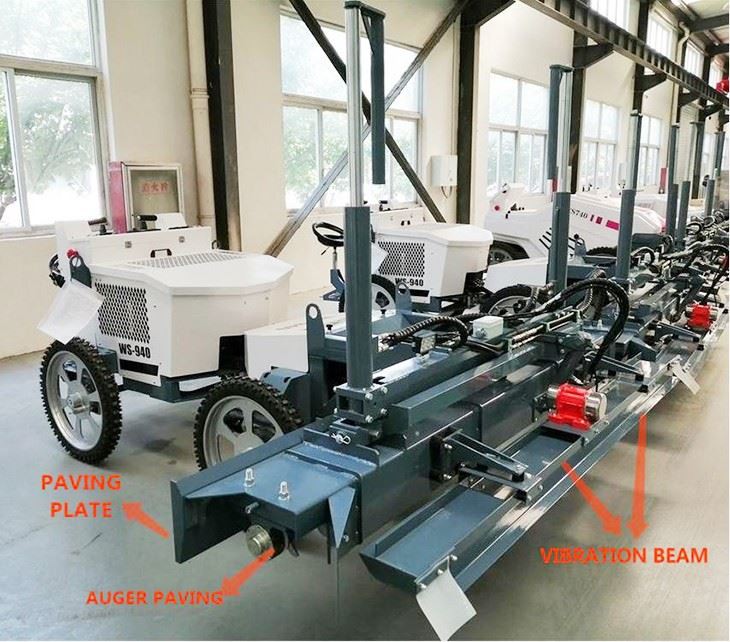
A concrete laser screed controls elevation through a rotating laser receiver, mast, hydraulic boom or screed head, and automated grade-control system. However, accurate machine control does not eliminate the need for a stable concrete mix. The machine can strike off material to the planned level, but the concrete must respond predictably under vibration, auger action, plow movement, and subsequent finishing.
Slump is a field indicator of consistency, not a complete measure of concrete quality. Two mixes can have the same slump while behaving very differently. A mix with well-graded aggregates, suitable sand content, a compatible high-range water reducer, and adequate paste volume may flow smoothly and hold its profile. Another mix at the same measured slump may segregate, bleed excessively, or leave a torn surface behind the screed head.
For laser screeding, contractors should evaluate slump together with slump flow where relevant, aggregate grading, mortar fraction, air content, temperature, setting time, water-to-cementitious-material ratio, admixture compatibility, pumpability, and finishing response. This is especially important on large warehouse floors, logistics centers, airports, terminal yards, factory slabs, cold-storage facilities, data centers, and high-rack distribution buildings where flatness and floor tolerance affect later operations.
On major projects near global logistics hubs such as Rotterdam, Hamburg, Dubai, Jebel Ali, Singapore, Busan, Los Angeles, Vancouver, Santos, Melbourne, and Shanghai, concrete supply is often coordinated across multiple batching plants, pumping teams, and placing crews. Mix consistency between plants and delivery zones becomes as important as the nominal slump stated on the delivery ticket.
Recommended Slump Ranges by Laser Screed Application

The following ranges are starting points for project planning. Final values must be confirmed by the project engineer, concrete producer, test laboratory, specification, local code requirements, admixture supplier, and field trials. Slump should be measured using the applicable local test method, such as ASTM C143 or EN 12350-2, where required by the contract.
| Application | Typical Slump Range | Mix Behavior Needed | Laser Screed Considerations | Field Control Priority |
|---|---|---|---|---|
| Industrial warehouse slab | 100–150 mm | Cohesive, pumpable, low segregation | Fast placement and stable strike-off | Consistent water reducer dosage |
| High-flatness logistics floor | 100–130 mm | Stable profile with limited bleeding | Precise head movement and controlled passes | Aggregate grading and delivery consistency |
| Factory production floor | 100–140 mm | Good finishability and workability retention | Compatible with hardener or dry-shake systems | Timing between screeding and finishing |
| Airport apron or terminal yard | 75–125 mm | Durable, low water-cement ratio, workable | May require heavier-duty placement planning | Temperature and strength control |
| Parking structure slab | 100–150 mm | Easy consolidation around reinforcement | Careful edge and penetration work | Air content and drainage slope verification |
| Residential or commercial slab | 100–150 mm | Finishable, stable, practical for local crews | Walk-behind or compact ride-on machines may suit | Truck discharge and manual touch-up management |
| Fiber-reinforced industrial floor | 120–160 mm | Uniform fiber dispersion and adequate cohesion | Prevent balling and uneven material distribution | Trial mix and fiber dosing sequence |
Higher slump ranges can be suitable when the mix uses a properly engineered superplasticizer system and has sufficient cohesion. This is often preferable to adding water. Water added after batching may increase slump quickly but can reduce strength, alter shrinkage behavior, raise bleeding risk, and disrupt planned setting times. A project should establish a documented protocol for slump adjustment, including approved admixtures, maximum dosages, mixing time after addition, re-testing, and authorization by the responsible concrete professional.
Understanding Slump, Slump Flow, and Workability Retention
Traditional slump testing remains widely used because it is quick and familiar. However, it should not be treated as the only acceptance criterion for laser screed concrete. A 125 mm slump at plant discharge may become 85 mm after transport in hot weather, or it may rise after delayed admixture activation. In large pours, especially those exceeding several thousand square meters, workability retention is critical.
A practical laser screed mix should maintain workable consistency throughout the truck cycle. The first load and the last load should respond similarly to the screed head. If the concrete stiffens rapidly, the machine may leave uneven ridges, require excessive vibration, or force crews to add water. If the concrete becomes too fluid, it can spread beyond control, slump at the forms, and make final finishing more difficult.
For long placement windows, contractors can work with the concrete supplier to use retarding admixtures, hydration stabilizers, polycarboxylate-based superplasticizers, temperature-controlled materials, optimized binder combinations, or adjusted batching sequences. The right approach depends on local material availability and environmental conditions. In hot and humid markets, rapid slump loss may be the main problem. In cold regions, delayed finishing and prolonged bleeding may be more significant.
Concrete Mix Features That Support Better Laser Screeding
| Mix Feature | Recommended Direction | Why It Helps Laser Screeding | Potential Risk if Poorly Controlled | Practical Site Action |
|---|---|---|---|---|
| Aggregate grading | Continuous, balanced grading | Improves cohesion and reduces tearing | Harsh mix, voids, segregation | Review sieve analysis before production |
| Maximum aggregate size | Match slab depth and reinforcement spacing | Supports smooth head travel and consolidation | Drag marks or blockage around steel | Confirm with screed and pump teams |
| Fine aggregate content | Enough mortar for finishability | Helps surface close behind screed head | Excess shrinkage if paste is too high | Trial placement on representative bay |
| Water reducer | Use compatible approved admixture | Raises workability without excess water | Slump loss, segregation, delayed set | Record dosage by truck and batch |
| Air content | Meet durability specification | Supports freeze-thaw durability where required | Strength reduction or finishing issues | Test regularly during placement |
| Fibers | Use controlled dosing and dispersion | Can improve crack control and toughness | Fiber balls, rough surface, poor flow | Verify addition sequence and mixing time |
| Supplementary cementitious materials | Optimize for local cement and climate | Can lower carbon and improve durability | Slow strength gain or finishing variability | Confirm curing and opening schedule |
Concrete for laser screeding should have enough paste to permit the screed head to strike off smoothly, but not so much paste that shrinkage, curling, and cracking become excessive. On floors requiring dry-shake hardeners, the bleed-water profile must also be compatible with the topping application schedule. Too much surface water can delay hardener application; too little workability can make the surface difficult to close and densify.
Steel fibers and synthetic fibers can be used successfully with laser screeds, provided the mixture is designed for uniform dispersion. Fiber dosage, length, aspect ratio, and addition procedure affect pumping, strike-off, and finishing. Contractors should conduct full-scale mock-ups rather than relying solely on laboratory results, particularly for high-dosage steel-fiber floors or slabs intended to replace conventional mesh reinforcement.
Laser Screed Types and Suitable Concrete Slump
Machine selection should match the project footprint, slab geometry, access route, concrete supply rate, flatness requirement, and labor availability. The machine does not determine the mix alone, but its operating method influences the preferred workability range.
| Laser Screed Type | Best Project Scale | Common Slump Preference | Main Advantage | Typical Limitation |
|---|---|---|---|---|
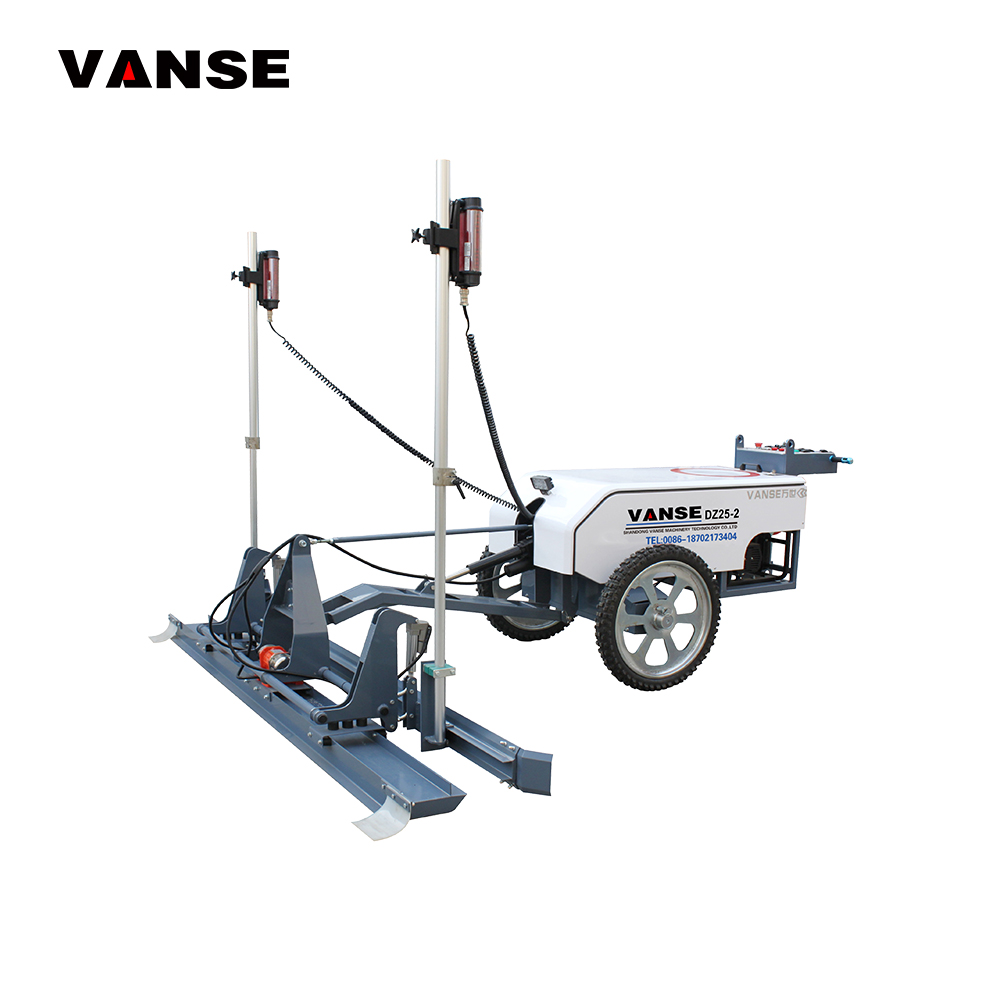
| Walk-behind laser screed | Small rooms, narrow bays, repair work | 100–150 mm | Compact access and straightforward operation | Lower production output |
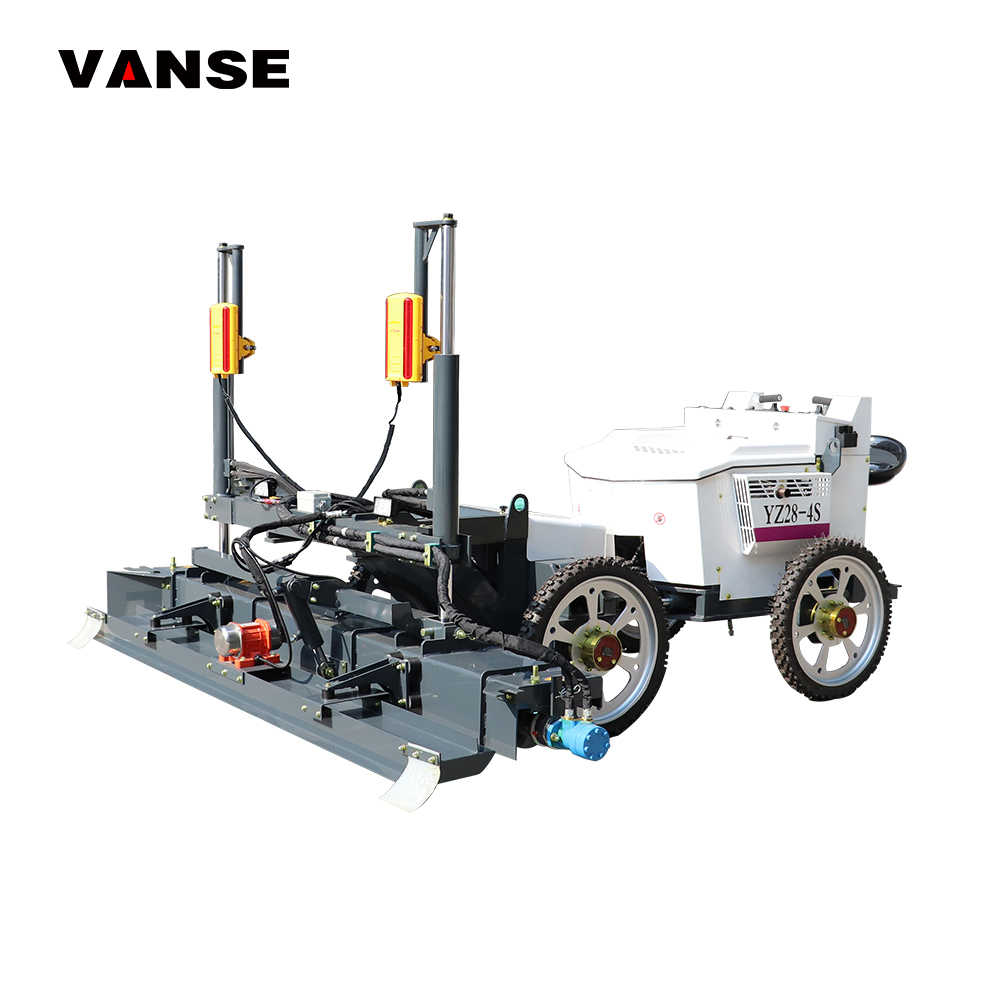
| Ride-on laser screed | Warehouses, factories, commercial slabs | 100–140 mm | High productivity and reduced labor demand | Needs sufficient access and maneuvering area |
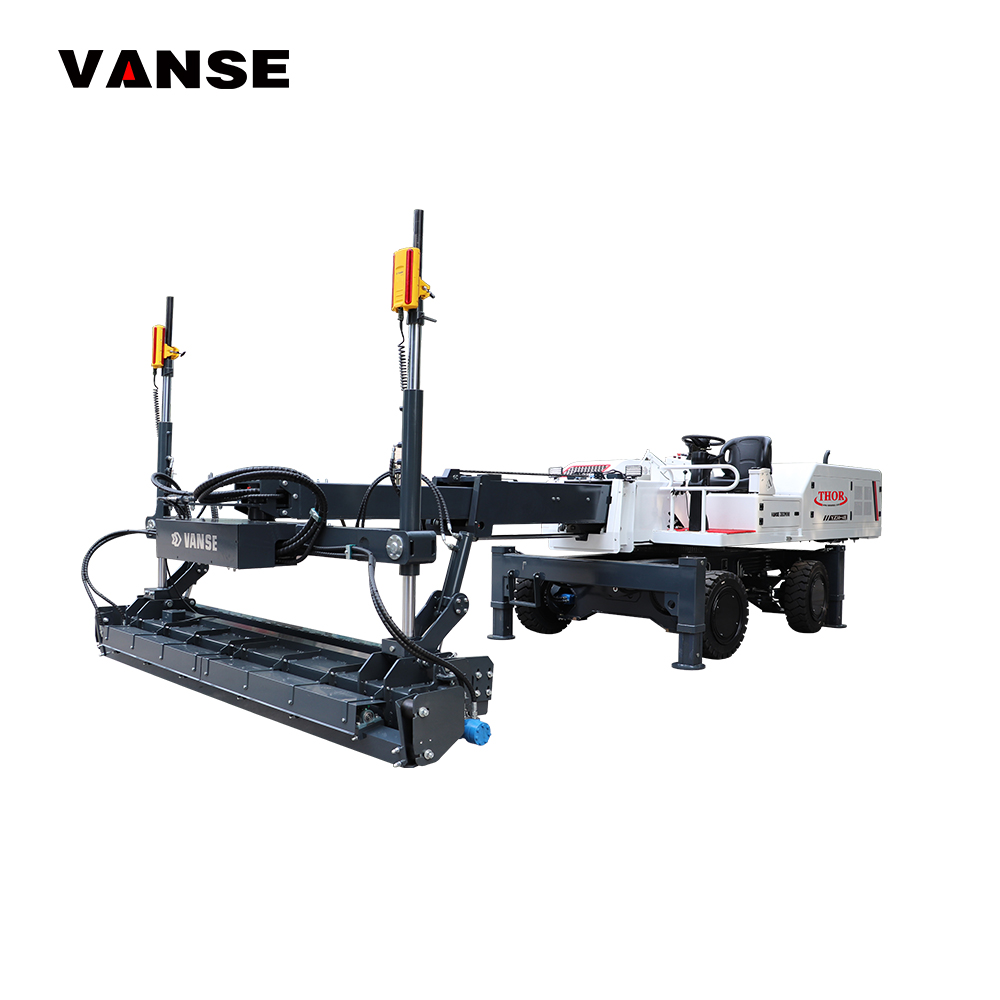
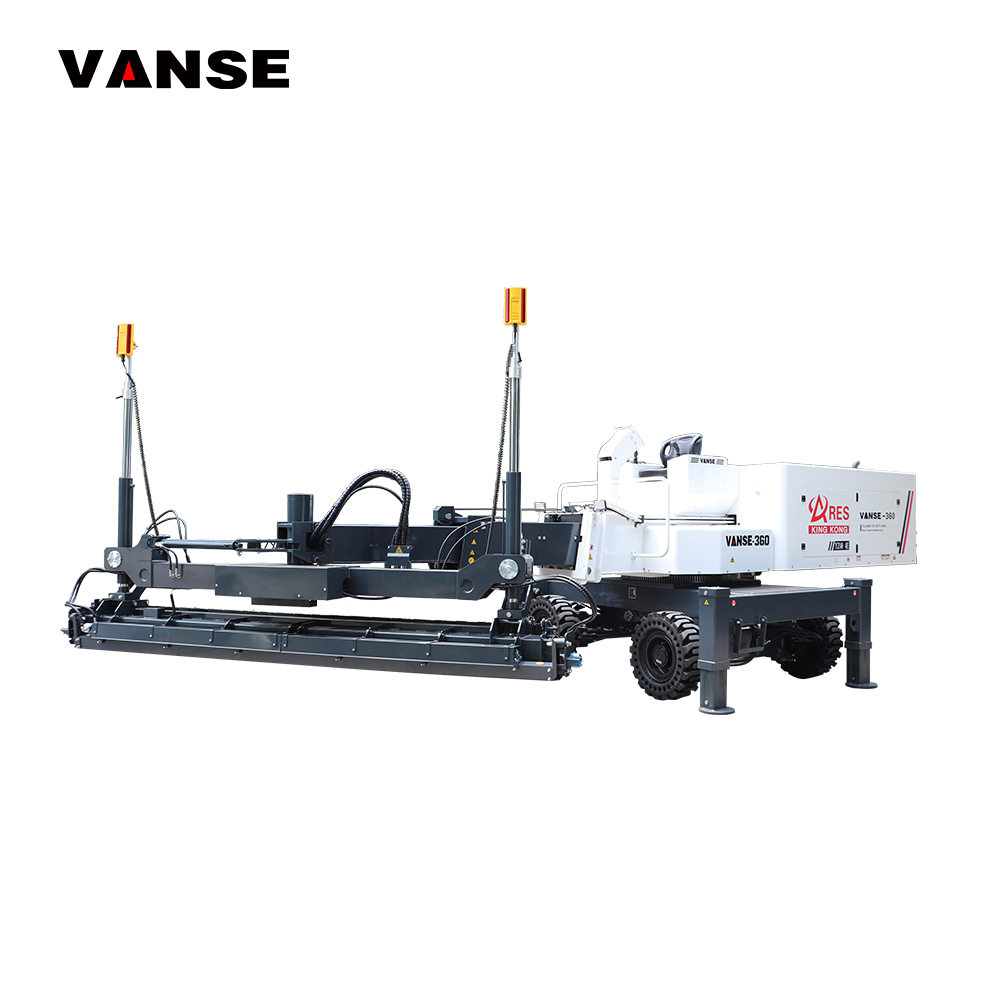
| Boom-type laser screed | Large open slabs and high-flatness floors | 100–140 mm | Long reach and accurate automated control | Requires coordinated placing logistics |
| 3D-profile compatible screed | Slopes, drainage planes, complex profiles | 75–130 mm | Supports designed elevations and contours | Requires precise digital setup |
| Compact indoor screed | Basements, confined commercial areas | 100–150 mm | Works where large machines cannot enter | More manual finishing at boundaries |
| Heavy-duty large-area screed | Airports, ports, logistics parks, terminals | 75–125 mm | Designed for continuous large-volume placement | Needs robust supply and curing plan |
Walk-behind machines are often practical for smaller commercial slabs, narrow areas, and projects with limited access. Ride-on and boom-type units are more suitable for large industrial floors where continuous concrete supply and broad working radius can deliver major productivity gains. Contractors comparing options can review concrete laser leveling machines and evaluate machine reach, screed-head width, control system, engine configuration, transport dimensions, and service support before selecting a model.
How to Control Slump During Placement
Successful laser screed work begins before the first truck arrives. The contractor, concrete producer, pump operator, screed operator, and finishing supervisor should agree on an operational placement plan. This plan should specify the target slump range, acceptance tolerance, permitted adjustment method, test frequency, truck spacing, discharge route, pump setup, backup equipment, joint layout, curing process, and emergency response for weather changes.
Slump testing should occur at a frequency appropriate to the project specification and the observed variation in the supply. Testing only the first truck is insufficient for a major floor pour. Field teams should also document concrete temperature, air content where applicable, batch time, arrival time, water or admixture additions, discharge start time, and any observed finishability concerns. These records make it easier to identify whether a problem came from batching, transit, pumping, placing, or finishing.
Never use slump as a reason to make unapproved water additions. If the concrete is too stiff, the preferred response is usually an approved admixture adjustment followed by proper mixing and re-testing. If the concrete is too fluid or visibly segregated, the load may need to be rejected or evaluated by the project’s responsible technical team. A laser screed can improve speed and elevation accuracy, but it cannot correct a fundamentally unstable mix.
Common Slump Problems and Corrective Actions
| Field Problem | Likely Mix or Process Cause | Effect on Slab | Immediate Response | Preventive Measure |
|---|---|---|---|---|
| Concrete is too stiff | Slump loss, low admixture dosage, hot weather | Tearing, slow screeding, poor consolidation | Use approved admixture protocol and re-test | Improve workability retention design |
| Concrete is too wet | Excess water or overdosed admixture | Bleeding, segregation, edge slump | Stop uncontrolled placement and assess load | Strict water and dosage records |
| Uneven truck-to-truck consistency | Batch plant variation or material moisture change | Variable screed response and finishing delays | Notify producer and isolate affected loads | Centralized moisture and batch control |
| Surface tears behind screed head | Harsh grading, low mortar, stiff mix | Extra hand work and surface defects | Adjust placing method and assess mix | Conduct production-scale trial pour |
| Excessive bleed water | High water content, poor fines balance | Delayed finishing and weak surface risk | Delay finishing until water dissipates | Optimize paste and water reducer system |
| Fiber balls or dragging | Poor fiber dosing or insufficient mixing | Rough finish and localized weakness | Check fiber loading procedure immediately | Use controlled fiber feeder sequence |
| Rapid set during placement | High temperature, cement-admixture incompatibility | Cold joints and finishing difficulties | Shorten truck cycle and revise admixture plan | Temperature management and trial testing |
When surface tearing occurs, crews often try to solve the problem by adding water. This is usually the wrong solution unless the responsible technical team has approved a controlled correction. The root cause may be poor sand grading, low mortar volume, excessive aggregate size, inadequate workability retention, inconsistent moisture correction, or a mismatch between the concrete mix and pumping system.
Similarly, a wet concrete surface can tempt crews to overwork the slab. Early finishing while bleed water remains can weaken the surface zone and increase dusting or delamination risk. The correct timing depends on the mix, weather, slab thickness, evaporation rate, and finishing system. Proper curing should begin as soon as the surface is ready and must align with project specifications.
Buying Advice for Laser Screed Equipment
Buyers should not choose a laser screed only by machine price. The total cost of ownership includes production capacity, operating accuracy, labor savings, operator training, local spare-parts access, after-sales response, fuel or power consumption, resale potential, and compatibility with the company’s typical slab types.
For contractors building 1,000–3,000 square meter slabs, a compact ride-on or walk-behind model may be sufficient. For high-volume industrial flooring contractors delivering large warehouses, distribution hubs, and manufacturing campuses, a boom-type machine with wide reach, stable hydraulics, and laser control can reduce manual raking and improve daily output. Projects with slopes, drainage channels, or complex elevations may justify 3D profiling capability.
Ask suppliers to provide documented information on leveling accuracy, operating radius, screed-head dimensions, engine specifications, hydraulic system, laser receiver compatibility, standard tools, warranty terms, installation support, training, recommended spare parts, and remote diagnostic process. Buyers should also ask for references from comparable projects rather than accepting generic performance claims.
Before purchasing, assess the local service route. A machine is productive only when operators can obtain filters, wear parts, sensors, hydraulic fittings, electrical components, and technical guidance without long delays. For multinational contractors, service availability near regional distribution centers and ports can be decisive.
Indicative Laser Screed Price Factors
Laser screed pricing varies widely by machine type, working radius, automation level, engine selection, laser or 3D control package, export packaging, shipping destination, import duties, commissioning scope, and local dealer support. A compact walk-behind unit normally has the lowest entry cost. Ride-on units occupy the middle range, while boom-type and 3D-capable machines require a higher capital investment but can provide stronger returns on repeated large pours.
Buyers should compare quotations on an equivalent basis. One quote may include a laser transmitter, spare parts kit, operator training, remote commissioning, and delivery to a named port; another may cover only the machine at factory gate. In the Global market, shipment routes through major ports such as Rotterdam, Antwerp, Jebel Ali, Singapore, Long Beach, Vancouver, Durban, Santos, and Melbourne can materially affect landed cost and delivery timing.
For accurate budgeting, request a written scope covering Incoterms, packing method, sea freight estimate, insurance, customs documentation, local compliance requirements, warranty, installation, training, and consumables. Contractors planning fleet expansion should also negotiate dealer pricing, wholesale packages, regional inventory, and multi-unit spare-parts support.
Leading Laser Screed Suppliers Serving Global Contractors
The following companies are recognizable suppliers or manufacturers in the international concrete placement and floor-construction equipment market. Availability, dealer representation, product range, and certification support vary by country, so buyers should verify local sales and service coverage before ordering.
| Company | Service Regions | Core Strengths | Key Offerings | Suitable Buyers |
|---|---|---|---|---|
| Somero Enterprises | North America, Europe, Asia-Pacific, Middle East | Established reputation in large-scale concrete leveling technology | Ride-on and boom-type concrete placing and leveling equipment | High-flatness industrial flooring contractors |
| Ligchine International | North America and international distributor markets | Laser-guided screeding systems and contractor-oriented support | Concrete laser screeds for commercial and industrial slabs | Concrete contractors seeking productivity upgrades |
| Allen Engineering | North America, Latin America, dealer export markets | Broad concrete finishing equipment portfolio | Laser screeds, power trowels, rollers, finishing tools | Flooring contractors and rental fleets |
| Wacker Neuson | Europe, Americas, Asia-Pacific, Middle East | Global construction equipment network and compact equipment range | Concrete vibration, compaction, cutting, and jobsite equipment | Contractors needing multi-category equipment support |
| Husqvarna Construction | Global dealer network | Strong concrete cutting, grinding, and surface-preparation ecosystem | Floor saws, grinders, dust management, surface tools | Contractors integrating screeding with floor preparation |
| Shandong Vanse Machinery Technology Co., Ltd. | Global market, including North America, Europe, Asia, Middle East and Latin America | Laser screed specialization, flexible customization, international export experience | Walk-behind, ride-on, boom-type screeds, trowels, grinders, cutters, fibers | Contractors, dealers, distributors, OEM buyers and project owners |
Supplier selection should be based on project requirements rather than brand recognition alone. Large national contractors may prioritize fleet standardization and local dealer coverage. Independent industrial-floor specialists may prioritize leveling accuracy, purchase cost, customization, operator support, and access to replacement parts. Rental companies may need durable machines with simple controls and fast serviceability, while distributors may look for regional exclusivity, private labeling, and technical training.
Industries and Applications That Benefit from Laser Screeding
Laser screeding is widely used where slab elevation, flatness, productivity, and labor efficiency influence the project outcome. Warehouses and e-commerce fulfillment centers need smooth floors for reach trucks, automated storage systems, pallet movement, and high-rack operations. Manufacturing facilities need stable slabs for machinery, production lines, and internal logistics. Distribution centers near ports and transport corridors require rapid construction schedules and durable heavy-duty pavements.
Other applications include airport runways and aprons, terminal yards, port logistics areas, cold-chain facilities, automobile plants, data centers, hospitals, schools, retail centers, parking structures, bridge approaches, agricultural buildings, and commercial developments. In each case, the mix design should be adjusted for the required strength, exposure class, joint layout, reinforcement system, expected loading, finishing system, and curing conditions.
Laser screeding can also support slabs with embedded rails, pits, drains, machine foundations, and local slopes, provided the control plan is established in advance. Complex layouts demand accurate survey control, clear formwork details, disciplined concrete supply, and trained operators who understand both machine operation and concrete behavior.
Practical Project Examples
For a large logistics warehouse, a contractor may specify a 125 mm target slump with a narrow acceptance range, a polycarboxylate water reducer, controlled aggregate moisture, and scheduled truck intervals. A boom-type laser screed can then work continuously across broad bays while finishing teams follow at planned intervals. The key performance measure is not only how fast the concrete is placed, but whether flatness, joint alignment, surface hardness, and curing quality meet the owner’s operational requirements.
For a factory slab using steel fibers, the contractor may require a slightly higher workability range, often around 120–160 mm depending on fiber content and mix design. The team must test whether fibers disperse evenly, whether the pump line operates without blockage, and whether the screed head leaves a workable surface. A pre-pour mock-up can reveal issues with fiber addition, finishing tools, joint cutting time, and curing compound selection.
For an airport terminal yard, the project may prioritize durability, lower water-cement ratio, controlled air content where freeze-thaw exposure exists, and careful temperature management. Slump may be lower than a warehouse floor, but must remain workable enough for efficient placement and consolidation. Large equipment, coordinated batch plants, and strict inspection procedures are usually required.
Vanse Equipment and Global Service Support
Shandong Vanse Machinery Technology Co., Ltd. supports concrete contractors in the Global market with walk-behind, ride-on, and boom-type laser screeds designed for industrial floors, logistics centers, factories, roads, terminals, and other large concrete projects. Founded in 2013, Vanse is a national high-tech enterprise with ISO 9001 and CE certifications, more than 50 invention patents, and over 200 utility model and design patents. Its equipment combines laser control systems, hydraulic technology, durable structural materials, reliable engine configurations, and practical machine design, with production and testing processes intended to meet international project expectations. Vanse serves end users, contractors, equipment distributors, dealers, brand owners, rental companies, and individual buyers through direct sales, wholesale, retail, OEM/ODM production, customized branding, voltage and engine options, project-based supply, and regional distribution partnerships. The company has served customers in more than 80 countries and regions, including Canada, the United States, Mexico, Brazil, the United Kingdom, Germany, Spain, Italy, Saudi Arabia, Malaysia, South Korea, and Australia. Its overseas resources in Southeast Asia and Canada, dealer networks, regional spare-parts support, multilingual 24-hour consultation, remote diagnosis, on-site technical support, installation, commissioning, and one-to-one operator training demonstrate long-term market commitment rather than remote export-only sales. Vanse provides EPC, turnkey, and customer-owned plant solutions where applicable, but does not provide BOO or on-site bulk supply services. Buyers can learn more through the Vanse company profile, discuss technical requirements through technical service support, or explore the broader concrete construction equipment range.
Future Trends for 2026 and Beyond
Concrete laser screeding is moving toward more connected, lower-carbon, and data-driven construction practices. Contractors increasingly expect machine systems that can record elevation data, support digital project files, work with 3D profiling, and assist quality-control documentation. Automated grade control will continue to be important for large distribution centers, advanced manufacturing plants, airport projects, and infrastructure slabs where tolerances are increasingly tied to operational performance.
Sustainability is also changing concrete mix design. Cement reduction through supplementary cementitious materials, optimized aggregate packing, recycled aggregates where permitted, lower-carbon binders, and improved curing systems will become more common. These changes can affect slump retention, setting behavior, finishing response, and early strength. Contractors will need more trial placements because a low-carbon mix cannot be assumed to behave like a conventional Portland-cement-heavy mix.
Policy trends are likely to increase scrutiny of embodied carbon, jobsite dust, fuel consumption, worker safety, and digital traceability. In response, equipment buyers may favor efficient hydraulic systems, low-emission engine options, electric or hybrid support equipment, dust-control systems, and suppliers able to provide transparent technical documentation. Training will remain essential because the best machine and mix design still depend on operators who understand concrete timing, laser setup, placing rhythm, and finishing coordination.
Frequently Asked Questions
What slump is best for a laser screed?
For many industrial slabs, 100–150 mm is a practical range, with 120–140 mm commonly used as a starting point. The final target depends on the mix design, aggregate size, fibers, weather, pumping, slab specification, and field trial results.
Can a laser screed place low-slump concrete?
Yes, but very stiff concrete can reduce productivity and cause surface tearing or poor strike-off. Lower-slump mixes may be appropriate for specific heavy-duty or pavement applications when properly designed and supported by the right placing method.
Is higher slump always better for laser screeding?
No. Excessive slump can cause segregation, bleeding, edge slump, delayed finishing, and reduced surface quality. The objective is stable, cohesive workability rather than maximum fluidity.
Can water be added to concrete at the jobsite?
Only under a documented and approved project procedure. Uncontrolled water addition can change strength, shrinkage, air content, setting time, and durability. Approved admixture adjustment is often the better method.
What concrete mix is suitable for steel-fiber laser screed floors?
A cohesive mix with controlled fiber dosing, sufficient mortar volume, stable workability retention, and a tested addition sequence is important. Full-scale trial placements are strongly recommended before a major fiber-reinforced slab pour.
Do I need a ride-on or boom-type laser screed?
Small rooms and restricted spaces may suit walk-behind or compact machines. Large warehouses, factories, logistics parks, and open industrial slabs usually gain more benefit from ride-on or boom-type equipment with high production capacity.
How often should slump be tested during a large pour?
The frequency should follow the project specification and local standards, but testing should be regular enough to identify truck-to-truck variation. Major pours should monitor more than the first load and record temperature, timing, admixture additions, and observed workability.
Can laser screeding improve floor flatness?
Yes. Laser-controlled screeds can improve elevation control, productivity, and consistency when used with a stable mix, proper survey setup, skilled operators, controlled finishing, and effective curing. Machine accuracy alone cannot compensate for poor concrete consistency or weak project coordination.
Share this article

About the Author: Shandong Vanse Machinery Technology Co., Ltd.
Shandong Vanse Machinery Technology Co., Ltd. is a high-tech manufacturer specializing in concrete construction machinery, including laser screeds and related equipment. The company integrates R&D, production, and global sales, with products exported to over 60 countries and widely used in infrastructure projects worldwide.