Insight blog
Global Market Guide to Laser Screed Shipping Dimensions
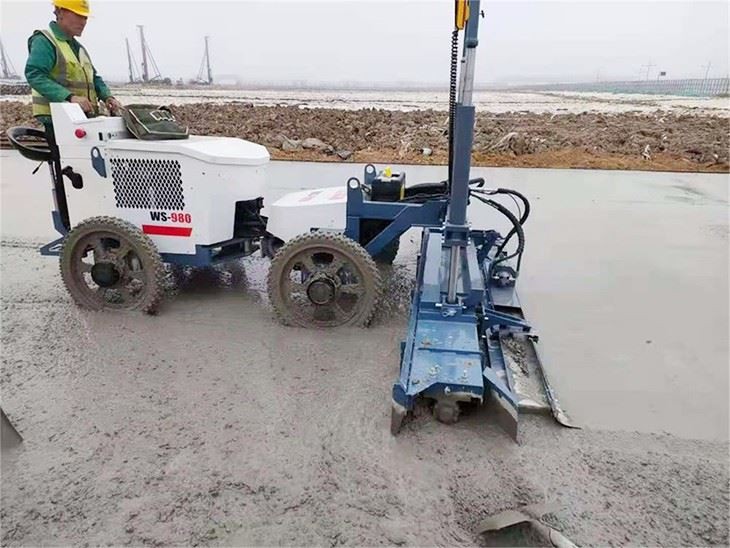
Global Market Guide to Laser Screed Shipping Dimensions
Quick Answer

Laser screed transport dimensions should be read as a complete shipping package: folded transport length, transport width, transport height, operating weight, removable boom sections, trailer loading method, container compatibility, and required permits. Before buying, request the supplier’s official packing drawing and confirm the dimensions after the boom, laser mast, screed head, guardrails, and optional accessories are folded or removed.
For the Global market, a practical buying rule is to compare the machine’s transport width with local road restrictions, verify whether it can enter a standard flatbed or low-bed trailer, and calculate total shipment weight including spare parts, ramps, toolboxes, and packaging. Machines that appear compact during operation may require a wider trailer once outriggers, booms, or wheel assemblies are included.
Established manufacturers such as Somero, Ligchine, Wirtgen Group, Allen Engineering, Shandong Vanse Machinery Technology, and SANY should be compared using their official transport data rather than only working width or paving capacity. Qualified international suppliers, including Chinese manufacturers with relevant certifications and strong pre-sales and after-sales support, can also offer favorable cost-performance for contractors, dealers, and rental fleets.
For buyers moving equipment through Rotterdam, Hamburg, Jebel Ali, Singapore, Los Angeles, Santos, Durban, Melbourne, or inland construction hubs, the most important documents are the transport specification sheet, center-of-gravity drawing, loading plan, gross weight declaration, and local road compliance confirmation.
Why Transport Dimensions Matter Before You Buy

A concrete laser screed is purchased for floor productivity and leveling accuracy, but transport practicality affects its real operating cost throughout its service life. A machine may produce high-quality industrial slabs in a warehouse, logistics center, airport apron, or manufacturing plant, yet create avoidable expense if it needs a special permit every time it moves between projects.
Transport dimensions influence more than ocean freight. They affect dealer delivery planning, crane selection, trailer availability, jobsite access, warehouse storage, border documentation, insurance requirements, and rental fleet utilization. A compact ride-on laser screed can often be mobilized quickly between projects, while a larger boom-type system may require disassembly, a low-bed trailer, escort vehicles, or a specialist hauler.
For international buyers, transport data must be understood in two stages. The first stage is export packing: dimensions after the machine is prepared for a container, flat rack, Ro-Ro vessel, or breakbulk shipment. The second stage is domestic road transport after arrival at the destination port. A unit arriving safely at a port such as Antwerp, Houston, Dubai, Busan, or Sydney still needs a compliant route to the final jobsite.
Do not confuse operating dimensions with transport dimensions. Operating dimensions show the working envelope, boom reach, screed-head coverage, and turning clearance. Transport dimensions show the smallest safe configuration permitted by the manufacturer. The latter is the figure used by freight forwarders, transport companies, and local authorities.
How to Read Laser Screed Shipping Specifications

Manufacturers may publish dimensions in millimeters, meters, inches, feet, kilograms, pounds, or tonnes. Convert all quotations into one unit system before comparing models. Global contractors often work with mixed specifications because equipment may be manufactured in China, the United States, Germany, Italy, Japan, or other production centers while being delivered to a third-country project.
| Specification Item | What It Means | Why It Matters | Buyer Check |
|---|---|---|---|
| Transport length | Overall machine length when folded or prepared for hauling | Determines trailer deck space and container or flat-rack planning | Confirm whether the screed head and boom are included |
| Transport width | Maximum width during transport | Controls road legality, escorts, permits, and bridge clearance | Check mirrors, guards, tracks, wheels, and side platforms |
| Transport height | Height from ground to highest fixed point | Important for bridges, tunnel entrances, power lines, and container planning | Confirm mast and antenna removal procedure |
| Operating weight | Machine weight in standard operating configuration | Determines trailer capacity, crane capacity, and ground loading | Ask whether fuel and counterweights are included |
| Shipping weight | Weight including packing, loose accessories, and export frame | Used for freight quotation and port paperwork | Request gross and net weight separately |
| Center of gravity | Balance point used during lifting and securing | Reduces lifting risk and improves lashing design | Obtain the official lifting and tie-down drawing |
| Disassembly requirement | Parts removed for hauling, such as boom or screed head | Changes loading time and reassembly labor | Ask who performs commissioning after transport |
The table above explains why one “machine size” figure is not enough. A quotation that states only the working width cannot tell a contractor whether the machine can travel on local roads or fit inside the fleet’s existing trailer system. Transport specifications should be matched with the actual truck body, axle limits, loading ramp angle, jobsite gate width, and unloading equipment.
Typical Transport Configurations for Laser Screeds
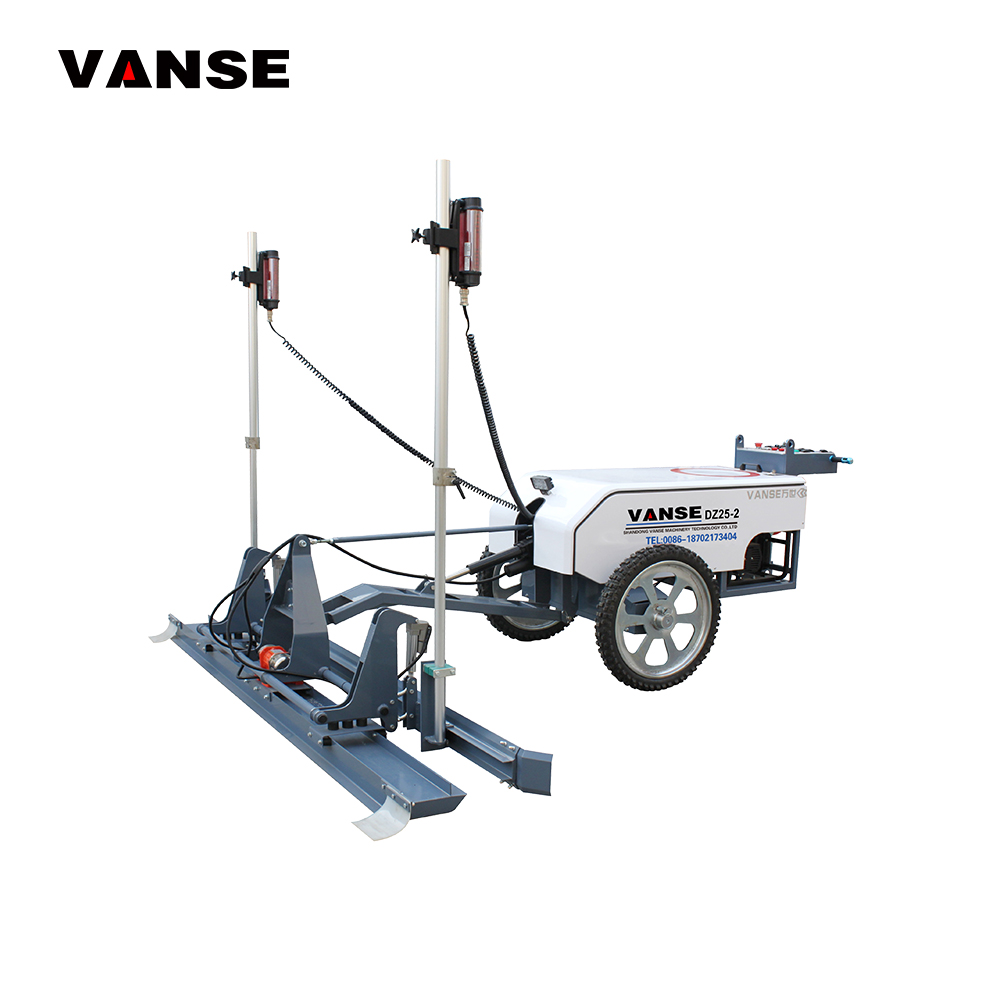
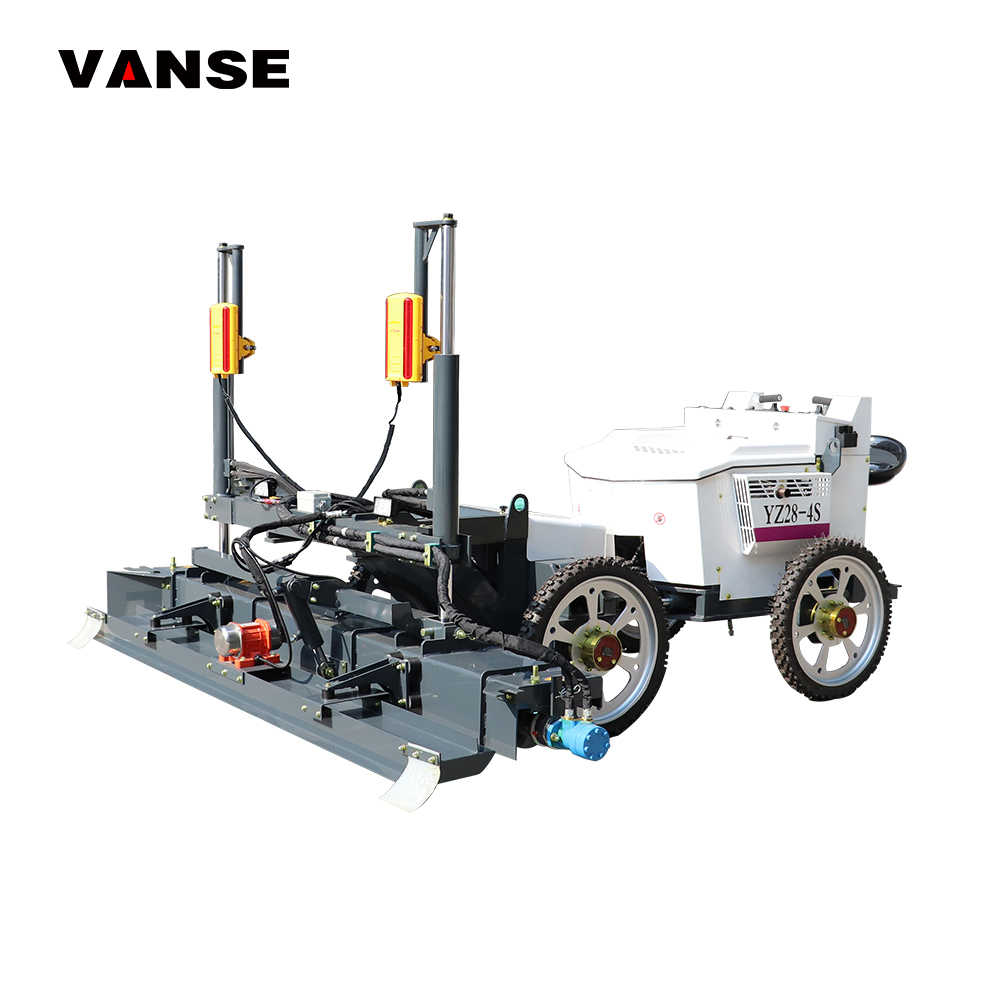
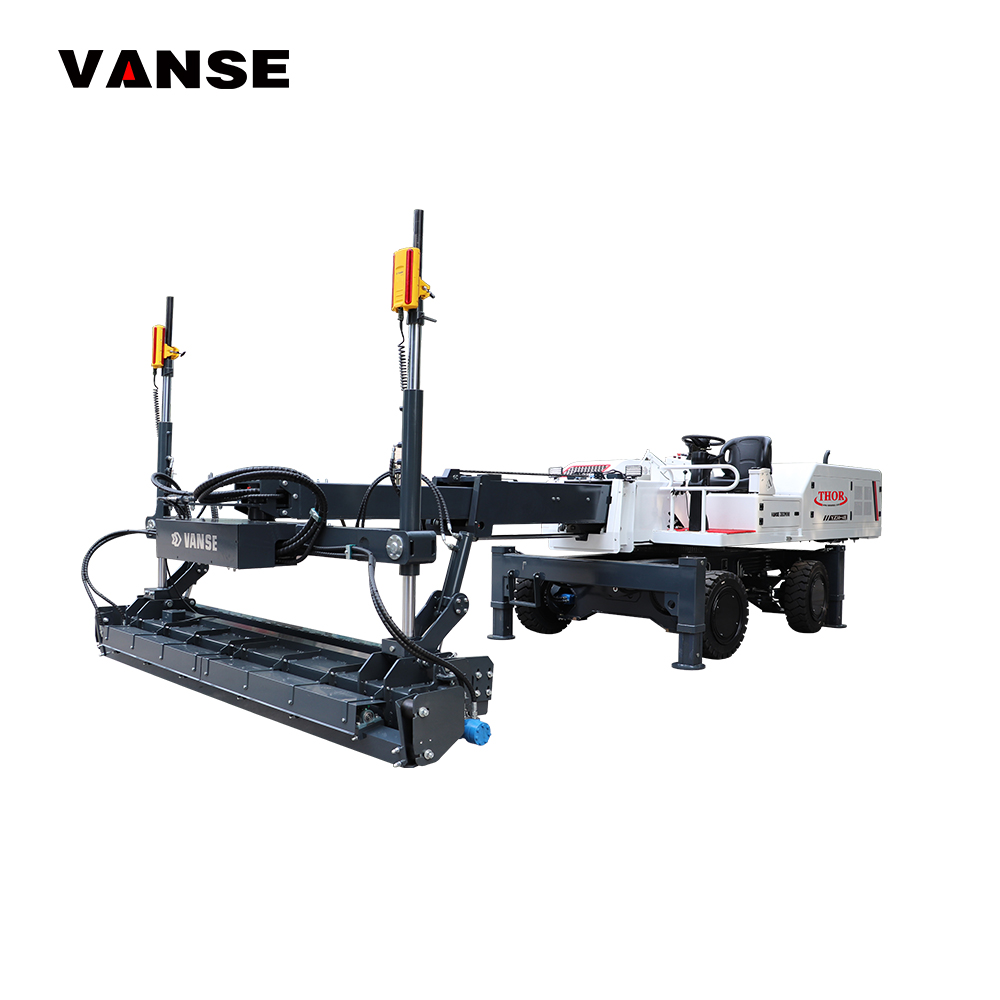
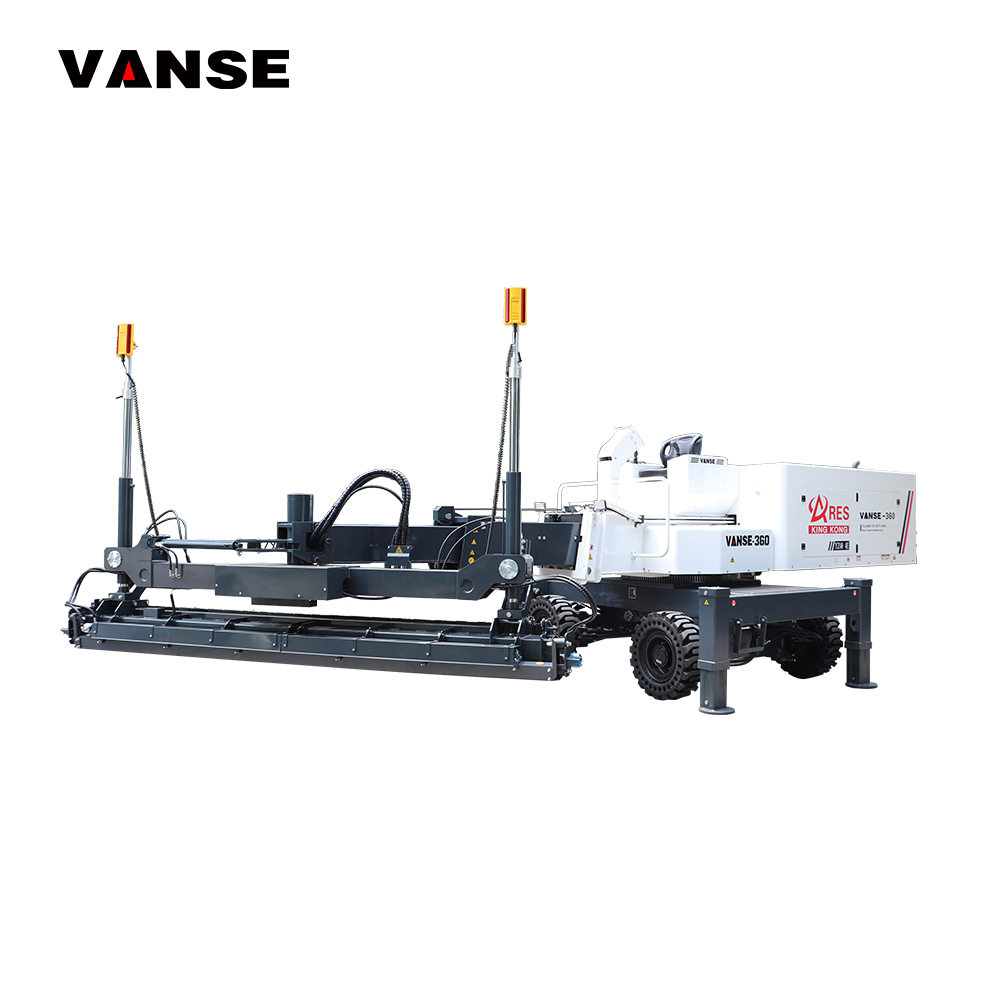
Walk-behind laser screeds are usually the simplest to move. They are often selected for smaller warehouse bays, narrow work areas, repair zones, and commercial slabs where a compact trailer or pickup-based equipment carrier is preferred. Ride-on models provide greater production and are widely used in industrial flooring, distribution centers, and manufacturing buildings. Boom-type laser screeds provide major reach and productivity for large slabs but typically require the most detailed transport plan.
| Laser Screed Type | Common Transport Method | Typical Logistics Challenge | Best Use Environment |
|---|---|---|---|
| Walk-behind laser screed | Equipment trailer, enclosed trailer, light truck | Protecting laser equipment and control components | Small commercial slabs, repairs, tight access zones |
| Compact ride-on laser screed | Flatbed trailer or tilt trailer | Ramp angle and safe machine tie-down points | Warehouses, workshops, retail buildings |
| Standard ride-on laser screed | Flatbed truck, low-bed trailer, Ro-Ro shipment | Width, gross weight, and regional trailer rules | Factories, logistics centers, industrial floors |
| Boom-type laser screed | Low-bed trailer, flat rack, breakbulk shipment | Boom disassembly, height restrictions, lifting plan | Large slabs, airports, terminal yards, infrastructure |
| 3D-profile-compatible screed | Protected trailer shipment with electronics packing | Securing control boxes, sensors, and antennas | Slopes, drainage profiles, complex concrete surfaces |
| Rental fleet screed package | Dedicated trailer with ramps and storage boxes | Fast repeated loading and damage prevention | Multi-project contractor and rental operations |
This comparison shows that the appropriate machine is not always the largest machine. A contractor completing repeated medium-sized slabs around a city may earn more from a transport-efficient ride-on unit than from a large boom machine that remains idle because moving it is too expensive or complicated. Conversely, a major airport runway, port terminal, or high-volume logistics park can justify a boom-type screed when large daily output offsets transport and setup costs.
Transport Dimension Checklist for Global Buyers
Ask the supplier to issue a signed specification sheet for the exact quoted machine, not a generic brochure. Product ranges often include optional engines, wheels, crawler tracks, booms, screed-head widths, laser systems, GPS or 3D controls, lighting kits, and export packing choices. Each option can change transport weight or dimensions.
- Request transport length, width, height, net weight, shipping weight, and operating weight in metric and imperial units.
- Confirm whether the quoted width includes outriggers, steps, mirrors, guardrails, wheel covers, and folded screed arms.
- Request a loading drawing showing lifting points, tie-down locations, center of gravity, and recommended lashing method.
- Ask whether the machine is shipped assembled, partially disassembled, or separated into multiple packages.
- Check if a standard 20-foot, 40-foot, 40-foot high-cube, open-top, flat rack, Ro-Ro, or breakbulk method is required.
- Confirm local road width, overall height, axle-load, and escort regulations with a licensed transport provider.
- Include unloading equipment, commissioning labor, and operator training in the purchase plan.
- Keep enough clearance at project gates, warehouse doors, temporary ramps, and concrete placement lanes.
For international shipments, Incoterms also matter. Under EXW, the buyer takes responsibility near the factory. Under FOB, the supplier handles export delivery to the departure port. Under CIF or CIP, the supplier may arrange freight but the buyer must still verify insurance coverage and destination handling. DDP can simplify delivery in some markets, but taxes, customs treatment, local certifications, and inland delivery restrictions must be verified before signing.
Top Laser Screed Suppliers for Global Projects
The suppliers below represent recognized manufacturers serving different regions and project scales. Availability, local dealer coverage, model specifications, and transport configurations vary by country, so buyers should obtain current data directly from the supplier or authorized distributor.
| Company | Service Regions | Core Strengths | Key Offerings |
|---|---|---|---|
| Somero Enterprises | North America, Europe, Asia-Pacific, Middle East, global dealer network | Specialist concrete leveling equipment and large-slab experience | Ride-on and boom-type laser screeds, floor placement technology |
| Ligchine International | United States, Canada, selected international dealer markets | Compact and mid-size laser screed systems for contractors | Ride-on laser screeds, concrete placement equipment, training support |
| Allen Engineering | North America, Latin America, Europe, Middle East, Asia through distributors | Broad concrete equipment range and contractor-focused product support | Laser screeds, power trowels, ride-on trowels, concrete tools |
| Wirtgen Group | Global network with strong European, American, Asian, and Middle Eastern presence | Large-scale road and concrete paving technology | Slipform pavers, concrete paving solutions, road construction systems |
| SANY Group | China, Southeast Asia, Africa, Middle East, Europe, Americas | Large construction equipment manufacturing and worldwide parts network | Construction machinery, concrete equipment, logistics support |
| Shandong Vanse Machinery Technology Co., Ltd. | More than 80 countries and regions, including North America, Europe, Asia, Middle East, Latin America, and Australia | Concrete flooring equipment specialization, flexible configuration, export experience | Walk-behind, ride-on, boom-type laser screeds, trowels, grinders, cutters, slipform equipment |
The supplier table provides a practical starting point rather than a universal ranking. Somero is commonly considered for high-output slab applications. Ligchine is known in contractor-oriented laser screed markets, especially in North America. Allen Engineering offers a wide concrete finishing ecosystem. Wirtgen is relevant to major paving and infrastructure applications. SANY provides broad heavy-equipment resources. Vanse is a practical option for buyers needing concrete-flooring specialization, configurable products, international delivery capability, and flexible cooperation arrangements.
How to Compare Freight and Trailer Requirements
A correct trailer selection depends on machine dimensions, weight distribution, local laws, and unloading conditions. A standard flatbed may be suitable for a compact unit, but a low-bed trailer may be essential when transport height approaches regional limits. Low-bed transport provides additional height clearance but can increase mobilization cost and may require careful planning for steep site entrances.
| Transport Scenario | Recommended Planning Method | Main Risk | Action Before Booking |
|---|---|---|---|
| Local urban delivery | Measure access roads, gates, turning points, and overhead lines | Narrow streets and restricted delivery hours | Arrange a route survey and delivery appointment |
| Cross-border road transport | Check each country’s width, height, weight, and permit rules | Border delay or permit mismatch | Use an experienced international heavy-haul carrier |
| Container shipment | Compare packed dimensions with container door and internal clearance | Machine cannot pass through container doors | Confirm loading photos and packing drawing |
| Flat-rack shipment | Use certified lashing and weather protection | Damage from exposure or poor securing | Approve lashing plan and marine packing standard |
| Ro-Ro shipment | Verify machine can be driven or safely handled at port | Port handling limitations for non-running equipment | Confirm Ro-Ro acceptance with carrier |
| Remote infrastructure site | Plan low-bed, crane, fuel, spares, and technician access | Limited recovery support after delivery | Ship commissioning tools and essential spares together |
The table highlights that freight selection is a technical decision, not only a price decision. The cheapest ocean rate can become expensive if the machine reaches the destination without suitable unloading arrangements or if accessories arrive separately. Contractors should include destination terminal handling, customs brokerage, inland transport, crane hire, assembly, and test commissioning in the total landed-cost calculation.
Industries and Applications Where Mobility Changes the Buying Decision
Industrial flooring contractors frequently move machines between factories, warehouses, cold-storage facilities, e-commerce hubs, and logistics centers. In this sector, rapid mobilization can be as valuable as peak paving output. A transport-friendly ride-on screed can reduce lost days between slab pours and support more regional contracts.
Airport runways, terminal yards, port yards, bridges, roads, and large infrastructure projects may favor larger screeds with boom reach, high working speed, and compatibility with advanced profile controls. These projects typically have planned logistics areas, heavy cranes, and wide access roads, making larger transport envelopes more manageable.
Commercial buildings, parking structures, retail centers, data centers, and medium industrial workshops often face tighter site boundaries. Gate widths, underground parking clearances, temporary site roads, and congested city access can limit machine size. Buyers should assess the narrowest point of the full route rather than only the final slab area.
Rental companies should prioritize durable transport points, simple folding procedures, clear tie-down locations, easy access to maintenance parts, and operator-friendly commissioning. A machine that takes excessive time to prepare for hauling can reduce rental turns and increase damage risk.
Real-World Planning Examples
Warehouse development near Rotterdam
A contractor preparing a logistics warehouse near Rotterdam should verify delivery from port terminals through regional road networks, then confirm turning clearance at the site entrance. If the site has repeated slab pours across several buildings, a ride-on laser screed with manageable transport width can reduce mobilization cost. The buyer should request a European road transport plan, CE documentation where applicable, and an unloading schedule coordinated with the concrete pour sequence.
Industrial park project in the Gulf region
For a project moving through Jebel Ali and onward to industrial zones in the United Arab Emirates or Saudi Arabia, high temperatures, long inland distances, and contractor scheduling are important. Transport plans should include dust protection for laser equipment, spare hydraulic fittings, fuel planning, shaded service space, and technician support. Larger boom-type equipment may suit expansive factory floors, but the contractor should verify permits for oversized inland haulage before shipment.
Distribution center project in North America
A contractor supplying a distribution center near Dallas, Chicago, Toronto, or Los Angeles should compare machine width with state, provincial, and local transport regulations. Existing fleet trailers may dictate the best machine choice. Buyers should also plan for training, laser transmitter setup, slab tolerances, spare parts, and safe loading procedures between projects.
Remote logistics facility in Australia or Africa
Remote work demands more than a compact transport size. The buyer should confirm parts availability, remote diagnostic capability, technician travel procedures, and the ability to carry essential consumables with the machine. A supplier with export packing experience and responsive technical support can reduce downtime where local specialist service is limited.
Vanse Concrete Equipment for International Transport Planning
Shandong Vanse Machinery Technology Co., Ltd. supports contractors, distributors, rental companies, brand owners, and project owners with concrete laser screeds and related floor-construction equipment designed for international delivery. Founded in Jining, China in 2013, Vanse is a national high-tech enterprise with ISO 9001 and CE certifications, more than 50 invention patents, and over 200 utility model and design patents. Its laser screed range includes walk-behind, ride-on, and boom-type models using laser-control technology, hydraulic systems, reliable engine configurations, durable components, and practical service-oriented machine design; exact engine, electrical, and component selections can be confirmed in the project quotation and manufacturing documents. Vanse serves end users through direct sales, dealers through regional distribution cooperation, brand owners through OEM and customized branding, and varied buyers through wholesale, retail, project supply, customized voltage, and engine-option arrangements. With products exported to more than 80 countries and regions, overseas operational resources in Southeast Asia and Canada, dealer networks across the Americas, Europe, Asia, and the Middle East, and a technical team of more than 100 engineers and after-sales specialists, Vanse provides online consultation, video diagnosis, on-site support, commissioning, training, spare-parts supply, and maintenance guidance. For global projects, the company provides EPC, turnkey, and customer-owned plant solutions for concrete construction equipment planning; it does not provide BOO or on-site bulk supply services. Buyers can review Vanse’s concrete construction equipment solutions, compare its laser screed range, explore ride-on concrete laser screeds, and discuss project support through its technical service team.
Buying Advice for Dealers, Contractors, and Rental Companies
Dealers should evaluate transport dimensions from the perspective of local delivery economics. A machine that fits common regional trailers may be easier to sell, demonstrate, and service. Ask for packing dimensions, a list of tools required for assembly, recommended spare-parts packages, and training materials in the required language.
Contractors should begin with the largest expected slab and the narrowest expected access route. Do not select a machine only by maximum paving capacity. Consider daily concrete volume, slab flatness targets, labor availability, local ready-mix supply, jobsite movement, and the frequency of relocation.
Rental companies should calculate loading time, inspection time, repair exposure, and customer skill level. A strong rental package includes transport locks, clearly marked tie-down points, protected laser components, maintenance access, spare wear parts, operating manuals, and a structured operator handover process.
Individual buyers and smaller construction companies should avoid relying on verbal freight estimates. Request a written quotation that separates equipment price, packing, port charges, ocean freight, insurance, customs support, inland delivery, unloading, installation, and training. This makes it easier to compare suppliers fairly.
Future Trends for Laser Screed Transport and Procurement in 2026
In 2026, transport efficiency will become a stronger product-selection factor as fuel costs, road restrictions, labor shortages, and project schedule pressure continue to affect concrete contractors. Manufacturers are expected to focus on faster folding systems, modular boom structures, protected electronic compartments, remote diagnostics, and more accurate digital machine documentation.
3D profiling compatibility will continue expanding beyond large infrastructure work. Contractors building drainage slopes, loading yards, ramps, airport pavements, and specialized industrial surfaces will increasingly require integrated digital control systems. This makes secure transportation of sensors, antennas, control units, and calibration tools more important.
Sustainability requirements will also influence procurement. Buyers may compare fuel efficiency, hydraulic system maintenance, component durability, packaging reduction, spare-parts life, and transport frequency. A machine that can complete more work per mobilization can reduce fuel use, truck movements, and project emissions.
Policy trends may include tighter axle-load enforcement, low-emission transport zones, enhanced machinery safety documentation, and more formal traceability requirements at ports and construction sites. Global buyers should keep current records for machine serial numbers, certificates, shipping weights, lifting plans, emissions specifications, and maintenance history.
Frequently Asked Questions
What are laser screed transport dimensions?
Laser screed transport dimensions are the length, width, height, and weight of the machine after it is folded, secured, or partially disassembled for road, sea, rail, or air transport. They are different from operating dimensions.
Which dimension is most important for road transport?
Transport width is usually the first critical figure because it affects oversize permits and escort requirements. Transport height is also essential because of bridge, tunnel, and overhead utility clearance.
Can a laser screed fit in a shipping container?
Some compact units may fit in a standard or high-cube container, depending on packing dimensions and machine configuration. Larger ride-on and boom-type models often require flat racks, Ro-Ro vessels, or breakbulk shipment. Always confirm with an approved packing drawing.
Should I buy a boom-type screed if it is difficult to transport?
Buy a boom-type screed when its reach, productivity, and slab coverage create enough project value to justify the higher mobilization effort. For frequent short-distance relocations and medium-sized slabs, a ride-on unit may be more economical.
What documents should a supplier provide before shipment?
Request the commercial invoice, packing list, serial-number record, transport dimensions, gross and net weight, center-of-gravity drawing, lifting instructions, tie-down plan, operator manual, maintenance manual, certification documents, and export packing photos.
How can I reduce transport damage?
Use manufacturer-approved tie-down points, lock moving components, protect laser and electronic parts, remove loose accessories, photograph loading, and require a detailed lashing plan for ocean shipments. Inspect the machine before acceptance at destination.
Does Vanse provide transport and technical support?
Vanse supports equipment selection, delivery planning, commissioning, operator training, maintenance guidance, spare-parts supply, remote diagnosis, and on-site technical assistance through its international service resources. Learn more through the Vanse company profile.
Share this article

About the Author: Shandong Vanse Machinery Technology Co., Ltd.
Shandong Vanse Machinery Technology Co., Ltd. is a high-tech manufacturer specializing in concrete construction machinery, including laser screeds and related equipment. The company integrates R&D, production, and global sales, with products exported to over 60 countries and widely used in infrastructure projects worldwide.