Insight blog
Global Market Guide to Laser Screed Hydraulic Care 2026
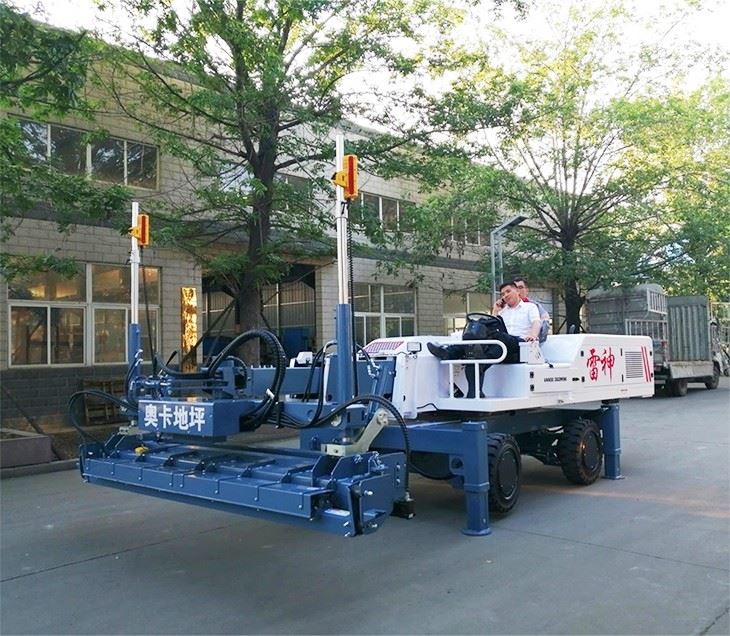
Laser Screed Hydraulic Care for Reliable Concrete Placement Worldwide
Quick Answer

Effective laser screed hydraulic care depends on clean hydraulic oil, correct fluid level, regular filter replacement, leak inspection, hose protection, temperature monitoring, and prompt correction of unusual noise or slow movement. For Global market contractors, the practical routine is to inspect the hydraulic system before every shift, check oil condition weekly, service filters at the manufacturer’s interval, and investigate pressure or steering changes before they affect slab flatness.
A properly maintained hydraulic system keeps the screed head stable, the boom responsive, the auger consistent, and the machine capable of achieving accurate elevation control. Neglecting oil contamination, worn hoses, clogged filters, or overheated pumps can lead to expensive downtime during critical concrete pours.
Buyers should evaluate established equipment and service providers such as Somero Enterprises, Ligchine International, Allen Engineering, Wacker Neuson, Husqvarna Construction, and Shandong Vanse Machinery Technology. Qualified international suppliers, including Chinese manufacturers with applicable local certifications, spare-parts support, and strong pre-sales and after-sales capability, can also be a cost-effective choice for contractors, dealers, and rental fleets.
Why Hydraulic Maintenance Matters in the Global Market

Concrete laser screeds operate in demanding environments where wet concrete, cement dust, vibration, heat, long working shifts, and frequent transport create constant stress on hydraulic components. The hydraulic circuit controls major working functions, including steering, drive motors, screed-head lift, boom articulation, auger rotation, machine travel, and leveling response. When oil quality or system pressure is compromised, operators may see reduced reaction speed, uneven concrete distribution, boom drift, difficult steering, overheating, or inconsistent slab elevation.
For contractors working in logistics parks, warehouses, production plants, airport terminals, ports, cold-storage facilities, and infrastructure sites, equipment reliability is directly linked to concrete quality. A delayed laser screed can disrupt batching schedules, finishing crews, pump trucks, ready-mix deliveries, and joint-cutting plans. This is especially important in major project hubs such as Rotterdam, Hamburg, Dubai, Singapore, Los Angeles, Toronto, Melbourne, São Paulo, Jeddah, and Kuala Lumpur, where large industrial-floor pours are often managed under tight delivery windows.
Hydraulic maintenance is not only an engineering issue. It is also a project-management and cost-control process. A contaminated hydraulic pump may cost far more than scheduled oil analysis and filter replacement. A ruptured hose can stop a pour, create a safety hazard, contaminate fresh concrete, and require emergency repair. A well-documented maintenance plan therefore protects machine availability, resale value, operator safety, and slab-performance outcomes.
Hydraulic systems on modern ride-on and boom-type laser screeds are designed to provide smooth, precise movement. However, high precision requires clean fluid and stable pressure. Even small particles in the oil can score valve spools, damage proportional valves, accelerate pump wear, and affect control response. This is why contractors should treat hydraulic cleanliness as part of their quality-assurance program, alongside laser calibration, screed-head inspection, engine servicing, and concrete mix control.
How a Laser Screed Hydraulic System Works

A typical concrete laser screed hydraulic system includes a reservoir, hydraulic oil, suction strainer, return filter, pressure filter, pump, control valves, hydraulic cylinders, drive motors, hoses, fittings, cooling equipment, and electronic controls. The engine drives the hydraulic pump. The pump creates fluid flow, while control valves direct that flow to the required movement or attachment. Pressure is created when the hydraulic system encounters resistance.
On a ride-on laser screed, hydraulics may drive the wheels, steering, screed-head lift, auger, plow, telescopic boom, and automatic level-control movements. On boom-type units, cylinders and motors may control larger working envelopes, making preventive inspection even more important. A leak or pressure loss at one circuit can affect the overall operating behavior of the machine.
Hydraulic fluid has several roles. It transfers power, lubricates internal components, carries heat away from the pump and valves, and suspends contaminants until filters capture them. Selecting the wrong viscosity or mixing incompatible oils can reduce these functions. Always follow the machine manufacturer’s oil grade, performance specification, and operating-temperature recommendation.
In cold climates, oil may become too viscous during startup, resulting in slow response and possible pump cavitation. In hot regions, especially summer construction in the Middle East, Australia, southern Europe, Latin America, Africa, and Southeast Asia, excessive oil temperature can reduce viscosity and shorten seal life. Contractors should select oil and cooling practices appropriate to ambient conditions, machine workload, and local service guidance.
Core Hydraulic Components and Their Maintenance Priorities
| Component | Main Function | Common Failure Risk | Maintenance Priority |
|---|---|---|---|
| Hydraulic reservoir | Stores, cools, and supplies hydraulic oil | Water ingress, incorrect oil level, sediment buildup | Keep the breather clean, inspect level on level ground, and prevent dust entry during filling |
| Hydraulic pump | Creates oil flow for machine functions | Cavitation, overheating, internal wear, contamination damage | Monitor noise, pressure, oil temperature, and suction-line condition |
| Return filter | Captures contaminants returning to the reservoir | Restriction, bypassing, delayed replacement | Replace according to hours, indicator status, and oil-condition results |
| Pressure filter | Protects sensitive valves and hydraulic circuits | Clogging or incorrect replacement element | Use approved filter specifications and inspect differential-pressure indicators |
| Hydraulic hoses | Carry pressurized oil between components | Abrasion, cracking, heat damage, loose fittings | Inspect daily, secure clamps, replace damaged lines before rupture |
| Control valves | Direct flow and regulate machine movement | Sticking spools, contamination, electrical connection faults | Keep oil clean, inspect connectors, and diagnose pressure before disassembly |
| Hydraulic cylinders | Provide linear movement for lift and boom functions | Seal leakage, bent rods, damaged wipers | Clean rods, inspect seals, and avoid impacts during transport and operation |
| Oil cooler | Reduces hydraulic oil temperature | Blocked fins, fan failure, external concrete buildup | Clean regularly with low-pressure air or water as approved by the manufacturer |
This component overview shows why routine inspection should cover more than the oil tank. Hydraulic failures often begin at small points: a damaged reservoir breather, a loose hose clamp, a contaminated fill funnel, a blocked cooler, or an aging cylinder seal. Regular checks allow technicians to correct these issues before they damage costly pumps, motors, or electronic hydraulic controls.
Daily, Weekly, and Scheduled Laser Screed Hydraulic Care
The best maintenance plan combines shift-based inspection with scheduled servicing based on operating hours and actual working conditions. Machines working continuously on large slab projects require more frequent attention than equipment used occasionally on small commercial sites. Dusty, hot, humid, coastal, or remote project environments may also justify shorter inspection intervals.
| Maintenance Interval | Recommended Tasks | What to Look For | Operational Benefit |
|---|---|---|---|
| Before each shift | Check oil level, visible leaks, hose routing, fittings, and cooler condition | Low oil, wet connections, hose rubbing, loose clamps, damaged guards | Prevents sudden failure during a concrete pour |
| During operation | Observe steering, boom speed, auger response, and oil-temperature warnings | Slow movement, noise, vibration, overheating, irregular control response | Allows early shutdown before major component damage |
| End of shift | Remove concrete splashes, clean cooler area, inspect undercarriage and cylinders | Concrete buildup, debris, rod damage, oil stains under the machine | Reduces corrosion, overheating, and concealed leaks |
| Weekly | Inspect filter indicators, reservoir breather, hose clamps, and electrical connectors | Restricted filters, cracked breather seals, loose terminals, abrasion points | Maintains stable flow and reduces contamination exposure |
| Monthly | Review operating hours, inspect suction hoses, check cooler fan and mounting points | Soft suction lines, loose brackets, fan damage, vibration wear | Protects pump inlet performance and heat management |
| Scheduled service | Replace filters and hydraulic oil according to the machine manual and oil testing | Dark oil, high particle count, water contamination, unusual odor | Extends pump, valve, motor, and cylinder service life |
| Seasonal or project change | Confirm oil grade, inspect storage conditions, and test critical functions | Cold-start delay, heat stress, stored-machine corrosion, stale fluid | Prepares the screed for changing climate and workload |
Do not treat service intervals as a substitute for inspection. A machine may require early maintenance if it has operated on an unusually dusty site, experienced a hose failure, overheated repeatedly, or been exposed to water contamination. Similarly, a low-hour machine that has been stored outdoors may need attention before it returns to work.
When checking fluid level, park the laser screed on stable, level ground and follow the manufacturer’s procedure for engine condition, hydraulic temperature, and attachment position. Overfilling can be as problematic as underfilling because hot oil expands. Use dedicated clean containers, funnels, and transfer pumps. A dirty funnel can introduce enough contamination to shorten the life of precision hydraulic parts.
Hydraulic Oil Selection, Cleanliness, and Temperature Control
Hydraulic oil should be selected according to the equipment manufacturer’s recommended viscosity grade and performance classification. Do not assume that any hydraulic oil is suitable simply because it is available locally. Anti-wear additives, viscosity index, oxidation resistance, water separation performance, and seal compatibility vary by product. Mixing different oil brands or specifications can create additive conflicts, unstable viscosity, foaming, or reduced protection.
Oil cleanliness is essential for proportional hydraulic valves and high-efficiency pumps. Fine particles can originate from external dust, worn pump surfaces, hose degradation, poor-quality replacement filters, contaminated oil drums, or improper maintenance practices. Water can enter through damaged breathers, condensation, pressure washing, rain exposure, or improperly sealed fill caps. Water-contaminated oil may appear milky, but early contamination is not always visible. Oil analysis provides a more reliable assessment.
Hydraulic oil temperature should remain within the operating range specified by the machine manufacturer. Excessive temperature can thin the oil, reduce film strength, harden seals, increase oxidation, and cause erratic performance. If hydraulic temperature rises repeatedly, do not simply add oil or continue working. Check the oil cooler for cement dust, verify fan operation, inspect airflow paths, review hydraulic load, confirm correct oil grade, and test for internal leakage or relief-valve issues.
For projects in tropical ports, humid coastal areas, desert construction zones, or cold-weather warehouses, store oil drums indoors when possible. Keep drum bungs sealed, use a first-in-first-out storage method, and label oil containers clearly. These small controls are especially valuable for rental businesses that maintain multiple machine brands and fluid specifications.
Hydraulic Fault Diagnosis for Laser Screeds
Accurate diagnosis prevents unnecessary part replacement. If a laser screed moves slowly, for example, the cause may be low oil level, clogged filtration, incorrect oil viscosity, pump wear, a sticking valve, electrical signal loss, an overheated system, or a mechanical obstruction. Technicians should begin with safe visual checks, then use the manufacturer’s diagnostic procedure and approved pressure-testing points.
| Observed Symptom | Likely Causes | Immediate Action | Recommended Repair Direction |
|---|---|---|---|
| Slow boom or screed-head movement | Low oil, restricted filter, pump wear, incorrect viscosity | Stop demanding operation and inspect level, temperature, and filter indicator | Test system pressure and replace restricted components using approved parts |
| Hydraulic oil overheating | Blocked cooler, failed fan, excessive internal leakage, unsuitable oil | Reduce load and shut down if temperature exceeds manufacturer limits | Clean cooler, test fan circuit, assess valves and pump condition |
| Whining or rattling pump noise | Cavitation, blocked suction path, low oil, air leak at inlet | Stop operation promptly to prevent pump damage | Inspect suction hose, reservoir level, strainer, seals, and oil condition |
| Jerky steering or uneven travel | Air in circuit, valve contamination, low pressure, damaged hose | Check visible leaks and avoid working near personnel or obstacles | Bleed and test system according to manufacturer procedure |
| Oil leak around cylinder rod | Worn seals, contaminated wiper, scratched rod, side loading | Clean area and assess whether the leak is active or residual | Repair cylinder seals and inspect rod alignment before returning to service |
| Auger or drive motor loses power | Motor wear, relief-valve setting issue, blocked filter, internal leakage | Do not increase settings without diagnostic confirmation | Measure flow and pressure; service motor or valve as required |
| Foamy hydraulic oil | Air entry, wrong fluid, overfill, poor return-line condition | Stop operation and allow fluid to settle before inspection | Locate air ingress, correct level, and replace contaminated oil if needed |
| Machine drifts or cannot hold position | Cylinder leakage, valve leakage, control calibration issue | Secure attachments and keep workers clear of moving components | Perform cylinder and valve leakage tests with qualified technicians |
Hydraulic pressure testing should be performed only by trained personnel using correctly rated gauges, hoses, adapters, and personal protective equipment. Pressurized hydraulic oil can penetrate skin and cause severe injury. Never search for leaks using hands or fingers. Use cardboard, wood, or a suitable detection method, maintain safe distance, and seek urgent medical attention for any suspected fluid-injection injury.
Laser Screed Types and Their Hydraulic Maintenance Needs
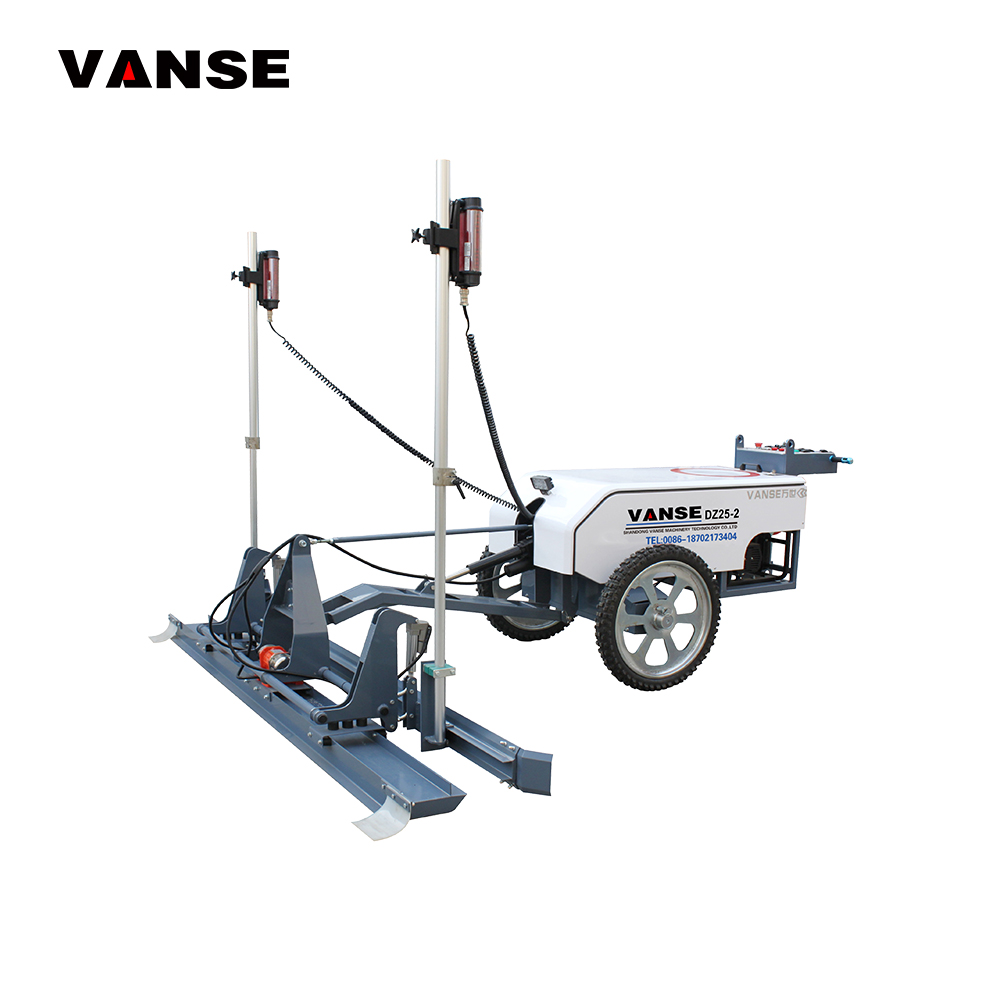
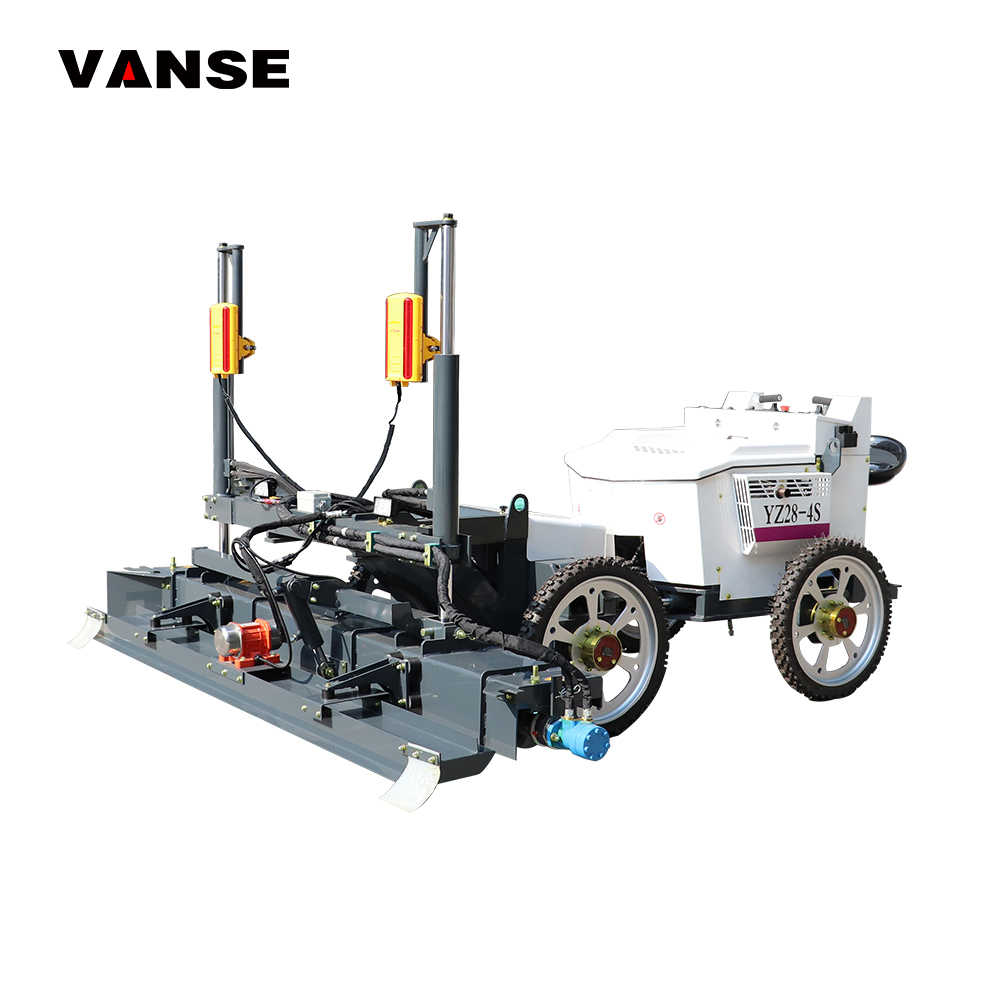
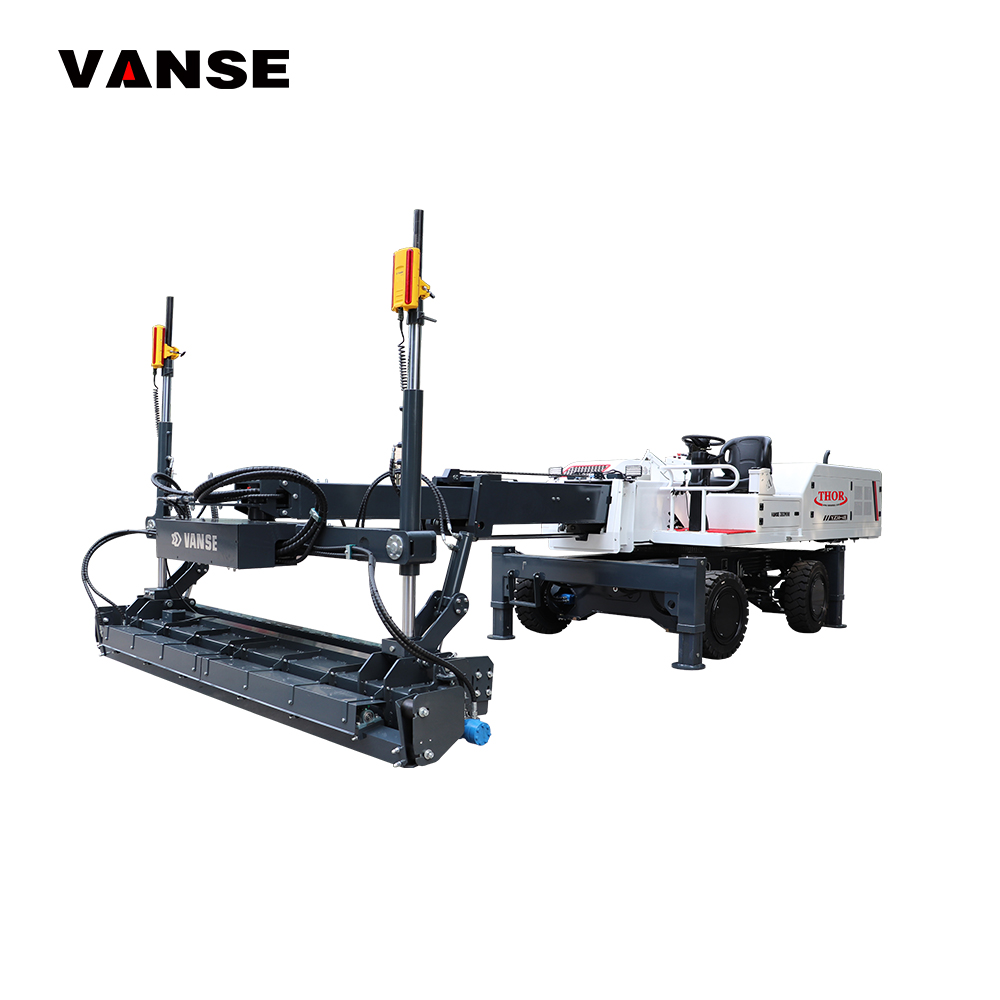
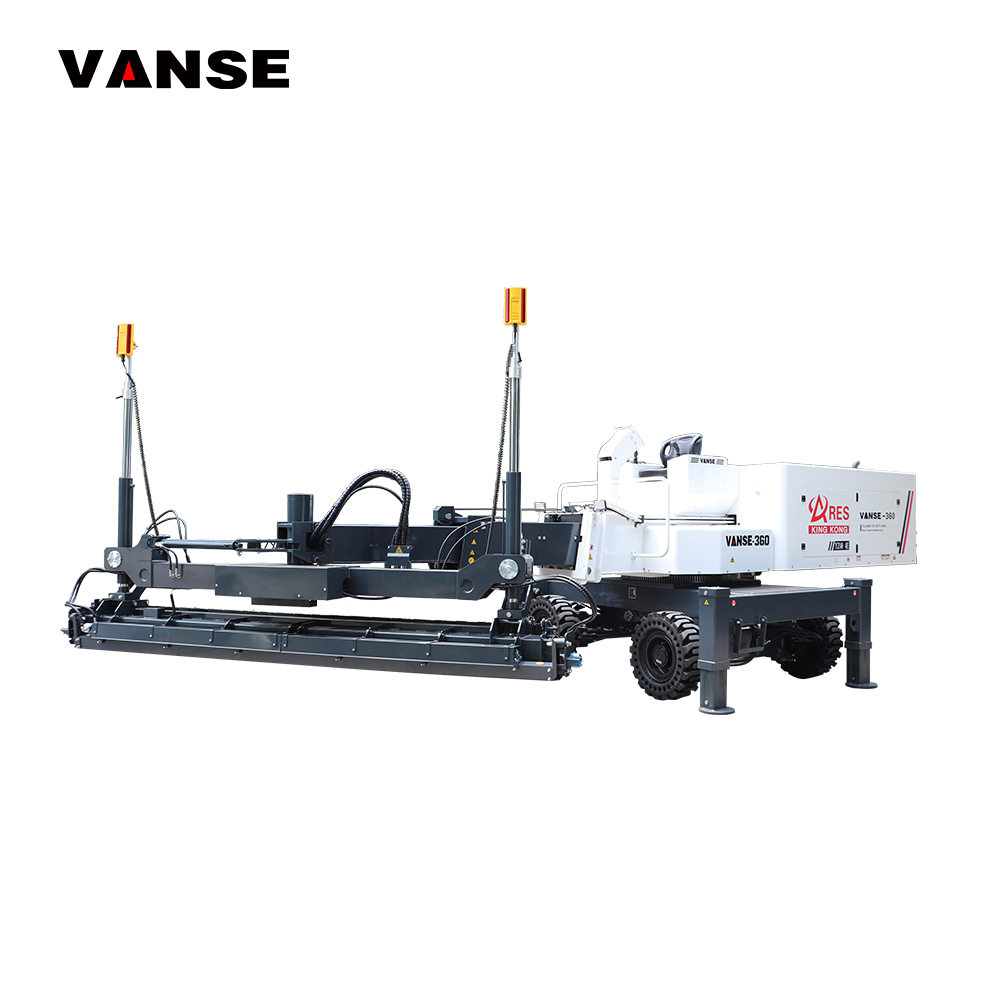
Different laser screed designs place different demands on their hydraulic systems. Walk-behind machines usually have simpler circuits and are suited to smaller slabs, confined spaces, and lower-volume work. Ride-on laser screeds are common on warehouse floors and medium-to-large industrial slabs, where travel hydraulics, steering, auger control, and screed-head movement must work consistently across long shifts. Boom-type machines are designed for broad working ranges and may include more complex articulation, making hose management and cylinder inspection particularly important.
Contractors selecting equipment can compare concrete laser leveling machines according to slab size, access conditions, pour rate, required flatness, operator experience, service availability, and local spare-parts access. The right machine should support the intended concrete-placement process rather than simply offer the largest working width.
Ride-on equipment often benefits from daily checks around wheel motors, steering circuits, articulation points, and the cooler. Contractors looking for suitable configurations can review ride-on concrete laser screed options for industrial floors, logistics centers, and large commercial slabs. Boom-type equipment requires special attention to hose routing through moving sections, cylinder rod protection, and structural hose clamps because repeated extension and rotation can create abrasion points.
Buying Advice for Hydraulic Reliability
When purchasing a new or used laser screed, buyers should ask detailed questions about hydraulic component sourcing, filtration design, cooler capacity, hose protection, service documentation, warranty terms, and local spare-parts response. The initial purchase price matters, but cost per operating hour is often more important for contractors completing repeated industrial-floor projects.
Request a clear parts list for filters, hoses, seals, pumps, valves, and common wear items. Verify whether replacement parts can be supplied from regional inventory or require international shipment. For fleet operators in remote areas, maintaining a small on-site kit of approved filters, hose fittings, seals, hydraulic oil, and consumables can substantially reduce downtime.
| Buying Criterion | Questions to Ask | Why It Matters | Preferred Evidence |
|---|---|---|---|
| Hydraulic pump design | Which pump type is used and how is it protected from contamination? | Pump replacement can be costly and delay projects | Technical specification, service history, and filter arrangement |
| Filtration system | What filters are fitted and where are service indicators located? | Proper filtration extends component life | Accessible filters with stated replacement intervals |
| Oil cooling | Is the cooler sized for hot-weather and high-output operation? | Heat is a common cause of oil degradation | Protected cooler, reliable fan, and easy cleaning access |
| Hose protection | Are hoses shielded from abrasion, concrete splash, and moving parts? | Hose failures can stop a pour immediately | Guards, clamps, quality fittings, and organized routing |
| Diagnostics | Are pressure test ports, fault codes, and manuals available? | Faster diagnosis lowers repair cost | Operator manual, service manual, and remote support process |
| Parts availability | Where are filters, seals, and hydraulic parts stocked? | Local availability protects project schedules | Regional warehouse, dealer stock, or defined dispatch lead times |
| Training | Does the supplier train operators and maintenance technicians? | Correct operation prevents avoidable failure | On-site commissioning, video support, and maintenance checklists |
For used equipment, inspect the hydraulic reservoir, service records, filter condition, hose age, cylinder rods, pump noise, oil temperature, and operating response. Ask for a demonstration under realistic load. Freshly cleaned equipment is not proof of sound hydraulic condition; oil analysis and pressure testing may be appropriate before purchase.
Industries and Applications That Depend on Hydraulic Uptime
Laser screed hydraulic reliability is essential in industrial flooring because concrete placement requires continuous coordination. Manufacturing plants need durable, flat slabs for machinery, automated production lines, and forklift traffic. Warehouses and distribution centers need controlled floor tolerances for racking systems, narrow-aisle forklifts, and high-volume logistics. E-commerce fulfillment centers, cold-storage sites, data centers, aircraft hangars, port terminals, and vehicle assembly buildings all benefit from consistent laser screed performance.
Infrastructure contractors use laser screeds for bridges, roads, terminal yards, airport pavements, parking structures, and large municipal facilities. In these applications, the machine may work far from a workshop, so preventive maintenance and mobile service planning become even more important. Rental companies also need strict inspection procedures because machines are operated by different crews, transported frequently, and exposed to variable jobsite conditions.
For concrete contractors, the main application benefit is more consistent slab placement with fewer manual corrections. Stable hydraulics help maintain screed-head response, auger distribution, and machine mobility. When hydraulic functions are predictable, operators can focus on concrete consistency, laser reception, pass planning, edge work, and communication with finishing teams.
Global Laser Screed Suppliers and Service Providers
The Global market includes manufacturers, dealers, rental companies, hydraulic-service businesses, and component suppliers. The best supplier depends on machine type, project scale, local technician access, available parts, financing needs, and required certification. The following companies are recognized names that buyers may evaluate based on local dealer coverage and project requirements.
| Company | Service Regions | Core Strengths | Key Offerings |
|---|---|---|---|
| Somero Enterprises | North America, Europe, Asia-Pacific, Middle East, and distributor markets | Specialized concrete-leveling equipment and established laser screed expertise | Ride-on and boom screeds, training, service support, and replacement parts |
| Ligchine International | United States and international dealer-supported markets | Compact and mid-size laser screed solutions for concrete contractors | Laser screeds, concrete-placement equipment, operational support, and parts |
| Allen Engineering | United States, Latin America, Europe, Asia, and global dealer markets | Broad concrete-equipment range and contractor-focused service network | Concrete screeds, power trowels, finishing equipment, and service parts |
| Wacker Neuson | Europe, North America, Latin America, Asia-Pacific, Africa, and Middle East | Global construction-equipment distribution and dealer infrastructure | Compaction, concrete equipment, light equipment, service, and fleet support |
| Husqvarna Construction | Worldwide through regional subsidiaries and dealer networks | Concrete cutting, grinding, surface preparation, and equipment support | Floor grinders, saws, dust-control equipment, tools, and technical service |
| Shandong Vanse Machinery Technology | More than 80 countries and regions, with Southeast Asia and Canada support resources | Laser screeds, hydraulic equipment design, customization, and global after-sales capability | Walk-behind, ride-on, boom-type laser screeds, spare parts, training, and remote diagnostics |
| Cat dealer networks | Global dealer territories, including major infrastructure and mining markets | Hydraulic-service knowledge and field-service capacity for construction fleets | Hydraulic hoses, fluids, mobile repair, parts supply, and equipment support |
This supplier comparison is intended to support practical procurement rather than replace local due diligence. Buyers should confirm the current dealer location, warranty support, technician availability, stock of hydraulic consumables, and lead time for urgent repairs in their country. In major trade and construction hubs, local service response can be as important as the original equipment specification.
Practical Maintenance Cases from Concrete Projects
On a warehouse project near a major port logistics zone, a ride-on laser screed began showing slower boom response late in the afternoon. The operator initially suspected an electronic laser-control issue. Inspection found that cement dust had restricted airflow through the hydraulic cooler, while high ambient temperature increased oil temperature. Cleaning the cooler, confirming fan function, and allowing the system to cool restored normal movement. The key lesson was that external cooler cleanliness can directly affect hydraulic precision.
On a large manufacturing-floor pour, a contractor noticed a recurring wet spot near a hose fitting. The machine still operated normally, so the crew considered postponing repair. The maintenance team instead isolated the machine after the pour and found abrasion caused by an incorrectly positioned hose clamp. Re-routing the hose and replacing the damaged line prevented a potential high-pressure hose rupture during the next project.
At a rental fleet serving commercial projects, several machines showed noisy hydraulic pumps after prolonged storage. The fleet manager found that reservoir breathers and fill caps had not been checked consistently. Moisture and dust contamination had entered some systems. The company introduced sealed oil-transfer equipment, storage inspections, filter tracking, and oil analysis for high-value equipment. Subsequent pump-related repairs declined, and machine availability improved during peak construction season.
For contractors managing airport, terminal-yard, or industrial-floor projects, these examples show that hydraulic maintenance is most effective when operators, mechanics, and project managers share responsibility. Operators identify early symptoms, technicians conduct diagnosis, and managers ensure service time and spare-parts budgets are available before a major pour begins.
Our Concrete Equipment and Service Support
Shandong Vanse Machinery Technology Co., Ltd. supports Global market concrete contractors, distributors, rental companies, brand owners, and project owners with concrete laser screeds and related construction equipment. Founded in 2013 in Jining, China, Vanse develops walk-behind, ride-on, and boom-type laser screeds designed around laser control, hydraulic technology, durable construction, and practical jobsite operation. Its manufacturing capability is supported by ISO 9001 and CE certifications, more than 50 invention patents, and more than 200 utility model and design patents. The company applies strict production and testing processes and uses reliable engines, durable hydraulic components, quality materials, and proven control-system configurations to support international project requirements. Vanse serves end users, dealers, distributors, OEM customers, private-label brand owners, and individual buyers through direct sales, wholesale, retail, OEM/ODM cooperation, customized branding, regional distribution, customized engine and voltage options, and project-based supply. For local buyer protection, Vanse has established overseas branch and service resources in Southeast Asia and Canada, while dealer networks, regional spare-parts channels, multilingual 24-hour technical communication, remote diagnosis, on-site support, commissioning, and one-to-one operator training support customers in more than 80 countries and regions. The company provides EPC, turnkey, and customer-owned plant solutions where required, rather than BOO or on-site bulk supply services. Customers can access laser screed spare parts and tool support and request technical service for concrete equipment to reduce downtime and maintain hydraulic-system performance over the equipment lifecycle.
Future Trends in Laser Screed Hydraulic Systems
By 2026 and beyond, laser screed hydraulic maintenance will increasingly use connected diagnostics, sensor-based condition monitoring, improved filtration, and digital service records. Larger contractors and rental fleets are adopting preventive maintenance software that tracks operating hours, filter changes, oil analysis, fault codes, and repair history. This helps managers plan service around project schedules rather than reacting to breakdowns.
Hydraulic systems will also become more efficient through better pump control, optimized cooling, lower-loss valves, improved hose routing, and more accurate electronic integration. Smart sensors can monitor oil temperature, pressure, filter restriction, fluid level, and pump performance. Remote diagnosis may allow suppliers to support technicians through video, data logs, and digital troubleshooting procedures, reducing travel time and improving first-time repair rates.
Sustainability requirements are influencing concrete equipment procurement. Contractors increasingly consider fuel consumption, extended component life, reduced oil waste, recyclable filter programs, and lower maintenance-related downtime. Clean hydraulic practices support sustainability because they reduce premature replacement of pumps, motors, hoses, and valves. Proper fluid storage and responsible disposal also help contractors comply with environmental regulations at ports, industrial estates, airports, and urban construction sites.
Policy trends in many regions are strengthening jobsite safety, emissions controls, equipment traceability, and waste-handling expectations. Buyers should choose suppliers that can provide documentation, safety guidance, service records, and technical support suited to local regulations. For internationally sourced machinery, confirm electrical requirements, emissions requirements, certification needs, language documentation, and spare-parts arrangements before delivery.
FAQ
How often should hydraulic oil be changed in a laser screed?
Follow the equipment manufacturer’s service schedule, but adjust the interval when oil analysis, high temperature, contamination, heavy usage, or severe jobsite conditions indicate earlier service is needed. Filter replacement and oil sampling are often more informative than relying on calendar time alone.
What is the most common cause of laser screed hydraulic failure?
Oil contamination is one of the most common causes. Dust, water, metal particles, incorrect oil, and degraded filters can damage pumps, valves, motors, and seals. Hose abrasion and overheating are also frequent causes of unexpected downtime.
Can I use a different hydraulic oil brand?
You may use another brand only if it fully matches the manufacturer’s required specification, viscosity grade, additive performance, and compatibility requirements. Do not mix fluids casually. When changing oil types, consult the equipment supplier regarding flushing and compatibility.
Why does my hydraulic system overheat during a concrete pour?
Common reasons include a blocked oil cooler, failed cooling fan, incorrect fluid viscosity, high ambient temperature, low oil level, internal leakage, excessive relief-valve operation, or a restricted filter. Stop the machine if operating temperature exceeds the approved limit and diagnose the cause before continuing.
What hydraulic spare parts should contractors keep on site?
A practical kit may include approved hydraulic filters, specified hydraulic oil, common hose fittings, hose-protection sleeves, seals, reservoir breathers, clamps, absorbent materials, and manufacturer-approved replacement hoses for known wear locations. Larger fleets may also keep pressure-testing equipment operated by trained technicians.
How can I identify a hydraulic hose that needs replacement?
Replace hoses showing cracks, exposed reinforcement, flattened sections, blistering, corrosion at fittings, repeated abrasion, leakage, heat damage, or damaged protective sleeves. Do not wait for a visible leak if the hose condition is poor.
Does hydraulic maintenance affect floor flatness?
Yes. Stable hydraulic response supports consistent screed-head movement, boom control, auger operation, and travel speed. Hydraulic hesitation or drift can reduce placement consistency and make it harder for operators to maintain target elevation and flatness.
Where can I find support for Vanse laser screed maintenance?
Vanse customers can contact the company through its official website at Vanse concrete construction equipment solutions for equipment selection, maintenance guidance, spare parts, remote diagnosis, operator training, and regional service coordination.
Share this article

About the Author: Shandong Vanse Machinery Technology Co., Ltd.
Shandong Vanse Machinery Technology Co., Ltd. is a high-tech manufacturer specializing in concrete construction machinery, including laser screeds and related equipment. The company integrates R&D, production, and global sales, with products exported to over 60 countries and widely used in infrastructure projects worldwide.