Insight blog
Global Market Guide to Laser Screed Operating Fuel Use
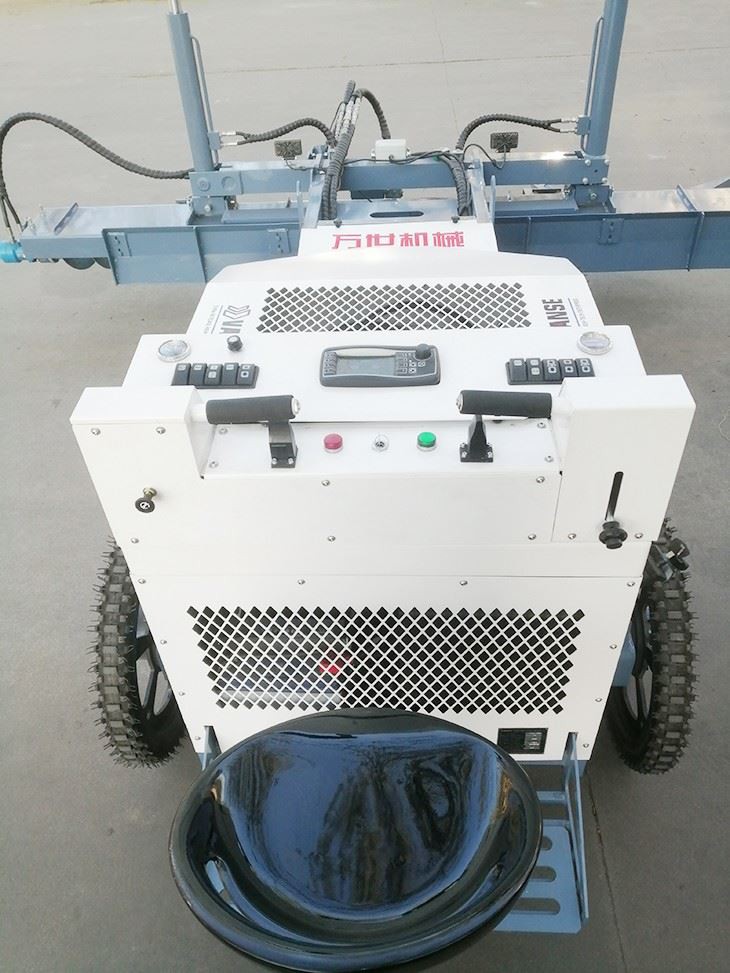
Global Market Guide to Laser Screed Operating Fuel Use
Quick Answer

Laser screed fuel consumption usually ranges from 3 to 12 litres per operating hour, depending on machine size, engine power, hydraulic load, slab design, travel distance, concrete volume, and operator practices. Compact walk-behind laser screeds commonly use about 3–5 L/h, ride-on units often consume 5–8 L/h, and large boom-type machines may use 8–12 L/h during continuous high-output work.
For most industrial flooring contractors in the Global market, the best way to reduce laser screed fuel consumption is to match the machine size to the pour area, maintain hydraulic systems, avoid excessive idle time, plan concrete delivery routes, and select efficient engines with reliable service support. Fuel cost should be evaluated together with output per hour: a larger machine may burn more fuel but can still cost less per square metre because it levels far more concrete in one shift.
Leading manufacturers and suppliers to compare include Somero, Ligchine International, Shandong Vanse Machinery Technology Co., Ltd., Allen Engineering, Wacker Neuson, and Multiquip. Buyers can also consider qualified international suppliers, including Chinese manufacturers with applicable CE, ISO, local engine-emissions compliance, and responsive pre-sales and after-sales support. These suppliers can offer strong cost-performance advantages for contractors, distributors, and rental fleets.
Before purchasing, request a documented fuel-use range under realistic working conditions, engine model details, hydraulic specifications, local spare-parts availability, operator training, and a productivity estimate based on your typical slab thickness and project size.
Why Fuel Use Matters in Concrete Laser Screed Selection

Fuel consumption is not simply an engine specification. It directly affects operating cost, jobsite logistics, environmental compliance, equipment uptime, and the profitability of every concrete placement. On a large warehouse floor in Rotterdam, Dubai, Toronto, São Paulo, Melbourne, or Kuala Lumpur, a laser screed may run for several hours without interruption. If the equipment has poor fuel efficiency, frequent refuelling can interrupt the placing sequence and create risks for flatness, levelness, and finishing quality.
Fuel use is especially important for contractors working on logistics centres, e-commerce warehouses, airport terminals, factory floors, cold-storage facilities, port yards, distribution hubs, bridge decks, and industrial plants. These projects commonly require large continuous concrete placements. A machine that consumes an extra 2 litres per hour may appear insignificant on one day, but the difference becomes substantial across hundreds or thousands of annual operating hours.
The practical calculation is fuel cost per square metre, not only litres per hour. For example, a compact laser screed using 4 L/h while producing 250 m²/h has a fuel intensity of 0.016 L/m². A larger boom laser screed consuming 10 L/h but producing 1,000 m²/h has a fuel intensity of 0.010 L/m². The boom machine burns more fuel per hour, but it can be more economical when the slab layout and daily pour volume justify its output.
Global contractors also face varying diesel prices, carbon-reduction targets, engine-emission regulations, and fuel availability. In high-cost diesel markets such as Western Europe, Japan, Singapore, and parts of Australia, machine productivity and engine efficiency can significantly influence tender pricing. In remote infrastructure projects in Africa, the Middle East, Latin America, Central Asia, and island markets, fuel transport and storage reliability may be equally important.
Typical Laser Screed Fuel Consumption by Equipment Type

The following figures are practical planning ranges rather than guaranteed manufacturer ratings. Actual fuel use changes with engine condition, concrete stiffness, hydraulic demand, boom movement, grade correction frequency, travel speed, elevation changes, weather, operator skill, and idling time. Buyers should always request model-specific figures from the supplier.
| Laser screed type | Typical engine range | Typical fuel use | Typical output range | Best-fit projects | Fuel efficiency consideration |
|---|---|---|---|---|---|
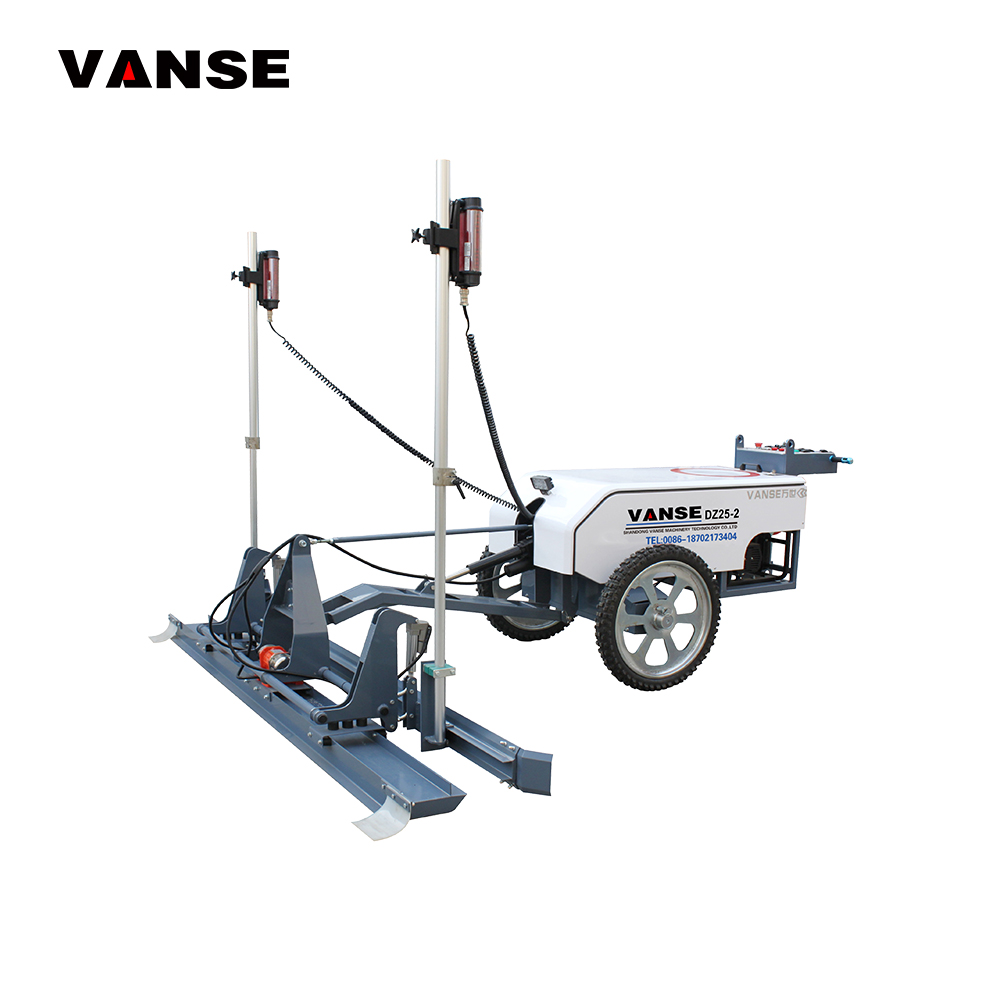
| Walk-behind laser screed | 5–13 hp petrol or diesel | 3–5 L/h | 150–400 m²/h | Small workshops, retail slabs, repair zones, tight spaces | Low hourly fuel use, but slower output on wide slabs |
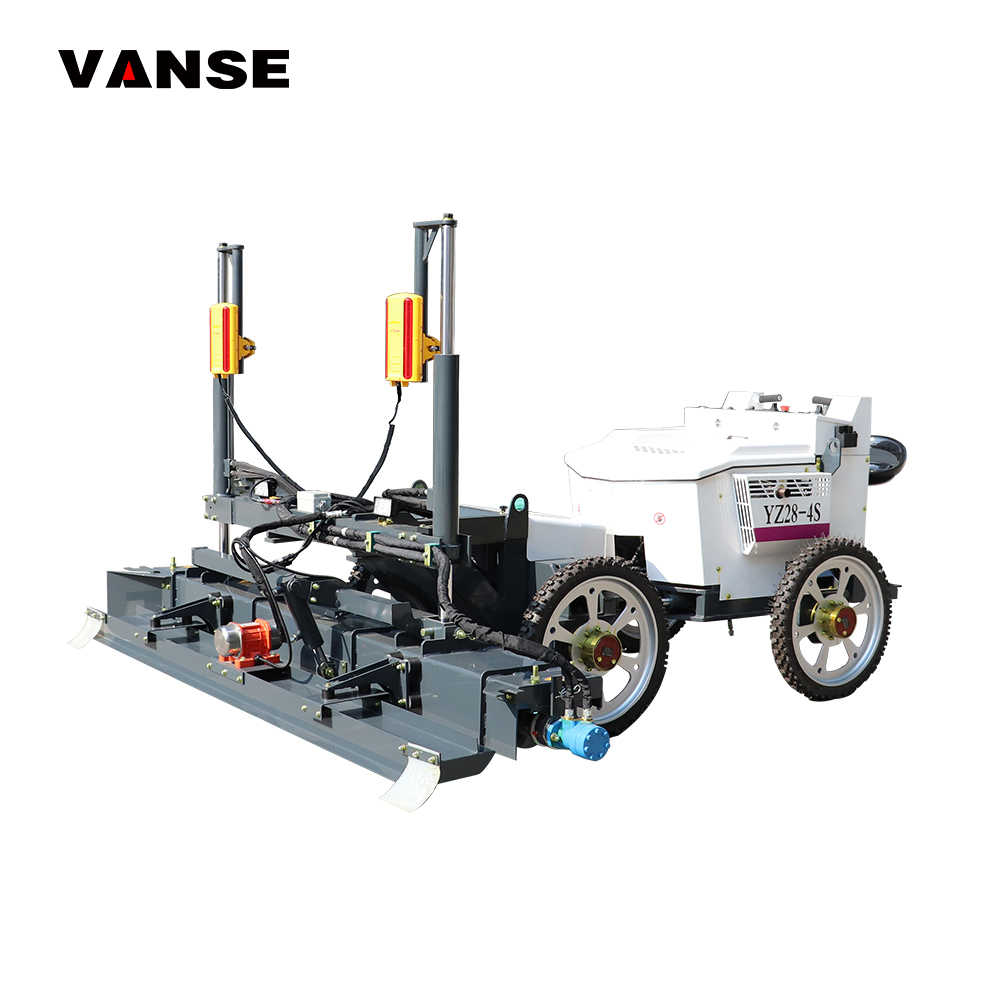
| Compact ride-on laser screed | 18–35 hp petrol or diesel | 4–7 L/h | 300–700 m²/h | Commercial floors, medium warehouses, enclosed buildings | Balanced fuel use and maneuverability |
| Standard ride-on laser screed | 35–55 hp diesel | 5–8 L/h | 600–1,200 m²/h | Industrial floors, logistics parks, manufacturing plants | Strong cost per square metre for regular slab work |
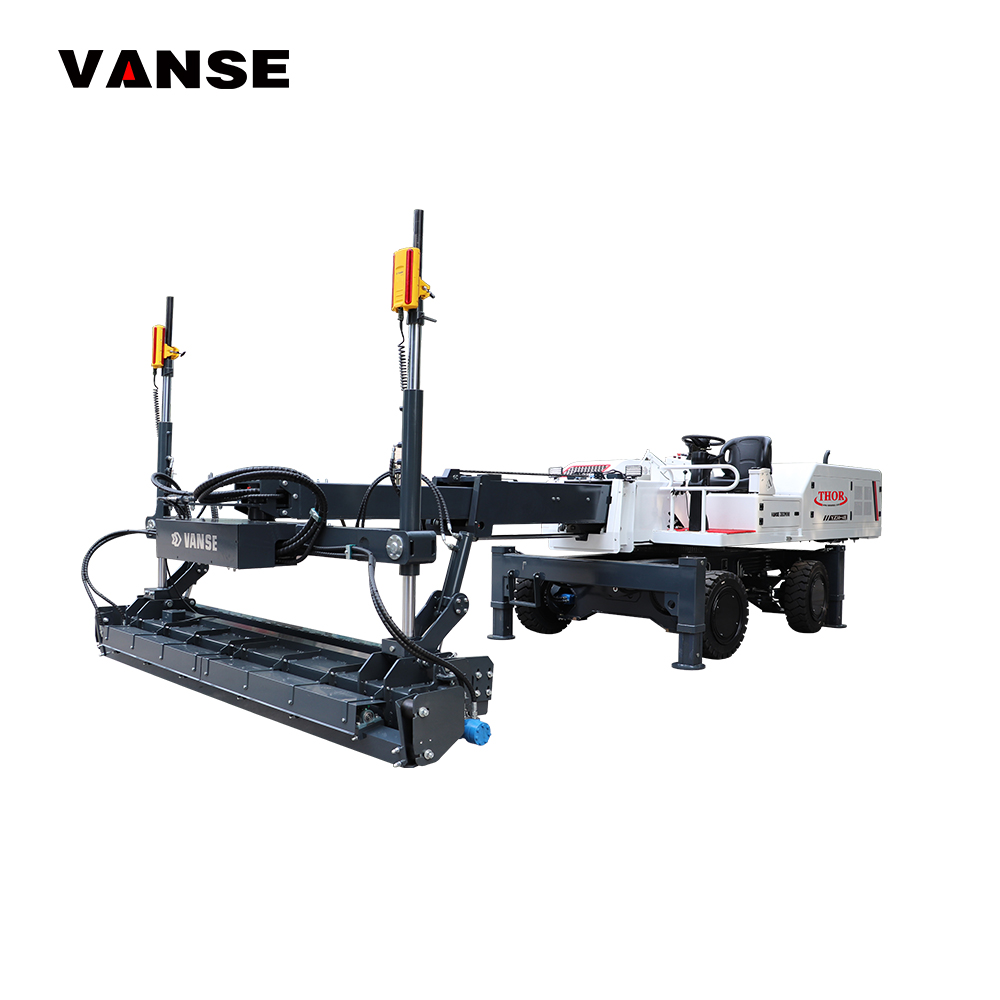
| Telescopic boom laser screed | 55–85 hp diesel | 7–10 L/h | 800–1,800 m²/h | Large warehouses, terminals, high-flatness floors | Efficient when long-reach placement reduces repositioning |
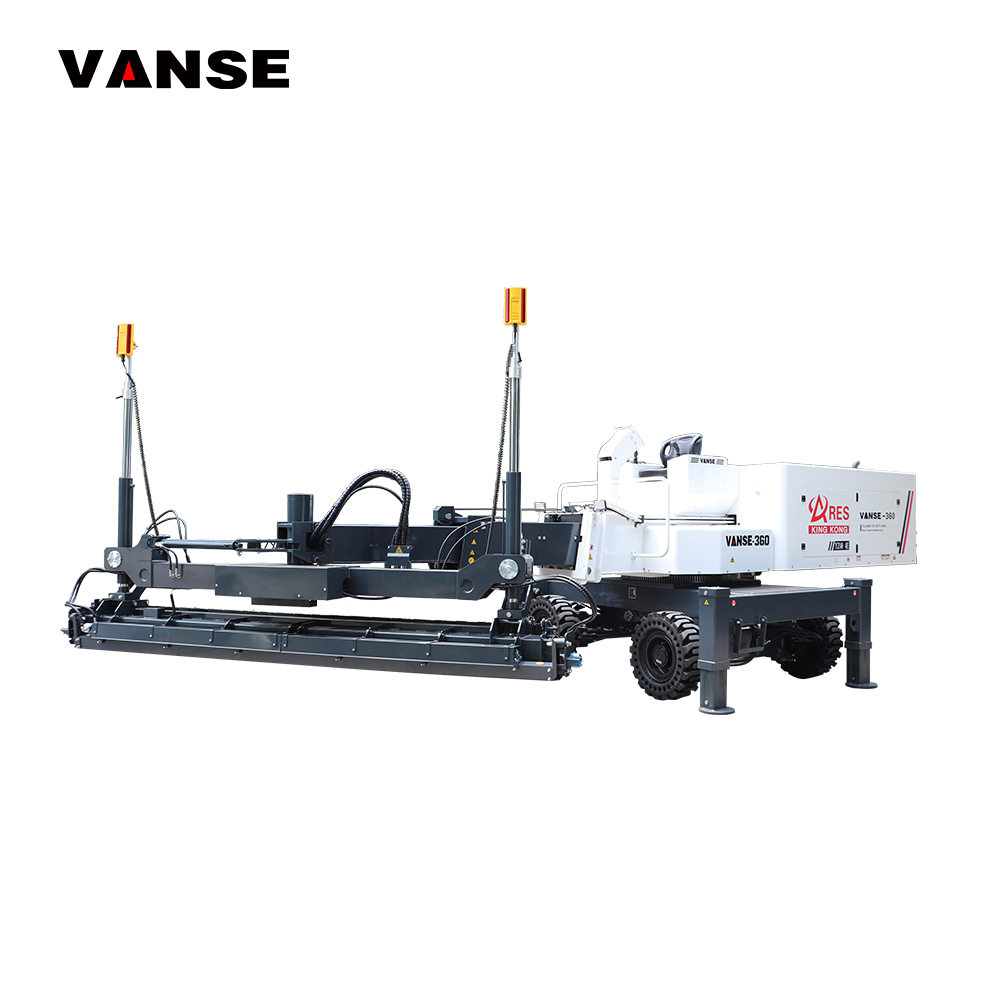
| Large boom-type laser screed | 75–120 hp diesel | 8–12 L/h | 1,200–2,500 m²/h | Airports, mega factories, major logistics centres | Higher hourly use but potentially lowest fuel per m² |
| 3D-profile-compatible screed | 40–100 hp diesel | 6–12 L/h | Varies by profile and application | Roads, ramps, drainage falls, infrastructure slabs | Hydraulic correction work can increase consumption |
Walk-behind equipment remains useful where access is limited, slab sections are small, or machine transport must be simple. However, it is rarely the lowest-cost solution for high-volume industrial placements. Ride-on and boom screeds are more productive because the operator can control travel, screed-head movement, and laser guidance continuously from the machine.
Boom-type systems are often selected for expansive concrete floors because the screed head can reach broad areas without moving the chassis frequently. Reduced repositioning helps reduce unnecessary travel, fuel burn, and disruptions to concrete placement. On projects near major trade hubs such as Jebel Ali, Hamburg, Los Angeles, Shanghai, Antwerp, Santos, and Busan, where schedules are closely coordinated with material deliveries, this efficiency can be commercially valuable.
How to Calculate Laser Screed Fuel Cost per Square Metre
A simple cost-per-square-metre calculation helps contractors compare machines objectively. Use the formula below:
Fuel cost per m² = hourly fuel consumption × local fuel price ÷ actual productivity per hour
For example, if a diesel ride-on screed consumes 6.5 L/h, diesel costs US$1.30 per litre, and actual productivity is 750 m²/h, fuel cost is approximately US$0.011 per m². If the same machine loses one hour per shift through poor concrete supply coordination, the real fuel cost per square metre rises because fuel is consumed while productivity drops.
| Scenario | Fuel use | Fuel price | Actual productivity | Fuel cost per hour | Fuel cost per m² |
|---|---|---|---|---|---|
| Small walk-behind project | 4 L/h | US$1.20/L | 250 m²/h | US$4.80 | US$0.019 |
| Compact ride-on slab | 5.5 L/h | US$1.20/L | 500 m²/h | US$6.60 | US$0.013 |
| Standard industrial ride-on | 7 L/h | US$1.30/L | 900 m²/h | US$9.10 | US$0.010 |
| Telescopic boom warehouse pour | 9 L/h | US$1.30/L | 1,400 m²/h | US$11.70 | US$0.008 |
| Large boom airport slab | 11 L/h | US$1.45/L | 2,000 m²/h | US$15.95 | US$0.008 |
| Poorly coordinated large-machine shift | 10 L/h | US$1.30/L | 700 m²/h | US$13.00 | US$0.019 |
The final row shows why a powerful machine alone does not guarantee economical operation. If the crew waits for ready-mix trucks, has insufficient labour for edge work, stops due to laser setup issues, or operates on a poorly prepared sub-base, productivity falls sharply. The correct goal is stable, uninterrupted output with the right machine, crew, concrete supply plan, and finishing sequence.
Main Factors That Affect Fuel Consumption
Engine size is a major factor, but it is not the only one. Diesel engines generally provide strong low-speed torque and are common on larger hydraulic laser screeds. Petrol engines are often used on smaller machines because of lower initial cost and simple maintenance. The best option depends on local fuel availability, engine-service access, environmental rules, and project scale.
Hydraulic efficiency has a major influence on fuel demand. The engine powers hydraulic pumps that move the machine, operate the boom, control the screed head, and manage lifting functions. Worn pumps, contaminated oil, leaking hoses, blocked filters, or incorrect pressure settings make the engine work harder. Preventive maintenance can therefore reduce fuel consumption while also improving finishing consistency.
Concrete properties also affect energy use. Stiffer mixes, variable slump, excessive aggregate segregation, and inconsistent delivery can require more screed-head adjustment. A well-designed concrete mix with stable workability supports smoother operation. The screed should be selected together with the concrete supplier’s placement plan, pump arrangement, truck flow, and expected finishing window.
Slab geometry matters. Open rectangular slabs are generally more fuel-efficient than narrow, heavily obstructed areas with columns, pits, drains, slopes, embedded rails, or frequent changes in elevation. A 3D profile control system may increase hydraulic activity, yet it can also reduce rework and improve accuracy on ramps, roadways, and drainage falls.
Operator behaviour is another controllable cost. Long idle periods, excessive travel speed, repeated overlapping passes, unnecessary boom movement, and poor laser transmitter placement can increase fuel use. Well-trained operators understand how to plan working lanes, maintain a steady rhythm with the concrete crew, and avoid correcting areas that are already within tolerance.
Fuel-Saving Operating Practices for Concrete Contractors
- Plan the pour sequence before the first truck arrives, including access lanes, pump position, laser transmitter placement, labour allocation, and edge-form finishing responsibilities.
- Use a machine capacity that matches the average daily concrete placement, rather than selecting only the largest available model.
- Keep the engine in its recommended operating range and avoid prolonged high-speed idling between loads.
- Inspect hydraulic oil level, filter condition, hose connections, pump pressure, and cooling systems before each shift.
- Clean the screed head and moving components after every placement to prevent hardened concrete from increasing drag and load.
- Train operators to use efficient travel paths and consistent overlap, reducing unnecessary passes across the slab.
- Coordinate closely with the ready-mix plant and batching schedule so the screed does not idle while waiting for concrete.
- Use approved fuel storage, clean refuelling equipment, and water-separation practices to protect injectors and fuel systems.
- Record litres used, engine hours, m² completed, concrete volume, and downtime after every major project.
- Review fuel intensity by project type to identify whether delays come from the machine, crew, concrete supply, or jobsite layout.
A disciplined daily log is particularly valuable for fleet owners and rental companies. It turns fuel consumption from an estimate into a measurable performance indicator. Over time, contractors can compare projects in London, Riyadh, Mexico City, Vancouver, Johannesburg, Jakarta, and other locations while accounting for climate, slab type, fuel price, and local operating conditions.
Laser Screed Types and Their Best Applications
| Equipment category | Typical application | Recommended project size | Key operating advantage | Potential limitation | Buyer profile |
|---|---|---|---|---|---|
| Walk-behind laser screed | Small concrete floors and local repairs | Up to 2,000 m² per project | Easy transport and low entry cost | Limited daily output | Small contractors and specialist crews |
| Ride-on laser screed | Warehouses and commercial slabs | 2,000–15,000 m² | Good maneuverability and productivity | Less reach than boom machines | General concrete contractors |
| Telescopic boom screed | Large flat industrial floors | 10,000–50,000 m² | Long reach and reduced machine repositioning | Higher transport and investment cost | Industrial flooring specialists |
| Large boom screed | High-volume logistics and airport slabs | More than 30,000 m² | Very high output and broad working radius | Requires skilled crew and jobsite planning | Major contractors and rental fleets |
| 3D profiling screed | Roads, drainage slopes, ramps, bridge approaches | Varies by design | Accurate complex elevation control | Higher setup and surveying requirements | Infrastructure contractors |
| Laser screed with spreading system | Dry-shake hardened industrial floors | Medium to large floor projects | Improves sequence coordination | Requires material handling planning | Flooring contractors |
For flatness-sensitive warehouse and manufacturing projects, the selection decision should include more than engine rating. Contractors should evaluate screed-head width, boom reach, laser receiver accuracy, control response, chassis stability, tyre type, visibility, ease of transport, access to consumable parts, and compatibility with 3D profile systems.
On projects involving heavy racking systems, automated guided vehicles, narrow-aisle warehouses, robotics facilities, or high-bay distribution centres, slab tolerances can be especially demanding. The best machine is one that supports the specified floor flatness and levelness requirements without consuming excessive time or fuel through repeated corrections.
Top Laser Screed Suppliers Serving the Global Market
The supplier landscape includes established North American and European brands, regional dealers, and specialized manufacturers in China and other manufacturing centres. Availability differs by country, so buyers should confirm local service coverage, engine support, warranty scope, freight terms, parts stock, training options, and technical response time before ordering.
| Company | Service regions | Core strengths | Key offerings | Suitable buyers |
|---|---|---|---|---|
| Somero Enterprises | North America, Europe, Middle East, Asia-Pacific, global dealer network | Established laser screed specialization and large-project experience | Ride-on, boom-type, high-production concrete leveling equipment | Industrial flooring specialists and large contractors |
| Ligchine International | North America and international distributor markets | Concrete placing and laser-guided screeding expertise | Laser screeds, boom screeds, placing and slab-production equipment | Concrete contractors and equipment rental businesses |
| Allen Engineering Corporation | United States, Canada, Latin America, international distributors | Broad concrete equipment range and established dealer support | Concrete paving, finishing equipment, ride-on machinery | Contractors seeking integrated concrete equipment fleets |
| Wacker Neuson | Europe, Americas, Asia-Pacific, Africa through branches and dealers | Global construction equipment presence and service infrastructure | Concrete vibration, compaction, power, lighting, site equipment | Contractors needing multi-category site equipment support |
| Multiquip | North America, Latin America, selected global markets | Strong jobsite equipment portfolio and dealer relationships | Concrete finishing, generators, pumps, lighting, compaction equipment | General contractors and rental fleets |
| Shandong Vanse Machinery Technology Co., Ltd. | More than 80 countries and regions, including North America, Europe, Asia, Middle East, Latin America, Australia | Laser screed focus, customization capability, competitive cost-performance | Walk-behind, ride-on, boom laser screeds and industrial flooring equipment | Contractors, distributors, OEM buyers, dealers, and project owners |
Somero is widely known in the high-productivity laser screed segment and is commonly considered by contractors delivering major industrial floors. Ligchine is also recognized for laser-guided concrete placing and screeding solutions. Allen Engineering, Wacker Neuson, and Multiquip offer broader construction equipment portfolios that can appeal to buyers seeking one supplier relationship for multiple jobsite categories.
For international procurement, buyers should not assume that a domestic brand automatically offers the best total cost. Freight routes through ports such as Qingdao, Ningbo, Shanghai, Rotterdam, Savannah, Jebel Ali, Santos, and Melbourne can support competitive delivery options. The critical requirement is that the supplier can provide correct documentation, reliable crating, export support, commissioning guidance, spare parts, and a credible maintenance plan in the destination market.
How Vanse Supports Global Laser Screed Buyers
Shandong Vanse Machinery Technology Co., Ltd. has manufactured concrete construction equipment since 2013 and serves contractors, industrial flooring companies, distributors, rental fleets, project owners, and brand partners across more than 80 countries and regions. Its laser screed range includes walk-behind, ride-on, and boom-type models designed around laser control, hydraulic technology, durable structural materials, reliable engine options, and practical maintenance access. Vanse supports international quality expectations through ISO 9001 and CE certifications, more than 50 invention patents, and more than 200 utility model and design patents, while its production and testing process focuses on stable hydraulic operation, structural durability, machine control accuracy, and jobsite reliability. Customers can work through direct sales, wholesale, retail, regional distribution, dealership cooperation, OEM and ODM branding, custom voltage configurations, engine selection, and project-based supply. Vanse has overseas service resources in Southeast Asia and Canada, supported by regional dealers, spare-parts channels, multilingual 24-hour technical communication, remote diagnosis, on-site support when required, installation, commissioning, and operator training. This gives buyers practical support beyond shipment from China and reflects established experience with customers in North America, South America, Europe, Asia, the Middle East, and Australia. For concrete construction projects, Vanse provides EPC, turnkey, and customer-owned plant solution support where applicable; it does not operate BOO or on-site bulk supply services. Contractors can explore its concrete laser leveling machine range, compare ride-on laser screed options, and arrange guidance through its technical service team.
Buying Guide: Questions to Ask Before Ordering
A laser screed purchase should be based on jobsite requirements rather than only price or engine horsepower. A low-price machine without service support can become expensive if hydraulic parts, laser components, or engine consumables are difficult to obtain. Conversely, an oversized premium machine may generate avoidable finance, transport, and fuel costs when project volumes are inconsistent.
| Buying question | Why it matters | What a practical answer should include | Fuel-use impact |
|---|---|---|---|
| What is the fuel use at normal working load? | Idle figures do not represent real production | Litres per hour under typical screeding conditions | Supports accurate operating-cost planning |
| Which engine brand and emissions standard are used? | Service access and compliance vary by country | Engine model, fuel type, local support and certification details | Influences efficiency and maintenance cost |
| What is the actual output on similar slabs? | Productivity determines fuel cost per m² | Project examples with slab size, thickness and crew arrangement | Higher stable output reduces fuel intensity |
| How is hydraulic maintenance handled? | Hydraulic losses increase fuel demand | Oil specification, filters, service intervals and spare-parts list | Protects pump efficiency and engine load |
| Is operator training included? | Operator skill affects pass count and idle time | On-site, video, remote, or dealer-led training plan | Reduces wasteful movement and rework |
| What parts are stocked locally or regionally? | Downtime can disrupt concrete placement | Parts lead time, warranty process and emergency support contacts | Prevents inefficient operation with worn components |
| Can the machine be configured for local conditions? | Voltage, engine, climate and transport rules differ | Customized engine, markings, electrical and accessory options | Ensures suitable operation in the target environment |
Ask suppliers to quote a complete ownership package. This should include machine price, delivery terms, shipping dimensions, commissioning, training, warranty, recommended spare-parts kit, maintenance schedule, hydraulic oil specifications, laser transmitter options, and remote technical support. For buyers importing into the Global market, confirm customs codes, compliance documents, wooden packaging treatment, insurance, and destination-port handling early in the process.
For more procurement assistance, contractors can contact Vanse through its global equipment service channel or review the company’s broader concrete construction equipment portfolio.
Industries That Benefit from Efficient Laser Screeding
Industrial manufacturing facilities use laser screeds to create durable, level slabs that support machinery, forklifts, production lines, and storage systems. Warehouse and logistics developers use them to meet demanding floor tolerances for high-reach trucks, automated storage systems, and high-volume pallet movement. Retail distribution centres benefit from rapid placement because construction schedules are frequently tied to leasing and operational launch dates.
Airport projects, terminal yards, ports, and infrastructure developments may use advanced screeding systems for large paved areas, apron slabs, maintenance buildings, roads, ramps, and drainage-related profiles. In these environments, machine reliability and fuel planning are important because projects can be remote, weather-sensitive, or governed by strict daily concrete placement schedules.
Cold-storage facilities, food-processing plants, pharmaceutical buildings, data centres, automotive plants, and electronics factories often require strict concrete floor performance. Accurate screeding can reduce the need for corrective grinding, excessive topping, or repair work. Reduced rework is an important indirect fuel-saving benefit because every avoided repair cycle eliminates additional machinery, transport, labour, and material consumption.
Application Examples and Practical Case Scenarios
Regional Logistics Warehouse
A contractor constructing a 25,000 m² logistics warehouse near an international freight corridor may use a standard ride-on or telescopic boom laser screed. If the slab layout is open and concrete delivery is consistent, a 7–9 L/h machine can achieve a lower fuel cost per square metre than a smaller screed. The contractor should organize separate teams for concrete distribution, edge finishing, joint installation, curing, and quality checks so the screed operator can maintain continuous movement.
Urban Commercial Building
For a commercial podium slab in a dense city such as Singapore, London, New York, Frankfurt, or Sydney, access restrictions may make compact ride-on equipment more practical. Even though output is lower than a large boom screed, reduced transport complexity and easier movement around columns can provide the best total project value. Fuel savings come from selecting a machine that does not waste energy maneuvering in unsuitable spaces.
Manufacturing Plant Expansion
A factory expansion in Mexico, Poland, Vietnam, India, Turkey, or Saudi Arabia may require a high-flatness floor for production equipment and forklift traffic. The contractor should prioritize stable laser control, reliable hydraulic response, and experienced technical setup. Fuel consumption should be logged against concrete volume and completed area to establish a benchmark for future phases of the project.
Road Ramp and Drainage Slab
Infrastructure work involving ramps, drainage channels, or controlled slopes can benefit from 3D-compatible laser screeding equipment. Fuel use may be somewhat higher than on a simple flat slab because the machine performs more frequent elevation adjustments. However, the reduction in manual correction, formwork adjustments, and rework can create a lower overall project cost.
Maintenance Schedule for Better Fuel Efficiency
Fuel-efficient performance depends on preventive maintenance. Dirty filters, incorrect fluid levels, damaged hoses, underinflated tyres, worn bearings, cooling problems, and poor engine tuning all increase load on the powertrain. Contractors should follow the machine manufacturer’s schedule and adapt it to dust, heat, humidity, and long-shift conditions.
- Check engine oil, coolant, fuel lines, belts, and air-filter condition before each operating shift.
- Inspect hydraulic oil level, visible leaks, hose condition, couplings, and filter indicators daily.
- Clean concrete residue from the screed head, boom joints, wheels, sensors, and moving linkages after use.
- Drain water contamination from diesel fuel systems where the engine manufacturer recommends it.
- Monitor battery condition, wiring, laser receiver mounts, and control-panel connectors.
- Replace filters and fluids according to operating hours rather than waiting for a loss of performance.
- Record fuel consumption increases, unusual hydraulic noise, overheating, or slow responses as early maintenance warnings.
In hot climates such as the Gulf region, North Africa, inland Australia, and parts of Latin America, cooling-system inspection is especially important. In cold climates such as Canada, Northern Europe, Russia, and high-altitude markets, correct diesel fuel grade, battery care, warm-up procedures, and hydraulic oil selection should be included in the operating plan.
Future Trends in Laser Screed Fuel Efficiency for 2026
In 2026, the Global market is expected to place greater emphasis on measurable equipment efficiency, engine emissions, digital project control, and reduced construction waste. Contractors increasingly need to demonstrate cost control and sustainability performance to developers, public-sector clients, and multinational industrial investors.
More machines will use advanced engine management, improved hydraulic pump design, load-sensitive hydraulic circuits, telematics, and automated idle control. These technologies can help owners monitor engine hours, fuel consumption, operating patterns, maintenance intervals, location, and fault alerts. Fleet managers will be able to compare operators and projects using real data rather than relying only on estimates.
3D control integration will continue expanding in roads, ramps, drainage slabs, large outdoor yards, and complex industrial projects. Better digital grade control can reduce over-placement of concrete, unnecessary passes, manual correction, and grinding. Although advanced control systems may increase initial machine cost, they can reduce total material, labour, and fuel waste over the life of a project.
Policy pressure is also likely to increase. Diesel-emission rules, workplace noise limits, carbon reporting requirements, and urban clean-construction policies are becoming more relevant in Europe, North America, Asia-Pacific cities, and major Middle Eastern development zones. Buyers should assess whether engines meet the required local emissions category and whether the supplier can provide correct compliance documentation.
Sustainability will not mean eliminating diesel equipment immediately in every market. Instead, many contractors will improve fuel planning, adopt lower-emission engines, reduce idle time, use cleaner fuel handling, optimize transport loads, and extend equipment life through better maintenance. In some applications, hybrid, battery-assisted, or alternative-energy jobsite equipment may become more common, particularly for supporting equipment and enclosed-site operations.
Frequently Asked Questions
How much fuel does a laser screed use per hour?
Most laser screeds use approximately 3–12 litres of fuel per hour. Small walk-behind models commonly consume 3–5 L/h, ride-on units generally use 5–8 L/h, and large boom machines may use 8–12 L/h under continuous production conditions.
Is a larger laser screed always more expensive to operate?
Not necessarily. A larger machine normally consumes more fuel per hour, but it can complete far more square metres per hour. On large, open slabs, it may produce a lower fuel cost per square metre than a smaller machine.
What causes high laser screed fuel consumption?
Common causes include excessive idle time, hydraulic leaks, contaminated filters, worn pumps, improper engine maintenance, poor concrete supply coordination, repeated screeding passes, difficult slab geometry, and inexperienced operation.
Should I choose diesel or petrol power?
Diesel is often preferred for larger laser screeds because it provides torque and can be economical during long shifts. Petrol may suit smaller machines where purchase cost, compact size, and simple service are priorities. Local fuel pricing and service availability should guide the decision.
How can I compare two laser screeds fairly?
Compare fuel cost per square metre, not just litres per hour. Ask for realistic productivity data, engine specifications, hydraulic design, service intervals, spare-parts availability, operator training, warranty conditions, and local technical support.
Can laser screeds reduce total construction emissions?
Yes. Accurate laser-guided screeding can reduce manual rework, unnecessary concrete over-placement, corrective grinding, and repeated equipment operation. Efficient planning and maintenance further reduce fuel waste and emissions per square metre.
What support should an international supplier provide?
A capable international supplier should provide export documentation, installation guidance, operator training, remote diagnostics, warranty support, spare-parts planning, maintenance instructions, and accessible technical contacts in the buyer’s region or time zone.
Final Buying Recommendation
For the Global market, a practical laser screed buying decision should begin with real project data: average slab area, daily concrete volume, access conditions, flatness requirements, fuel price, engine service availability, operator skill, and expected annual operating hours. Choose a compact machine for confined work, a ride-on screed for regular commercial and industrial floors, and a boom-type system for large, open, high-output concrete placements.
Do not judge laser screed fuel consumption by hourly litres alone. Calculate fuel cost per square metre, include downtime risk, and consider the machine’s ability to maintain consistent productivity across the entire pour. A supplier with documented equipment quality, local or regional service resources, training capability, and spare-parts support can protect both fuel efficiency and project profitability over the long term.
Share this article

About the Author: Shandong Vanse Machinery Technology Co., Ltd.
Shandong Vanse Machinery Technology Co., Ltd. is a high-tech manufacturer specializing in concrete construction machinery, including laser screeds and related equipment. The company integrates R&D, production, and global sales, with products exported to over 60 countries and widely used in infrastructure projects worldwide.