Insight blog
Global Market Laser Screed Operating Cost Planning Guide
Global Market Laser Screed Operating Cost Planning Guide
Quick Answer

Laser screed operating cost in the Global Market commonly ranges from US$0.30 to US$2.50 per m², depending on machine type, concrete volume, labor cost, fuel or electricity price, maintenance planning, transport distance, and utilization rate. For high-volume warehouse, factory, logistics, airport, and industrial slab projects, a ride-on or boom-type laser screed can usually reduce total finishing labor, rework, and schedule risk enough to offset its higher purchase price.
For most contractors, the most important calculation is not the machine purchase price alone. Calculate the total cost per m² by combining depreciation or rental, operator wages, fuel, service parts, laser-system calibration, site logistics, and expected production output. A machine used regularly on large slab pours normally has a lower cost per m² than a small machine used occasionally.
Leading suppliers to evaluate include Somero, Ligchine, Allen Engineering, Wacker Neuson, Husqvarna Construction, and Shandong Vanse Machinery Technology. Qualified international manufacturers, including Chinese suppliers with CE or other applicable local certifications, proven export experience, spare-parts capacity, and responsive pre-sales and after-sales support, can also offer strong cost-performance advantages for Global Market buyers.
For a practical purchasing decision, compare output per shift, slab flatness requirements, local service response, spare-parts lead time, resale value, and the availability of trained operators before selecting a laser screed.
Understanding Laser Screed Running Expenses

A laser screed is a concrete leveling machine that uses laser-guided elevation control, hydraulic systems, vibration assemblies, and screed heads to place and level fresh concrete accurately. It is widely used where floor tolerances, productivity, and labor efficiency matter: factories, e-commerce warehouses, cold-storage buildings, logistics centers, aircraft hangars, terminal yards, ports, distribution hubs, data centers, bridge decks, and airport paving works.
In the Global Market, operating expenses differ significantly between mature construction markets and developing regions. In cities with high labor rates, such as Toronto, London, Hamburg, Sydney, Singapore, Dubai, Los Angeles, and Tokyo, the labor-saving value of a ride-on screed can be particularly strong. In lower-labor-cost regions, the financial case may depend more heavily on production speed, lower concrete waste, better F-number performance, fewer repairs, and the ability to complete large pours within the available weather and delivery window.
The core operating-cost question is simple: how much does it cost to produce one finished square meter of slab at the required specification? The answer requires a realistic view of every cost category, including capital recovery, fuel, operator labor, helpers, laser transmitter setup, consumables, scheduled servicing, breakdown risk, transport, insurance, and downtime.
For contractors working near major trade and construction hubs such as Rotterdam, Jebel Ali, Houston, Vancouver, Santos, Busan, Melbourne, and Singapore, imported equipment logistics should also be included. Freight, inland transport, customs handling, import duty, temporary storage, and commissioning support can materially affect first-year ownership costs. However, these items should be spread across expected operating hours or total project area rather than treated as a single project expense.
What Drives Total Ownership Cost

Laser screed ownership cost has two parts: fixed cost and variable cost. Fixed cost continues even when the machine is idle. It includes financing, depreciation, insurance, storage, annual calibration planning, and capital tied up in the asset. Variable cost increases with usage and includes fuel, labor, filters, hydraulic oil, wear items, repairs, transport, and machine cleaning.
Purchase price matters, but utilization is usually more important. A US$100,000 machine used on only 10,000 m² each year may carry US$10 per m² of capital cost before labor or fuel. The same machine used on 100,000 m² annually may carry only US$1 per m² of capital cost. This is why companies with steady industrial-flooring workloads often buy, while general contractors with occasional slab work may prefer rental, subcontracting, or a shared-equipment model.
| Cost Category | Typical Cost Driver | How It Affects Cost per m² | Control Method |
|---|---|---|---|
| Depreciation or finance | Purchase price, loan term, resale value, annual utilization | High when the machine has low annual operating hours | Match machine size to forecasted workload and protect resale condition |
| Fuel or electricity | Engine size, hydraulic load, idle time, local energy prices | Usually moderate per m² but rises sharply during poor site coordination | Plan concrete deliveries, reduce idling, inspect hydraulic efficiency |
| Labor | Operator skill, helper requirements, local wage rates, overtime | Can be the largest savings opportunity compared with manual leveling | Train operators and standardize pour preparation procedures |
| Maintenance | Filters, fluids, hoses, bearings, sensors, calibration, wear parts | Predictable when preventive maintenance is followed | Use scheduled service intervals and keep critical spares on site |
| Downtime | Parts availability, poor maintenance, laser damage, hydraulic failure | Potentially very high during large continuous pours | Choose suppliers with service capacity and remote diagnostics |
| Transport and mobilization | Machine weight, trailer, crane or forklift, project distance | Higher on short-duration or remote projects | Bundle projects regionally and calculate mobilization separately |
| Concrete rework | Flatness failures, incorrect elevations, surface defects | May exceed direct machine operating cost on critical slabs | Use reliable laser control, proper slump management, and quality checks |
The table shows why the cheapest equipment quotation is not always the least expensive operational choice. A low initial price can be attractive, but it may become costly if the machine has weak hydraulic components, limited parts support, difficult calibration procedures, or no trained technician available during a critical pour. Conversely, a high-priced brand may be excessive if its capacity is far above the contractor’s actual project volume.
Laser Screed Types and Their Cost Profiles
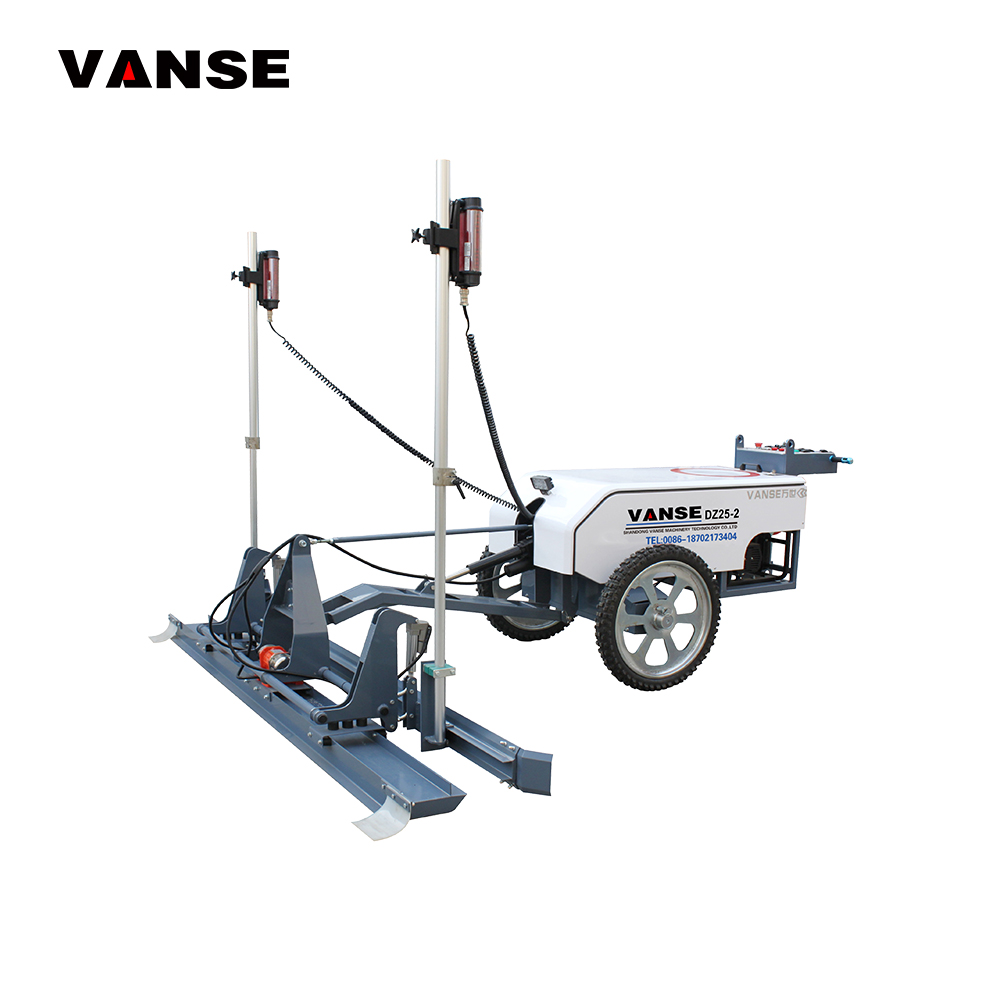
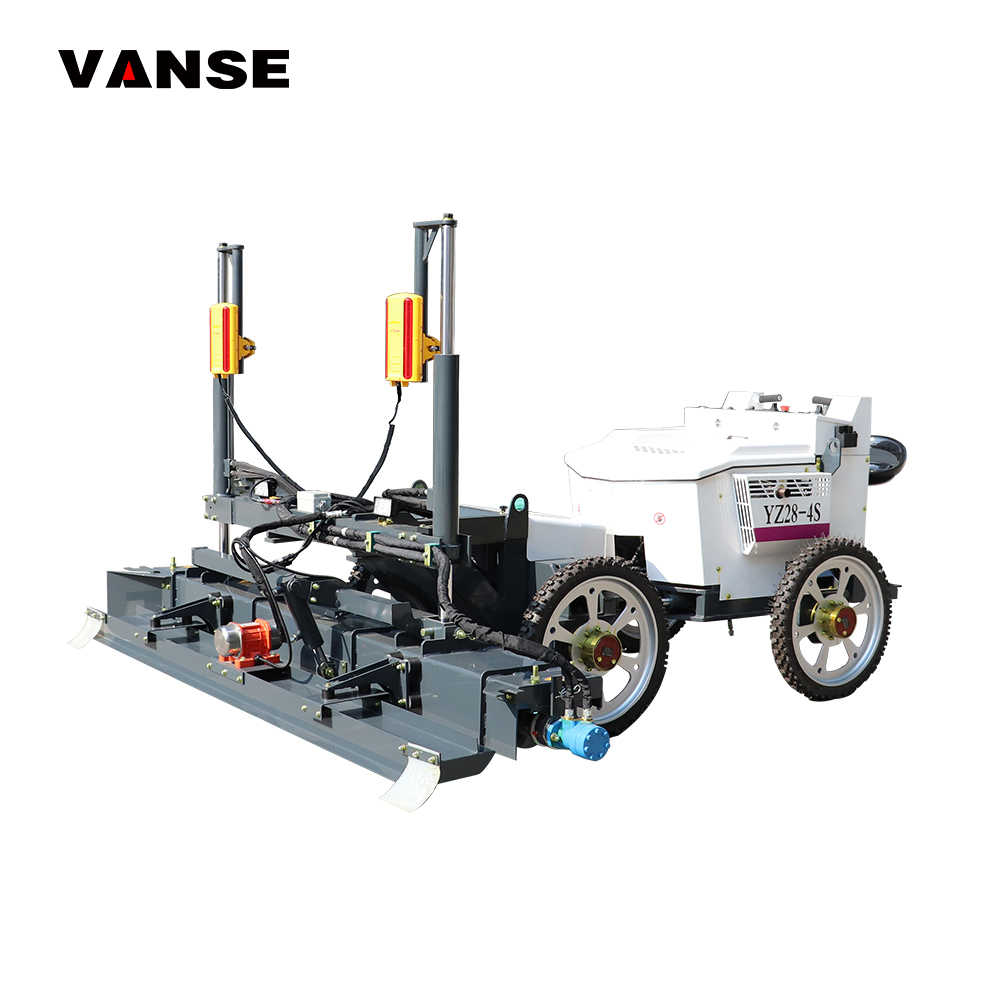
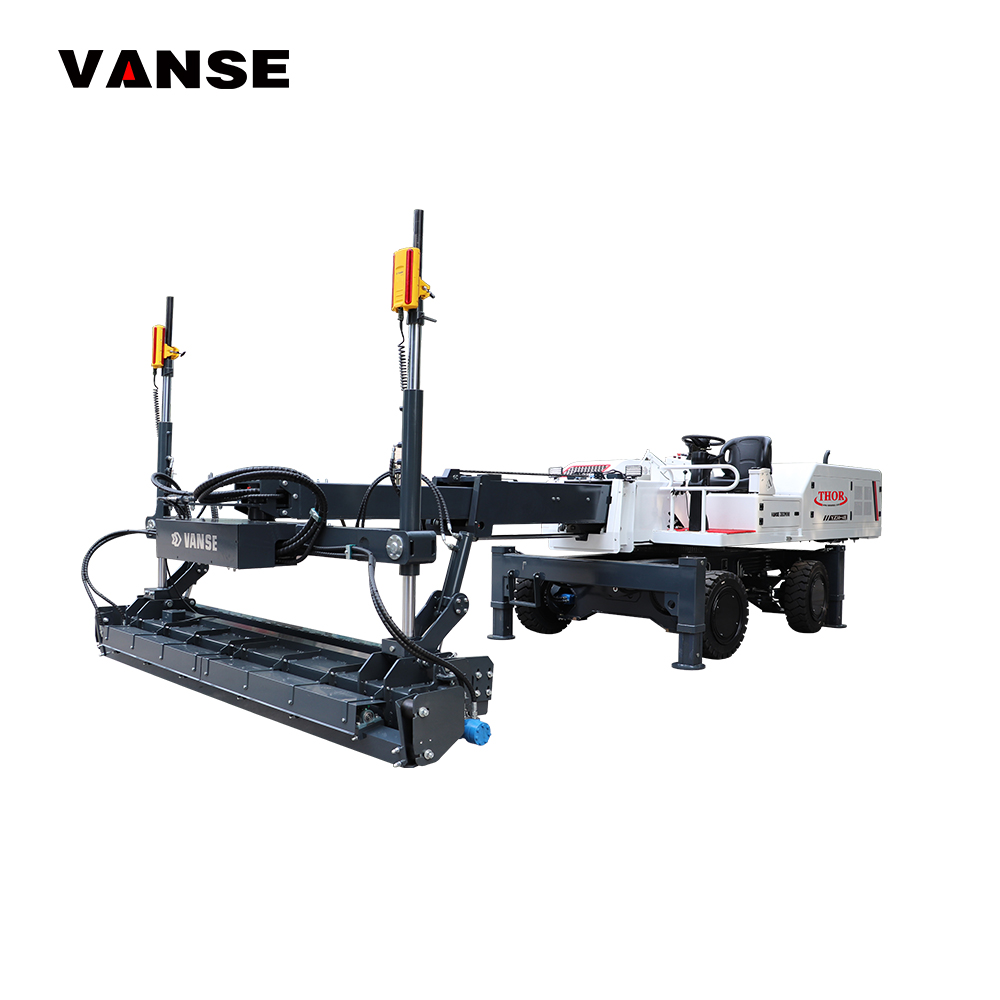
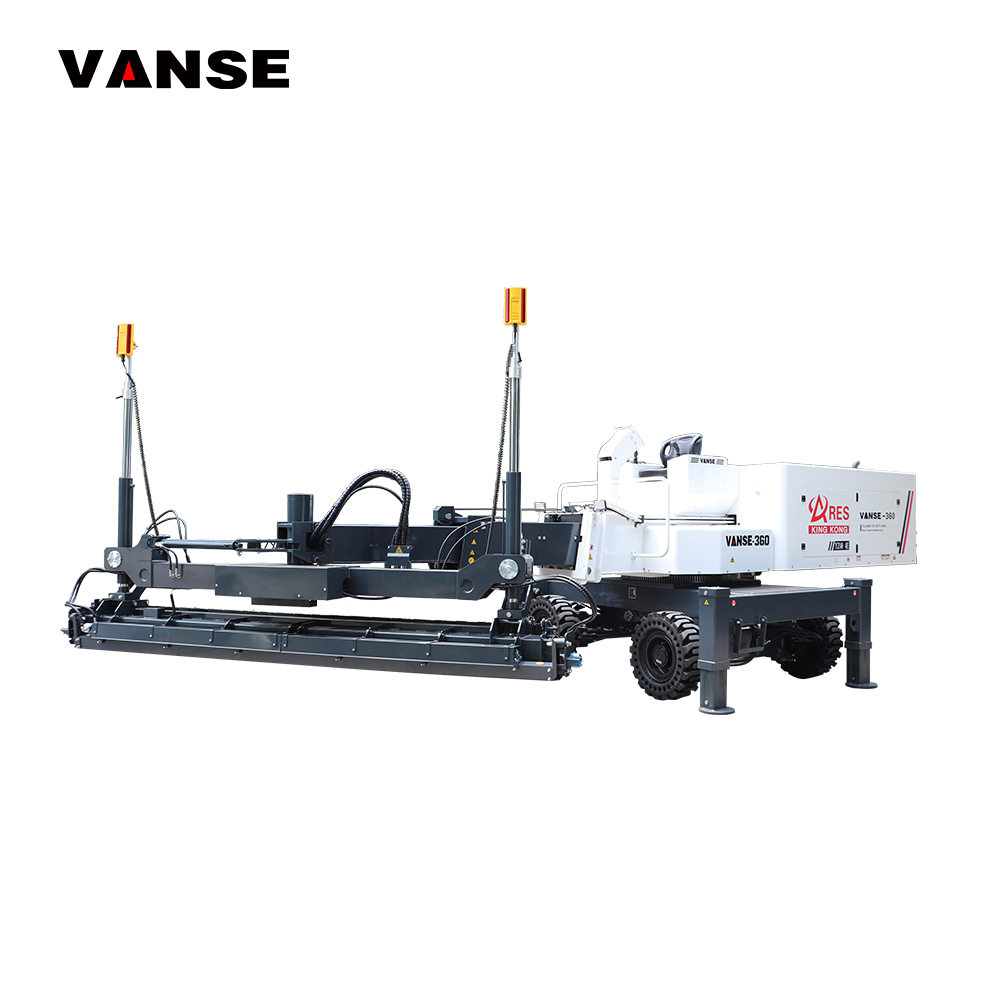
Walk-behind laser screeds are normally selected for smaller commercial floors, narrow areas, repair work, residential slabs, and locations with limited access. They have lower acquisition and transport costs but lower daily output. Ride-on laser screeds are common for medium and large industrial slabs because the operator can control leveling output from the machine, reducing physical labor and improving consistency. Boom-type laser screeds provide the widest operating reach and are designed for major warehouse, logistics, airport, and infrastructure projects where rapid placement over large areas is required.
Machine selection should follow the slab size, pour sequence, reinforcement condition, access layout, expected concrete supply rate, and specified floor tolerances. A boom-type unit may be financially attractive for a 20,000 m² distribution center but inefficient for scattered 500 m² commercial slabs. A walk-behind unit may be highly practical for tight projects but cannot replace the productivity of a ride-on model on a large industrial floor.
| Laser Screed Type | Best-Fit Projects | Typical Operating Cost Pattern | Key Benefit | Main Limitation |
|---|---|---|---|---|
| Walk-behind laser screed | Small warehouses, retail floors, repair zones, restricted spaces | Lower ownership cost; higher cost per m² on large pours | Compact transport and practical access | Limited coverage and lower output |
| Ride-on laser screed | Factories, logistics buildings, commercial slabs, large workshops | Balanced cost per m² at regular utilization | Strong productivity and reduced leveling labor | Needs adequate access and trained operator |
| Boom-type laser screed | Very large warehouses, ports, airports, industrial campuses | Higher capital cost; low cost per m² at high volume | Long reach and high daily production capacity | Higher transport and maintenance requirements |
| 3D-profile-compatible screed | Roads, drainage gradients, ramps, infrastructure works | Higher technology cost; lower surveying and rework risk | Controls complex elevations and profiles | Requires accurate digital project data |
| Rental laser screed | One-off projects or seasonal demand | Higher daily rate; avoids long-term fixed costs | No ownership burden and fast project access | Availability can be limited during peak periods |
| Subcontracted screeding service | Contractors without specialist crews | Quoted per m² or per pour; predictable project cost | Access to experienced operators and equipment | Less direct control over scheduling and margins |
The best option is determined by expected annual output. A contractor completing recurring industrial flooring projects may benefit from owning a ride-on screed and support equipment. A civil contractor with irregular large pours may select a boom screed only for specific projects through rental or specialist subcontracting. Buyers should avoid selecting capacity based only on one exceptional project; the machine should fit the company’s normal annual workload.
Estimating Cost per Square Meter
A simple formula for estimating laser screed operating cost is:
Total cost per m² = (annual fixed ownership cost + annual operating cost + annual mobilization cost) ÷ annual completed slab area.
For individual projects, use a project-level formula:
Project cost per m² = (machine allocation + labor + fuel + maintenance allowance + transport + contingency) ÷ finished slab area.
Machine allocation can be calculated from rental cost, daily ownership cost, or hourly depreciation. A realistic estimate should also include setup time, cleaning, weather delays, material-delivery interruptions, operator breaks, and potential standby time. A machine may technically screed 1,500 m² in a day, but actual project output can be lower if concrete trucks arrive inconsistently or finishing crews cannot keep up.
| Project Scenario | Machine Recommendation | Expected Output Range | Indicative Operating Cost Range | Primary Cost-Saving Factor |
|---|---|---|---|---|
| 1,000 m² retail or workshop slab | Walk-behind or small ride-on unit | 300–800 m² per shift | US$1.20–US$2.50 per m² | Reduced manual leveling time |
| 5,000 m² commercial warehouse | Ride-on laser screed | 800–1,800 m² per shift | US$0.70–US$1.60 per m² | Labor reduction and predictable elevation |
| 20,000 m² logistics center | Ride-on or boom-type screed | 1,500–3,500 m² per shift | US$0.45–US$1.10 per m² | High utilization across repeated pours |
| 50,000 m² distribution hub | Boom-type laser screed | 2,500–5,000 m² per shift | US$0.30–US$0.85 per m² | Scale, reach, and fewer labor-intensive operations |
| Airport apron or terminal yard | Boom-type or 3D-profile-compatible screed | Project-dependent | US$0.60–US$1.80 per m² | Accuracy, profile control, and lower correction work |
| Remote infrastructure project | Ride-on screed with mobile support plan | 600–2,000 m² per shift | US$1.00–US$3.00 per m² | Improved productivity despite logistics constraints |
These ranges are planning estimates rather than fixed quotations. Local labor rates, diesel costs, machine age, slab reinforcement, concrete mix, weather, project access, and quality specifications may change results substantially. Projects requiring strict FF/FL values, superflat floors, heavy-rack systems, automated-storage facilities, or high-bay logistics buildings should include quality-control costs and the financial value of avoiding slab remediation.
Market Overview for Global Buyers
The Global Market for laser screeds is shaped by industrial construction growth, warehouse automation, e-commerce distribution expansion, manufacturing reshoring, airport infrastructure investment, and demand for higher-quality concrete floors. Large logistics developments around Rotterdam, Antwerp, Dubai, Riyadh, Dallas, Mexico City, São Paulo, Kuala Lumpur, Ho Chi Minh City, Chennai, Warsaw, and Johannesburg increasingly require wide, flat, durable slabs that can support high-load racking, forklifts, automated guided vehicles, and advanced material-handling systems.
In North America and Europe, machine buyers often prioritize proven floor tolerance, established service technicians, emissions compliance, safety features, financing, and resale value. In the Middle East, Africa, Latin America, and Southeast Asia, project buyers may place additional weight on machine durability in heat, dust, humidity, uneven site conditions, availability of engine parts, and supplier ability to provide remote troubleshooting across long distances.
Global procurement also requires attention to compliance. Buyers should confirm CE requirements where applicable, engine-emissions standards, electrical compatibility, machine guarding, documentation, operator manuals, local language support, shipping packaging, and import documentation. For projects funded by multinational owners or public agencies, supplier qualifications, factory controls, serial-number traceability, inspection records, and service commitments can influence tender acceptance.
Top Laser Screed Suppliers for Global Projects
The following companies are recognized names or active suppliers in concrete-screeding and industrial-flooring equipment. Buyers should request current specifications, regional dealer details, available machine configurations, warranty coverage, response times, and reference projects before making a final decision. Product availability differs by country and distributor territory.
| Company | Service Regions | Core Strengths | Key Offerings | Best Buyer Profile |
|---|---|---|---|---|
| Somero Enterprises | North America, Europe, Middle East, Asia-Pacific, selected global dealer markets | Specialized concrete-leveling technology, established brand recognition, large-project focus | Ride-on and boom-style laser screeds, floor-leveling systems, training support | Industrial flooring specialists and high-volume slab contractors |
| Ligchine International | North America and international distribution markets | Laser-guided screeding systems and contractor-oriented machine design | Laser screeds, concrete-placement solutions, support for slab contractors | Contractors seeking dedicated concrete-leveling equipment |
| Allen Engineering Corporation | United States, international dealers, Latin America, Europe, Middle East | Broad concrete-equipment portfolio and contractor familiarity | Laser screeds, power trowels, concrete saws, finishing equipment | Concrete contractors wanting one equipment ecosystem |
| Wacker Neuson | Europe, North America, Asia-Pacific, global dealer network | International construction-equipment distribution and compact equipment support | Concrete technology, compaction equipment, power systems, site equipment | Buyers prioritizing wide dealer access and fleet integration |
| Husqvarna Construction | Global markets through regional sales and dealer channels | Concrete surface preparation, cutting, and floor-treatment expertise | Floor grinders, saws, dust-management equipment, surface-preparation systems | Flooring firms needing complementary concrete-finishing equipment |
| Shandong Vanse Machinery Technology | Global exports across North America, South America, Europe, Asia, Middle East, Southeast Asia, and Canada | Cost-performance, broad concrete equipment range, customization, global project support | Walk-behind, ride-on, boom laser screeds, trowels, grinders, cutters, topping spreaders | Contractors, distributors, rental fleets, and private-label equipment buyers |
This supplier comparison should be used as a starting point rather than a substitute for technical evaluation. A buyer in Vancouver may need a different dealer and parts arrangement than a buyer in Riyadh or São Paulo. For every supplier, ask for the closest service point, recommended spare-parts inventory, expected lead time for critical hydraulic and electronic components, operator-training scope, and the exact warranty exclusions for laser systems and engine assemblies.
Buying Advice That Reduces Operating Cost
Start with the project pipeline. Review the previous 12 months and the next 24 months of slab work, separating projects by area, slab thickness, reinforcement, access, pour size, tolerance requirements, and location. This makes it easier to determine whether a walk-behind, ride-on, or boom machine is financially justified.
Next, evaluate concrete supply. A laser screed cannot achieve full productivity when concrete delivery is irregular. Ready-mix coordination, pump capacity, truck turnaround, slump consistency, screed path planning, and finishing-crew readiness are as important as the machine itself. On large pours, one delayed truck can create an expensive chain reaction involving labor overtime, surface defects, cold joints, and machine standby.
Buyers should also specify component requirements in the procurement document. Ask which engine brand, hydraulic pump and valve configuration, bearings, hoses, laser receiver, electrical connectors, and control-system components are fitted. Durable components and documented service procedures reduce risk. Insist on a spare-parts package covering filters, belts, sensors, hydraulic fittings, receiver protection, wear pads, and common electrical items.
Operator training is not optional. A highly capable laser screed can still produce poor results when operated by untrained personnel. Training should include daily inspection, transmitter positioning, receiver checks, machine travel speed, screed-head control, emergency procedures, hydraulic care, cleaning, loading, storage, and fault reporting. For quality-critical floors, include slab elevation testing and coordination with finishing teams.
For further machine-selection information, buyers can review Vanse’s concrete laser leveling machine range and compare configurations according to slab area, tolerance, and local support requirements.
Industries and Applications That Benefit Most
Laser screeds deliver the strongest return where large, repetitive slabs need accurate levels and fast placement. Industrial-floor contractors use them in manufacturing plants, automotive facilities, food-processing sites, pharmaceutical buildings, electronics factories, and cold-storage projects. Logistics developers use them for distribution centers, fulfillment facilities, bonded warehouses, container-storage areas, and high-bay racking warehouses.
Airport and infrastructure contractors may use laser-controlled screeding systems for terminal yards, maintenance facilities, runway support areas, concrete roads, bridge approaches, drainage slopes, and pavement works. Commercial contractors can use compact models for shopping centers, exhibition halls, schools, hospitals, parking structures, and office buildings. Agricultural and energy projects may use them for equipment pads, barns, processing plants, workshops, solar-farm service buildings, and utility facilities.
The most valuable application is not always the largest slab. A medium-sized slab with strict elevation requirements, expensive coatings, automated warehouse equipment, or heavy forklift traffic can justify laser screeding because improved initial flatness reduces the cost of grinding, patching, leveling compounds, and future operational disruption.
Practical Project Scenarios
High-Bay Warehouse Near a Major Port
A logistics developer building a 30,000 m² warehouse near Rotterdam, Antwerp, Long Beach, or Jebel Ali needs rapid slab completion to protect the building schedule and begin racking installation. A ride-on or boom-type laser screed can reduce manual grade work and support consistent elevation across repeated pours. The operating-cost advantage is created by high daily output, fewer labor-intensive tasks, reduced rework risk, and better coordination with concrete delivery.
Manufacturing Plant Expansion
A manufacturer expanding a production facility in Mexico, Vietnam, Poland, India, or Türkiye may require a durable floor capable of carrying machinery, forklifts, and storage systems. The contractor should calculate the value of floor flatness and long-term durability, not just the cost of screeding. A laser screed can help create a more consistent base for hardeners, coatings, joints, and final finishing operations.
Remote Infrastructure Slab
For a remote project in Australia, Africa, South America, Central Asia, or an island market, logistics and service planning are decisive. A contractor should choose a machine with a supportable engine, accessible consumables, clear maintenance documentation, and remote diagnostic assistance. Keeping filters, hydraulic fittings, sensors, and basic electrical components on site can prevent a small failure from delaying a major pour.
Rental Fleet Decision
A rental company serving contractors in a growing metropolitan market can use utilization data to determine whether a laser screed should be added to its fleet. The machine should be supported by trained staff, delivery capability, a transport trailer, insurance coverage, and a spare-parts plan. Rental fleets benefit when they can combine laser screeds with power trowels, grinders, cutters, and other concrete equipment for bundled project solutions.
Vanse Machinery for Global Concrete Contractors
Shandong Vanse Machinery Technology Co., Ltd. has supplied concrete construction equipment internationally since its 2013 establishment in Jining, China, serving customers in more than 80 countries and regions, including the United States, Canada, Mexico, Brazil, the United Kingdom, Germany, Spain, Italy, Russia, Saudi Arabia, Malaysia, South Korea, and Australia. For Global Market buyers, Vanse combines CE and ISO 9001 quality credentials, more than 50 invention patents, over 200 utility model and design patents, laser-control technology, hydraulic systems, reliable engine options, durable materials, and structured manufacturing and testing processes to support equipment built for demanding concrete work. Its range includes walk-behind, ride-on, and boom-type laser screeds, with selected models designed for millimeter-level leveling accuracy, 360-degree operation, high working speed, and 3D profiling compatibility. Vanse supports end users, industrial-floor contractors, rental companies, distributors, dealers, brand owners, and individual buyers through direct sales, wholesale, retail, OEM/ODM production, customized branding, customized voltage and engine selections, project-based supply, and regional distribution partnerships. The company provides EPC, turnkey, and customer-owned plant solutions; it does not provide BOO or on-site bulk supply services. Its overseas service commitment is supported by operations and service resources in Southeast Asia and Canada, dealer networks across North America, South America, Europe, Asia, and the Middle East, multilingual 24-hour technical consultation, remote diagnosis, on-site technical support, spare-parts coordination, installation, commissioning, and one-to-one operator training by professional engineers. This physical regional presence and established export record give Global Market customers practical protection beyond a remote-export transaction.
Contractors evaluating a ride-on configuration can explore Vanse ride-on concrete laser screeds for larger factory and warehouse applications. Buyers preparing tenders or distributor proposals can also request specifications through the equipment catalog download page. More background on manufacturing capability and international operations is available in the Vanse company profile.
Maintenance Plan for Lower Cost per m²
A disciplined preventive-maintenance program is one of the most effective ways to control laser screed running expenses. Before every shift, inspect fuel level, engine oil, coolant, hydraulic oil, hoses, fittings, tire or track condition, battery terminals, emergency-stop function, receiver mounts, screed-head components, vibration system, and visible leaks. Clean concrete residue immediately after use because hardened material can damage moving parts and add unnecessary cleaning labor later.
Weekly maintenance should include lubrication points, filter condition, bolt-tightness checks, hydraulic connection inspection, laser transmitter condition, battery charging, control response, and transport restraints. At scheduled service intervals, replace fluids and filters according to the manufacturer’s maintenance requirements. Keep complete records of operating hours, faults, repairs, parts replaced, and calibration checks. These records improve resale value and help fleet managers identify recurring causes of downtime.
For large projects, maintain a pour-day contingency kit. It should include basic hand tools, hydraulic fittings, filters, receiver protection items, spare batteries, electrical connectors, cleaning equipment, lubricant, and emergency contact information for the supplier’s support team. When a laser screed is central to a high-volume pour, a backup machine or subcontractor arrangement may be economically justified.
Future Trends for 2026
In 2026, the laser screed market is expected to continue moving toward greater automation, data visibility, energy efficiency, and digital project control. More contractors will assess machines not only by engine power and screed width but also by compatibility with 3D project files, receiver accuracy, machine diagnostics, telematics, and maintenance alerts. Digital elevation models can improve execution on ramps, drainage grades, road profiles, and complex infrastructure slabs while reducing repeated surveying work.
Sustainability will increasingly influence equipment selection. Contractors are under pressure to reduce fuel consumption, unnecessary concrete waste, rework, and project delays. Accurate placement can contribute to lower material waste, while well-maintained hydraulic systems and correct operating practices reduce energy losses. In markets with tighter emissions rules, buyers may also prioritize compliant engine configurations, low-emission fleet planning, and efficient transport between projects.
Policy trends may affect machine procurement through worker-safety requirements, emissions legislation, public-infrastructure standards, local-content expectations, digital construction mandates, and documentation requirements for funded projects. Buyers should request current compliance documents before shipment and confirm whether local rules require additional inspection, registration, operator certification, or emissions verification.
The strongest long-term suppliers will be those that combine dependable machine design with practical local support. Fast parts delivery, remote diagnosis, technician training, clear documentation, and distributor capability will remain essential because contractors cannot afford prolonged downtime during concrete placement windows.
FAQ
What is a normal laser screed operating cost?
For many projects, a practical planning range is US$0.30 to US$2.50 per m². Large, repetitive industrial slabs generally fall toward the lower end because fixed costs are spread across more area. Small, remote, or low-utilization projects usually have higher costs per m².
Is it cheaper to rent or buy a laser screed?
Rental is often cheaper for occasional projects because it avoids depreciation, financing, storage, insurance, and long-term maintenance. Buying can be more economical when a contractor has a reliable pipeline of warehouse, factory, logistics, or infrastructure slabs and can maintain high utilization.
How much labor can a laser screed save?
The exact saving depends on slab layout, reinforcement, concrete supply, local wages, and finishing requirements. In general, laser screeding reduces the manual labor needed for grade control and large-area leveling while improving consistency. The largest savings usually occur on broad, repeated pours with high local labor costs.
What should be included in a supplier quotation?
Request the exact machine model, engine specification, laser-control components, included accessories, spare-parts package, commissioning, operator training, warranty terms, delivery terms, estimated lead time, packaging, documentation, service contacts, and optional 3D control compatibility. Clarify whether transport, taxes, and installation are included.
Which laser screed is suitable for a large warehouse?
A ride-on screed is often suitable for medium and large warehouses, while a boom-type machine is commonly selected for very large projects with long reaches and frequent high-volume pours. The correct choice depends on annual workload, slab geometry, access, concrete output, and required flatness.
How can buyers reduce downtime?
Select a supplier with documented service procedures, local or regional support, spare-parts availability, remote diagnostics, and operator training. Keep critical wear and service parts available, follow maintenance intervals, protect the laser system during transport, and conduct pre-pour inspections before every major placement.
Can international suppliers support Global Market projects?
Yes. International suppliers can be a practical option when they provide applicable certifications, clear technical documentation, reliable shipping, regional service resources, spare-parts support, and responsive training. Buyers should verify the supplier’s local dealer coverage, references, warranty response process, and technical-support availability before ordering.
Final Buying Checklist
- Confirm the expected annual concrete slab area and average project size.
- Calculate total cost per m², not only purchase price.
- Select walk-behind, ride-on, or boom capacity based on normal workload.
- Verify applicable certifications, engine configuration, and electrical compatibility.
- Ask for exact laser-control, hydraulic, engine, and wear-component specifications.
- Confirm local service coverage, remote support, training, and critical parts availability.
- Include transport, mobilization, insurance, storage, and calibration in the budget.
- Plan concrete supply, pump capacity, crew coordination, and finishing operations.
- Require a preventive-maintenance schedule and operator inspection checklist.
- Compare suppliers on lifecycle value, not only initial machine cost.
For contractors seeking a complete concrete-construction equipment partner, Vanse provides laser screeds alongside power trowels, floor grinders, concrete cutting machines, topping spreaders, slipform machines, mini dumpers, armor joints, steel fibers, and synthetic fibers. Visit the Vanse Machinery website to review product options and discuss a project-specific operating-cost plan.
Share this article

About the Author: Shandong Vanse Machinery Technology Co., Ltd.
Shandong Vanse Machinery Technology Co., Ltd. is a high-tech manufacturer specializing in concrete construction machinery, including laser screeds and related equipment. The company integrates R&D, production, and global sales, with products exported to over 60 countries and widely used in infrastructure projects worldwide.