Insight blog
Global Market Guide to Laser Screed Flatness Performance
Laser Screed Flatness Performance in the Global Market
Quick Answer

Laser screed floor flatness results can be significantly better than conventional strike-off methods when the slab design, concrete supply, laser setup, operator skill, finishing sequence, and curing plan are controlled as one system. For large industrial slabs in the Global market, a properly operated laser screed commonly helps contractors pursue consistent FF/FL outcomes, reduce manual rework, improve elevation control, and increase daily placement output. However, a laser screed alone does not guarantee a superflat floor: joint layout, curling risk, concrete shrinkage, reinforcement congestion, and post-placement finishing remain decisive.
For most warehouses, factories, logistics hubs, and commercial slabs, buyers should specify measurable acceptance criteria such as ASTM E1155 floor flatness and levelness testing, identify the test timing, and agree on repair responsibilities before concrete placement begins. Leading suppliers worth comparing include Somero, Ligchine, Topcon Positioning Systems, Allen Engineering, Wacker Neuson, and Shandong Vanse Machinery Technology. Qualified international suppliers, including Chinese manufacturers with applicable CE, ISO, local compliance documentation, and responsive pre-sales and after-sales support, can also be strong options because of their cost-performance advantages.
The most actionable approach is to select the screed type for the pour size, verify the laser receiver and hydraulic control accuracy, run a trial bay, measure the slab within the agreed timeframe, and use the results to fine-tune placing, vibration, finishing, and curing procedures.
What Laser Screed Flatness Results Really Mean

Floor flatness is not simply a visual judgment. A slab may look smooth immediately after troweling but still fail the required riding quality, local elevation tolerance, or long-distance levelness requirement. Laser screed flatness performance refers to how consistently the equipment places and strikes off fresh concrete at the intended elevation while minimizing surface undulations. The final result is normally evaluated through floor flatness and floor levelness measurements, project-specific straightedge checks, digital surveying, or a combination of these methods.
In the Global market, the two most widely discussed indicators for industrial floor slabs are FF, which relates primarily to short-wavelength surface smoothness, and FL, which relates to longer-wavelength elevation variation. Higher values generally indicate flatter and more level slabs, but the required specification depends on the building use. A conventional warehouse may need a practical industrial floor, while high-bay racking, very-narrow-aisle forklift systems, automated storage systems, aircraft hangars, and distribution centers may demand far tighter results.
The best laser screed outcomes occur when the equipment is treated as part of a complete concrete construction workflow. A reliable ready-mix supply, controlled slump, suitable aggregate grading, correct fiber dosage where specified, accurate forms, stable subbase, trained laser screed operator, disciplined power-trowel crew, and effective curing are all essential. A laser screed can rapidly establish the initial plane, but poor finishing, delayed saw cutting, uncontrolled moisture loss, or slab curling can reduce the final measurement result.
How Flatness and Levelness Are Assessed

Project teams should state the measurement method in the contract rather than relying on descriptions such as “very flat” or “laser leveled.” ASTM E1155 is commonly used to calculate FF and FL values for slabs. Other projects may use DIN 18202 tolerance classes, national building standards, straightedge methods, total-station surveys, or machine-guidance requirements from warehouse equipment suppliers. The selected method should match the practical operating needs of the finished facility.
| Measurement Item | What It Indicates | Typical Test Method | When It Matters Most | Common Risk to Control | Practical Project Action |
|---|---|---|---|---|---|
| FF floor flatness | Short-distance surface smoothness | ASTM E1155 profile measurement | Forklift travel, coatings, rack aisles | Local humps, dips, trowel marks | Check screed head, vibration, and finishing passes |
| FL floor levelness | Long-distance elevation consistency | ASTM E1155 profile measurement | Large warehouses and drainage-sensitive slabs | Incorrect benchmark or settlement | Confirm laser datum and subbase tolerance before pouring |
| Local elevation | Difference from design elevation | Laser level, total station, or digital level | Doorways, pits, drains, equipment bases | Wrong set-out level | Survey critical points before and after placement |
| Straightedge tolerance | Localized gaps under a defined straightedge | Project-specified straightedge test | Small rooms and repair areas | Overreliance on visual checks | Use it as a supplementary acceptance check |
| Joint differential | Vertical displacement across a joint | Level survey and joint inspection | Hard-wheel traffic and automated vehicles | Curling and poor load transfer | Specify armoring, dowels, and curing strategy early |
| Wheel-path ride quality | Actual operating smoothness for vehicles | Equipment-specific survey or testing | VNA, AS/RS, airport and logistics facilities | Mismatch between FF/FL and operating requirements | Coordinate with racking and vehicle suppliers |
The table shows why one number cannot describe every floor. For example, a slab may achieve acceptable FF/FL values but still require additional attention at rack aisles, construction joints, loading docks, or drainage zones. Conversely, a highly polished retail floor may prioritize visual uniformity and finish quality as much as numerical flatness.
Expected Results by Project Type
It is not responsible to promise one universal FF/FL value for every laser screed placement. Actual performance depends on slab thickness, concrete mix behavior, access, joint-free panel size, weather, crew coordination, and the timing of measurement. Still, laser-guided screeding provides a repeatable method for achieving consistent initial elevation across wide pours when compared with purely manual methods.
For general industrial floor construction, contractors frequently use laser screeds to improve productivity and reduce the labor needed for hand striking. For demanding superflat applications, the machine is often only the first stage. Contractors may use specialized strike-off methods, controlled placing routes, wet-screed corrections, precision hand finishing, early-age testing, and localized grinding or repair where the specification permits.
| Project Environment | Typical Flatness Priority | Recommended Screed Approach | Key Supporting Controls | Likely Acceptance Focus | Important Caution |
|---|---|---|---|---|---|
| General factory floor | Reliable daily operational flatness | Ride-on or boom laser screed | Stable mix, correct curing, planned joints | Practical FF/FL and elevation checks | Do not neglect joint protection for forklift traffic |
| Logistics warehouse | Consistent forklift travel and rack performance | Large boom screed for wide pours | Accurate benchmarks and coordinated finishing | FF/FL plus aisle checks | Racking design may require tighter local tolerances |
| Very-narrow-aisle warehouse | High wheel-path precision | Precision screeding with specialized finishing | Detailed survey control and early testing | Defined wheel-path performance criteria | Standard whole-floor FF/FL may be insufficient |
| Commercial retail slab | Visual finish and coating readiness | Walk-behind or ride-on screed by area | Uniform curing and finishing timing | Surface appearance and local tolerance | Color hardeners and toppings need compatible procedures |
| Airport apron or terminal yard | Grade control and drainage reliability | 3D-compatible boom screed where appropriate | Surveying, drainage design, heavy-duty joints | Elevation profile and drainage performance | Exterior climate exposure increases curing demands |
| Bridge deck or infrastructure slab | Specified profile and durability | Project-engineered screeding system | Structural sequencing and strict quality inspection | Design grade, cover, and surface tolerance | Use equipment suited to the structural method statement |
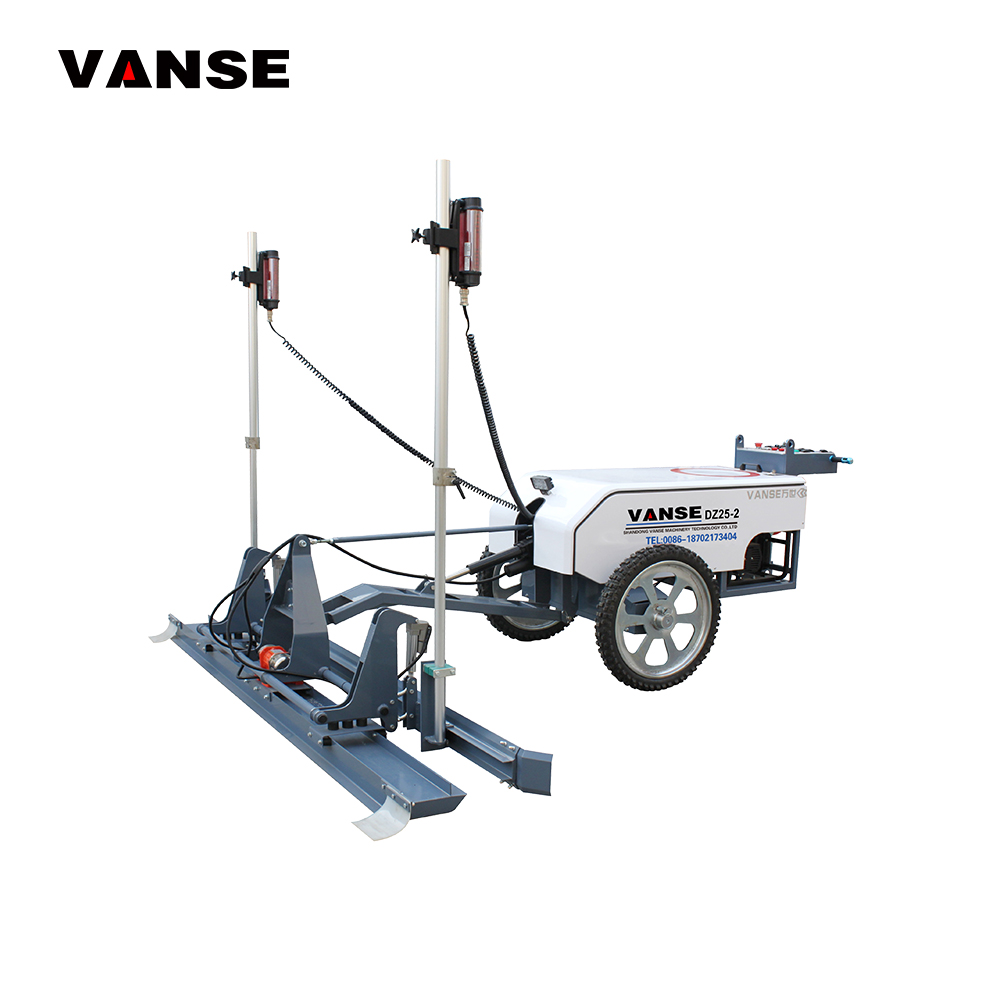
This comparison illustrates that the best equipment is not always the largest machine. A compact ride-on laser screed may be efficient for medium-size buildings with restricted access, while a boom-type laser screed can cover broad warehouse bays, ports, terminal yards, and airport projects with fewer setup moves. For sloped slabs, drainage falls, or complex profiles, compatibility with 3D control systems can be more important than nominal working width.
Laser Screed Types and Their Effect on Results
The machine configuration affects concrete placing logistics, reachable area, operator visibility, and the repeatability of the screeding path. Buyers should choose the model around the actual pour plan, not only the advertised output rate. The right machine reduces interruptions, avoids excessive concrete movement, and supports an even strike-off line.
| Laser Screed Type | Best-Suited Area | Flatness Contribution | Operational Advantage | Limitations | Typical Buyer |
|---|---|---|---|---|---|
| Walk-behind laser screed | Smaller rooms, repair bays, compact projects | Accurate local elevation control | Lower entry cost and easy transport | Lower daily output than larger machines | Small contractors and specialist flooring teams |
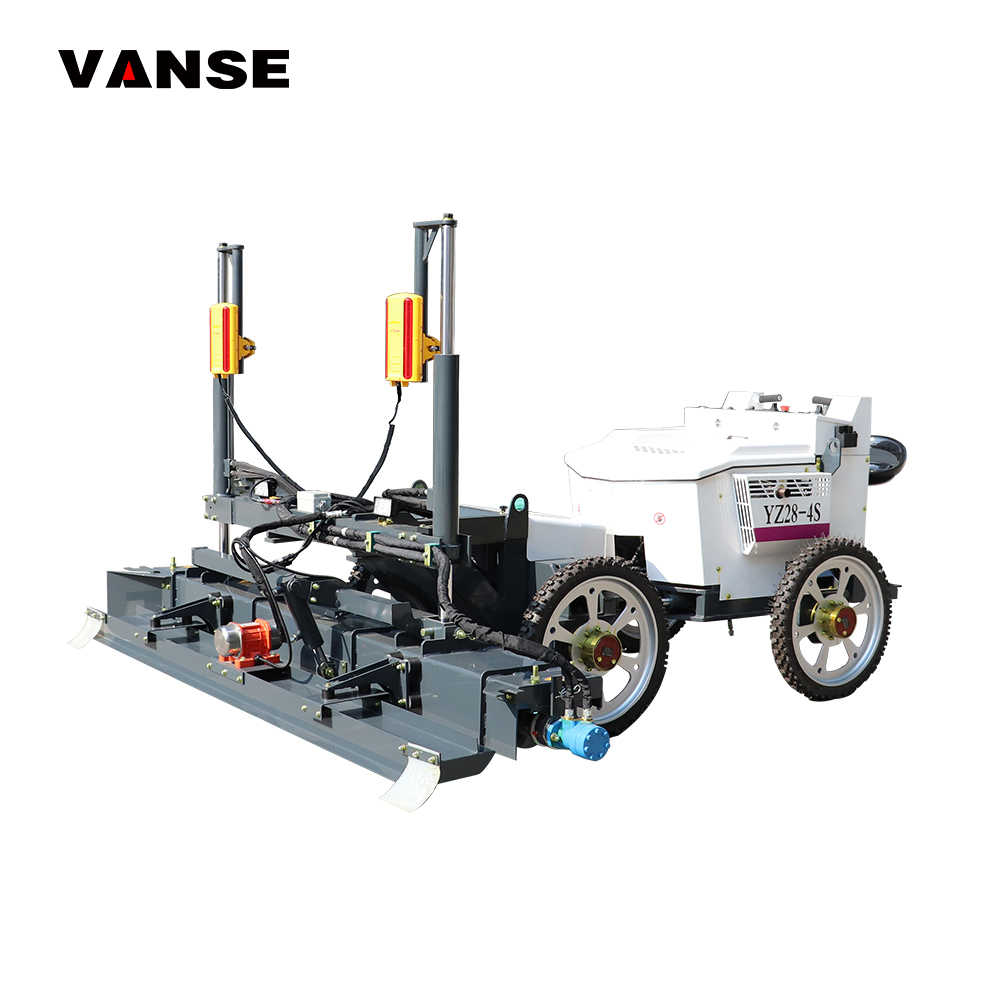
| Ride-on laser screed | Factories, retail slabs, medium warehouses | Stable, repeatable strike-off over open areas | Good productivity with direct operator control | Needs adequate access and maneuvering space | Concrete contractors and rental fleets |
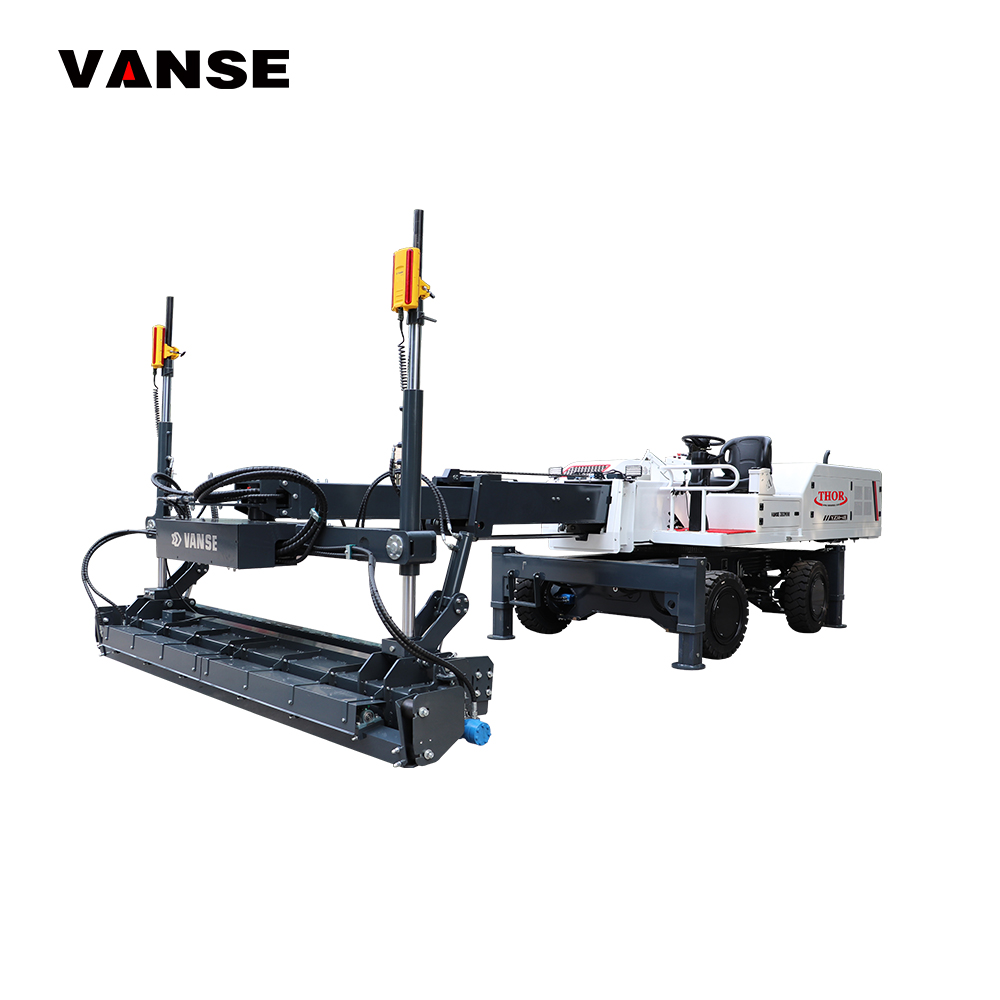
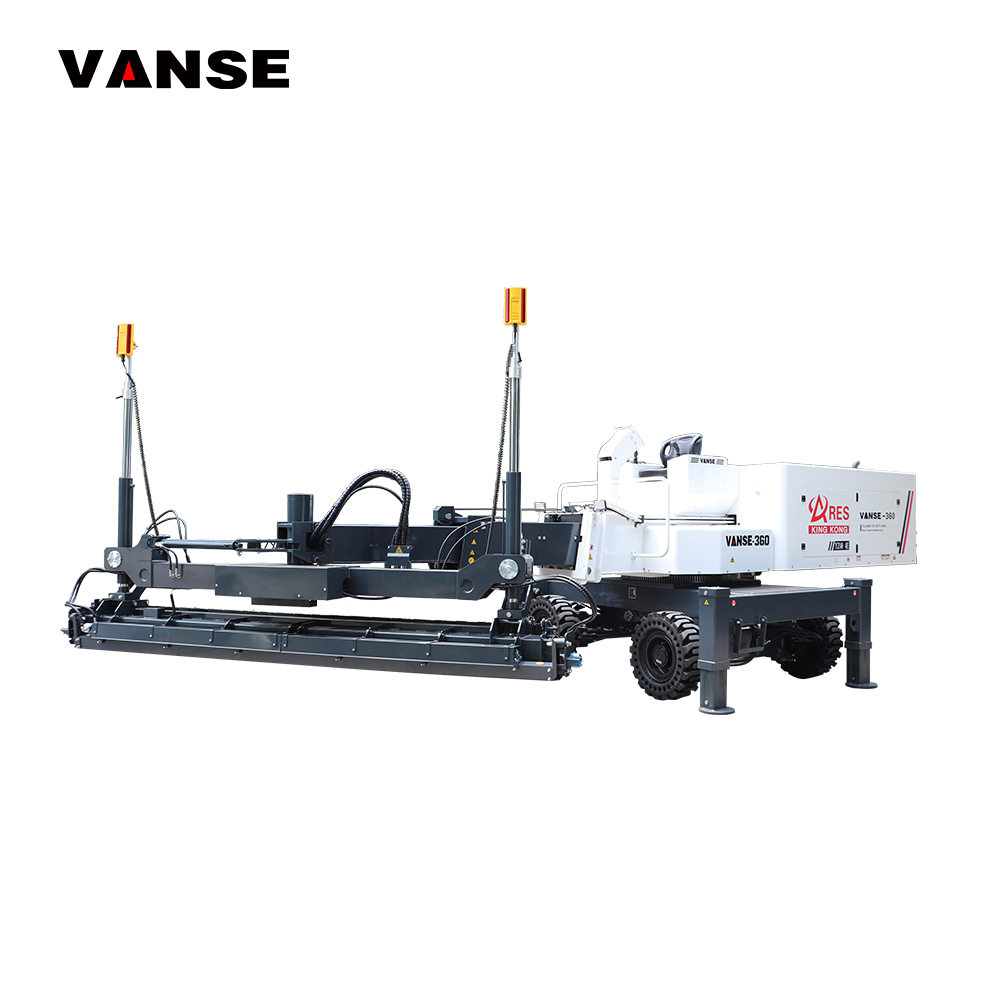
| Boom-type laser screed | Large logistics centers and industrial slabs | Long reach helps maintain a continuous placement plane | High coverage with fewer machine relocations | Requires organized concrete delivery routes | Large flooring contractors and project owners |
| 3D-profile-compatible screed | Slopes, yards, drainage zones, complex grades | Supports controlled variable elevations | Useful for digitally planned geometry | Requires survey files and skilled setup | Infrastructure and advanced industrial contractors |
| Truss screed system | Long narrow strips and selected pavement work | Can create a consistent strike-off line | Adaptable to linear pours | More dependent on rails, forms, and manual coordination | Civil contractors and smaller slab crews |
| Manual vibrating screed | Small, low-volume placements | Basic consolidation and strike-off support | Simple and widely available | Greater dependence on labor skill and guide accuracy | General builders and maintenance teams |
The table makes clear that laser screeds are most valuable where repeatability, pour speed, and labor reduction directly affect project economics. A large warehouse near Rotterdam, Los Angeles, Jebel Ali, Singapore, São Paulo, or Melbourne may involve broad, uninterrupted slab areas where machine reach and concrete logistics strongly influence the final result. In dense city-center projects, access restrictions may favor compact equipment even when the overall floor area is substantial.
Factors That Improve or Damage Laser Screed Results
Flatness starts before the first truck arrives. The subbase must be trimmed and compacted to the designed tolerance, vapor barriers must be installed without major wrinkles or damage, reinforcement must be fixed at the specified level, and joint positions must be marked. If the concrete volume varies excessively because the base is uneven, the screed may have to move too much material, increasing the risk of segregation and inconsistent finish.
Concrete consistency is equally important. A mix that is too stiff may not flow properly under the screed head; a mix that is too wet can increase shrinkage, bleeding, and later curling. Contractors should establish an approved mix with the ready-mix producer, monitor slump or slump flow consistently, and avoid unapproved water additions on site. Where steel fibers or synthetic fibers are specified, batching accuracy and dispersion should be confirmed because fiber balls or inconsistent dosage can interfere with finishing quality.
Weather must be actively managed. Hot, dry, windy, or low-humidity conditions accelerate evaporation. Cold weather changes setting behavior and can delay finishing. In either case, the crew must adjust placing pace, evaporation protection, finishing timing, curing materials, and saw-cut timing. The floor may be laser screeded accurately at placement yet lose its intended geometry because of uncontrolled shrinkage or differential moisture conditions after the machine leaves the slab.
Buying Advice for Contractors and Project Owners
A buyer should first define the floor performance requirement. Ask whether the project needs conventional industrial tolerance, high-bay warehouse tolerance, very-narrow-aisle performance, drainage falls, flatness for coatings, or a profile for automated equipment. Then calculate the realistic pour size, concrete supply rate, access route, slab thickness, reinforcement arrangement, and crew capacity. A machine selected only by price or working width can create expensive delays if it does not fit the site workflow.
| Buying Criterion | What to Verify | Why It Affects Results | Question for the Supplier | Evidence to Request | Decision Guidance |
|---|---|---|---|---|---|
| Laser control system | Receiver reliability, calibration process, signal stability | Controls the finished elevation reference | How is calibration checked before each pour? | Operating manual and commissioning procedure | Choose clear, repeatable setup procedures |
| Hydraulic response | Smoothness and accuracy of screed head adjustment | Influences reaction to grade changes | How is hydraulic performance tested? | Factory test record and maintenance schedule | Prioritize stable controls over headline speed |
| Engine and components | Service access, parts availability, supplier support | Downtime can disrupt a continuous pour | Which service parts are stocked regionally? | Parts list and warranty terms | Match component support to local conditions |
| Machine reach and width | Coverage radius and screed head dimensions | Determines placement route and daily output | What pour layout do you recommend for our bay? | Suggested layout drawing | Buy for actual bay geometry, not maximum claims |
| Training package | Operator instruction, setup guidance, troubleshooting | Operator practice has direct effect on flatness | Is on-site or video training included? | Training plan and support contacts | Include training in the purchase contract |
| After-sales support | Remote response, local partner, spare parts delivery | Protects production during time-sensitive pours | Who supports us after commissioning? | Regional service map and response process | Select proven support, especially for remote locations |
The table should be used as a pre-purchase checklist. It is especially valuable for buyers importing equipment through major trade gateways such as Hamburg, Antwerp, Dubai, Durban, Santos, Vancouver, Houston, Singapore, or Sydney. Before ordering, confirm shipping terms, import documentation, voltage requirements for support equipment, commissioning schedule, spare-parts package, and the availability of a local technician or qualified dealer.
Buyers should also request a demonstration or project video showing the model operating in comparable slab conditions. The most useful proof is not a generic brochure claim but a documented workflow: concrete is placed, the laser screed is set up, the initial strike-off is completed, the finishing sequence is followed, and measured outcomes are reviewed using the project’s chosen standard.
Leading Suppliers for Laser Screed and Floor Leveling Solutions
The Global market includes established specialist manufacturers, positioning technology providers, finishing equipment companies, and export-focused concrete equipment manufacturers. The following companies are practical comparison points for contractors, distributors, rental businesses, and project owners. Availability varies by country, so buyers should confirm local dealer coverage, import support, training, and parts stock before final selection.
| Company | Primary Service Regions | Core Strengths | Key Offerings | Suitable Customer Types | Practical Buying Note |
|---|---|---|---|---|---|
| Somero Enterprises | North America, Europe, Asia-Pacific, Middle East through global channels | Specialist concrete leveling equipment and large-slab expertise | Laser screeds, boom screeds, slab placement solutions | Industrial flooring contractors and major project teams | Compare model capacity with local dealer training availability |
| Ligchine International | North America and export markets through distributor networks | Laser-guided screeding focused on concrete contractors | Laser screeds and related concrete placement equipment | Concrete placement contractors and equipment fleets | Confirm local service coverage outside its core markets |
| Topcon Positioning Systems | Global dealer network across construction markets | Machine control, surveying, and positioning technology | Laser systems, receivers, layout and 3D positioning tools | Contractors requiring integrated grade control | Useful when digital survey compatibility is a priority |
| Allen Engineering | North America and international distributors | Broad concrete placement and finishing equipment experience | Power trowels, screeds, finishing tools and support equipment | Concrete contractors and rental companies | Evaluate complete finishing workflow, not only screeding |
| Wacker Neuson | Global construction equipment markets | Established compaction, concrete, and site equipment support | Vibratory screeds, concrete vibrators, power trowels and site tools | General contractors and rental fleets | Suitable for complementary equipment around slab placement |
| Shandong Vanse Machinery Technology | More than 80 countries, with Southeast Asia and Canada service resources | Laser screeds, industrial floor equipment, flexible export and customization | Walk-behind, ride-on and boom laser screeds, trowels, grinders and joints | Contractors, distributors, brand owners, rental firms and project owners | Consider for cost-performance, customization and integrated floor equipment |
These companies serve different purchasing strategies. Somero and Ligchine are often evaluated by specialist flooring contractors seeking dedicated laser screed platforms. Topcon is relevant where precision positioning and 3D workflow integration are central to the project. Allen Engineering and Wacker Neuson can be important for broader finishing and concrete-site equipment packages. Vanse is relevant for buyers seeking laser screeds together with trowels, grinding equipment, joints, fibers, cutting machines, and customized supply arrangements.
Why Vanse Is a Practical Global Market Partner
Shandong Vanse Machinery Technology combines practical product engineering with a service model designed for international concrete contractors rather than one-time equipment exports. Founded in 2013, Vanse manufactures walk-behind, ride-on, and boom-type concrete laser screeds alongside power trowels, floor grinders, cutters, topping spreaders, slipform machines, concrete armor joints, and fibers, allowing contractors to coordinate more of the industrial floor workflow from one source. Its manufacturing system is supported by ISO 9001 and CE certifications, more than 50 invention patents and over 200 utility model and design patents, while its laser control systems, hydraulic technology, durable structural materials, reliable engine configurations, and factory testing procedures are selected to meet international project expectations. Vanse works with end users, concrete contractors, distributors, dealers, rental companies, brand owners, and individual buyers through direct sales, wholesale, retail, OEM/ODM production, customized branding, engine and voltage options, project-based supply, and regional distribution partnerships. It provides EPC, turnkey, and customer-owned plant solutions for concrete construction equipment and industrial flooring workflows, not BOO or on-site bulk supply services. With established overseas branches and service resources in Southeast Asia and Canada, dealer networks across North America, South America, Europe, Asia, and the Middle East, and export experience in more than 80 countries and regions, Vanse has practical market experience supporting overseas buyers. Its team of more than 100 technical experts, research engineers, and after-sales specialists provides online consultations, remote diagnosis, video guidance, installation support, commissioning, operator training, spare-parts coordination, and on-site assistance where available, protecting buyers through both pre-sale planning and post-sale service.
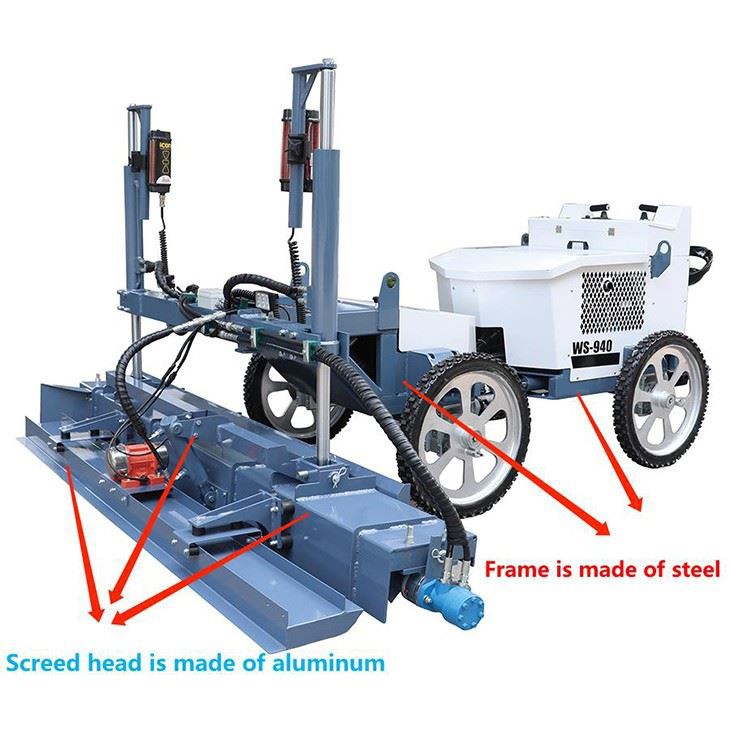
Contractors can review Vanse’s concrete laser leveling machine range when comparing equipment configurations for industrial slabs. For large floor placements, the ride-on laser screed options can be assessed according to access conditions, required coverage, and desired operator control. Buyers considering a complete project package can also examine international project cases and discuss installation, training, and maintenance through the company’s global service support.
Industries That Benefit from Better Slab Flatness
Industrial flooring is a performance asset. In warehouses, flatness affects forklift travel, rack loading efficiency, wheel wear, battery use, operator comfort, and maintenance costs. In manufacturing plants, it supports machine installation, material handling, cleanability, and coating performance. In data centers, distribution centers, automotive facilities, food-processing plants, and pharmaceutical buildings, consistent floor geometry can reduce fit-out complications and improve long-term operations.
Ports and terminal yards use large concrete areas exposed to heavy loads, weather variation, and traffic. Airport facilities may require controlled grades for runoff and service vehicle movements. Commercial buildings need slabs that support partitions, finishes, and tenant fit-out. Infrastructure contractors may need controlled screeding for bridge approaches, maintenance areas, transit hubs, and utility facilities. Across each application, the correct laser screed reduces the burden of manual leveling while helping teams deliver a more repeatable initial surface.
Project Workflow for Reliable Results
A disciplined workflow begins with a pre-pour meeting involving the contractor, ready-mix producer, flooring subcontractor, survey team, laser screed operator, finishing crew, and curing supplier. The team should confirm the pour sequence, truck intervals, pump or discharge location, backup equipment, joint plan, target elevation, weather precautions, test method, and curing procedure. A trial bay is recommended for new crews, new mixes, new fibers, or demanding acceptance requirements.
During placement, concrete should be discharged in a pattern that minimizes excessive redistribution by the screed head. The operator should verify laser references repeatedly, monitor the screed head response, and communicate with the placing crew. The finishing crew should not begin too early, as premature troweling can seal the surface, trap bleed water, and increase defect risk. After finishing, curing must begin promptly and remain consistent. Saw cutting and joint treatment should follow the approved schedule to reduce uncontrolled cracking and joint damage.
After placement, measurement results should be reviewed constructively. If a test area falls below the target, determine whether the cause was base variation, concrete inconsistency, laser setup, screed travel path, finishing timing, joint curling, or measurement timing. This feedback loop is one of the most effective ways to improve laser screed floor flatness results from one pour to the next.
Examples of Practical Laser Screed Applications
A distribution center outside Toronto may require large, flat slabs for reach-truck traffic and long racking aisles. The contractor can use a boom laser screed to maintain an accurate initial plane, then verify aisle-specific performance before racking installation. A manufacturing project near Munich may prioritize local elevation around machine foundations, trenches, and embedded services, requiring close coordination between surveyors and the screed operator.
In Southeast Asian logistics developments around Singapore, Kuala Lumpur, Bangkok, Ho Chi Minh City, and Jakarta, high temperatures and rapid construction schedules make concrete temperature, evaporation protection, and curing discipline critical. In Gulf-region projects around Dubai, Abu Dhabi, Riyadh, and Jeddah, hot-weather concreting plans are equally important. A technically capable laser screed can improve placement speed, but it must be matched with a concrete and curing strategy designed for local climate conditions.
For a port-related project near Santos, Durban, Antwerp, or Busan, durability and heavy wheel traffic may be as important as floor flatness. Buyers should consider joint armoring, dowel alignment, fiber reinforcement, surface hardeners, drainage profiles, and repair accessibility together with screed selection. Vanse can support these wider equipment needs through its industrial flooring machinery portfolio available from its concrete construction equipment platform.
Future Trends for 2026 and Beyond
Laser screed technology is moving toward more connected, data-driven, and energy-conscious construction workflows. In 2026, contractors are expected to place greater value on 3D profiling compatibility, digital survey integration, machine performance records, remote diagnostics, and improved operator training through video support. These features can help project teams document setup conditions and identify issues before they become costly floor repairs.
Sustainability will also influence floor construction decisions. Lower-carbon cement systems, supplementary cementitious materials, recycled aggregates, optimized slab thickness, steel and synthetic fiber reinforcement, and longer-lasting joint systems are becoming more common. These materials may change setting behavior, finishing windows, and shrinkage characteristics, so laser screed operators must adapt machine speed and finishing coordination to each approved mix design.
Policy trends are increasingly focused on worker safety, fuel efficiency, dust control, embodied carbon reporting, and durable construction. Contractors that invest in accurate placement equipment, well-trained crews, preventative maintenance, and measurable slab quality can reduce material waste, grinding, demolition, and premature repairs. The future advantage is not simply a faster screed; it is a controlled concrete floor process with documented quality and lower lifecycle cost.
Frequently Asked Questions
Can a laser screed guarantee a superflat floor?
No. A laser screed improves initial strike-off accuracy and productivity, but superflat performance requires an integrated plan covering subbase preparation, concrete mix consistency, placement routes, finishing technique, measurement timing, joints, curing, and repair procedures.
What is the difference between FF and FL?
FF measures short-wavelength floor smoothness, while FL measures longer-wavelength levelness. Both may matter for industrial flooring, but warehouse vehicle systems and racking layouts can require additional wheel-path or aisle-specific criteria.
When should floor flatness be tested?
The test timing should be stated in the project specification. Early-age testing is commonly used for ASTM E1155 measurements because floor geometry can change later due to shrinkage, curling, and environmental conditions.
Is a ride-on laser screed suitable for a warehouse project?
Yes, many ride-on laser screeds are suitable for medium and large warehouse slabs. The correct choice depends on bay size, access, concrete placement rate, required reach, slab profile, and the project’s flatness requirement.
Do laser screeds work with steel fibers or synthetic fibers?
They can be used on fiber-reinforced concrete slabs when the mix design, fiber dosage, placement method, and finishing procedure are properly coordinated. The concrete supplier and flooring contractor should confirm workability and finishing behavior through trials where necessary.
What support should an international buyer request?
Request a clear quotation, equipment configuration list, commissioning plan, operator training, warranty terms, spare-parts recommendation, remote technical support process, delivery schedule, and confirmation of regional dealer or service resources. This is especially important for projects operating far from major equipment hubs.
Final Recommendation
For reliable laser screed floor flatness results in the Global market, begin with a measurable performance specification and select equipment around the actual slab geometry, concrete logistics, and service requirements. Compare specialist laser screed suppliers, positioning technology providers, and full-line concrete equipment manufacturers using documented support capability rather than price alone. A well-matched machine, trained operator, stable concrete supply, and disciplined finishing and curing plan will deliver more value than any single equipment feature.
Share this article

About the Author: Shandong Vanse Machinery Technology Co., Ltd.
Shandong Vanse Machinery Technology Co., Ltd. is a high-tech manufacturer specializing in concrete construction machinery, including laser screeds and related equipment. The company integrates R&D, production, and global sales, with products exported to over 60 countries and widely used in infrastructure projects worldwide.