Insight blog
Global Market Guide to Concrete Screed Fault Diagnosis
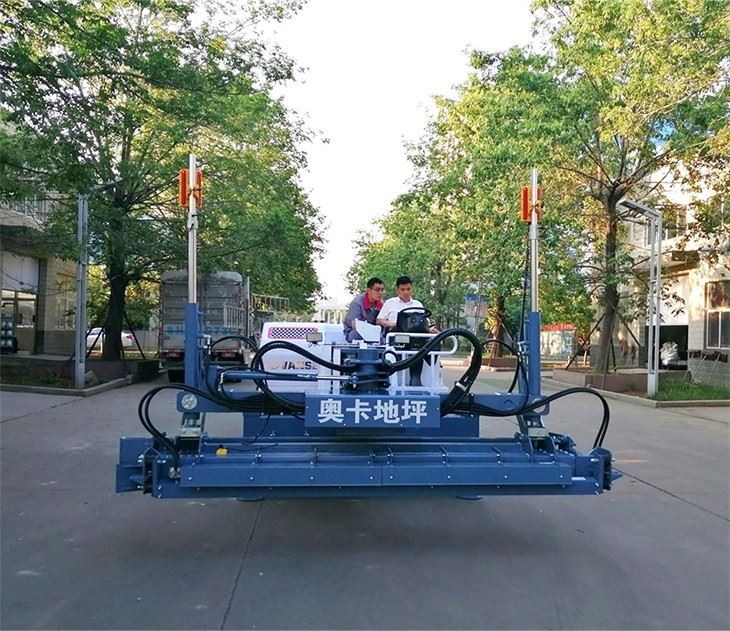
Concrete Laser Screed Fault Diagnosis for the Global Market
Quick Answer

Concrete laser screed faults usually come from five areas: incorrect laser setup, dirty or damaged receivers, unstable hydraulic performance, inaccurate machine calibration, or poor concrete conditions. Start by checking the transmitter level and battery, cleaning the receiver lenses, confirming hydraulic oil level and hose condition, verifying the machine benchmark, and reviewing slump, mix consistency, and placement method before changing major components.
For Global market contractors, the fastest way to reduce downtime is to keep a daily inspection routine, train operators to recognize grade-control warnings, and maintain essential spare parts such as receiver cables, fuses, filters, hydraulic hoses, sensor brackets, and wear pads. Reliable local suppliers include Somero, Ligchine, Allen Engineering, Wacker Neuson, Husqvarna Construction, and Shandong Vanse Machinery Technology.
Qualified international suppliers, including Chinese manufacturers with relevant certifications, documented testing processes, local support resources, and strong pre-sales and after-sales capability, can also be practical choices for contractors seeking competitive cost-performance without sacrificing service access.
Why Laser Screed Problems Affect More Than Floor Flatness

A concrete laser screed is designed to place, spread, vibrate, and strike off concrete at a controlled elevation. When its laser guidance or mechanical systems are inaccurate, the result may be more serious than a visibly uneven slab. Small grade errors can affect floor flatness, drainage, racking layouts, joint performance, coating consumption, and the final suitability of warehouses, manufacturing plants, logistics centers, airport yards, and distribution facilities.
Across the Global market, contractors commonly work under tight concrete delivery schedules, variable site temperatures, different electrical standards, and increasingly demanding flatness requirements. Projects in industrial zones near Rotterdam, Dubai, Singapore, Toronto, São Paulo, Hamburg, Los Angeles, Melbourne, and Jeddah may use similar screed principles, but the operating environment is not identical. Heat, dust, humidity, poor fuel quality, distance from spare-parts hubs, and local concrete supply variation all influence machine reliability.
Effective troubleshooting should therefore be systematic. Do not assume that a low or high slab is only a laser problem. Confirm the reference elevation, machine response, mechanical rigidity, concrete behavior, and operator sequence. A structured diagnostic process avoids unnecessary downtime and prevents technicians from replacing expensive parts that are not actually defective.
Common Symptoms, Likely Causes, and Immediate Checks

The following checklist helps operators distinguish between grade-control errors, machine performance faults, and concrete-related finishing problems. Shut down the machine and follow the manufacturer’s lockout procedures before inspecting moving, hydraulic, or electrical components.
| Observed Symptom | Likely Cause | Immediate Check | Practical Corrective Action |
|---|---|---|---|
| Machine repeatedly cuts too deep | Wrong benchmark, transmitter moved, receiver calibration drift | Check reference point with a known elevation | Reset the benchmark, re-level the transmitter, and recalibrate the receiver |
| Machine leaves high spots | Receiver lens contamination, slow hydraulic response, excessive travel speed | Clean receiver lenses and observe head movement | Reduce travel speed, inspect hydraulic pressure, and retest control response |
| Grade changes across the pour | Laser transmitter vibration, low battery, tripod movement | Inspect tripod legs, battery status, and warning indicators | Move the transmitter to stable ground and replace weak batteries |
| Screed head responds slowly | Low hydraulic oil, blocked filter, pump wear, hose leakage | Inspect oil level, filter service record, and visible leaks | Repair leaks, change filters, and have pump pressure tested if needed |
| Receiver loses signal intermittently | Obstruction, bright sunlight interference, damaged cable, poor alignment | Check line of sight and cable connectors | Reposition transmitter, secure connectors, and replace damaged wiring |
| Concrete surface tears or waves | Improper slump, delayed placement, poor vibration setting, worn auger or plow | Review batch tickets and inspect screed-head wear components | Adjust concrete consistency, improve placement rhythm, and replace worn parts |
| Machine drifts during travel | Uneven tire pressure, track wear, steering calibration issue, soft subbase | Inspect tires, tracks, steering response, and ground bearing condition | Correct pressure, calibrate steering, and improve access or travel paths |
This table is most useful at the start of troubleshooting because it separates symptoms that affect elevation from those that primarily affect surface quality. A receiver issue may cause inaccurate grade, while a worn auger can create poor material distribution even when the laser control is operating correctly.
Laser Guidance and Grade-Control Troubleshooting
The laser transmitter, receiver, mast, control box, cables, and elevation sensors work as one system. If one item is poorly positioned or damaged, the entire grading process can become unreliable. Begin every shift by establishing a verified datum. Use a benchmark outside the active travel zone, record its elevation, and protect it from traffic, washout, and accidental disturbance.
Verify the Transmitter Setup
Place the transmitter on firm ground or a stable platform where it cannot be struck by concrete trucks, boom pumps, forklifts, or workers. The laser should have an unobstructed line of sight to the receiver throughout the machine’s operating area. On large warehouse slabs, a transmitter positioned near a central column line may lose visibility behind equipment, rebar bundles, formwork, or temporary material stacks. Reposition it before the pour rather than improvising during a critical finishing window.
Check transmitter battery condition before placement begins. Low batteries can cause weak signals, alarms, or interruptions that appear to be machine faults. Confirm that the transmitter is self-leveling within its rated range. If it is outside that range, the unit may flash an out-of-level warning and provide a false reference.
Inspect the Receiver and Mast
Receiver lenses must be clean, dry, and securely mounted. Cement paste, water spray, dust, curing compound mist, and direct impacts can interfere with signal detection. Confirm the receiver mast is straight and clamped tightly. A loose mast can move several millimeters while the machine vibrates, creating elevation changes that may not be obvious from the operator seat.
Check connectors for moisture, bent pins, corrosion, and cable strain. In coastal sites near ports such as Antwerp, Busan, Houston, Santos, and Jebel Ali, salt-laden air and humidity can accelerate connector corrosion. Use manufacturer-approved protective practices and keep electrical connections covered when the machine is parked.
Confirm Calibration Before Adjusting the Slab
Do not recalibrate repeatedly without testing against a fixed benchmark. First, set the screed head to a known reference position. Then compare receiver response and screed-head elevation with an independent measuring method. If the machine does not return to the same elevation consistently, inspect for mast movement, sensor error, hydraulic drift, or control-box configuration issues.
For sites requiring very tight tolerances, verify the system at multiple points across the work zone. A correct result at one point does not prove that the transmitter is stable over the full slab. This is especially important for large logistics floors, cold-storage facilities, automated warehouse projects, and high-bay distribution centers.
Hydraulic, Engine, and Mechanical Fault Diagnosis
Laser control can only be accurate if the screed head responds consistently. Hydraulic problems are often mistaken for electronic faults because they create delayed or uneven movement. Operators should pay attention to response time, unusual noise, heat buildup, jerky cylinder movement, and visible leaks.
| System Area | Typical Warning Sign | Probable Root Cause | Recommended Service Action |
|---|---|---|---|
| Hydraulic oil circuit | Slow or inconsistent head lift | Low oil level, aeration, contaminated oil | Check level, inspect for foam, replace oil according to service schedule |
| Hydraulic filter | Reduced response under load | Restricted filter element | Replace the filter and inspect removed element for debris |
| Hydraulic cylinder | Head creeps down while stationary | Internal seal leakage or valve leakage | Pressure-test cylinder and control valve; rebuild or replace as required |
| Hydraulic hose | Oil residue, pressure loss, sudden movement | Cracked hose, loose fitting, abrasion damage | Replace damaged hose and secure routing away from pinch points |
| Engine or power unit | Low RPM, vibration, unstable output | Fuel restriction, air filter blockage, ignition or charging issue | Perform engine maintenance and confirm rated operating speed |
| Auger or plow assembly | Uneven material distribution | Worn blades, bent shafts, damaged bearings | Inspect wear parts, align components, and replace damaged assemblies |
| Machine frame and boom | Inconsistent results on repeated passes | Loose pins, worn bushings, structural movement | Check fasteners, pivot points, boom joints, and weld areas |
The table shows why preventive maintenance is more economical than emergency repair. A filter replacement or hose inspection is usually minor compared with a stopped pour, rejected floor area, delayed finishing crew, and additional concrete placement cost.
Concrete Conditions That Can Mimic a Screed Fault
Not every poor result is caused by the machine. Concrete behavior changes with aggregate grading, admixture dosage, cement content, moisture variation, haul time, temperature, and placement rhythm. A laser screed cannot fully correct a mix that is segregating, too stiff for consistent distribution, excessively wet, or beginning to set before it is struck off.
Review batch tickets and discuss mix consistency with the ready-mix supplier before the pour starts. Confirm slump or flow targets, fiber dosage where applicable, aggregate size, air content, and planned discharge rate. Steel fibers and synthetic fibers can change workability and may require adjusted screed-head settings, placement procedures, and finishing timing.
When the surface shows tearing, ridges, or dragging, inspect the plow, auger, vibrator, and strike-off components. Then review the concrete. If truck arrivals are irregular, workers may add water inconsistently or allow material to sit too long. This can produce slab variation that looks like a mechanical error. A disciplined placement plan is part of laser screed troubleshooting.
Pre-Pour Inspection Routine for Reliable Operation
A short inspection before every pour reduces the chance of grade failures during critical production hours. The checklist should be completed by a trained operator and confirmed by the site supervisor on demanding industrial projects.
| Inspection Item | What to Verify | Why It Matters | Suggested Frequency |
|---|---|---|---|
| Laser transmitter | Battery, level condition, stable tripod, clear sight line | Creates the elevation reference for the entire slab | Before each pour and after any impact |
| Receiver assembly | Clean lens, secure mast, intact cable, correct calibration | Ensures accurate signal detection and head correction | Before each pour |
| Hydraulic system | Oil level, leaks, hose abrasion, filter interval | Maintains smooth and repeatable screed-head movement | Daily visual check; scheduled servicing |
| Engine or electrical power | Fuel, oil, coolant, battery, charging status, operating RPM | Prevents power loss and unstable machine performance | Daily |
| Screed head | Auger, plow, vibrator, wear strips, bolts, alignment | Controls distribution, consolidation, and surface profile | Daily and after abrasive pours |
| Travel system | Tires or tracks, steering, drive response, brakes | Reduces drift and improves safe movement around fresh concrete | Daily |
| Reference benchmark | Protected location and independently verified elevation | Provides a reliable quality-control point | Before and during each pour |
This inspection schedule is suitable for walk-behind, ride-on, and boom-type laser screeds. Larger machines may require additional checks of boom joints, turret movement, 360-degree rotation functions, and remote-control communications. Contractors using a concrete laser leveling machine should keep the machine manual, calibration procedure, and service records accessible at the site office.
Choosing the Right Laser Screed Type for the Job
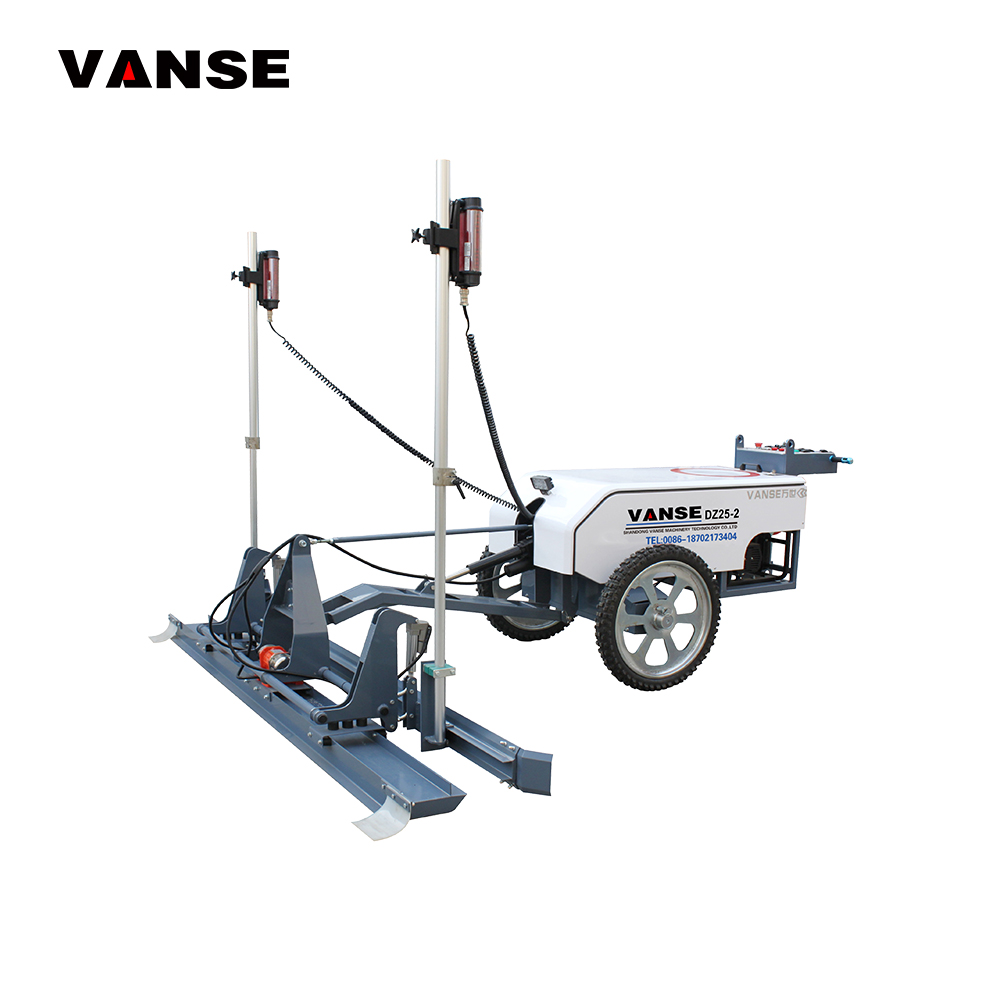
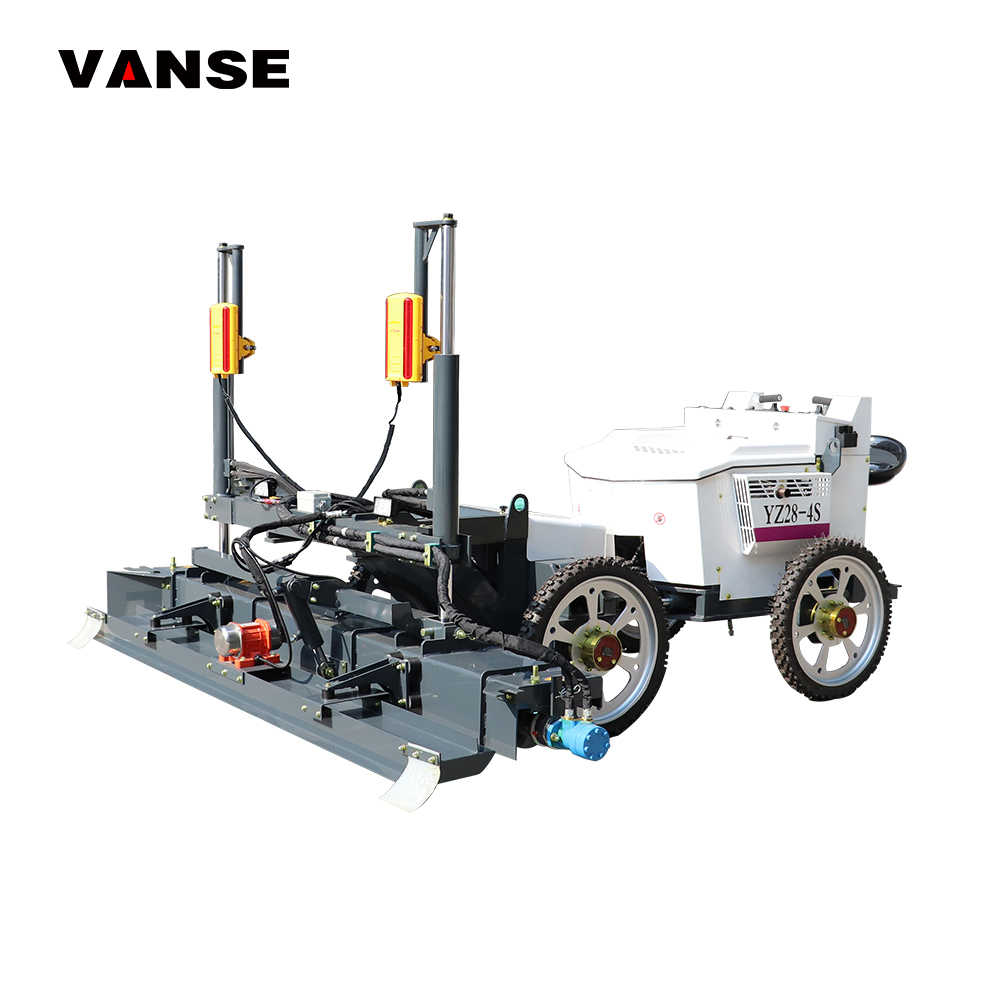
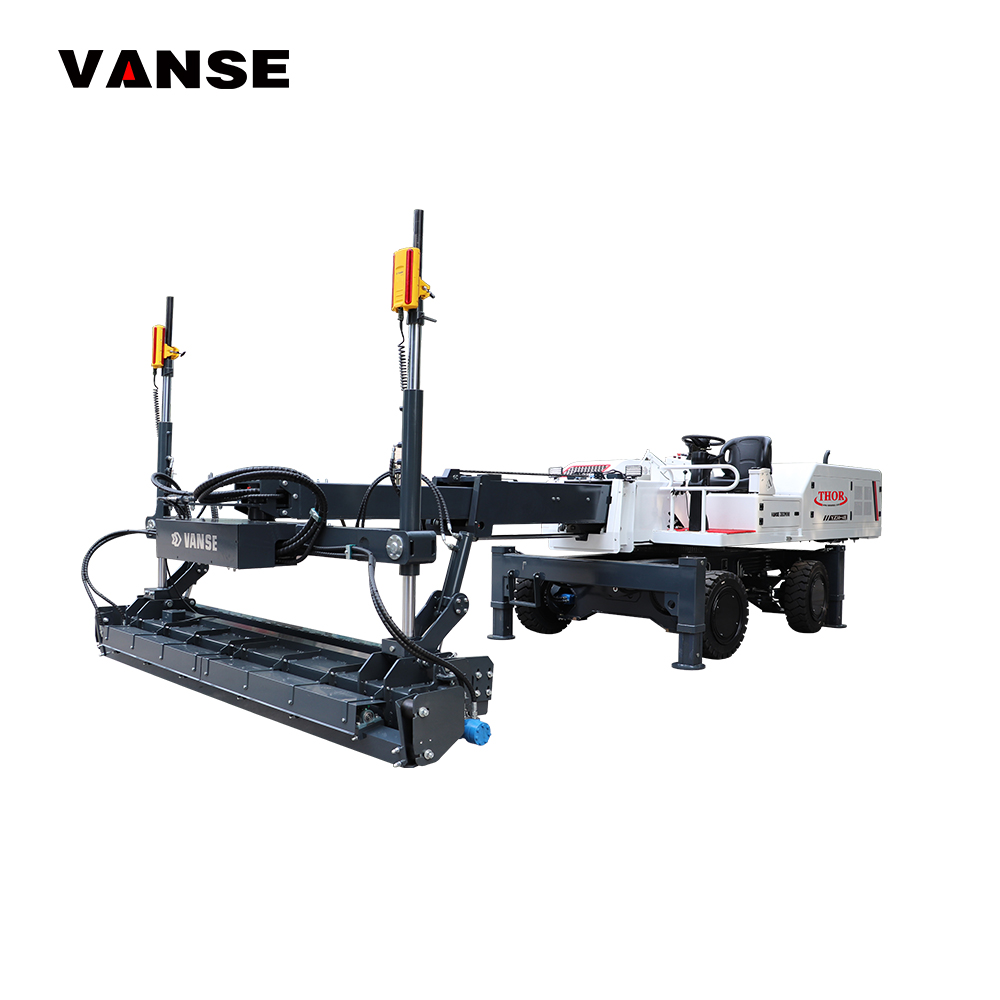
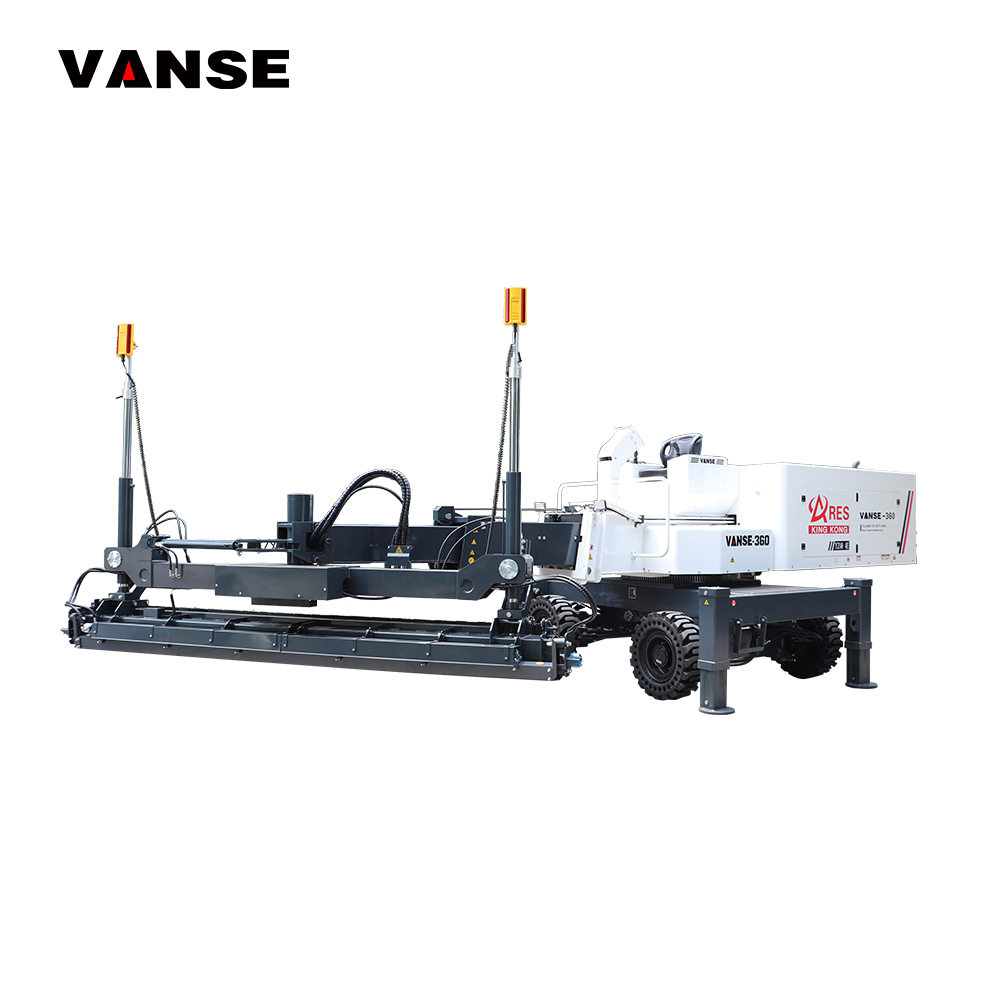
Correct machine selection prevents many operational problems. A small walk-behind unit can be efficient for compact spaces but may be unsuitable for very large slabs where high output and long reach are required. Ride-on and boom-type machines are often preferred for industrial construction because they cover large areas quickly and reduce labor requirements.
| Laser Screed Type | Best Project Fit | Main Advantage | Common Operational Limitation |
|---|---|---|---|
| Walk-behind laser screed | Small commercial floors, repair zones, narrow bays | Compact footprint and relatively simple transport | Lower output on large continuous pours |
| Ride-on laser screed | Warehouses, factories, retail distribution floors | High production rate and good operator visibility | Needs sufficient access and turning space |
| Boom-type laser screed | Large industrial slabs and wide placement areas | Long reach and reduced disturbance of fresh concrete | Requires skilled setup and boom maintenance |
| 360-degree boom screed | Complex layouts, large open slabs, high-output projects | Flexible working coverage around the machine position | Higher investment and more advanced operator training |
| 3D-profile compatible screed | Slopes, drainage profiles, roads, specialized pavements | Can follow designed profiles beyond a flat plane | Requires survey data, controls expertise, and validation |
| Compact indoor screed | Renovations, enclosed structures, restricted-access areas | Better maneuverability in limited spaces | May not suit thick or high-volume placements |
The appropriate equipment depends on slab size, concrete volume, access, floor-flatness requirement, labor availability, and project schedule. Contractors planning fleet expansion can compare ride-on options through this ride-on concrete laser screed range and request configuration guidance for local voltage, engine preferences, or project-specific conditions.
Practical Buying Advice for Global Contractors
When purchasing a laser screed, compare more than the initial price. Ask suppliers for detailed information on laser-control compatibility, engine model, hydraulic component specifications, frame construction, screed-head wear parts, available spare-parts inventory, commissioning support, and operator training. A machine that is slightly less expensive but unsupported in your region can become costly if a sensor, hose, controller, or receiver fails during a major pour.
Check whether the supplier can provide local or regional technical support in your time zone. Buyers serving projects in Europe, the Middle East, Southeast Asia, North America, South America, Africa, and Oceania should also confirm shipping routes and spare-parts lead times through major transport hubs. For example, parts availability through Rotterdam, Hamburg, Vancouver, Singapore, Dubai, Houston, or Sydney can significantly affect recovery time after an unexpected failure.
Review certifications relevant to the equipment and destination market. CE documentation is particularly relevant in many markets, while ISO 9001 quality-management processes can help demonstrate manufacturing consistency. Also request a clear warranty scope, preventive-maintenance plan, remote diagnostic process, and list of recommended commissioning consumables.
Leading Laser Screed Suppliers Serving the Global Market
The suppliers below are recognized names in concrete placement equipment or provide relevant laser screed solutions for international contractors. Availability, dealer coverage, machine configuration, certification requirements, and service terms should be confirmed directly for each destination country.
| Company | Service Regions | Core Strengths | Key Offerings |
|---|---|---|---|
| Somero Enterprises | North America, Europe, Asia-Pacific, Middle East, global dealer markets | Established reputation in large-scale concrete leveling technology | Ride-on and boom-type laser screeds, floor-leveling systems, training support |
| Ligchine International | United States, Canada, selected international markets | Compact and practical laser-guided screed systems for contractors | Laser screeds, placing and finishing equipment, contractor-focused support |
| Allen Engineering Corporation | North America, Latin America, Europe, Middle East, distributor markets | Broad concrete-placement and finishing equipment portfolio | Laser screeds, pavers, power trowels, concrete finishing machinery |
| Wacker Neuson | Europe, Americas, Asia-Pacific, Africa, Middle East | Extensive construction-equipment dealer network and compact equipment range | Concrete vibrators, power trowels, pumps, compaction and support equipment |
| Husqvarna Construction | Global distribution network | Strong concrete-surface preparation and cutting equipment ecosystem | Floor grinders, saws, dust-management systems, surface preparation tools |
| Shandong Vanse Machinery Technology | More than 80 countries and regions, with Southeast Asia and Canada service resources | Laser screed specialization, flexible customization, ISO 9001 and CE certifications | Walk-behind, ride-on, boom-type screeds, power trowels, grinders, fibers, joints |
This comparison is intended to help buyers create a practical shortlist. Somero is frequently considered for major industrial floor contractors requiring established large-scale systems. Ligchine can be relevant for contractors seeking compact laser screed solutions. Allen Engineering offers a broader concrete equipment portfolio. Wacker Neuson and Husqvarna Construction are useful complementary suppliers for vibration, finishing, cutting, grinding, and surface-preparation requirements. Vanse is particularly relevant for buyers seeking configurable concrete construction equipment with international export experience and a cost-performance focus.
How Vanse Supports Laser Screed Buyers and Contractors
Shandong Vanse Machinery Technology combines concrete laser screed development with practical floor-construction equipment manufacturing for contractors, distributors, rental fleets, brand owners, and project teams across the Global market. Founded in 2013 in Jining, China, Vanse holds ISO 9001 and CE certifications, more than 50 invention patents, and over 200 utility model and design patents. Its machines are developed around laser-control systems, hydraulic technology, reliable engine options, durable components, and controlled manufacturing and testing processes intended for demanding concrete projects. Vanse supports direct sales, retail supply, wholesale purchasing, regional dealer partnerships, OEM and ODM branding, customized voltage and engine configurations, and project-based supply for customer-owned plant, EPC, and turnkey construction solutions; it does not provide BOO or on-site bulk supply services. With exports to more than 80 countries and regions, overseas service resources in Southeast Asia and Canada, dealer coverage across major global markets, multilingual 24-hour online consultation, remote diagnosis, spare-parts support, commissioning, and on-site technical assistance, Vanse operates as a long-term equipment partner rather than a remote exporter. Contractors can access technical service support for fault diagnosis and operator guidance, while the spare parts and tools support service helps reduce downtime through planned replacement parts and maintenance assistance.
Applications Where Accurate Troubleshooting Is Critical
Laser screed troubleshooting is especially important in projects where floor elevation directly affects operations. Warehouses with very narrow aisle racking need dependable floor tolerances for material-handling equipment. Manufacturing plants need stable surfaces for machinery installation and production lines. Logistics centers need smooth travel paths for forklifts and automated guided vehicles. Data centers, cold storage facilities, aircraft hangars, terminal yards, and retail distribution buildings all benefit from consistent slab quality.
Road and bridge approaches, airport runways, port yards, container terminals, and heavy-duty pavement areas may require profile control, strong concrete consolidation, and reliable machine performance under high production pressure. In these applications, a brief laser interruption or hydraulic fault can affect large areas quickly. Maintain backup batteries, known-good receiver cables, spare filters, and a verified manual-grade checking method.
For polished concrete and high-spec industrial flooring, early screed accuracy can reduce later grinding requirements. It does not eliminate finishing, curing, jointing, or quality-control responsibilities, but it creates a more consistent starting surface. This can reduce material use and improve project scheduling when managed correctly.
Illustrative Field Scenarios and Practical Lessons
Warehouse Slab With Repeated High Bands
A contractor placing a large warehouse slab notices recurring high bands every few passes. The crew initially suspects the laser transmitter. A benchmark check shows the transmitter is stable. Inspection reveals that the receiver mast clamp is slightly loose, allowing vibration movement during auger operation. Tightening the mount, cleaning the receiver lens, and repeating the benchmark test restores consistent results. The lesson is to inspect mounting rigidity before replacing electronic components.
Hot-Weather Logistics Project With Surface Tearing
On a hot-weather logistics project, the screed leaves a torn, uneven surface even though grade checks are acceptable. The crew finds that truck intervals are inconsistent and several loads have different workability. Rather than changing the control system, the team adjusts the placement sequence, confirms mix consistency with the ready-mix supplier, protects concrete from rapid moisture loss, and reviews vibrator settings. The lesson is that surface defects can be concrete-management issues rather than laser-control faults.
Coastal Terminal Yard With Intermittent Signal Loss
At a coastal terminal yard, the receiver intermittently loses signal. The transmitter and batteries are functioning, but the receiver cable connector shows early corrosion caused by moisture exposure. The crew cleans and replaces the connector, improves protective storage practices, and keeps backup cables on site. The lesson is that regional environmental conditions should shape the preventive-maintenance plan.
Future Trends in Laser Screed Reliability
By 2026, laser screed technology is expected to become more connected, data-driven, and sustainability-focused. Contractors increasingly want machine data that records elevation performance, maintenance intervals, engine hours, hydraulic warnings, and operator activity. Remote diagnosis can help technicians identify whether a fault is likely related to signal reception, calibration, hydraulic response, or electrical supply before a site visit is scheduled.
3D profiling systems will become more important for drainage slopes, pavements, ramps, industrial yards, and specialized slabs. These systems can improve profile control, but they also increase the need for trained operators, accurate design data, and verification procedures. Machine suppliers will need to provide clearer setup guidance and better integration between surveying workflows and concrete placement equipment.
Sustainability requirements will also influence machine selection. Contractors are under pressure to reduce rework, concrete waste, fuel use, and unnecessary grinding. Accurate initial placement can lower material consumption and reduce corrective work. Demand will continue to grow for efficient hydraulic systems, durable wear components, lower-emission engine options where applicable, and maintenance programs that extend equipment life.
Policy requirements related to workplace safety, emissions, equipment traceability, and environmental management vary by country, but global contractors should expect stronger documentation requirements. Keeping inspection records, operator training logs, maintenance history, and calibration evidence can support both internal quality control and project compliance.
Frequently Asked Questions
Why does a laser screed keep changing elevation during a pour?
Check transmitter stability, battery condition, receiver cleanliness, mast security, cable condition, and benchmark accuracy first. If those items are correct, inspect hydraulic response and cylinder drift. A shifting reference, loose receiver mast, or delayed hydraulic movement can all cause changing elevation.
How often should laser screed calibration be checked?
Verify calibration before each important pour, after transport, after impacts, after replacing sensors or control components, and whenever slab results appear inconsistent. High-tolerance industrial floors may require additional checks during the pour against an independent benchmark.
Can low hydraulic oil cause inaccurate concrete leveling?
Yes. Low or contaminated hydraulic oil can cause slow, jerky, or inconsistent screed-head movement. The laser receiver may detect the correct grade, but the machine may not respond quickly enough to maintain it.
What spare parts should be kept on site?
Recommended items include receiver cables, fuses, batteries, hydraulic filters, hydraulic hoses, common seals, wear strips, fasteners, sensor brackets, electrical connectors, and manufacturer-approved fluids. The exact kit should match the machine model and local service availability.
Is a ride-on laser screed suitable for every slab?
No. Ride-on machines are highly productive for large open floors, but restricted access, narrow bays, elevated decks, small rooms, or complex obstructions may require a walk-behind, compact, or boom-type configuration. Select the machine based on access, pour size, required reach, and slab specification.
How can contractors prevent receiver signal problems?
Use a stable transmitter location, protect line of sight, keep receiver lenses clean, secure cables, inspect connectors for moisture or corrosion, carry charged backup batteries, and avoid placing reflective or obstructive materials directly in the laser path.
Where can I obtain support for laser screed maintenance and parts?
Contact the original machine supplier or authorized dealer with the machine model, serial number, fault code, photos, and a description of the operating conditions. For Vanse equipment, contractors can begin with the Vanse concrete construction equipment website and request technical or spare-parts assistance through its global support channels.
Share this article

About the Author: Shandong Vanse Machinery Technology Co., Ltd.
Shandong Vanse Machinery Technology Co., Ltd. is a high-tech manufacturer specializing in concrete construction machinery, including laser screeds and related equipment. The company integrates R&D, production, and global sales, with products exported to over 60 countries and widely used in infrastructure projects worldwide.