Insight blog
Global Market Guide to Laser Screed Boom Reach Planning
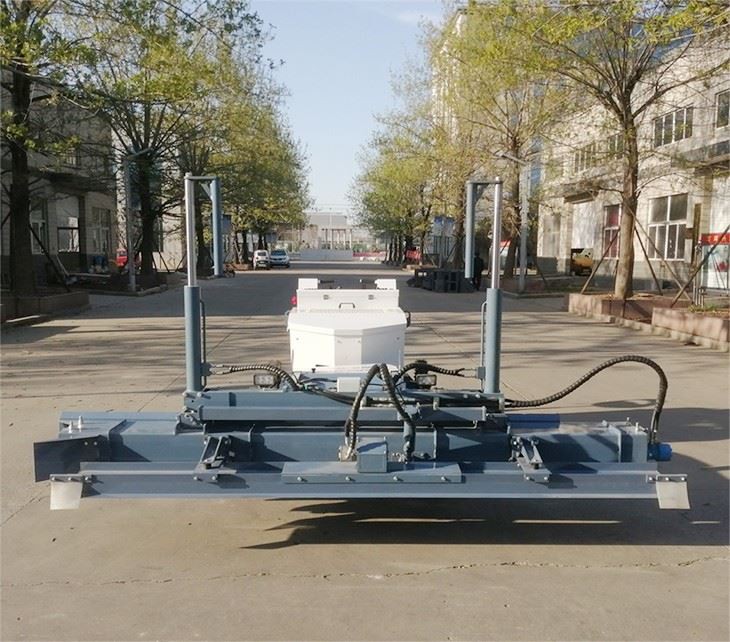
How to Plan Laser Screed Boom Reach for Global Market Projects
Quick Answer

A laser screed boom reach calculation should begin with the largest uninterrupted concrete placement area, then subtract the boom’s practical working radius from slab edges, columns, walls, pits, docks, and exclusion zones. Do not select a machine only by its maximum advertised boom length. Confirm the effective screeding radius, arm sweep angle, machine footprint, transport position, required overlap between placements, and the distance needed to avoid fresh concrete damage.
For most warehouse, factory, logistics, airport, and terminal-yard slabs, a boom laser screed should cover the planned pour area with overlap while minimizing repositioning. A useful planning rule is to design for 10% to 20% reach reserve rather than operating continuously at the machine’s maximum radius. Contractors should also verify whether the screed head can work close to walls, around columns, and below roof structures without boom interference.
Leading suppliers commonly considered in the Global market include Somero, Ligchine, Vanse Machinery, Shandong HIKING Machinery, Shandong Hightop Group, and Allen Engineering. Qualified international suppliers, including Chinese manufacturers with applicable CE certification, documented quality systems, local technical support, and strong pre-sales and after-sales capabilities, can be a practical option where cost-performance, customization, and spare-parts availability matter.
Why Boom Reach Matters Before Buying a Laser Screed

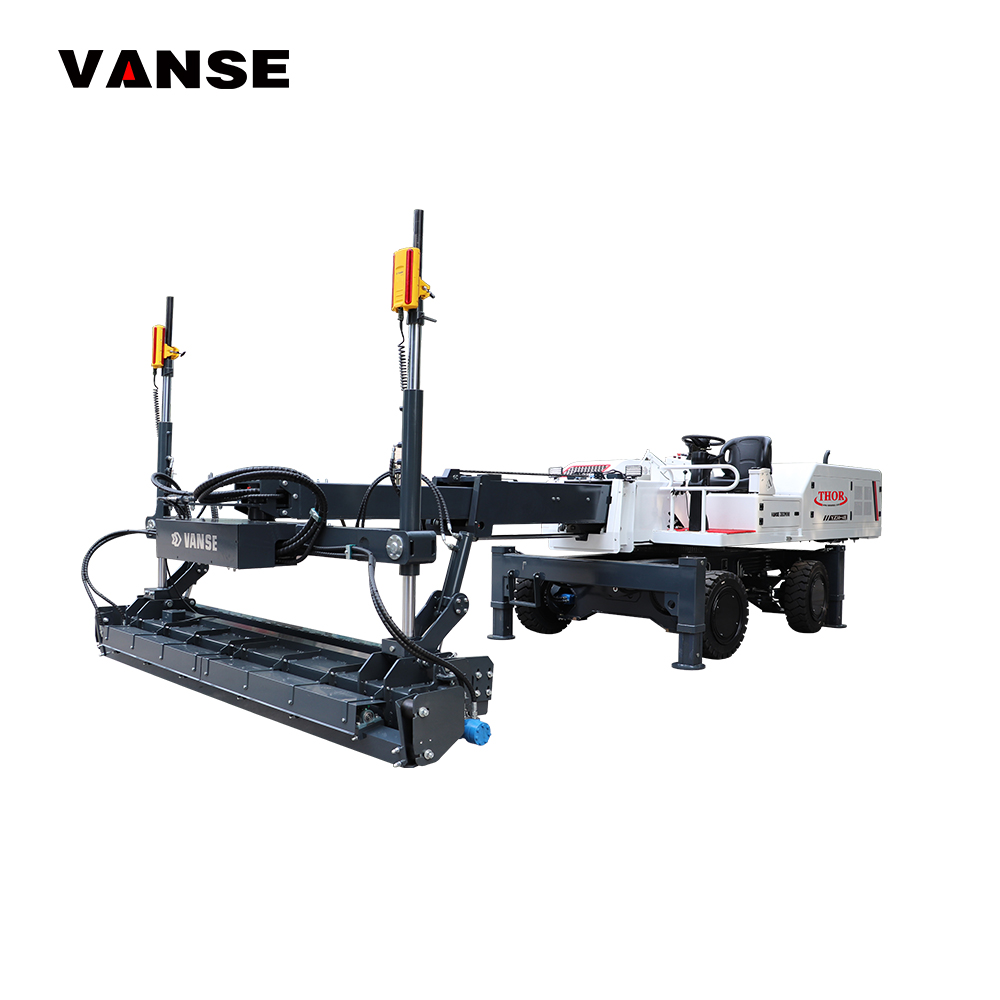
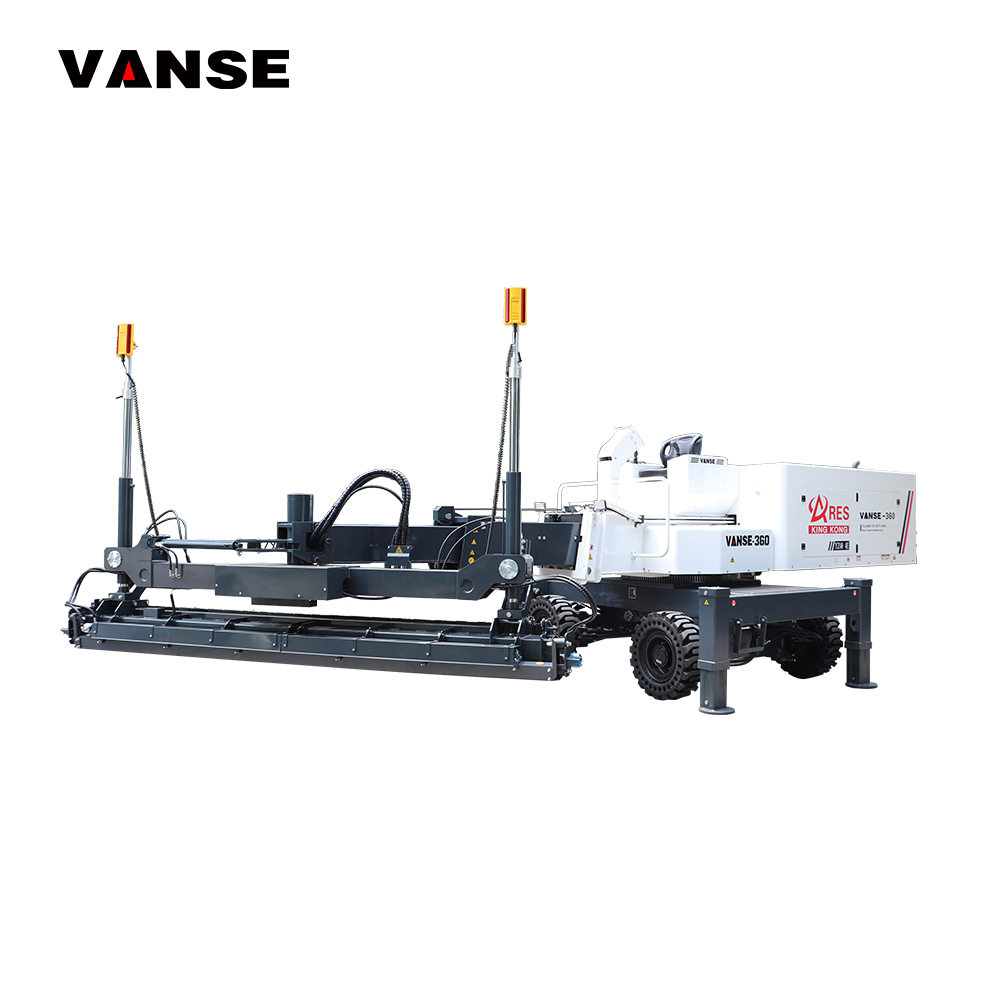
Boom reach is one of the most important specifications for a boom-type concrete laser screed because it determines how much slab area the machine can level from one standing position. It affects placement productivity, labor movement, pour sequencing, concrete consistency, joint layout, access routes, and the number of times operators need to relocate the machine.
On large industrial projects in Rotterdam, Hamburg, Dubai, São Paulo, Toronto, Singapore, Sydney, and other major logistics and construction hubs, floor contractors often work in environments with tight delivery schedules and high flatness requirements. A machine with insufficient boom coverage can create excessive repositioning, disrupted concrete flow, and avoidable cold-joint risk. Conversely, selecting a boom that is unnecessarily large may increase initial cost, transport complexity, fuel consumption, and maneuvering difficulty in restricted buildings.
The objective is not simply to purchase the largest laser screed available. The objective is to match the practical working envelope to the project geometry. A well-matched machine supports stable concrete placement, consistent laser-controlled elevation, reduced raking labor, and more predictable finishing operations.
When comparing equipment, review the complete range of concrete laser leveling machines rather than focusing only on a single boom model. Ride-on machines, compact units, and boom-type systems serve different slab sizes, access conditions, and production objectives.
Core Formula for Boom Reach Planning

The simplest reach calculation starts with the total floor width and length, but professional equipment selection requires more than dividing the building dimensions by boom radius. The working area must account for the machine location, 360-degree rotation capability, obstacles, perimeter clearance, boom-head geometry, and planned overlap.
Basic effective coverage radius:
Effective working radius = Advertised boom radius − safety clearance − obstacle allowance − perimeter exclusion allowance
Approximate circular coverage area:
Coverage area = π × effective working radius²
This circular-area estimate is useful for comparison, but real buildings are rectangular, irregular, and often filled with columns, loading docks, door openings, pits, drainage channels, or embedded services. Therefore, contractors should use it only as an early planning reference. The final decision should be based on a scaled site layout showing every expected machine position and the full boom sweep.
For example, if a screed has an advertised working radius of 16 m, the contractor may reserve 1 m for slab-edge clearance, 1 m for practical overlap, and 0.5 m for obstacle allowance. The practical radius becomes 13.5 m. While the maximum specification may appear capable of covering a large zone, the real-world work envelope is smaller and must be checked against the pour plan.
Inputs Required for an Accurate Boom Reach Calculation
A reliable laser screed boom reach assessment begins before the machine arrives on site. The estimator, project manager, concrete contractor, and equipment supplier should review the building layout and concrete logistics together. This avoids choosing equipment from a brochure specification that does not reflect actual jobsite constraints.
| Planning Input | What to Measure | Why It Changes Machine Selection | Practical Check |
|---|---|---|---|
| Pour dimensions | Length, width, and total slab area | Defines the number of machine positions and daily production target | Mark planned pour strips on the floor drawing |
| Boom working radius | Maximum and recommended operating radius | Determines practical coverage from each machine location | Use supplier drawings, not only sales descriptions |
| Machine footprint | Chassis width, turning space, stabilizing needs | Influences access lanes and standing-position choices | Confirm clearance at doors, ramps, and aisles |
| Column grid | Column spacing, dimensions, and edge offsets | Columns can block boom rotation and screed-head travel | Overlay the swing radius onto the structural plan |
| Slab perimeter | Walls, docks, pits, trenches, and openings | Limits full-radius use and requires edge work planning | Allow a realistic hand-finishing or compact-machine zone |
| Concrete supply route | Truck, pump, buggy, and placing route | Conflicts between delivery traffic and screed movement reduce output | Plan separate access paths where possible |
| Roof and overhead clearance | Steelwork, sprinklers, cable trays, and doors | May limit boom elevation, rotation, or transport movement | Check both operating and folded boom dimensions |
The table above shows why the stated boom radius is only one part of the purchase decision. A supplier should be able to review CAD drawings, photographs, slab specifications, and pour schedules before recommending a machine model.
How to Map a Boom Laser Screed on a Floor Plan
Start with the structural drawing and plot the usable floor area. Identify walls, columns, loading-bay doors, racking bases, pits, drainage channels, elevator shafts, equipment foundations, temporary construction barriers, and restricted access routes. Then place a circle around each proposed laser screed position using the effective radius rather than the maximum radius.
Each circle should overlap the next coverage area. The overlap prevents untreated strips caused by inaccuracies in machine positioning, unexpected obstacles, or the need to maintain a stable screed path. In most projects, overlap should be planned deliberately rather than treated as wasted capacity. It helps operators achieve continuous, consistent passes and reduces the risk of unlevel zones between machine positions.
For rectangular slabs, machine placement near the geometric center of the planned pour can maximize coverage. However, the center is not always accessible. On warehouse projects near major ports such as Antwerp, Los Angeles, Jebel Ali, or Busan, concrete trucks and pumps may need priority access at one side of the building. In these cases, a reach plan must balance ideal screed positioning against the actual supply route.
Where a building has a regular wide column grid, the boom may work efficiently between columns if the arm can pass safely around them. Where columns are closely spaced, a compact ride-on laser screed or a smaller boom machine may be more productive than a larger model that cannot rotate freely.
Practical Reach Allowances Contractors Should Not Ignore
Maximum reach is normally measured under controlled conditions. Concrete work introduces variables that reduce useful reach. Operators must preserve safe clearance from walls, reinforcement projections, formwork, sleeves, temporary supports, and fresh concrete edges. The screed head also needs a workable path for trimming and leveling.
| Allowance Category | Typical Planning Range | Reason for Allowance | Impact if Ignored |
|---|---|---|---|
| Perimeter clearance | 0.5 m to 1.5 m | Prevents boom or screed-head interference with walls and forms | Extra manual edge work and last-minute relocation |
| Coverage overlap | 1 m to 3 m | Ensures complete treatment between working positions | Untreated strips or inconsistent slab elevation |
| Column avoidance | Depends on grid and column size | Accounts for boom swing restrictions and collision clearance | Blocked rotation and poor access around structures |
| Fresh concrete travel buffer | Project-specific | Protects recently placed concrete from traffic damage | Surface defects, rutting, and disrupted finishing |
| Operator visibility margin | 1 m or more where sightlines are poor | Improves safe control near obstructions and edges | Slower work, collision risk, and inconsistent passes |
| Laser receiver stability zone | Based on site conditions | Allows reliable signal reception and benchmark control | Elevation errors caused by setup or signal interruptions |
| Future layout changes | 5% to 10% reserve | Accounts for revised joints, openings, or work zones | Equipment becomes undersized after design changes |
The allowances in this table are planning guides, not fixed rules. A supplier should confirm the correct margins after reviewing the slab drawing, construction sequence, and machine operating manual. Projects with dense reinforcement, multiple embedded items, or restricted overhead space may require larger allowances.
Choosing Between Compact, Ride-On, and Boom-Type Laser Screeds
Laser screed selection should reflect the floor area, concrete volume, flatness requirement, access condition, labor availability, and future workload. A boom-type machine is usually selected when contractors need broad coverage from a fixed position and high production on large slabs. Compact and ride-on machines may be preferable where access is limited or the project includes many small zones.
| Machine Type | Best-Fit Project Conditions | Reach Planning Priority | Main Advantage | Potential Limitation |
|---|---|---|---|---|
| Walk-behind laser screed | Small rooms, repairs, narrow areas, local leveling | Access width and manual movement | Simple transport and low footprint | Lower output on large slabs |
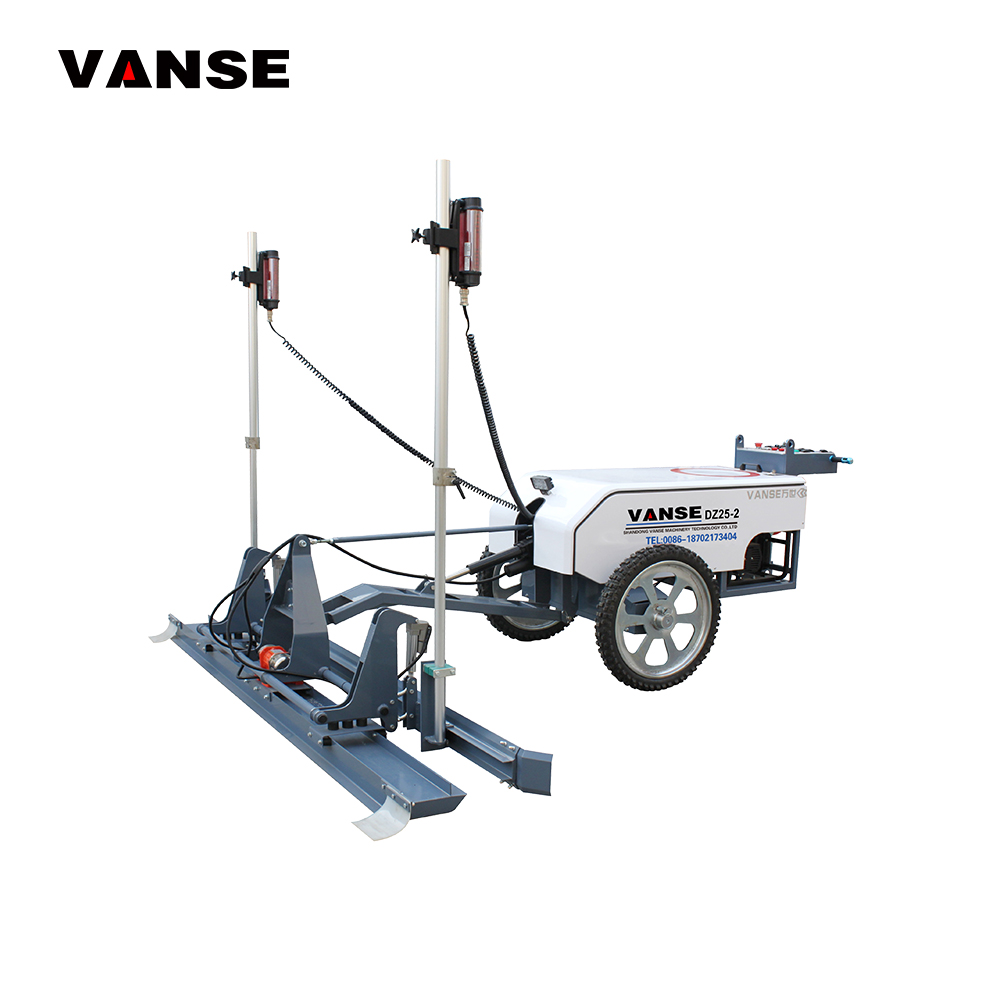
| Compact ride-on laser screed | Commercial floors and medium-size enclosed spaces | Turning radius and doorway access | Good maneuverability and operator control | Limited reach compared with boom systems |
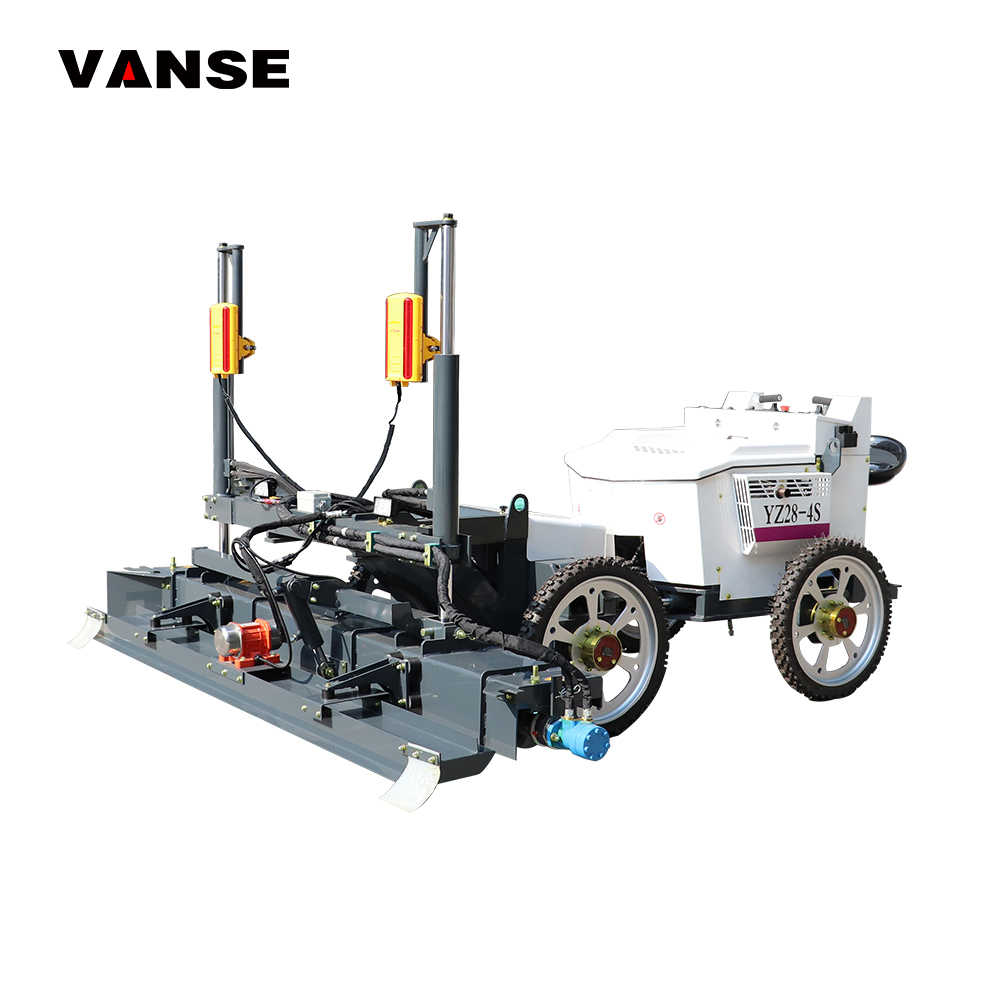
| Standard ride-on laser screed | Warehouses, factories, logistics facilities | Pass width and production lane layout | High productivity in open floor zones | More frequent machine travel may be needed |
| Boom-type laser screed | Large industrial slabs, terminals, wide bays | Effective boom radius and swing clearance | Large coverage from one machine position | Needs careful access and boom-envelope planning |
| 3D-profile compatible screed | Slopes, drainage, pavements, complex elevations | Control setup and design-model coverage | Supports variable-grade concrete surfaces | Requires skilled setup and digital coordination |
| Multi-machine fleet | Very large pours or phased industrial developments | Overlap between machine work zones | Higher output and schedule resilience | Requires disciplined logistics and crew coordination |
This comparison shows that reach is not the only measure of productivity. A smaller machine that can move freely through a constrained site may complete the job more efficiently than a large boom model that requires repeated clearance work or cannot access key sections of the pour.
Top Laser Screed Suppliers for Global Market Buyers
Global buyers should compare manufacturers according to equipment range, documented boom specifications, local support capacity, training, spare-parts supply, warranty terms, and ability to review specific project drawings. The following companies are known in concrete-flooring equipment markets. Buyers should verify current model availability, regional compliance requirements, dealer coverage, and service response commitments before placing an order.
| Company | Service Regions | Core Strengths | Key Offerings |
|---|---|---|---|
| Somero Enterprises | North America, Europe, Asia-Pacific, Middle East, selected global markets | Long-standing specialization in concrete placing and leveling technology | Ride-on and boom screeds, floor profiling systems, large-slab equipment |
| Ligchine International | North America and international dealer markets | Contractor-focused screed design and practical jobsite operation | ScreedSaver laser screeds, boom screed configurations, training support |
| Vanse Machinery | More than 80 countries and regions, with Southeast Asia and Canada service resources | Broad concrete-equipment portfolio, flexible customization, global support | Boom-type, ride-on, and walk-behind laser screeds; 3D-capable options |
| Allen Engineering Corporation | North America, Latin America, Europe, Asia, dealer-led export markets | Concrete placing, finishing, and paving equipment experience | Concrete finishing machines, paving equipment, support for slab contractors |
| Shandong HIKING Machinery | China and export-oriented equipment markets | Concrete floor construction equipment manufacturing | Laser screeds, power trowels, cutting equipment, floor machinery |
| Shandong Hightop Group | Global export markets through distribution channels | Compact construction equipment and flexible procurement options | Laser screeds, power trowels, construction machinery, attachments |
The supplier comparison is intended as a practical starting point. For buyers in the Global market, local dealer access, customs lead time, engine emissions rules, electrical standards, operator training, and parts stocking can be as important as the initial machine price. A machine that is technically capable but unsupported locally may create costly downtime during a critical slab pour.
Buying Advice for Contractors and Equipment Distributors
Before buying, request a machine layout drawing that clearly states maximum boom reach, effective working radius, folded transport dimensions, overall machine width, screed-head dimensions, swing range, total operating weight, engine model, hydraulic system details, laser-control compatibility, and recommended maintenance intervals.
Ask the supplier to overlay the proposed model on your building plan. A credible supplier should identify the expected number of machine positions, inaccessible corners, likely manual-work zones, and recommended concrete delivery route. This is particularly important for high-bay logistics centers, e-commerce warehouses, automotive plants, cold-storage facilities, airport hangars, and port-terminal yards.
Confirm the slab specification. Flatness requirements such as FF/FL targets, tolerance requirements, jointing strategy, concrete slump, fiber dosage, aggregate size, and curing plan all influence the practical result. A laser screed improves elevation control and productivity, but the final floor outcome also depends on batching consistency, placement timing, finishing skill, joint design, and curing discipline.
For distributors, the best product range often includes compact, ride-on, and boom models. This allows the dealer to serve small contractors, industrial flooring specialists, rental fleets, and large infrastructure clients without forcing every project into one machine format.
Industries That Benefit from Correct Boom Reach Selection
Boom laser screeds are widely used where concrete slab quality and production speed directly affect the value of the finished facility. In industrial flooring, accurate level control supports forklift movement, automated storage systems, rack installation, and long-term maintenance. In infrastructure work, broad screeding coverage helps manage large paved areas and heavy concrete volumes.
- Manufacturing plants and automotive facilities
- Warehouses, distribution centers, and e-commerce fulfillment hubs
- Airport runways, aprons, hangars, and terminal yards
- Port logistics yards and container handling areas
- Commercial buildings, retail centers, and exhibition halls
- Cold-storage warehouses and food-processing facilities
- Road, bridge, and infrastructure concrete projects
- Data centers and facilities requiring precise equipment-floor tolerances
On large logistics developments, a properly sized boom machine can reduce the need for repeated machine movement across wet concrete. This can improve crew coordination between concrete pumping, spreading, laser screeding, bull floating, joint cutting, and curing.
Application Examples for Boom Reach Calculation
Large warehouse slab: A contractor is pouring a 36 m by 72 m warehouse bay with a clear interior and a pump positioned outside the main work zone. A boom screed with a practical 14 m to 16 m radius may cover the slab through several planned standing positions. The contractor should establish overlapping zones, leaving sufficient edge allowance for wall-adjacent work and door thresholds.
Column-grid factory: A manufacturing building has columns at 9 m by 9 m centers. Although a large boom offers strong nominal coverage, the arm must rotate around each column without obstruction. A detailed swing-radius overlay may show that a ride-on screed can work more efficiently in the internal bays while a boom screed handles open perimeter zones.
Airport terminal yard: A terminal expansion project has open external paving areas but requires variable elevations for drainage. A boom-type screed with compatible 3D control may be considered. The reach calculation must include the working radius, grade transitions, control-point positioning, truck access, wind conditions, and the ability to relocate without disturbing prepared subgrade.
Cold-storage facility: Door openings, insulation details, embedded services, and narrow internal zones can limit machine access. The buyer should not select a large boom screed solely because of total building area. A combined fleet of a boom machine for open zones and a compact screed for detailed sections can improve overall productivity.
Project Planning Case Examples
In a large distribution-center project near Toronto, the contractor may use a boom screed in open slab zones where the machine can remain at a central position while concrete is supplied from designated pump lanes. The reach plan should preserve a clear delivery route and maintain overlap between circular working zones. Areas near dock doors and perimeter walls may be allocated to a compact screed or finishing crew.
For a logistics building near Dubai’s Jebel Ali trade zone, heat management and concrete delivery timing may be as important as boom reach. A larger coverage radius can reduce movement time, but only if the boom can work safely under the roof structure and around dock-side elements. The supplier should review operating temperature expectations, engine cooling, hydraulic performance, and local parts support.
In a European manufacturing expansion near Hamburg or Rotterdam, buyers may prioritize CE documentation, operator safety systems, emissions compliance, and digital project coordination. The reach plan should include temporary safety barriers, column guards, slab openings, and the position of laser transmitters. A well-documented commissioning process helps the contractor begin production with fewer elevation-control issues.
Vanse Machinery for Global Laser Screed Projects
Vanse Machinery supports Global market contractors, distributors, rental businesses, brand owners, and individual buyers with boom-type, ride-on, and walk-behind laser screeds designed for industrial floor construction, supported by ISO 9001 and CE certifications, more than 50 invention patents, and over 200 utility model and design patents. Founded in Jining in 2013, the company combines laser control systems, hydraulic technology, durable structural materials, reliable engine options, and strict manufacturing and testing procedures to meet international project expectations for stable operation and millimeter-level leveling applications. Customers can choose direct purchase, retail, wholesale, OEM/ODM production, customized branding, regional distribution partnerships, customized voltage and engine configurations, and project-based supply for customer-owned plants and contractor operations; Vanse provides EPC, turnkey, and customer-owned plant solutions, but does not provide BOO or on-site bulk supply services. Its established export experience across more than 80 countries and regions, together with overseas service resources in Southeast Asia and Canada, dealer networks in North America, South America, Europe, Asia, and the Middle East, multilingual remote support, spare-parts coordination, installation assistance, commissioning, and one-to-one operator training, gives buyers practical protection beyond remote export sales. Contractors can explore the dedicated boom-type laser screed range, arrange project selection support through technical service consultation, and review ongoing support options through the company’s global service network.
Questions to Ask Before Approving a Purchase Order
- What is the maximum boom radius, and what radius does the supplier recommend for regular production?
- Can the supplier mark the proposed machine positions on our actual slab drawing?
- What is the boom swing range, and can it work around our column grid?
- What clearance is required from walls, forms, pits, and dock edges?
- Can the machine pass through our doors, ramps, and temporary access routes?
- What laser transmitter, receiver, and 3D-control options are compatible?
- Which engine, hydraulic components, and electrical configuration are supplied in our region?
- Where are spare parts stocked, and what is the normal response time for technical support?
- Does the supplier provide installation, commissioning, operator training, and remote diagnostics?
- What tasks remain for manual screeding or a compact machine after the boom coverage plan is complete?
Future Trends in Laser Screed Reach Planning
By 2026, laser screed selection is increasingly linked to digital construction planning. Contractors are moving from simple radius estimates to CAD overlays, BIM coordination, 3D surface models, machine-control data, and documented production workflows. This improves decisions on boom placement, pump positioning, labor allocation, joint layout, and daily pour sequencing.
3D profiling systems will become more important for drainage slabs, external yards, airport works, ramps, and industrial floors with multiple elevation changes. Instead of using only a single flat reference plane, contractors can use digital design data to guide screeding across complex grades. Buyers should confirm whether the equipment can be upgraded for these systems and whether local technicians can support calibration and field setup.
Sustainability is also shaping equipment decisions. Contractors increasingly evaluate engine efficiency, hydraulic energy management, durable components, repairability, transport efficiency, and reduced material waste. Better leveling accuracy can help reduce unnecessary topping material, rework, grinding, and concrete waste. In regions with tighter emissions policies, buyers should confirm engine compliance requirements before shipment.
Safety expectations are rising as well. Future purchase decisions will place greater value on camera options, clearer operator visibility, emergency-stop systems, reliable boom interlocks, safer transport arrangements, and structured operator training. Equipment suppliers that combine practical machine design with documented service processes will be better positioned to support long-term contractor productivity.
Frequently Asked Questions
What is the difference between maximum boom reach and effective working reach?
Maximum boom reach is the farthest distance stated in the equipment specification. Effective working reach is the usable jobsite distance after deducting clearance for walls, columns, overlap, obstacles, safety, and practical screeding access. Buyers should base project planning on effective working reach.
How much overlap should be included between boom screed positions?
Many contractors allow approximately 1 m to 3 m of overlap, depending on slab geometry, operator experience, screed-head width, and tolerance requirements. The correct overlap should be confirmed through the floor plan and the supplier’s operating recommendation.
Can one boom laser screed cover an entire warehouse?
It may cover a large open warehouse through multiple positions, but a single standing location rarely covers an entire building. The final number of positions depends on effective radius, building dimensions, columns, dock areas, access routes, and edge-work requirements.
Should I buy a boom-type screed for every large slab?
Not necessarily. Boom machines are highly effective on large, open placements, but compact or ride-on laser screeds may be better for tight buildings, dense column grids, small rooms, or projects with frequent access restrictions. A mixed equipment fleet can be the most productive solution.
How do columns affect boom reach planning?
Columns can block rotation, reduce access near corners, and create untreated shadow zones. Plot each column on the boom swing drawing and verify that the arm, screed head, and machine chassis can operate without collision.
Can a boom laser screed work with 3D profiles?
Some models can be configured for 3D profiling systems, which are useful for slopes, drainage, ramps, pavement, and variable-elevation slabs. Confirm compatibility, calibration requirements, and local technical support before ordering.
What support should an international supplier provide?
A capable supplier should provide project consultation, machine selection, layout review, documentation, delivery coordination, commissioning guidance, operator training, maintenance instructions, spare-parts access, remote diagnosis, and, where available, local dealer or branch support.
Where can I request a boom laser screed recommendation?
Buyers can begin by sharing their slab drawings, building dimensions, column grid, concrete placement plan, and target completion schedule with a qualified equipment supplier. For Vanse product information and project consultation, visit Vanse Machinery’s official website.
Share this article

About the Author: Shandong Vanse Machinery Technology Co., Ltd.
Shandong Vanse Machinery Technology Co., Ltd. is a high-tech manufacturer specializing in concrete construction machinery, including laser screeds and related equipment. The company integrates R&D, production, and global sales, with products exported to over 60 countries and widely used in infrastructure projects worldwide.