Technical Knowledge
How does concrete laser leveling machine use effect
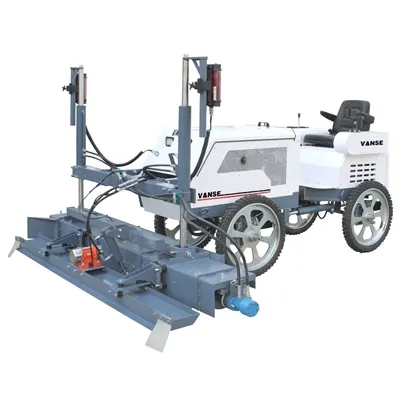
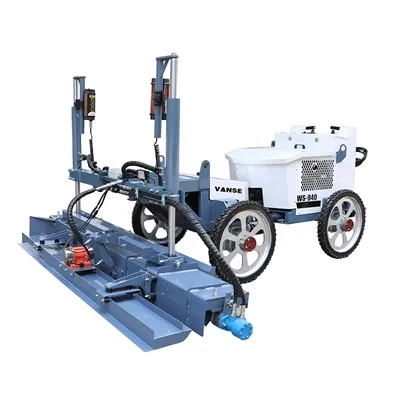
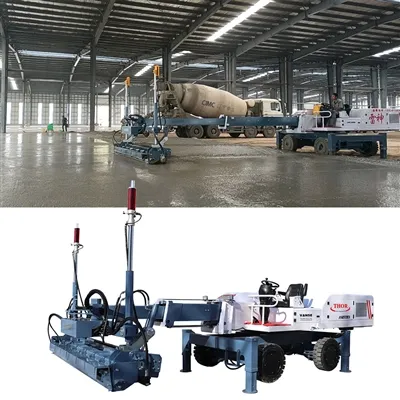
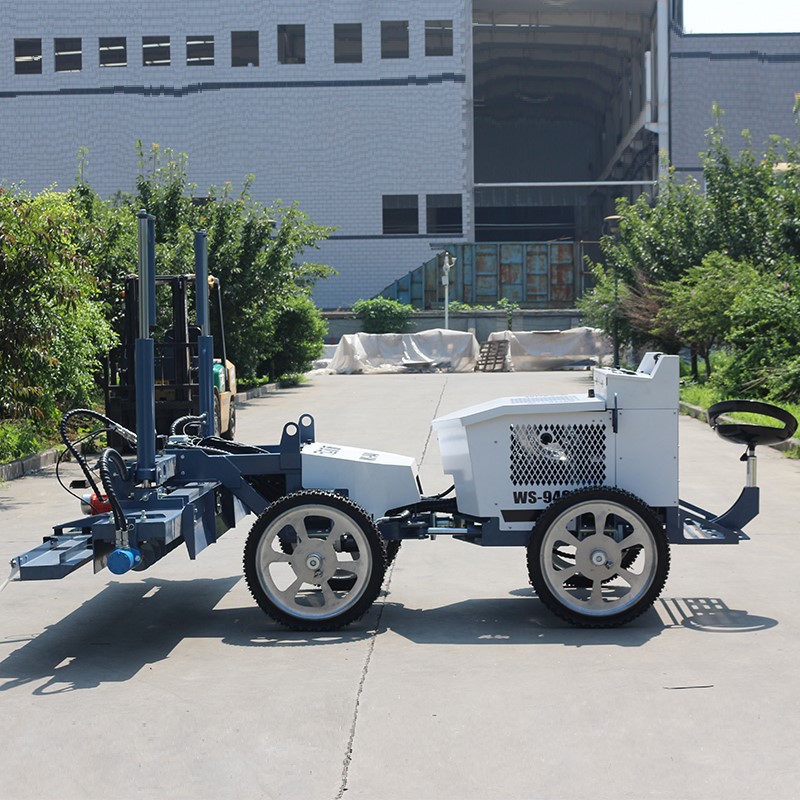
With the continuous development and progress of science and technology, various mechanical functions are more and more complete, and the demand is increasingly large, leading to a lot of machinery on the market are in short supply, and laser leveling machine is one of them. Then what aspects of the role of leveling machine is played, many people are not very familiar with it, the following Xiaobian from four perspectives to analyze for you, Let you more comprehensive understanding of laser leveling machine equipment.
1, reduce labor costs, double the efficiency.
The number of traditional construction, need to support the formwork (channel steel), dot, spread. About 20 people are needed. The daily construction area is 700 square meters.
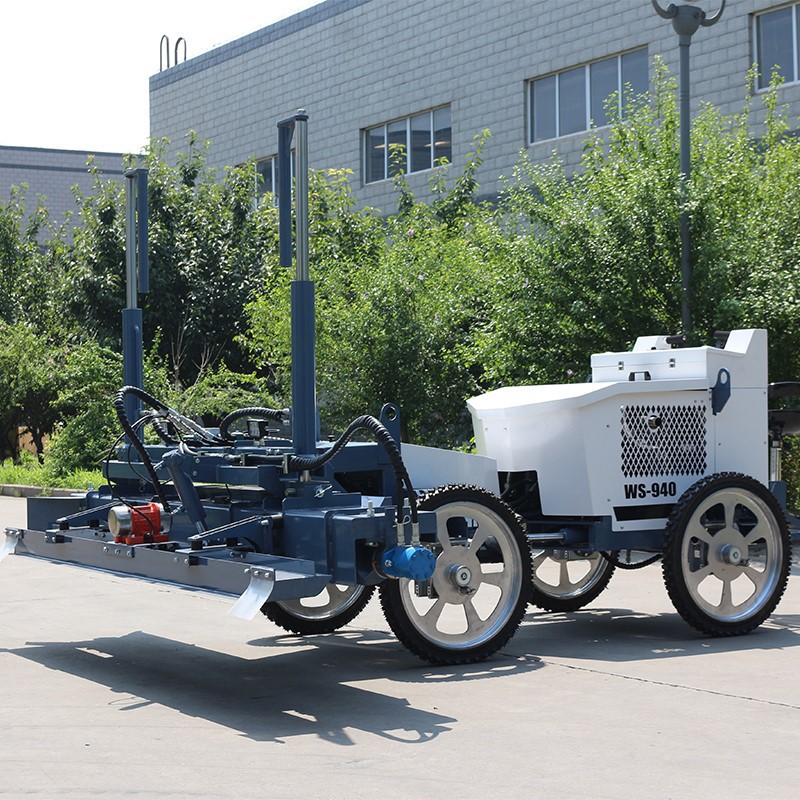
The total number of people using the concrete laser levelling machine is less than half of the traditional process. Can be operated by one person. The daily construction area is 2500 square meters -3500 square meters, greatly reducing the labor cost.
2, laser point, high precision, low error.
Traditional technology leveling requires a template to control the elevation of the ground and pull the control line. The elevation error is large. The levelness and flatness of the whole floor cannot be guaranteed.
Using laser point emitter, suitable for large area one-time paving. There is a laser measurement and control system to control the elevation in real time, leveling does not need to pull line, the middle does not need to support the side plate to control the ground elevation. In this way, the elevation error caused by the vibration of the formwork (channel steel) in the construction process is avoided, and the elevation error caused by the traditional manual block support die is also reduced.
3. Better flatness and integrity.
Traditional technology construction, a day of mold support, a day of watering, can only jump off the construction piece by piece, large limitations, can not be continuous operation, and the integrity is not good, easy to cause the cumulative error of the construction joint.
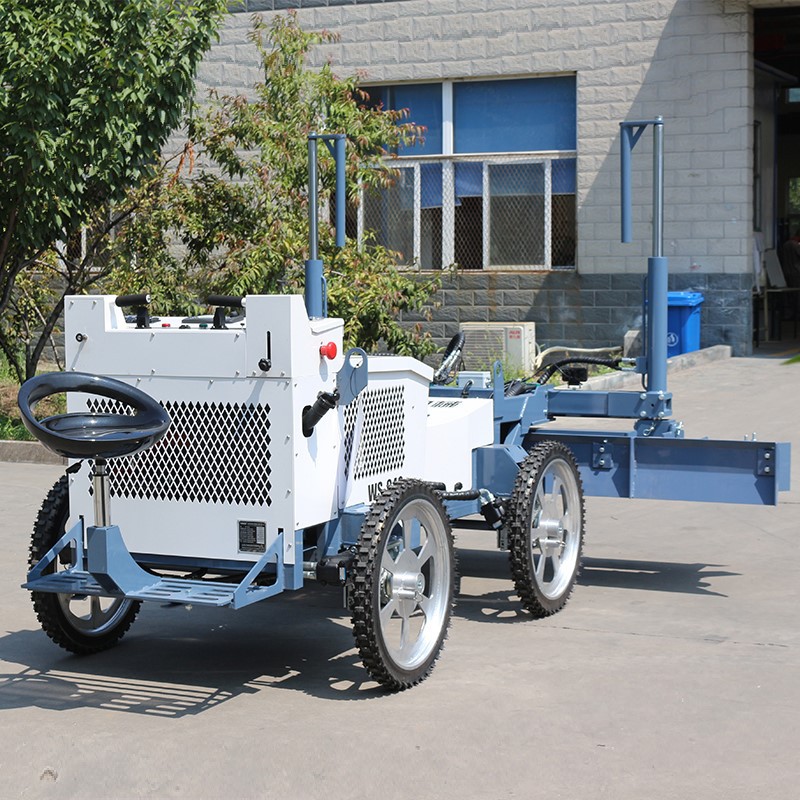
Concrete laser leveling machine for a large area of the floor one-time overall paving, higher efficiency and integrality, the completion of the whole floor makes the ground integrity better, which is completely unable to do traditional construction.
4, the ground is more dense and uniform.
High frequency vibrator 4000 times per minute, let the flat head vibrator produce even high frequency vibration, make the concrete floor more compact and uniform.
Thanks to All the Friends Who Support and Trust Shandong Vanse Machinery Technology Co., Ltd.
If you want to know more about Shandong Vanse Machinery Technology Co., Ltd. or have any questions, please feel free to contact us:
Our Factory
Shandong Vanse Machinery Technology Co., Ltd.








Share this article

About the Author: Shandong Vanse Machinery Technology Co., Ltd.
Shandong Vanse Machinery Technology Co., Ltd. is a high-tech manufacturer specializing in concrete construction machinery, including laser screeds and related equipment. The company integrates R&D, production, and global sales, with products exported to over 60 countries and widely used in infrastructure projects worldwide.
Previous Post
Next Post
Related Articles
You Might Also Like
Laser leveling machine purchase tips
Now the sales of laser leveling machines in the market are becoming more and more fierce. Many manufacturers are competing for sales, and dealers are blooming everywhere. All sellers are doing their best to expand marketing, while consumers are mostly in a waiting state. Consumers feel very confused and don't know how to start when purchasing equipment. They are afraid that the quality of the purchased products is not good, the seller does not have enough integrity, the after-sales service is not in place after the purchase, and the boss is not satisfied with the purchased products. A series of problems. The editor knows the difficulties of being a purchaser, so the editor is here to solve everyone's confusion today. How to buy a laser leveling machine that you are satisfied with can be considered from these aspects: channel, quality, brand, and after-sales. These four aspects can be used to evaluate whether the laser leveling machine is the product you want to buy. First of all, the channel, the channel here refers to the source of the equipment. Everyone knows that the manufacturer is always the choice of the customer. Shandong Vanse Machinery has focused on the research and development of laser leveling machines for more than ten years. The laser leveling machine is sold directly by the manufacturer. Compared with dealers, customers will save a lot of costs, one-step, convenient and fast, and quality guaranteed. Quality is the core of a product. All equipment that is not produced for quality will be eliminated. Without quality, there will be no product survival. Shandong Vanse Machinery's laser leveling machine uses imported engines, integrates high-tech technologies such as laser, integrated hydraulics, and closed-loop control technology, and its high-standard design appearance has won praise from many old customers. Brand is the soul of the product. Without a soul, it is like a walking corpse. The brand is given by the enterprise. An enterprise with a positive energy culture has a full of positive energy in its product soul. Shandong Vanse Machinery has always adhered to the development concept of technological innovation and providing excellent products to users in the field of laser leveling machine industry. This is also an important reason why Shandong Vanse Machinery Technology Co., Ltd. has been at the forefront of the industry and has become the first brand for users. After-sales service is even more assured. Shandong Vanse Machinery is located in Yanzhou, Shandong, the birthplace of Confucianism. It has a large production plant and an excellent technical team. Many years of good service reputation have accumulated many good praises for the company. If you have any needs for laser leveling machines, the company will accept your questions at any time and answer your questions with professional equipment technology.What equipment can the concrete laser leveling be used with?
Concrete laser levelings can be used in conjunction with other equipment to achieve a more efficient and convenient construction process. Here's how a concrete laser leveling works with some common equipment: Use with mixing station The mixing station is one of the main equipment in concrete production. It can mix various raw materials together, add water and chemical additives according to a certain proportion, and finally produce concrete that meets the construction requirements. The combination of the concrete laser leveling machine and the mixing station can directly transport the mixed concrete to the leveling machine to achieve continuous production and leveling of concrete, which greatly improves construction efficiency and quality. When used together, the concrete laser leveling machine can adjust the parameters and operating status of the equipment according to the production capacity and construction requirements of the mixing station to ensure continuous production and leveling of concrete. At the same time, the mixing station can adjust the ratio of raw materials and the production volume of concrete according to the construction requirements of the leveler and the amount of concrete to ensure the quality and production efficiency of concrete. Use with pump truck The pump truck is one of the main equipment for concrete transportation and pouring. It can transport concrete from the mixing station or other places to the construction site for pouring and leveling. The combination of the concrete laser leveling machine and the pump truck can directly use the leveling machine to level the concrete surface after the concrete is poured by the pump truck. This avoids the inconvenience and inefficiency of the traditional manual leveling method and improves the leveling efficiency. and quality. When used together, the concrete laser leveler can adjust the parameters and operating status of the equipment according to the amount of concrete poured by the pump truck and construction requirements to ensure the leveling effect and quality of the concrete surface. At the same time, the pump truck can adjust the position and depth of pouring according to the construction requirements of the leveling and the amount of concrete to ensure the quality and pouring effect of the concrete. Use with templates Formwork is one of the important equipment in concrete construction. It can produce formwork of various shapes and sizes according to the design requirements, and the concrete construction can be completed by disassembling and moving the formwork. When the concrete laser leveler is used in conjunction with the formwork, the leveler can be used to level the concrete surface under the formwork before the formwork is disassembled and moved to ensure that the concrete surface under the formwork is flat and dense, and to avoid voids under the formwork. Problems such as drums and honeycombs. When used together, the concrete laser leveling can adjust the parameters and operating status of the equipment according to the shape and size of the formwork to ensure that the concrete surface under the formwork is smooth and dense. At the same time, the formwork can be adjusted according to the construction requirements and positioning of the leveling machine, the disassembly and movement of the formwork, and the design of the formwork, etc. to ensure that the construction quality of the concrete meets the requirements. For use with scrapers and smoothing belts Scrapers and trowels are one of the main equipment for concrete surface treatment. They can scrape or polish the concrete surface manually or mechanically to achieve a certain level of flatness and finish. When the concrete laser leveling machine is used in conjunction with a scraper and a smoothing belt, after the construction of the leveling machine is completed, the concrete surface can be further smoothed and polished with a scraper or smoothing belt to make the surface smoother and smoother. , beautiful. When used together, the scraper or troweling belt can adjust the parameters and operating status of the scraper or troweling belt according to the construction requirements and positioning of the concrete laser leveling to ensure that the flatness and smoothness of the concrete surface meet the requirements. . At the same time, the concrete laser leveling machine can adjust the parameters and operating status of the equipment according to the construction requirements and speed of the scraper or trowel belt to ensure the construction effect and quality of the scraper or trowel belt. In summary, concrete laser levelings can be used in conjunction with other equipment to achieve a more efficient and convenient construction process. When used together, it is necessary to pay attention to factors such as the connection and processing methods between different equipment as well as the skills and professionalism of the construction personnel to ensure that the construction quality and use effect are optimal.The Specific Content Of Maintenance Of Concrete Laser leveling Machine
What are the specific contents of maintenanc e of concrete laser leveling machine? As an important equipment in modern building construction, concrete laser leveling machine's maintenance work is crucial. Correct maintenance can not only ensure the normal operation and extend the service life of the equipment, but also improve construction efficiency and quality. Therefore, this article will elaborate on concrete laser leveling from the aspects of daily inspection and maintenance, regular cleaning and maintenance, wave pressure system maintenance, electrical system inspection, engine maintenance, cutting and wearing parts, lubrication system inspection, and storage and transportation precautions. Specific content of machine maintenance. 1. Daily inspection and maintenance Routine inspection is the basic work for the maintenance of concrete laser leveling machine, which mainly includes the following aspects: ☑ Check the appearance of the equipment: Check whether there are scratches, deformations or damage on the surface of the leveler. If so, repair or replace relevant parts in time. ☑Check the traveling system: Check whether the tires or tracks are severely worn, whether the bolts are tight, and whether the traveling mechanism is flexible. If there are any abnormalities, they should be dealt with in time. ☑Check the laser system: Check whether the laser transmitter, receiver and reflector are clean and intact to ensure stable laser signal transmission. ☑ Check the operation control system: Check whether the operating handle, buttons, switches, etc. are flexible and reliable, and whether their functions are normal. In addition, during daily use, you need to pay attention to the operating status of the equipment. If there are abnormal sounds, vibrations, or excessive temperatures, you should stop the machine in time for inspection and troubleshooting. 2. Regular cleaning and maintenance Regular cleaning and maintenance are key to keeping the concrete laser leveling in good operating condition, including: ☑Clean the body: Clean the body of the leveler regularly with clean water and a soft cloth to remove dust, oil and other stains to keep the equipment clean. ☑Clean the hydraulic oil tank and filter element: Change the hydraulic oil regularly and clean the oil tank and filter element to prevent oil contamination and blockage. ☑Clean the radiator: Clean the dust and debris on the radiator regularly to maintain good heat dissipation and prevent the device from overheating. In addition, the equipment needs to be rust-proofed regularly to prevent equipment from rusting and corroding. 3. Hydraulic system maintenance The hydraulic system is the core part of the concrete laser leveling machine, and its maintenance is crucial. Specific contents include: ☑ Check the hydraulic oil tank; regularly check the oil level and oil quality of the hydraulic oil tank to ensure that the oil is clean and sufficient, and replace the hydraulic oil in time according to usage. ☑ Check the hydraulic pipeline: Check whether the hydraulic pipeline is leaking, aging or damaged. If so, it should be replaced or repaired in time. ☑Check the hydraulic cylinder: Check the sealing and flexibility of the hydraulic cylinder. If there is leakage or stuck, deal with it in time. In addition, it is necessary to pay attention to the operating specifications of the hydraulic system and avoid overloading, overspeeding or illegal operations to ensure the stable operation of the system. 4. Electrical system inspection The electrical system is an important part of the concrete laser leveling machine, and its normal operation is crucial to the stability and safety of the equipment. Electrical system inspection mainly includes: ☑ Check the cable line: Check whether the cable line is intact and whether the connection is tight to prevent short circuit, open circuit or poor contact. ☑ Check the motor and controller: Check the working status of the motor and controller to ensure their normal operation. If there are any abnormalities, they should be dealt with in time. ☑Check electrical components: Check whether each electrical component is intact and working properly, such as relays, fuses, etc., to ensure the safe and stable operation of the electrical system. 5. Engine maintenance The engine is the power source of the concrete laser leveling machine, and its maintenance is equally important. Specific contents include: ☑ Check the engine oil: Check the oil level and oil quality of the engine oil regularly, and replace the oil and oil filter in time. ☑ Check the engine coolant: Make sure the engine coolant is sufficient and clean, and replace the coolant regularly to prevent the engine from overheating. ☑ Check engine accessories: Check whether the engine belts, chains and other accessories are intact. If they are worn or aged, they should be replaced in time. In addition, it is also necessary to pay attention to the engine starting and stopping operating specifications and avoid frequent starts or emergency stops to reduce damage to the engine. 6. Cutting and wear parts The cutting and wearing parts of the concrete laser leveling will gradually wear out during use and require regular inspection and replacement. Specific contents include: ☑Check the blade: Regularly check whether the blade is sharp and intact. If it is worn or damaged, replace or repair it in time. ☑ Check the scraper: Check whether the scraper is flat and not deformed or damaged. If there are any abnormalities, deal with them in time. ☑Check worn parts: Regularly check other worn parts, such as belt plates, chains, etc., and replace them in time according to the degree of damage. By replacing worn parts in time, the construction efficiency and quality of the concrete laser leveling can be ensured, while the service life of the equipment can be extended. 7. Lubrication system inspection The lubrication system is the key to ensuring the normal operation of all components of the concrete laser leveling, so the inspection of the lubrication system is also an important part of maintenance. Specific contents include: ☑Check lubrication points: Regularly check the grease condition of each lubrication point, such as bearings, chains, etc., to ensure adequate lubrication. ☑Replace lubricating oil: According to the equipment usage and instructions, replace the lubricating oil regularly to ensure clean oil quality. ☑Clean the lubrication system: Clean the lubrication system regularly to remove impurities and sediments and keep the system smooth. Through good lubrication system maintenance, equipment wear and failure can be reduced, and the service life and working efficiency of the equipment can be improved. 8. Storage and transportation precautions During the storage and transportation of the concrete laser leveling machine, some matters need to be paid attention to to ensure the safety and integrity of the equipment. The following are key points to note during storage and transportation: ☑Storage environment selection: When storing the concrete laser leveling machine, you should choose a dry, ventilated, and non-corrosive gas indoor environment to prevent the equipment from being eroded by moisture, dust or harmful gases. At the same time, ensure that the storage area is flat and stable to prevent equipment from being damaged due to uneven ground. ☑Equipment fixation and protection: When the equipment is stored, fixing measures should be taken to prevent the equipment from tipping or moving due to external forces. At the same time, vulnerable parts of the equipment should be protected, such as covering with dust covers, etc., to prevent dust, Debris, etc. cause damage to the equipment. ☑ Precautions during transportation: When transporting the concrete laser leveling machine, ensure that the equipment is firmly fixed to prevent shifting or collision during transportation. At the same time, avoid transporting in bad weather or poor road conditions to avoid unnecessary damage to the equipment. ☑Inspection before transportation: Before transportation, the equipment should be fully inspected to ensure that the equipment is in good condition and without damage or failure. At the same time, check whether the accessories, tools, etc. of the equipment are complete so that it can be put into use quickly after arriving at the destination. In addition, during storage and transportation, attention should be paid to keeping the equipment confidential to prevent equipment information from being leaked or illegally obtained. To sum up, the maintenance of concrete laser leveling machines involves many aspects, including daily inspection and maintenance, regular cleaning and maintenance, hydraulic system maintenance, electrical system inspection, engine maintenance, cutting and wearing parts, lubrication system inspection and storage and transportation precautions, etc. Only by completing these maintenance tasks comprehensively and meticulously can the normal operation and extended service life of the concrete laser leveling be ensured, providing a strong guarantee for construction quality and efficiency. In actual operation, specific maintenance plans should be formulated based on the specific conditions and usage environment of the equipment and strictly implemented. At the same time, it is necessary to strengthen the training and management of equipment operators, improve their operating skills and maintenance awareness, and ensure the safe and efficient operation of equipment. In addition, with the continuous development of science and technology, the maintenance technology of concrete laser leveling machines is also constantly updated and improved. Therefore, in actual work, we should also pay attention to the application of new technologies and new methods, continuously improve the maintenance level of equipment, and provide strong support for the improvement of construction quality and efficiency. In short, the maintenance of concrete laser levelinging machines is a long-term and important work. It requires us to continuously accumulate experience and sum up lessons in daily use, and constantly improve and optimize maintenance measures to ensure the stable operation of the equipment and extend its service life.