Technical Knowledge
Concrete laser leveling compared to other construction methods
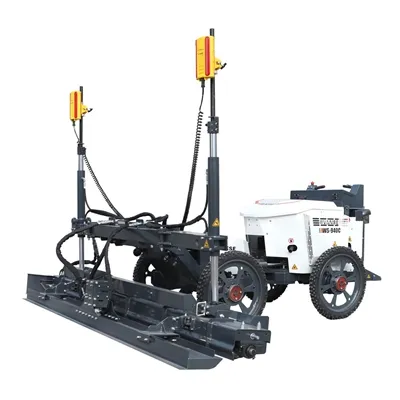
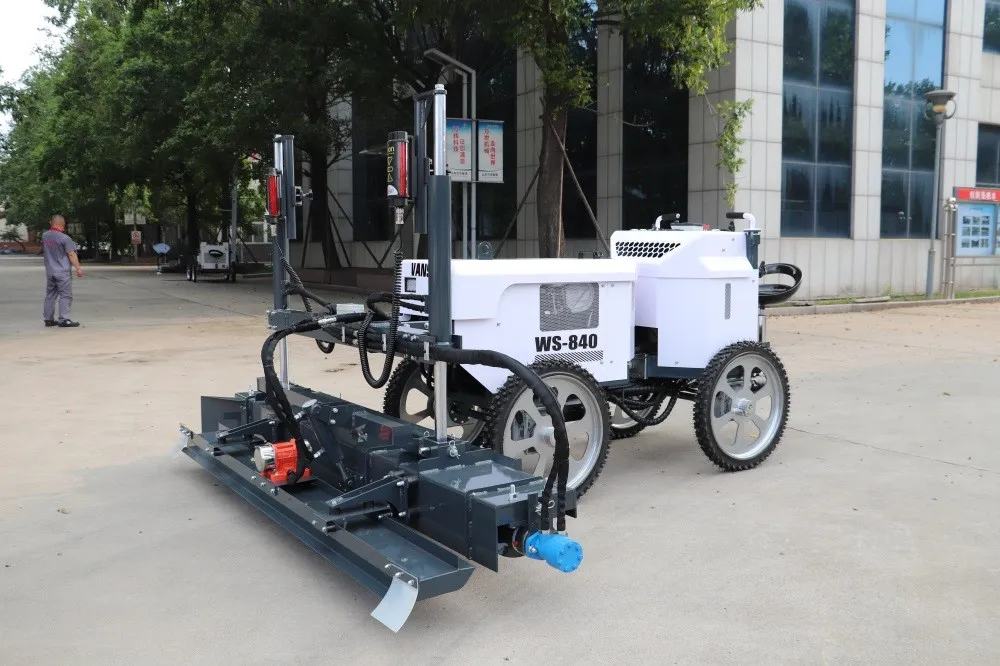
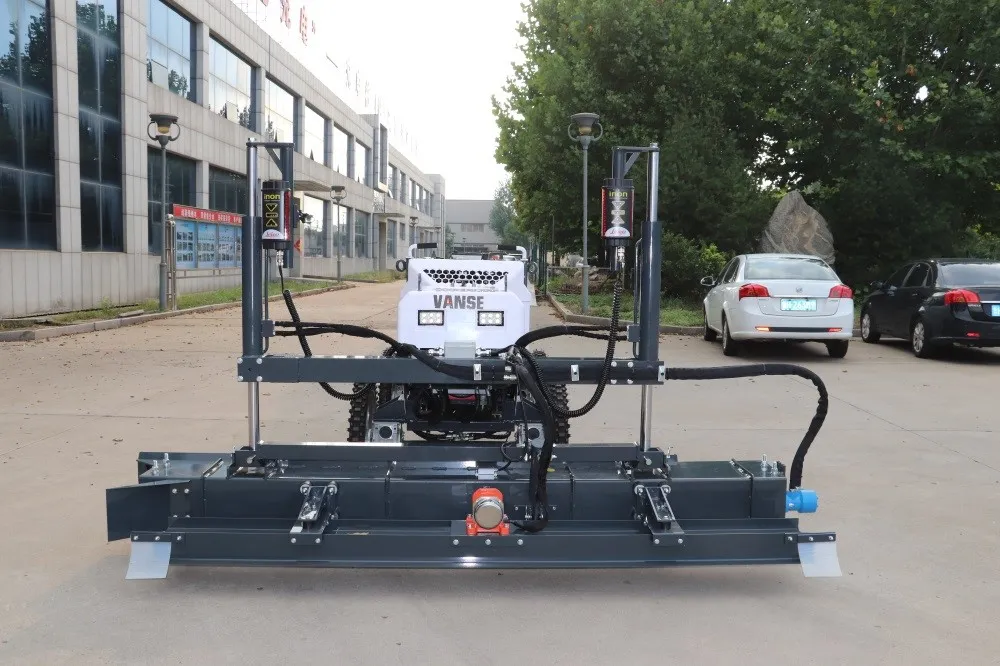
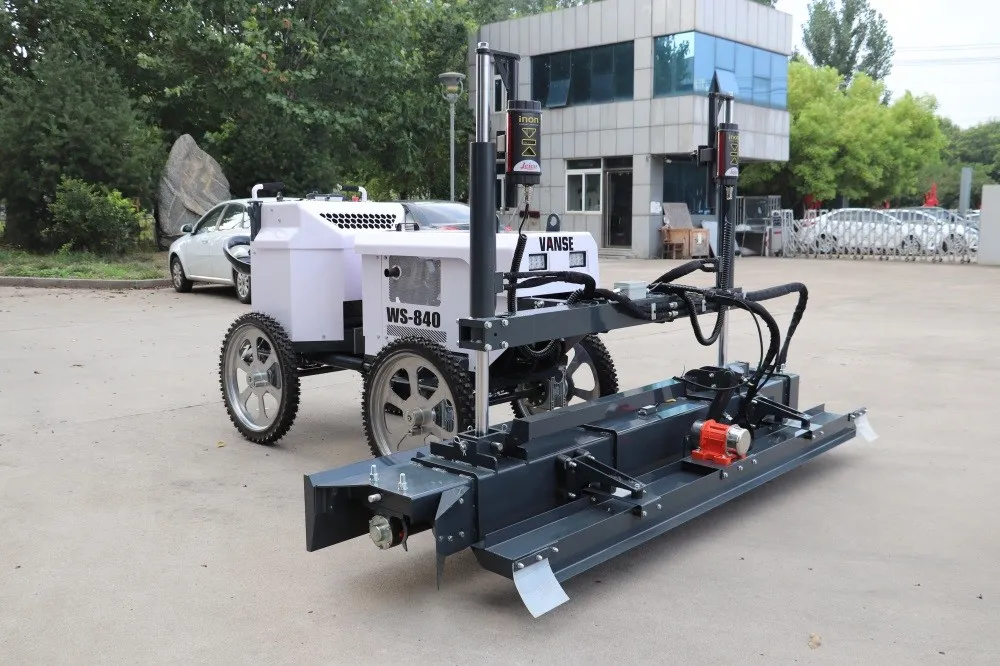
The concrete laser leveling is an advanced concrete construction equipment that uses laser technology to achieve high-precision concrete leveling. Concrete laser levelings offer many advantages over traditional manual construction methods. The following will compare the concrete laser leveling with other construction methods in terms of construction efficiency, construction quality, economic benefits and production safety.
Construction efficiency
The traditional artificial concrete leveling method requires a lot of manpower and time, and is limited by the workers' operating skills and fatigue, so the efficiency is low. In comparison, concrete laser leveling machines have higher construction efficiency. This equipment uses advanced laser technology to quickly and accurately complete large areas of concrete leveling. At the same time, the concrete laser leveling machine is simple to operate, which can reduce the interference of human factors and make the leveling work more stable and reliable. Therefore, from the perspective of construction efficiency, concrete laser levelings have obvious advantages.
Construction Quality
The quality of artificial concrete leveling methods is limited by the skills and operating accuracy of workers, and problems such as insufficient flatness and uneven concrete thickness often occur. These problems may affect the structural strength and stability of concrete, leading to safety risks. In contrast, concrete laser leveling machines use laser technology to precisely control the thickness and flatness of concrete, making the leveling work more precise and uniform. In addition, the concrete laser leveling machine can also monitor and control errors during the construction process in real time, thereby improving construction quality. Therefore, from the perspective of construction quality, concrete laser levelings have obvious advantages.
Economic benefits
Although the manufacturing cost of the concrete laser leveling is relatively high, its service life is long and it can improve construction efficiency and construction quality, thereby reducing the cost of the entire project. In contrast, traditional manual construction methods require a lot of manpower and time, and may require multiple reworks and repairs, increasing the cost of the entire project. Therefore, from the perspective of economic benefits, concrete laser levelings have obvious advantages.
Production safety
The traditional artificial concrete leveling method requires a large number of workers to be exposed to the construction site, and is susceptible to hazards and dangerous factors at the construction site, such as mechanical damage, falling objects from high altitude, etc. In contrast, concrete laser levelings are safe to operate and can reduce the time and frequency of personnel exposure to hazardous environments, thereby reducing the risk of safety accidents. In addition, the concrete laser leveling machine has a high degree of automation, which can reduce operator errors and mistakes, thereby avoiding accidents caused by human factors. Therefore, from the perspective of production safety, concrete laser levelings have obvious advantages.
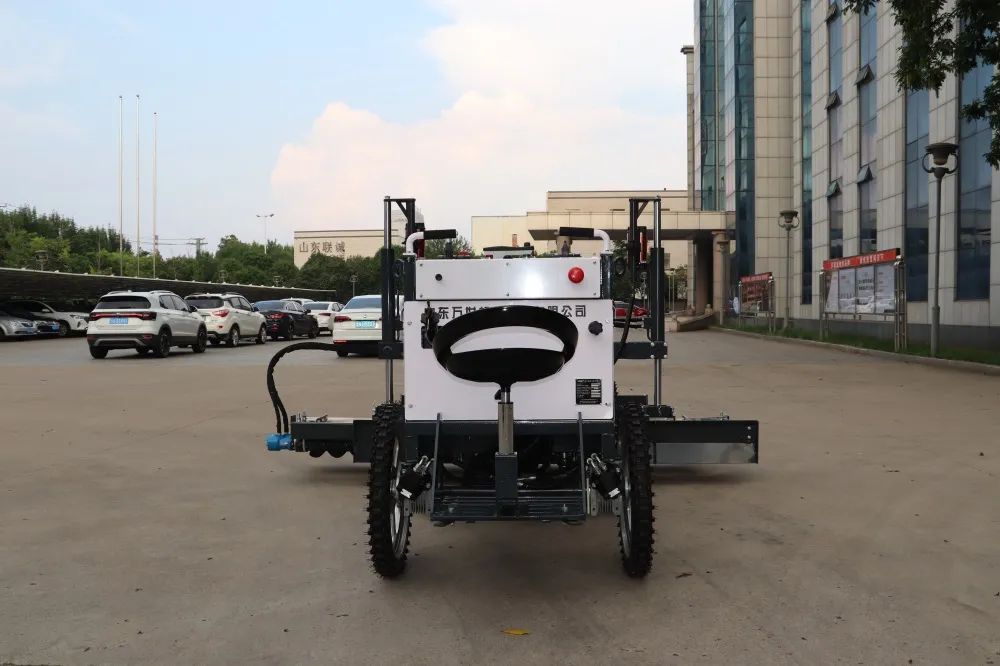
To sum up, concrete laser leveling has obvious advantages compared with other construction methods. It can not only improve construction efficiency and quality, but also improve economic benefits and production safety. With the continuous development and advancement of technology, the application prospects of concrete laser leveling machines will be broader. Therefore, when choosing a concrete construction method, the advantages and application conditions of concrete laser levelings should be fully considered in order to better meet construction needs and improve project quality.
Thanks to All the Friends Who Support and Trust Shandong Vanse Machinery Technology Co., Ltd.
If you want to know more about Shandong Vanse Machinery Technology Co., Ltd. or have any questions, please feel free to contact us:
Our Factory
Shandong Vanse Machinery Technology Co., Ltd.








Share this article

About the Author: Shandong Vanse Machinery Technology Co., Ltd.
Shandong Vanse Machinery Technology Co., Ltd. is a high-tech manufacturer specializing in concrete construction machinery, including laser screeds and related equipment. The company integrates R&D, production, and global sales, with products exported to over 60 countries and widely used in infrastructure projects worldwide.
Previous Post
Next Post
Related Articles
You Might Also Like
Two methods and techniques for concrete pavement leveling, how to improve leveling efficiency and quality?
◑◐Construction method: Use a 3-4m light ruler to scrape the concrete surface, remove excess water and slurry, fill the low-lying areas with concrete, vibrate and re-trim, remove and trim the high parts, and then smooth them appropriately. The vibrator rod will also be used to "quickly insert and slowly pull out" to fully vibrate the concrete. The moving distance of each rod is generally not more than 1.5 times its effective radius (can be controlled as 30cm), and the distance from the template is less than 0.5 times the effective radius of the vibration. Vibrate until the slurry overflows on the surface of the concrete mixture, no longer sinks significantly, and no obvious bubbles overflow; then use the vibration beam to walk back and forth 2-3 times to level and raise the slurry to make the surface flat and uniform. ◑◐Applicable scenarios: Applicable to small projects, rural roads with narrow construction sites or relatively low requirements for flatness. For example, some self-built roads in rural areas, internal roads in small factory areas, etc. ◑◐Advantages: The equipment is simple and easy to obtain, the cost is low, the operation is relatively easy, and the technical requirements for operators are relatively low. ◑◐Disadvantages: The construction efficiency is low, the labor intensity of manual operation is high, the flatness control accuracy is limited, and it is difficult to meet the requirements of large-area, high-precision road projects. ◑◐Construction method: The laser emitted by the transmitter is used as the reference plane, and the leveling head is controlled in real time through the laser receiver on the laser leveling machine. Just like the laser leveling machine equipped with a HONDA GX690 engine (power 18.4kW/25HP, fuel tank capacity 19L), the steel bar is tied after the formwork of the civil engineering project. Before pouring concrete, the elevation is set on the column reinforcement and led to the laser leveling control system. When the pouring personnel scrape the elevation, the elevation is controlled to be 5-10mm higher than the design elevation, and then the machine operator uses the equipment to accurately level the concrete surface. The leveling width is 3m (9.84ft), and it adopts hydraulic screw conveying paving mode. The vibration system is hydraulic vibration, with a maximum excitation force of 2000N, which can be automatically calibrated and controlled at a certain frequency. After the water seepage of the concrete pouring surface is completed, the laser leveling instrument is used for re-measurement, the water accumulation is filled, and the 3-meter scraper is used to rotate and level it, and then the single-disc trowel is used to level the slurry. ◑◐Applicable scenarios: It is widely used in large-scale industrial plants, large shopping malls, warehouses, underground garages, airport runways, docks and other large-scale concrete floor projects with high requirements for ground flatness, horizontality and strength. For example, the workshop floor of a large automobile manufacturing plant, the floor of a large logistics storage center, etc. ◑◐Advantages: It can achieve high-precision and fast leveling of concrete, and the flatness and levelness of the ground are more than 3 times higher than conventional methods, and the density and strength are increased by more than 20%; it can improve work efficiency by more than 50% and save about 35% of labor; it can lay high-strength concrete, low-slump concrete and fiber concrete; and it can also automatically control the longitudinal and transverse slopes. The equipment has an all-aluminum body and is light in weight (net weight 835kgs / 1841lbs), which is convenient for operation under various working conditions. It is also equipped with an anti-skid system, a hydraulic brake system and a trailer system, a more precise height adjustment rod, a standard soft landing system for the working head, and switch detection and valve port calibration functions to ensure stable machine performance after long-term use. It is also equipped with two types of tires (inflated narrow tires and inflated wide tires) to adapt to different working conditions. ◑◐Disadvantages: The equipment has high purchase costs, high professional and technical requirements for operators, and requires professional training; the site requirements are relatively high, and it is inconvenient to operate in narrow and complex terrain sites. ◑◐Pre-construction preparation skills: Before construction, ensure that the roadbed is stable, the formwork is strong and installed straight and flat, and set up a support device every 1m. Accurately measure and lay out the construction site to determine the road elevation and slope. At the same time, clean the construction site to ensure that the ground is clean, dust-free, and oil-free. If there are cracks or unevenness on the ground, it needs to be repaired first. In addition, the quality control of raw materials and mechanical debugging must be done well to ensure the quality of concrete and the normal operation of equipment (such as the laser leveling machine equipped with the HONDA engine mentioned above). ◑◐Concrete spreading skills: Spread the material during pouring. When unloading with a dump truck or a mixer truck, it is strictly forbidden to concentrate the material on a few points to prevent concrete accumulation and ensure that the concrete mixture is evenly distributed. ◑◐Vibration operation skills: Use the vibrator to "insert quickly and pull out slowly" to avoid missing vibration and over-vibration. Control the moving distance of the vibrator and the distance from the formwork. For equipment using a hydraulic vibration system (such as the relevant laser leveling machine), the exciting force should be reasonably adjusted according to the characteristics of the concrete and construction requirements. ◑◐Surface treatment skills: Correct minor defects in the leveling process in time; rub the surface with a grinding disc to compact the slurry before the initial setting to eliminate water seepage channels and tiny cracks; complete the finishing and embossing processes before the final setting, and finish 3-4 times. Moisturize in time during hot and windy weather in summer to prevent the surface from evaporating too quickly and forming a hard shell. ◑◐Equipment upgrade and reasonable configuration: When conditions permit, give priority to equipment such as advanced laser leveling machines with the above parameters. Its hydraulic screw conveying paving mode and larger leveling width can improve construction efficiency. At the same time, according to the scale of the project and the conditions of the construction site, reasonably match other auxiliary equipment, such as concrete mixers, pump trucks, etc., to ensure smooth connection between concrete supply and construction. ◑◐Construction process optimization: Scientifically plan the construction sequence and operation area, adopt a segmented flow operation method, and reduce the waiting time between each process. For example, reasonably arrange the connection between concrete pouring, vibration, and leveling with a laser leveler (operated according to its performance parameters) to avoid idle work. ◑◐Personnel training and management: Strengthen the skills training of operators to enable them to master the operation of construction equipment (especially laser levelers) and construction processes, and improve their operating proficiency and accuracy. At the same time, optimize the division of labor, clarify the responsibilities of each position, and improve the efficiency of teamwork. ◑◐Strictly control the quality of raw materials: Select raw materials such as cement, aggregates, and admixtures of qualified quality, control the mix ratio, and ensure that the strength and workability of concrete meet the design requirements. For example, cement should be selected from brands with stable strength and reliable quality, and the particle size and mud content of aggregates should meet the standards. ◑◐Strengthen process quality inspection: During the construction process, use measuring instruments such as levels and theodolites to monitor road elevation, flatness, slope and other indicators in real time, and make timely adjustments when deviations are found. At the same time, do a good job in testing the slump of concrete and the compaction density. For laser leveling machine construction, it is necessary to regularly check whether the laser system and hydraulic system of the equipment (such as checking the accuracy of its height adjustment rod, the performance of the hydraulic brake system, etc.) are normal. ◑◐Protect the finished product: After the concrete pavement construction is completed, timely take maintenance measures such as covering and sprinkling water, and the maintenance time is not less than 14 days. Set up warning signs to restrict the passage of vehicles and pedestrians before the concrete strength reaches the design requirements to prevent damage to the road surface.Best equipment for VNA warehouse flooring
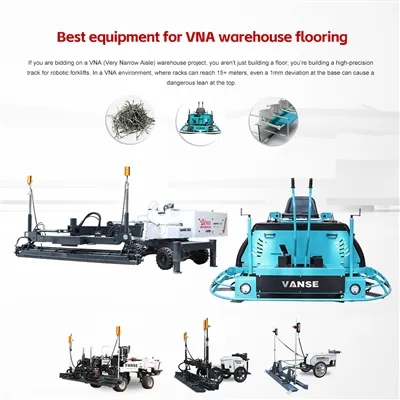
If you are bidding on a VNA (Very Narrow Aisle) warehouse project, you aren't just building a floor; you're building a high-precision track for robotic forklifts. In a VNA environment, where racks can reach 15+ meters, even a 1mm deviation at the base can cause a dangerous lean at the top. To hit the Superflat (FM1/FM2) standards required for these projects, you need a synchronized fleet of equipment. Here is the ultimate professional gear list for VNA flooring, featuring the specialized lineup from Vanse Machinery. For VNA floors, the traditional "strip pour" method is often used to maintain extreme levelness (FL). Why it matters: You need a machine that reacts to laser signals in milliseconds. The Vanse Choice: The Vanse YZ30-4E Telescopic Boomed Laser leveling is the heavyweight champion here. Its 6-meter telescopic boom allows the leveling head to reach out and leveling without the machine moving its wheels on the wet concrete. This eliminates the "tire track effect," which is the #1 enemy of Superflat FL numbers. For smaller areas, the WS940/WS940C/YZ28-4S/YZ25-4 offers incredible agility without sacrificing precision. Before you level, you have to get the concrete into the "strips" without disturbing your reinforcement or localized subgrade. The Workflow: Using a Vanse Concrete Distributor allows for an even, controlled discharge of the mix, preventing "mounds" that are hard to level later. For tight spots or multi-level projects, the Vanse Mini Dumper (available in electric and gasoline versions) is the perfect "last-mile" transport tool, moving material quickly without the heavy footprint of a full-size truck. VNA floors experience intense, repetitive traffic in the exact same wheel paths. They must be wear-resistant. Why it matters: Manual spreading of dry-shake hardener is too uneven for VNA specs. The Vanse Choice: The Vanse Automatic Topping Spreader ensures an exact grams-per-square-meter application. By spreading the hardener evenly behind the laser leveling, you ensure a uniform surface density that won't delaminate or "dust" under heavy forklift loads. Once the concrete begins to set, the "magic" happens. You need to densify the surface until it's hard as iron and smooth as glass. Why it matters: VNA floors require a high FF (Flatness) score. The Vanse Choice: Transition from your walk-behind units to a Vanse VS1046 Ride-on Power Trowel. With its dual 46-inch rotors and high-torque BRIGGS & STRATTON engine, it provides the heavy compaction needed to "burnish" the floor. Its precision pitch control allows the operator to flatten the surface to a mirror finish without creating "waves." Finally, even the best floor will fail if it cracks in the wrong place. The Strategy: In VNA lanes, joint placement is critical. The Vanse Choice: Use a Vanse Concrete Cutting Machine (Floor Saw) for early-entry or standard contraction joints. Its stable chassis and high-speed blade ensure clean, straight cuts that won't "spall" or break at the edges when the forklifts start running. When you visit www.vansemac.com, you aren't just buying individual tools; you are investing in a Superflat Ecosystem. Here is why it works for the international market: Integrated Tech: Vanse machines are designed to work together. The vibration frequency of the laser leveling matches the compaction needs of the power trowels. ROI Focus: In the UK, US, or Middle East, labor is expensive. A full Vanse fleet can reduce your crew size by 40% while doubling your daily output. Standard Compliance: Whether you're aiming for ACI 117 or TR34 (FM1), this equipment is engineered to hit those high FF/FL numbers consistently. VNA warehouse flooring is the "Formula 1" of the concrete world. You wouldn't take a family sedan to the race track-so don't take "standard" equipment to a VNA job site. Equip your team with the precision of Vanse (www.vansemac.com) and turn those high-spec requirements into a competitive advantage. Ready to upgrade your fleet? Check out the full technical specs on the Vanse website and see how we can help you hit those FM1 numbers on your next pour. Note: The parameters provided in this document are for reference only and are not mandatory. Due to differences in technical characteristics between different brands and models of laser levelers, please consult the manufacturer for a suitable solution before actual operation. This reference document assumes no responsibility for any issues arising from failure to follow the manufacturer's instructions.What are the key differences between manual leveling and laser leveling for large-scale concrete floor projects
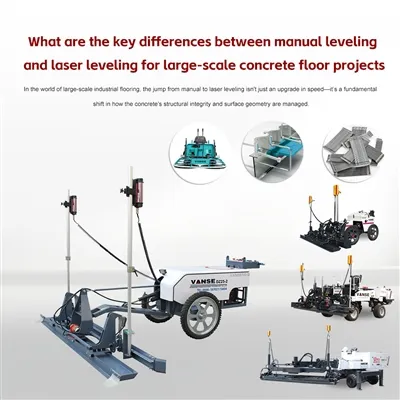
In the world of large-scale industrial flooring, the jump from manual to laser leveling isn't just an upgrade in speed-it's a fundamental shift in how the concrete's structural integrity and surface geometry are managed. While manual leveling relies on the "eye" and physical strength of the crew, laser leveling relies on active hydraulic feedback loops. Feature Manual Leveling (Hand leveling) Laser Leveling (Automated leveling) Precision ±6mm to ±12mm (Typical) ±3mm or better FF 50+) Daily Output 500 – 1,000 ㎡ 2,000 – 5,000+ ㎡ Consistency Highly dependent on crew fatigue High; machine doesn't "get tired" Slump Tolerance Requires higher slump (wetter) Handles low slump (stiffer) mixes Labor Density Large crew required for pulling Smaller crew; specialized operators Manual leveling uses "wet pads" or form-to-form leveling. Because humans pull the leveling board, they naturally create "waves" as they step and reset. Manual: Prone to "birdbaths" (low spots) and "humps" because the reference point (the form or a previously leveled section) is static. Laser: The laser leveling receives a signal 10 times per second. The onboard computer adjusts the hydraulic cylinders in real-time to ensure the plow and vibrator stay at the exact elevation, regardless of the chassis moving over uneven subgrade. This is a critical, often overlooked difference. Manual: To make hand-pulling physically possible, crews often request a higher slump (more water). More water increases the risk of shrinkage, curling, and cracking. Laser: Laser leveling have the power to strike off low-slump, stiff concrete. This results in a much stronger slab with higher density and significantly less shrinkage over time. Manual: Large projects must be broken into many small "strips" or "checkerboard" pours because the crew can only handle so much area at once. This creates more construction joints, which are the weakest points of a floor. Laser: Allows for "Large Area Pours." You can pour massive sections in a single day, drastically reducing the number of joints. Fewer joints mean lower maintenance costs for the facility owner (especially in warehouses with high forklift traffic). Manual leveling often relies on a "vibratory leveling" or just the strike-off action. Laser leveling utilize a high-frequency vibrator head integrated into the leveling boom. This ensures that the aggregate is consolidated uniformly throughout the entire depth of the slab, not just the surface. This creates a more durable "wear layer" for the final power trowel finish. Choose Manual if: You are working in tight spaces with many penetrations (pipes/drains), or the total area is under 300 ㎡ where the mobilization cost of a laser leveling is too high. Choose Laser if: You are hitting FF (Flatness) or FL (Levelness) specifications, or if the project exceeds 1,000 ㎡. The efficiency gains usually pay for the machine rental in saved labor hours alone. Would you like me to break down the cost-per-square-foot difference between these two methods for a typical warehouse project? Contact us NOW Note: The parameters provided in this document are for reference only and are not mandatory. Due to differences in technical characteristics between different brands and models of laser levelers, please consult the manufacturer for a suitable solution before actual operation. This reference document assumes no responsibility for any issues arising from failure to follow the manufacturer's instructions.