Technical Knowledge
Flooring construction mainstay – telescopic arm type concrete laser leveling machine
 |
|
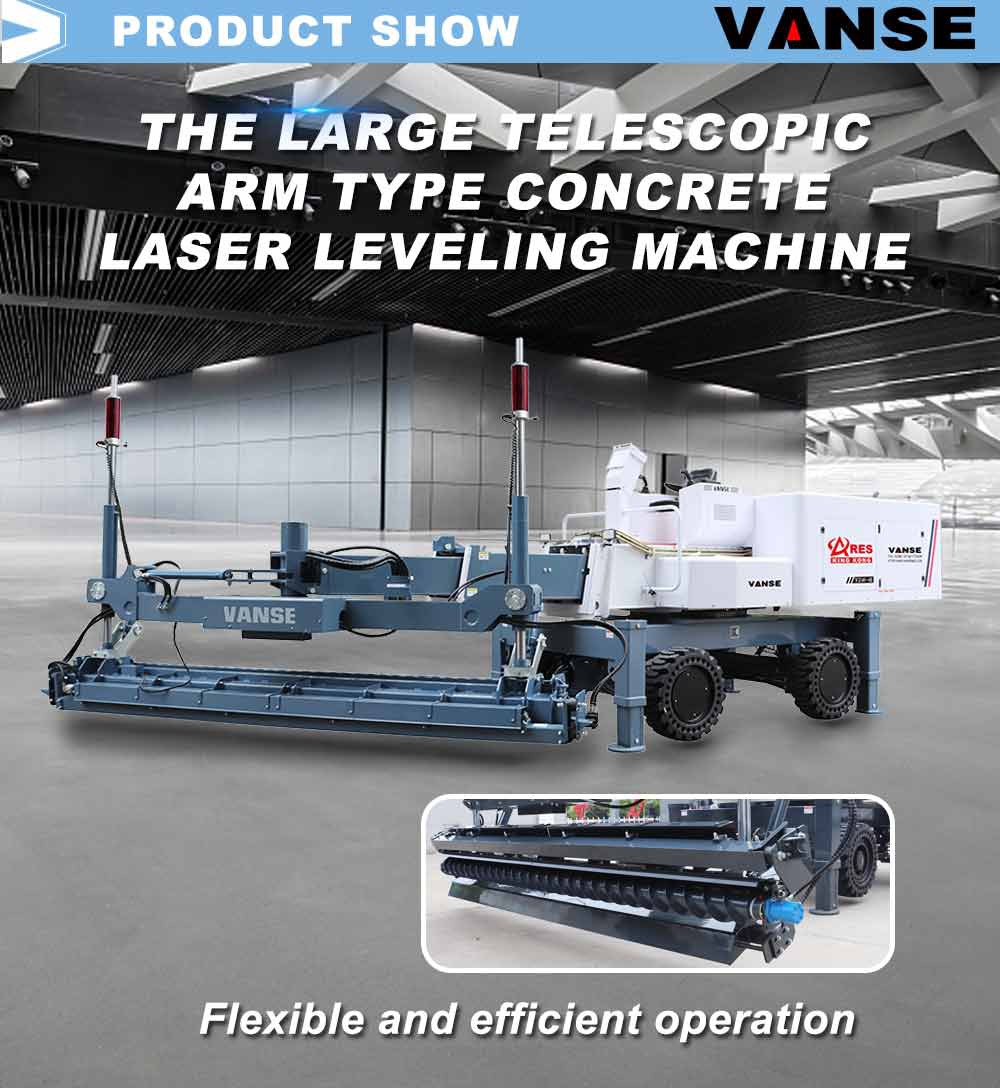
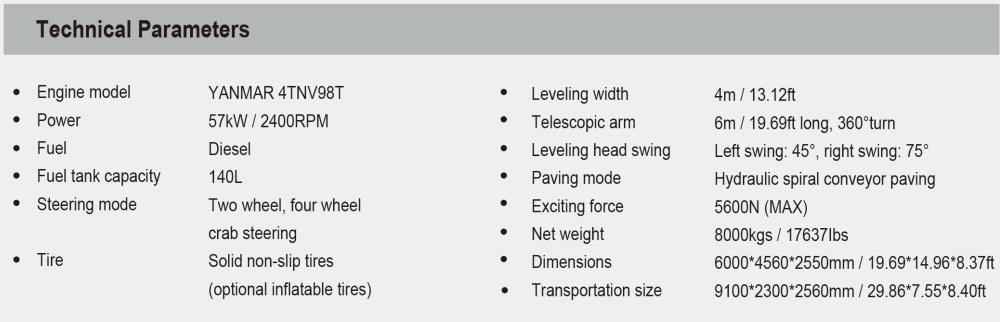
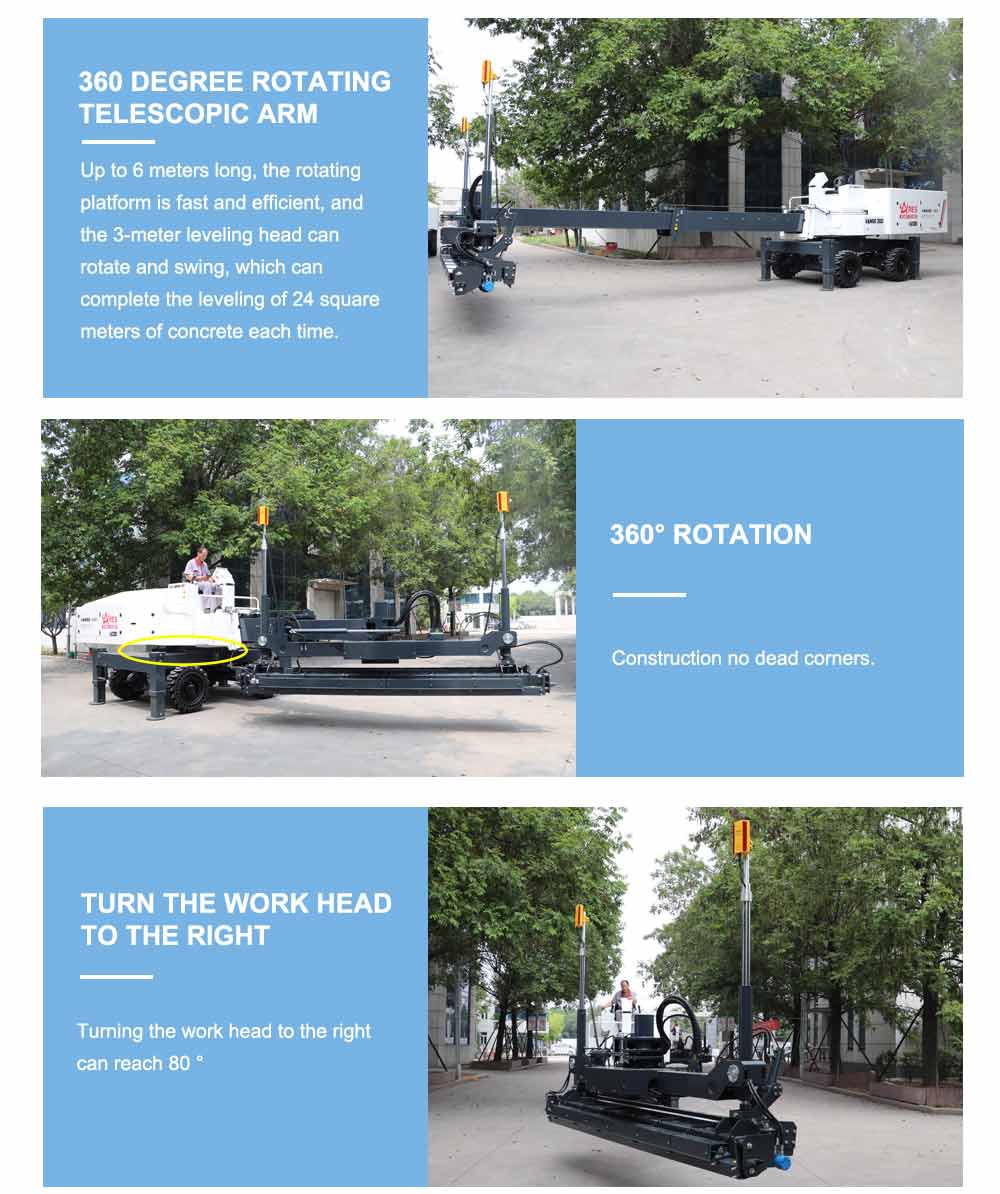
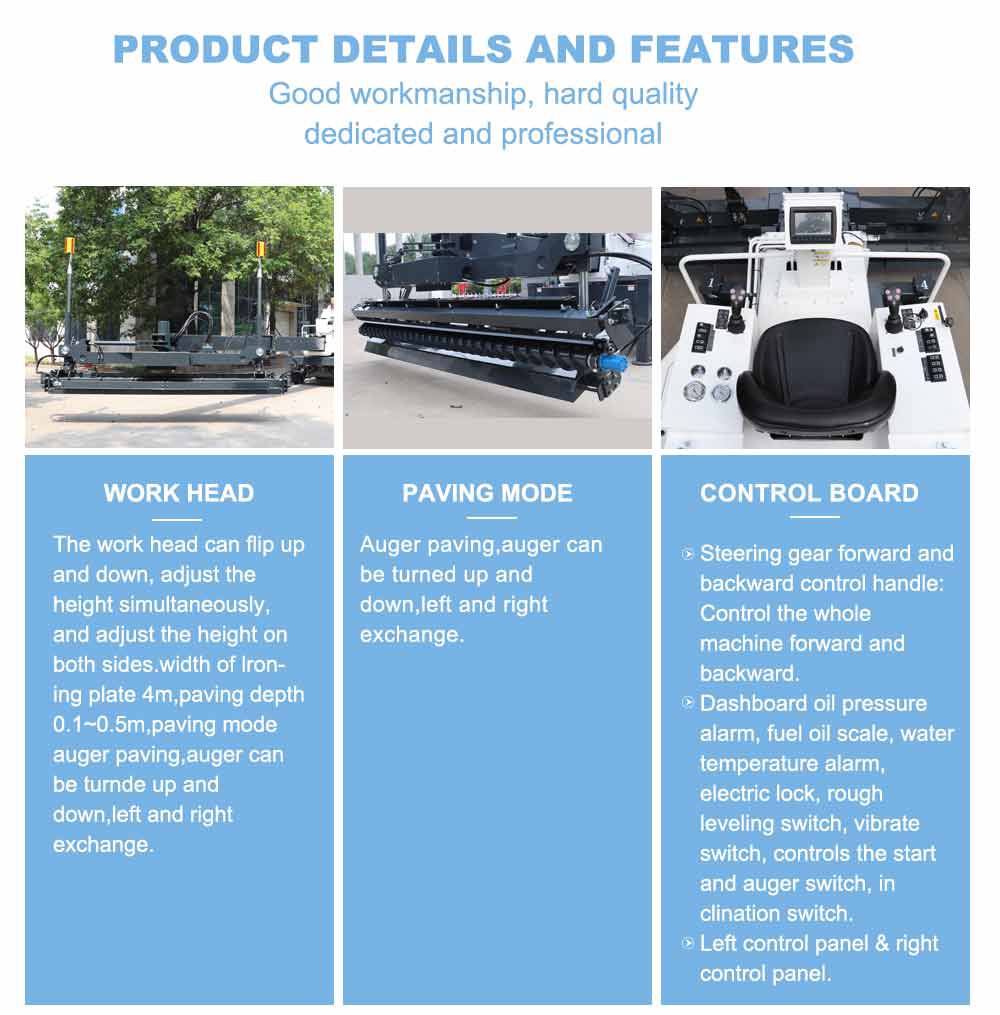
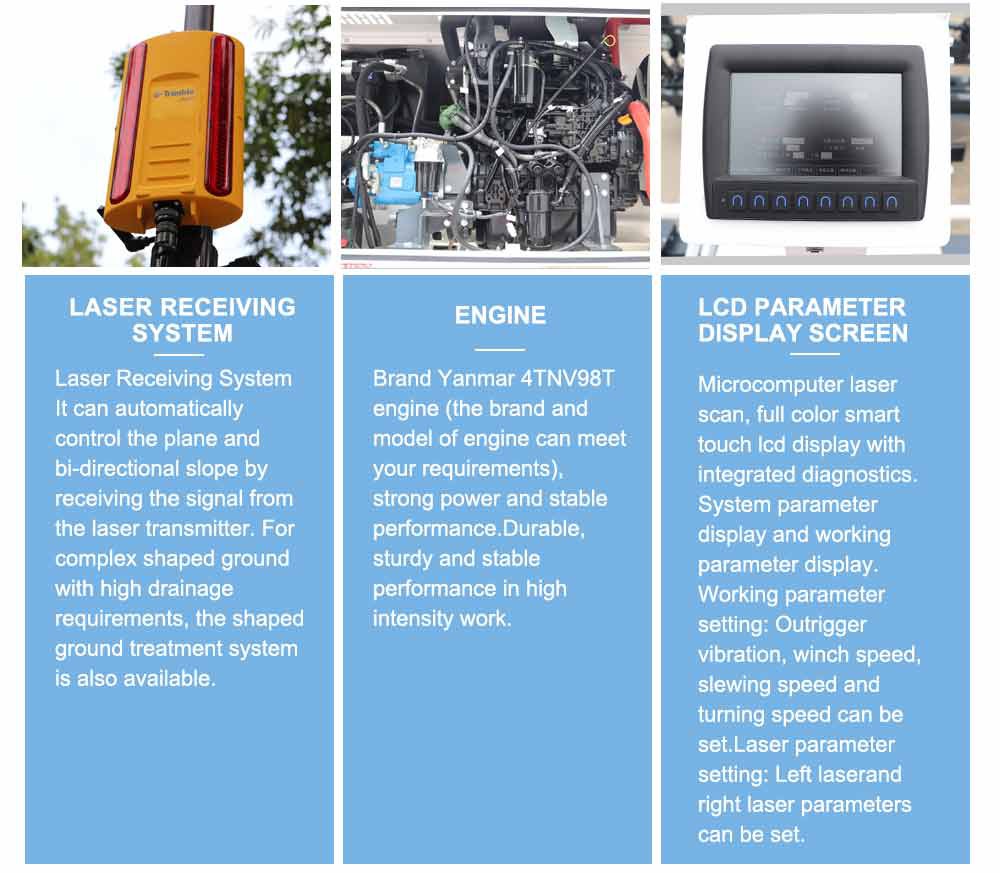
Nowadays, when it comes to flooring, we all know that laser leveling machine, large Telescopic Arm Type Concrete Laser leveling machine adopts advanced laser scanning control system to strictly control the construction accuracy error, the width of the leveling plate is 4.0m, the arm length can be telescoped to 6m, and the leveling head adopts 360° rotation, which is applied for large construction environment. That is to improve the construction efficiency, and improve the levelness and compactness of the ground. It ensures less cracks in the later concrete ground, thus reducing the repair cost of the later ground. In today's flooring construction gradually replace the application of manual and small laser leveling machine, become the main force of the new era of flooring.
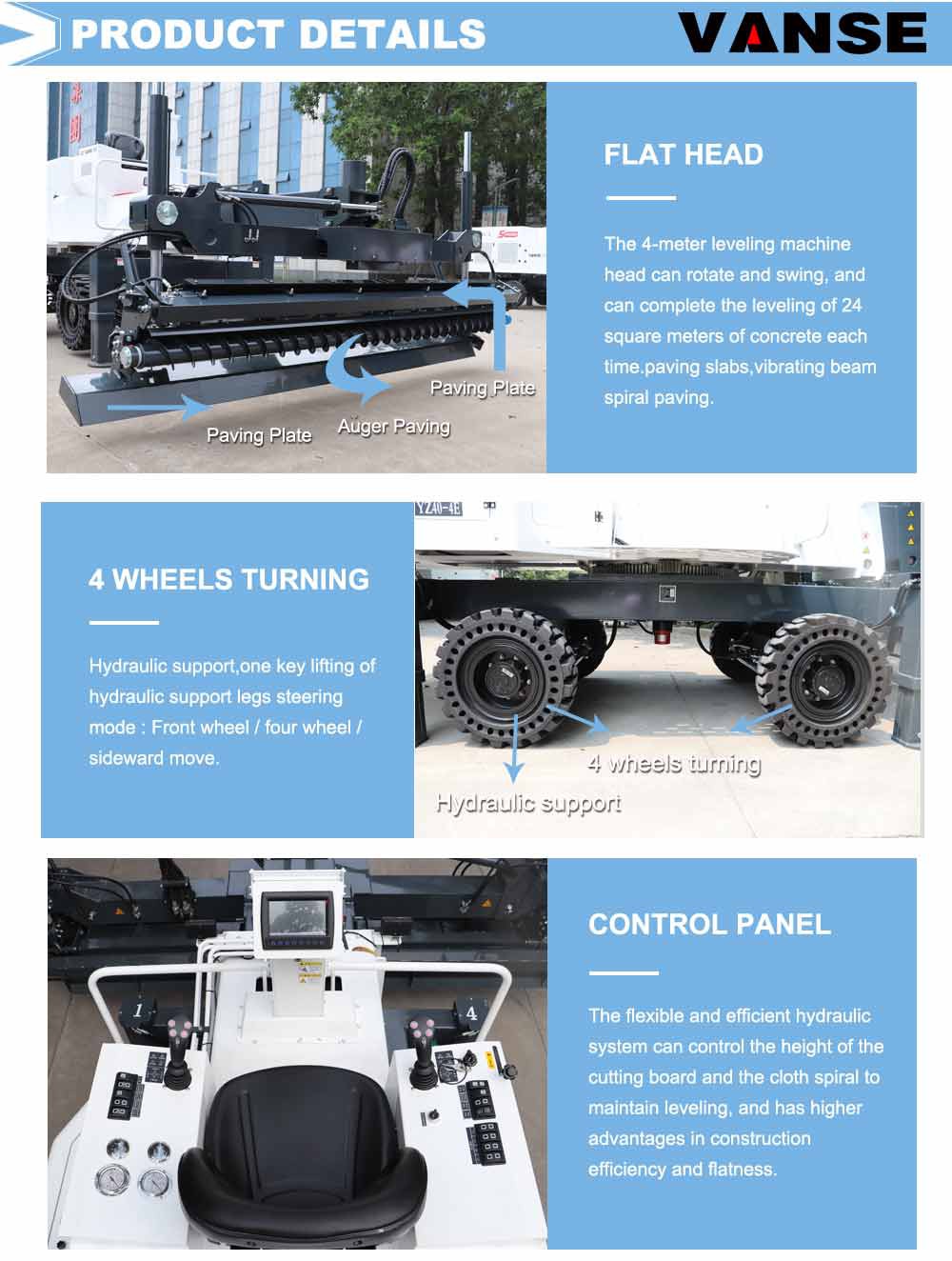
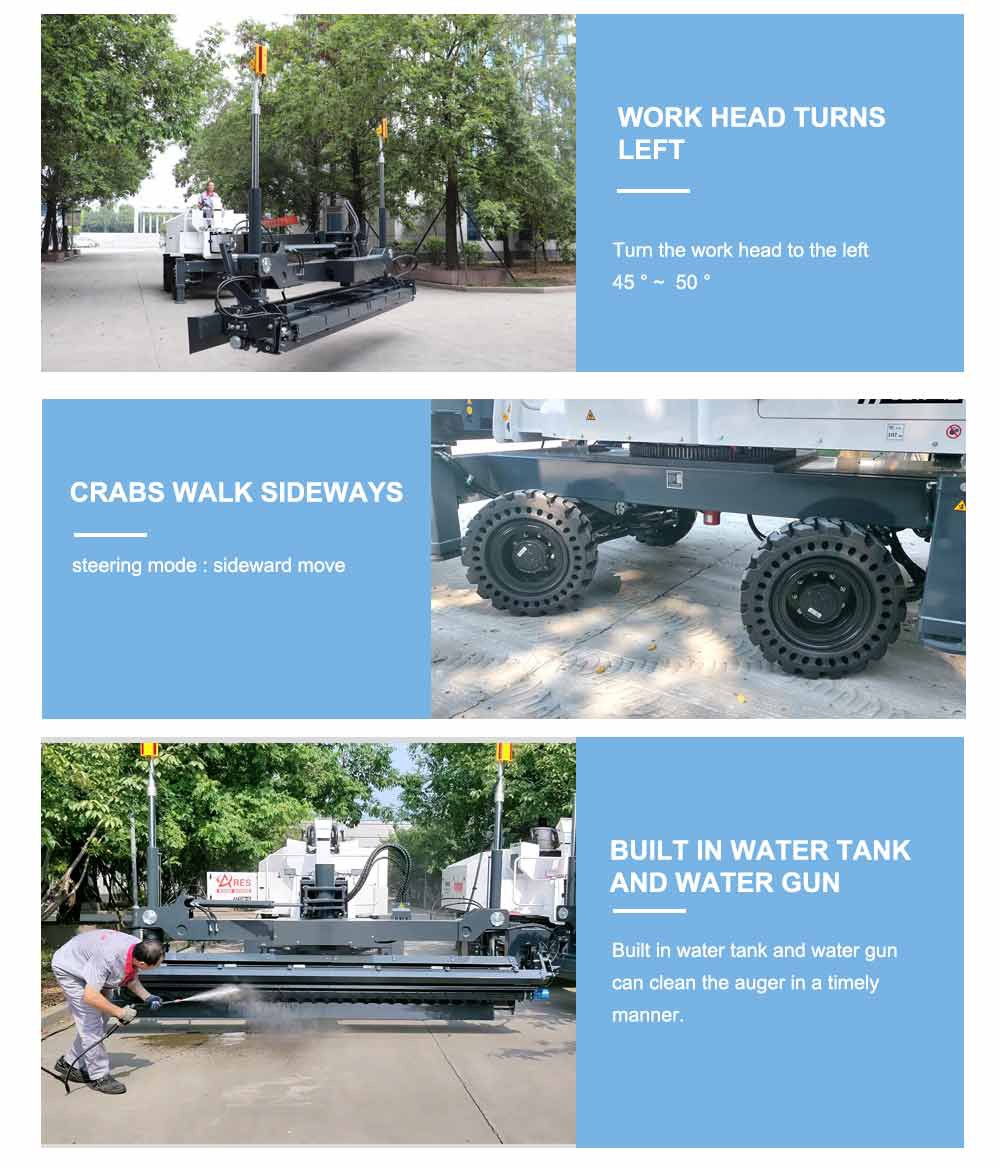
Advantageous features of Vanse Ares Concrete Laser leveling machine: 1, 360 degree telescopic arm up to 6 meters long, fast and efficient rotating platform, the leveling head can rotate and swing, and it can finish the leveling of 24 square meters of concrete each time. With the newly designed eccentric vibrating beam and 4.15m super long scraper, the construction speed is fast, the construction effect is super flat without construction joints, and the work head lifting cylinder stroke is large, fully applicable to bridge operation. 2, Four hydraulic support legs can realize one-touch lifting in just 3 seconds, electric operation longitudinal rod control steering, driving, telescopic arm and rotation, as well as one-touch out of staging mode. 3, Added two-speed anti-skid valve set, the speed can be fast or slow, and can prevent the single wheel from slipping when unable to walk; tires are larger, wider, more stable, large tread pattern, not easy to slip. 4, the United States imported engine, 4 wheel hydraulic drive, laser control system, automatic head rotation, electrical diagnosis, double ramp launcher. 5, the upper frame storage space, 4-wheel steering, 2-wheel steering, can crab walk and rotate in place, color large operation display. 6, Large color LCD display can show the number of engine revolutions, parameters, alarm failure, etc. 7, Flexible and efficient hydraulic system can control the height of the scraper and fabric spiral, keep the leveling layer flatness, and have higher advantages in construction efficiency and ground leveling. 8, Three years warranty, and two visits per year, free maintenance for life, the world's customers no worries. |
Thanks to All the Friends Who Support and Trust Shandong Vanse Machinery Technology Co., Ltd.
If you want to know more about Shandong Vanse Machinery Technology Co., Ltd. or have any questions, please feel free to contact us:
Our Factory
Shandong Vanse Machinery Technology Co., Ltd.








Share this article

About the Author: Shandong Vanse Machinery Technology Co., Ltd.
Shandong Vanse Machinery Technology Co., Ltd. is a high-tech manufacturer specializing in concrete construction machinery, including laser screeds and related equipment. The company integrates R&D, production, and global sales, with products exported to over 60 countries and widely used in infrastructure projects worldwide.
Previous Post
Next Post
Related Articles
You Might Also Like
How much greater efficiency can a ride-on laser leveling improve compared to a walk-behind model? Is the difference noticeable in actual construction?
The improvement in construction efficiency between ride-on laser leveling machines and walk-behind laser leveling machines, as well as the actual gap in construction, can mainly be analyzed from the following aspects. However, the specific improvement ratio and the severity of the gap may vary due to various factors such as equipment model, construction conditions, and the skill level of operators The moving speed: The ride-on laser leveling usually has a faster moving speed. For instance, the transfer speed of the YZ30-4E and YZ40-4E models can reach 0 to 10Km/h (dual-speed switching), while the walk-behind equipment mainly relies on the walking speed of the operator, which directly affects the construction efficiency. Assignment width: The leveling width of ride-on equipment such as YZ30-4E is 3100mm, and that of YZ40-4E is 4000mm. Compared with walk-behind equipment (such as the vibration plate width of DZ25-2 is 2500mm, and that of DZ30-2 is 3000mm), the single operation coverage area is larger, the number of repetitive operations is reduced, and thus the construction efficiency is improved. Degree of automation: Ride-on laser levelings are usually equipped with more advanced automatic control systems, such as microcomputer laser scanning control, which can achieve automatic leveling, reducing the time for manual adjustment and improving the construction accuracy and efficiency. Project Walk-behind laser leveling Ride-on laser leveling Construction speed Approximately 200 to 300 square meters per hour Approximately 600 to 1,000 square meters per hour Number of operators 2 to 3 people (including assistants) 1 to 2 people (single-person operation is acceptable) Continuous operation capacity Generally, human fatigue has a significant impact Strong, suitable for long working hours Adapted area Small areas and corner zones Large areas, main passage zones Construction accuracy High (laser control Higher (more stable system Significant efficiency improvement: In large-scale site leveling construction, the ride-on laser leveling, due to its high-speed movement and large-area operation capabilities, can significantly shorten the construction period. For instance, when laying large areas of concrete floors, ride-on equipment can quickly complete the leveling work, while walk-behind equipment requires more time and manpower. Precision and flatness: The ride-on laser leveling, through an advanced laser control system, can achieve higher construction precision and flatness, reducing the workload of subsequent repairs and adjustments. This is also one of the important factors for improving construction efficiency. Operator fatigue: Walk-behind equipment requires operators to walk for long periods and operate manually, which can easily lead to fatigue and affect construction efficiency. Ride-on equipment, on the other hand, offers a more comfortable operating environment, reduces the physical exertion of operators, and is conducive to maintaining continuous construction efficiency. The improvement in construction efficiency of the ride-on laser leveling is obvious, especially in large-scale site leveling construction, where its advantages are even more prominent. However, for small or complex terrain construction, hand-held equipment may have more advantages due to its flexibility and portability. Therefore, when choosing equipment, a comprehensive consideration should be made based on specific construction requirements and conditions. Concrete supply efficiency: The ride-on type requires 8-12 cubic meters of concrete per hour (calculated at 600 square meters per hour and a thickness of 150mm). If the concrete supply is insufficient (such as only one pump truck), the efficiency will be limited by the feeding speed, and the gap with the walk-behind type will be narrowed to within 20%. If the supply is sufficient (more than two pump trucks), the ride-on type can operate at full load, with a difference of up to 80%. Operator proficiency: The walk-behind operation is simple, and new operators can start working after one day of training. For the ride-on type, one needs to master functions such as laser system debugging and auger speed adjustment. The training will last for 3 to 5 days. If the operator is not skilled, the efficiency of the ride-on type may only be 20% to 30% higher than that of the walk-behind type. After becoming proficient, one can fully exert their performance, and the gap will expand to over 60%. Equipment maintenance and continuous operation capacity: Core components of the vehicle-type equipment (such as hydraulic systems and telescopic arms) require regular maintenance (hydraulic oil should be replaced every 500 hours). If maintenance is not timely, malfunctions may occur and the equipment may shut down. The walk-behind maintenance is simple (clean the air filter every 100 hours), with a low failure rate. However, long-term operation can easily reduce efficiency due to personnel fatigue. Preferred scenarios for ride-on type: Construction area > 5,000 square meters, regular site, and continuous high-intensity operation required (such as factories, logistics warehouses), with significant efficiency improvement and reduced labor costs (in the long term, one ride-on type can replace 2-3 walk-behind types + 4-6 workers). Preferred scenarios for the walk-behind type: Construction area less than 1,000 square meters, narrow site (such as interior renovation), and limited budget. At this time, the efficiency gap is small, and the procurement cost of the walk-behind type is lower (about 1/3 to 1/2 of that of the ride-on type). From the feedback of actual projects, in the construction of mainstream industrial plants and large commercial complexes' floors, the efficiency advantage of the ride-on type has become the key to "cost reduction and efficiency improvement". Especially when the construction area exceeds 10,000 square meters, choosing the ride-on type can shorten the construction period by 30% to 50%, and reduce the comprehensive cost (labor + construction period) by more than 20%. Note: The parameters provided in this document are for reference only and are not mandatory. Due to differences in technical characteristics between different brands and models of laser levelers, please consult the manufacturer for a suitable solution before actual operation. This reference document assumes no responsibility for any issues arising from failure to follow the manufacturer's instructions.How to deal with the construction challenges of concrete laser leveling machines under special ground conditions?
To deal with the construction challenges of concrete laser leveling machines under special ground conditions, the following measures can be taken: 1. Strengthen technical training: Ensure that operators are familiar with machine performance and can operate accurately, especially when facing different ground conditions, they should be able to flexibly adjust machine parameters 2. Choose the appropriate construction method: Choose the appropriate construction method according to the ground conditions. For example, for soft soil ground, preloading method or filling method can be used; for hard ground, crushing method or milling method can be used 3. Strengthen on-site management: Ensure the construction site is orderly and avoid cross-operation and chaos. At the same time, strengthen material management to ensure the quality and supply of concrete and other materials 4. Use auxiliary equipment: As needed, auxiliary equipment such as vibrators and polishers can be equipped to improve the leveling quality and efficiency. 5. Regular maintenance and upkeep: Ensure the normal operation of the machine by regularly inspecting and maintaining key components, such as laser transmitters, sensors, etc. 6. Strengthen communication and collaboration: Maintain close communication with all parties such as design and construction, solve problems encountered during construction in a timely manner, and ensure smooth progress of construction. 7. Use intelligent technology: Consider using automation and intelligent technology, such as machine vision, intelligent control, etc., to improve construction efficiency and accuracy. 8. Pay attention to safety: During the construction process, you should always pay attention to safety and take necessary safety measures to ensure the safety of personnel and equipment. In short, dealing with the construction challenges of concrete laser leveling machines under special ground conditions requires comprehensive consideration of technology, management, collaboration and other aspects. By strengthening training, selecting appropriate construction methods, strengthening on-site management, using auxiliary equipment, regular maintenance and upkeep, strengthening communication and collaboration, adopting intelligent technology, and paying attention to safety, we can effectively deal with these challenges and improve construction efficiency and project quality.What materials are suitable for concrete laser leveling machines?
Concrete laser leveling: suitable materials and applications ★1★ Introduction to compact soil laser leveling machine The concrete laser leveling is a high-efficiency, high-precision concrete construction equipment that is widely used in the construction of floors, roads, bridges and other fields. This equipment achieves high-precision positioning and leveling through laser technology, which can greatly improve the quality and efficiency of concrete construction. ★2★ Concrete material properties Concrete is a composite material widely used in construction projects. It is mainly composed of aggregates, cement, water and other additives. The hardening process of concrete involves factors such as hydration reaction and temperature changes, and it requires a certain amount of time and appropriate maintenance to reach the design strength. Due to the diversity of concrete materials, different types and proportions of mixers have different characteristics and application ranges. ★3★ Working principle of concrete laser leveling machine The working principle of the compacted soil laser leveling machine mainly uses laser technology for high-precision positioning and measurement. By installing a laser transmitter and receiver on the equipment, the concrete laser leveling can form a laser beam in the construction area, and monitor and control the height and level of the laser beam in real time through sensors and control systems. During the leveling process, the equipment will automatically adjust the walking track and concrete paving thickness to ensure the flatness and compactness of the floor. ★4★ Applicable material range of concrete laser leveling machine Concrete laser leveling machines are suitable for many types of concrete materials, including but not limited to the following: 1. Ordinary concrete: suitable for concrete construction in general construction projects, such as floors, roads, etc. 2. High-strength concrete: suitable for structures with high strength requirements, such as bridges, high-rise buildings, etc. 3. Durable concrete: Suitable for projects with high durability requirements, such as nuclear power plants, tunnels, etc. 4. Special function concrete: such as thermal insulation concrete, refractory concrete, etc., suitable for projects with specific functions. It should be noted that for different types of concrete materials, appropriate mix design and construction process adjustments need to be carried out according to their characteristics and requirements to ensure Construction Quality. ★5★ Application of concrete laser leveling machine in different scenarios The application of concrete laser leveling machines in different scenarios includes the following aspects: 1. Floor construction: Suitable for floor construction in industrial plants, warehouses, parking lots, shopping malls, etc., which can improve the flatness and durability of the floor. 2. Road construction: It is suitable for the construction of urban roads, highway bridges and other road projects. It can improve the smoothness and durability of the road and reduce maintenance costs. 3. Bridge construction: It is suitable for construction on the surface of bridges, which can improve the flatness and durability of the bridge and extend the service life of the bridge. 4. Airport runway construction: Suitable for the construction of airport runways, it can improve the flatness and durability of the runway and ensure flight safety. 5. Special projects: Suitable for the construction of special projects with extremely high safety requirements such as nuclear power plants, tunnels, and oil depots. ★6★ Advantages and limitations of concrete laser leveling machine The advantages of the compacted soil laser leveler mainly include high precision, high efficiency, and high degree of automation, which can greatly improve construction quality and efficiency, and reduce labor costs and material waste. However, there are also some limitations to the compacted soil laser leveling, such as the higher skill level requirements for operators, additional processing and adjustments that may be required for construction with complex shapes and special requirements, and in addition, the purchase and maintenance costs of the equipment. It also requires reasonable economic considerations. ★7★ Operation and maintenance of concrete laser leveling machine Operating a concrete laser leveling requires professional training and practical experience. Operators need to master the performance and working principles of the equipment and strictly abide by operating procedures and safety regulations. During use, the equipment must be inspected and maintained regularly to ensure the normal operation and service life of the equipment. At the same time, for different types of concrete materials and construction scenarios, corresponding adjustments and treatments are required to ensure construction quality. ★8★ Market Prospects and Investment Value Analysis With the continuous expansion of the scale of construction projects and the continuous improvement of construction requirements, the market demand for concrete laser leveling machines is also gradually increasing. In the next few years, with the continuous advancement of technology and the expansion of application fields, there is still a lot of room for improvement in the accuracy, efficiency and service life of concrete laser levelings. Therefore, for investors with a long-term perspective, concrete laser leveling machines are a potential investment area. However, it should be noted that the investment cost of equipment is relatively high, and adequate preparation and planning are required economically. At the same time, market competition is becoming increasingly fierce, and it is necessary to strengthen technological innovation and service quality improvement to maintain competitive advantages.