Technical Knowledge
Concrete laser leveling machine – modern machinery for hardening large areas of cement
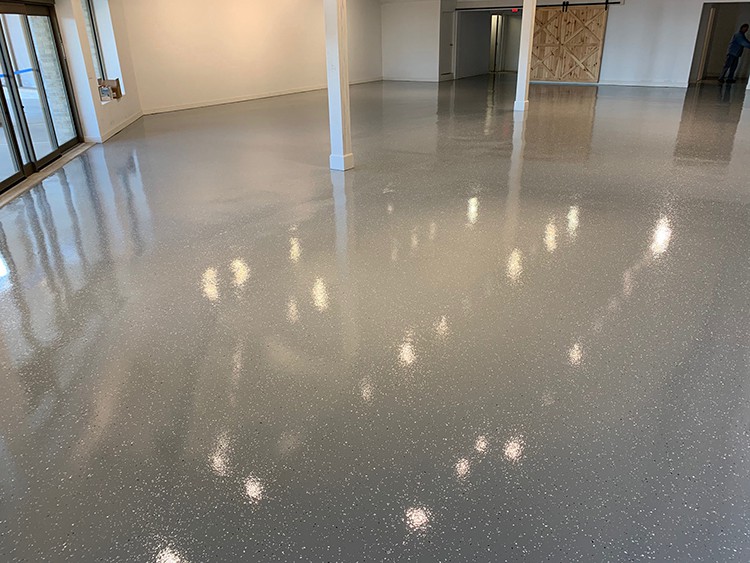
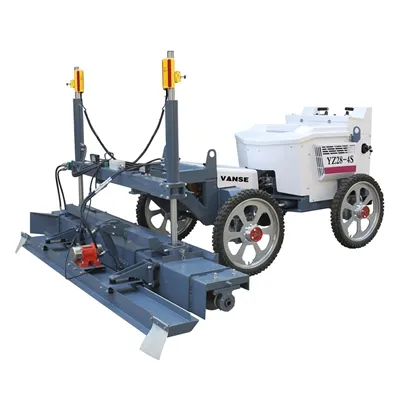
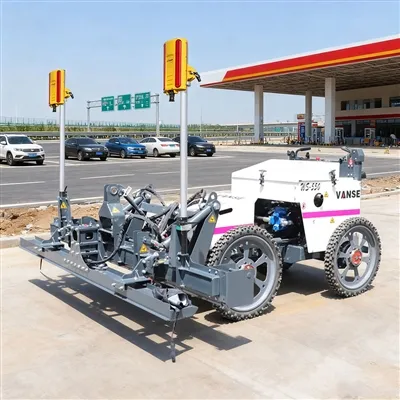
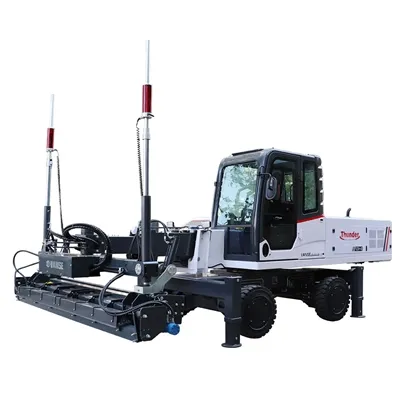
Concrete laser leveling machine – modern machinery for hardening large areas of cement, can effectively improve the hardness of the cement floor strength flatness. Nowadays, for the construction industry, the simple ground has higher requirements, so there are many companies will produce some machinery to help people to successfully complete the goal they want to achieve. The Vanse concrete laser leveling machine is made with the development of society. Its biggest effect is to help people maximize the strength of the cement after hardening or the levelness of the cement floor. It is an essential machine for modern construction industry. Concrete laser leveling machine is a machine that operates on large floors, or floors that require a very flat surface. After placing it on the ground, it can be leveled manually or automatically. The concrete floor is then hardened and leveled by means of high frequency vibration. This is an extremely efficient and modern way of working. The use of Vanse concrete laser leveling machine can reduce labor costs significantly. Although it costs about tens of thousands of dollars to buy a machine, it basically pays for itself in a few relatively small projects. And then the machine is still your own. This is a very worthwhile investment in modern machinery and equipment. Such a machine and equipment is through a variety of feedback mechanism and a variety of electrical equipment to collect signals. Then on the computer host for processing, and finally feedback to the machine itself and then through the computer analysis and processing to tell the answer to the machine. The Vanse concrete laser leveling machine has a very efficient operation. It can guarantee 24 hours a day non-stop work, and can reduce the length of time and labor costs. This is an essential piece of machinery for modern building construction.
Thanks to All the Friends Who Support and Trust Shandong Vanse Machinery Technology Co., Ltd.
If you want to know more about Shandong Vanse Machinery Technology Co., Ltd. or have any questions, please feel free to contact us:
Our Factory
Shandong Vanse Machinery Technology Co., Ltd.








Share this article

About the Author: Shandong Vanse Machinery Technology Co., Ltd.
Shandong Vanse Machinery Technology Co., Ltd. is a high-tech manufacturer specializing in concrete construction machinery, including laser screeds and related equipment. The company integrates R&D, production, and global sales, with products exported to over 60 countries and widely used in infrastructure projects worldwide.
Previous Post
Next Post
Related Articles
You Might Also Like
What are the common faults and troubleshooting methods of concrete laser leveling machines?
The concrete laser leveler is a high-tech equipment used for concrete construction. It uses laser technology to level the concrete surface to improve construction quality and efficiency. However, during use, the concrete laser leveling may experience some common faults, which can be repaired with some simple troubleshooting methods. The following will introduce common faults and troubleshooting methods of concrete laser leveling machines. 1. The device cannot be turned on. The device cannot be turned on because the power cord is not connected correctly, the battery is low, or the device itself is faulty. To troubleshoot this problem, you can check whether the power cord is connected correctly, whether the battery is charged or replaced with a new one, and whether there are other malfunctions in the device. 2. The device cannot receive signals. The failure of the device to receive signals may be caused by the GPS antenna being blocked, signal receiver failure, or surrounding signal interference. To troubleshoot this fault, you can check whether the GPS antenna is blocked or move to a better location, check whether the signal receiver is faulty or replace it with a new one, eliminate surrounding signal interference, etc. 3. The device cannot scan. The device cannot scan. The reason may be that the laser head is blocked, the laser head is faulty, or the control circuit is faulty. To troubleshoot this fault, you can check whether the laser head is blocked or clean, check whether the laser head is faulty or replace it with a new one, check whether the control circuit is faulty or repair the circuit, etc. 4. The device cannot transmit data. The device cannot transmit data. The reason may be that the memory card is full, the memory card is faulty, or the connection between the device and the computer is poor. To troubleshoot this problem, you can check whether the memory card is full or delete unnecessary files, check whether the memory card is faulty or replace it with a new one, check whether the connection between the device and the computer is good, etc. 5. The device cannot be calibrated. The failure of the device to be calibrated may be caused by incorrect calibration steps, incorrect placement of the device, or errors during the calibration process. To troubleshoot this problem, you can follow the correct calibration steps, place the device in the correct location, check if there are any errors during the calibration process, etc. 6. The equipment cannot perform automatic leveling. The failure of the equipment to perform automatic leveling may be caused by sensor failure, poor connection between the sensor and the equipment, or incorrect sensor position. To eliminate this fault, you can check whether the sensor is faulty or replace it with a new one, check whether the connection between the sensor and the device is good, adjust the position of the sensor, etc. 7. The equipment cannot perform automatic smoothing. The equipment cannot perform automatic smoothing. It may be caused by motor failure, poor connection between the smoother and the equipment, or incorrect position of the smoother. To eliminate this fault, you can check whether the motor is faulty or replace it with a new one, check whether the connection between the trowel and the equipment is good, adjust the position of the trowel, etc. 8. The equipment cannot perform automatic control. The failure of the equipment to perform automatic control may be caused by controller failure, control circuit failure or control program error. To eliminate this fault, you can check whether the controller is faulty or replace it with a new controller, check whether the control circuit is faulty or repair the circuit, check whether the control program is wrong or update the program, etc. In short, there are many common faults and troubleshooting methods for concrete laser leveling machines. When a fault occurs, you should first understand the basic operating methods of the machine, and then analyze and troubleshoot according to the actual situation. If you cannot solve the problem by yourself, it is recommended to seek help from professional technicians in time.Analysis of the Causes of Unstable Laser Signals in Concrete Laser Leveling and Treatment Measures
The following is a detailed answer to the analysis of the causes of unstable laser signals in Concrete Laser Leveling and the corresponding treatment measures. Unstable laser signals are one of the common faults in the construction of Concrete Laser Leveling, which will directly lead to a decrease in the leveling accuracy and affect the flatness and quality of the floor. It is of vital importance to quickly locate and solve problems. The main causes of unstable laser signals come from four aspects: the laser emitter, the signal receiver, the external environment and the machinery itself. Power supply issue: Insufficient battery power or poor contact of the power adapter leads to unstable power supply to the laser and fluctuations in output power. Laser itself malfunction: Aging, damage of the laser module or loosening or contamination of internal optical components (such as lenses) can cause the beam to diverge or drift. Unstable reference point: The tripod of the laser emitter is not stably set up and may slightly move or sink under the influence of wind or human touch. Automatic calibration failure: The calibration system of the transmitter with self-leveling function (such as pendulum, magnetic damping or electronic sensor) malfunctions and cannot maintain a stable level reference. Power connection issue: The connection cable between the receiver and the main body of the leveler is loose, poorly connected or damaged. Sensor failure: The photoelectric sensor on the receiver is aged, its sensitivity has decreased, or it is covered with dirt (dust, cement slurry), making it impossible to accurately identify the laser signal. Improper installation: The receiver is not correctly installed on the mast, or there is severe vibration at the installation position, which affects signal reception. Strong light interference: The intense sunlight at noon, especially its infrared spectrum, can interfere with the receiver's recognition of laser signals. Obstruction: Temporary obstructions such as scaffolding, personnel, and equipment at the construction site block the laser beam, causing signal discontinuity. Vibration interference: There are large equipment (such as excavators, heavy trucks) operating nearby, or the laser emitter is set up on a platform with obvious vibration, causing the reference optical path to jitter. Atmospheric disturbance: At super-large construction sites, heat waves caused by high ground temperatures can lead to uneven air density, resulting in slight refraction and jitter of laser beams. Mechanical vibration: If the engine of the Leveling machine operates unsmoothly or the hydraulic system vibrates excessively, the vibration will be transmitted to the receiver, introducing signal noise. Electrical system interference: The generator, frequency converter or high-current circuit of the leveling machine itself generates electromagnetic interference, affecting the sensitive receiver circuit. Follow the principle of "from simple to complex and from outside to inside" in the investigation. Check the power supply: Ensure that the laser emitter is fully charged and all power connections are firm and reliable. Clean and inspect optical components: Use dedicated lens cleaning paper to clean the output lens of the laser emitter and the sensor window of the receiver. Stable reference: Confirm that the laser emitter tripod is firmly set up on a solid floor and kept away from vibration sources. Use counterweights to stabilize the tripod when necessary. Eliminate environmental interference Shading: Install a sunshade on the receiver to prevent direct exposure to strong light. Obstacle clearance: Inspect and clear all possible obstacles along the laser propagation path. Vibration avoidance: Suspend operations that generate strong vibrations nearby or move the position of the laser emitter. 5. Restart the system: Turn off the power of the laser emitter and the leveler, wait for one minute, and then restart to reset the electronic system. 6. Calibration check Manually rotate the transmitter to check if it can provide a stable signal throughout the entire 360-degree range. Use professional tools to check whether the automatic leveling function of the laser emitter is normal. If necessary, send it for repair and calibration. 7. Substitution method test Install the receiver on another confirmed normal level machine for testing. If the problem persists, it indicates that the receiver is faulty. Replace it with a confirmed normal laser emitter. If the problem is solved, the original emitter needs to be repaired. 8. Inspect the cables and connections: Carefully check all the cables from the receiver to the main controller for any signs of compression, wear or breakage, and reinsert all the connectors. 9. Seek professional support: If none of the above steps can solve the problem, it is very likely that there is a hard fault with the electronic components inside the laser or the receiver. At this point, you should immediately contact the after-sales service department of the equipment manufacturer (such as Shandong Wansai Technology) for diagnosis and repair by professional technicians. Do not disassemble the core components by yourself. Regular maintenance: Clean and calibrate the laser transmitter and receiver regularly in accordance with the operation manual. Standard operation: Set up and move the equipment correctly to avoid violent impacts. On-site investigation: Observe the on-site environment before construction, plan the installation position of the laser emitter in advance, and avoid potential interference sources. Backup equipment: For critical projects, it is recommended to prepare backup laser transmitters or receivers to deal with sudden malfunctions. Through systematic analysis and step-by-step investigation, the problem of unstable laser signals of concrete Laser Leveling machines can be efficiently solved, ensuring the quality and efficiency of construction. Note: The parameters provided in this document are for reference only and are not mandatory. Due to differences in technical characteristics between different brands and models of laser levelers, please consult the manufacturer for a suitable solution before actual operation. This reference document assumes no responsibility for any issues arising from failure to follow the manufacturer's instructions.What are the advantages and limitations of concrete laser levelings?
Concrete laser levelings offer many advantages, including 1. High flatness: The concrete laser leveling machine uses laser technology, which can accurately control the height and slope of the ground to achieve high-precision ground leveling. 2. High efficiency: Compared with the traditional manual leveling method, the concrete laser leveling machine can greatly improve the construction efficiency and shorten the construction period. 3. Reduce material waste: Due to the high leveling accuracy, it can reduce the waste of concrete materials and reduce costs. 4. Easy to operate and maintain: The concrete laser leveling machine is simple to operate and requires low skills of workers. At the same time, the equipment is also easier to maintain. 5. Applicable to various floors: The concrete laser leveling machine can be applied to a variety of different floors, such as cement, asphalt, etc. However, concrete laser levelings also have some limitations: 1. Higher cost: The purchase and maintenance cost of a concrete laser leveling is higher, which may increase the total investment of the project. 2. Limited adaptability to terrain: The concrete laser leveler has limited adaptability to terrain, and may not be able to level some special terrain or obstacles. 3. Professional operation and maintenance are required: Although operation and maintenance are relatively simple, professionals are still required to operate and maintain the equipment to ensure the performance and life of the equipment. 4. Not suitable for small-area construction: For small-area construction projects, it may not be cost-effective to use a concrete laser leveler because of its higher cost. 5. Not suitable for short-term construction projects: Since concrete requires a certain amount of time to harden and stabilize, it may not be suitable to use a compact laser leveling for short-term construction projects. In general, concrete laser leveling machines have significant advantages in improving construction efficiency and achieving high-precision ground leveling. They are especially suitable for large industrial plants, logistics centers, airports and other places that require high-precision and high-strength floors. However, limitations such as its high cost and limited adaptability to terrain also need to be considered in practical applications.