Technical Knowledge
Four requirements that must be met in concrete mix design

Concrete mix design is a key link to ensure the quality of the project. It must meet the following four core requirements to ensure that the concrete reaches the expected goals in terms of strength, construction performance, durability and cost:
⛳1. Meet the strength requirements of structural design
The strength of concrete (such as compressive strength, tensile strength, etc.) must strictly comply with the engineering design standards (such as C30, C50 and other strength grades), which is the basis of structural safety. During the design, it is necessary to accurately calculate the water-cement ratio, select the cement strength grade and aggregate grading to ensure that the concrete reaches the design strength under standard curing conditions. For example, for high-rise buildings or large-span structures, it is necessary to appropriately increase the amount of cement or add high-efficiency water reducer to improve the early strength and later strength reserve of concrete.
⛳2. Meet the workability requirements of construction technology
Concrete must have good workability (including fluidity, cohesion and water retention) to adapt to the construction links such as mixing, transportation, pouring, and vibration.
🌸Flowability:
By adjusting the water-cement ratio, sand ratio or adding water reducing agent, the slump or expansion of concrete can meet the requirements of construction equipment (such as the slump of pumped concrete is usually controlled at 120~200mm).
🌸Cohesion and water retention:
Avoid segregation or bleeding of concrete during transportation or pouring, which affects the uniformity of the structure. For example, the cohesion of concrete can be improved and stratification can be prevented by increasing the sand ratio or adding mineral admixtures such as fly ash and silica fume.
⛳3. Meet the durability requirements of the engineering environment
Concrete needs to adapt to the erosion of the long-term use environment and have anti-freeze, anti-seepage, anti-corrosion, anti-carbonization and other properties.
🌸Anti-freeze:
In severe cold areas, it is necessary to control the air content of concrete (usually 3%~5%) and add air entraining agent to prevent freeze-thaw cycles from causing structural damage.
🌸Impermeability:
By reducing the water-cement ratio, optimizing aggregate grading or adding expansion agents, the density of concrete can be improved to resist the intrusion of moisture and harmful media (for example, underground projects must meet the P6~P12 impermeability grade).
🌸Corrosion resistance:
For corrosive environments such as salt spray, acid and alkali, corrosion-resistant cement (such as slag silicate cement) can be used or the thickness of the concrete protective layer can be increased.
⛳4. Meet the requirements of economy and material properties
On the premise of ensuring performance, it is necessary to optimize the material composition, reduce production costs and comply with environmental protection principles:
🌸Reasonable use of admixtures:
Add fly ash, slag powder, silica fume and other industrial waste slag to replace part of the cement, reduce the amount of cementitious materials, reduce hydration heat and carbon emissions (for example, the amount of fly ash in large-volume concrete can reach 20%~40%).
🌸Optimize aggregate grading:
Use coarse and fine aggregates with continuous grading to reduce the amount of cement paste and reduce the risk of shrinkage cracking.
🌸Control the amount of admixture:
Select suitable water reducers, early strength agents, etc., and reduce the cost of admixtures while meeting the performance requirements.
⛳Summary
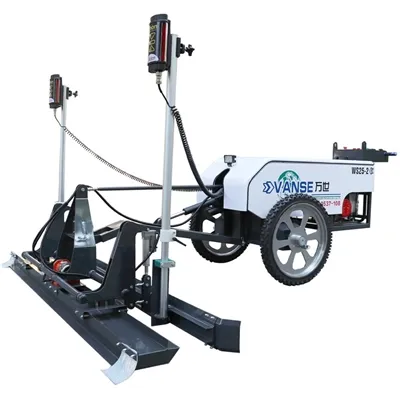
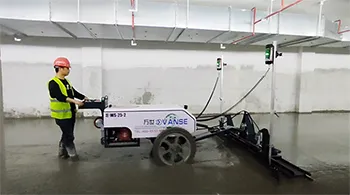
Concrete mix design should focus on strength, workabilityas the construction basis, durabilityas the long-term guarantee, and economic efficiencyas the optimization goal. By scientifically adjusting the material composition and proportion, the balance between engineering performance and cost can be achieved. In actual design, it is also necessary to combine specific construction processes (such as whether to use equipment such as concrete laser leveling machines) and material properties for trial adjustment to ensure that the quality of the entire process from mixing to molding of concrete is controllable.
Click the below to jump immediately!!!


LASER LEVELING MACHINE


SLIPFORM MACHINE


TOPPING SPREADER

TRACKED MINI DUMPER
Thanks to All the Friends Who Support and Trust Shandong Vanse Machinery Technology Co., Ltd.
If you want to know more about Shandong Vanse Machinery Technology Co., Ltd. or have any questions, please feel free to contact us:
Our Factory
Shandong Vanse Machinery Technology Co., Ltd.








Share this article

About the Author: Shandong Vanse Machinery Technology Co., Ltd.
Shandong Vanse Machinery Technology Co., Ltd. is a high-tech manufacturer specializing in concrete construction machinery, including laser screeds and related equipment. The company integrates R&D, production, and global sales, with products exported to over 60 countries and widely used in infrastructure projects worldwide.
Previous Post
Next Post
Related Articles
You Might Also Like
What special attention should be paid to the maintenance and care of concrete laser leveling machines under different climatic conditions?
– Under high temperature environment, the engine (if it is a fuel laser leveler) and hydraulic system are prone to overheating. For the engine, make sure that the coolant in the radiator is sufficient and clean. The coolant level should be checked regularly, generally every 8-10 hours of work, and the coolant should be replaced regularly according to the requirements of the equipment manual. It is usually recommended to replace it once a year. – Clean the dust and debris on the surface of the radiator, as these will affect the heat dissipation effect. You can use a compressed air can or a soft brush to gently clean it to avoid damaging the radiator fins. – For the hydraulic system, some laser levelers are equipped with a hydraulic oil cooler. Also ensure that its surface is clean and pay attention to the temperature of the hydraulic oil. If the hydraulic oil temperature is too high, it may cause the performance of the hydraulic system to decline or even damage. – Try to avoid using the equipment for a long time when the temperature is highest during the day (usually 12 noon-3 pm). Because during the high temperature period, the operating temperature of each component of the equipment is already high, and long-term continuous operation will further aggravate heat accumulation and increase the risk of equipment failure. – The working time can be adjusted to the early morning or evening, when the ambient temperature is relatively low, which is conducive to the normal operation of the equipment. If it is unavoidable to work during high temperature periods, the rest frequency of the equipment should be increased. After every 1-2 hours of work, the equipment should be allowed to rest for 15-20 minutes to allow the various parts of the equipment to fully dissipate heat. – High temperature will accelerate the evaporation and aging of lubricating oil (grease), so the lubrication of the equipment should be checked more frequently. For example, for the bearings, chains and other parts of the equipment, lubrication may be performed once every 50-100 hours of work. In a high temperature environment, it is necessary to check and add grease every 30-50 hours of work. – At the same time, check the seals of the equipment, such as the seals at the joints of the hydraulic pipes and the engine oil seals. High temperature may cause the seals to age and deform, resulting in leakage. If the seals show signs of damage, they should be replaced in time to avoid leakage of hydraulic oil or coolant, which will affect the normal operation of the equipment. – For fuel-type laser levelers, use fuel suitable for low temperature environments. In cold weather, diesel may wax, which will affect the start and normal operation of the engine. You can add anticoagulants or use low-grade winter diesel to solve this problem. – Battery performance will decrease at low temperatures, so make sure the battery is fully charged. When the equipment is not in use, the battery can be removed and placed in a warm room for charging and storage. In addition, before starting the equipment, the battery can be preheated, such as using a battery heater, which can improve the battery's starting ability. – The engine should be fully preheated before starting. According to the requirements of the equipment manual, use a preheating device to preheat the engine. The preheating time is generally determined by the ambient temperature. For example, in an environment of about minus 10℃, the preheating time may take 10-15 minutes. – For the hydraulic system and working parts, do not let the equipment work at full load immediately after starting. Let the equipment run at no load for 5-10 minutes to gradually heat up the hydraulic oil and various components. After reaching the normal working temperature, start construction. – If the equipment is not used for a long time, it should be stored indoors or in a place with insulation measures to avoid exposure to cold outdoor environments. If it can only be stored outdoors, the equipment should be properly covered to prevent damage to the equipment caused by snow and ice. – Antifreeze can be added to the water tank and hydraulic oil tank of the equipment to prevent the water tank and oil tank from freezing and cracking at low temperatures. The amount of antifreeze added should be in accordance with the requirements of the equipment manual. Generally, the concentration of antifreeze should be ensured to effectively prevent freezing at the expected minimum temperature. – Check the electrical system of the equipment to ensure that all electrical components (such as motors, controllers, sensors, etc.) have good waterproof seals. For wire connectors exposed to the outside, waterproof tape or sealant can be used to wrap them to prevent moisture from entering and causing short circuits. – The laser transmitter and receiver of the laser leveling machine should also be waterproof. In humid weather, if these precision components are damp, it may affect the transmission and reception of laser signals, thereby affecting the construction accuracy. You can use a special waterproof cover to protect it. When the equipment is not in use, store these parts in a dry place. – Humid air can easily cause equipment to rust, especially the metal parts of the equipment. Anti-rust oil or anti-rust paint can be applied to the surface of the equipment, and the parts that are prone to rust (such as chassis, scrapers, screws, etc.) should be protected. – Regularly check whether the equipment has signs of rust. For rusted parts, rust removal should be carried out in time. You can use sandpaper or rust remover to remove the rust, and then apply anti-rust oil or touch-up paint. – After working in humid weather, the equipment should be cleaned and dried in time. Use a clean rag to wipe off the moisture on the surface of the equipment. For parts inside the equipment that may be damp (such as the cab, electrical control cabinet, etc.), a hair dryer or dehumidifier can be used to dry them. – At the same time, the working parts of the equipment (such as scrapers, spiral distributors, etc.) should be cleaned to prevent concrete residues and moisture from mixing and solidifying on the parts, affecting the next use of the equipment.How does the concrete laser leveling machine improve the flatness of the floor?
The main methods for using a concrete laser screed to improve the flatness of the floor include the following steps: 1. Laser positioning: First, the laser leveling machine uses a laser rangefinder for positioning. This is a critical step in ensuring a smooth floor, as the laser rangefinder provides precise horizontal and vertical reference lines. Regular inspection and calibration of the laser rangefinder is an important measure to ensure its accuracy. 2. Preliminary leveling of concrete: After the concrete is laid, the initial leveling work is carried out first. The purpose of preliminary leveling is to make the concrete surface basically reach the preset elevation and prepare for subsequent fine leveling work. The concrete surface after initial leveling should be higher than the preset elevation to facilitate subsequent leveling work. 3. Laser leveling: After the initial leveling, use a concrete laser leveling machine to perform fine leveling work. The screed works according to the reference line provided by the laser distance finder, ensuring that the concrete surface exactly matches the reference line. During this process, the leveler works at a constant speed to avoid uneven floors caused by being too fast or too slow. 4. Regular inspection and adjustment: During the construction process, the flatness of the floor needs to be checked regularly. If any unevenness is found, adjustments need to be made in time. This can be accomplished by adjusting the speed and height of the leveler. At the same time, a certain amount of expansion joints should be reserved every day to cope with possible downtime during the leveling process. 5. Maintenance after construction: After the construction is completed, it is also very important to perform proper maintenance on the floor. Maintenance measures include covering with plastic film in the early stage and covering with non-woven fabric after cutting to prevent cracking and other problems caused by the floor drying too quickly. In general, improving floor smoothness relies on accurate laser positioning, proper concrete primary leveling, accurate laser leveling, regular inspections and adjustments, and proper post-construction maintenance. These steps require professional operators to ensure the flatness and construction quality of the floor.After-sale maintenance and notice of concrete laser leveling machine
1.The time interval of each start-up should not be less than 10s. 2. In the process of equipment shutdown and transfer, the pulling ring of hub center plug should be pulled out before the tire can be rotated. 3. In the process of equipment transfer, the arm can be lifted manually to control the height of the leveling head. 4. After completion of construction, please lift the nose manually by using the lifting button, and then withdraw from the construction site. It is forbidden to push the machine in the vibration and leveling parts and the ground contact state, so as to prevent damage to the vibration plate. 5. It is strictly forbidden to insert air plugs in operation, to rotate the fixed part of laser receiver by force, and to rotate the fixed part of metal air plug. 6. It is strictly forbidden for those who are not familiar with the performance of the machine to start the machine. They need to receive training before operation. 7. It is strictly forbidden to aim the eyes at the laser beam for a long time. 8. Machines shall not be used under construction in thunderstorm weather. 9. In the process of stopping leveling or turning, the vibration motor must be shut down first. 10. In the process of turning, the speed knob must be adjusted to the position below 3. 11. Check the fastening bolts of vibration motor every 100 hours. 12. The joint head of the lifting frame is refueled once a day. 13. Calcium-based butter is added to the axle head of the wheel every 50 hours. 14. The scraper coupling shaft is filled with oil once a day. 15. It is strictly forbidden to move the laser transmitter when it is turned on. 16. Do not use high-pressure water gun to clean the control box and operation screen and plug the power line of the control box at will. 17. Laser transmitters should be placed in open, non-interference and vibration places, and avoid electromagnetic interference places as far as possible, such as distribution boxes. 18.Handheld receivers snap must be perpendicular scrapers and laser receivers must be in a vertical state. Welcome for asking if you had any needs on concrete laser leveling equipment, choose Vanse, choose quality.