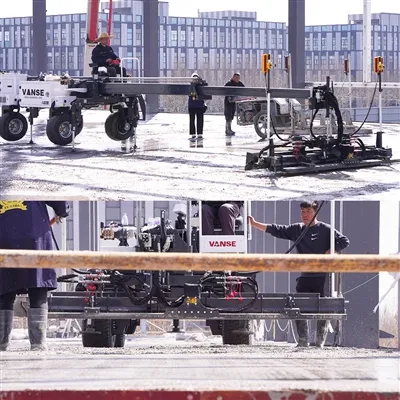
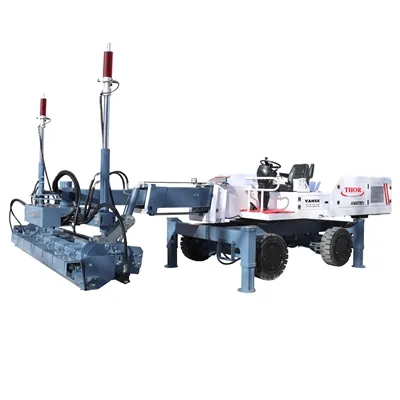
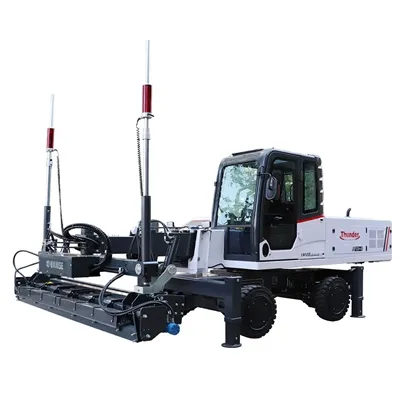
Technical Knowledge
How To Take Precautions When The Concrete Laser Leveling Machine Works Under High Temperature Conditions
If the concrete laser leveling machine works in the summer, it will need to face hot temperatures for a long time. However, if the leveling machine is always under high temperature, it will actually cause many adverse reactions. For example, the tires will be more likely to be damaged or The water in the water tank will evaporate at an accelerated rate, so in order to protect the concrete laser leveler, when you need to operate the leveler at high temperatures, you should take appropriate precautions in advance. How to take precautions when the concrete laser leveling machine works under high temperature conditions
●First,
because the summer is hot and the temperature is continuous, so if the concrete laser leveling needs to work for a long time, it means that the vehicle tires are always exposed to high temperatures. At this time, you should pay attention to the tires caused by high temperatures. Rubber softening problem. Moreover, if you encounter sharp objects during the work, a tire blowout may occur. Therefore, this requires car owners to check the air pressure level in the tires in advance before the concrete laser leveling machine is working. If the tire temperature is found to be relatively high during the work, appropriate cooling measures need to be taken. There are two misunderstandings to avoid here. The two cooling measures of directly pouring cold water and deflating the air are very undesirable because they will cause damage to the tires and even cause a puncture later.
●Second,
if the concrete laser leveling machine works under high temperature conditions for a long time, the water in the water tank will evaporate more quickly, so the owner should pay more attention to how much cooling water is left and what temperature the water temperature meter shows. , if you find that the water volume is not enough, you should stop the car immediately, but you cannot add water immediately at this time, but you should add water after the temperature has cooled down a little. When adding water, be careful to avoid burns.
●Third,
ther
e are two particularly dangerous time periods that require more vigilance, mainly at noon and dusk. After a morning of working with the concrete laser leveling, especially in summer when the temperature is high, people can easily become sleepy during the noon period, which can lead to fatigue driving and lack of concentration, so accidents often occur. It is also easier to get tired at dusk because of the hard work of the day. In this case, the car owner can drink something refreshing, or stop and rest, and then continue the work of the concrete laser leveling machine when his mental state is better.
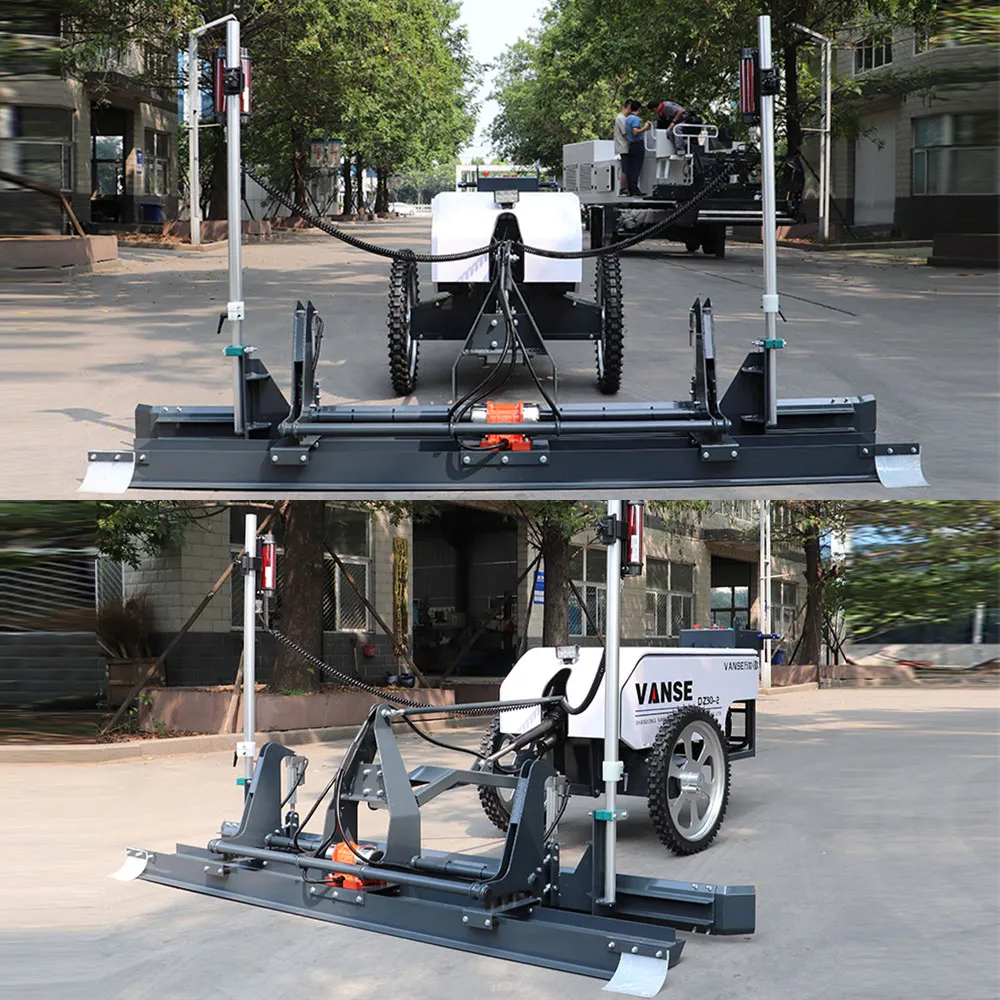
Thanks to All the Friends Who Support and Trust Shandong Vanse Machinery Technology Co., Ltd.
If you want to know more about Shandong Vanse Machinery Technology Co., Ltd. or have any questions, please feel free to contact us:
Our Factory
Shandong Vanse Machinery Technology Co., Ltd.








Share this article

About the Author: Shandong Vanse Machinery Technology Co., Ltd.
Shandong Vanse Machinery Technology Co., Ltd. is a high-tech manufacturer specializing in concrete construction machinery, including laser screeds and related equipment. The company integrates R&D, production, and global sales, with products exported to over 60 countries and widely used in infrastructure projects worldwide.
Previous Post
Next Post
Related Articles
You Might Also Like
How to ensure the stability of concrete during transportation and pouring?
During the transportation and pouring of concrete, ensuring its stability requires multiple aspects such as the selection of transportation equipment, transportation process control, pouring process optimization and auxiliary equipment application. The following are specific measures and key points on how to integrate concrete laser leveling machine: – Useconcrete mixer truck, the low-speed rotation of its mixing drum can prevent concrete from segregating during transportation and maintain uniformity. For large volumes of concrete or long-distance transportation, it is necessary to ensure that the sealing and rotation speed of the mixing drum meet the specifications (usually the speed is 2~4 rpm). -Keyword integration: Ifconcrete laser leveling machine is needed to level the pouring surface after transportation, it is necessary to plan the transportation route in advance to ensure that the vehicle can arrive at the working surface smoothly to avoid excessive loss of concrete slump due to bumps, which affects the flatness accuracy of subsequent laser leveling. – The time from concrete mixing to pouring should be strictly controlled (e.g. no more than 90 minutes at room temperature) to avoid initial setting or slump reduction due to too long time. The setting time can be adjusted by adding retarders during transportation, but the compatibility needs to be tested in advance. -Keyword association: When usingconcrete laser leveling machine, the slump of concrete must meet the equipment operation requirements (usually 120~180mm). If the slump loss is too large during transportation, an appropriate amount of water reducer can be added twice on site according to regulations and quickly stirred evenly to ensure that the laser leveling machine can effectively spread and level. – Use "layered continuous pouring" or "pushing continuous pouring" to avoid cold joints. For large-area flat structures (such as industrial plants, parking lots, etc.), they can be poured in sections, and each section can be synchronized with theconcrete laser leveling machine to ensure that the concrete is leveled before initial setting. -Equipment application scenario: When pouring large-area concrete, theconcrete laser leveling machine adjusts the leveling height in real time through the laser control system, which can reduce the error of manual leveling. At the same time, the high-frequency vibration device (integrated in some models) ensures the compactness of the concrete and improves the stability of the structure. – The pouring speed should match the concrete mixing and transportation capacity to avoid accumulation or waiting. When vibrating, use an inserted vibrator rod and operate according to the principle of "fast insertion and slow withdrawal" to ensure that the vibration is dense but not over-vibrated (over-vibration will cause segregation). -Synergy of laser leveling machine: Someconcrete laser leveling machines are equipped with vibrating beams or vibration plates, which can complete vibration synchronously during the leveling process, which can reduce the unevenness of manual vibration, especially suitable for components with dense steel bars or thin walls, to avoid the impact of insufficient vibration on the stability of concrete. -Concrete laser leveling machine emits a reference plane through a laser transmitter, and the leveling head automatically adjusts the height according to real-time feedback. The leveling accuracy can reach ±3mm/3m, which is much higher than traditional manual leveling. This feature ensures uniform thickness of the concrete casting layer, avoids stress concentration caused by local excessive thickness or thinness, and thus enhances overall stability. – Traditional manual leveling requires the cooperation of multiple people and takes a long time, while the laser leveling machine can complete paving, leveling and vibration (some models) at one time, and the efficiency is increased by more than 50%. Quick completion of the operation can reduce the exposure time of concrete, reduce the impact of environmental factors (such as high temperature and strong wind) on its working performance, and indirectly ensure stability. – On slopes, curved surfaces or sites with drainage slope requirements,concrete laser leveling machine can set different elevations through programming, accurately achieve the designed slope, avoid uneven slopes or flatness defects caused by manual operation, and ensure the stability of concrete structures under complex working conditions. – In hot weather, transport vehicles need to take shading measures, and cover the curing film in time after pouring; in low temperature environment, concrete needs to be transported insulated, covered with quilts or steam curing after pouring to prevent freezing damage from affecting stability. -Adaptive operation of laser leveling machine: When used in high temperature environment, the leveling speed can be appropriately accelerated to reduce the sanding problem caused by too fast evaporation of water on the concrete surface; in low temperature environment, use with early strength agent to ensure that the strength growth of concrete after laser leveling meets the maintenance requirements. – Before transportation, test the slump and workability of concrete; during the pouring process, randomly sample and make test blocks to test compressive strength, impermeability and other indicators; after completing the leveling withconcrete laser leveling machine, immediately check the flatness with a ruler, and repair the local deviation area in time to ensure that the overall stability meets the standard. By optimizing transportation equipment and processes, standardizing pouring processes, and rationally applying advanced equipment such asconcrete laser leveling machine, the stability of concrete during transportation and pouring can be comprehensively improved. Laser leveling machines can not only achieve high-precision leveling, but also shorten construction time and reduce environmental interference through efficient operations. They are key technical means to ensure structural quality in modern concrete engineering. In practical applications, special plans need to be formulated in combination with the characteristics of the project to ensure coordination of all links and ultimately achieve the stability and durability goals of concrete engineering. Click the below to jump immediately!!! ARMOUR JOINT LASER LEVELING MACHINE LIGHT TOWER POWER TROWEL SLIPFORM MACHINE STEEL FIBER TOPPING SPREADER TRACKED MINI DUMPERGood maintenance habits really extend the service life of a laser leveler?
Laser leveling machine is a great helper for leveling machinery in construction, but road construction workers can always feel that after several years of use, the equipment is far from being as flexible and convenient as before. What is the reason? Many users only know the surface, but not the reason, and can only procrastinate, and regret it when they use it next time. During the use of laser leveling machine, due to the different intensity of work, it is very likely to have some minor faults after use. At this time, road construction workers should pay attention to it. After use, they should do some daily maintenance on the machine appropriately, which can extend the service life of the machine equipment. 1. Check the connection and fastening of each component of the laser leveling machine, whether the connecting bolts are loose or broken, and tighten or replace them if necessary. Check for leaks and eliminate leaks in various parts in time. Pay attention to the amount of engine oil, fuel, coolant and hydraulic oil, and add new oil to the oil mark as required. Is there an appropriate amount of grease in the centralized lubrication device? 2. Be careful not to work under the maximum load that the machine can bear, and use the machine to the best of your ability. As a laser leveling machine manager, when designating an operator, the laser leveling machine random data and operation manual should be handed over to the operator so that he can master the mechanical performance and operating procedures normally, and the relevant data should not be withheld at will. 3. Try to ensure the uniform addition and subtraction of the mechanical load, so that the machine is in a relatively gentle load change. Specifically, it is to add and subtract the throttle more evenly to prevent the ups and downs of the engine and working device. 4. There will be a lot of dust and mud on the laser leveling machine after construction. First, wipe the dust on the laser leveling machine clean, and wipe the dirt and oil stains with thin paper or cotton cloth. 5. If the laser signal is lost during the construction of the laser leveling machine, the machine needs to be restarted, and the interval time needs to be more than ten seconds. 6. If there are too many stains, you can soak it in water diluted with neutral detergent with a soft cloth, wring it out and wash it. Wanshi laser leveling machine manufacturers remind everyone to remember not to use volatile oil, thinner, gasoline and other chemicals for cleaning and wiping. Developing good habits of operating the laser leveling machine will be of great help in the construction and storage of the laser leveling machine in the future. This not only improves work efficiency, but also extends the service life of the machine to a certain extent.How does the laser leveling machine improve construction quality and efficiency in industrial plants and warehouses?
The application of laser leveling machines in industrial plants and warehouses can significantly improve construction quality and efficiency, which is specifically reflected in the following aspects: 1. **Improve ground flatness**: – The laser leveling machine uses a high-precision laser system to control the flatness of the ground, reducing the errors caused by human factors in traditional construction methods. 2. **Increase construction speed**: – With a high degree of automation, the laser leveling machine can quickly complete large-area concrete laying and leveling work, greatly improving the construction speed compared to manual work. 3. **Ensure construction accuracy**: – The equipment is equipped with a sophisticated control system that can achieve precise control of the concrete floor to ensure that the horizontality and verticality of the floor meet the design requirements. 4. **Reduce material waste**: – The laser leveling machine effectively reduces material waste and construction costs by accurately controlling the laying thickness of concrete. 5. **Increase ground bearing capacity**: – The ground constructed by the laser leveling machine has a higher density, thereby improving the bearing capacity and durability of the ground, which is suitable for heavy machinery and cargo stacking in industrial plants and warehouses. 6. **Reduce the cost of later maintenance**: – High-quality construction results reduce problems such as ground cracks and potholes, thereby reducing the cost of later maintenance and repair. 7. **Improve the working environment**: – The flat and seamless ground reduces the accumulation of dust and debris, providing a cleaner and safer working environment for industrial plants and warehouses. 8. **Adapt to different construction conditions**: – The laser leveler can work in different climates and ground conditions, including wet, cold or hot environments, to ensure the continuity and efficiency of construction. 9. **Improve construction safety**: – Reduce the amount of manual work and reduce the safety risks of construction workers during the construction process. 10. **Facilitate subsequent construction and use**: – The ground constructed by the laser leveler provides a good foundation for subsequent equipment installation and internal logistics, which is conducive to improving the operating efficiency of the entire factory. In the above way, the application of laser levelers in industrial plants and warehouses not only improves the quality and efficiency of construction, but also brings long-term economic benefits and better use experience to owners. With the continuous advancement of technology, the application of laser leveling machines in the industrial field will become more extensive, and the construction quality and efficiency will be further improved.