Technical Knowledge
Where should I start buying a laser leveling machine?
WHERE SHOULD I START BUYING A LASER LEVELING MACHINE?
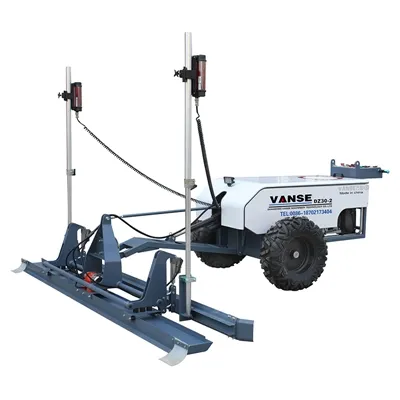
In order to alleviate the tension of the labor force, many companies have purchased concrete laser leveling machines, which can reduce the amount of labor used and reduce capital investment to a certain extent. But for consumers to buy this device, they should find the manufacturer to buy it on the basis of a thorough understanding.
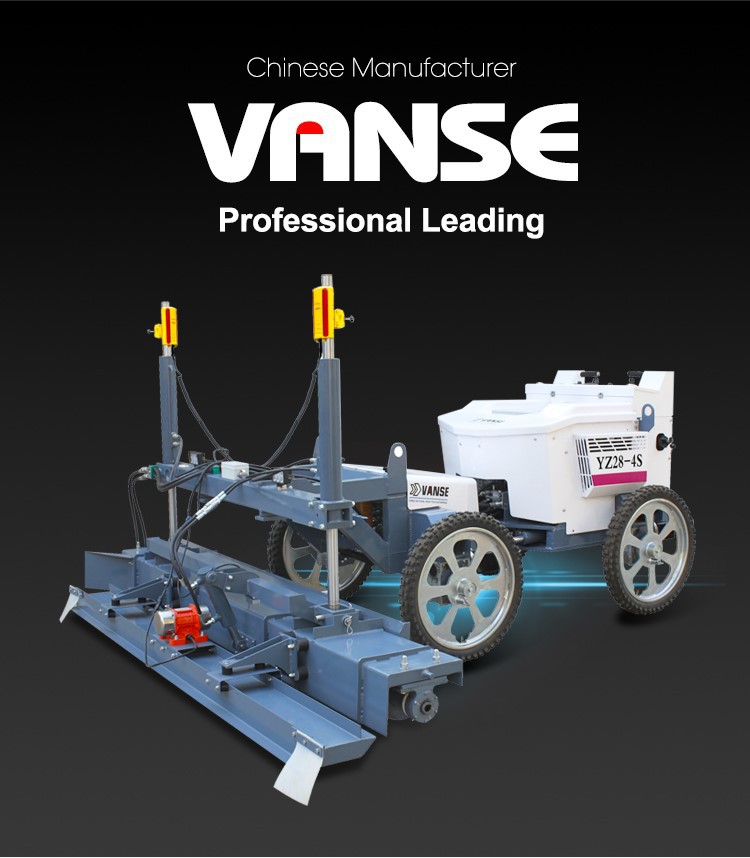
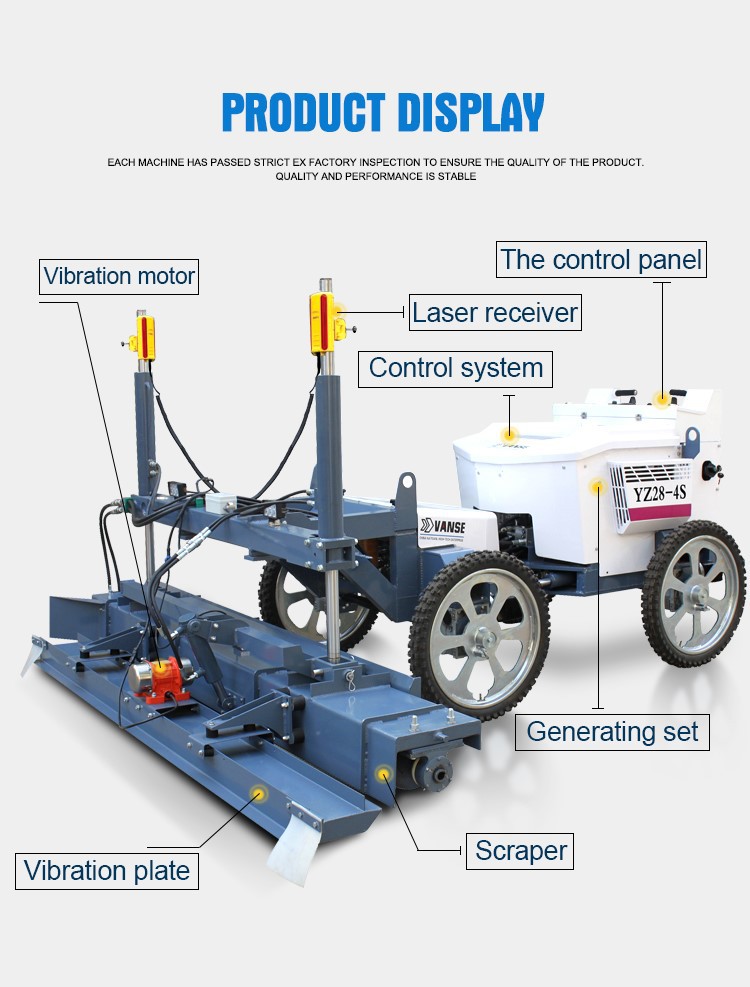
"High degree of automation, low labor intensity, save formwork, channel steel, reduce labor input, and make the ground smoother"… Based on various advantages, laser leveling machines are now highly sought after by the construction floor industry and become a star product in construction machinery and equipment. Driven by unlimited business opportunities and market interests, many companies have begun to join in and promote themselves as professional brands, professional manufacturers, and product experts. This phenomenon makes consumers unaware when purchasing laser leveling machine products. How to choose, here Shandong Wanshi Machinery Xiaobian has compiled a few precautions for purchasing laser leveling machines to help users stay away from being "fooled" and find good brands and products that are truly professional and focused.
1. Carefully select brands just getting started
For high-tech products such as concrete laser leveling machines, in addition to technological innovation, there is another important factor that affects the quality of concrete laser leveling machines, and that is experience. How to define laser leveling machine products of different models and specifications? How to deal with the flatness of the ground? How to position the laser transmitter and other issues require years of long-term accumulation to accurately grasp. When users choose laser leveling machine products, if they rush to buy the products of the brand that has just started, they are likely to become "guinea pigs" and encounter various troubles. It is very simple to identify whether this brand is just getting started, just check its patent registration time and understand the real cases in the past.
2. Do not choose low-priced e-commerce products, but also consider the comprehensive strength of the enterprise
Regarding the current phenomenon and confusion in the laser leveling machine industry, industry insiders believe that for an enterprise, the trust of consumers in the final purchase is a comprehensive consideration. The price factor may account for 25% of it, but in the end, consumers still consider comprehensive factors. Today, as consumption habits become more and more rational, low prices can only become a gimmick to attract consumers' attention. The real measure of a company's success or failure is the company's product quality, after-sales service and its own strong strength. At present, when the reshuffle trend of the laser leveling machine industry is becoming more and more obvious, laser leveling machine companies with insufficient terminals, insufficient networks, and insufficiently well-known brands will face greater pressure.
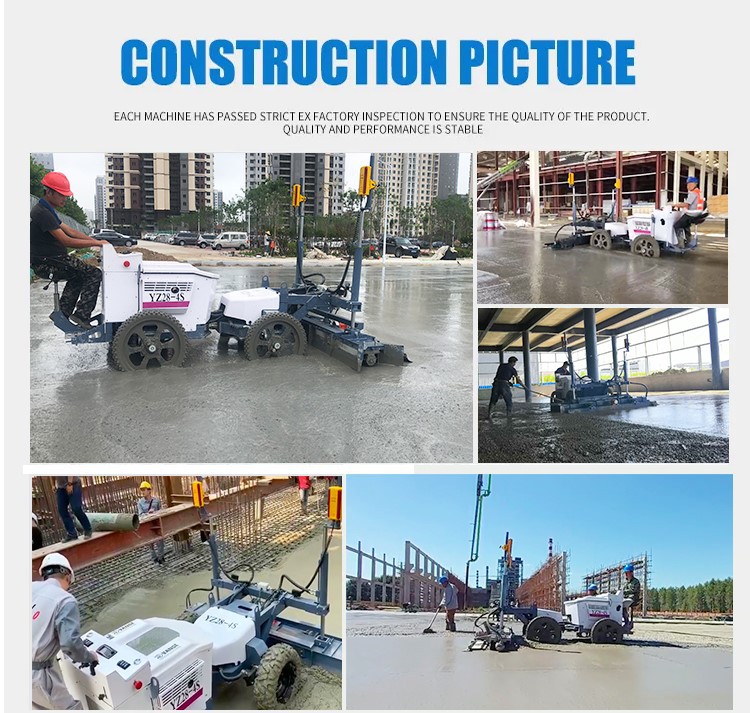
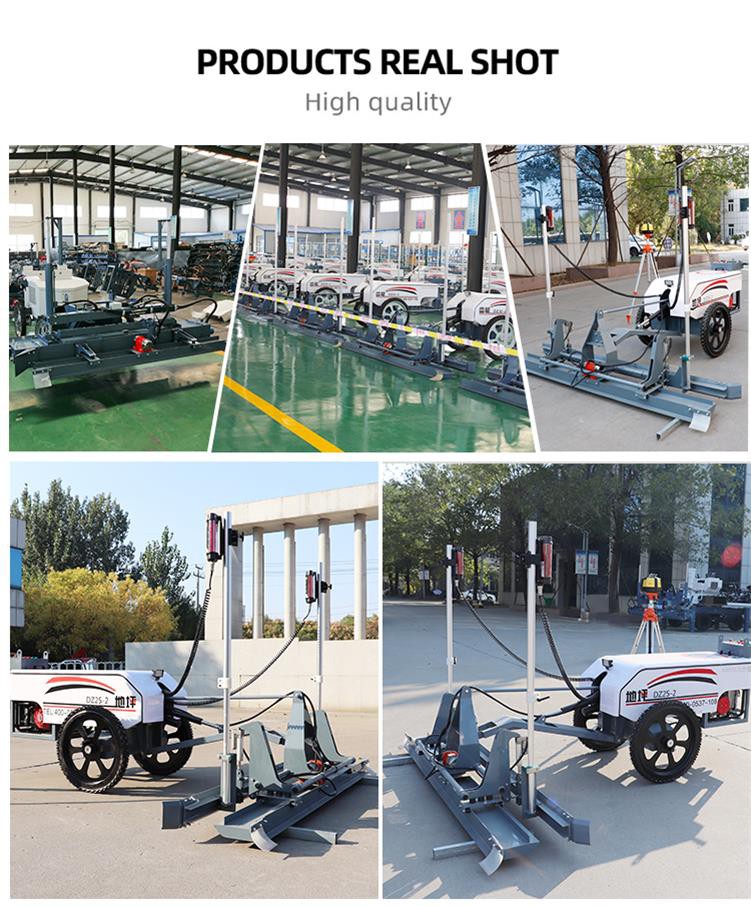
Shandong VANSE Machinery has been committed to the research and development and production of concrete laser leveling machines for many years. Its core components are all produced by large manufacturers in advanced countries such as Germany and the United States. The production process is strictly in accordance with national standards, enterprise standards, and quality control guarantees. System production, to ensure that product quality meets or exceeds the requirements of corporate standards and relevant national standards, and has won the trust and praise of users with excellent quality, excellent performance, and superior cost performance.
Thanks to All the Friends Who Support and Trust Shandong Vanse Machinery Technology Co., Ltd.
If you want to know more about Shandong Vanse Machinery Technology Co., Ltd. or have any questions, please feel free to contact us:
Our Factory
Shandong Vanse Machinery Technology Co., Ltd.








Share this article

About the Author: Shandong Vanse Machinery Technology Co., Ltd.
Shandong Vanse Machinery Technology Co., Ltd. is a high-tech manufacturer specializing in concrete construction machinery, including laser screeds and related equipment. The company integrates R&D, production, and global sales, with products exported to over 60 countries and widely used in infrastructure projects worldwide.
Previous Post
Next Post
Related Articles
You Might Also Like
Can a concrete laser leveling machine handle slopes? Which settings work best?
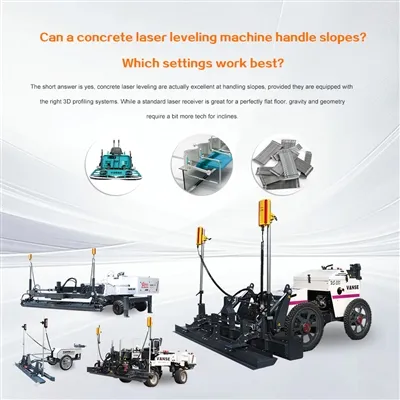
The short answer is yes, concrete laser leveling are actually excellent at handling slopes, provided they are equipped with the right 3D profiling systems. While a standard laser receiver is great for a perfectly flat floor, gravity and geometry require a bit more tech for inclines. Standard laser leveling uses a rotating laser transmitter on a tripod and receivers on the machine. This creates a flat "plane" of light. Single/Dual Slopes (2D): If you are doing a simple parking lot ramp or a consistent drainage slope, you can physically tilt the laser transmitter on its tripod to a specific percentage (e.g., a 1% grade). The machine will then follow that tilted plane.Complex Contours (3D): For complex curbs, valleys, or multi-directional slopes, the machine uses 3D Profiling Systems (often involving a Total Station or GPS). This allows the leveling to automatically adjust the head height based on its exact coordinate position on a digital map. To get the best finish on a slope, you can't just "set it and forget it." You need to account for the way wet concrete behaves under gravity. On a slope, concrete tends to "slump" or migrate downward. Setting: Keep the auger speed high enough to move excess material but not so fast that it creates a "wave" of concrete that pulls away from the high side. The vibrator is what settles the aggregate and brings the "cream" to the top. Setting: On steep slopes, lower the vibration frequency slightly. Over-vibrating on an incline can cause the concrete to fluidize too much, leading it to slide down the hill before it sets (slumping). Best Practice: Generally, you want to pull the machine up the slope or work across the fall. Pulling downhill can lead to "shingling," where the leveling head pushes too much material in front of it, resulting in an uneven thickness. If your machine has slope compensation software, ensure it is toggled on. This adjusts the hydraulic response time to ensure the leveling head reacts instantly to changes in elevation without "hunting" or bouncing, which happens more often on uneven grades. Factor Standard Flat Setting Slope Setting Laser Mode Horizontal / Level Grade / Manual Slope Vibration High / Normal Reduced (to prevent slump) Travel Speed Faster Slower & More Consistent Concrete Slump 4" – 5" 3" – 4" (Lower is better for slopes) Note: The parameters provided in this document are for reference only and are not mandatory. Due to differences in technical characteristics between different brands and models of laser levelers, please consult the manufacturer for a suitable solution before actual operation. This reference document assumes no responsibility for any issues arising from failure to follow the manufacturer's instructions.Construction quality control and management of concrete laser leveling machine
The construction quality control and management of concrete laser leveling mainly involves the following aspects: 1. Equipment selection and calibration First of all, choosing a qualified concrete laser leveler is the basis for ensuring construction quality. It is necessary to ensure that the selected equipment can meet various requirements of construction, including accuracy, stability, durability, etc. After the equipment arrives at the construction site, it must be carefully unpacked and inspected to ensure that all parts are intact, and preliminary debugging and calibration must be carried out in accordance with the instructions. 2. Operator training Operating a concrete laser leveling requires professional skills and experience, so operators must be rigorously trained. The training content includes the basic principles of equipment, operating procedures, safety precautions, fault diagnosis and troubleshooting, etc. Only operators who have been trained and obtained certificates can perform actual operations. 3. Construction process quality control Pre-construction quality control: This includes inspection of the construction environment to ensure it is dry, ventilated and dust-free. At the same time, concrete raw materials must be strictly controlled to ensure that their quality meets construction requirements. Quality control during construction: This is mainly to control the operation process of the concrete laser leveling machine. Operators are required to strictly abide by operating procedures and carry out construction according to preset parameters. At the same time, a dedicated person must supervise the construction process to ensure correct operation. Post-construction quality control: After the construction is completed, the concrete surface should be inspected for quality, including surface flatness, smoothness, etc. Any areas that do not meet the requirements must be dealt with promptly and leveled again. 4. Acceptance standards Acceptance standards are an important basis for measuring construction quality. For concrete laser leveling machine construction, the acceptance criteria mainly include the following aspects: Concrete surface flatness: This is the most basic acceptance standard, which requires that the concrete surface has no obvious undulations and the overall flatness meets the design requirements. Concrete surface finish: Good finish can reduce friction on the concrete surface and improve performance. The concrete surface is required to be smooth and flawless during acceptance. Construction accuracy: For high-precision construction projects, the accuracy of the concrete laser leveler must meet the design requirements. During acceptance, the construction accuracy should be measured to see whether it meets the design standards. Equipment stability: The stability of the equipment must be checked during acceptance, including the operation stability and working status stability of the equipment. Equipment reliability: During acceptance, the reliability of the equipment should be checked to see whether the equipment is prone to failure and whether each component of the equipment can operate stably. Economy: The economy of using the concrete laser leveling is also an important acceptance criterion. Economical use mainly refers to whether the energy, material and other costs consumed by the equipment during the construction process are reasonable. During acceptance, the economics of the equipment should be evaluated to see whether it meets the requirements of economic benefits. Safety: During acceptance, the safety of the equipment must also be checked, including whether the safety protection measures of the equipment are complete and whether the operators have safety awareness. In addition, it should be ensured that the noise and vibration of the equipment are within an acceptable range and will not affect the surrounding environment and personnel. Environmental protection: The environmental performance of the equipment must also be considered during acceptance. Concrete laser levelings may produce pollution such as dust and noise during the construction process. Therefore, it is necessary to ensure that environmental factors are considered during the design process of the equipment to minimize environmental pollution. 5. Quality inspection and maintenance During and after the construction process, the concrete laser leveling machine should be regularly inspected and maintained for quality. Quality inspection mainly includes inspection of the equipment's operating status, working accuracy, concrete quality, etc. Maintenance mainly includes daily maintenance, regular inspection and repair of the equipment. 6. Recording and archiving During the construction process, various construction parameters, operating procedures, problems and solutions should be recorded. These records can provide a basis for acceptance and quality inspection, and are also an important reference for equipment maintenance and improvement. Records should be organized into files and properly preserved for subsequent review and reference. In summary, the construction quality control and management of concrete laser leveling machines need to be comprehensively considered and implemented from multiple aspects such as equipment selection, personnel training, construction process control, acceptance standard formulation, quality inspection and maintenance, and record archiving. Only in this way can the construction quality of the concrete laser leveling be ensured and the overall quality and efficiency of the project improved.Precautions for Using Power Trowels in Epoxy Floor Substrate Preparation
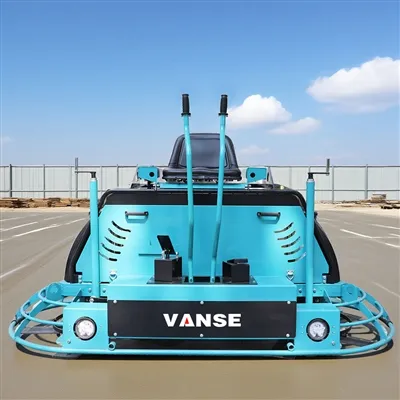
In epoxy flooring construction, power trowels are primarily used for smoothing and leveling the concrete substrate. It is crucial to note that the requirements for the substrate in epoxy flooring differ significantly from those for ordinary hardened floors. While ordinary floors strive for a "shinier, better" finish, improper substrate preparation for epoxy flooring (such as excessive burnishing) can lead to delamination and peeling later on. The following are key precautions for using power trowels in epoxy floor substrate preparation: This is the most important point. Problem: High-speed power trowels at large blade angles can create a "singeing" or "smoothing" effect, forming an extremely dense, hard, and smooth metallic sheen layer (sealing layer) on the concrete surface. Consequence: This dense film seals the concrete's pores, preventing epoxy primer from penetrating and resulting in extremely poor adhesion. The flooring is prone to peeling off in large sections later on, almost like "peeling off" the skin. Consequence: This dense film seals the concrete's pores, preventing epoxy primer from penetrating and resulting in extremely poor adhesion. The flooring is prone to peeling off in large sections later on, almost like "peeling off" the skin. Recommendation: Only perform moderate polishing. Ensure a smooth surface, but maintain some microporous structure (presenting a matte or slightly textured finish). During the use of a power trowel, workers may spray curing agents to prevent excessive moisture evaporation. Note: Most oil-based or silicone-based curing agents are incompatible with epoxy resin. If curing is necessary, please use a water spraying method, or confirm that the curing agent is "removable" or "epoxy-compatible." Epoxy flooring is typically thin (1mm – 5mm), and it cannot conceal unevenness in the subfloor like a cement leveling layer. Procedure: Initial leveling must be performed using **float pans** to eliminate waviness during paving. Standard: For precision epoxy flooring, the smoothness error within a 2-meter straightedge range should be ≤ 2mm – 3mm. If the surface is not leveled during the troweling stage, expensive epoxy mortar will be required for later leveling. Blade Angle: Maintain a small blade angle. A larger angle results in more concentrated pressure, making it easier to create an overly dense finish. Intervention Timing: Finish the finishing process slightly earlier than for regular floor finishing. Stop the machine as soon as the surface is smooth and there are no obvious blade marks. Edge Treatment: Corners and column edges that the power trowel cannot reach must be smoothed by hand with a trowel; otherwise, these protrusions will be difficult to remove with a sander later. Even with a perfect trowel finish, surface preparation using a grinder or shot blaster is essential before applying the epoxy primer. Purpose: To thoroughly remove the laitance layer created by the trowel, exposing the internal sand-grain structure (similar to the texture of coarse sandpaper), achieving CSP 2-3 (concrete surface roughness grade) standards. If you are working as a base coat for epoxy flooring, the goal of using a power trowel is to achieve a **smooth, not glossy** finish. Is your current work environment an indoor factory or an outdoor parking lot? Different environments have different requirements for the moisture content and strength (C25/C30) of the base coat. I can provide you with more detailed advice. Note: The parameters provided in this document are for reference only and are not mandatory. Due to differences in technical characteristics between different brands and models of laser levelers, please consult the manufacturer for a suitable solution before actual operation. This reference document assumes no responsibility for any issues arising from failure to follow the manufacturer's instructions.