Technical Knowledge
Inadequate maintenance will affect the use effect of the concrete laser leveling machine!
April 21, 2023
Inadequate maintenance will affect the use effect of the concrete laser leveling machine!

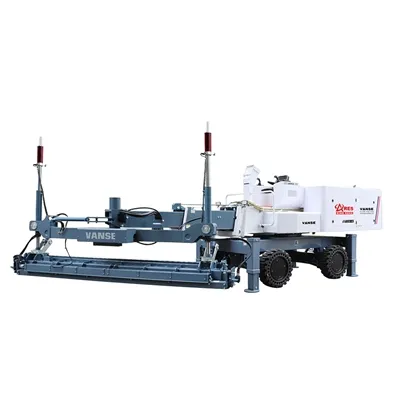
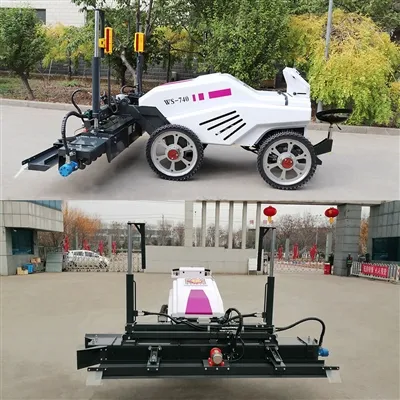
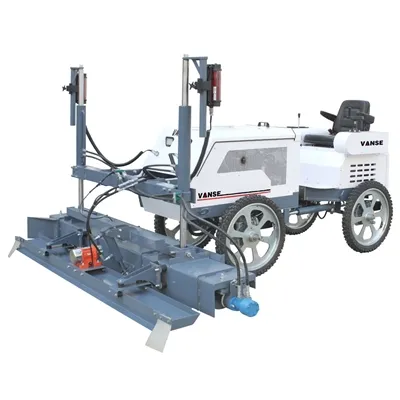
The word "maintenance" is the prerequisite for the normal use of mechanical equipment. The laser leveling machine is a kind of precision paving equipment. The use of laser self-leveling completely achieves the purpose of automation, but if the maintenance is not in place, the equipment may be damaged. There are various problems that affect the subsequent normal use. Let’s find out how to maintain the laser leveling machine.
During the use of the laser leveling machine, due to the different working intensity, there may be some minor faults after use. At this time, road builders should pay attention to it. After use, it is necessary to properly do some daily maintenance for the machine. This can prolong the service life of the machine equipment.
1. Check the connection and fastening of the parts of the laser leveling machine, whether the connecting bolts are loose or broken, and tighten or replace them if necessary. Check for leaks and eliminate leaks in various parts in time. Pay attention to the quantity of engine oil, fuel, coolant and hydraulic oil, and add new oil to the scale indicated on the oil mark as required. Whether there is proper amount of grease in the centralized lubrication device.
2. Be careful not to work under the maximum load that the machine can bear, and use the machine within your ability. As a laser leveling machine manager, when appointing an operator, the laser leveling machine random data and operation manual should be handed over to the operator, so that they can normally grasp the mechanical properties and operating procedures, and should not arbitrarily hand over the relevant information Buckle it down.
3. Try to ensure the uniform addition and subtraction of the mechanical load, so that the machinery is in a relatively gentle load change. Specifically, it is necessary to increase and decrease the accelerator more evenly to prevent the engine and working devices from fluctuating greatly.
4. There will be a lot of dust and mud on the laser leveling machine after construction. First, wipe off the dust on the laser leveling machine, and wipe off the dirt and oil stains with tissue paper or cotton cloth.
5. If the laser signal is lost during the construction of the laser leveling machine, the machine needs to be restarted, and the interval time needs to be more than ten seconds.
6. If there are too many stains, you can use a soft cloth to soak in water diluted with a neutral detergent, and then wring it out to clean it. The manufacturer of Leilong laser leveling machine reminds everyone to remember not to use volatile oil, thinner, gasoline and other chemicals. Product cleaning and wiping.
Developing a good habit of operating the laser leveling machine will be of great help to the construction and storage of the laser leveling machine in the future. This will not only improve the work efficiency, but also extend the service life of the machine to a certain extent .
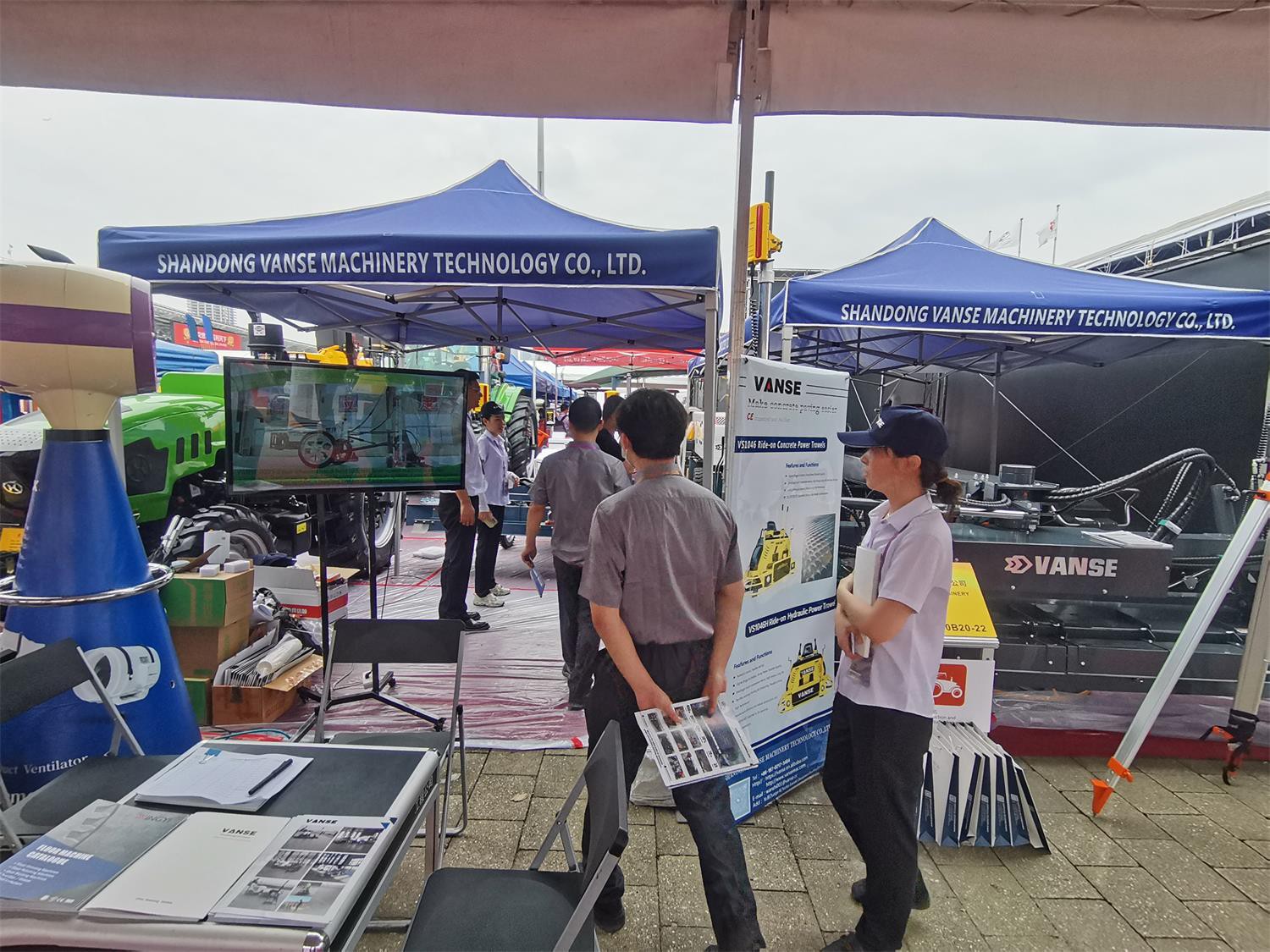
Thanks to All the Friends Who Support and Trust Shandong Vanse Machinery Technology Co., Ltd.
If you want to know more about Shandong Vanse Machinery Technology Co., Ltd. or have any questions, please feel free to contact us:
Our Factory
Shandong Vanse Machinery Technology Co., Ltd.


About the Author: Shandong Vanse Machinery Technology Co., Ltd.

Shandong Vanse Machinery Technology Co., Ltd. is a high-tech manufacturer specializing in concrete construction machinery, including laser screeds and related equipment. The company integrates R&D, production, and global sales, with products exported to over 60 countries and widely used in infrastructure projects worldwide.

Shandong Vanse Machinery
Leading manufacturer specializing in high-performance concrete laser screeds, telescopic arm flatwork handlers, and mechanical ride-on power trowels.
Post overview
Main PRODUCT Categories
Need Machine Guidance?
Speak directly with Shandong Vanse field specialists for tailored equipment quotes and site planning.
Contact Us TodayRelated Articles
You Might Also Like
November 12, 2025
Lifecycle management and replacement records for wear parts of power trowels (such as filters, oil seals, and bearings).
Effective management of the vulnerable parts of the power trowel not only ensures the continuity and quality of construction but also significantly extends the overall service life of the machine and reduces long-term operating costs. The following is a detailed elaboration on the establishment and implementation of the life cycle management and replacement record system for the vulnerable parts (filter elements, oil seals, bearings) of the power trowel. Life cycle management aims to prevent unexpected downtime and chain damage to other components by replacing parts before they fail through preventive maintenance. Life cycle influencing factors Environmental dust concentration: This is the most crucial factor. During the polishing stage of the cement floor, the dust is extremely high and the working load on the filter element is very heavy. Working hours: Cumulative working hours are the basic reference. Filter element type: The paper filter element is disposable, while the polyurethane foam pre-filter element can be cleaned and reused. Life Cycle and Management strategies Paper main filter element Standard cycle: Usually 50 to 100 working hours. In an environment with extremely high levels of dust, it may be necessary to inspect and clean the area every shift (8-10 hours) and replace it every 25-50 hours. Management method Daily inspection: After each shift's work, remove the filter element and illuminate it from the inside with a light to observe if there are any light-transmitting points on the outside. If so, it indicates that it is damaged and must be replaced. Non-oily cleaning: For minor blockages, low-pressure air (pressure < 0.5MPa) can be used to blow from the inside out. Do not strike. Forced replacement: Even if there is no obvious damage, replacement must be carried out when the recommended working time is reached or significant resistance is still found after cleaning. Polyurethane foam pre-filter core Cleaning cycle: Per shift or every 4 to 8 working hours. Management method: Clean with neutral detergent (such as soapy water), squeeze out the water by hand, dry and then install. Do not clean with gasoline, as it will damage the foam. Replace immediately in case of damage or loss of elasticity. Life cycle influencing factors Operating temperature: High temperatures in the engine and transmission will accelerate the aging of the oil seal rubber. The quality of lubricating grease: Using substandard grease or grease mixed with impurities will wear out the lip of the oil seal. The surface condition of the journal: If the output shaft is rusted or scratched, it will directly cut the oil seal, causing oil leakage. Installation quality: Improper installation is the main cause of early failure of oil seals. Life Cycle and Management strategies There is no fixed time period, and it belongs to the type of vulnerable parts that are subject to condition monitoring and regular inspection. Management method Daily observation: During each maintenance or use, check whether there is any grease leakage at the transmission case, engine crankshaft end, blade drive shaft, etc. Regular inspection: Every 100 to 200 working hours, or every quarter, conduct a detailed inspection of the oil seals at key parts to check for any flanging, hardening or cracks at the lip. Preventive replacement: When overhauling equipment (such as replacing bearings and clutches), all associated oil seals must be replaced at the same time. Do not take the risk of secondary disassembly and assembly just to save a little money. Life cycle influencing factors Load: When the trowel is under eccentric load or overload (such as when attempting to grind overly high protrusions), the bearings are subjected to impact loads. Lubrication: Insufficient lubrication is the primary cause of bearing damage. This includes incorrect grease type, untimely addition, and excessive addition leading to high temperatures. Sealing performance: The failure of the oil seal causes cement dust and moisture to invade the bearing, forming abrasives and causing rapid wear. Alignment accuracy: Improper installation (such as directly hitting with a hammer) or shaft bending can cause uneven wear of the bearing. Life Cycle and Management strategies As a core transmission component, the goal is to extend its service life infinitely through good maintenance before the end of its natural lifespan. Management method Regular lubrication: Strictly follow the instructions and add the specified lithium-based grease through the grease nipple every 8 to 10 working hours. Add until new grease overflows from the seal and squeeze out the old impurities. Abnormal noise and vibration monitoring: Operators and mechanics must be sensitive. If you hear a "clattering" noise, a strong granular friction sound or abnormal vibration of the entire machine at the bearing part during operation, stop the machine immediately for inspection. Temperature monitoring: After working for a period of time, touch the outer shell of the bearing housing with your hand. If it is abnormally hot and cannot be touched, it indicates that there may be poor lubrication or wear inside. Establishing a record system is the core of achieving scientific management. It is recommended to use the tabular management of "one file per machine". Record Form for Replacement and Maintenance of Vulnerable Parts of the power trowel Equipment number: ______ Equipment model: ______ Person in charge: ______ Date Cumulative working hours Name of vulnerable parts Specification and model Reasons for replacement/maintenance Operator The estimated maintenance time for the next time is per hour Remarks 2023/10/26 1250 Air filter element (paper) ABC-123 Replace periodically/Dust blockage A 1350 2023/10/26 1250 Polyurethane pre-filter element XYZ-456 Clean B 1258 2023/11/15 1380 Drive shaft oil seal OIL-789 When replacing bearings, replace them prevatively C – Accompanied by bearing replacement 2023/11/15 1380 Main shaft bearing BEAR-001 There is an abnormal noise during operation and it is damaged after disassembly and inspection D – Replace the oil seals on both sides simultaneously 2023/12/1 1450 Air filter element (paper) ABC-123 Replace on a periodic basis E 1550 … … … … … … … … When purchasing genuine parts, the lifespan of counterfeit parts may only be half that of genuine ones, and they are prone to causing collateral damage, which is not worth it. Train operators: Cultivate the habit among operators of "checking before starting work, monitoring during work, and maintaining after completion". They are the first perceivers of the equipment's status. Establish an early warning mechanism: Based on the record sheet, simple early warnings can be set up. For instance, when the accumulated hours approach the "estimated next maintenance time", the equipment administrator should prepare spare parts in advance and arrange a maintenance plan. Standardized operation procedures: Especially for the replacement of bearings and oil seals, standard operation instructions must be formulated, including: Correct disassembly and installation tools (use pullers and special sockets; hammering is strictly prohibited). Cleaning work before installation (ensuring that the shaft and seat are clean and free of debris). Apply grease to the lip of the oil seal before installation. After installation, conduct a trial run and check. Through the life cycle management of the above system and strict replacement records, you can minimize the unexpected failures of the power trowel, ensure that it is in the best condition on every construction day, and ultimately achieve cost reduction and efficiency improvement. Note: The parameters provided in this document are for reference only and are not mandatory. Due to differences in technical characteristics between different brands and models of laser levelers, please consult the manufacturer for a suitable solution before actual operation. This reference document assumes no responsibility for any issues arising from failure to follow the manufacturer's instructions.Read More
October 14, 2025
In a low-temperature winter environment, how should a concrete laser leveling machine be maintained to avoid difficulties in starting?
In a low-temperature winter environment (typically referring to an ambient temperature of ≤5℃), concrete laser leveling machines are prone to difficulties in starting due to issues such as increased oil viscosity, battery discharge, and fuel solidification (for diesel models). Maintenance should be carried out from four dimensions: "protection of the starting system, optimization of oil performance, anti-freezing of core components, and protection of idle storage". The specific measures are as follows: At low temperatures, the battery capacity will drop significantly (for every 10℃ drop in temperature, the capacity approximately decreases by 10% to 15%), and the load on the starting motor increases, which is the main reason for the difficulty in starting. Special protection is required: Check the battery status: Use a multimeter to measure the battery voltage. For a 12V battery, it should be ≥12.4V (fully charged state). If the voltage is lower than 12V, immediately use a dedicated low-temperature charger (to avoid the low charging efficiency of ordinary chargers) to recharge the battery. If the battery has been in use for more than two years, it is prone to "quick discharge" at low temperatures. It is recommended to replace the battery with a new one in advance (to avoid failure when starting temporarily). Prevent the battery from cracking due to freezing: The freezing point of the battery electrolyte varies with its concentration (if the concentration is too low, it may freeze and crack the casing). Check the electrolyte level (if it is below the scale line, add distilled water; do not add tap water or electrolyte). If necessary, test the density of the electrolyte (use a hydrometer, standard value 1.26-1.28g/cm³; if the density is low, adjust the concentration). Clean the battery connection: If there is white sulfide (which is prone to condensation at low temperatures) at the connection, rinse it with hot water, then sand it clean with sandpaper, and apply vaseline or battery protector (to prevent re-oxidation and ensure smooth current conduction). Check the terminal blocks of the starting motor: Ensure that the bolts are tightened (metal shrinks and is prone to loosening at low temperatures, resulting in poor contact). If the terminal blocks are oxidized, they need to be sanded with sandpaper. Manually rotate the starting motor gear to ensure there is no jamming (to avoid poor gear meshing at low temperatures). Additional inspection for diesel models: Check if the start preheater (if any) is functioning properly – after power-on, the preheater indicator light should be on. If it is not on, check the circuit or replace the preheater (the preheater can increase the temperature inside the cylinder, help diesel atomize, and avoid difficulties in cold starting). Low temperatures can cause a sharp increase in the viscosity of engine oil, hydraulic oil and diesel, resulting in slow flow and difficulty in oil suction by the pump body. It is necessary to ensure the fluidity of the oil through "oil change + preheating". Replace with low-grade diesel: Select the corresponding grade based on the ambient temperature (for example, -20 # diesel for -10 ℃ to -20℃ and -35 # diesel for -20℃ to -35 ℃), to prevent diesel from solidifying in the fuel tank or fuel line (solidification can cause fuel supply interruption and prevent starting). If high-grade diesel has been added, diesel pour point depressant should be added (add it in the proportion specified in the manual to lower the freezing point of the diesel). Fuel system preheating: Before starting, you can first turn on the ignition switch (without starting the engine), and let the fuel pump be powered on to work for 30 seconds (some models have a "fuel preheating" mode), allowing the diesel to preheat and flow in the fuel pipes. If the diesel in the fuel tank has slightly solidified, a small amount of low-grade diesel or kerosene (not exceeding 10%) can be added to the tank to help dilute and melt it. Do not add gasoline to avoid safety risks. Type of oil Maintenance measures Engine oil 1. Switch to winter-specific low-temperature engine oil (such as 5W-30, 10W-30, the smaller the number before the viscosity grade, the better the low-temperature fluidity) to prevent the original summer engine oil from having excessive viscosity at low temperatures, which could increase the engine's starting resistance. 2. Before starting, if the ambient temperature is ≤-10℃, you can first heat the engine oil through the engine preheater (external or built-in) for 30 to 60 minutes, or pour hot water over the oil pan (water temperature 50 to 60℃, do not use boiling water) to reduce the viscosity of the engine oil. Hydraulic oil 1. Replace it with low-temperature anti-wear hydraulic oil (such as L-HV46, L-HV32, which has better low-temperature fluidity than ordinary hydraulic oil) to prevent the hydraulic oil from getting stuck at low temperatures, which could lead to the failure of the leveling scraper and the walking action. After starting the equipment, let the hydraulic system run idle for 5 to 10 minutes (operate the handle to slowly extend and contract the cylinder). When the temperature of the hydraulic oil rises above 10℃, then carry out load operation to avoid damage to the hydraulic pump due to dry grinding at low temperatures. In winter, the air humidity is high, and moisture is likely to remain inside the equipment. Freezing at low temperatures can cause components to get stuck or break, so targeted protection is needed Laser transmitter/receiver: When not in use, it should be stored indoors (to avoid low temperature and moisture in the open air). Before use, check if there is any ice inside (if there is, it needs to be thawed naturally indoors. Do not use open flames to bake it to avoid damaging electronic components). Before powering on, wipe the casing and lens with a dry soft cloth to ensure there is no moisture residue. Control circuit: Check if there is any condensation water at the circuit joints (if so, dry it with a hair dryer using cold air). Wrap the joints with waterproof insulating tape to prevent water from seeping in and causing short circuits, which may affect the transmission of laser signals. Hydraulic oil tank: Check whether the seal of the oil tank cover is intact (to prevent rainwater or snow water from seeping in). If water is mixed into the hydraulic oil, it will freeze at low temperatures, blocking the oil pipes or damaging the hydraulic pump. It is necessary to regularly drain the accumulated water at the bottom of the oil tank (open the oil tank drain valve, release a small amount of oil, and observe whether there is any water sedimentation). If there is too much water, all the hydraulic oil needs to be replaced and the oil tank cleaned. Engine cooling system (diesel model) : Antifreeze must be used (tap water or ordinary water is not allowed). The antifreeze should be mixed in a ratio of "antifreeze + distilled water = 1:1" (the freezing point can be reduced to around -35 ℃). Check the antifreeze level (it should be between "MIN" and "MAX" in the expansion tank). If the level is insufficient, add the same type of antifreeze. Prevent the cooling system from freezing and cracking the water tank or cylinder block. Hydraulic oil tank: Check whether the seal of the oil tank cover is intact (to prevent rainwater or snow water from seeping in). If water is mixed into the hydraulic oil, it will freeze at low temperatures, blocking the oil pipes or damaging the hydraulic pump. It is necessary to regularly drain the accumulated water at the bottom of the oil tank (open the oil tank drain valve, release a small amount of oil, and observe whether there is any water sedimentation). If there is too much water, all the hydraulic oil needs to be replaced and the oil tank cleaned. Engine cooling system (diesel model) : Antifreeze must be used (tap water or ordinary water is not allowed). The antifreeze should be mixed in a ratio of "antifreeze + distilled water = 1:1" (the freezing point can be reduced to around -35 ℃). Check the antifreeze level (it should be between "MIN" and "MAX" in the expansion tank). If the level is insufficient, add the same type of antifreeze. Prevent the cooling system from freezing and cracking the water tank or cylinder block. First startup: If the ambient temperature is ≤-15℃, do not start directly. First, perform the "three-step preheating" : ① Connect the power supply and turn on the preheater (if available) for 30 seconds; Turn off the preheater, wait for 10 seconds, and repeat 2 to 3 times. ③ Gently press the accelerator (for diesel models), slowly turn the start key. If the start fails in one attempt, wait for 1-2 minutes and then try again (to avoid overheating and damage to the starting motor due to continuous operation). Do not start continuously more than three times. After starting: After the engine starts, it should idle for 10 to 15 minutes (do not accelerate immediately). Wait until the water temperature rises above 40℃ and the oil pressure is normal (the pointer is stable within the standard range), then operate the hydraulic system and traveling mechanism to gradually adapt the equipment to the low-temperature environment. If the battery is discharged and the device cannot be started: It can be started by jumper connection (use the battery of another device, connect the positive terminal to the positive terminal and the negative terminal to the negative terminal. After starting, keep the idle speed for 15 minutes to charge the discharged battery). Do not jumper for a long time to avoid damaging the electrical system. If the diesel solidifies and causes the fuel supply to be interrupted: The equipment should be moved indoors (temperature ≥5℃) to allow the diesel to melt naturally, or low-grade diesel can be added to the fuel tank for dilution. After the diesel flows normally, press the fuel pump to expel the air in the fuel pipe, and then try to start it. If the hydraulic system gets stuck: After starting, run the hydraulic system unloaded first. If it still gets stuck, check the temperature of the hydraulic oil (if it is below 0℃). You can heat the hydraulic oil by connecting an external heater (placed outside the hydraulic oil pipe). Wait until the temperature rises above 10℃ before operating. Through the above measures, the problem of difficult start-up in winter due to low temperatures can be solved from four aspects: "start-up source, oil, components, and operation". At the same time, it can reduce the hidden damage to the equipment caused by low temperatures and ensure the stability and accuracy of the laser leveling machine machine during winter construction. Note: The parameters provided in this document are for reference only and are not mandatory. Due to differences in technical characteristics between different brands and models of laser levelers, please consult the manufacturer for a suitable solution before actual operation. This reference document assumes no responsibility for any issues arising from failure to follow the manufacturer's instructions.Read More
April 7, 2026
Construction Adaptability of Laser Leveling Machine in Low Temperature or High Humidity Environments
In the global commercial construction industry, project schedules rarely pause for ideal weather conditions. Contractors frequently face the challenge of pouring and leveling massive concrete slabs in sub-zero winters or sweltering, high-humidity tropical climates. Maintaining strict Floor Flatness (FF) and Floor Levelness (FL) specifications under these extremes requires highly adaptable equipment. Understanding the construction adaptability of a concrete laser leveling machine (laser Leveling) in extreme environments is crucial for international contractors looking to minimize downtime and prevent costly structural defects. Here is a comprehensive technical analysis of how advanced laser leveling machinery, such as the industry-leading solutions from Shandong Vanse Machinery Technology Co., Ltd. (www.vansemac.com), adapts to harsh environmental factors. Pouring concrete in freezing conditions introduces a host of mechanical and material challenges. Hydraulic fluids thicken, engines struggle to cold-start, and the concrete itself cures sluggishly, remaining stiff and difficult to manipulate. Reliable Powertrain and Cold-Start Capability: In cold weather, equipment reliability is paramount. Machines equipped with high-quality, cold-weather-rated engines-such as the reliable and fuel-saving Honda engines found in the Vanse YZ28-4S ride-on laser Leveling-ensure that the machine starts immediately, preventing disastrous delays during a freeze-sensitive pour. Intelligent Hydraulic Systems: Low temperatures increase hydraulic fluid viscosity, which can cause erratic boom movements or slow leveling head responses in standard machines. Advanced equipment like the Vanse WS550 Hydraulic Concrete Laser Leveling machine utilizes precision valves and thermal-stable fluids to maintain a smooth, fixed-speed walking and leveling pace, regardless of the ambient temperature drop. Consistent High-Frequency Vibration: Because cold concrete has a lower slump and sets rigidly, the Leveling must provide powerful, consistent surface vibration to draw the cement paste to the surface. The 4,000 RPM high-frequency vibrating plates on Vanse equipment fluidize the stiff matrix efficiently, preventing honeycombing and ensuring a dense, super-flat finish. High humidity, heavy fog, and frequent rain (common in Southeast Asia and Latin American markets) create entirely different operational hazards. Condensation interferes with laser optics, and wet subgrades lead to severe traction loss. Traction and Anti-Skidding Technology: A wet subgrade or vapor barrier can cause a wheeled machine to slip, instantly ruining the FL (levelness) metric. To combat this, models like the Vanse YZ28-4S come standard with an integrated anti-skidding system and are equipped with two types of easily interchangeable tires suitable for different muddy or slick working conditions. Keeping the Machine Off the Concrete: In high-humidity environments where the concrete bleed water takes hours to evaporate, driving on the slab is a major risk. Telescopic boom-type laser Leveling, such as the Vanse YZ30-4E and YZ40-4E, are engineered specifically for this. With a 360° rotating chassis and long telescopic arms, the machine remains stationary on stable ground while the leveling head extends over the wet concrete, totally eliminating footprint damage and traction issues. Electric Precision for Indoor Humidity: For enclosed commercial floors where high humidity traps exhaust fumes, the Vanse DZ25-2 offers a revolutionary solution. With an all-electric drive, it provides zero emissions and fast, responsive green energy operation, making it perfectly adapted for damp, poorly ventilated indoor construction sites. Extreme weather can play havoc with leveling precision. Thick fog scatters standard laser beams, and rapid temperature shifts can cause standard structural metals to contract or expand slightly. Advanced concrete leveling machines adapt to this by utilizing heavy-duty aviation-grade aluminum alloys for the leveling heads, which resist temperature-induced warping. Furthermore, high-end receivers paired with quick-elevation and quick-detection devices (standard across Vanse's ride-on and boom lines) dynamically adjust the scraping blade hundreds of times per minute. This micro-adjustment capability completely isolates the leveling process from environmental instability. Whether constructing a logistics center in the freezing conditions of northern Canada and Russia, or pouring a seamless factory floor in the humid climates of Brazil and Malaysia, contractors cannot rely on fair-weather equipment. By investing in highly adaptable machinery from Vanse Group-which features robust anti-skid systems, cold-start reliable engines, and telescopic boom isolation-contractors can secure their project timelines, protect their profit margins, and deliver world-class E-E-A-T (Experience, Expertise, Authoritativeness, and Trustworthiness) certified concrete floors in any climate. Note: The parameters provided in this document are for reference only and are not mandatory. Due to differences in technical characteristics between different brands and models of laser levelers, please consult the manufacturer for a suitable solution before actual operation. This reference document assumes no responsibility for any issues arising from failure to follow the manufacturer's instructions.Read More