Technical Knowledge
What is the precaution for daily maintenance and care of the hydraulic system of the concrete laser leveling machine?

The following are the precautions for daily maintenance and care of the hydraulic system of the concrete laser leveling machine
✨Oil management:
– Check the hydraulic oil level regularly,
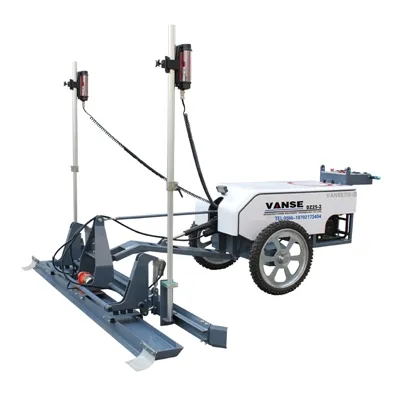
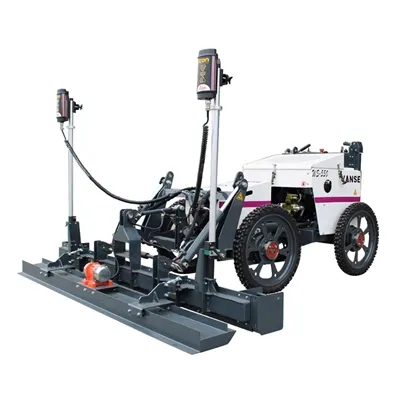
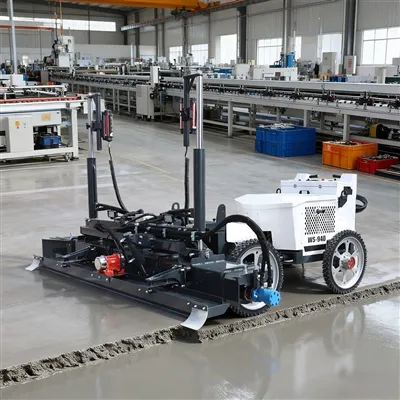
park the เครื่องปรับระดับคอนกรีตด้วยเลเซอร์ on a level surface, turn off the engine and check to ensure that the oil level is within the normal scale range. If the oil level is found to be too low, add hydraulic oil that meets the equipment requirements in time. Different models of concrete laser leveling machines, such as vanse concrete laser leveling machine or mini concrete paver leveling machine, may have different requirements for hydraulic oil, and must be selected strictly according to the instructions.
– Pay attention to the quality of the oil.
Hydraulic oil will age and deteriorate after long-term use. If the oil is found to be black, has a pungent smell, is turbid or has precipitation, it should be replaced immediately even if the specified replacement cycle has not been reached. When replacing, drain the old oil thoroughly, clean the oil tank and filter, and then add new oil. At the same time, pay attention to the equipment with higher vanse laser leveling price, and use high-quality hydraulic oil to ensure the performance and life of the hydraulic system.
✨Filter maintenance:
– The filter in the hydraulic system plays a key role and should be replaced regularly.
Generally speaking, the filter needs to be replaced every certain number of working hours or every few months. The specific interval can be referred to the equipment manual. For places with harsh working environment and large dust, the replacement cycle should be appropriately shortened to ensure the cleanliness of the hydraulic oil and protect the precision parts of the hydraulic system.
–
When replacing the filter, carefully check whether there are impurities such as metal particles and fibers on the filter.
If a large amount of impurities are found, it may mean that there are worn parts inside the hydraulic system, which requires further inspection and repair to avoid the expansion of the fault and affect the normal use of the เครื่องปรับระดับคอนกรีตด้วยเลเซอร์ or Extendedoras de hormigón.
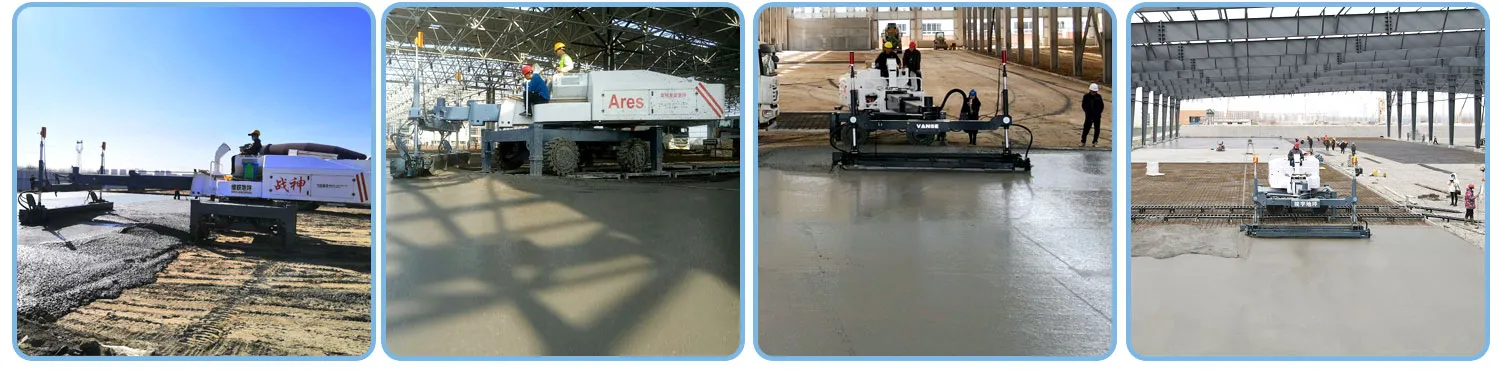
✨System component inspection:
– Check the working status of the hydraulic pump and hydraulic motor,
listen to whether the running sound is normal, and whether there is abnormal vibration and noise. Observe whether its working pressure is stable and whether it is within the specified range. If the pressure is unstable or there is an abnormal sound, it may be due to wear of the internal parts of the pump or motor, damage to the seal, etc., which needs to be repaired or replaced in time to ensure the stable power output of the Máy cán sàn bê tông bằng Laser hydraulic system.
– Check whether there is oil leakage in the oil pipe and joints,
and whether the oil pipe is damaged, aged, cracked, etc. If the oil pipe is found to be damaged, it should be replaced in time; loose joints should be tightened in time to prevent oil leakage from causing the pressure of the hydraulic system to drop and affect the normal operation of the equipment. At the same time, keep the surface of the system clean, clean up oil and dust in time to prevent them from entering the hydraulic system.

In short, doing a good job of daily maintenance and maintenance of the hydraulic system of the concrete laser leveling machine can effectively extend the service life of the equipment, improve work efficiency, reduce maintenance costs, and ensure that the equipment can operate stably and reliably under various working conditions.
Thanks to All the Friends Who Support and Trust Shandong Vanse Machinery Technology Co., Ltd.
If you want to know more about Shandong Vanse Machinery Technology Co., Ltd. or have any questions, please feel free to contact us:
Our Factory
Shandong Vanse Machinery Technology Co., Ltd.








Share this article

About the Author: Shandong Vanse Machinery Technology Co., Ltd.
Shandong Vanse Machinery Technology Co., Ltd. is a high-tech manufacturer specializing in concrete construction machinery, including laser screeds and related equipment. The company integrates R&D, production, and global sales, with products exported to over 60 countries and widely used in infrastructure projects worldwide.
Previous Post
Next Post
Related Articles
You Might Also Like
Concrete laser leveling summer maintenance
Concrete laser leveling summer maintenance 1.The hot weather construction to prevent engine overheating, in general, the temperature of the engine not more than 95 °, if the temperature is too high, you should select a shaded area to cool down, down at the same time can have the fuselage cover ventilation cooling. 2.Before entering the summer, should thoroughly remove the combustion chamber, valve top and the carbon of other parts in order to maintain good heat dissipation and normal compression ratio, in case of engine deflagration. 3.Often clean the hydraulic oil radiator, in order to prevent poor heat dissipation. 4.In the summer construction, high temperature, need to check the tire pressure and tire temperature, if the tire temperature is too high should be promptly shut down and placed in a cool place to cool down, disable the wrong way to vent or pour cold water to cool down. 5.The electrical system should pay attention to waterproof, do not open the box cover, do not use water to wash the electrical protection box, do not use corrosive liquid cleaning machine! 6.Check the temperature of hydraulic oil and hydraulic transmission oil.The temperature is too high to rest, not more than high temperature operation. 7.To pay attention to the daily maintenance of concrete machinery and equipment.The operator should regularly carry out comprehensive maintenance of the machinery, due to the rise of temperature, summer construction must be timely replacement of the engine air filter, oil filter and oil, and check the performance of the fan, water tank, generator is reliable, necessary maintenance, maintenance or replacement;At the same time, the concrete solidification speed is fast in summer, so the concrete impurities of the fuselage should be cleaned in time to ensure the cleanliness of the fuselage.Standard requirements for the flatness of concrete pavement
The standard requirements for the flatness of concrete pavement vary depending on the type of project, usage function and other factors. Here are some common standards: General concrete pavement: According to the "Construction and Acceptance Specifications for Concrete Pavement of Highway Engineering" (JTG F40 – 2004), under normal circumstances, the allowable deviation of the flatness of concrete pavement should be controlled within ±3mm. High-standard pavement such as highways: For highways and other roads with high requirements for driving comfort and safety, the allowable deviation of the flatness should be more stringent, generally controlled within ±2mm. During the construction process, the use of concrete laser leveling machine (concrete laser leveling machine) can help improve the flatness of the concrete pavement. The concrete laser leveling machine uses the horizontal laser as the reference surface to control the ground elevation, which can effectively ensure the levelness and flatness of the ground. Its application advantages include: Precise elevation control: The concrete laser leveling machine uses a laser measurement and control system to control the elevation in real time. There is no need to pull a control line for leveling, nor is there a need to support the side template to control the ground elevation, thus avoiding elevation errors caused by template vibration or manual block support during construction. Extremely small flatness error: When applied to large-area floor construction, the ground elevation is easy to control. The entire floor only requires 1-2 reference point elevations, which can reduce the error caused by multiple reference points. As long as the laser transmitter is not disturbed, no matter where the leveling machine moves, it can ensure that the overall elevation of the paved ground is not affected, and the flatness error is extremely small. Better ground integrity: Using a concrete laser leveling machine for floor construction, it is easy to achieve one-time overall paving of a large area of floor. It can be divided into blocks as needed, and the construction can be continued until the entire floor is completed, making the ground integrity better. The ground is more compact and uniform: When the concrete laser leveling machine is leveling the concrete, it is always in a uniform speed construction state. Through the high-frequency vibrator of 4000 times per minute, the vibration plate of the leveling head produces uniform high-frequency vibration, making the concrete ground more compact and uniform. —- Click the below to jump immediately!!! —- ARMOUR JOINT LASER LEVELING MACHINE LIGHT TOWER POWER TROWEL SLIPFORM MACHINE STEEL FIBER TOPPING SPREADER TRACKED MINI DUMPERThere are two methods and techniques for leveling concrete pavement, which one is more suitable for actual construction?
Two methods and techniques for concrete pavement leveling: Comparative analysis of manual leveling and mechanical leveling In concrete pavement construction, leveling operations are an important step in ensuring the smoothness of the pavement and improving its performance and aesthetics. Depending on the construction conditions, the leveling operation can take two methods: manual leveling and mechanical leveling. This article will conduct a detailed analysis of these two methods and their techniques, and explore which method is more suitable based on actual construction conditions. Manual leveling mainly relies on the experience and skills of workers, using scrapers, wooden bars and other tools. After the concrete is poured, workers need to quickly and evenly scrape the concrete surface with a scraper, then use a wooden pole to check the flatness, and scrape repeatedly until the requirements are met. (1) Master the initial setting time of concrete to ensure that the leveling work is completed before the concrete begins to harden. (2) The scraper must be used evenly and forcefully to avoid unevenness. (3) The wooden poles should be kept level during inspection to ensure that the road surface is overall smooth. Advantages: The manual leveling method is flexible and convenient for small area or irregular-shaped road construction. Disadvantages: High technical requirements for workers, relatively low leveling efficiency, and difficulty in ensuring the smoothness of large-area road surfaces. Mechanical leveling mainly uses mechanical equipment such as vibrating rollers and plate vibrators. After the concrete is poured, the concrete is first compacted with a vibratory roller and then finely leveled with a plate vibrator. (1) Ensure that the mechanical equipment is in good working condition and adjust the vibration frequency and amplitude. (2) Control the driving speed of the road roller and plate vibrator to maintain uniform operation. (3) For corners and areas that are difficult to level mechanically, manual leveling is required. Advantages: The mechanical leveling method is highly efficient, can quickly complete the leveling of large areas of road surface, and the leveling quality is relatively stable. Disadvantages: It may not be suitable for small-area or irregular-shaped road construction, and requires certain equipment investment and maintenance costs. (1) For large-area, regular-shaped road construction, mechanical leveling method is more suitable because it can significantly improve construction efficiency and ensure leveling quality. (2) For small-area, irregular-shaped pavement construction, manual leveling may be more suitable because it is more flexible. (1) The manual leveling method has high technical requirements for workers and requires experienced workers to ensure the leveling quality. (2) The mechanical square rule is relatively simple but has certain requirements for the operation and maintenance of mechanical equipment. (1) The initial investment cost of manual leveling method is low, but the labor cost may be high, and the leveling efficiency is relatively low (2) The mechanical leveling method requires certain equipment investment and maintenance costs, but in the long run, its construction efficiency and quality advantages may bring higher economic benefits. When selecting a concrete pavement leveling method, factors such as construction conditions, technical requirements, and economic costs need to be comprehensively considered. The manual leveling method is suitable for small-area, irregular-shaped pavement construction, while the mechanical leveling method is more suitable for large-area, regular-shaped pavement construction. In actual construction, two methods can be flexibly used according to specific conditions to achieve the best leveling effect. (1) Strengthen technical training for workers and improve the quality and efficiency of manual leveling. (2) Optimize the configuration and maintenance management of mechanical equipment to ensure the stable progress of mechanical leveling work. (3) In actual construction, manual leveling and mechanical leveling are combined and used flexibly according to specific conditions to improve construction efficiency and quality. (4) Regularly conduct quality inspections and assessments of the construction process, identify problems in a timely manner and take appropriate measures to improve them. Concrete pavement leveling is a key link to ensure pavement quality and performance. When selecting a leveling method, factors such as construction conditions, technical requirements, and economic costs should be fully considered. Through detailed analysis and comparison of the two methods of manual leveling and mechanical leveling, the following conclusions can be drawn: In actual construction, these two methods should be flexibly used according to specific conditions to achieve the best leveling effect. At the same time, strengthening the technical training of workers and the management and maintenance of machinery and equipment are also important ways to improve the quality and efficiency of leveling. Note: The parameters provided in this document are for reference only and are not mandatory. Due to differences in technical characteristics between different brands and models of laser levelers, please consult the manufacturer for a suitable solution before actual operation. This reference document assumes no responsibility for any issues arising from failure to follow the manufacturer's instructions.