Technical Knowledge
Large-area concrete floor seamless and laser leveling construction technology
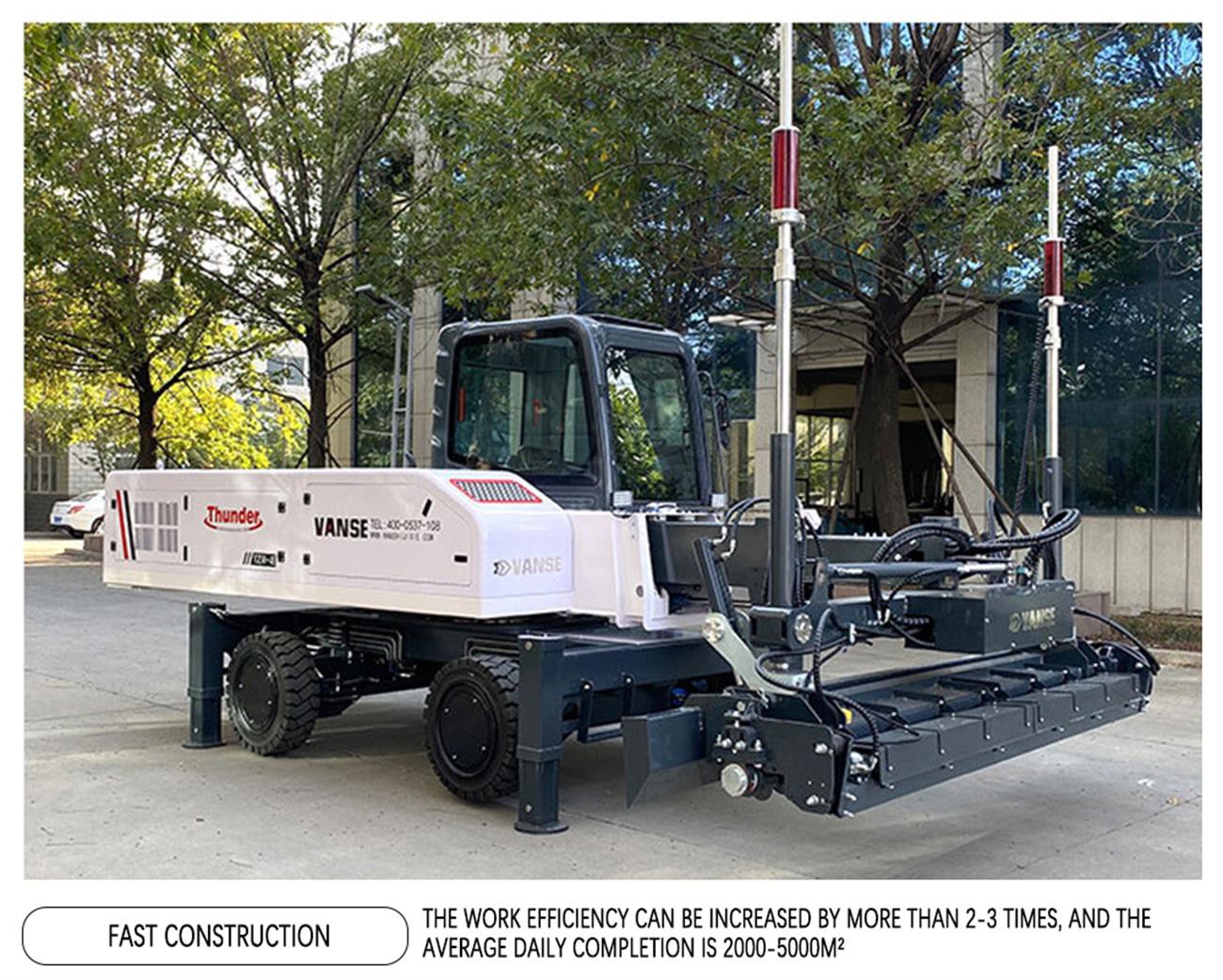
Ultra-large area concrete floor seamless, laser leveling construction technology is an advanced construction method that aims to improve the flatness and integrity of the concrete floor and reduce the occurrence of cracks. The following are the key steps and key points of this technology
🎈 Construction preparation
– **Material preparation**:
Select a suitable concrete mix ratio to ensure the fluidity and strength of the concrete. Commonly used materials include cement, sand, gravel and additives.
– **Equipment preparation**:
Use laser leveling machine, concrete mixer, pumping equipment, vibrator, trowel, etc.
– **Site preparation**:
Ensure that the construction site is flat and clean, the base treatment meets the requirements, and the elevation control is accurate.
🎈 Construction process
– **Laser leveling machine construction**:
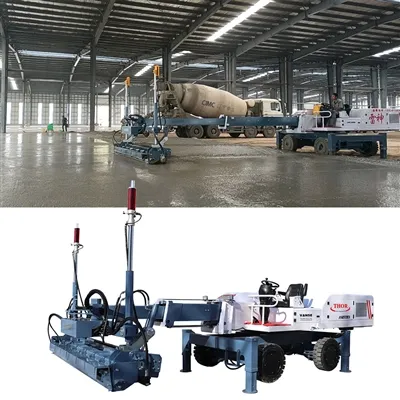
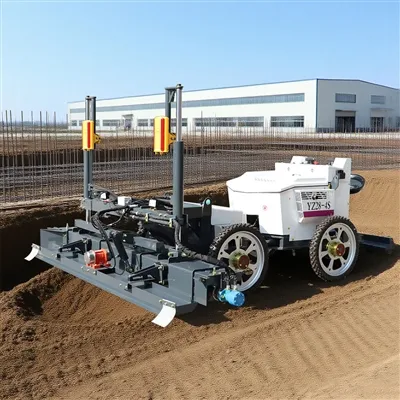
The laser leveling machine forms a reference plane through the laser beam emitted by the laser transmitter, and the receiver on the leveling machine controls the leveling head in real time to achieve high-precision leveling. During the leveling process, it is necessary to ensure the accurate alignment of the laser transmitter and the receiver, as well as the stable operation of the leveling head.
– **Concrete pouring**:
Pumped concrete is used for pouring to ensure the uniformity and density of concrete. The pouring should be carried out in layers, and the thickness of each layer should not be too large to ensure compaction.
– **Vibration and leveling**:
Use a vibrator to fully vibrate the concrete to ensure density. Then, use a laser leveling machine to level it. The elevation and flatness need to be checked continuously during the leveling process.
– **Smoothing and finishing**:
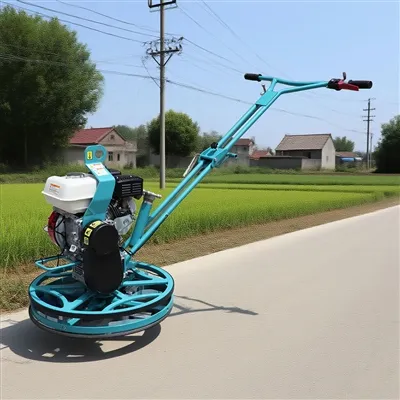
After the initial setting of the concrete, use a trowel to smooth it and rub the slurry. Then finish it to ensure a smooth and flat surface.
🎈 Construction points
– **Skip warehouse construction**:
Divide the ground into multiple grid blocks. Each concrete pouring should be continuous and uninterrupted. The pouring interval between adjacent grid blocks should be long enough to ensure the volume stability of the concrete.
– **Construction joint treatment**:
The construction joint should be standardized and straight, and the elevation control should be precise. Use angle steel to fix the ground elevation to ensure that the joints are smooth and straight.
– **Maintenance**:
After the concrete is poured, it should be maintained in time. Use maintenance blankets or non-woven fabrics to cover and water to keep the concrete surface moist.
🎈 Advantages
– **High flatness**:
Laser leveling technology can achieve high-precision ground flatness, with an error control within ±2mm.
– **Good integrity**:
Through skip-bin construction and fine treatment of construction joints, the overall seamless effect of the ground is achieved.
– **High construction efficiency**:
The laser leveling machine integrates scraping, vibrating and leveling, with a high coverage rate, which greatly improves the construction efficiency.
🎈 Application scenarios
This technology is suitable for construction projects such as industrial plants, logistics warehouses, and large public places that have high requirements for ground flatness and integrity.
Through the application of the above technologies, the construction quality of ultra-large concrete floors can be effectively improved, the later maintenance costs can be reduced, and the service life of the floor can be extended.
🎈
Thanks to All the Friends Who Support and Trust Shandong Vanse Machinery Technology Co., Ltd.
If you want to know more about Shandong Vanse Machinery Technology Co., Ltd. or have any questions, please feel free to contact us:
Our Factory
Shandong Vanse Machinery Technology Co., Ltd.








Share this article

About the Author: Shandong Vanse Machinery Technology Co., Ltd.
Shandong Vanse Machinery Technology Co., Ltd. is a high-tech manufacturer specializing in concrete construction machinery, including laser screeds and related equipment. The company integrates R&D, production, and global sales, with products exported to over 60 countries and widely used in infrastructure projects worldwide.
Previous Post
Next Post
Related Articles
You Might Also Like
The Specific Content Of Maintenance Of Concrete Laser leveling Machine
What are the specific contents of maintenanc e of concrete laser leveling machine? As an important equipment in modern building construction, concrete laser leveling machine's maintenance work is crucial. Correct maintenance can not only ensure the normal operation and extend the service life of the equipment, but also improve construction efficiency and quality. Therefore, this article will elaborate on concrete laser leveling from the aspects of daily inspection and maintenance, regular cleaning and maintenance, wave pressure system maintenance, electrical system inspection, engine maintenance, cutting and wearing parts, lubrication system inspection, and storage and transportation precautions. Specific content of machine maintenance. 1. Daily inspection and maintenance Routine inspection is the basic work for the maintenance of concrete laser leveling machine, which mainly includes the following aspects: ☑ Check the appearance of the equipment: Check whether there are scratches, deformations or damage on the surface of the leveler. If so, repair or replace relevant parts in time. ☑Check the traveling system: Check whether the tires or tracks are severely worn, whether the bolts are tight, and whether the traveling mechanism is flexible. If there are any abnormalities, they should be dealt with in time. ☑Check the laser system: Check whether the laser transmitter, receiver and reflector are clean and intact to ensure stable laser signal transmission. ☑ Check the operation control system: Check whether the operating handle, buttons, switches, etc. are flexible and reliable, and whether their functions are normal. In addition, during daily use, you need to pay attention to the operating status of the equipment. If there are abnormal sounds, vibrations, or excessive temperatures, you should stop the machine in time for inspection and troubleshooting. 2. Regular cleaning and maintenance Regular cleaning and maintenance are key to keeping the concrete laser leveling in good operating condition, including: ☑Clean the body: Clean the body of the leveler regularly with clean water and a soft cloth to remove dust, oil and other stains to keep the equipment clean. ☑Clean the hydraulic oil tank and filter element: Change the hydraulic oil regularly and clean the oil tank and filter element to prevent oil contamination and blockage. ☑Clean the radiator: Clean the dust and debris on the radiator regularly to maintain good heat dissipation and prevent the device from overheating. In addition, the equipment needs to be rust-proofed regularly to prevent equipment from rusting and corroding. 3. Hydraulic system maintenance The hydraulic system is the core part of the concrete laser leveling machine, and its maintenance is crucial. Specific contents include: ☑ Check the hydraulic oil tank; regularly check the oil level and oil quality of the hydraulic oil tank to ensure that the oil is clean and sufficient, and replace the hydraulic oil in time according to usage. ☑ Check the hydraulic pipeline: Check whether the hydraulic pipeline is leaking, aging or damaged. If so, it should be replaced or repaired in time. ☑Check the hydraulic cylinder: Check the sealing and flexibility of the hydraulic cylinder. If there is leakage or stuck, deal with it in time. In addition, it is necessary to pay attention to the operating specifications of the hydraulic system and avoid overloading, overspeeding or illegal operations to ensure the stable operation of the system. 4. Electrical system inspection The electrical system is an important part of the concrete laser leveling machine, and its normal operation is crucial to the stability and safety of the equipment. Electrical system inspection mainly includes: ☑ Check the cable line: Check whether the cable line is intact and whether the connection is tight to prevent short circuit, open circuit or poor contact. ☑ Check the motor and controller: Check the working status of the motor and controller to ensure their normal operation. If there are any abnormalities, they should be dealt with in time. ☑Check electrical components: Check whether each electrical component is intact and working properly, such as relays, fuses, etc., to ensure the safe and stable operation of the electrical system. 5. Engine maintenance The engine is the power source of the concrete laser leveling machine, and its maintenance is equally important. Specific contents include: ☑ Check the engine oil: Check the oil level and oil quality of the engine oil regularly, and replace the oil and oil filter in time. ☑ Check the engine coolant: Make sure the engine coolant is sufficient and clean, and replace the coolant regularly to prevent the engine from overheating. ☑ Check engine accessories: Check whether the engine belts, chains and other accessories are intact. If they are worn or aged, they should be replaced in time. In addition, it is also necessary to pay attention to the engine starting and stopping operating specifications and avoid frequent starts or emergency stops to reduce damage to the engine. 6. Cutting and wear parts The cutting and wearing parts of the concrete laser leveling will gradually wear out during use and require regular inspection and replacement. Specific contents include: ☑Check the blade: Regularly check whether the blade is sharp and intact. If it is worn or damaged, replace or repair it in time. ☑ Check the scraper: Check whether the scraper is flat and not deformed or damaged. If there are any abnormalities, deal with them in time. ☑Check worn parts: Regularly check other worn parts, such as belt plates, chains, etc., and replace them in time according to the degree of damage. By replacing worn parts in time, the construction efficiency and quality of the concrete laser leveling can be ensured, while the service life of the equipment can be extended. 7. Lubrication system inspection The lubrication system is the key to ensuring the normal operation of all components of the concrete laser leveling, so the inspection of the lubrication system is also an important part of maintenance. Specific contents include: ☑Check lubrication points: Regularly check the grease condition of each lubrication point, such as bearings, chains, etc., to ensure adequate lubrication. ☑Replace lubricating oil: According to the equipment usage and instructions, replace the lubricating oil regularly to ensure clean oil quality. ☑Clean the lubrication system: Clean the lubrication system regularly to remove impurities and sediments and keep the system smooth. Through good lubrication system maintenance, equipment wear and failure can be reduced, and the service life and working efficiency of the equipment can be improved. 8. Storage and transportation precautions During the storage and transportation of the concrete laser leveling machine, some matters need to be paid attention to to ensure the safety and integrity of the equipment. The following are key points to note during storage and transportation: ☑Storage environment selection: When storing the concrete laser leveling machine, you should choose a dry, ventilated, and non-corrosive gas indoor environment to prevent the equipment from being eroded by moisture, dust or harmful gases. At the same time, ensure that the storage area is flat and stable to prevent equipment from being damaged due to uneven ground. ☑Equipment fixation and protection: When the equipment is stored, fixing measures should be taken to prevent the equipment from tipping or moving due to external forces. At the same time, vulnerable parts of the equipment should be protected, such as covering with dust covers, etc., to prevent dust, Debris, etc. cause damage to the equipment. ☑ Precautions during transportation: When transporting the concrete laser leveling machine, ensure that the equipment is firmly fixed to prevent shifting or collision during transportation. At the same time, avoid transporting in bad weather or poor road conditions to avoid unnecessary damage to the equipment. ☑Inspection before transportation: Before transportation, the equipment should be fully inspected to ensure that the equipment is in good condition and without damage or failure. At the same time, check whether the accessories, tools, etc. of the equipment are complete so that it can be put into use quickly after arriving at the destination. In addition, during storage and transportation, attention should be paid to keeping the equipment confidential to prevent equipment information from being leaked or illegally obtained. To sum up, the maintenance of concrete laser leveling machines involves many aspects, including daily inspection and maintenance, regular cleaning and maintenance, hydraulic system maintenance, electrical system inspection, engine maintenance, cutting and wearing parts, lubrication system inspection and storage and transportation precautions, etc. Only by completing these maintenance tasks comprehensively and meticulously can the normal operation and extended service life of the concrete laser leveling be ensured, providing a strong guarantee for construction quality and efficiency. In actual operation, specific maintenance plans should be formulated based on the specific conditions and usage environment of the equipment and strictly implemented. At the same time, it is necessary to strengthen the training and management of equipment operators, improve their operating skills and maintenance awareness, and ensure the safe and efficient operation of equipment. In addition, with the continuous development of science and technology, the maintenance technology of concrete laser leveling machines is also constantly updated and improved. Therefore, in actual work, we should also pay attention to the application of new technologies and new methods, continuously improve the maintenance level of equipment, and provide strong support for the improvement of construction quality and efficiency. In short, the maintenance of concrete laser levelinging machines is a long-term and important work. It requires us to continuously accumulate experience and sum up lessons in daily use, and constantly improve and optimize maintenance measures to ensure the stable operation of the equipment and extend its service life.Key points for lubrication & maintenance of the power trowel machine
Lubrication and maintenance of the power trowel is the core work to ensure the long-term stable operation of the equipment and prevent sudden failures. The key lies in "using the right oil, finding the right time, doing it on time and using the right method". The following are the specific key points 1. Power trowel the main shaft bearing – the most crucial and frequent Location: The center drive shaft of the pan, usually with 1-2 grease nozzles. Lubricant: High-temperature resistant (≥120℃), extreme pressure lithium-based grease (such as molybdenum disulfide grease) must be used. Ordinary butter must not be used. Method and Cycle It must be carried out after each shift's work (working for 8 to 10 hours). Thoroughly clean the grease nipple and its surroundings. Add until the new grease overflows: Use a grease gun to add until the clean new grease is completely squeezed out from the edge of the bearing seal ring from the old grease. Wipe off the excess grease. Objective: To remove metal shavings and impurities produced by internal wear and ensure that the bearing cavity is filled with new grease. 2. Gearbox/reducer Lubricant: Select the specified type of gear oil (such as SAE 80W-90 GL-4) strictly in accordance with the instructions. Check: Every day, check through the oil window or dipstick whether the oil level is between the upper and lower marks. Replacement cycle First replacement: After the new machine has been running for 20 to 30 hours, remove the running-in debris. Regular replacement: Replace it every 300 to 500 hours of operation or annually thereafter. Key point: Oil change should be carried out when the oil temperature is still hot after the equipment is shut down to ensure that the old oil is completely drained. 3. Traveling wheels and steering mechanism Location: Walking wheel bearing, steering tie rod ball joint, hinge point. Lubricant: The high-temperature resistant lithium-based grease as mentioned above. Cycle: Every 50 hours of operation or once a week. Method: Clean each grease nozzle and add grease until new grease overflows from the gaps. 4. Engine (Gasoline model) Engine oil inspection and replacement Check the oil dipstick before starting every day to ensure the oil level is normal. First replacement: After running for 20 to 30 hours. Regular replacement: Every 100 hours or every quarter. The cycle should be shortened in harsh environments. Air filter maintenance: Regular cleaning. For oil bath air filters, use the dedicated air filter oil as per the instructions. Cleaning first: Before filling, be sure to clean the oil nozzle, oil cap and the surrounding area to prevent sand, dust and concrete particles from being brought into the interior. Strict specifications: Different parts should use the specified type of grease/oil products. They must not be mixed or substituted. High-temperature grease is the "life-saving oil" for the main shaft bearings. Squeezing out the old grease: For bearing lubrication, "adding until the new grease overflows" is a necessary step. This is the only effective way to remove contaminants and ensure the lubrication effect. Precise cycle: The maintenance cycle is mainly based on the operating hours (rather than calendar time) and is strictly recorded. Error: Lubricate the main shaft bearings with ordinary grease. Consequence: The grease melts and leaks away at high temperatures, the bearings dry grind rapidly and burn out at high temperatures, leading to the failure of the entire machine. Error: Only add fat without squeezing out the old fat. Consequence: Metal shavings accumulate in the bearing cavity, forming abrasives, accelerating wear, and causing abnormal noises and jamming. Error: Ignoring the oil level in the gearbox and its replacement. Consequence: Insufficient lubrication of gears and bearings leads to pitting corrosion, broken teeth, and scrapping of the reducer. Error: The spilled grease was not cleaned up after lubrication. Consequence: Grease adsorbs dust to form hard scale, which damages the sealing performance of the oil seal and makes it easier for impurities to invade. Create a lubrication chart: Make a simple chart of all lubrication points, oil types and cycles of the equipment, and stick it in a prominent place on the equipment. Equipped with dedicated tools: Use high-quality grease guns and dedicated oiling nozzles to ensure sufficient filling pressure. Record: After each maintenance, record the operating hours and maintenance items to form a traceable maintenance file. Long-term storage and maintenance: Before the equipment is out of use, thoroughly lubricate all lubrication points once. The engine oil should be changed or stabilizers added as per regulations to prevent internal rusting. The lubrication and maintenance of a power trowel essentially involve the continuous confrontation with its harsh working environment (heavy load, high temperature, and much dust). By grasping the two key points of "post-shift high-temperature grease extrusion lubrication" for the main shaft bearings and "regular oil change" for the gearboxes, the vast majority of major mechanical failures can be avoided, significantly extending the service life of the equipment. Note: The parameters provided in this document are for reference only and are not mandatory. Due to differences in technical characteristics between different brands and models of laser levelers, please consult the manufacturer for a suitable solution before actual operation. This reference document assumes no responsibility for any issues arising from failure to follow the manufacturer's instructions.Quantitative evaluation of the single concrete laser leveling machines operating efficiency
The quantitative evaluation of single-machine operating efficiency for concrete laser leveling machines, such as those from Vanse Machinery, is primarily measured in the area of concrete leveled per unit of time, typically square meters per hour m^2/hr or square feet per minute (ft^2/min). Vanse's official efficiency metrics indicate a significant output compared to traditional methods, though the specific value is heavily dependent on the machine model and job site conditions. The operating efficiency is quantified using the following key productivity rates: This is the most direct measure of efficiency. Vanse Machine Type Typical Efficiency Range Implied Daily Output (8-Hour Shift) Basis for Rate Walk-Behind Models (e.g., DZ30-2) ≈500 sets/year (Manufacturer throughput) Not typically quantified by area per day. Small-area flexibility. Four-Wheel Ride-On (e.g., YZ28-4S) 600 to 1,050 m2/hr 4,800 to 8,400 m2/shift Average driving speed of 4 to 7 meters per minute. Telescopic Boom Models (e.g., YZ40-4E) 500 m2/hr or more Up to 4,000 m2 (specific claim) 4 meter leveling width and 6 meter telescopic arm reach. Note: The high range of 600 to 1,050 m^2 / hr (Source 2.1) is often cited as the theoretical peak performance under near-ideal conditions (large, open areas with consistent concrete supply). A critical quantitative advantage is the reduction in labor required: A laser leveling machine generally requires 2 to 3 workers (operator, laser checker, concrete placement crew) compared to 4 to 6 workers for traditional leveling and floating methods. This translates to up to 60% reduction in labor costs for the leveling process. The high efficiency of the single machine is due to integrated technical parameters: Operating Speed: The walking speed of the machine (e.g., 0-40 meters per minute for the DZ30-2 or 0-4.5km/h for the YZ28-4S) dictates how quickly the area is covered. Leveling Width: The width of the leveling head (e.g., 3 meters for the DZ30-2 or 4 meters for the YZ40-4E) determines the area covered in a single pass. The area output is calculated as: Efficiency ≈ Operating Speed × leveling Width The machine's accuracy is a qualitative feature that directly yields quantitative time savings. Leveling Accuracy: Vanse machines control ground elevation with high precision (e.g., ±1.5mm). Impact: This precision drastically reduces or eliminates the need for rework and post-pour correction, which can often add an entire shift or more to a traditional job, thus maximizing the single-machine operating time. The leveling head combines multiple manual steps into one pass: Spreading: A spiral conveyor (auger) on the head spreads the concrete. Leveling: The leveling plate strikes off the concrete to the laser-controlled grade. Vibrating/Compacting: A high-frequency vibrator (50Hz or more) consolidates the concrete in the same pass. By combining these steps, the machine maximizes the output of a single worker and piece of equipment. The actual on-site operating efficiency is constrained by factors outside the machine itself: Concrete Supply Rate: The single most critical factor. The machine can only work as fast as the concrete can be delivered and placed in front of its head. If the batch plant and pump cannot maintain flow, the leveling sits idle. Obstacles and Layout: Highly congested sites with many columns or fixed elements require the machine to spend more time maneuvering (especially for non-boom models), which lowers the effective m^2/hr rate. Operator Skill: A highly experienced operator can maintain steady, precise operation, which minimizes stops and restarts, ensuring the machine operates at its peak capacity. This video demonstrates the Vanse YZ40-4E machine operating on a job site, giving a visual context to its reach and speed: VANSE YZ40-4E Concrete Laser leveling Machine Mexico Construction Site. Note: The parameters provided in this document are for reference only and are not mandatory. Due to differences in technical characteristics between different brands and models of laser levelers, please consult the manufacturer for a suitable solution before actual operation. This reference document assumes no responsibility for any issues arising from failure to follow the manufacturer's instructions.