Technical Knowledge
The role and significance of concrete laser leveling machine in construction site quality monitoring
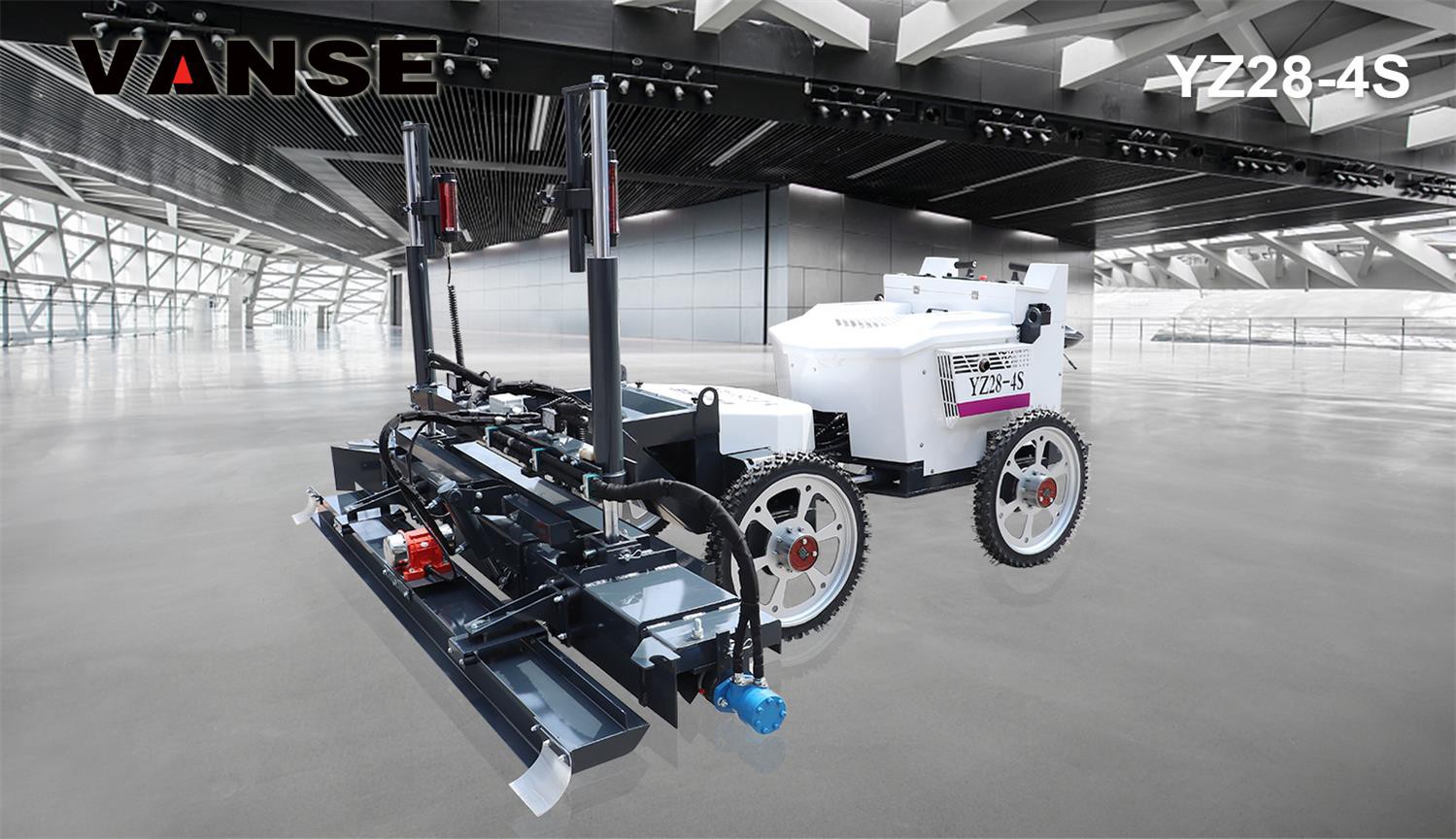
The role and significance of concrete laser leveling machine in construction site quality monitoring
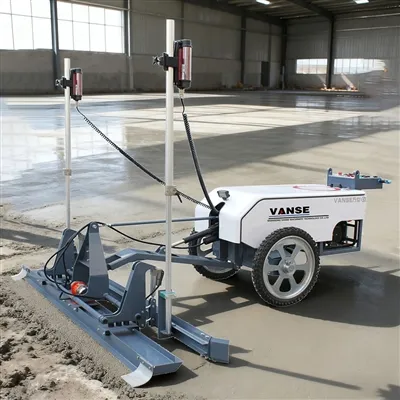
The role and significance of the concrete laser leveler in the quality monitoring of the construction site are mainly reflected in the following aspects:
⛳ Improve flatness and levelness
– Precisely control the elevation:
The laser leveler uses the laser emitted by the laser transmitter as the reference surface, and uses the laser receiver to control the leveling head in real time to ensure that the elevation of the concrete surface is consistent with the design elevation, avoiding the elevation deviation caused by manual operation in traditional construction.
– Reduce cumulative errors:
Since the laser transmitter is fixed, the laser leveler will not produce cumulative errors in large-scale construction, ensuring the flatness and levelness of the entire ground.
⛳ Improve construction efficiency
– Integrated operation:
The laser leveler integrates scraping, vibrating, and leveling, and is formed in one step, which greatly improves construction efficiency. For example, the traditional construction method can complete 700-800 square meters of floor construction per day, requiring 25 workers; while the use of the laser leveler can complete at least 1920 square meters of floor construction per day, requiring only 9 workers.
– Shorten construction period:
The efficient construction capacity of the laser leveling machine can significantly shorten the construction period, especially in large-scale concrete floor construction such as large factories and logistics warehouses, which can complete the floor construction faster and save time for subsequent projects.
⛳ Ensure stable construction quality
– Automatic control:
The laser leveling machine adopts computer automatic control, which can monitor and adjust the floor elevation and laser in real time to ensure the stability of construction quality. For example, the two-way hydraulic cylinder is adjusted 10 times per second to ensure accurate leveling.
– Reduce human error:
In traditional construction, the proficiency and responsibility of the operator are the key to quality control, while the laser leveling machine reduces the dependence on manual labor and reduces the quality fluctuation caused by human factors.
⛳ Reduce construction costs
– Reduce material waste:
The laser leveling machine can accurately control the thickness of concrete, avoid material waste caused by improper manual operation, and save project costs.
– Reduce labor costs:
Due to the improvement of construction efficiency and the reduction of dependence on manual labor, the construction of the laser leveling machine can significantly reduce labor costs. For example, a job that requires 25 people to complete using traditional construction methods only requires 9 people using a laser leveler.
⛳ Enhance the integrity of the ground
– Reduce construction joints:
The laser leveler can be constructed with large-area compartments, which reduces the number of construction joints and ensures the integrity of the ground. For example, the area of each compartment in this project is set at 1,920 square meters, while the area of each compartment should be 400 square meters under the premise of ensuring quality for manual scraping.
– Reduce the cost of later maintenance:
Due to the good integrity of the ground, the problems of ground cracking and hollowing caused by construction joints are reduced, and the cost of later maintenance is reduced.
⛳ Realize real-time monitoring
– Automatically monitor the operating status:
The laser leveler can realize automatic monitoring of the operating status, prevent problems that occur in the project in real time and solve them in time, and ensure the safety, reliability and stability of the construction process.
– Timely adjust construction parameters:
By real-time monitoring of the flatness and elevation of the ground, construction personnel can adjust the working status of the laser leveler in time to ensure that the construction quality meets the design requirements.
⛳ Improve construction safety
– Reduce operating risks for personnel:
The use of laser leveling machines reduces the risks of construction personnel working at heights and operating heavy machinery, and improves construction safety.
– Standardize construction process:
The construction process of the laser leveling machine is relatively standardized, reducing safety accidents caused by improper human operation.
⛳
Thanks to All the Friends Who Support and Trust Shandong Vanse Machinery Technology Co., Ltd.
If you want to know more about Shandong Vanse Machinery Technology Co., Ltd. or have any questions, please feel free to contact us:
Our Factory
Shandong Vanse Machinery Technology Co., Ltd.








Share this article

About the Author: Shandong Vanse Machinery Technology Co., Ltd.
Shandong Vanse Machinery Technology Co., Ltd. is a high-tech manufacturer specializing in concrete construction machinery, including laser screeds and related equipment. The company integrates R&D, production, and global sales, with products exported to over 60 countries and widely used in infrastructure projects worldwide.
Previous Post
Next Post
Related Articles
You Might Also Like
Establishment and sharing of a common fault troubleshooting manual for power trowel
Establishing a systematic and user-friendly manual can significantly reduce equipment downtime, lower maintenance costs, and enhance the skill levels of operators. 1. Clarify the structure and core content of the manual The manual should adopt a quick index structure of "problem – cause – solution". Chapter One: Safety First All safety regulations that must be followed before conducting any inspection operations (such as: power off, hanging warning signs, wearing protective gloves, etc.). Strictly prohibited non-professional operation tips. Chapter Two: Quick Fault Index Table Design a table listing the fault phenomena, directly corresponding to the detailed page numbers in the manual. Fault phenomenon: Possible causes: See page numbers |—|—|—-| The engine won't start. 1. Insufficient fuel. 2. Dead battery. 3. Spark plug failure: P10 Severe shaking of the power trowel disc: 1. Unbalanced installation of the blade 2. Damaged transmission shaft 3. Chassis deformation: P15 Poor polishing effect (with scratches) : 1. Blade wear 2. Improper rotational speed 3 The initial setting time of the concrete is incorrect Chapter Three: Detailed Troubleshooting Guide for Subsystems (Core) Power system failure Failed to start: Check the fuel, engine oil, battery, spark plugs, air filter and carburetor. Insufficient power: Check the fuel filter, air filter, spark plug clearance and cylinder pressure. Transmission and vibration system failure If the pan does not rotate or the speed is unstable: Check the throttle line, the drive belt (tightness or wear), and the clutch. Abnormal shaking of the machine body: Check whether the power trowel blade is installed flat, whether the fastening bolts are loose, and whether the transmission shaft is bent. Operation and control system failure The operating lever is not sensitive: Check whether the connecting rod mechanism is stuck and whether the control cable needs lubrication. Matte effect-related faults Uneven surface: Check the wear of the blade, whether the operation technique is uniform, and whether the concrete aggregates are uniform. Scratches appear: Check if the blade is damaged and if the bottom of the wiping plate is clean. Chapter Four: Regular Maintenance and Preventive Maintenance Plan Daily, weekly and monthly maintenance lists. Replacement cycle table of vulnerable parts (such as: blades, belts, spark plugs, engine oil). Chapter Five: Appendix Model specification table, official service contact information, essential tool list, basic parts drawing. 2. Enrich the manual by adopting multiple media forms Illustrated with pictures: Take high-definition photos of key components and disassembly steps and mark them with arrows. Video QR code: Make short videos of common inspection processes (such as "replacing the polishing machine blade", "cleaning the carburetor"), and attach QR codes at the corresponding positions in the manual. You can scan them with your mobile phone to watch. Digital interactive manual: Created using online document tools (such as Notion/ Yuque) or professional manual software, it supports full-text search and hyperlink jumps. 1. Select the sharing platform and form: Basic version: Printable PDF file. Advantages: Simple and universal, can be posted between devices. Disadvantages: Inconvenient to update and poor interactivity. Recommended version: Cloud-based Live Document. Tools: Tencent Docs, Feishu Docs, Notion, Enterprise Internal Wiki. Advantages Real-time updates: New issues can be supplemented at any time, and everyone can see the latest version immediately. Access anytime and anywhere: Workers can view it on their mobile phones, tablets and computers. Collaboration function: Employees can leave messages to ask questions and share their experiences, forming a virtuous cycle of the knowledge base. Advanced version: Integrated into the company's internal system. Embed the manual into the company's OA, EAM (Enterprise Asset Management System) or training platform. 2. Promotion and training to cultivate a culture of investigation Official release and training: Organize a special training session to explain the structure and usage methods of the manual to all equipment administrators and operators, with a focus on demonstrating the troubleshooting processes for several common faults. On-site visualization: Make the "Quick Fault Index Table" and "Daily Maintenance List" into large boards and post them in prominent positions in the equipment warehouse or maintenance area. Establish an incentive and feedback mechanism Encourage contributions: Establish rewards to encourage employees to submit unincluded fault cases or better solutions. After confirmation, update them to the manual and sign the contributor's name. Collect feedback: Regularly collect employees' suggestions for improving the manual, such as "Where do I not understand?" "What else needs to be added?" " . Only when users are involved in the construction can the manual have more vitality. Integrate into new employee training: Make the manual a compulsory textbook for the on-the-job training of new equipment operators. The goal of establishing the "Common Fault Troubleshooting Manual for power trowelers" is not merely to generate a document, but to build a continuously evolving, easily accessible, and participatory equipment management knowledge ecosystem for all. By taking a four-pronged approach of "structured content + multi-media presentation + cloud sharing platform + proactive promotion culture", what you will obtain is not just a manual, but a powerful tool that can effectively reduce operation and maintenance costs and improve construction efficiency. Note: The parameters provided in this document are for reference only and are not mandatory. Due to differences in technical characteristics between different brands and models of laser levelers, please consult the manufacturer for a suitable solution before actual operation. This reference document assumes no responsibility for any issues arising from failure to follow the manufacturer's instructions.What are the construction options for a concrete laser leveling machine?
The construction plan for a concrete laser leveling machine must be tailored to the project type (e.g., industrial plant, underground garage, large plaza, etc.), concrete grade, and site conditions. The core design principle is "standardized processes and controllable precision." The following is a general plan framework and examples of typical scenarios: Floor Flatness Error: ≤3mm/2m (core indicator for laser leveling); Concrete Density: ≥98% (avoiding sanding and hollowing); Construction Schedule: Planned based on a "500-800㎡/shift" (per machine). Stages Key Work Areas Core Requirements 1. Construction Preparation ① Base Preparation: Compaction (compaction degree ≥ 95%), debris removal, and watering (no water accumulation); Base leveling error ≤ 5mm/2m; Laser signal unobstructed (avoid metal and strong light). ② Laser System Commissioning: Transmitter calibration (horizontal error ≤ 0.1mm/m), receiver sensitivity test; ③ Material Preparation: Concrete (slump 120-160mm, initial setting ≥ 4h), geotextile/plastic film curing 2. Concrete Pouring ① Spreading: Use a tanker or concrete spreader to spread the material evenly, 30-50mm above the design elevation (allowing for leveling margin); Material spreading speed matches leveling speed (no accumulation or material shortages); Bin seams align with subsequent expansion joints. ② Combination Casting: For large areas, divide the concrete into 6-8m wide compartments (with temporary dividers) to prevent cracking after initial setting. 3. Laser Leveling ① Equipment Movement: Drive at a constant speed (0.8-1.2m/min), following a "horizontal back-and-forth" pattern with staggered overlaps; Real-time monitoring of the laser receiver (steady green indicates normal operation); immediate shutdown and calibration if deviation exceeds 2mm. ② Vibration Control: Insert the vibrator ≥ 50mm (penetrating the current paving layer) to ensure the connection between the upper and lower layers. 4. Finishing ① Rough Finishing: After the leveling passes, manually use a scraper to assist with leveling (to address any minor vibration leaks or unevenness). Timing of fine cutting is critical: premature cutting can lead to sanding, while delayed cutting may prevent surface air bubbles. ② Fine Finishing: After the concrete surface has cleared of water seepage (no noticeable indentations when pressed with a finger), use a trowel (with a disc) to smooth the surface 2-3 times. 5. Curing ① Covering: Cover with geotextile/plastic film within 1-2 hours of completion (before initial setting). No personnel or material stacking is permitted during the curing period; avoid freeze-thaw cycles in winter. ② Moisturizing: Water the surface every 2 hours in summer (to keep the film moist), and cover with a thermal blanket in winter (curing temperature ≥ 5°C). ③ Curing Time: ≥ 7 days (≥ 14 days for C30 and above concrete). 6. Expansion Joint Cutting ① Timing: 24-48 hours after pouring (surface hardness reaches 1.2 MPa, and no visible marks are visible when scratched with a fingernail). Clean the seams after cutting and apply sealant later to prevent water seepage. ② Specifications: Joint depth = 1/3-1/4 of the floor thickness, spacing ≤ 6 meters (required for areas over 36 square meters), joint width 5-8 mm. Key Differentiations: Concrete Grade: C35/C40 (one grade higher than standard flooring) is used, with polypropylene anti-cracking fiber (0.9 kg/m³) added to reduce thermal cracking. Laser System: Due to obstruction by pillars in the garage, a "multi-transmitter zoned coverage" system (one transmitter every 15-20 meters) is used to avoid signal blind spots. Surface Optimization: After finishing, diamond wear-resistant aggregate (5-6 kg/m²) is applied, followed by finishing with a high-speed trowel to improve surface hardness (Mohs hardness ≥ 6). Key Differentiators: Base Reinforcement: 300mm thick graded sand and gravel with a 150mm thick C25 cushion layer (50% thicker than standard flooring) ensures a load capacity of ≥5t/m2; Leveling Parameters: Vibration frequency is adjusted to 60-70Hz (compared to 50Hz for standard flooring) and travel speed is reduced to 0.6-0.8m/min to enhance concrete density; Post-treatment: After curing, a sealant and curing agent treatment (penetration depth ≥5mm) is applied to improve the floor's compressive strength (≥80MPa) and impermeability. Key Differentiations: Optimized Compartmentalization: Compartments are divided into 10m x 10m squares (common flooring requires 6-8m). Expansion joints (filled with foam board) are provided to relieve thermal stress. Concrete Control: Low-heat cement (heat of hydration ≤ 270kJ/kg) is used, and a retarder is added in summer (extending the initial setting time to 6-8 hours) to prevent cracking due to temperature differences. Laser Calibration: Transmitter levelness is rechecked every 2 hours (common flooring requires 4 hours). Because the plaza is unobstructed, a wind shield is required to prevent strong winds from interfering with the signal. Staffing: Each machine is equipped with one operator (certified) + two fabricators + two finishers + one laser monitor. Equipment Inspection Checklist: Before starting the machine, check the laser transmitter battery, vibrator wear, and tire pressure (tolerance ≤ 0.1 MPa). Emergency Plan: If the initial setting of the concrete is too rapid, immediately activate the backup leveling. If the laser signal is lost, switch to manual mode (using the adjacent leveled surface as a reference). Note: The parameters provided in this document are for reference only and are not mandatory. Due to differences in technical characteristics between different brands and models of laser levelers, please consult the manufacturer for a suitable solution before actual operation. This reference document assumes no responsibility for any issues arising from failure to follow the manufacturer's instructions.Concrete Knowledge
This paper introduces in detail what strength levels of concrete, what are the requirements of concrete for water quality, what factors the durability of concrete is related to, and how concrete is maintained. Why should concrete be graded in intensity? To ask why concrete should be graded in strength, you should first know what the strength level of concrete is. The concrete strength level is artificially divided according to the value of the concrete cube's anti-pressure strength, which is the characteristic strength of concrete. According to the current relevant standards and specifications, the concrete cube pressure strength is a standard size of 150mm of the edge of the standard size of the cube test piece sproducing according to the standard method, the temperature consistent with the ISO test method is 20 pc 2 degrees C, humidity is more than 95% of the standard maintenance room, maintenance to 28d age. The pressure strength of the concrete cube measured according to the standard test method. According to the relevant standards, building material strength grade should be expressed by the name of the material plus its strength standard value. Therefore, the concrete strength grade is divided into the standard valueofs of the symbol C (short for the English concrete Concrete) and the pressure strength of the cube behind it: C10, C15, C20, C25, C30, C35, C40, C45, C50, C55, C60, C65, C70, C75, C80. Because the general engineering of different parts of the concrete load is not the same, some large, some small, can not fully use a strength grade of concrete. For the heavy pressure of the site, it is necessary to use high-strength grade concrete, for the low pressure of the site, the use of low- strength grade of concrete, therefore, the concrete is divided into different strength levels to meet the needs of different projects, through the design and calculation of selection. Why does concrete specify 28d strength as the standard strength? Concrete is based on the cement bonding action, gradually hardening, and improve the strength of pressure. Because the cement stiffness is not done at once, but gradually perfected over time. Under normal maintenance conditions, the first seven days of pressure resistance increased faster, between 7d and 14d growth slightly slower, and after 28d, the intensity growth is relatively slow. In other words, after 28d the pressure strength is the standard strength, as the standard for design and construction inspection quality. Obviously, if the strength of less than 28d as the standard strength, will make the concrete performance can not be fully exploited. If the strength of greater than 28d as the standard strength, although the performance of concrete can be fully developed, but because of the time to reach the standard strength is too long, affecting the construction progress. Concrete level leveling on concrete working Why does concrete had request standard of water? Industrial wastewater containing fat, vegetable oil, sugar, acid and so on can not be used to mix concrete. Because the water containing impurities will reduce the cement bonding force, so that the strength of the concrete decreased, so can not use mineral water contains a large number of salts, so that cement can not be very resistant to water erosion. For the chemical composition of mineral water, must meet the indicators set by the family, or compared with ordinary drinking fresh water test, see the intensity does not decrease before use. As for the general tap water and drinkable water, can be used to mix concrete. Concrete level leveling on concrete working Why are concrete blocks in groups of three? Concrete test block is the standard to measure the strength of concrete components, that is, the strength of the test block is destroyed by pressure, as the strength of the component can have. Therefore, in addition to the test block should be made according to the component, the test block must also have a certain number. Because although we try to make the concrete of the test block and the concrete of the component is the same, but after all, there are some differences, if only a test block to identify the strength of the component, it is difficult to be reliable. So in three groups, the strength of the three test blocks is used as the strength of the three test blocks (in special cases, some values need to be removed), that is, the strength of the component symup. Next artical we will go on share concrete knowledge etc, please follow our Youtube or Facebook to get more~