Technical Knowledge
How does concrete laser leveling technology achieve precise leveling of concrete surfaces?
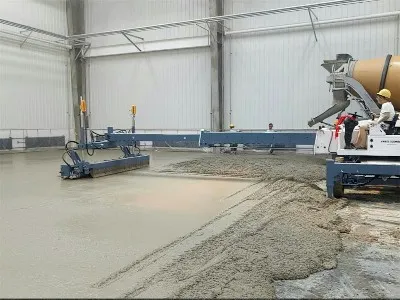
The core of concrete laser leveling technology is to use laser as a reference. The laser beam emitted by the laser transmitter forms a horizontal plane in the construction area. The construction personnel or machines adjust the laying thickness and flatness of the concrete according to this horizontal plane.
Working Principle
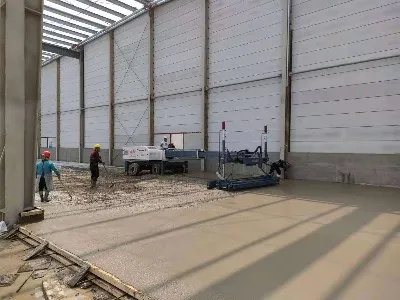
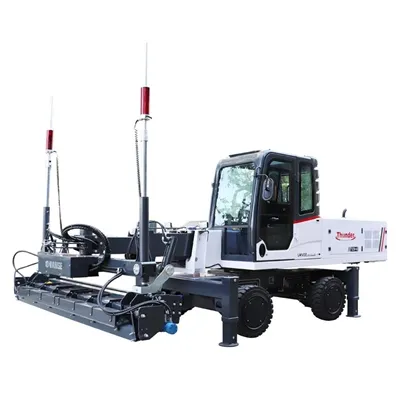
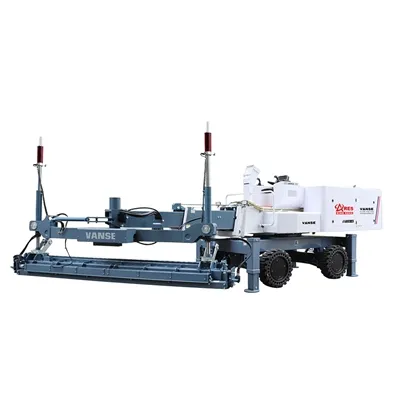
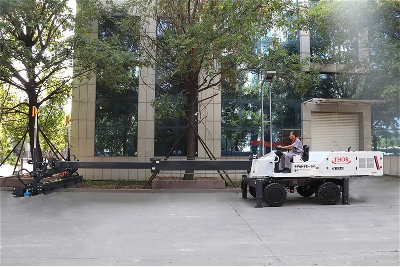
The laser leveling machine usually consists of the following parts:
– **Laser transmitter**: emits a stable laser beam to form a horizontal reference plane.
– **Receiver**: installed on the leveling machine, receives laser signals and converts them into electrical signals.
– **Control system**: automatically adjusts the working state of the leveling machine according to the received electrical signal to ensure that the concrete surface is consistent with the laser plane.
– **Leveling machine**: According to the instructions of the control system, the concrete surface is leveled through vibration and scraping functions.
– **High efficiency**: The laser leveling machine can quickly complete the leveling of large-area concrete, saving manpower and time.
– **High precision**: Laser leveling technology can ensure that the flatness of the concrete surface reaches extremely high standards and reduce subsequent finishing work.
– **Reduce material waste**: Reduce material waste by accurately controlling the laying thickness of concrete.
– **Improve construction quality**: A flat concrete surface can improve the overall quality and service life of the building.
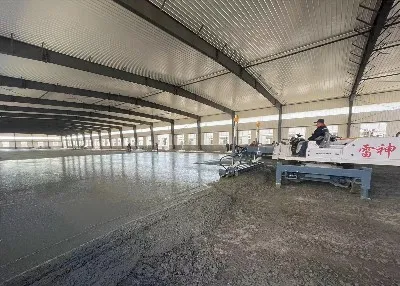
Construction process
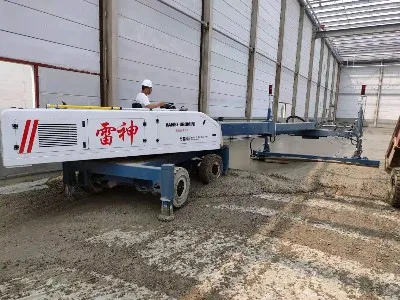
1. **Site preparation**: Clean the construction site to ensure that the ground is clean and flat.
2. **Laser transmitter setting**: Set the position and angle of the laser transmitter according to construction requirements.
3. **Concrete pouring**: Concrete is poured with the assistance of the laser leveling machine.
4. **Leveling operation**: The laser leveling machine automatically adjusts the scraper height according to the laser signal for leveling.
5. **Surface treatment**: After leveling, the concrete surface is smoothed and calendered to improve the surface quality.
6. **Quality inspection**: Use professional equipment to inspect the flatness and levelness of the concrete surface.
Laser leveling technology is widely used in the following fields:
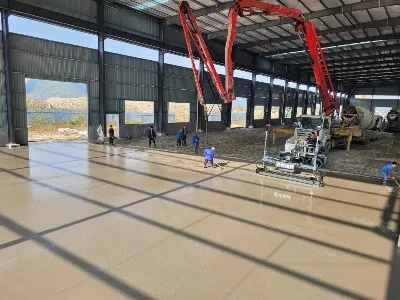
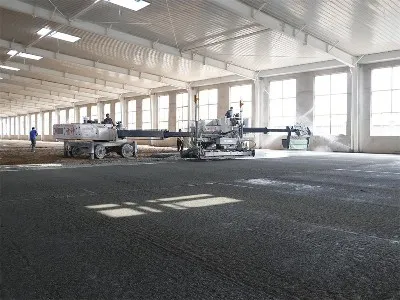
– **Industrial plants**: Large, flat floors are required for mechanical operation and cargo storage.
– **Commercial facilities**: Such as shopping malls, exhibition halls, etc., require flat floors to provide a good customer experience.
– **Airport runways**: There are extremely high requirements for flatness and strength to ensure the safe takeoff and landing of aircraft.
– **Roads and bridges**: Precise flatness is required to ensure the smoothness and safety of vehicle driving.
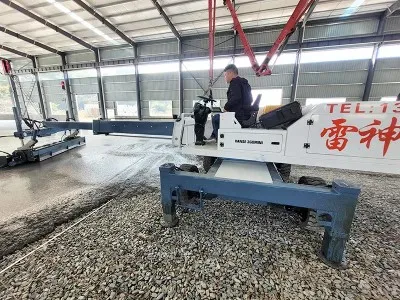
Technical challenges and solutions
– **Environmental factors**: Such as wind force, temperature changes, etc. may affect the stability of the laser. The solution is to improve the stability of the laser transmitter through technical improvements.
– **Equipment maintenance**: Laser leveling machines require regular maintenance to ensure their performance. The solution is to establish a complete maintenance system and train operators.
– **Training of construction personnel**: Operating a laser leveling machine requires professional knowledge and skills. The solution is to provide professional training courses.
With the advancement of science and technology, laser leveling technology is also developing. Future development directions may include:
– **Intelligentization**: Improving the automation level of leveling machines by integrating more intelligent sensors and control systems.
– **Multifunctionality**: Developing leveling machines that can complete multiple construction tasks at the same time.
– **Environmentally friendly materials**: Researching and using more environmentally friendly concrete materials to reduce the impact of construction on the environment.
Conclusion
Concrete laser leveling technology has become an indispensable part of modern construction with its advantages of high efficiency, high precision and construction quality. With the continuous advancement and innovation of technology, this technology will play a greater role in the future and bring more possibilities to the construction industry.
This article provides a comprehensive introduction to concrete laser leveling technology, including its working principle, technical advantages, construction process, application areas, challenges faced, and future development directions. The article avoids the use of clichés and shows how this technology plays a role in the modern construction industry through specific technical details and practical application cases. I hope this article can provide readers with valuable information and in-depth understanding.
Thanks to All the Friends Who Support and Trust Shandong Vanse Machinery Technology Co., Ltd.
If you want to know more about Shandong Vanse Machinery Technology Co., Ltd. or have any questions, please feel free to contact us:
Our Factory
Shandong Vanse Machinery Technology Co., Ltd.








Share this article

About the Author: Shandong Vanse Machinery Technology Co., Ltd.
Shandong Vanse Machinery Technology Co., Ltd. is a high-tech manufacturer specializing in concrete construction machinery, including laser screeds and related equipment. The company integrates R&D, production, and global sales, with products exported to over 60 countries and widely used in infrastructure projects worldwide.
Previous Post
Next Post
Related Articles
You Might Also Like
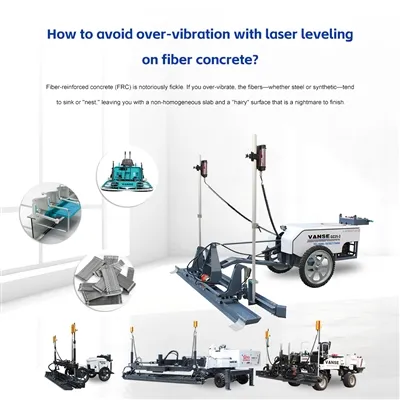
How to avoid over-vibration with laser leveling on fiber concrete?
Fiber-reinforced concrete (FRC) is notoriously fickle. If you over-vibrate, the fibers-whether steel or synthetic-tend to sink or "nest," leaving you with a non-homogeneous slab and a "hairy" surface that is a nightmare to finish. With a laser leveling, the goal is to keep the fibers suspended in the paste while achieving your ±3mm tolerance. Here is how to dial in your machine: Over-vibration usually happens when the centrifugal force is too high for the concrete's consistency. The Rule of Thumb: For high-fiber mixes, you generally want high frequency but low amplitude. Adjustment: Most laser leveling (like Vanse) allow you to adjust the hydraulic flow to the vibrator motor. If you see "fat" (excessive cream/paste) rising more than 2mm–3mm above the fibers, slow the vibrator RPM down immediately. If the machine moves too slowly while the vibrator is screaming, you are effectively "drilling" the fibers down into the subgrade. The Sweet Spot: Maintain a consistent forward (or pulling) speed. If you have to stop the machine for any reason, shut off the vibrator immediately. Leaving a vibrating leveling head stationary for even 5 seconds will create a permanent "soft spot" or depression in a fiber floor. The vibrator should not be buried in the concrete. Positioning: The vibrator plate should just "kiss" the surface of the concrete as the auger levels it. The Sink Effect: If the vibrator is set too low, it pushes the larger aggregate and fibers down, leaving only weak laitance on top. This leads to surface scaling later in the floor's life. Fibers can sometimes clump (balling) before they even hit the leveling. Auger Interaction: Ensure your auger is set to the correct height (3mm to 5mm above finished grade). The auger's job is to "cut" the excess; if it's too low, it will snag fibers and drag them, creating tears in the surface. Avoid "Double-leveling": With fiber, try to get it right in one pass. Re-vibrating the same area almost guarantees the fibers will settle too deep. Because fibers can make the mix "stiffer," the leveling head might "ride up" on the material. The Fix: Don't increase vibration to force it down. Instead, adjust your Laser Offset. If the machine is riding high, lower the laser receivers by 1MM or 2MM to compensate for the material's resistance without over-working the paste. Variable Adjustment for Fiber Goal Vibrator RPM Reduce by 15-20% Prevent fiber sinking Travel Speed Faster / Consistent Prevent "hot spots" Auger Height Slightly Higher Avoid snagging/tearing Slump Maintain 100mm – 125mm Ensure flow without segregation Pro Tip: Have a "muck man" with a come-along tool standing by to watch the auger. If he sees a "beard" of fibers building up on the plow, you need to stop and clean the head, or it will ruin your FF numbers. Would you like a guide on how to properly "dry-shake" hardener over a fiber-reinforced floor without creating delamination? Contact us NOW Note: The parameters provided in this document are for reference only and are not mandatory. Due to differences in technical characteristics between different brands and models of laser levelers, please consult the manufacturer for a suitable solution before actual operation. This reference document assumes no responsibility for any issues arising from failure to follow the manufacturer's instructions.Laser leveling machine manufacturers: Standardized use to extend its life is no longer a problem
As we all know, the service life of the laser leveler is limited. If you don't want the life of the leveler to end early, you need to follow the rules during use. As an expert in the production and use of levelers, laser levelers naturally have a lot of knowledge that others don't know. In order to help users learn to use the leveler, laser levelers will give a detailed introduction in today's content, so please don't miss it. ▲ After the laser leveler manufacturer completes the leveling operation, it will perform routine maintenance operations in accordance with the contents of the routine maintenance procedures. ▲ The working devices and motion mechanisms of the leveler that are in direct contact with the asphalt mixture during the operation are sprayed with diesel after the operation and then run for a period of time to remove the residual asphalt on them, so that they can operate freely and rotate flexibly. It is forbidden to spray diesel on the electronic control system and spiral wire to prevent fire and burning when the power is turned on. ▲ After leveling the fly ash soil operation, flush with water to flush away the white material. After flushing, use waste hydraulic oil to lubricate the active parts of the scraper conveyor chain, and apply anti-rust oil to the piston rod. Be careful not to flush the electrical appliances and bearings with water to prevent short circuits and foreign objects from entering the bearings. ▲ Clean and check the vertical slope meter lifting and adjustment device, and apply grease to the screw. Apply grease to the floating arm slide rail. Grease each oil filling point until the joints overflow. For leveling machines with oil filling cups, observe the consumption and fill them up at any time. ▲ Due to the high efficiency of construction, the later seam cutting needs to keep up. Generally, each laser paving leveling machine is equipped with 7-8 seam cutting machines to meet the requirements. ▲ The speed of the laser leveling machine should not be too fast during the leveling operation; ▲ The laser leveling machine manufacturer should perform initial leveling before concrete leveling, and the concrete after initial leveling should be higher than the established elevation. ▲ It is advisable to use ground film covering maintenance in the early stage, and cover the non-woven fabric after cutting the seam. ▲ When installing the laser transmitter, be careful to avoid obstacles; ▲ During the construction process, due to the side pressure of concrete, the steel mesh is easy to move horizontally. For this reason, an isolation bench is directly placed on the adjacent steel mesh, and the horizontal movement of the steel mesh is effectively controlled, and the bench can be used in rotation. The above is the relevant matters that our concrete laser leveling machine manufacturer tells you. I hope it can help you. If you want to buy it, please contact us as soon as possible. The contact number and company address of our company are at the bottom of the screen. Whether you call for details or come to the factory for inspection, we warmly welcome you.The advantages of laser leveling machine are revealed, don’t be convinced!
In the past, when creating super-flat ground, the traditional cement concrete paving and leveling method was generally used. Most of the time, the cement concrete was roughly leveled manually using shovels, rake and other tools, and then the cement concrete vibrating beams, roller bars and scrapers were used for repeated leveling. Leveling, except for the poor flatness in this method, completely relies on manual operation and consumes a lot of labor costs. With the advancement of the times, laser leveling machines are becoming more and more common in super-flat floor construction. It is a device that uses laser as the reference plane and controls the leveling head in real time to achieve high-precision and rapid leveling of concrete. What exactly is it? What are the advantages that make it so popular? 1. Laser leveling machine reduces labor costs and doubles efficiency Traditional construction techniques require a large number of people, and require support of formwork (channel steel), dotting, and paving, and require about 20 manpower. The total number of people using the concrete laser leveling machine is more than half that of the traditional process. It can be operated by a single person, and the daily construction area is also greatly increased, which greatly reduces the labor cost. 2. Laser leveling machine laser point alignment, high precision and low error Traditional leveling technology requires support templates to control the elevation of the ground and pull control lines. The elevation error is large, and the levelness and smoothness of the entire floor cannot be guaranteed. The use of laser point transmitters is suitable for one-time paving of large areas. There is a laser measurement and control system that controls the elevation in real time. No pulling wires are required for leveling, and there is no need for support and side plates in the middle to control the ground elevation. This avoids the elevation error caused by the vibration of the formwork (channel steel) during the construction process, and also reduces the elevation error caused by traditional manual block formwork. 3. The ground flatness and integrity are better With traditional construction techniques, formwork is set up one day and watering is done the other day. The construction can only be carried out piece by piece. It has great limitations and cannot be operated continuously. Moreover, the integrity is not good and it is easy to cause accumulated errors in the construction joints. The concrete laser leveling machine can pave a large area of floor in one go, with higher efficiency and integrity. The completion of the entire floor makes the ground more integrated, which is completely impossible with traditional construction. 4. The ground is denser and more uniform, which improves the overall construction quality. The high-frequency vibrator per minute allows the leveling head vibrator to produce uniform high-frequency vibration, making the concrete floor denser and more uniform. It is said that laser levelings are a means of reducing enterprise construction costs. In fact, these are not the only reasons why enterprises choose concrete laser levelings. As the requirements for ground smoothness and levelness in modern logistics, workshops, supermarkets, etc. continue to increase, laser leveling machines are becoming more and more widely used to ensure construction quality and improve work efficiency, so it is the best choice. Got it!