Technical Knowledge
What is the future development of concrete laser leveling machines?

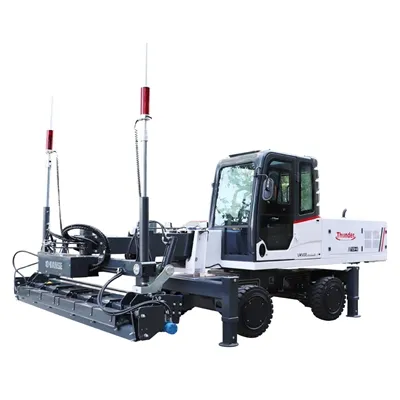
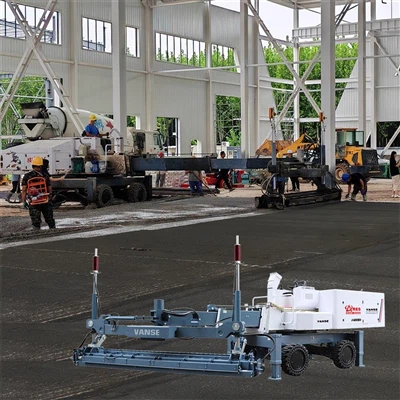
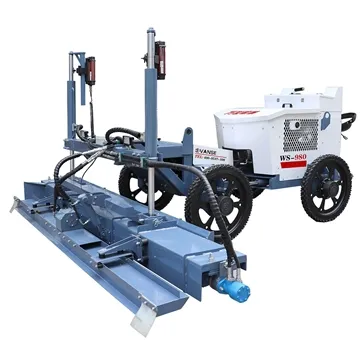
Concrete laser leveling machine is an advanced construction technology that uses laser beams to scan and measure the ground and automatically control the lifting and lowering of the mixer truck to achieve automatic leveling and leveling of concrete. This technology has the advantages of high efficiency, high quality, and low cost, and is widely used in the construction of concrete structures such as buildings, bridges, and tunnels. In the future, concrete laser leveling machines will develop in a more efficient, intelligent, and multifunctional direction.
First,
concrete laser levelings will be more efficient.
With the acceleration of urbanization, construction period requirements for construction are becoming more and more stringent. The concrete laser leveling machine can realize automated construction, greatly improving construction efficiency and shortening the construction period. In the future, there will be more efficient and intelligent concrete laser leveling machines that can achieve fast and precise construction and further improve construction efficiency.
Secondly,
concrete laser levelings will be more intelligent.
With the development of artificial intelligence, Internet of Things and other technologies, concrete laser leveling machines will have more intelligent functions. For example, by combining with BIM technology, real-time monitoring and data management of the construction process can be achieved to improve construction quality and efficiency; by combining with drones, robots and other technologies, more intelligent and automatic construction can be achieved, reducing manual intervention and reducing construction costs. .
Third,
concrete laser levelings will have more functions.
At present, concrete laser leveling machines are mainly used for leveling and leveling concrete, and will have more functions in the future. For example, it can realize automatic distribution, lightening, compaction and other operations of concrete to realize one-stop concrete construction; it can realize quality inspection such as strength detection and crack detection of concrete, providing a more comprehensive guarantee for construction quality.
Finally, the application range of concrete laser levelings will be wider.
At present, concrete laser leveling machines are mainly used in the construction of concrete structures such as buildings, bridges, and tunnels, and will be expanded to more fields in the future. For example, in road construction, operations such as automatic leveling and compaction of road surfaces can be realized; in the agricultural field, operations such as leveling and compaction of farmland can be realized to improve agricultural production efficiency and quality.
In short, in the future, concrete laser leveling machines will develop in a more efficient, intelligent, and multi-functional direction, providing more high-quality, efficient, and intelligent solutions for building construction. With the continuous advancement of technology and the expansion of application scope, concrete laser leveling machines will play an important role in more fields.
Thanks to All the Friends Who Support and Trust Shandong Vanse Machinery Technology Co., Ltd.
If you want to know more about Shandong Vanse Machinery Technology Co., Ltd. or have any questions, please feel free to contact us:
Our Factory
Shandong Vanse Machinery Technology Co., Ltd.
Share this article

About the Author: Shandong Vanse Machinery Technology Co., Ltd.
Shandong Vanse Machinery Technology Co., Ltd. is a high-tech manufacturer specializing in concrete construction machinery, including laser screeds and related equipment. The company integrates R&D, production, and global sales, with products exported to over 60 countries and widely used in infrastructure projects worldwide.
Previous Post
Next Post
Related Articles
You Might Also Like
In a construction environment, how to adjust construction technology and equipment parameters according to environmental changes?
In the construction environment, environmental changes are inevitable. These changes may include climate conditions, terrain features, material supply, and construction progress. Adjusting construction technology and equipment parameters according to environmental changes is an important measure to ensure construction efficiency and project quality. The following is a detailed analysis of how to adjust construction technology and equipment parameters according to environmental changes in the construction environment. The complexity and variability of the construction environment require the construction team to have the ability to adapt flexibly. By adjusting the construction technology and equipment parameters in a timely manner, we can adapt to environmental changes, reduce construction risks, and improve construction efficiency. First, it is necessary to establish an effective environmental monitoring and evaluation system: – **Environmental monitoring system**: Use sensors and monitoring equipment to monitor environmental factors such as temperature, humidity, and wind force at the construction site in real time. – **Environmental assessment mechanism**: Regularly evaluate the possible impact of environmental changes on construction and predict potential risks. According to environmental changes, the construction technology needs to be adjusted accordingly: – **Construction method selection**: Select a construction method suitable for the current environmental conditions, such as choosing a concrete pouring process that is more suitable for humid conditions in a high humidity environment. – **Optimization of construction sequence**: Adjust the construction sequence according to environmental changes, such as giving priority to indoor construction in rainy seasons. Adjustment of construction equipment parameters is the key to adapting to environmental changes: – **Parameter adjustment of laser leveling machine**: Adjust the vibration frequency and walking speed of the laser leveling machine according to the ground material and humidity. – **Parameter adjustment of concrete mixing station**: Adjust the proportion and mixing time of concrete according to temperature and humidity. The selection of construction materials should be adaptively adjusted according to environmental changes: – **Material performance evaluation**: Evaluate the performance of different materials in the current environment and select the best material. – **Material supply strategy**: Adjust the procurement and storage strategy of materials according to environmental changes to ensure the continuity and stability of material supply. The skills and adaptability of construction personnel are crucial to cope with environmental changes: – **Skill training**: Regularly conduct skill training for construction personnel to improve their mastery of construction processes under different environmental conditions. – **Emergency response training**: Strengthen the training of construction personnel's emergency response capabilities to environmental changes. The construction plan needs to have a certain degree of flexibility to adapt to environmental changes: – **Dynamic adjustment plan**: Dynamically adjust the construction plan according to the results of environmental monitoring to ensure the progress and quality of construction. – **Backup plan formulation**: Formulate backup construction plans to cope with sudden environmental changes. Improve and control the construction environment to reduce adverse effects: – **Construction site layout**: Reasonably arrange the construction site to reduce the direct impact of environmental factors such as wind, sand and rain on construction. – **Environmental control technology**: Apply environmental control technology, such as temperature and humidity control equipment, to improve the construction microenvironment. Regularly maintain and upgrade construction equipment in a timely manner to adapt to environmental changes: – **Equipment maintenance plan**: Formulate a detailed equipment maintenance plan to ensure that the equipment can operate stably in various environments. – **Technology upgrade**: Pay attention to the development of industry technology, upgrade the technology of equipment, and improve its adaptability and reliability. Collect and analyze construction data to provide a basis for adjusting construction technology and equipment parameters: – **Data collection system**: Establish a data collection system to collect various data during the construction process. – **Data analysis tools**: Use data analysis tools to analyze the impact of environmental changes on construction and guide process and parameter adjustments. Strengthen construction risk management and reduce the risks brought by environmental changes: – **Risk identification**: Timely identify construction risks that may be brought about by environmental changes. – **Risk assessment and control**: Assess the risk level and take corresponding control measures, such as adjusting construction methods or strengthening safety protection. Adjusting construction technology and equipment parameters according to changes in the construction environment is a dynamic management process. Through environmental monitoring and assessment, construction technology adjustment, equipment parameter adjustment, construction material selection, personnel training, construction plan flexibility, construction environment improvement, equipment maintenance and upgrade, data collection and analysis, and risk management, we can effectively respond to environmental changes and ensure the smooth progress of construction.The construction process and requirements of laser leveling concrete wear-resistant floor
Laser leveling concrete wear-resistant floor refers to the use of laser leveling machines to perform high-precision and rapid leveling operations on concrete, thereby obtaining a concrete wear-resistant floor that meets high standards in terms of flatness, levelness, density and strength. The concrete laser leveling machine uses laser as the reference plane, and emits rotating laser through the laser transmitter. The laser signal is captured by the laser receiver on the leveling machine. The received signal is deeply analyzed by the laser measurement and control system, and any deviation will be accurately identified and fed back to the highly sensitive computer control system on the leveling machine. Based on this feedback information, the leveling machine will intelligently adjust the height of the scraper or leveling head to ensure the accuracy of the leveling operation. At the same time, the hydraulically driven vibration motor drives the vibration plate to vibrate the concrete to further compact the ground. (1) Construction preparation Material preparation: Ensure the quality of concrete materials. Polycondensate high-efficiency water reducer can be added to reduce the risk of cracking. At the same time, prepare the required wear-resistant aggregates, interface agents and other materials. Equipment preparation: Transport and place laser leveling machines, trowels, trimmers, vacuum cleaners and other equipment to the designated location on site, and perform maintenance work to ensure that the equipment is in good standby condition. Base treatment: Mill the base to increase the adhesion between the leveling layer concrete and the base. Clean the surface of the concrete base plate and use a high-pressure water gun to thoroughly rinse the floor surface. Sweep mortar or apply special interface agent as needed. (2) Formwork setting and steel bar laying Formwork setting: Set the formwork according to the design requirements, ensure that the formwork support is on the same horizontal line as the elevation, and use a special formwork frame to set it at an inclined angle to facilitate subsequent construction. Rebar laying: Adding steel bars to concrete can effectively increase the tensile strength of concrete and prevent cracking. The steel mesh should be placed 20mm~30mm away from the floor surface, which not only increases the tensile strength of concrete but also protects the surface from cracks. (3) Concrete paving and laser leveling Concrete paving: The mixed concrete is pumped and spread on the crushed stone base. The paving speed should be appropriate, and manual leveling should be assisted quickly. Ensure that the concrete construction thickness meets the design requirements. Laser leveling: Use a laser transmitter to determine the height of the concrete paving construction, and use a laser leveling machine to perform leveling operations. During the leveling process, one person should be responsible for moving the laser leveling machine, and two people should be responsible for the front-end auxiliary leveling to ensure that the concrete surface remains at the designed height (4) Initial grinding and slurry breaking and throwing wear-resistant aggregates Initial grinding and slurry breaking: When the concrete is initially set, use a single-disc and double-disc trowel to repeatedly rub and level the concrete slurry. The best time is when there are no clear footprints left by people on the concrete. Spreading wear-resistant aggregate: Spread the specified amount of wear-resistant material evenly on the surface of the concrete just after the slurry is broken. Special materials can be considered as specific conditions and spread more than twice. After each spreading, use a trowel to grind and compact the aggregate. Finishing and maintenance Finishing operation: Depending on the degree of hardening of the concrete, perform at least three trowel operations without a disc. The speed and angle of the trowel should be adjusted according to the degree of hardening of the concrete. The corners can be manually scraped. Maintenance: After the construction is completed, it takes more than 28 days to maintain. Sprinkle water for maintenance and lay soil cloth to reduce water evaporation and keep the wear-resistant floor after construction in water. (5) Cutting expansion joints and subsequent treatment Cutting expansion joints: After the concrete has been sprinkled with water for a certain period of time (such as 24 hours), cut the expansion joints according to the design requirements. The setting of expansion joints should take into account the expansion and contraction space of concrete to prevent cracking. Subsequent treatment: Clean and fill the expansion joints after cutting to ensure the beauty and practicality of the floor. The construction requirements of laser-leveled concrete wear-resistant floor are strict, covering material selection, construction equipment, construction process, construction environment and other aspects. The following is a detailed summary of these requirements: (1) Material requirements: Concrete Strength grade: C25~C30 concrete, 28-day strength not less than 25MPa. Water-cement ratio: not more than 0.5, no water should be added at will during the feeding process. Cement: ordinary silicate cement with a grade not less than 42.5 should be used. Bone material: well-graded, coarse bone material is crushed granite or pebble, with a maximum diameter not more than 25mm; fine bone material is clean river sand, with a fineness modulus of 2.4~2.7. Concrete mix ratio: cement dosage is not less than 350Kg/m³, and the sand ratio is controlled at 35%~40%. Concrete slump: 14±2cm, maximum 16cm. Setting time: The initial setting time is controlled within 3-5 hours. Wear-resistant aggregate: The amount of wear-resistant aggregate is not less than 5kg/㎡, and it is evenly spread in batches to ensure wear resistance and flatness. (2) Construction equipment requirements Concrete laser leveling machine: Ensure that the laser transmitter and receiver work normally, without dead corners, and can monitor and control the ground elevation in real time. Other auxiliary equipment: Including concrete mixing station, pumping equipment, trowel, trimmer, vacuum cleaner, etc., to ensure that the equipment is intact and meets the construction requirements. (3) Construction process requirements Preparation work: Including laying the base, steel mesh, setting the transmission rod, placing the buffer zone, etc., to ensure that the foundation is firm and flat. Concrete paving: Pump concrete to the site and manually assist in leveling to ensure that the concrete is evenly distributed. Laser leveling: Use a laser leveling machine for high-precision leveling to ensure that the ground flatness and levelness meet the requirements. Initial grinding and breaking of slurry: When the concrete is initially set, use a trowel to perform initial grinding and breaking of slurry to remove the concrete slurry. Spreading of wear-resistant aggregate: Spread wear-resistant aggregate evenly in batches and compact and grind with a trowel. Finishing: Perform multiple finishing operations according to the hardening of the concrete to ensure that the floor is smooth and free of defects. Maintenance: After the construction is completed, perform maintenance for more than 28 days to ensure the strength and durability of the concrete. (4) Construction environment requirements Temperature: Avoid construction in extremely high or low temperature environments to prevent the concrete from drying or condensing too quickly. Humidity: Keep the construction environment moderately moist to prevent the concrete from losing water too quickly and causing cracks. Avoid wind and rain: The newly constructed concrete floor should not be exposed to sunlight, wind, rain and other environments that are unfavorable to the health of concrete. (5) Other requirements Cutting expansion joints: Cut expansion joints in time to prevent concrete from cracking due to expansion and contraction. Construction sequence: Ensure that the construction sequence such as concrete feeding speed, leveling speed, polishing time is reasonable to avoid problems such as cold joints. Personnel coordination: Manual and mechanical construction to ensure construction quality and efficiency. Safety requirements: Comply with construction safety regulations to ensure the safety of personnel and equipment. (1) Protection principles Timeliness: After the construction is completed, protective measures should be taken as soon as possible to prevent the floor from being polluted and damaged. Comprehensiveness: The protective measures should cover the entire floor, leaving no dead corners, to ensure comprehensive protection. Targetedness: Develop targeted protection measures for different construction environments and floor uses. (2) Protection measures Covering protection Maintenance blanket or non-woven fabric covering: Within 5-10 hours after the construction is completed, use a maintenance blanket or special maintenance non-woven fabric to cover the floor and water it to keep it moist to prevent the floor from drying out too quickly and causing cracks. Film covering: In certain circumstances, such as before the steel structure is hoisted, a film can be used to cover the floor to prevent components from falling and damaging the floor. Isolation protection Set up guardrails: Set up guardrails for the completed floor area to prohibit people from entering at will to prevent trampling and pollution. Warning signs: Set up eye-catching warning signs at places such as doors where people frequently enter and exit to remind people to pay attention to protecting the floor. Anti-collision protection Fully spread earth cloth or wooden formwork: During the hoisting operation, the floor is protected from collision by fully spread earth cloth or densely spread wooden formwork. Take anti-fall measures: Small objects such as tools and screws (caps) should be packed in special tool bags to prevent them from falling and damaging the floor. Anti-pollution protection Apply special concrete sealing wax: Apply special concrete sealing wax on the floor surface to form a surface wax coating to prevent pollution and damage. Receiving bucket setting: During the hydraulic test of electromechanical installation, arrange the water inlet and outlet positions to prevent the test water from flowing into the floor. At the same time, place the receiving bucket at the joint position to prevent leakage from polluting the floor. Repair measures Small pit repair: If the floor has small pits and other damage, it can be repaired with a special adhesive SBR. Finished product protection team: Establish a special finished product protection team to be responsible for daily inspection and maintenance of the floor, and promptly discover and deal with damage problems. (3) Protection period and supervision Protection period: According to the specific situation of the floor and construction requirements, determine a reasonable protection period to ensure that the floor is fully protected during the maintenance period. Supervision and inspection: Regularly inspect the floor to ensure that the protection measures are effectively implemented. Violations of protection measures will be corrected and punished in a timely manner. ①Material preparation: Ensure the quality of concrete materials. The concrete specifications must meet the design requirements, such as C25~C30 concrete, and the 28-day strength is not less than 25MPa. The aggregate grading is good, the maximum particle size of coarse aggregate is not more than 25mm, and the fineness modulus of fine aggregate is moderate. Ordinary silicate cement with a cement grade of not less than 42.5. Equipment inspection: The laser leveling machine and auxiliary equipment (such as mixing station, pumping equipment, trowel, etc.) should be intact and overhauled to ensure normal operation during construction. Check whether the laser transmitter and receiver are working properly, ensure that the laser signal has no dead corners, and can monitor and control the ground elevation in real time. Base treatment: The base should be flat, solid, free of oil and debris to ensure good bonding between the concrete and the base. After the base is treated, it should be inspected and accepted, and the next step can be carried out only after it is qualified. ② Matters needing attention during construction Concrete paving: The minimum hourly feeding speed of concrete should be determined according to the ground thickness and pouring area to avoid cold joint problems. When manually assisted leveling, attention should be paid to the uniform distribution of concrete to avoid large piles falling. Laser leveling: When using the laser leveling machine, the measured height of the vertical pole should be accurate to ensure the leveling accuracy. During the leveling process, the laser leveling machine should be integrated with the paving machine to maintain good rigidity and avoid excessive vibration affecting the construction quality. Operators of laser leveling machines need to undergo professional training and be familiar with the performance and operating procedures of the equipment. Spreading of wear-resistant bone materials: Wear-resistant bone materials should be spread evenly in batches, and after each spreading, they should be compacted and polished with a trowel to ensure wear resistance and flatness. Finishing and maintenance: The finishing operation should be polished multiple times according to the hardening of the concrete to ensure that the floor is smooth and flawless. The floor should be kept moist during maintenance, and a maintenance blanket, non-woven fabric or film should be used to cover and moisturize the floor to prevent the concrete from drying out too quickly and causing cracking. ③ Precautions after construction Cutting and expansion joint treatment: After the construction of the laser-leveled concrete wear-resistant floor is completed, the expansion joint should be cut in time to prevent the concrete from cracking due to expansion and contraction. Professional personnel should be assigned to the cutting operation to ensure that the cutting depth and spacing meet the design requirements. Finished product protection: Guardrails and warning signs should be set up for the completed floor area to prevent people from stepping on and contaminating. Use maintenance blankets, non-woven fabrics or films to cover and protect the floor from external damage. Quality inspection and acceptance: After the construction is completed, the floor should be inspected for quality, including flatness, levelness, density, strength and other indicators. It can only be delivered for use after acceptance to ensure that the floor meets the design requirements and usage functions.How to use the laser leveling machine? How many steps?
How to use the laser leveling machine? How many steps? The laser leveling machine manufacturer will introduce to you what to do with the equipment: check the equipment before using it to ensure that all functions of the equipment are normal, and adjust the reference point of the laser before it can be used , After paving, technicians are required to evaluate the ground, and it is completed only after the flatness is determined. 1. Preparation (1) After the base layer is processed, the equipment of the laser paver is debugged, and the fixed reference level point is drawn according to the original level point; the non-woven fabric is laid, the side formwork is supported, the laser transmitter is erected, and the ground is ground according to the original level point. The elevation is introduced into the laser leveling machine. (2) Conveying concrete Commercial concrete is used, and the commercial concrete is transported to the entrance and exit of the garage by tank truck, and then transported to the construction site by a three-wheel dump truck. (3) Standardization and verification Use a hand-held laser receiver to check the elevation of the floor, introduce the elevation into the laser paver, and adjust the reference point (±0.00) on the leveling machine. 2. Concrete paving Pouring steps: (1) After the formwork is supported, the warehouse should be cleaned and soaked with water one day in advance before pouring concrete. When pouring is approaching, drain the open water and sweep the cement slurry or interface agent. At this time, no obvious water accumulation is strictly prohibited. If there is, it must be resolutely removed before paving concrete. (2) After the concrete is put down, it should be preliminarily leveled, and the leveling height should be 3 cm thicker than the elevation. Then level it with a laser paver. The corners that cannot be leveled can be leveled with a gasoline leveler or manually. (3) When the warehouse near the wall is being poured, after the leveling machine walks over, it must be leveled with a scraper in time. and so on. (4) For areas where concrete mixer trucks cannot be driven to the site, tractors should be used to transfer concrete. After the pouring is completed, the floor finishing construction begins when the concrete is initially set. (5) When the warehouse near the wall is pouring, after the leveling machine walks over, it must be scraped with a scraper in time. and so on. (6) For areas where concrete mixer trucks cannot be driven to the site, tractors should be used to transfer concrete. After the pouring is completed, the floor finishing construction begins when the concrete is initially set. 3. During construction, the laser signal received by the receiver of the laser paver (frequency of 10 times per second) automatically adjusts the elevation in real time to ensure that the construction elevation is always at the set standard. Because the laser transmitter is fixed after being set up, it can ensure that the construction of a large area of ground does not produce cumulative errors. 4. During the construction, the operator uses a hand-held laser receiver to detect the ground after the machine is constructed, and again ensures that the flatness error is within the controllable range. A complete and perfect brand of course needs good word-of-mouth from local users, and the establishment of word-of-mouth requires long-term accumulation. If you want to be a good company, you must be responsible for customers and think about customers, and bring profits to customers better. This is the most important thing.