Technical Knowledge
What are the main components of a concrete trowel?
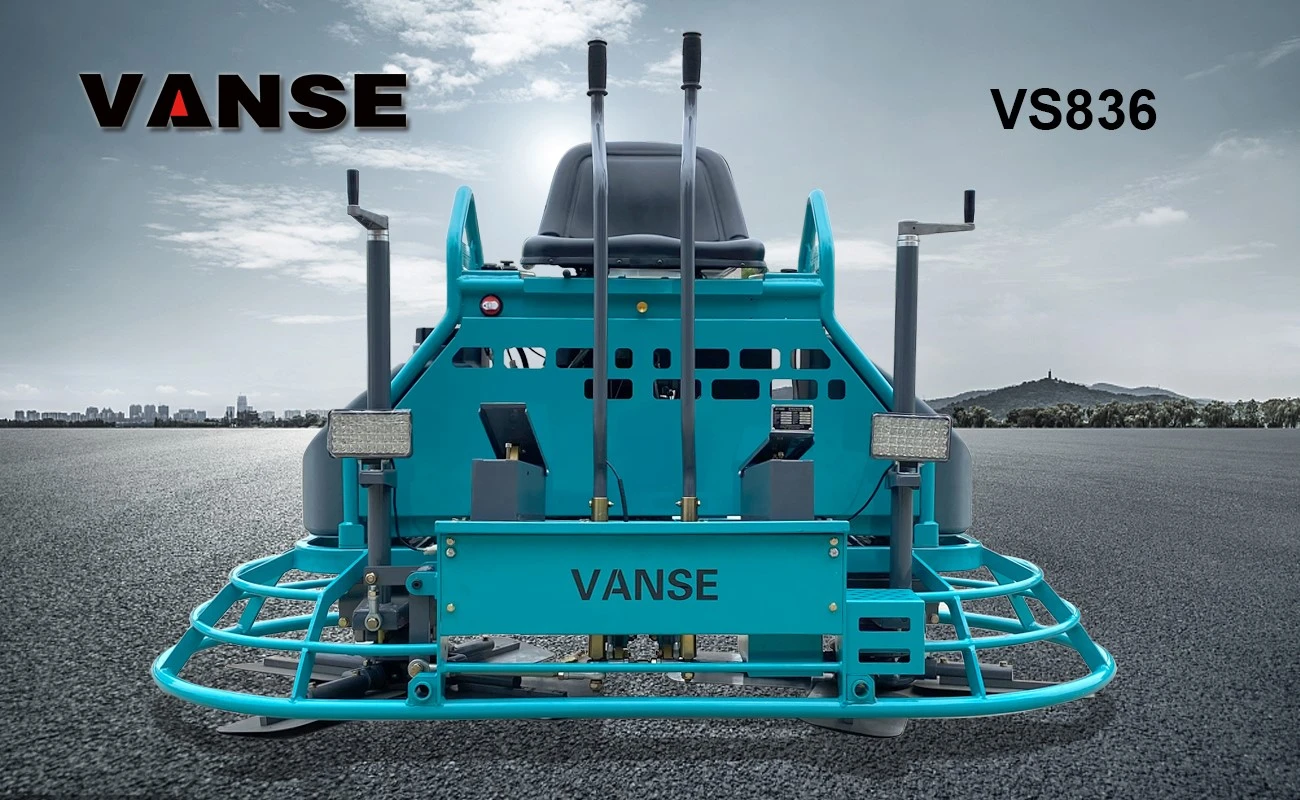
Concrete trowels are mainly composed of the following parts:
1. Power unit
– This is the power source of the trowel. There are two common types: electric and fuel-powered. Electric trowels are powered by electric motors. Their advantages are quiet operation, no pollution, and easy operation. They only need to be connected to the power supply. For example, the power of electric trowels used in small indoor construction sites is generally around 1-2 kilowatts. Fuel-powered trowels are powered by gasoline or diesel engines. This power unit is powerful and suitable for large outdoor concrete construction sites, especially when there is no power supply. Its engine power can reach 3-5 kilowatts, which can meet the needs of large-scale, high-intensity troweling operations.
2. Transmission components
– Mainly include belts, chains and gears. The function of the transmission components is to transmit the power generated by the power unit to the trowel working parts. For example, the belt drive is relatively stable and can effectively reduce vibration. It is widely used in some trowel machines with high precision requirements; chain drive has high transmission efficiency, can withstand large loads, and is suitable for trowel machines with high power; gear drive can accurately control the speed ratio, so that the trowel working parts can obtain a stable speed.
3. Trouble working parts (trowel disc and trowel blade)
– The trowel disc is the part that directly contacts the concrete surface. It is generally a round metal disc, and its material requires high strength and wear resistance. The trowel blade is installed on the trowel disc, which is usually a blade made of wear-resistant alloy steel or special plastic. The number and shape of the trowel blades will vary depending on the model and purpose of the trowel machine. For example, in the rough trowel stage, thicker and larger angle trowel blades are used to quickly level the concrete surface; in the fine trowel stage, thinner and smaller angle trowel blades are used to make the concrete surface smoother.
4. Operating handle and control device
– The operating handle is convenient for the operator to hold and control the movement direction of the trowel machine. Its design conforms to the principles of ergonomics, allowing the operator to operate comfortably for a long time. The control device is usually installed near the operating handle, including the start and stop buttons, and the speed adjustment knob. The operator can easily turn on or off the trowel through the control device, and adjust the working speed of the trowel according to the state of the concrete and the construction requirements.
5. Body and chassis
– The body is the main frame of the entire trowel, which supports and connects other parts. It is usually made of solid metal materials such as steel or aluminum alloy to ensure the overall stability of the trowel. The chassis is located at the bottom of the trowel and is used to install the trowel working parts and power devices, etc. The design of the chassis also takes into account the balance and stability of the machine to prevent the trowel from shaking or tipping over during operation.
Thanks to All the Friends Who Support and Trust Shandong Vanse Machinery Technology Co., Ltd.
If you want to know more about Shandong Vanse Machinery Technology Co., Ltd. or have any questions, please feel free to contact us:
Our Factory
Shandong Vanse Machinery Technology Co., Ltd.








Share this article

About the Author: Shandong Vanse Machinery Technology Co., Ltd.
Shandong Vanse Machinery Technology Co., Ltd. is a high-tech manufacturer specializing in concrete construction machinery, including laser screeds and related equipment. The company integrates R&D, production, and global sales, with products exported to over 60 countries and widely used in infrastructure projects worldwide.
Previous Post
Next Post
Related Articles
You Might Also Like
During concrete pavement construction, what is the effect of slump on pavement strength?
🎈Changes in water-cement ratio: Slump mainly affects pavement strength by affecting the water-cement ratio of concrete. Generally speaking, the larger the slump, the more water is used in concrete. According to the theory of concrete strength, under the condition of certain cement type and dosage, the larger the water-cement ratio, the lower the strength of concrete after hardening. This is because excessive water will form more pores and channels during the hardening process of concrete, and the pores left after the evaporation of water will reduce the density of concrete, thereby reducing the strength of concrete. For example, when the slump increases by 20-30mm from the appropriate value, the water-cement ratio may increase by 0.05-0.1, and the 28-day compressive strength of the pavement may decrease by 10%-20%. 🎈Cement slurry distribution: The appropriate slump can make the cement slurry evenly distributed in the concrete, wrapped on the surface of the aggregate, play a good bonding role, make the internal structure of the concrete dense, and thus ensure the strength of the pavement. If the slump is too small, the concrete is too dry and hard, and the cement paste is difficult to evenly wrap the aggregate, which will lead to more uncemented aggregate particles in the concrete, forming a weak link and reducing the overall strength of the road surface. On the contrary, if the slump is too large, the cement paste will sink due to its own weight, resulting in uneven distribution inside the concrete, resulting in relatively less cement paste in the upper part of the concrete and lower strength, while the lower part may be segregated due to excessive cement paste, which also affects the strength of the road surface. 🎈Aggregate interface bonding: The interfacial bonding strength between aggregate and cement paste in concrete is crucial to the overall strength of concrete. When the slump is appropriate, the cement paste can fully contact and bond well with the aggregate surface. When the slump is not appropriate, such as too large, the cement paste layer around the aggregate will be too thick. During the hardening process of concrete, due to the large shrinkage of the cement paste, micro cracks are easily generated at the interface between the aggregate and the cement paste, weakening the interfacial bonding strength, thereby reducing the strength of the road surface; and if the slump is too small, the cement paste cannot wet the aggregate surface well, which will also lead to poor interfacial bonding and affect the strength of the road surface. In concrete pavement construction, the slump should be strictly controlled, and concrete with appropriate slump should be selected according to construction conditions and design requirements to ensure that the pavement strength meets the design standards.Manual leveling VS laser leveling—Which is better for large concrete floors?
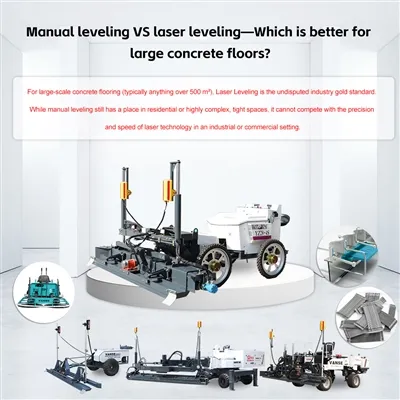
For large-scale concrete flooring (typically anything over 500 m²), Laser Leveling is the undisputed industry gold standard. While manual leveling still has a place in residential or highly complex, tight spaces, it cannot compete with the precision and speed of laser technology in an industrial or commercial setting. Here is a detailed breakdown of how they compare across critical performance metrics: Objective: To prevent problems before they occur and promptly identify potential issues through daily observation. Feature Manual Leveling (Traditional) Laser Leveling (Automated) Accuracy (FF / FL) Low to Moderate (FF 20-35) High to Ultra-High (FF 50-100+) Daily Output ~300–500 ㎡ 1,500–3,000+ ㎡ Labor Intensity Extremely high (8-12 people) Moderate (3-5 people) Joint Frequency Many construction joints (every 4-6m) Fewer joints (large pour strips) Consistency Highly dependent on worker fatigue Machine-consistent precision Laser Levelings receive a signal from a stationary transmitter 300 times per minute. This real-time hydraulic adjustment ensures the floor is leveled to within millimeters. Manual Downside: Humans using straightedges naturally create "waves" as they get tired, leading to poor FF (Flatness) scores. In large floors, joints are the "weakest link"-they are where cracks start and forklift tires wear out. Laser: Allows for large-area pours (e.g., 2,000 ㎡ in one go), significantly reducing the number of construction joints. Manual: Requires "form-to-form" pouring in narrow strips, creating a grid of joints that increases maintenance costs. Laser Levelings use high-frequency vibration (usually 3,000–4,000 rpm) integrated into the leveling head. This ensures the concrete is uniformly compacted from bottom to top. Manual tamping often leaves air pockets or inconsistent density, especially in thicker slabs. Despite the superiority of lasers, manual methods are preferred in these specific scenarios: Highly Congested Areas: Floors with hundreds of vertical penetrations (pipes, columns, or drains) where a machine cannot maneuver. Sloped Drainage: While 3D laser systems can handle slopes, simple manual Leveling is often more cost-effective for small wash-down areas with complex multi-directional falls. Low-Budget/Small Scale: For a small garage or a space under 200 ㎡, the mobilization cost of a laser Leveling is rarely justifiable. While a laser Leveling has a higher daily rental/operation cost, it is usually cheaper per square meter on large projects because: Reduced Labor: You need fewer skilled finishers. Faster Schedule: You can finish a 10,000 ㎡ warehouse in 4-5 days instead of 20 days. Lower Material Waste: Precision leveling prevents "over-pouring" (lowering concrete waste by 3-5%). For a warehouse, hangar, or factory floor, Laser Leveling is mandatory. Manual leveling in these environments is a liability that leads to poor floor performance and high long-term maintenance costs. Would you like me to help you calculate the estimated "Time vs. Cost" savings for a specific floor area you are planning? Contact us NOW Note: The parameters provided in this document are for reference only and are not mandatory. Due to differences in technical characteristics between different brands and models of laser levelers, please consult the manufacturer for a suitable solution before actual operation. This reference document assumes no responsibility for any issues arising from failure to follow the manufacturer's instructions.Pay attention to six major items in the use of laser leveling machine, which can greatly improve the smoothness of construction.
With the continuous development and progress of the construction floor industry, the concrete laser leveling machine has become an indispensable mechanical equipment in modern buildings. Weiyu mechanical concrete laser leveling machine is used to make super-flat and level ground an advanced machine. In the past few years since it came out, the sales of Shandong Weiyu concrete laser leveling machine have been increasing. And with the gradual recovery of the economy, the prospect of the entire laser leveling machine industry in the future is generally optimistic. Modern large-scale storage and logistics, squares, municipal roads, parking lots and other construction fields directly stimulate the demand for concrete laser leveling machines. The market demand for excitatory paving and leveling machine equipment is very large. During the use of the concrete leveling machine, pay attention to the following items so that the machine can serve you better: 1. Due to the high efficiency of construction, the cutting seams in the later stage must keep up. Generally, each laser paving and leveling machine is equipped with 7-8 cutting seams to meet the requirements. 2. The speed of the laser leveling machine should not be too fast during the leveling operation; 3. Initial leveling should be carried out before concrete leveling, and the concrete after initial leveling should be higher than the established elevation. 4. In the early stage, plastic film should be used for maintenance, and non-woven fabric should be covered after cutting. 5. Pay attention to avoid obstacles when installing the laser transmitter; 6. During the construction process, due to the lateral pressure of the concrete, the steel mesh is easy to displace horizontally. Therefore, an isolation bench is placed directly on the adjacent steel mesh, and the horizontal movement of the steel mesh is effectively controlled, and the bench can be used for turnover.