Technical Knowledge
What are the tips for using a concrete power trowel?
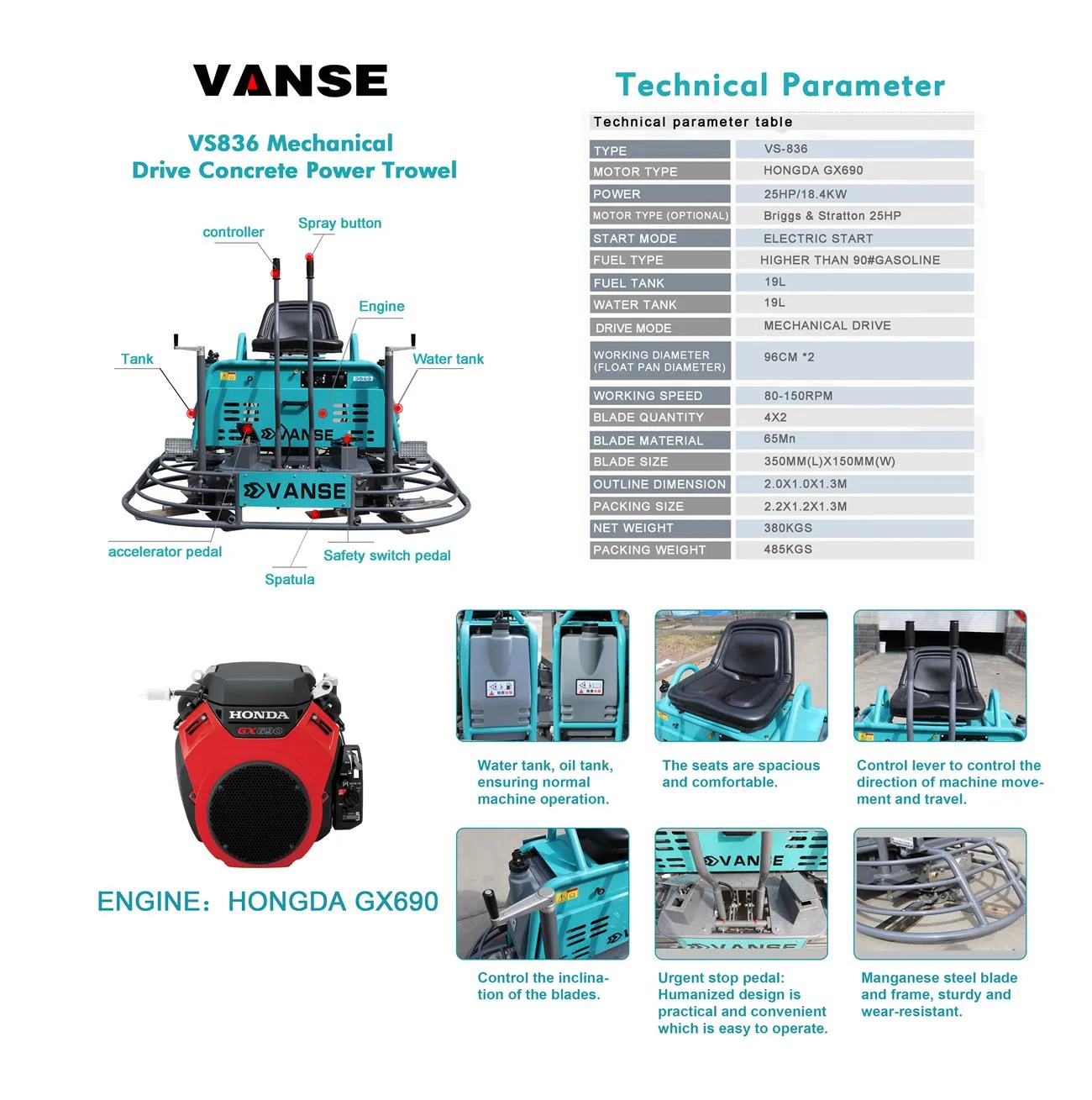
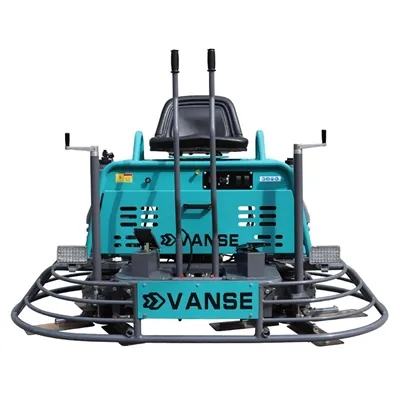
Concrete can be said to be one of the most commonly used materials in construction. In order to make the ground smoother and more beautiful, many people also use a trowel, so you must understand some skills and matters before using it. The editor below will introduce to you the tips for using a concrete trowel.
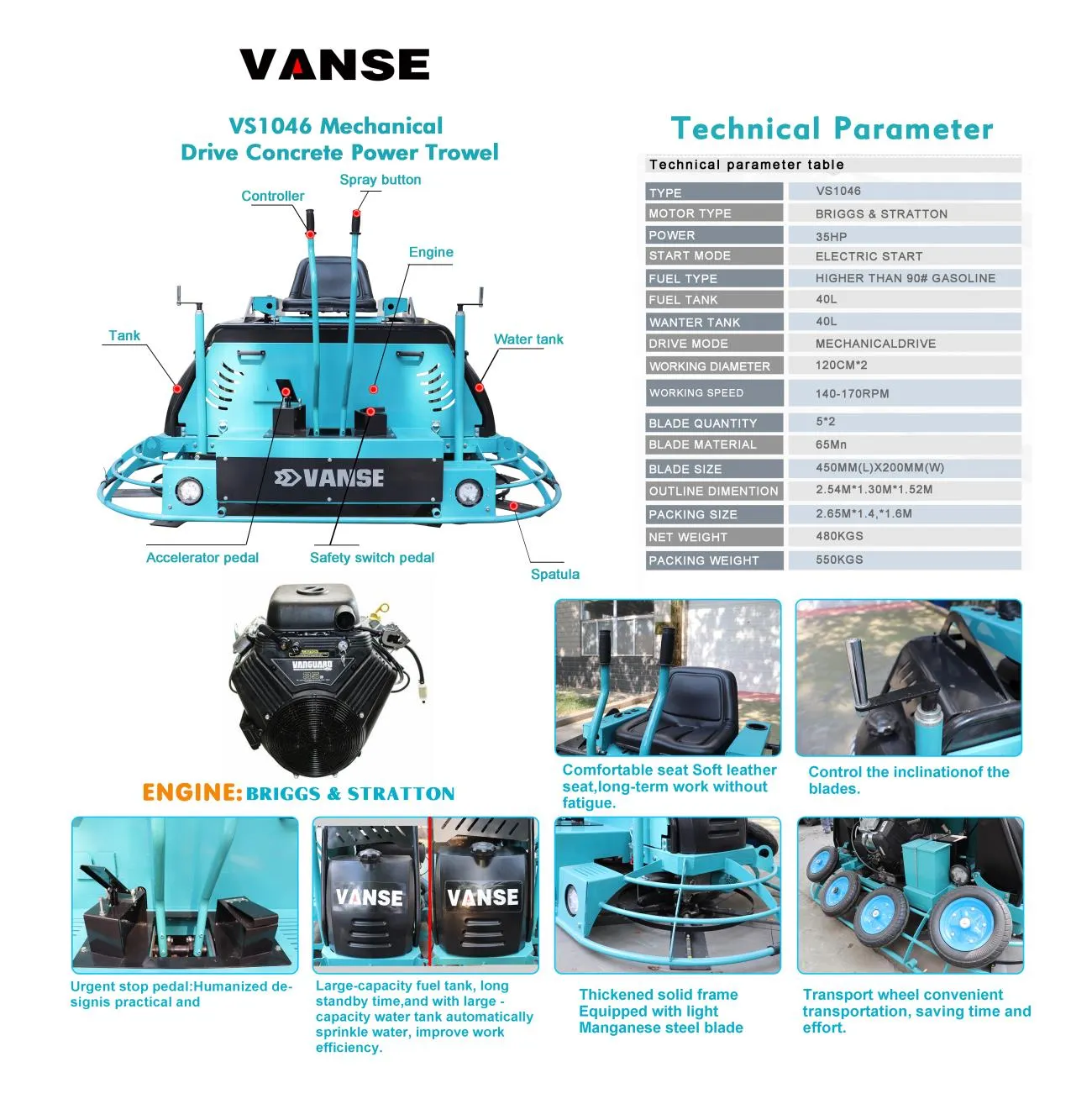
What are the tips for using concrete trowel
The troweling machine can only be started by holding it steady by hand. In order to balance the machine body, adjust the screw. When starting work, be sure to hold it steady. If you are operating on the floor, adjust the direction to prevent the machine from losing control. Remember to first Grind coarsely, then finely grind later.
When selecting, you must choose a suitable blade material based on the construction conditions. If it is too soft, it will deform during use, which may cause unevenness. You must choose a blade with high rigidity and strength.
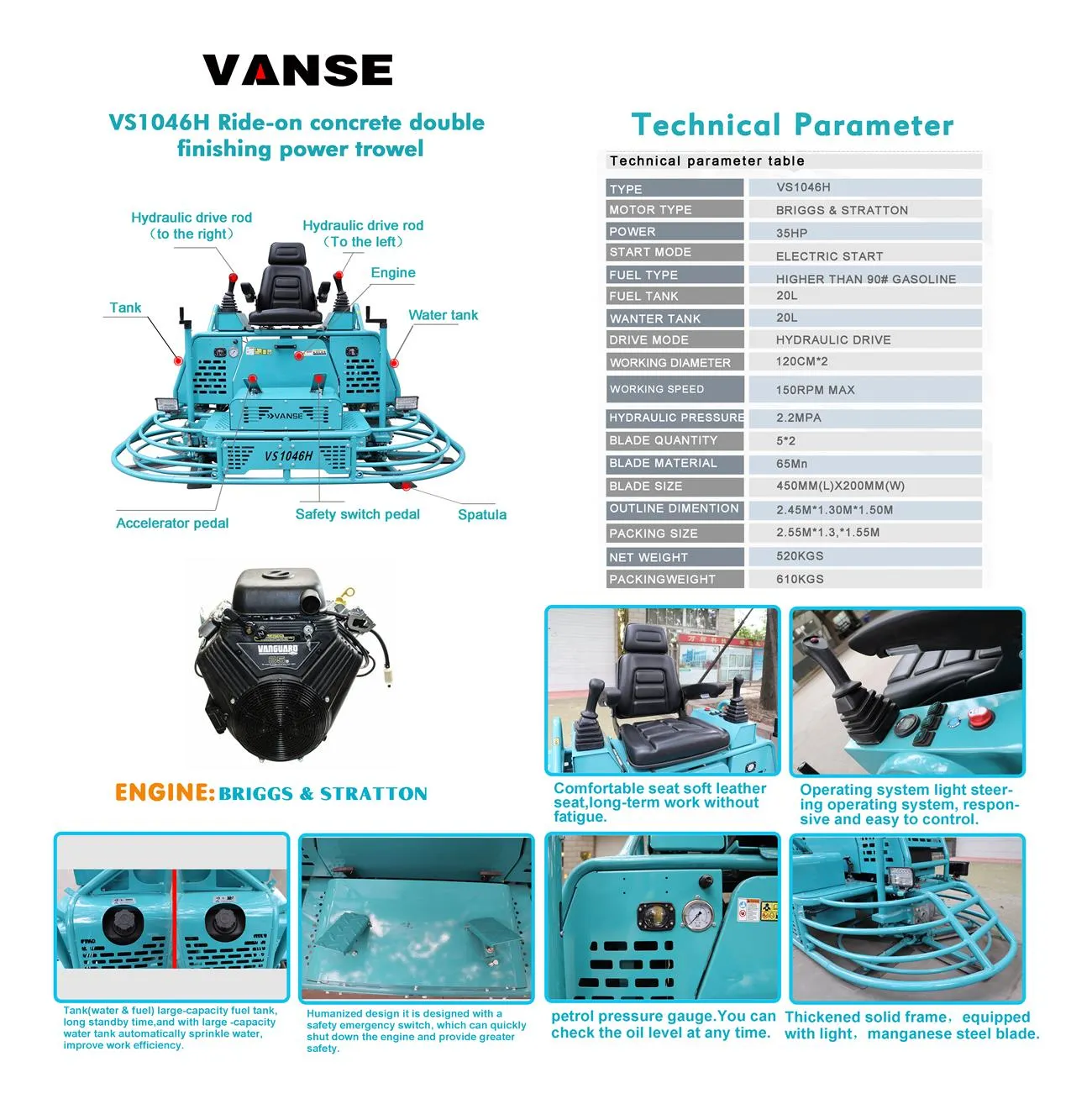
What are the precautions for operating the trowel machine?
1. Before use, you need to check the switch of the motor, check whether the cables and wiring are normal and comply with regulations, and check whether a leakage protector is installed.
2. Before use, you need to check whether there are any debris on the wiper plate to prevent the whole machine from jumping during use.
3. Start the trial operation after the power is turned on. The blades are generally in a clockwise direction and must not be reversed.
4. Operators must remember to wear insulating shoes and gloves. Assistant personnel must also wear these things to avoid damage to the insulation layer and electric shock accidents.
5. When a fault occurs, the power must be cut off before maintenance can be carried out.
6. The trowel should be placed in a dry place, free of corrosive gases and dirt, and its handle should also be placed in the specified position. When moving it, no rough handling can be carried out.
Summary: This is the introduction to the tips for using concrete trowels. When choosing, you must first look at the material of the blade. If it is too soft, it will deform during use, which may cause unevenness. phenomenon, it is appropriate to choose a material with high rigidity and strength. If you want to know more related knowledge, you can follow us for consultation.
Thanks to All the Friends Who Support and Trust Shandong Vanse Machinery Technology Co., Ltd.
If you want to know more about Shandong Vanse Machinery Technology Co., Ltd. or have any questions, please feel free to contact us:
Our Factory
Shandong Vanse Machinery Technology Co., Ltd.








Share this article

About the Author: Shandong Vanse Machinery Technology Co., Ltd.
Shandong Vanse Machinery Technology Co., Ltd. is a high-tech manufacturer specializing in concrete construction machinery, including laser screeds and related equipment. The company integrates R&D, production, and global sales, with products exported to over 60 countries and widely used in infrastructure projects worldwide.
Previous Post
Next Post
Related Articles
You Might Also Like
How to evaluate the operator’s understanding and mastery of the laser leveling machine operating procedures?
The evaluation of the operator's understanding and mastery of the laser leveling machine operating procedures can be carried out through the following steps: – Through written tests or online assessments, the operator's theoretical knowledge of the laser leveling machine is evaluated, including equipment structure, working principle, operating steps, safety procedures, etc. – Observe the operator's performance in actual construction and evaluate whether he can skillfully start, adjust, operate and troubleshoot the equipment. – Let the operator operate in a simulated environment to evaluate his proficiency in equipment control and his ability to respond to emergencies. – During the actual operation, experienced supervisors will supervise the operator on-site and provide immediate feedback and guidance. – By setting simulated faults, the operator's ability to diagnose and handle equipment faults is evaluated. – Check whether the operator strictly complies with the safety operating procedures, including wearing personal protective equipment, and complying with the inspection and maintenance procedures before and after operation. – Evaluate the operator's operating effect by checking the quality indicators such as ground flatness and levelness after construction. – Regularly provide continuous education and training to operators to ensure that they have a full understanding of the latest operating procedures and equipment updates. – Develop a set of detailed assessment standards, including multiple dimensions such as operating skills, theoretical knowledge, and safety awareness, to comprehensively evaluate the operator's capabilities. – Through actual operation assessment, let the operator independently complete a series of operating tasks under supervision to evaluate their ability to operate independently. Through the above methods, the operator's understanding and mastery of the laser leveling machine operating procedures can be comprehensively evaluated to ensure construction safety and construction quality.Comparison of Concrete Floor Construction Equipment Standards in Different Countries
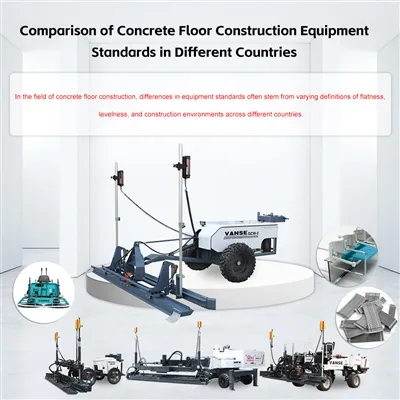
In the field of concrete floor construction, differences in equipment standards often stem from varying definitions of flatness, levelness, and construction environments across different countries. Currently, there are three main standard systems globally: the United States (ACI/ASTM), Europe (EN/TR34), and China (GB/JGJ). The following is a detailed comparative analysis of construction equipment and technical standards: The selection of construction equipment directly depends on how the country evaluates the quality of the flooring. Features American Standards (ACI/ASTM) European Standard (EN/TR34) Chinese Standards (GB/JGJ) Main Measurement System F-Number (FF/FL) FM/DM (TR34) Straightedge Method (2m/3m) Evaluation Dimensions Emphasizes flatness (FF) and levelness (FL) for random traffic areas. Distinguishes between free movement (FM) and defined movement (DM) Measuring surface flatness and perpendicularity deviations Trends in Mainstream Equipment Laser Leveling, digital measuring instrument High-precision laser leveling and grinding correction equipment Laser leveling machine, traditional Leveling, straightedge US Standards: ACI 302.1R strongly promotes large-area automated paving. Due to high labor costs and emphasis on the FF / FL index in the US, their equipment is typically equipped with high-frequency vibration and laser feedback systems to correct flatness in real time.European Standards: Especially in the UK and Germany, for very narrow aisle (VNA) warehouses, the equipment focuses more on lateral tilt control. The TR34 standard has very high requirements for "directional travel," so European floor finishing equipment often combines this with a "grinding and thinning" process. Chinese Standards: Early practices favored traditional construction methods, but with the popularization of standards such as the "Code for Construction and Quality Acceptance of Floor Engineering," large-area laser Leveling have become mainstream. However, the requirements for automated data analysis in equipment are slightly lower than in Europe and the US. United States (CPAA/ASCC): Emphasizes dry grinding and dust collection (OSHA silica dust standards). Equipment often features high power and multi-planetary grinding heads.Europe (CE Standards): Mandatory requirement for equipment to comply with CE safety certification, with a strong emphasis on low noise and low energy consumption during operation. China: Emphasizes efficiency and cost-effectiveness. Currently, domestically produced polishing machines have reached international standards in terms of weight and pressure adjustment, but there is still a gap compared to top European and American brands in terms of operational comfort (ergonomics) and intelligent control. This is the most significant "hard barrier" when using equipment across borders: USA: Commonly 110V/240V, 60Hz. Europe/China: 220V/380V, 50Hz. This means that the specifications for frequency converters and motors must be different. Europe (CE): Mandates emergency stop switches, protective guards, and strict electromagnetic compatibility (EMC) testing. USA (UL/OSHA): Places greater emphasis on fire risk prevention and operator dust protection. American System: The core principle is "data-driven." Equipment often requires the use of laser measuring instruments (such as Dipstick or FloorPro) to provide real-time FF values. European System: The core principle is "application-oriented." Floor surfaces are classified into FM (Free Movement) and DM (Defined Movement), and equipment requires more complex track or laser guidance systems during construction. Chinese System: The core principle is "acceptance-based." Although it is rapidly aligning with European and American standards, there is still greater diversity in the standardized interfaces of construction equipment (such as grinding head fixing methods). If you are planning to procure construction equipment internationally or need to develop construction plans based on specific national standards, I can assist you with: A detailed explanation of the calculation formula for the FF / FL value and equipment requirements; Providing construction process flowcharts for specific countries (such as German DIN or British TR34 standards). Which part would you like to learn more about? Contact us NOW Note: The parameters provided in this document are for reference only and are not mandatory. Due to differences in technical characteristics between different brands and models of laser levelers, please consult the manufacturer for a suitable solution before actual operation. This reference document assumes no responsibility for any issues arising from failure to follow the manufacturer's instructions.How to judge whether the performance of the concrete power trowel is stable?
– Power output stability: During the operation of the trowel, observe whether its power output is stable. For electric trowels, you can monitor by connecting power detection equipment (such as a power meter). If the power fluctuation range is small under normal working load (for example, the fluctuation range is within ±5% of the rated power), it means that the performance of the motor is relatively stable. For example, a trowel with a rated power of 3kW has an actual working power of 2.85-3.15kW, which is relatively stable. – Heating condition: After the motor (or engine) has been working continuously for a period of time (such as 1-2 hours), check its heating level. Touch the motor housing with your hand (be careful to prevent burns). If it is just warm, it means that the heat dissipation is good and the performance is stable. If it feels very hot, there may be a heat dissipation problem or an internal motor fault, which will affect the performance stability. Generally speaking, the motor housing temperature does not exceed 70-80 degrees Celsius, which is the normal range. – Inspection of transmission components: Check the transmission belt, chain or transmission shaft of the trowel. If it is a belt drive, observe whether the belt slips during operation. A high-quality trowel belt has good friction and toughness, and will not show obvious relaxation or slippage during normal operation. For chain drive, check whether the chain can smoothly transmit power from the motor to the trowel disc, the chain tension is moderate, and there is no abnormal jump or chain derailment. The transmission shaft should be checked for firm connection and looseness or abnormal vibration during rotation. – Rotation stability: Observe the rotation state of the trowel disc during operation. Under normal circumstances, the trowel disc should rotate at a uniform speed without obvious shaking or eccentricity. After the trowel is started, you can stand a little further away and observe the edge of the trowel disc to see if there is any swing up, down, left, or right. If the rotation accuracy of the trowel disc is high and the deviation is within a small range (for example, the edge of the trowel disc does not exceed 2-3 mm), it means that it has good stability and can ensure the uniformity of the trowel effect. – Firmness of installation of the trowel disc: Check the installation of the trowel disc on the trowel disc. The trowel disc should be installed tightly and will not loosen or fall off during operation. You can initially check the firmness of its installation by gently shaking the trowel disc by hand. In addition, after the trowel machine has been running for a period of time, check again whether the trowel disc has shifted to ensure that it can stably participate in the trowel work. – Test the trowel effect multiple times: Perform trowel tests on different ground areas (such as areas with the same area, similar concrete materials and casting conditions). If the indicators such as ground flatness and glossiness after each troweling are close, it means that the performance of the trowel machine is stable. For example, if the gloss meter is used to measure the gloss of the floor after troweling, and the difference of multiple measurement results is within a small range (such as the gloss difference does not exceed 5-10 gloss units), it means that the trowel machine can output performance stably and achieve consistent troweling effect. – Vibration amplitude during operation: During the operation of the trowel machine, observe the vibration of the machine body. You can put your hand on the outer shell of the machine body to feel the vibration. If the vibration is slight, it means that its structural design is reasonable and the parts are closely matched. Generally speaking, when a high-performance and stable trowel machine is working, the vibration amplitude of the machine body is small, and the vertical vibration displacement does not exceed 1-2 mm. – Structural strength of the machine body: Check the frame structure of the trowel machine. The machine body of a high-quality trowel machine is made of solid metal materials (such as high-strength aluminum alloy or steel), and the frame is firmly connected without loose parts. When subjected to certain external forces (such as collisions during transportation or reaction forces during work), the machine body will not be deformed or damaged, thus ensuring the stability of its performance. – Stability of handles and control components: Check whether the handle design of the trowel is reasonable, comfortable to hold, and will not loosen or shake during operation. The control buttons (such as start/stop buttons, speed adjustment buttons, etc.) are sensitive to operation and reasonably located, which is convenient for operators to operate during work. If the handles and control components can work stably during operation, without misoperation or inconvenience in operation, it also reflects the stability of the trowel performance from the side. – Flexibility and stability of movement and steering: For walk-behind trowels, test their movement and steering performance. The trowel should be able to move flexibly on the ground, turn smoothly, and not get stuck or lose control. For example, when troweling corners or edge areas, the trowel can stably change direction and perform fine troweling operations, which indicates that its performance is stable and reliable during operation.