Technical Knowledge
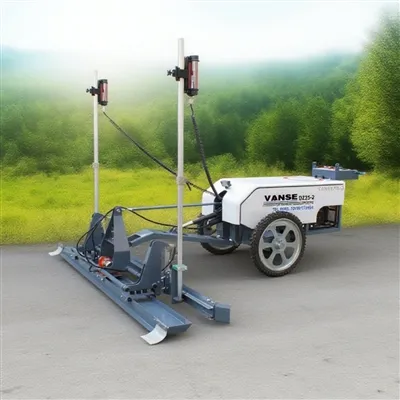
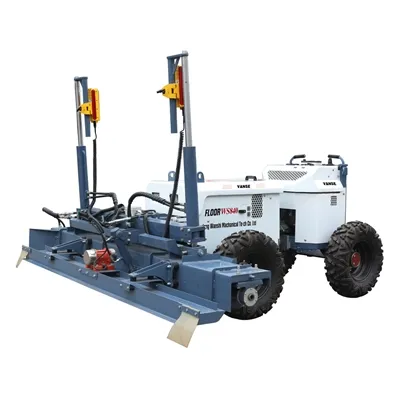
Vanse mechanical laser leveling machine serves overseas construction sites.
Laser leveling machines are widely used in modern industrial plants, large shopping places, warehouses and other large-area concrete ground construction. Its maintenance can greatly improve the life of the machine and save costs.
Laser leveling machine maintenance method/step
Fuselage cleaning: When cleaning the surface of the machine, first check whether there is any depression or leakage in the fuel tank, oil pipes, joints, etc., and check whether the fixing screws of the fuel tank bracket are tightened before cleaning.
Prevent rust: In the daily maintenance of the laser leveling machine, butter or anti-rust oil should be used to prevent the rust of the exposed parts and mechanical parts, and the gears, sprockets and other parts should be lubricated every half a month.
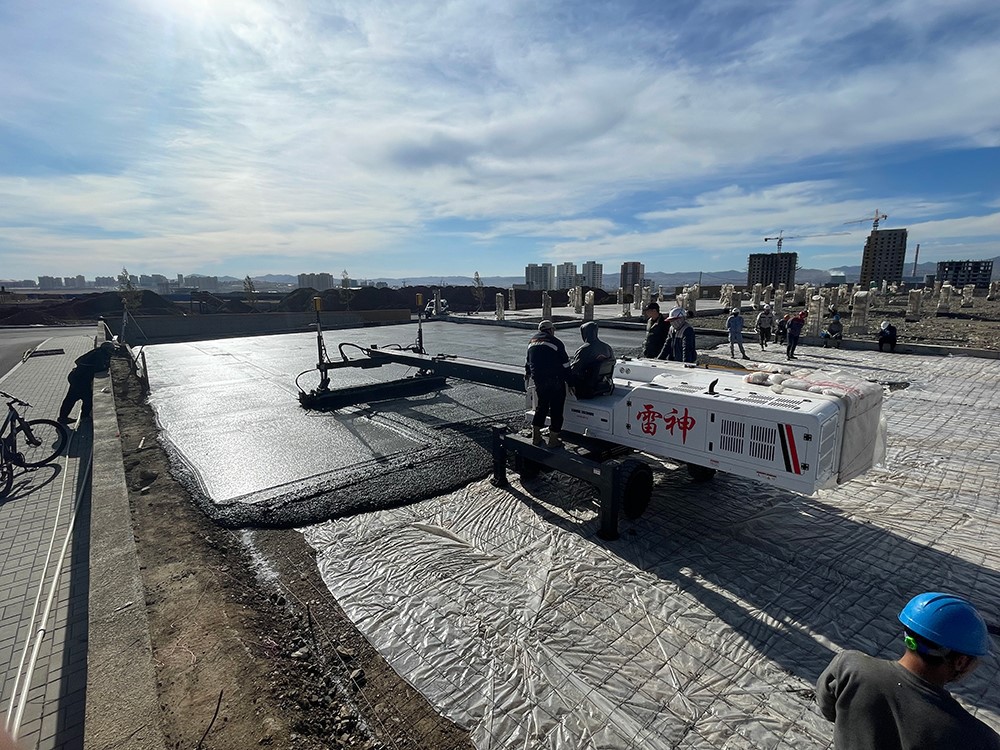
Leveling: The quality of the leveling and the construction quality also have a necessary relationship. Some buildings have a lot of dust or other sundries, which will cause the leveling machine to level the concrete and become dirty, which will lead to unqualified construction. Therefore, it is usually necessary to Remember to tell Xun Phi to clean the leveling in time.
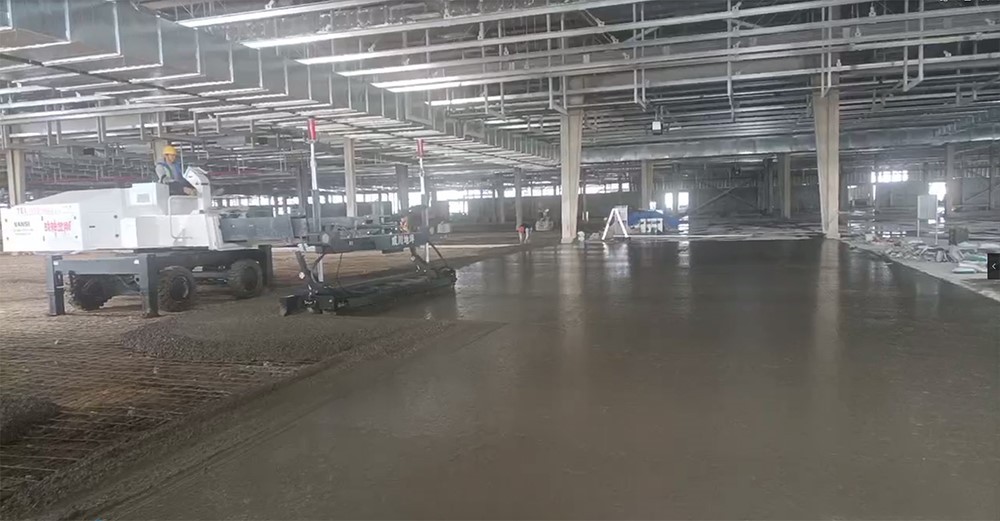
Oil replacement: The engine oil and hydraulic oil in the machine need to be replaced after a period of use. Most people think that it is enough to drain the oil in the oil tank and fill up with new hydraulic oil. But at this time, there will be a lot of old grease trace hydraulic oil in the hydraulic oil pipe. When the equipment is in use, the new oil and the old oil will be mixed together, which will shorten the service life of the new oil. The correct oil change procedure is to drain the hydraulic oil in the hydraulic oil tank first, clean the oil tank and then add new hydraulic oil. Then remove the circuit main pipe, start the engine and run it at a low speed to make the oil pump work, operate each mechanism separately, and use new hydraulic oil to discharge the old oil in the circuit one by one until new oil flows out of the oil return main pipe. Finally, connect the oil return main pipe to the fuel tank, and add new hydraulic oil to the fuel tank to the specified position.
Precautions
The usual maintenance and maintenance of machinery is important, but it is more important to choose a good machine equipment. VANSE laser leveling machine is your best choice!
Thanks to All the Friends Who Support and Trust Shandong Vanse Machinery Technology Co., Ltd.
If you want to know more about Shandong Vanse Machinery Technology Co., Ltd. or have any questions, please feel free to contact us:
Our Factory
Shandong Vanse Machinery Technology Co., Ltd.








Share this article

About the Author: Shandong Vanse Machinery Technology Co., Ltd.
Shandong Vanse Machinery Technology Co., Ltd. is a high-tech manufacturer specializing in concrete construction machinery, including laser screeds and related equipment. The company integrates R&D, production, and global sales, with products exported to over 60 countries and widely used in infrastructure projects worldwide.
Previous Post
Next Post
Related Articles
You Might Also Like
How do the concrete laser leveling machines improve the flatness?
The ability of the concrete laser leveler to improve flatness is its core advantage. It fundamentally changes the traditional way of concrete leveling by combining modern laser technology, hydraulic systems and precision mechanical control. To improve the smoothness of construction,Equipment principles, pre-construction preparation, construction process control and post-construction maintenanceThe following is a detailed explanation of the key measures and principles: Erect alaser transmitter, it will produce a very thin, constantly rotating laser plane (360°). This laser plane is the entire field. Absolute horizontal reference, its accuracy is very high (usually up to ±1mm/10m). On the leveling machineLaser receiver, This laser signal will be captured in real time. The receiver transmits the signal to the leveler in real time.Vehicle control system (computer). The control system compares the actual height received with the preset design elevation and calculates the height difference within milliseconds. The control system immediately passes the calculated dropHydraulic valvesdrive. Hydraulic cylinder, to precisely adjust the height of the scraper. This process is Continuous automatic, the machine is always leveling dynamically and in real time, replacing reliance on human judgment and manual operation and eliminating human errors. Foundation treatment: The compaction and smoothness of the base layer (usually crushed stone or stabilized soil) are crucial. While a laser machine can compensate for minor undulations in the base layer, large undulations can significantly impact the concrete usage and overall quality. The base layer should be evenly compacted with no noticeable bumps or indentations. Laser transmitter installation: The laser transmitter must be firmly installed in a place with minimal interference from construction. Use a precise level to ensure it is absolutely level. Input and verification of elevation: Accurately input the design elevation into the control system. Before construction, the site should be tested at multiple points (especially corners and center) withLaser receiving poleVerify the accuracy of the laser signal to ensure that the entire construction surface is within the effective laser scanning range. Formwork (formwork) control: The top surface elevation and rigidity of the template must meet the requirements. Large errors in template elevation or deformation during pouring will directly affect the operating benchmark of the laser leveling machine. Slump: This is a key metric. The slump of each truckload of concrete must be uniform. Excessive slump variation can lead to varying degrees of aggregate segregation after paving, with some areas being too thin and others too dry. Laser leveling cannot effectively treat this uniformly, resulting in poor flatness after hardening. The ideal slump should be determined based on the floor thickness and reinforcement. Generally, a slump of 140-160mm is recommended for pumped concrete. Adequate concrete supply: Ensure the continuous supply of concrete to avoid the situation where the first poured concrete has initially set due to long waiting time, resulting in cold joints between the concrete and the later poured concrete, thus affecting the overall flatness. Paving thickness: The initial paving concrete material should be 2-3 cm higher than the design elevation to leave operating margin for the leveling machine. Routing method: The operator should be experienced and control the leveling machine to move forward smoothly and at a constant speed, avoiding sudden stops and sudden movements. The paths of adjacent milling discs (scrapers) should overlap to avoid missing parts. Bleeding water treatment: If the concrete bleeds severely, the surface water should be scraped off in time before leveling, otherwise a weak layer will be formed on the surface, affecting the final surface strength and flatness. Timely grinding (milling): For floors with ultra-high flatness requirements (such as ultra-flat floors), after the laser leveling machine completes the operation and the concrete reaches the initial setting (people step on it and there is a footprint about 3-5mm deep), it will be used. Double disc driving trowel. Perform overall grinding (milling). This step can eliminate the tiny marks left by the laser leveling machine scraper and the unevenness caused by individual aggregates. It is a key step in achieving extremely high flatness. Slit: Expansion joints must be cut in time within the specified time (when the concrete strength reaches 25-30% of the design strength) to avoid irregular cracking that damages the flatness. Maintenance: Use plastic film to fully cover or spray curing agent to provide sufficient moisturizing maintenance to prevent shrinkage cracks and peeling due to rapid water loss on the surface, there by protecting the flatness that has been achieved. Characteristic Concrete laser leveling machine Traditional manual leveling Benchmark Fixed absolute laser plane (precise) Moving channel steel, rulers, or workers' sight lines (prone to error accumulation) Control method Computer real-time calculation, automatic hydraulic adjustment (intelligent, continuous) Human judgment based on experience and manual operation (subjective, intermittent) Flatness Very high, can reach±2mm within 2 meters Even higher Low, usually only reach4-5mm/2m Efficiency Extremely high, 10-20 times that of manual labor Low, depends on the number and skill of workers Artificial Dependency Low, 1 operator and a few assistants High, requires a large number of skilled workers In short, to improve the flatness of the concrete laser leveling machine, it must be recognized that it is a systematic project: Relying on its high-tech "brain" (control system) and "eyes" (laser system) is a prerequisite, but the final effect also depends on a qualified "foundation" (base and formwork), uniform and stable "ingredients" (concrete), standardized "cooking techniques" (operating technology) and proper "post-processing" (polishing and maintenance).Only when every link is done well can the highest standard of flat floor be produced.The future application prospects and development trends of concrete laser levelings include considerations of new materials, new processes, new technologies, etc. And prospects for application prospects.
The application prospects and development trends of concrete laser leveling machines in the future are very broad. The following are some considerations and application prospects regarding new materials, new processes, new technologies, etc.: 1. Application of new materials: With the continuous development of science and technology, new concrete materials continue to emerge. For example, new concrete materials such as high-strength concrete, self-healing concrete, and conductive concrete will bring new opportunities and challenges to the application of concrete laser levelings. High-strength concrete has the characteristics of high density, high strength and durability, and can be used in high-rise buildings, bridges and other structures, which puts forward higher requirements for the accuracy and stability of laser leveling machines. Self-healing concrete has the ability to repair itself, which can reduce problems such as concrete cracks and damage to a certain extent. It will also have a positive impact on the construction quality and efficiency of laser leveling machines. Conductive concrete is a concrete material that can conduct electricity. Conductive components can be added to the concrete or carbon fiber reinforced plastics can be used to enhance the conductive properties. The intelligent and automated control of laser leveling machines will bring new application prospects. 2. Application of new technologies: With the continuous development of the construction industry, new concrete construction technologies are also emerging. For example, 3D printing concrete technology is a new concrete construction technology that can use three-dimensional model data to print concrete components with various shapes and structures. This technology will bring new challenges and opportunities to the application of laser leveling machines, and can be combined with 3D printing technology to achieve more efficient, precise and personalized construction. In addition, concrete laser leveling machines can also be combined with other new technologies, such as 3D scanning technology, ultrasonic detection technology, etc., to achieve more efficient, precise and reliable construction. 3. Application of new technologies: With the continuous development of science and technology, new laser technologies are also emerging. For example, new lasers such as ultrafast lasers, solid-state lasers, and fiber lasers have the advantages of higher precision, wider wavelength range, and higher pulse energy, and can provide better, more efficient, and more reliable light sources for concrete laser levelings. . In addition, with the continuous development of artificial intelligence, Internet of Things, cloud computing and other technologies, concrete laser levelings can also combine these new technologies to achieve more intelligent, automated and networked control and management. In summary, the future application prospects and development trends of concrete laser leveling machines are very broad. In the future, with the continuous emergence and application of new materials, new processes, and new technologies, concrete laser levelings will become more efficient, precise, reliable, and intelligent, providing more reliable construction guarantees for the development of the construction industry. . At the same time, it is also necessary to strengthen investment in technology research and development and talent training to improve the overall level and competitiveness of domestic concrete laser leveling machines to meet the needs of future development of the construction industry.How to use concrete curing blankets to protect super flat floors after laser leveling and power trowel
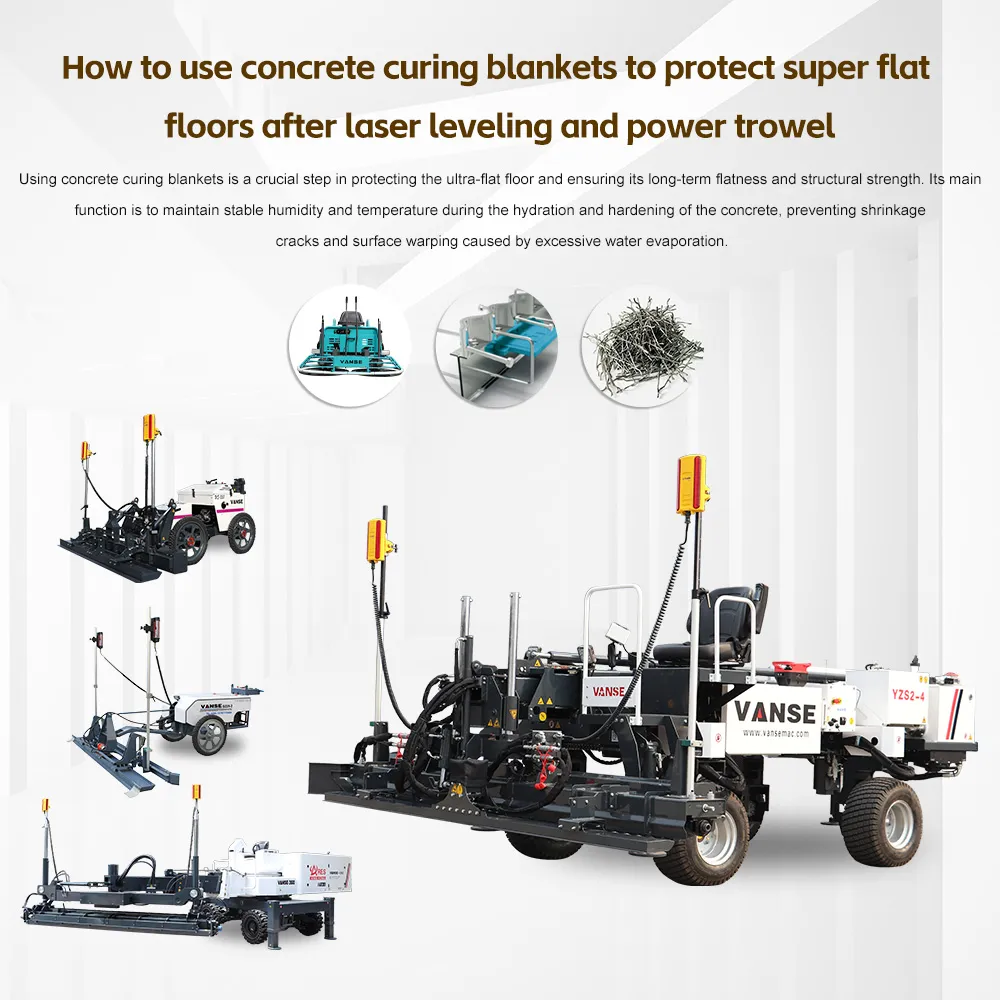
Using concrete curing blankets is a crucial step in protecting the ultra-flat floor and ensuring its long-term flatness and structural strength. Its main function is to maintain stable humidity and temperature during the hydration and hardening of the concrete, preventing shrinkage cracks and surface warping caused by excessive water evaporation. The following is a detailed operation guide based on industry standards and engineering practices. To achieve the best maintenance results, please follow the following steps: Steps Key operation Core purpose and precautions: 1. Timing for laying down After the surface is polished and leveled, proceed with the laying as soon as possible. Ideally, the covering should start within 10 to 15 minutes. Immediate moisturization: The moisture on freshly polished floors evaporates very quickly. Immediate coverage can lock in the surface moisture and prevent plastic shrinkage cracks. Note: If there is water on the floor, it should be carefully drained using a hose to prevent the surface from becoming too soft and being pressed into an indentation. 2. Laying method Complete wetting: Before laying, the contact surface (the gray side) of the ground and the maintenance blanket must be thoroughly sprayed with water to ensure the blanket is fully saturated. Front and back distinction: Lay the blanket with the white reflective side facing up and the gray wet side facing down, ensuring it closely adheres to the concrete. The white side can reflect sunlight and prevent the blanket from overheating. Close contact: Ensure that the blanket is in 100% tight contact with the concrete surface, without any air bubbles or wrinkles. Otherwise, the areas with poor contact will form dry spots. Overlap and fixation: Adjacent blankets need to overlap at least 15-30 centimeters (12 inches) and use sandbags or heavy objects to compact the edges and seams to prevent them from being blown away and ensure sealing. Covering the edges: The edges of the concrete slab and exposed formwork should also be covered with the blanket and kept moist. These areas are most prone to losing moisture. 3. Maintenance period management Continuous Moisture Retention: During the maintenance period, it is necessary to regularly check and re-wet the blanket to ensure it remains in a saturated state. Especially in hot, dry, or windy weather, it may be necessary to spray water multiple times a day. Maintenance Duration: At least 7 consecutive days of maintenance are required. For super smooth floors with high requirements or using high-performance concrete, it is recommended to extend the maintenance period to 14 days for better performance. Avoid Disturbance: During the maintenance period, it is strictly prohibited to walk on the blanket or stack any items on it to avoid damaging the floor. Whether to use the maintenance blanket and how to use it mainly depend on the ambient temperature during the construction process: Environmental conditions Why is a curing blanket needed? Specific approach: Cold weather (< 10°C) The hydration reaction is extremely slow and there is a risk of freezing. Ice crystals can damage the internal structure of the concrete, resulting in loss of strength. Use a thermal insulation blanket (typically a thick blanket filled with insulation material). Cover it immediately after the surface is polished, and keep it covered for 5-7 days. Remove it when the temperature is higher during the day (such as at noon) to prevent "thermal shock". Normal/Hot weather (10°C – 30°C +) The core is to prevent excessive evaporation of water. High temperatures, direct sunlight, and strong winds will quickly remove the water, causing shrinkage cracks. Strictly follow the above "three-step method", with the focus being on thoroughly pre-wetting the blanket and maintaining saturation. Facing the white reflective side upwards can lower the blanket temperature and reduce water evaporation. Strong wind and dry weather Wind is the primary factor that accelerates water evaporation. Even if the temperature is not high, it can easily cause rapid cracking on the surface. The blanket must be immediately covered and the edges must be tightly fixed to prevent wind from entering the bottom of the blanket and forming a "wind tunnel", which accelerates local water loss. Fast: Cover immediately after sanding. Wet: The blanket and the floor must be fully moistened. Tight: Ensure the blanket is tightly attached to the floor and the edges are sealed. Long: At least maintain for 7 days, preferably 14 days. What is the current environmental temperature and weather conditions of your project? Please tell me the specific conditions so that I can help you further confirm if the maintenance plan needs to be adjusted. Contact us NOW Note: The parameters provided in this document are for reference only and are not mandatory. Due to differences in technical characteristics between different brands and models of laser levelers, please consult the manufacturer for a suitable solution before actual operation. This reference document assumes no responsibility for any issues arising from failure to follow the manufacturer's instructions.