Technical Knowledge
What are the safety operating procedures for concrete laser leveling machines?
March 6, 2024

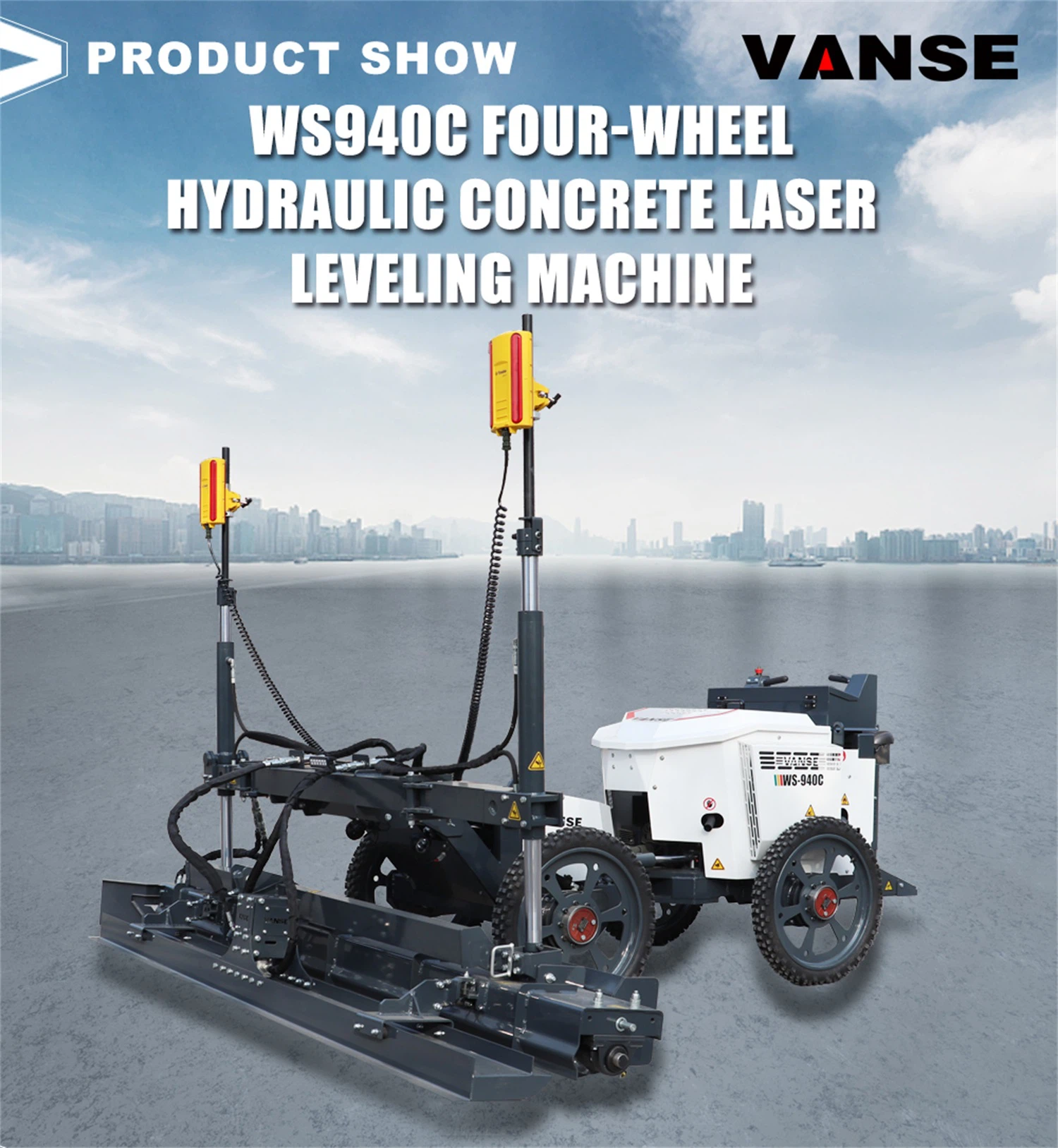
Safety operating procedures for concrete laser leveling machines
◆◆◆◆Preparation before operation◆◆◆◆
1. Operators should be familiar with the performance, principles and operating methods of the machine, and operate it correctly in accordance with the requirements of the instruction manual.
2. Check whether all parts of the machine are intact, without damage or missing, and ensure that the machine is in normal working condition.
3. Ensure the safety and cleanliness of the construction site, clean up the surrounding debris and obstacles, and ensure the smooth progress of the construction.
◆◆◆◆Work environment inspection◆◆◆◆
1. Check whether the work area is safe and free of potential safety hazards.
2. Confirm that there are no oil stains, water stains or other impurities on the concrete surface, so as not to affect the normal operation and leveling effect of the machine.
3. Check whether the laser measurement and control system is working properly to ensure the accuracy and stability of the machine.
◆◆◆◆Equipment startup and shutdown◆◆◆◆
1. Turn on the power switch, start the machine, and check whether the machine is working normally.
2. After the leveling work is completed, the laser measurement and control system should be turned off first, and then the power switch is turned off to ensure the normal service life of the machine.
3. When the machine fails, it should be stopped immediately for inspection, and the work should be carried out after troubleshooting.
◆◆◆◆Machine debugging◆◆◆◆
1. According to work needs, adjust the height, angle and other parameters of the machine to ensure the leveling effect and quality:
2. During the debugging process, attention should be paid to the surrounding environment and personnel safety to avoid accidents.
◆◆◆◆Calibration of laser measurement and control system◆◆◆◆
1. The laser measurement and control system should be calibrated regularly before and after use to ensure the accuracy and stability of the machine.
2. During the calibration process, attention should be paid to the surrounding environment and personnel safety to avoid accidents.
◆◆◆◆Leveling operation◆◆◆◆
1. According to the work needs, select appropriate leveling tools and parameters to perform leveling work.
2. During the leveling process, attention should be paid to the surrounding environment and personnel safety to avoid accidents.
3. After leveling is completed, the leveling effect and quality should be checked and any problems found should be dealt with in a timely manner.
◆◆◆◆Exception handling◆◆◆◆
During use, if any abnormality or malfunction is found in the machine, it should be stopped immediately for inspection and the fault should be eliminated before starting work.
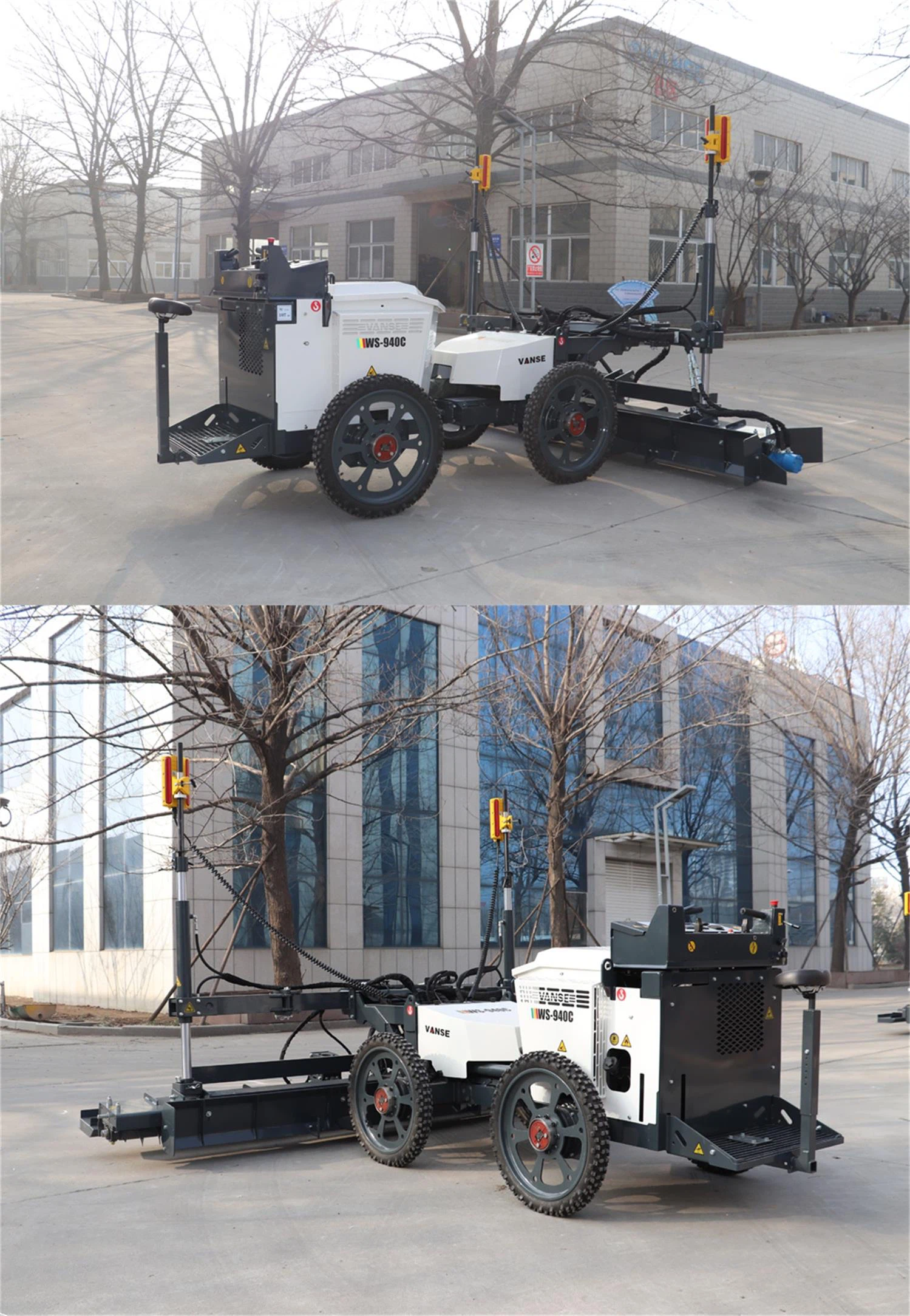
Thanks to All the Friends Who Support and Trust Shandong Vanse Machinery Technology Co., Ltd.
If you want to know more about Shandong Vanse Machinery Technology Co., Ltd. or have any questions, please feel free to contact us:
Our Factory
Shandong Vanse Machinery Technology Co., Ltd.


About the Author: Shandong Vanse Machinery Technology Co., Ltd.

Shandong Vanse Machinery Technology Co., Ltd. is a high-tech manufacturer specializing in concrete construction machinery, including laser screeds and related equipment. The company integrates R&D, production, and global sales, with products exported to over 60 countries and widely used in infrastructure projects worldwide.

Shandong Vanse Machinery
Leading manufacturer specializing in high-performance concrete laser screeds, telescopic arm flatwork handlers, and mechanical ride-on power trowels.
Post overview
Main PRODUCT Categories
Need Machine Guidance?
Speak directly with Shandong Vanse field specialists for tailored equipment quotes and site planning.
Contact Us TodayRelated Articles
You Might Also Like
January 20, 2026
Common sources of errors & solutions in the construction of concrete laser leveling machines
Although the concrete laser leveling machine is a highly precise device, it is not a "fully automatic wonder". The final leveling accuracy (FF/FL value) of it is highly dependent on the perfect coordination of "human-machine-material-method". Often, the machine itself is not faulty, but the ground it produces has unevenness or wave patterns. Here are the four main sources of common errors and their specific solutions. This is a "guide to avoiding pitfalls" derived from countless construction sites. This is the most common but also the most easily overlooked source of error. The laser system serves as the benchmark for the leveling machine. If the benchmark is incorrect, everything will be ruined. Source of error Description of the phenomenon Solution Reference drift of the transmitter Over time, the overall elevation of the entire area has shifted or there has been a large-scale inclination. Root control: The launcher tripod must be set up on a completely stationary base (strictly prohibited from being placed on soil prone to subsidence or on vibrating floor slabs). Root control: The launcher tripod must be set up on a completely stationary base (strictly prohibited from being placed on soil prone to subsidence or on vibrating floor slabs). Laser signal dead zone / interference The machine suddenly started to move erratically, or the leveling head began to shake up and down. Clean up the site: Ensure there is no obstruction (workers moving, pillars) between the transmitter and the receiver. Light shielding reflection: Remove large areas of glass and stainless steel plates at the scene to prevent multi-path laser reflection that could cause false signals. Adjusting the Dead Band: Based on the requirements for flatness, appropriately set the sensitivity (width of the dead band) of the receiver. Strong wind vibration During outdoor construction, strong winds blew the transmitter, causing the base surface to shake up and down. Physical Wind Protection: Build a wind shield around the transmitter, or use a heavy tripod with added weights. 💡 Expert tip: Never allow the power cords of the concrete pump pipe or the vibration rod to come into contact with the frame of the laser emitter! This is the most embarrassing error that can occur on-site. The mechanical condition of the machine directly determines whether it can accurately execute the instructions of the laser system. Question: If there is a significant difference in tire pressure between the left and right wheels, the machine will shake while moving, causing the leveling head to sway left and right and resulting in wave patterns. Solution: Before construction, the tire pressure of all four wheels must be measured to ensure they are exactly the same. Question: The laser caused the scraper to rise, but the hydraulic cylinder responded half a second later, resulting in a "pit" on the ground. Solution: Check if the hydraulic oil temperature is too high and if the solenoid valve is clogged. Problem: The bottom of the scraper is worn unevenly, resulting in scratches or stripes on the polished surface. Solution: Daily inspect the wear plate at the bottom of the scraper. Replace it immediately if it is severely worn. This is the factor that the machine "cannot control" but is the most affected one. The inconsistency in slump (cohesion) is the number one killer of flatness. Too dry (<100mm): The machine cannot scrape, or the leveling head is "pushed up" by the counterforce, resulting in an overly high ground elevation. Too dry (<100mm): The machine cannot scrape, or the leveling head is "pushed up" by the counterforce, resulting in an overly high ground elevation. Solution: Strict control must be exercised over the material distribution at the concrete mixing station! Designate a dedicated person to test the slump before the tanker unloads the material. Those with Unqualified slumps must be immediately withdrawn or adjusted on-site. The optimal slump for the laser leveling machine is typically 140mm ± 20mm (depending on the model). Question: The interval between the first batch of materials and the second batch is too long, resulting in "cold joints" or hardness differences at the junction. The machine will vibrate when passing through. Solution: Ensure continuous supply of materials and avoid any interruptions. A good machine requires a good operator. The operator's experience determines 30% of the final outcome. Error principle: If the concrete in front of the scraper is piled up too high (for example, more than half the height of the feeding screw), the machine resistance becomes too large, the tires slip or the machine head is lifted. If it is piled up too little, it will result in the pit not being filled. Solution: The operator needs to work in coordination with the general workers to ensure that there is always only 2-3 cm of excess concrete remaining on the scraper during the rolling process. Make more corrections when necessary and avoid excessive adjustments. Solution: The recommended standard overlap width is usually between 15cm and 30cm, and the marking lines should be used to assist with walking. Solution: The recommended standard overlap width is usually between 15cm and 30cm, and the marking lines should be used to assist with walking. Question: It's like driving over a speed bump. If you go too fast, the suspension system doesn't have enough time to react. Solution: Maintain a constant speed. It is generally recommended to keep the speed within the range of 3 – 5 meters per minute, allowing sufficient reaction time for the hydraulic system. Check 1 (Test): Before starting each day's work, calibrate the laser transmitter and check the tire pressure. Check 2 (Control): Strictly control the slump of the first batch of concrete, and set the standard for the day. Check 3 (and): At a distance of 2 meters behind the leveling machine, arrange workers to hold a 3-meter scraper to perform fine adjustment (remember: it's fine adjustment, not re-scraping), to eliminate any minor defects that may remain at the turning points or seams of the machine. Note: The parameters provided in this document are for reference only and are not mandatory. Due to differences in technical characteristics between different brands and models of laser levelers, please consult the manufacturer for a suitable solution before actual operation. This reference document assumes no responsibility for any issues arising from failure to follow the manufacturer's instructions.Read More
June 4, 2025
How to evaluate the reliability of concrete laser leveling machine?
In the field of modern concrete construction, concrete laser leveling machine (concrete laser leveling machine or concrete laser leveler) has become the preferred equipment for many large projects due to its high efficiency and precision. With the continuous increase in the industry's requirements for construction quality and efficiency, as well as the continuous development of industries such as infrastructure construction and real estate, the market demand for concrete laser leveling machines is growing. According to relevant reports, the global concrete laser leveling machine market size is expected to reach US$1.76 billion in 2025, with an annual growth rate of approximately 11.4%. In this context, it is particularly important to evaluate the reliability of concrete laser leveling machines, which is not only related to construction quality, but also closely related to the cost and progress of the project. Leveling accuracy is the core performance indicator of concrete laser leveling machines, which directly determines the flatness of the concrete surface after construction. In projects such as airport runways and precision electronic factories that require extremely high ground flatness, high-precision laser leveling machines are indispensable. Some of the internationally renowned brands use advanced 3D laser scanning technology to achieve a flatness accuracy of ±2 mm. Some leading domestic companies, such as Shandong Vanse Machinery Technology Co., Ltd., currently have product accuracy of ±2 mm, of which the WS940C/YZ30-4E uses 3D laser scanning technology. When evaluating the leveling accuracy, you can view the technical parameter description of the equipment and refer to the test data of actual construction cases. At the same time, pay attention to the stability of the laser system. Stable laser signal transmission can ensure continuous and accurate leveling operations. For example, in the floor construction of large shopping malls, the use of high-precision laser leveling machines can ensure that the floor will not cause uneven laying of floor tiles or inconvenience for pedestrians due to flatness problems during long-term use. Work efficiency directly affects the construction progress and cost of the project. Taking the common large-scale industrial plant construction as an example, the traditional manual leveling method not only consumes a lot of manpower, but also has a slow construction speed, while the concrete laser leveling machine shows significant advantages. The concrete laser paving and leveling machine can complete 3,000 square meters of work per day and 350 square meters per hour (depending on the type of machine, the construction area completed varies), greatly shortening the construction cycle. When evaluating work efficiency, it is necessary to comprehensively consider parameters such as the equipment's travel speed, vibration frequency, and scraping width. At the same time, combined with the actual construction environment, such as site size and concrete supply, it is necessary to determine whether the equipment can maintain efficient operation under different working conditions. For example, in the construction of a narrow underground parking lot, the mobility and flexible operation of the equipment have a greater impact on work efficiency. As the "eye" of the concrete laser leveling machine, the stability of the laser system is crucial. A stable laser system can ensure that the equipment continues to provide an accurate elevation benchmark during long-term operation. Some high-end laser leveling machines are equipped with a dual-axis automatic compensation system, which can effectively reduce the interference of the laser signal caused by uneven ground or equipment vibration. When evaluating the stability of the laser system, the performance of the equipment under different ground conditions can be observed, such as whether the laser system can quickly adjust and maintain stable elevation control when constructing on a foundation with large undulations. At the same time, understand the protection level and anti-interference ability of the laser transmitter, as well as whether it has an automatic calibration function. For example, in a dusty construction site, a laser transmitter with a good dustproof design can better maintain signal stability and ensure the accuracy of the leveling operation. Reasonable structural design is the basis for ensuring the stable operation and durability of the concrete laser leveling machine. The overall structure of the equipment should fully consider the stress conditions during operation to ensure that key components such as the frame and vibrating device have sufficient strength and rigidity. Taking the driving laser leveling machine as an example, its frame structure needs to bear the weight of the equipment itself, the weight of the operator, and the vibration impact during operation. Therefore, it is mostly welded with high-strength steel and optimized to disperse stress and prevent deformation or breakage. In addition, the layout of the equipment should be easy to operate and maintain, and the connection and transmission methods between the components should be simple and reliable. For example, some advanced laser leveling machines adopt a modular design, integrating components with different functions into independent modules, which is convenient for quick replacement of faulty modules during maintenance and shortening downtime. The manufacturing process is directly related to the quality and reliability of the equipment. During the manufacturing process of high-quality concrete laser leveling machines, extremely high processing accuracy is required for parts. Taking the scraper of the leveling machine as an example, the surface flatness and straightness errors must be controlled within a very small range to ensure uniformity and high precision when leveling concrete. At the same time, advanced welding technology and surface treatment technology are also the key to improving equipment quality. For example, the use of robot welding technology can ensure uniform and firm welds and improve the stability of welding quality; hot-dip galvanizing or painting of key components can effectively enhance the anti-corrosion ability of the equipment and extend its service life. When evaluating the manufacturing process level, you can check the production qualifications and quality certification system of the equipment manufacturer, as well as understand its reputation and performance in the industry. For example, manufacturers with ISO quality management system certification usually follow stricter quality control standards during the production process. The durability of key components of concrete laser leveling machines, such as engines, hydraulic systems, electrical components, etc., directly affects the overall service life of the equipment. Take the engine as an example. Under the condition of continuous long-term operation, high-quality engines can maintain stable power output, and have good heat dissipation performance and low failure rate. Some laser leveling machines that use well-known brand engines can run for thousands of hours without failure under harsh working conditions after rigorous durability testing. When evaluating the durability of key components, you can check the brand, model and related technical parameters of the components to understand their reputation and actual application cases in the market. At the same time, pay attention to the warranty period of the components provided by the manufacturer. A longer warranty period usually means confidence in the quality of the components. For example, if the oil pump, oil cylinder and other components in the hydraulic system are made of high-quality materials and advanced manufacturing processes, leakage and wear can be effectively reduced, and the reliability and durability of the system can be improved. Equipment that is easy to maintain can reduce the cost of use and improve the availability of the equipment. The concrete laser leveling machine should have a design that is convenient for inspection, cleaning and replacement of parts. For example, the engine hood of the equipment should be easy to open, so as to facilitate daily inspection of oil level, air filter and other components; the installation position of key components should be easy to operate, such as the filter element of the hydraulic system, which should be designed in a position that is easy to disassemble and replace. In addition, the manufacturer should provide a detailed maintenance manual to clarify the maintenance cycle, maintenance items and operation methods, and provide original parts support in a timely manner. Some advanced laser leveling machines are also equipped with a fault diagnosis system that can quickly locate the fault point and provide accurate maintenance instructions for maintenance personnel. For example, when the electrical system of the equipment fails, the fault diagnosis system can prompt the specific fault code through the indicator light or display screen to help maintenance personnel quickly troubleshoot the problem and shorten the maintenance time. By investigating the actual performance of concrete laser leveling machines under different working conditions, we can more intuitively understand its reliability. In the construction of large storage centers, due to the large ground area and high flatness requirements, the laser leveling machine needs to work continuously for a long time, which is a great test for the stability and durability of the equipment. In the construction of some outdoor parking lots with complex terrain, the equipment not only has to deal with the ups and downs of the ground, but may also face the influence of bad weather. At this time, the adaptability and reliability of the equipment are particularly important. By collecting construction feedback from similar projects, we can fully understand the advantages and disadvantages of the equipment under different working conditions. User feedback and word of mouth are important bases for evaluating the reliability of concrete laser leveling machines. In industry forums, social media groups and professional equipment evaluation websites, a large number of users' evaluations of laser leveling machines of different brands and models can be collected. For example, after using a certain brand of laser leveling machine for a period of time, some users reported that the laser system of the equipment had a problem of reduced accuracy after half a year of use, while other users praised a certain equipment for its simple operation and convenient maintenance, and stable performance in multiple projects. In addition, you can communicate with construction companies and engineering contractors who have actually used the equipment to understand the problems they encountered during long-term use and their evaluation of the overall performance of the equipment. By comprehensively analyzing a large number of user feedback, we can have a more accurate understanding of the reliability of concrete laser leveling machines of different brands and models, and provide a strong reference for equipment selection. Click the below to jump immediately!!! ARMOUR JOINT CONCRETE LASER LEVELING MACHINE LIGHT TOWER POWER TROWEL SLIPFORM MACHINE STEEL FIBER TOPPING SPREADER TRACKED MINI DUMPERRead More
January 28, 2026
Application of Spreaders in Anti-corrosion Concrete Flooring (e.g., Acid-resistant, Oil-resistant)
In the construction of anti-corrosion concrete floors (e.g., those resistant to acids, oils, and chemical corrosion), **spreaders** play a crucial role in transforming the process from "manual, extensive work" to "standardized, precise construction." Unlike ordinary wear-resistant floors, anti-corrosion floors have stringent requirements for the uniformity and density of material distribution. The following is an analysis of the specific applications of spreaders in this field: When constructing anti-corrosion concrete floors (typically involving hardeners, aggregates, or special resin mortars), spreaders primarily address the following three major challenges: Precise Quantity Control: Anti-corrosion materials (such as quartz sand, corundum, or alloy aggregates) are generally more expensive than ordinary materials. Spreaders can precisely control the amount spread per square meter within an error range (e.g., 5 kg/m²), avoiding localized areas that are too thin (easily corroded) or too thick (easily cracked) due to manual spreading. Physical Density: Spreaders are typically used in conjunction with laser leveling machines to uniformly spread the material over a large area during the initial setting phase of the concrete. This uniformity ensures a tight bond between the anti-corrosion surface layer and the base concrete, reducing porosity and thus improving the floor's impermeability-a key factor in anti-corrosion. Synchronized Progress: The construction window for anti-corrosion flooring is extremely short. The high efficiency of spreaders ensures that, during large-area construction, the material is pressed into the surface in the optimal hydration state of the concrete. This type of flooring requires extremely high sealing properties. Application: Use a spreader to evenly distribute non-metallic hardened aggregate. Effect: The resulting dense layer effectively prevents engine oil and cutting fluid from seeping into the concrete through capillaries, avoiding a loose or crumbling base layer. Although concrete itself is not resistant to strong acids, modern processes often involve applying a vinyl ester mortar or epoxy anti-corrosion mortar to the surface. Application: When laying anti-corrosion aggregate layers over large areas, the spreader ensures a consistent distribution density of the corrosion-resistant filler. Effect: Eliminates "weak points and gaps" left by manual operation, preventing acidic media from "drilling" through sparsely distributed areas and corroding the reinforcing steel. Links Manual material application Automatic spreading machine application Uniformity Relies on experience, easily resulting in uneven application and weak areas. Uniform height, fully automated control. Denseness Secondary leveling is difficult. Instant bonding with the substrate after application, minimizing air bubbles. Corrosion resistance life Due to localized weaknesses, premature pitting corrosion is likely. Uniform coating thickness, extending overall lifespan by over 30%. Material loss Loss rate is approximately 10%-15%. Loss rate controlled below 3%. Timing: In anti-corrosion flooring construction, spreading the aggregate too early will cause it to settle to the bottom, negating its anti-corrosion protective effect; spreading it too late will prevent it from forming a cohesive whole with the concrete, leading to peeling later. Overlapping Area Treatment: The spreader's path should have slight overlap to ensure that the anti-corrosion performance at the joints is not compromised. Multiple Process Coordination: After spreading, a power trowel must be used for multiple finishing processes to further improve the surface layer's wear resistance and impermeability through mechanical pressure. When pursuing high-performance corrosion protection, the material spreader is not only a tool for improving efficiency but also a physical line of defense for quality control. Through its uniform physical structure, it provides the most stable carrier for chemical corrosion-resistant materials. Are you planning a specific factory flooring project? If you have specific corrosion protection requirements (such as resistance to 5% sulfuric acid or deep grease penetration), I can provide you with more targeted material proportioning suggestions or construction plan guidance. Note: The parameters provided in this document are for reference only and are not mandatory. Due to differences in technical characteristics between different brands and models of laser levelers, please consult the manufacturer for a suitable solution before actual operation. This reference document assumes no responsibility for any issues arising from failure to follow the manufacturer's instructions.Read More