Technical Knowledge
What are the performance indicators of concrete laser leveling machine?
Performance indicators of concrete laser leveling machine
1. Laser measurement and control system
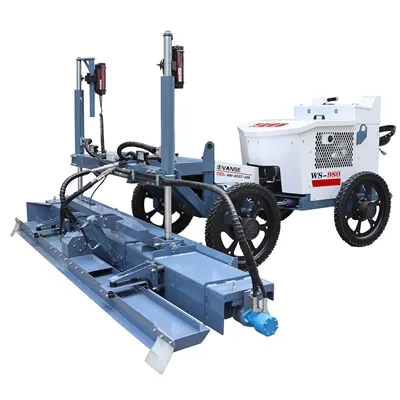
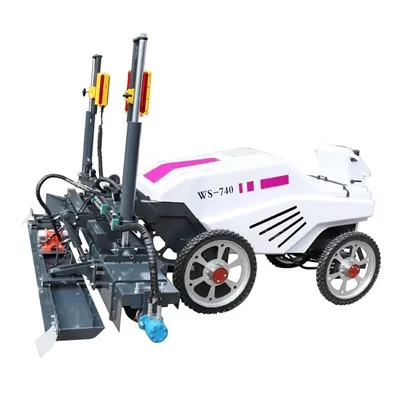
The laser measurement and control system is the core component of the concrete laser leveling machine and is used to achieve high-precision ground flatness control. The system includes components such as laser transmitters, receivers and controllers, which can monitor the height and slope of the ground in real time, and precisely control the leveling head and walking system through the control system to achieve the flatness and slope requirements of the floor.
2. Leveling head accuracy
The leveling head is the front-end working part of the concrete laser leveling machine, which is used for preliminary leveling and leveling of concrete materials. The accuracy of the leveling head directly affects the flatness of the floor. Therefore, the accuracy of the leveling head is an important performance indicator of the concrete laser leveling machine. The higher the accuracy of the leveling head, the better the flatness of the floor and the improvement of construction efficiency.
3. Vibrator performance
The vibrator is a component used in the concrete laser leveling machine to shake the concrete. Its performance directly affects the compactness and construction quality of the concrete. The vibration frequency and amplitude of the vibrator determine the vibration effect of the concrete. The higher the frequency and the greater the amplitude, the better the density of the concrete and the higher the quality of the floor after construction.
4. Walking system
The walking system is the moving support component of the compacted soil laser leveling machine. Its performance directly affects the construction efficiency and stability of the leveling machine. The design of the walking system should consider factors such as moving speed, stability, durability, and maintenance to ensure leveling. The machine can move quickly and stably during the construction process and maintain good working condition.
5. Control system
The control system is the command center of the concrete laser leveling, responsible for receiving operating instructions and sensor signals, and controlling each action of the leveling. The performance of the control system determines the automation level and construction accuracy of the leveling. A high-performance control system can achieve fast and accurate construction control.
6. Power system
The power system is the component that provides power for the concrete laser leveling, including engines, motors, etc. The performance of the power system determines the construction efficiency and stability of the leveling. A high-performance power system can provide continuous and stable power output to ensure that the leveling can operate stably during the construction process.
7. Operation convenience
Operation convenience is one of the important factors in the experience of using a concrete laser leveling, including the friendliness of the operation interface, ease of operation, remote control functions, etc. The easy-to-operate concrete laser leveling can improve construction efficiency and reduce the labor intensity of operators.
8. Maintenance needs
Maintenance is one of the key factors to ensure the long-term stable operation of the compacted soil laser leveling machine. A concrete laser leveling with good performance should have low maintenance requirements, including regular lubrication inspections and replacement of wearing parts, to ensure that the leveling can maintain good working condition during the construction process.
9. Service life
The service life is one of the important indicators to measure the cost-effectiveness of the compacted soil laser leveling machine. A high-performance concrete laser leveling should have a long service life, which can reduce usage costs and improve economic benefits. When selecting a concrete laser leveling, factors such as its design, materials, and manufacturing processes should be considered to ensure a long service life.
10. Safety performance
Safety performance is one of the important performance indicators of concrete laser leveling machines. High-performance concrete laser leveling machines should be equipped with complete safety protection devices and warning signs to ensure the safety of operators and the smooth progress of construction. When choosing a concrete laser leveling, factors such as its safety performance and safety certification should be considered.


Thanks to All the Friends Who Support and Trust Shandong Vanse Machinery Technology Co., Ltd.
If you want to know more about Shandong Vanse Machinery Technology Co., Ltd. or have any questions, please feel free to contact us:
Our Factory
Shandong Vanse Machinery Technology Co., Ltd.








Share this article

About the Author: Shandong Vanse Machinery Technology Co., Ltd.
Shandong Vanse Machinery Technology Co., Ltd. is a high-tech manufacturer specializing in concrete construction machinery, including laser screeds and related equipment. The company integrates R&D, production, and global sales, with products exported to over 60 countries and widely used in infrastructure projects worldwide.
Previous Post
Next Post
Related Articles
You Might Also Like
Concrete laser leveling machine+car type power troweling machine
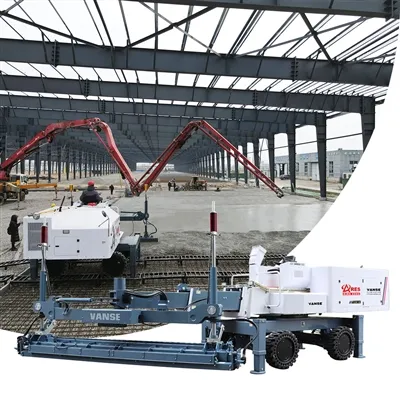
For large-scale industrial plants, the quality of concrete floor construction directly affects the normal production. Therefore, the floors of industrial plants now generally require special bearing capacity, anti-slip wear resistance, and flatness. Through practical research, we found that in the construction of steel fiber concrete wear-resistant ground in industrial plants, using a wider range of concrete laser leveling/ leveling machines for leveling, coupled with driving double-disc trowels for ground finishing, can Greatly improve the construction quality and speed of the floor. The following briefly introduces the characteristics, principles, processes and benefits of the construction of the concrete laser leveling/ leveling machine + car troweling machine. ◤Construction method characteristics◥: ◆ Higher construction quality: The floor elevation can reach laser-level precision, and the ground flatness and levelness are more than three times that of traditional manual leveling operations, which can guarantee the owner's requirements for ground flatness and levelness. ◆ Faster construction speed: It can greatly shorten the construction period and improve the work efficiency by 100~300% (150~300 square meters of paving work can be completed per hour, and 1500~2500 square meters can be completed every day on average), and the manpower can be reduced by more than 30%. It is especially suitable for engineering projects that require tight construction schedules, large injection areas, and high quality requirements. ◆ Better integrity of the ground: It is very easy to achieve large-area overall paving. This paving technology can avoid the hollowing problem caused by layered pouring of the floor. On the other hand, it can reduce a large number of construction joints and make the overall floor Sex is better. ◆ The post-maintenance cost of the ground is greatly reduced: due to the large-area overall paving, the construction joints can be reduced by 3-5 times, and the construction joints are easily damaged by the load, which can greatly reduce the post-maintenance cost of the ground. ◆ Wide scope of application: Not only can it be constructed on reinforced concrete ground with single-layer or double-layer steel mesh. Among them, the light-duty laser leveling machine is suitable for all kinds of concrete floors and reinforced concrete floors with single or double-layer steel mesh, especially suitable for large-scale, high-quality ground construction. ◤Process Principle◥: ◆ Concrete laser leveling machine leveling principle: use precision laser technology, closed-loop control technology and highly precise hydraulic system to achieve leveling under the automatic control of the computer. This closed-loop control can adapt to the elevation of the concrete surface and can Automatic adjustment 6 times. ◆ Concrete laser leveling machine leveling principle: Rely on the hydraulically driven leveling head, cooperate with the laser system and computer control system to complete the leveling work while automatically leveling. The leveling head is equipped with a scraper with integrated design and a leveling beam with a vibrator, which integrates all leveling work into one body. The computer control system automatically adjusts the elevation 6 times per second in real time, and the vibration frequency of the vibrator with balanced design can reach 30005000 times per minute. ◆ Principle of driving-type troweling machine finishing: the driving-type troweling machine is equipped with a double-disk knife holder, and the hydraulic drive system provides power and torque for the two non-overlapping knife holders respectively. To achieve better results, use the joystick on the handle to control the sprinkler system, so that the dry ground can be sprinkled at any time for remediation. ◤Construction process◥: Construction preparation ➨ D ividing separation joints ➨ Processing the ground base ➨ Supporting construction formwork ➨ Setting up laser leveling system and debugging equipment ➨ Pouring concrete ➨ Leveling with concrete laser leveling machine ➨ Manual leveling after mechanical leveling ➨ Disc extraction ➨ Scattering Abrasion-resistant aggregate ➨ disk operation ➨ drive-on trowel finishing ➨ maintenance and cutting. Compared with the original concrete floor construction technology, the benefits of using the dual-machine operation of concrete laser leveling machine + driving trowel machine are: fast construction speed, low construction investment, good overall appearance of the ground, and large investment in ground construction joints and corresponding materials. reduce and so on. In the future, with the continuous improvement of construction quality requirements for building ground engineering, this construction method will be widely promoted and applied.How should the slump of concrete pavement construction be adjusted in different construction scenarios?
Reason: The increase in temperature will accelerate the cement hydration rate and the water evaporation rate, resulting in faster loss of concrete slump and reduced fluidity. Adjustment method: Appropriately increase the slump. It is generally recommended to increase it by 2040mm compared with normal temperature construction. For example, the slump is controlled at 80100mm at normal temperature, and it can be adjusted to 100140mm at high temperature. At the same time, measures can be taken to reduce the temperature of raw materials, such as shading aggregates, spraying water to cool down, using underground cold water to mix concrete, and adding ice cubes to the mixing water to control the concrete outlet temperature ≤30℃. Reason: Low temperature will prolong the setting time of concrete and deteriorate the construction performance. If the slump is too small, the concrete may be difficult to vibrate and compact. Adjustment method: The slump should not be too large, usually controlled at 3060mm. Warm water can be used to mix concrete to increase the temperature of the concrete out of the machine, and the amount of admixture can be appropriately reduced to avoid too long setting time of the concrete. In addition, attention should be paid to the insulation and maintenance of the concrete to prevent freezing. Reason: Long transportation time will cause the slump of concrete to be lost. If the initial slump is small, it may be difficult to meet the construction requirements when arriving at the construction site. Adjustment method: Appropriately increase the slump when setting off, such as increasing it by 2030mm compared to normal construction. For example, the normal construction slump is 80100mm, and it can be set to 100130mm during longdistance transportation. At the same time, on the basis of the continuous lowspeed rotation of the mixer tank (24 rpm), a transport retarder can be added to ensure that the slump loss rate is ≤30% within 2 hours. Reason: Pumping requires concrete to have good fluidity and pumpability to pass through the pipeline smoothly and reach the pouring location. Adjustment method: The slump is usually controlled at 120180mm. It is necessary to select a suitable pumping agent and adjust its dosage according to the pumping distance, height and pipeline layout. At the same time, optimize the concrete mix ratio and control the sand ratio at around 35%45% to improve the fluidity and water retention of the concrete. Reason: If manual paving or small mechanical paving is used, the concrete does not need to have high fluidity like pumping, but it still needs to have a certain workability to facilitate paving and vibration. Adjustment method: The slump is generally controlled at 3080mm. If the slump is increased by one level (i.e., by 20 30 mm), in addition to increasing the sand content by more than 1% to ensure stability and workability, the amount of water (5 10 kg/m3) and cement (10 kg per cubic meter) must be increased accordingly. In actual construction, the optimal slump and mix ratio should be determined through tests according to specific conditions, and inspection and adjustment should be carried out strictly in accordance with relevant standards and specifications to ensure the construction quality of the concrete pavement.The laser leveling machine parts frequently fail. How much do you know about the correct avoidance methods?
If the laser leveling machine is used for too long or the method of use is incorrect, the various components will frequently fail. To prevent such a phenomenon from happening, it is necessary to check the wear of the equipment accessories in time. If the wear phenomenon is serious, the seriously worn accessories should be replaced in time to avoid affecting the normal use of the equipment. Let's take a detailed look at the methods to prevent frequent failures of laser leveling machine parts. 1. Check the connection and fastening of the various parts of the laser leveling machine, whether the connecting bolts are loose or broken, tighten or replace them if necessary, check whether there are leaks, and eliminate leaks in various parts in time. Pay attention to the amount of engine oil, fuel, coolant and hydraulic oil, and add new oil to the oil mark as required. Check whether the grease in the centralized lubrication device is appropriate. 2. Be careful not to work under a larger load than the machine can bear. Use the machine to the best of your ability. As a laser leveling machine manager, when designating an operator, you should give the laser leveling machine random information and operation manual to the operator so that he can master the mechanical performance and operating procedures normally, and should not arbitrarily withhold the relevant information. 3. Try to ensure the uniform addition and subtraction of mechanical load, so that the machine is in a relatively gentle load change. Specifically, it is necessary to add and subtract the throttle more evenly to prevent the engine and working device from fluctuating greatly. After the construction, there will be a lot of dust and mud on the equipment. First, wipe the dust on the laser leveler clean, and wipe the dirt and oil stains with thin paper or cotton cloth. 4. If the laser signal is lost during the construction of the laser leveler, the machine needs to be restarted. The interval time is more than ten seconds. If there are too many stains, you can soak it in water diluted with neutral detergent with a soft cloth, wring it out and wash it. Remember not to use volatile oil, thinner, gasoline and other chemicals to clean and wipe. The laser leveler uses several automatic control components to monitor the elevation of the leveling head in real time, and the monitoring frequency is relatively high, which can reach about 10 times per second. The above is a method to prevent the failure of laser leveler components. You can learn about it in detail. If you have any ideas and need to understand the intention of the product during the reading process, you can contact us in time, and we will have professional technicians to help you solve the problem.