Technical Knowledge
The laser leveling machine oil temperature rises, it is the right thing to do to find out the cause in time

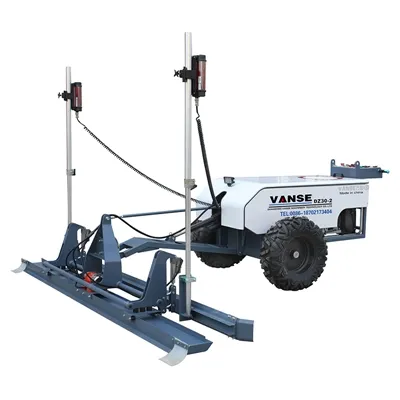
The road surface under our feet is very flat. In fact, it is only after leveling that we can achieve the effect we see today. When it comes to leveling the ground, we must talk about the laser leveling machine, because the reason why the road surface is so flat now is inseparable from the efforts of the laser leveling machine. However, when we use the leveling machine to work, sometimes some abnormal conditions will occur, such as how to solve the problem of too high oil temperature?
If the oil temperature of the hydraulic system of the laser leveling machine is too high, the viscosity of the oil will be reduced, the leakage will increase, the oil film of the lubricated parts will be destroyed, and the wear of the parts will be aggravated; at the same time, high temperature will also cause the sealing gasket made of rubber and other materials to age prematurely and damage. Therefore, it is very important to control the appropriate oil temperature.
When the oil temperature of the leveling machine is too high, it must be stopped for inspection. Generally, it can be started from the following aspects:
1. Check whether the oil level in the oil tank is too low. Experience shows that high oil temperature is often caused by lack of oil in the oil tank, so it should be replenished in time when it is lacking oil.
2. Whether the hydraulic oil filter and circuit are blocked.
3. Whether the radiator is normal. If a large amount of dust adheres to the radiator, it may cause poor heat dissipation and increase the oil temperature. Since the working environment of the laser leveling machine is dusty, the radiator should be cleaned in time.
4. Is the quality of the hydraulic oil qualified? If the added oil quality is unqualified, the system oil temperature will also be too high.
In addition, the hydraulic system is working when it is short of oil, which is easy to cause damage to the pump and motor. Therefore, after the oil shortage fault is eliminated, the operating status of the pump and motor should be checked, and the damaged parts of the pump and motor should be replaced if necessary.
Precautions for the use of laser leveling machine:
1. After completing the leveling operation, perform routine maintenance operations in accordance with the contents of the routine maintenance procedures.
2. The working devices and motion mechanisms of the leveling machine that are in direct contact with the asphalt mixture during operation should be sprayed with diesel after the operation and then run for a period of time to remove the residual asphalt on it, so that it can operate freely and rotate flexibly. It is forbidden to spray diesel on the electronic control system and spiral wire to prevent fire and combustion when the power is turned on.
3. After the laser leveling machine is leveled, flush it with water to wash away the white material. After flushing, use waste hydraulic oil to lubricate the moving parts of the scraper conveyor chain, and apply anti-rust oil to the piston rod. Be careful not to flush water to the electrical and bearing parts to prevent short circuits and foreign objects from entering the bearings.
4. Clean and check the lifting and adjusting device of the laser leveling machine longitudinal slope meter, and lubricate the screw with grease. Apply grease to the floating arm slide rail. Grease each oil filling point until the joint overflows. For leveling machines with oil filling cups, observe the consumption and fill them up at any time.
This is the first part of the small knowledge about the increase in oil temperature of laser leveling machines. We will continue to update it for you later. I hope that the content shared can help you solve the problem better. If you want to know more exciting information about leveling machines, please visit our official website at any time to inquire.
Thanks to All the Friends Who Support and Trust Shandong Vanse Machinery Technology Co., Ltd.
If you want to know more about Shandong Vanse Machinery Technology Co., Ltd. or have any questions, please feel free to contact us:
Our Factory
Shandong Vanse Machinery Technology Co., Ltd.








Share this article

About the Author: Shandong Vanse Machinery Technology Co., Ltd.
Shandong Vanse Machinery Technology Co., Ltd. is a high-tech manufacturer specializing in concrete construction machinery, including laser screeds and related equipment. The company integrates R&D, production, and global sales, with products exported to over 60 countries and widely used in infrastructure projects worldwide.
Previous Post
Next Post
Related Articles
You Might Also Like
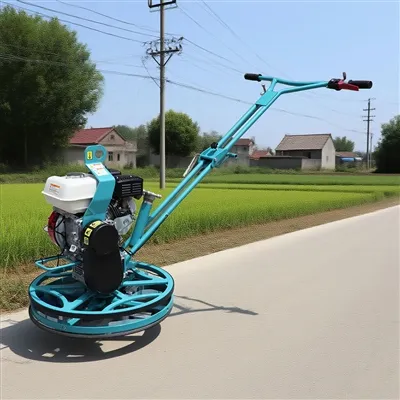
Key points for lubrication & maintenance of the power trowel machine
Lubrication and maintenance of the power trowel is the core work to ensure the long-term stable operation of the equipment and prevent sudden failures. The key lies in "using the right oil, finding the right time, doing it on time and using the right method". The following are the specific key points 1. Power trowel the main shaft bearing – the most crucial and frequent Location: The center drive shaft of the pan, usually with 1-2 grease nozzles. Lubricant: High-temperature resistant (≥120℃), extreme pressure lithium-based grease (such as molybdenum disulfide grease) must be used. Ordinary butter must not be used. Method and Cycle It must be carried out after each shift's work (working for 8 to 10 hours). Thoroughly clean the grease nipple and its surroundings. Add until the new grease overflows: Use a grease gun to add until the clean new grease is completely squeezed out from the edge of the bearing seal ring from the old grease. Wipe off the excess grease. Objective: To remove metal shavings and impurities produced by internal wear and ensure that the bearing cavity is filled with new grease. 2. Gearbox/reducer Lubricant: Select the specified type of gear oil (such as SAE 80W-90 GL-4) strictly in accordance with the instructions. Check: Every day, check through the oil window or dipstick whether the oil level is between the upper and lower marks. Replacement cycle First replacement: After the new machine has been running for 20 to 30 hours, remove the running-in debris. Regular replacement: Replace it every 300 to 500 hours of operation or annually thereafter. Key point: Oil change should be carried out when the oil temperature is still hot after the equipment is shut down to ensure that the old oil is completely drained. 3. Traveling wheels and steering mechanism Location: Walking wheel bearing, steering tie rod ball joint, hinge point. Lubricant: The high-temperature resistant lithium-based grease as mentioned above. Cycle: Every 50 hours of operation or once a week. Method: Clean each grease nozzle and add grease until new grease overflows from the gaps. 4. Engine (Gasoline model) Engine oil inspection and replacement Check the oil dipstick before starting every day to ensure the oil level is normal. First replacement: After running for 20 to 30 hours. Regular replacement: Every 100 hours or every quarter. The cycle should be shortened in harsh environments. Air filter maintenance: Regular cleaning. For oil bath air filters, use the dedicated air filter oil as per the instructions. Cleaning first: Before filling, be sure to clean the oil nozzle, oil cap and the surrounding area to prevent sand, dust and concrete particles from being brought into the interior. Strict specifications: Different parts should use the specified type of grease/oil products. They must not be mixed or substituted. High-temperature grease is the "life-saving oil" for the main shaft bearings. Squeezing out the old grease: For bearing lubrication, "adding until the new grease overflows" is a necessary step. This is the only effective way to remove contaminants and ensure the lubrication effect. Precise cycle: The maintenance cycle is mainly based on the operating hours (rather than calendar time) and is strictly recorded. Error: Lubricate the main shaft bearings with ordinary grease. Consequence: The grease melts and leaks away at high temperatures, the bearings dry grind rapidly and burn out at high temperatures, leading to the failure of the entire machine. Error: Only add fat without squeezing out the old fat. Consequence: Metal shavings accumulate in the bearing cavity, forming abrasives, accelerating wear, and causing abnormal noises and jamming. Error: Ignoring the oil level in the gearbox and its replacement. Consequence: Insufficient lubrication of gears and bearings leads to pitting corrosion, broken teeth, and scrapping of the reducer. Error: The spilled grease was not cleaned up after lubrication. Consequence: Grease adsorbs dust to form hard scale, which damages the sealing performance of the oil seal and makes it easier for impurities to invade. Create a lubrication chart: Make a simple chart of all lubrication points, oil types and cycles of the equipment, and stick it in a prominent place on the equipment. Equipped with dedicated tools: Use high-quality grease guns and dedicated oiling nozzles to ensure sufficient filling pressure. Record: After each maintenance, record the operating hours and maintenance items to form a traceable maintenance file. Long-term storage and maintenance: Before the equipment is out of use, thoroughly lubricate all lubrication points once. The engine oil should be changed or stabilizers added as per regulations to prevent internal rusting. The lubrication and maintenance of a power trowel essentially involve the continuous confrontation with its harsh working environment (heavy load, high temperature, and much dust). By grasping the two key points of "post-shift high-temperature grease extrusion lubrication" for the main shaft bearings and "regular oil change" for the gearboxes, the vast majority of major mechanical failures can be avoided, significantly extending the service life of the equipment. Note: The parameters provided in this document are for reference only and are not mandatory. Due to differences in technical characteristics between different brands and models of laser levelers, please consult the manufacturer for a suitable solution before actual operation. This reference document assumes no responsibility for any issues arising from failure to follow the manufacturer's instructions.How to ensure the construction effect and ground flatness of concrete laser leveling machine?
Ensuring the construction effect of the concrete laser leveling machine and the smoothness of the ground are key. Here are some suggestions and measures: 1. Choose the right equipment: Choose a concrete laser leveler with advanced technology and good reputation, which can better cope with various construction conditions and ensure smoothness. 2. Operator training: Provide professional training to operators to ensure that they are familiar with the performance, operating skills and safety procedures of the equipment. Trained operators can control equipment more accurately, improving construction results and smoothness. 3. Preparation work before construction: Before construction, the ground should be cleaned and leveled, foreign objects should be removed, potholes should be filled, and the ground should be smooth. In addition, checking the mix proportion and quality of concrete materials is also key to ensure that the performance of the concrete meets the construction requirements. 4. Adjust equipment parameters: According to construction conditions and requirements, reasonably adjust various parameters of the concrete laser leveling, such as working height, vibration frequency, paving speed, etc. Appropriate parameter settings can better control the paving and leveling of concrete, thereby improving smoothness. 5. Real-time monitoring and control: Use advanced sensors and control systems to monitor the flatness and height of the ground in real time, and adjust the equipment automatically or manually to ensure that the laying of concrete meets the design requirements. Real-time data feedback and analysis can help operators find and solve flatness problems in time. 6. Repeated leveling: For some special or demanding floors, repeated leveling can be carried out multiple times to further improve the flatness of the ground. After each leveling, quality inspection should be carried out and parts that do not meet the requirements should be re-leveled. 7. Strengthen quality control and acceptance: During the construction process, quality inspections should be carried out regularly, including the density, thickness and flatness of the concrete. After the construction is completed, strict acceptance procedures are carried out to ensure that the design requirements and flatness standards are met. If necessary, a third party can be entrusted to conduct quality testing and evaluation. 8. Maintenance and maintenance: Carry out regular maintenance and upkeep on the concrete laser leveling to ensure the normal operation and use of the equipment. Timely replacement of worn parts, inspection of key parts, and lubrication of key parts can extend the service life of equipment and improve construction results. 9. Technological innovation and application: Pay attention to industry trends and technological innovation results, and continuously introduce advanced processes and technologies. New concrete laser leveling machines and technologies can better improve construction efficiency and smoothness. 10. Experience summary and feedback: During the actual construction process, experience and lessons are constantly summarized and feedback is given to relevant departments or teams in a timely manner. Through experience sharing and improvement measures, we will continue to optimize construction processes and methods to improve flatness and construction effects. To sum up, ensuring the construction effect and ground flatness of the concrete laser leveling requires comprehensive consideration of many aspects. From equipment selection, personnel training to pre-construction preparation, real-time monitoring and control of parameter adjustment, quality control and acceptance, management needs to be strengthened. At the same time, measures such as technological innovation and application, experience summary and feedback are constantly optimized and improved to improve construction effects and flatness. Through these comprehensive measures, the construction quality and efficiency of concrete laser levelings can be effectively improved.How do power trowel machines and concrete laser levelers work together?
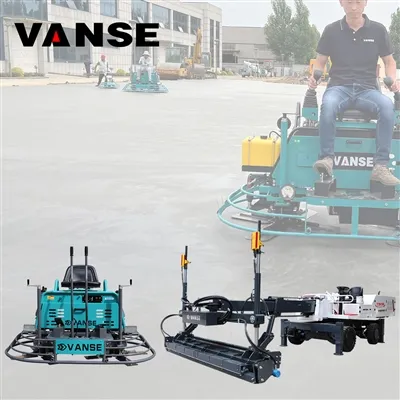
△ Applicable stage: Before initial setting after concrete pouring (about 1-2 hours after pouring, the specific time depends on the concrete ratio and ambient temperature). △ Operation points: The laser leveler sets the reference plane through the laser transmitter, automatically levels and vibrates the concrete, and quickly completes the rough leveling of a large area. Focus on the corners, column roots and other areas that are difficult for the laser leveler to cover, and manually assist in scraping. △ Applicable stage: after the initial setting of concrete (when there is a slight indentation when pressing with fingers but it is not sticky). Operation steps: △ Disc trowel: First use a disc trowel to perform preliminary slurry lifting and compaction to eliminate surface bumps. △ Blade trowel: After the concrete strength is further improved, use a blade trowel for fine finishing to form a smooth surface. △ Note: The trowel needs to be divided into 2-3 Operate over and adjust the blade angle (from low to high) each time to gradually increase the surface density. △ The laser leveling machine needs to complete the rough leveling before the initial setting of the concrete to avoid the difficulty of vibrating the concrete after hardening. △ The trowel machine needs to start working after the initial setting of the concrete. Too early will cause sand on the surface, and too late will make it difficult to compact. △ The laser leveling machine is responsible for efficient leveling of large areas, and the trowel machine is responsible for local finishing and surface treatment. △ For the corners that the laser leveling machine cannot reach, it is necessary to manually use a scraper to initially level it, and then the trowel machine will handle it. △ The leveling accuracy of the laser leveling machine must meet the design requirements (such as ±3mm/3m), providing a good foundation for the trowel. △ The angle and speed of the trowel blade need to be adjusted according to the strength of the concrete to avoid over-grinding or under-grinding. Cover and maintain in time after the operation is completed to prevent surface cracking. The operation interval should be shortened in hot and dry weather to avoid excessive water loss of concrete. The laser leveling machine needs to calibrate the laser transmitter regularly, and the trowel blade needs to clean the concrete residue in time. Through reasonable process arrangement and equipment coordination, the quality and efficiency of concrete construction can be significantly improved, which is suitable for large-scale ground projects such as industrial plants, parking lots, and airport runways.