Technical Knowledge
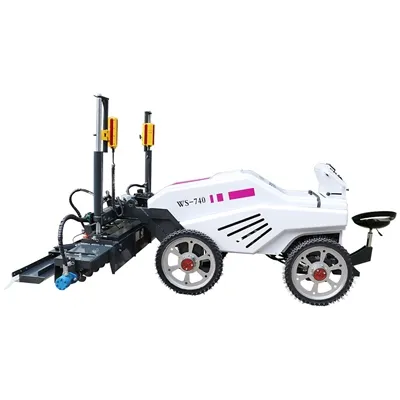
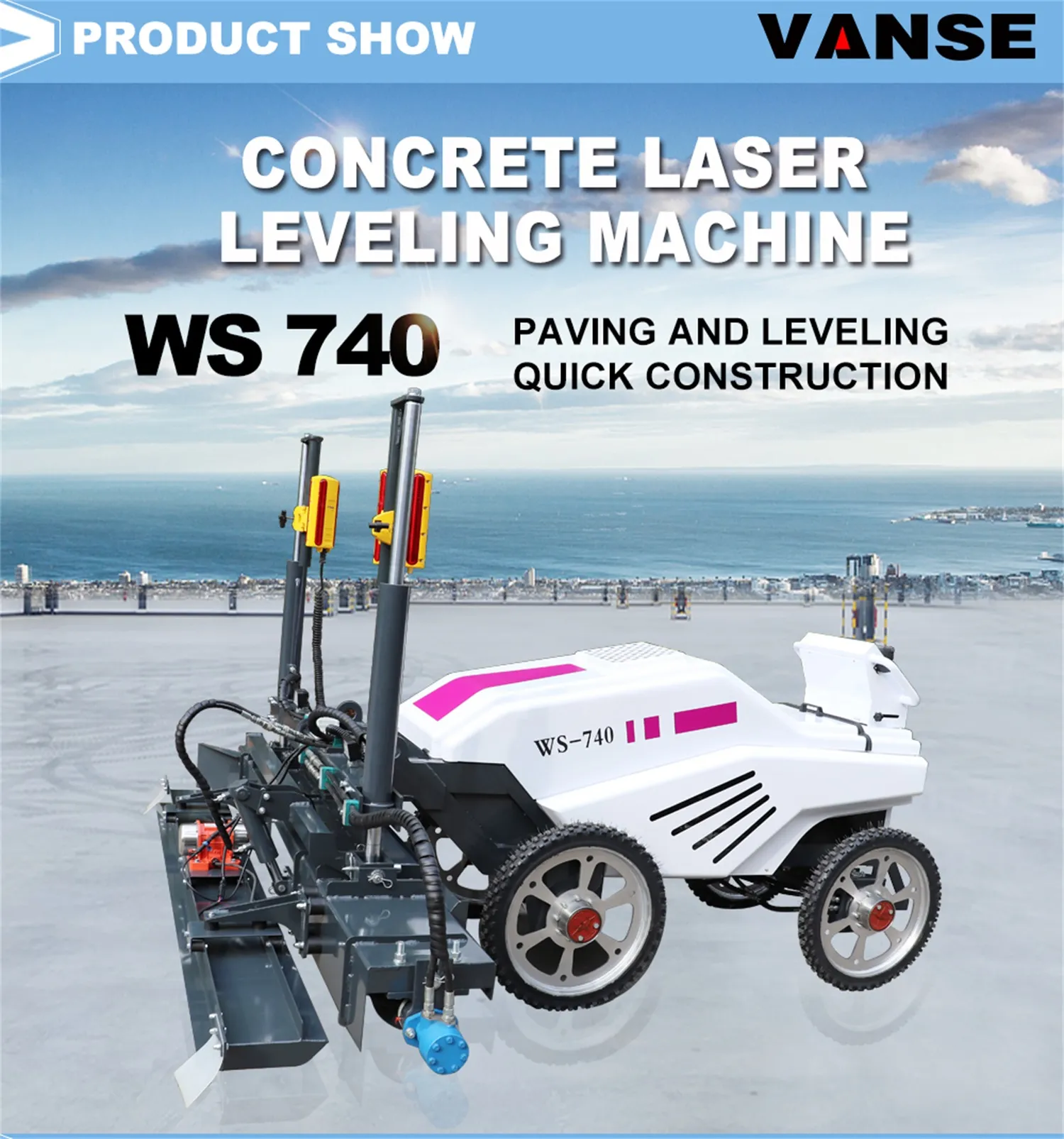
THE Concrete laser leveling machine are not only widely used in municipal engineering, but also have outstanding performance in the following fields:
1. **Industrial plants and warehouses**:
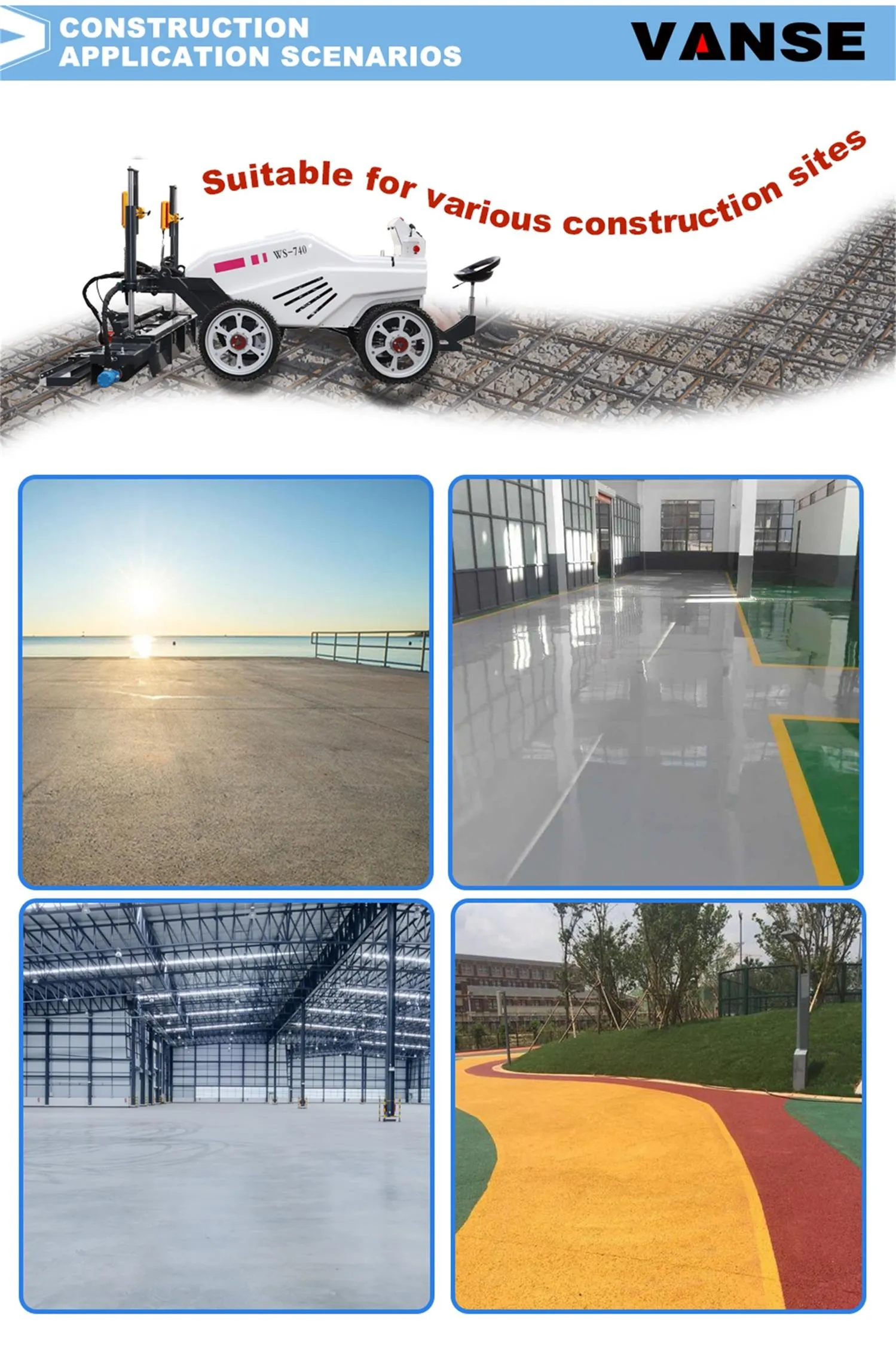
Laser levelers are used for ground construction in industrial plants and large warehouses to meet the flatness and strength requirements of large-area concrete floors.
2. **Commercial facilities**:
In the ground construction of large shopping malls, shopping centers, supermarkets and other commercial facilities, laser levelers can provide high-quality ground flatness and enhance customer experience.
3. **Logistics and warehousing**:
Logistics centers, warehouse-style supermarkets and exhibition centers require large-area flat and durable floors, and laser levelers can meet these needs.
4. **Transportation infrastructure**:
In the construction of transportation infrastructure such as airport runways, aprons, port terminals and container yards, laser levelers ensure the flatness and bearing capacity of the ground.
5. **Clean room environment**:
In clean workshops with special requirements for environmental cleanliness such as electronic appliances, food materials, and medicines, the application of laser levelers improves the overall quality and performance of the ground.
6. **Outdoor floor**:
Laser leveling machine is also suitable for the construction of outdoor floors such as outdoor parking lots and municipal pavements, providing high-quality concrete surfaces.
7. **Special ground engineering**:
Such as aerospace manufacturing centers, aircraft manufacturing and maintenance workshops, and other places with special requirements for ground flatness and bearing capacity.
8. **Overall super-flat floor system**:
In this modern floor construction process, the laser leveling machine ensures that the flatness of the ground exceeds the Chinese architectural design and construction standards.
9. **Large-area concrete floor construction**:
Laser leveling machine is suitable for the construction of large-area concrete floors such as various industrial plants, warehouses, parking lots, airport runways, etc., whether it is flat, sloping or even with potholes.
10. **Floor construction**:
Laser leveling machines are used in floor construction, especially for environments that require high cleanliness, beauty, dust-free, sterile and anti-static environments, such as electronics, microelectronics, communications products, computer production industries, large precision instrument factory floors, and warehouses, workshops, and garage floors that require wear resistance, heavy pressure resistance, impact resistance, and chemical corrosion resistance.
The versatility and high adaptability of laser leveling machines enable them to play an important role in a variety of construction environments, improve construction efficiency and quality, and reduce labor costs and later maintenance costs. With the continuous advancement of technology, the application scope of laser leveling machines will continue to expand to meet the construction needs of more fields.
Thanks to All the Friends Who Support and Trust Shandong Vanse Machinery Technology Co., Ltd.
If you want to know more about Shandong Vanse Machinery Technology Co., Ltd. or have any questions, please feel free to contact us:
Our Factory
Shandong Vanse Machinery Technology Co., Ltd.








Share this article

About the Author: Shandong Vanse Machinery Technology Co., Ltd.
Shandong Vanse Machinery Technology Co., Ltd. is a high-tech manufacturer specializing in concrete construction machinery, including laser screeds and related equipment. The company integrates R&D, production, and global sales, with products exported to over 60 countries and widely used in infrastructure projects worldwide.
Previous Post
Next Post
Related Articles
You Might Also Like
How should the emery floor be maintained before and after construction?
Emery floor is widely used in industrial plants, parking lots, warehouses and other places due to its high wear resistance, high strength, anti-slip and beautiful appearance. However, in order for the emery floor to achieve the expected use effect and life, in addition to high-quality materials and scientific construction technology, maintenance work before and after construction is also crucial. This article will conduct an in-depth discussion on the maintenance of diamond floor before and after construction, in order to provide valuable reference for relevant practitioners. 1. Foundation treatment before construction The foundation treatment before the construction of diamond floor is a key step to ensure the quality and service life of the floor. First, the base floor should be thoroughly cleaned to remove oil, dust, debris, etc., to ensure that the surface of the base is dry, flat and free of slurry. Secondly, the strength and density of the base should be checked. If there are defects such as cracks and potholes, they should be repaired and leveled in time. In addition, for the newly poured concrete base, the diamond floor should be fully maintained to sufficient strength before the construction of diamond floor. During the foundation treatment process, the following points should also be noted: First, ensure that the bonding performance between the base layer and the diamond floor material is good to avoid problems such as delamination and sanding; second, control the moisture content of the base layer to avoid excessive or low moisture content affecting the quality of the floor; third, for special base layers, such as renovation of old floors, appropriate treatment plans should be formulated according to specific circumstances. 2. Preparation of construction materials The construction materials of diamond floor mainly include diamond aggregate, cementitious materials, additives, etc. During the material preparation stage, it should be ensured that the selected materials meet the design requirements and have good wear resistance, compression resistance, anti-slip properties, etc. At the same time, strict quality inspections should be carried out on the materials to ensure that there are no impurities, no lumps, no expiration, etc. During the transportation and storage of materials, attention should be paid to moisture-proof, sun-proof, and anti-pollution measures to prevent the materials from being damp, lumped or polluted and affecting the use effect. In addition, during the material mixing process, the water-cement ratio and mixing time should be strictly controlled to ensure the uniformity and fluidity of the mixture. 3. Construction process control The construction process of diamond floor includes primer construction, diamond aggregate laying, compaction, maintenance and other steps. During the construction process, the construction specifications and process flow should be strictly followed to ensure quality control of each link. First, the primer construction should be uniform and without omission to enhance the adhesion between the base and the diamond floor. Secondly, when laying diamond aggregate, the laying thickness and uniformity should be controlled to avoid uneven thickness or hollowing. At the same time, compaction should be carried out in time after laying to improve the density and strength of the floor. Finally, during the maintenance stage, the maintenance time and method should be reasonably controlled according to the ambient temperature and humidity conditions to ensure that the floor is fully hardened and dried. 4. Initial maintenance and protection After the construction of diamond floor is completed, initial maintenance is an important link to ensure the quality of the floor and extend its service life. During the maintenance period, heavy objects should be avoided from rolling on the floor or scratching with sharp objects to avoid damage to the floor. At the same time, the floor surface should be kept clean and dry to prevent moisture and dirt from penetrating and affecting the quality of the floor. In the initial maintenance stage, some measures can also be taken to improve the performance and aesthetics of the floor. For example, applying a layer of transparent or colored coating on the floor surface can increase the gloss and wear resistance of the floor; setting angle steel or corner guard strips on the edge of the floor can prevent damage caused by the impact of equipment such as forklifts. 5. Long-term maintenance and care The long-term maintenance and care of diamond sand floor is the key to ensuring its performance and service life. In daily use, the floor surface should be cleaned regularly to remove oil, dust and other debris to keep the floor clean and beautiful. At the same time, avoid using corrosive substances such as strong acids and alkalis to clean the floor to avoid damage to the floor. For floor areas with wear, scratches and other problems, they should be repaired and renovated in time. When repairing, the repair material compatible with the original floor material should be selected, and the operation should be carried out in accordance with the construction specifications to ensure the quality of the repair. In addition, according to the use and wear of the floor, the overall renovation can be carried out regularly to restore the performance and aesthetics of the floor. 6. Problem Solving and Prevention During the use of diamond sand floor, some problems may occur, such as delamination, sanding, cracking, etc. For these problems, the causes should be analyzed in time and corresponding solutions should be taken. For example, for delamination problems, it may be caused by improper base treatment or poor material quality. Therefore, the base treatment and material quality control should be strengthened; for cracking problems, it may be caused by improper construction or changes in ambient temperature. Therefore, the construction process should be optimized and the ambient temperature should be controlled. At the same time, in order to prevent the occurrence of problems, daily inspections and maintenance should be strengthened. During inspections, attention should be paid to changes in the flatness, glossiness, wear resistance, etc. of the floor, and potential problems should be discovered and dealt with in a timely manner. During maintenance, a reasonable maintenance plan should be formulated according to the use and wear of the floor, and regular cleaning, repairs and renovations should be carried out. 7. Summary and Precautions In summary, the maintenance work before and after the construction of diamond sand floor is of great significance to ensure the quality and service life of the floor. In actual operation, attention should be paid to the basic treatment before construction, the preparation of construction materials and the control of construction process to ensure the quality of construction; at the same time, it is necessary to strengthen the initial maintenance and long-term maintenance and maintenance work, and timely discover and deal with problems; finally, through the implementation of problem solving and preventive measures, ensure that the diamond floor always maintains good performance and appearance. It should be noted that when carrying out the maintenance of diamond floor, relevant specifications and safety requirements should be followed to ensure the safety of operators. In addition, a reasonable maintenance plan should be formulated according to the specific use environment and requirements to ensure that the diamond floor can meet the needs of long-term use. When summarizing the key points of maintenance before and after the construction of diamond floor, we can summarize the following points: First, ensure that the base is properly treated, which is the basis for ensuring the quality of the floor. The flatness, strength, moisture content and other indicators of the base must meet the construction requirements, otherwise it will have an adverse effect on the subsequent use of the floor. Secondly, pay attention to the selection and quality control of materials. High-quality materials are the key to ensuring the performance and service life of the floor. When selecting materials, full consideration should be given to performance indicators such as wear resistance, compression resistance, and anti-slip properties, and the supplier should be ensured to have a good reputation and stable supply capacity. Furthermore, the control of the construction process is also crucial. During the construction process, operations should be carried out strictly in accordance with the construction specifications and process flow to ensure quality control at each link. In particular, the compaction and maintenance links are of great significance for improving the density and strength of the floor. In addition, daily maintenance and care work should not be ignored. Regular cleaning, inspection of the wear of the floor, and timely repair and renovation can effectively extend the service life of the floor. At the same time, the use of corrosive substances such as strong acids and alkalis to clean the floor should be avoided to avoid damage to the floor. Finally, it is equally important to prevent the occurrence of problems. By strengthening daily inspections, optimizing construction processes, and controlling ambient temperature, potential problems can be discovered and dealt with in a timely manner to avoid the expansion and deterioration of problems. To sum up, the maintenance work of diamond abrasive floor before and after construction is a systematic and complex task, which requires comprehensive consideration of multiple factors. By strengthening the work in grassroots treatment, material selection, construction process control, daily maintenance and care, as well as problem prevention, the quality and service life of diamond abrasive floor can be guaranteed to the greatest extent.How to match concrete power floats with laser leveling for high-precision warehouse floor projects
Think of a high-precision warehouse floor like a high-stakes relay race. The laser Leveling runs the first leg, getting the concrete to the right height and basic levelness (FL). The power float (specifically ride-on trowels) runs the anchor leg, refining the flatness (FF) and sealing the surface. If these two machines aren't perfectly "matched" in timing and technique, you'll end up with a floor that is level across the building but bumpy under a forklift. Here is how to synchronize them for elite results. For high-precision (Superflat) projects, weight is your friend. While walk-behind floats are fine for small shops, warehouse floors require heavy-duty ride-on power trowels. These machines provide the necessary downward pressure to "cut" high spots and "fill" low spots left by the Leveling. Machine Role Laser Leveling (The Macro) Power Float (The Micro) Primary Goal Elevation & Levelness (FL) Flatness & Density (FF) Key Component Laser receiver & Augers Float pans (Clip-on) Timing Immediate (Wet/Plastic) Delayed (Walkable/Plastic) Correction Moves bulk material Shaves "micro-waves" The most critical "match" between the Leveling and the float happens during the panning phase. * The Pan: Instead of using individual blades, you clip large, flat steel disks (pans) onto the bottom of the power float. The Synergy: The laser Leveling leaves a "closed" surface, but it's never perfectly flat. The pans act as a giant plane. Because the ride-on float has a wide wheelbase, the pans cannot fall into small dips; they "bridge" them and shave the peaks. The Technique: To maximize precision, the operator should run the power float perpendicular to the direction the laser Leveling traveled. This cross-cutting action cancels out any rhythmic waves the Leveling may have left behind. A laser Leveling is fast-it can place 20,000 square feet in a few hours. If your power floating crew can't keep up, the concrete will "get away" from them. The "Footprint" Test: You shouldn't start power floating until a man can stand on the concrete and leave a footprint about 3 mm to 6 mm deep. Matching the Pace: For every laser Leveling on-site, you typically need at least two high-speed ride-on trowels to ensure the entire slab is panned and finished within the same moisture window. If the concrete hardens unevenly, the float will "bounce" over high spots rather than cutting them. One common mistake is over-floating the edges or the areas around columns. The Problem: Power floats naturally want to "dig in" at the edges. The Match: High-precision projects use hand-leveling tools (like a 10-foot highway straightedge) in tandem with the power float. After the first pass of the float, a worker "restraightens" the floor manually to ensure the float didn't create any new "dishes" while trying to fix the old ones. Use Clip-on Pans: Never use just blades if you are chasing high FF numbers. Cross-Pass Pattern: Always float at a 90-degree angle to the laser Leveling's path. Non-overlapping Passes: Ensure the float operator maintains a consistent overlap (usually 50%) to prevent creating new ridges. Monitor Blade Pitch: As the floor hardens, increase the blade pitch gradually. Moving too fast to a high pitch can "chatter" the surface, ruining the flatness the laser Leveling worked so hard to establish. Pro Tip: On Superflat jobs, use a Floor Profiler (like a Dipstick) between floating passes. This allows the team to identify a low spot while the concrete is still "green" enough to be corrected with the power float. Would you like to see a step-by-step "Finishing Schedule" that outlines exactly when to switch from pans to combo blades for maximum floor density? Contact us NOW Note: The parameters provided in this document are for reference only and are not mandatory. Due to differences in technical characteristics between different brands and models of laser levelers, please consult the manufacturer for a suitable solution before actual operation. This reference document assumes no responsibility for any issues arising from failure to follow the manufacturer's instructions.How does the ergonomic design of the ride-on power trowel reduce the fatigue of the operator
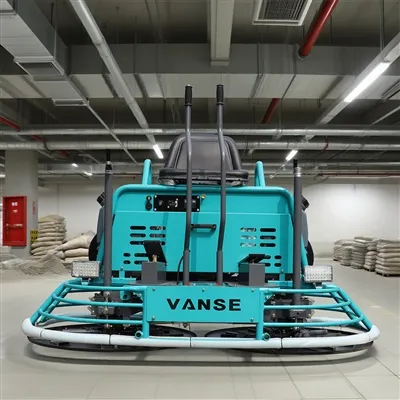
The ergonomic design of the ride-on power trowel is the core indicator to measure its advancement. The design that reduces the fatigue of the operator is mainly reflected in the following aspects: Compared with traditional handheld operation, the ergonomic design of the ride-on power trowel enhances the operator's comfort and efficiency in all aspects by reducing physical load, optimizing the operation interface and improving the working environment, thereby significantly reducing fatigue. This is the most direct way to relieve fatigue. Free from walking and bending: Operators do not need to walk for long periods on the initially set concrete or bend over to operate heavy machinery, completely eliminating the huge burden on the legs, waist and back, and preventing musculoskeletal diseases. Anti-vibration transmission: The vibration of the machine itself is the main factor causing fatigue (" vibration white finger disease ") and long-term health problems. The vehicle-style design has passed: Suspended seats: Equipped with mechanical or air shock-absorbing seats, effectively isolating the vast majority of vibrations from the ground and machines. Elastic base installation: Isolate key components such as the engine and operating system from the operating platform through elastic supports to reduce the vibration transmitted to the operator's body. This is the most direct way to relieve fatigue. Free from walking and bending: Operators do not need to walk for long periods on the initially set concrete or bend over to operate heavy machinery, completely eliminating the huge burden on the legs, waist and back, and preventing musculoskeletal diseases. Anti-vibration transmission: The vibration of the machine itself is the main factor causing fatigue (" vibration white finger disease ") and long-term health problems. The vehicle-style design has passed: Suspended seats: Equipped with mechanical or air shock-absorbing seats, effectively isolating the vast majority of vibrations from the ground and machines. Elastic base installation: Isolate key components such as the engine and operating system from the operating platform through elastic supports to reduce the vibration transmitted to the operator's body. Easy operation means dual relaxation of both the mind and the muscles. Precise control response: Equipped with advanced hydraulic or electronic control systems, the machine's response to operation instructions is very linear and smooth. It avoids the tension caused by the sudden forward rush or turn of traditional machines, and operators do not need to spend extra energy "fighting" against the machines. Outstanding machine balance: The excellent design ensures that the machine remains stable as a whole when lifting and tilting the slatboard, without any uncomfortable shaking or tilting, enhancing the operator's confidence and comfort. Reduce mental stress: Operators are in a stable and controlled "workstation", maintaining their balance without distraction, and can focus more on the polishing process and quality, significantly reducing mental fatigue. Enhancing work efficiency: Due to reduced fatigue, operators can complete more work in a single shift and maintain high-quality construction standards for a long time. This sense of achievement and controllability also indirectly alleviates mental fatigue. The ergonomic design of the ride-on power trowel is far more than just "adding a seat to the machine". It is a systematic project that transforms operators from heavy manual laborers into efficient managers by eliminating physical labor, isolating harmful vibrations, providing adjustable and comfortable sitting postures, and achieving intuitive and effortless precise control. This not only significantly reduces short-term and long-term physical fatigue and health risks, but also enhances construction quality, safety and the overall job satisfaction of operators. Note: The parameters provided in this document are for reference only and are not mandatory. Due to differences in technical characteristics between different brands and models of laser levelers, please consult the manufacturer for a suitable solution before actual operation. This reference document assumes no responsibility for any issues arising from failure to follow the manufacturer's instructions.