Technical Knowledge
Concrete Laser Leveling Machine Application Fields
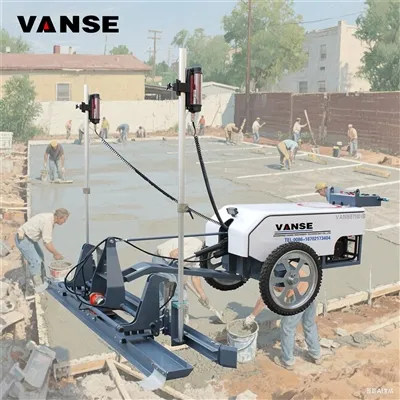
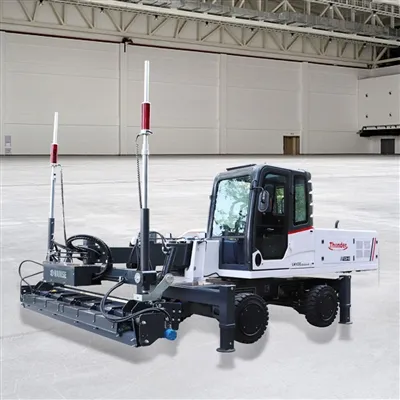
The concrete laser leveling is an efficient construction equipment that is widely used in modern construction sites. It has a wide range of applications and can be used in many fields, such as industrial plants, workshops, automated three-dimensional warehouses, electronic appliances, food materials, pharmaceutical large-scale warehouse supermarkets, logistics centers, exhibition centers, docks, container yards, cargo yards, Airport runways, aprons, parking lots, squares, residential grounds, municipal roads, etc.
In industrial plants and workshops,
concrete laser levelings can lay flatter floors for production lines, facilitate the movement of equipment, machines and personnel, and improve production efficiency and product quality. In automated three-dimensional warehouses, this equipment can provide a flat floor for the storage and transportation of goods, improving the operational efficiency of the warehouse and the safety of goods.
In the fields of electronic appliances and food materials,
concrete laser leveling machines can provide flat floors for production workshops and warehouses to ensure product quality and safety. In the pharmaceutical field, this equipment can provide a dust-free, flat floor for pharmaceutical production and storage, ensuring the quality and safety of pharmaceuticals.
In large warehouse supermarkets and logistics centers,
concrete laser leveling machines can provide a flat floor for the storage and transportation of goods, improve the turnover efficiency of goods and reduce damage to goods. In the exhibition center, this equipment can provide a flat floor for the exhibition hall to ensure the smooth progress of the exhibition.
In terminals and container yards,
concrete laser levelings can provide a flat surface for the transportation of goods and equipment, improve terminal operation efficiency and reduce damage to goods. In airport runways, this equipment can provide a flat surface for aircraft to take off and land, ensuring the safety of aircraft and the comfort of passengers.
In parking lots and squares,
concrete laser levelings can provide vehicles with a smooth driving surface, reduce vehicle wear and noise, and improve driving safety and comfort. In residential grounds and municipal pavements, this equipment can provide residents with smooth and beautiful roads and public facilities, improving residents' quality of life and the image of the city.
In general,
the concrete laser leveling machine is an efficient, accurate, and flexible sensor device that is used in many fields such as construction, transportation, and T industries. It has injected new impetus into the development of various industries and promoted the construction industry. development of the industry. With the continuous development of new technologies, concrete laser levelings have unlimited development potential and will become an indispensable and important equipment in the construction industry.
In addition to the application areas mentioned above,
concrete
laser levelings can also be used in other places where ground leveling is required. For example, in the construction of garden landscapes, the equipment can provide flat ground for garden roads and squares: in the construction of sports venues, the equipment can provide flat, non-slip ground for sports venues; in the agricultural field, the equipment can provide flat, non-slip ground for farmland. and greenhouses provide a flat ground to improve crop growth efficiency and yield.
In addition,
concrete laser levelinging machines can also be used in some special environments. For example, in cold areas, the equipment can work normally in low-temperature environments to facilitate winter construction; in desert areas, the equipment can adapt to construction in harsh environmental conditions such as sandstorms; in marine environments, the equipment can be used Construction of offshore platforms and docks
In short, the application fields of concrete laser leveling machines are very wide and can be used in various places and special environmental conditions that require smoothing of the ground. With the continuous advancement of technology and the continuous expansion of application fields, the application prospects of concrete laser leveling machines will become even broader.
Thanks to All the Friends Who Support and Trust Shandong Vanse Machinery Technology Co., Ltd.
If you want to know more about Shandong Vanse Machinery Technology Co., Ltd. or have any questions, please feel free to contact us:
Our Factory
Shandong Vanse Machinery Technology Co., Ltd.








Share this article

About the Author: Shandong Vanse Machinery Technology Co., Ltd.
Shandong Vanse Machinery Technology Co., Ltd. is a high-tech manufacturer specializing in concrete construction machinery, including laser screeds and related equipment. The company integrates R&D, production, and global sales, with products exported to over 60 countries and widely used in infrastructure projects worldwide.
Previous Post
Next Post
Related Articles
You Might Also Like
What benefits does a concrete laser leveling machine offer in comparison to conventional leveling approaches?
Concrete laser leveling machine is an efficient and precise equipment in modern concrete construction. Compared with traditional manual leveling (such as ruler, scraper, vibrator) or mechanical leveling (such as simple leveling by paver), its advantages are mainly reflected in the following dimensions: Laser control, unified global benchmark: The laser leveling machine establishes a horizontal reference plane through a laser transmitter, and the leveling head always works with this reference as a reference, avoiding the local height difference caused by manual visual errors and reference line offset (such as loose wire) in traditional methods. Accuracy can reach millimeter level: The flatness error of traditional manual leveling is usually above 5-10mm, while the laser leveling machine can control the error within 3mm, which is especially suitable for scenes with high flatness requirements (such as industrial plants, storage and logistics floors, precision instrument workshops, etc.), which can reduce the risk of sanding and cracking of the ground in the later stage, and also provide a more stable foundation for subsequent epoxy flooring, wear-resistant flooring and other processes. The single-shift operation area doubles: A traditional manual leveling team (3-5 people) can complete about 300-500 square meters per day, while a laser leveling machine (operated by 1-2 people) with concrete conveying equipment can complete 1000-2000 square meters in a single shift, and the efficiency is increased by 2-4 times. Integrated operation, reducing processes: The laser leveling machine integrates the functions of vibration, leveling, and slurry. The traditional method of "paving – vibration – scraping – slurry" requires multiple people to cooperate, and the laser leveling machine can complete it at one time, shortening the process connection time. Save labor costs: Traditional leveling requires a large number of workers to work together (such as paving, measuring, scraping, finishing, etc.), while the laser leveling machine only requires 1 operator and 1-2 auxiliary workers (handling corners, filling materials), which greatly reduces the number of workers, especially suitable for the current situation of labor shortage in the construction industry. Reduce labor intensity: Traditional manual leveling requires bending over and repeatedly pushing and pulling the scraper bar, which is labor-intensive, and long-term operation is prone to cause occupational diseases such as lumbar muscle strain; laser leveling machines are operated through mechanical automation, and the labor intensity of workers is significantly reduced. High-frequency vibration reduces bubbles and honeycombs: The leveling head of the laser leveling machine is equipped with a high-frequency vibrator (the vibration frequency can reach 3000-5000 times/minute), which can fully discharge the air in the concrete, avoid local leakage and lack of vibration caused by uneven manual operation of traditional vibrating rods, and improve the density and strength of concrete. Uniform slurry lifting effect: The leveling head completes slurry lifting simultaneously during the leveling process, making the surface cement mortar more evenly distributed, reducing the local thinning or overdrying caused by traditional manual slurry lifting, which is conducive to subsequent surface finishing and enhancing surface wear resistance. Capability of large slope construction: Some laser levelers support slope adjustment (0-5% or even higher), which can be used in scenes with slope requirements such as ramps and sloping roofs. Traditional manual leveling is difficult to accurately control the slope. Large area seamless construction: For ultra-large area concrete (such as large factory buildings and airport runways), laser levelers can operate continuously, reduce joint errors caused by manual segmented construction, and improve overall flatness. Adaptability to harsh environments: The laser system is less affected by weather (such as strong light and breeze), while manual leveling is prone to visual errors under strong light, and strong winds will affect the stability of the baseline. Reduce later maintenance costs: Due to high flatness and good density, the probability of cracking and sanding of concrete floors is reduced, and subsequent repair and maintenance costs are reduced. Shorten construction period and accelerate capital turnover: Efficient construction can complete project nodes ahead of schedule, reduce indirect costs such as equipment rental and labor management, and especially for large projects, the time cost savings are more significant. The concrete laser leveling machine surpasses the traditional leveling method in terms of accuracy, efficiency, quality, cost, etc. through "laser precision control + mechanical automation operation", and is especially suitable for projects with high requirements for ground quality and large construction areas. Although the initial equipment investment is high, in the long run, the comprehensive benefits it brings (reducing rework, saving labor, shortening construction period, etc.) can significantly improve the competitiveness of construction. Click the below to jump immediately!!! ARMOUR JOINT CONCRETE LASER LEVELING MACHINE LIGHT TOWER POWER TROWEL SLIPFORM MACHINE STEEL FIBER TOPPING SPREADER TRACKED MINI DUMPERHow to control the power trowel speed and pressure to prevent surface cracking on super flat floors?
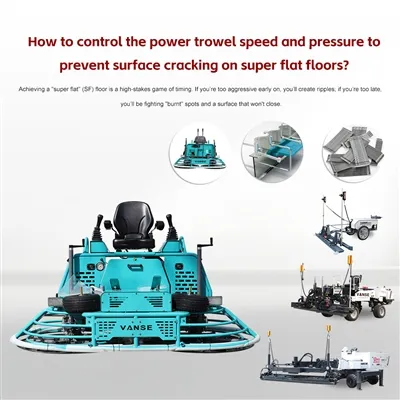
Achieving a "super flat" (SF) floor is a high-stakes game of timing. If you're too aggressive early on, you'll create ripples; if you're too late, you'll be fighting "burnt" spots and a surface that won't close. To prevent surface cracking-specifically crazing (fine spiderweb cracks) or plastic shrinkage cracks-you need to manage the relationship between the machine's RPM and the pitch of the blades. The general rule for super flat floors is: Slow and steady wins. High speeds create centrifugal force that can pull moisture to the surface prematurely or "tear" the paste. Initial Passes: Keep the engine at a low-to-medium throttle. You want just enough speed to move the machine smoothly without "digging in." Finishing Passes: Increase speed gradually as the slab hardens. However, on SF floors, avoid "redlining" the engine, as excessive vibration can interfere with the floor's levelness ($F_{L}$) and flatness ($F_{F}$) numbers. Uniformity: Maintain a consistent walking or riding speed. Sudden accelerations create "waves" in the concrete paste that are nearly impossible to flatten out later. Blade pitch is your primary tool for controlling how much pressure is exerted on the slab. Stage Blade Pitch Objective Panning (Float) Flat (0°) Use float pans to break open the surface, bring up "cream," and knock down high spots. First Power Trowel Slight Tilt (1-2°) Close the pores without tearing the surface. Late Finishing High Pitch (Increasing) Increase pressure to "burnish" or densify the surface. Pro Tip: If you notice "chatter marks" (rhythmic ripples), your pitch is likely too steep for the current hardness of the slab. Flatten the blades immediately. Cracking on super flat floors often happens because the surface dries faster than the base. Avoid "Dusting": Never throw dry cement or "shake" on a floor that has already lost its bleed water. This is a recipe for delamination and crazing. Watch the Wind: If you are working in an open bay, use windbreaks. Rapid evaporation is the #1 cause of plastic shrinkage cracks. The "Touch" Test: Do not start troweling until you can step on the slab and leave a footprint no deeper than 1/8 to 1/4 inch. For a high FF rating, your movement pattern is just as vital as your speed: Overlap: Ensure a 50% overlap on every pass. Direction: Always change your direction by 90 degrees on subsequent passes to "cross-cut" any minor ridges created by the previous pass. The "Sweet Spot": If the concrete begins to turn dark (the "burn"), you have reached maximum density. Stop pitching the blades higher, or you risk brittle surface cracking. Would you like me to create a checklist for the curing process to ensure those super flat specs hold up after the troweling is done? Contact us NOW Note: The parameters provided in this document are for reference only and are not mandatory. Due to differences in technical characteristics between different brands and models of laser levelers, please consult the manufacturer for a suitable solution before actual operation. This reference document assumes no responsibility for any issues arising from failure to follow the manufacturer's instructions.What impact does concrete pavement paving speed have on flatness?
🥂Affecting the concrete vibration effect: If the paving speed is too fast, the concrete stays in the vibration area for too short a time, and the vibrator cannot fully vibrate the concrete, resulting in the inability to completely discharge the air inside the concrete and insufficient density. In this way, in the subsequent use of the pavement, problems such as local subsidence are prone to occur, affecting the flatness. On the contrary, if the paving speed is too slow, the concrete stays in the vibration area for too long, which will cause excessive vibration of the concrete, causing the coarse aggregate to sink, the fine aggregate and cement slurry to float, and segregation, which will also affect the flatness and overall quality of the pavement. 🥂Affecting the working state of the leveling plate: The leveling plate of the paver is a key component for the initial leveling of concrete. When the paving speed changes, the concrete resistance of the leveling plate will also change. If the paving speed suddenly increases, the amount of concrete accumulation in front of the leveling plate decreases, and the upward buoyancy of the leveling plate decreases, which may cause the leveling plate to sink, causing local depressions on the pavement after paving. On the contrary, if the paving speed suddenly slows down, the concrete accumulation in front of the leveling increases, and the buoyancy of the leveling increases, which will cause the leveling to rise, resulting in the road surface being too high in some parts, affecting the flatness. 🥂Affecting the finishing of the concrete surface: The appropriate paving speed helps the construction workers to timely and effectively finish the newly paved concrete surface. If the paving speed is too fast, the construction workers will not have time to carefully deal with the unevenness of the concrete surface, and some small bumps will remain, affecting the flatness of the road surface. If the paving speed is too slow, the water on the concrete surface will evaporate too much. When finishing, it is easy to cause surface roughness and peeling, which is also not conducive to ensuring flatness. To ensure the flatness of the concrete pavement, the appropriate and stable paving speed should be selected according to the properties of the concrete (such as slump and workability), the performance of the paver and the actual situation of the construction site. It is generally advisable to control it at 2-3m/min. Click the below to jump immediately!!! ARMOUR JOINT CONCRETE LEVELING MACHINE LIGHT TOWER POWER TROWEL SLIPFORM MACHINE STEEL FIBER TOPPING SPREADER TRACKED MINI DUMPER