Technical Knowledge
Summarization and Application of Reinforced Concrete Cutting Technology
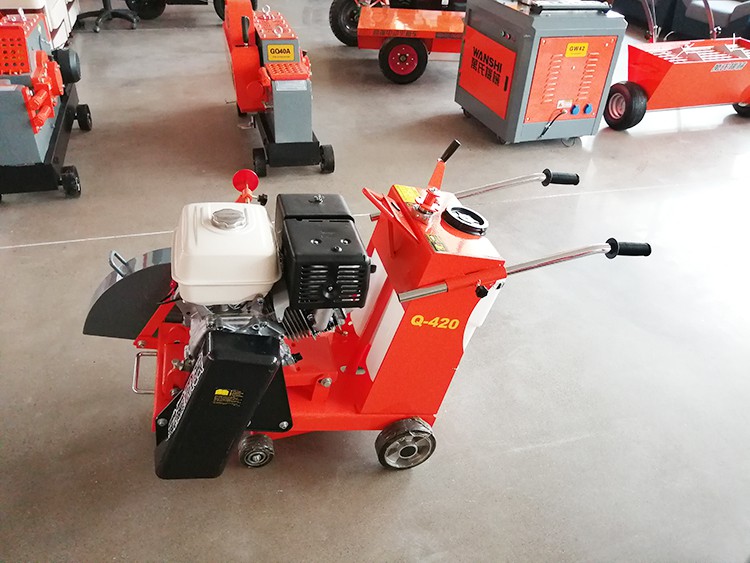
Concrete cutting process With the accelerated pace of urbanization, urban construction with each passing day. In the big city, the ground has been unable to meet the traffic requirements, urban traffic up to the elevated, light rail, down to the subway. Some elevated posts now seem to be factors that constrain urban development. It is inevitable that some of the elevated structures are to be demolished, and that part of it is not affected and reused, which has become a problem before us. In the traditional demolition of this construction can not do anything, advanced reinforced concrete cutting method is safe, efficient and environmentally friendly features.
Reinforced concrete cutting technology mainly disc cutting method and diamond wire cutting method. Diamond wire cutting method has faster speed, greater flexibility and lower construction noise. Especially in the construction renovation project has been more and more applications. Disc cutting method to break the traditional wind pick chisel after the gas cutting or directional blasting construction methods, with diamond particles with cutting disc cutting, construction incision neatly, straight, without post-processing, free from construction sites, environmental protection , Duration, safety reasons and other conditions, is widely used in various types of large-scale building structural transformation and cutting construction. The steel wire cutting method is composed of high power hydraulic press, transmission locating pulley and steel wire with diamond sawtooth. The hydraulic motor drives the steel wire around the cutting object to rotate at high speed through the drive pulley. It has the advantages of fast construction and noise Low, no vibration, no dust and other advantages of waste gas pollution, and incision straight and smooth, no need to do after the processing. The use of the technology, for some of the special requirements of the construction of the project, such as tight schedule, high environmental requirements, as well as some large concrete structure demolition, cutting works, these problems can be solved.
Thanks to All the Friends Who Support and Trust Shandong Vanse Machinery Technology Co., Ltd.
If you want to know more about Shandong Vanse Machinery Technology Co., Ltd. or have any questions, please feel free to contact us:
Our Factory
Shandong Vanse Machinery Technology Co., Ltd.








Share this article

About the Author: Shandong Vanse Machinery Technology Co., Ltd.
Shandong Vanse Machinery Technology Co., Ltd. is a high-tech manufacturer specializing in concrete construction machinery, including laser screeds and related equipment. The company integrates R&D, production, and global sales, with products exported to over 60 countries and widely used in infrastructure projects worldwide.
Previous Post
Next Post
Related Articles
You Might Also Like
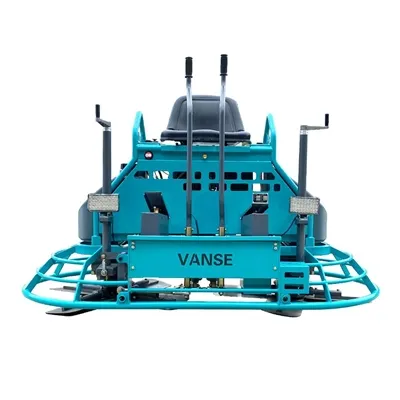
What influence does the speed of the power trowel’s disk have on the construction effect?
– When the trowel speed is moderate, it can effectively flatten the raised parts of the concrete surface and fill the sunken parts. For example, in general indoor floor construction, if the trowel speed is set in a suitable range, such as 70-100 rpm, the blade on the trowel can initially level the newly poured concrete surface as the trowel moves forward. Because at this speed, the pressure and flattening effect of the blade on the concrete are relatively uniform, and it will not be over-cut due to too fast a speed, nor will it be unable to effectively deal with the unevenness of the surface due to too slow a speed. – When the trowel speed is too high, the cutting force of the trowel blade on the concrete surface is too large. This may cause over-cutting of the concrete surface, destroy the original structure of the concrete, and cause fine cracks or pits on the surface. Especially for concrete whose strength has not yet fully developed, too high a speed may excessively disturb the cement slurry layer on the surface, affecting the final quality of the concrete. – On the contrary, if the trowel speed is too low, the trowel blade will not have enough force on the concrete surface. This will make it impossible to effectively deal with the uneven parts of the concrete surface. For example, on the concrete surface with large stone protrusions or template splicing marks, the trowel at a low speed may not be able to remove these defects, resulting in the ground flatness not meeting the requirements. – Appropriate trowel speed helps to improve the compaction of the concrete surface. When the trowel rotates at a certain speed, the weight of the trowel and the rotation of the blade work together to exert pressure on the concrete surface, so that the particles in the concrete are arranged more closely. For example, in concrete construction with high bearing capacity requirements such as industrial plant floors, the trowel speed is controlled at about 80-120 rpm, which can make the concrete surface better compacted during the troweling process, thereby improving the bearing capacity and wear resistance of the ground. – When the speed is too high, although the surface looks smoother, it may actually make the mortar layer on the concrete surface too loose. Because too high a rotation speed will cause the water in the mortar layer to evaporate too quickly, and excessive rotation will destroy the bonding force between the mortar particles, resulting in insufficient surface compaction, which is prone to quality problems such as sanding and peeling during later use. – If the speed of the trowel is too low, it will not generate enough pressure to compact the concrete surface. This will make the porosity of the concrete surface larger and reduce the compactness of the concrete. Such a concrete surface is easily damaged when there are heavy objects rolling or frequent friction. – A higher trowel speed can make the concrete surface have better gloss. When the speed reaches a certain level, such as 100-150 rpm, the trowel blade can further smooth the mortar layer on the concrete surface during rapid rotation, making the surface more delicate and producing gloss. In some places with high requirements for appearance, such as shopping mall floors and exhibition hall floors, by appropriately increasing the trowel speed, a smooth mirror effect can be created. – However, if the speed is too high, it may cause wavy textures on the concrete surface, affecting the uniformity of gloss. This is because too high a speed will cause the trowel to vibrate during the rotation process, and this vibration is transmitted to the concrete surface, affecting the surface flatness and destroying the uniformity of the gloss. – When the speed is too low, the surface roughness of the concrete is greater and the glossiness is poor. Because the trowel rotating at a low speed cannot fully smooth the microscopic unevenness of the concrete surface, it cannot form a smooth surface, and can only obtain a relatively rough matte effect.From Ground Up: Your Complete Guide to Professional Concrete Slab Preparation & Pouring
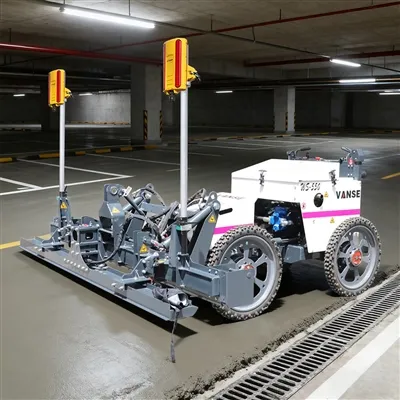
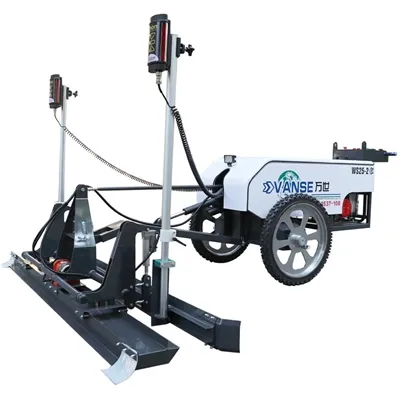
Whether you're planning a sturdy new patio, a warehouse floor, or any concrete project, success is truly built from the ground up. A flawless finish begins long before the concrete truck arrives. At Vanse Machinery, with over a decade of expertise in concrete equipment, we understand that proper ground preparation is the most critical, yet often overlooked, step. This comprehensive guide will walk you through the essential stages of prepping for a concrete slab and introduce how modern robotic concrete pumps and laser-guided equipment can elevate your project's quality and efficiency. A concrete slab is only as strong and stable as the base it rests on. Skipping or rushing through preparation is a direct path to future cracks, sinking, and expensive repairs. Here is your essential checklist for how to prep ground for concrete slab: Site Clearing & Excavation: Remove all vegetation, topsoil, rocks, and debris. Excavate to the required depth, accounting for the slab thickness and the sub-base material. Sub-Grade Compaction: Compact the native soil thoroughly. A well-compacted sub-grade prevents settling. For optimal support, consider using a laser leveling machine to ensure a perfectly flat and uniform base before adding gravel. Installing the Sub-Base: Add a 4-6 inch layer of compactible gravel or crushed stone. This layer provides drainage, prevents frost heave, and offers a stable platform. Use a plate compactor in layers to achieve maximum density. Formwork & Reinforcement: Build sturdy wooden or metal forms to define the slab's edges. Install any necessary reinforcement, such as rebar or welded wire mesh, and support it with chairs to keep it centered in the slab. Final Checks & Moisture Barrier: Verify all dimensions, levels, and slopes. On indoor projects or where moisture is a concern, lay a vapor barrier over the sub-base before pouring. While meticulous manual preparation is vital, the actual pouring and finishing phases are where modern concrete pouring equipment makes a transformative difference. This is the core of Vanse's expertise. For Unmatched Flatness: Laser Leveling Technology After the concrete is placed, achieving a perfectly level surface is paramount. Vanse's Boom Laser Leveling Machines (like the YZ30-4E) automate this process. They use a rotating laser transmitter and a mobile receiver to automatically control the Leveling head's height, producing a super-flat floor with far greater speed and accuracy than manual methods. This technology is essential for large-scale industrial floors, warehouses, and commercial spaces. Beyond Basic Pumps: The Power of Robotic Placement The keyword robotic concrete pump points to the future of placement. Vanse's advanced machinery embodies this concept. Our truck-mounted concrete boom pumps allow for precise, remote-controlled placement of concrete directly into the forms, even in hard-to-reach areas. This minimizes labor, reduces material segregation, and significantly speeds up the concrete pouring process for patios, foundations, and elevated slabs. From Pour to Polish: The Complete Equipment Ecosystem A perfect slab requires more than just pouring. Vanse provides the full suite of equipment: Spreaders & Distributors: For evenly placing and roughly leveling the concrete mass. Power Trowels: Ride-on and walk-behind models (like the VS836) for creating a dense, smooth, professional-grade finish. Cutting Machines: To create precise control joints (like those made with the VS-HM500), which guide where the concrete should crack as it cures, preventing unsightly random cracks When you research cement slab preparation, you're seeking reliable, proven solutions. This aligns perfectly with Google's E-E-A-T (Experience, Expertise, Authoritativeness, Trustworthiness) framework, which Vanse exemplifies: Experience & Expertise: Founded in 2013, Vanse is a national high-tech enterprise with deep, specialized knowledge in concrete equipment R&D and manufacturing. Our solutions are born from real-world application. Authoritativeness: We have successfully partnered with major global firms like JD Logistics, CATL, and China State Construction Engineering Corporation (CSCEC), a testament to the reliability and performance of our equipment on demanding projects. Trustworthiness: Our global reach-exporting to over 80 countries including the USA, Germany, Australia, and Saudi Arabia-and established overseas branches demonstrate a commitment to quality and international standards that contractors worldwide trust. Preparing for a concrete slab is a systematic process that blends fundamental best practices with cutting-edge technology. By following a thorough concrete pre pour checklist for ground preparation and leveraging precision equipment like laser Levelings and advanced pumps for the pour, you ensure a result that is structurally sound, aesthetically pleasing, and built to last. For contractors and project managers looking to invest in efficiency and quality, exploring Vanse's range of concrete pouring equipment is the logical next step. Our team is ready to help you select the right machinery to make your next patio, floor, or slab project your most successful one yet. Note: The parameters provided in this document are for reference only and are not mandatory. Due to differences in technical characteristics between different brands and models of laser levelers, please consult the manufacturer for a suitable solution before actual operation. This reference document assumes no responsibility for any issues arising from failure to follow the manufacturer's instructions.In order to reduce the probability of accidents, the laser leveling machine should be operated in this way
If the laser leveler is used improperly, it is easy to cause danger, especially if it rolls over, it is likely to cause casualties. Therefore, when using the leveler, you should always maintain the correct operation method, because only in this way can the safety of the laser leveler be guaranteed to the greatest extent, and the construction quality of the leveler can be well exerted. Please see the following for the correct operation method. ◀ Before the laser leveler moves, check the road conditions, remove obstacles on the road, keep irrelevant personnel away from the leveler, and then retract the telescopic arm to start. ◀ Check the direction of travel, determine the position of the drive wheel, and then honk the horn, and the laser leveler will start to move slowly. ◀ When reversing the laser leveler, estimate the space behind the car in advance. If the blind spot is too large, ask a special person to direct and coordinate behind. ◀ The driver controls the walking speed according to the road conditions. When walking on an open flat ground, you can select "1" gear, and the walking speed of the laser leveler will automatically increase or decrease according to the working pressure of the hydraulic walking circuit; when going up and downhill, you can select "0" gear, and the laser leveler will walk at a low speed and high torque. ◀ Try to choose a flat road when the laser leveler is walking. ◀ Avoid walking the leveler in water as much as possible. If you must wade, remember to explore the water depth and the soft and hard platform of the bottom of the water in advance. It is not suitable to walk if the underwater silt is too deep or the water surface exceeds the wheels The above is the correct operation method of the laser leveler. I hope you can get some substantial reference value from this article. If you have other questions, please feel free to consult us at any time, and we will answer them one by one.