Technical Knowledge
Recommended reading 】 Buy concrete laser leveling machine must know two or three things
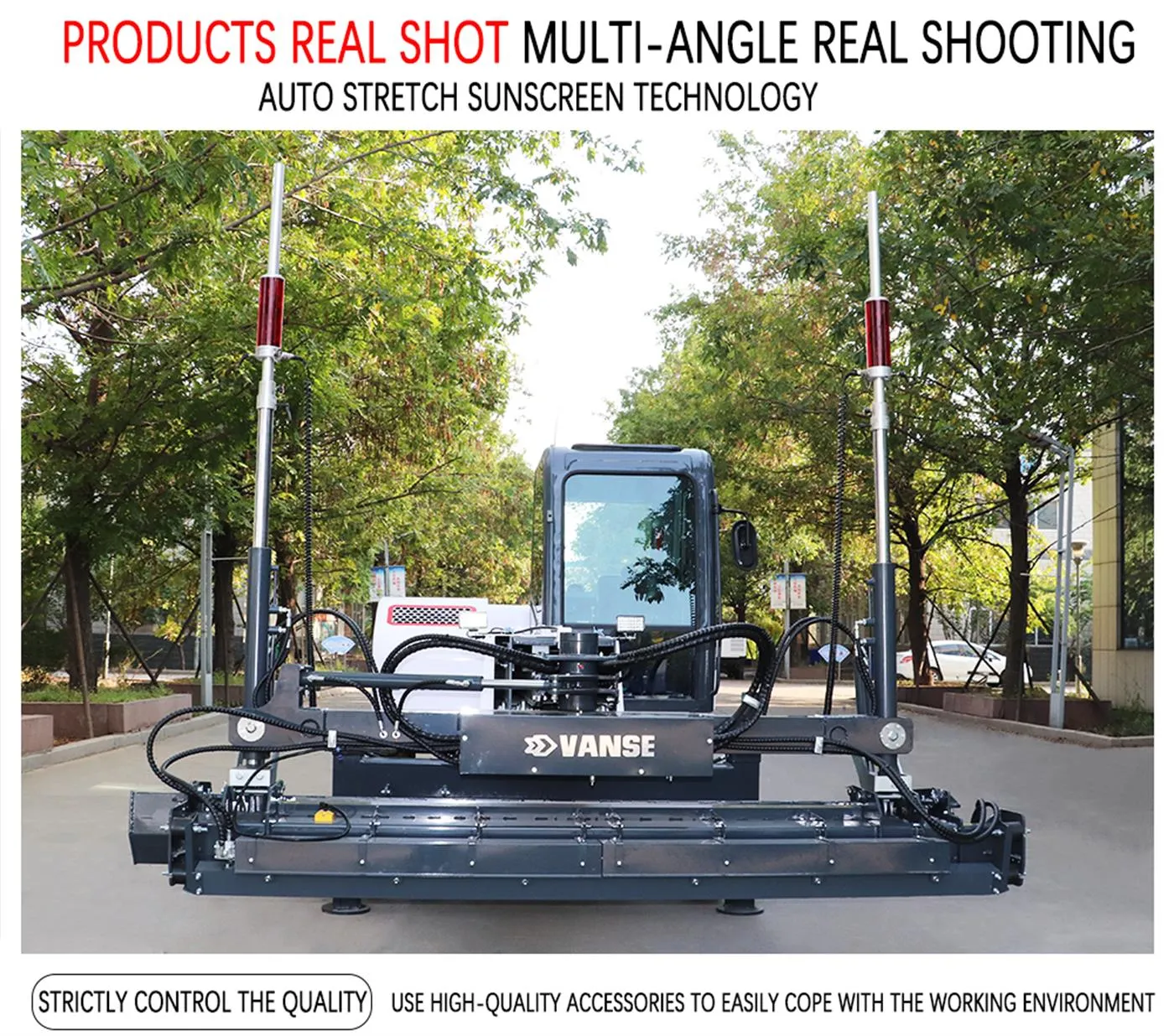
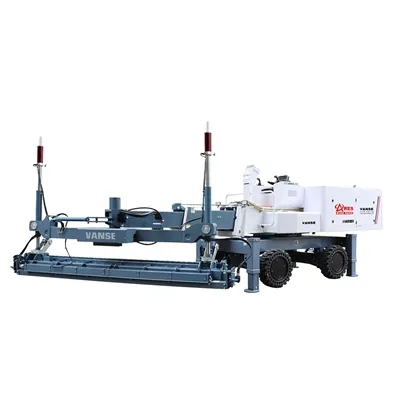
The application of concrete laser levelling machine undoubtedly improves the efficiency of construction, realizes the saving of labor costs, and improves the economic benefits of engineering construction, but with the gradual maturity of the levelling machine technology, the types and models of the machines sold on the market are also increasing, however, only the suitable machine can play a multiplier effect with half the effort in construction. In order to help the majority of users to find a really professional and focused good brand good products, today we will talk about the purchase of concrete laser leveling machine a few points for attention.
—- From the manufacturer's point of view —-
« Do not choose low-price products to investigate the comprehensive strength »
Consumers for a business, the purchase of trust is a comprehensive consideration. Price may account for 25 percent of that, but at the end of the day, what consumers value is a combination of factors. In today's increasingly rational consumption habits, low prices can only become a gimmick to attract consumers' attention, and the real measure of a company's success or failure is a sign of the company's product quality, after-sales service and its own strong strength. In the current shuffle trend of the concrete laser leveling machine industry is becoming more and more obvious, the terminal is not enough, the network is not perfect, the brand is not well-known enough enterprises, will face greater pressure.
« Choose the leveler carefully choose the just starting brand »
For this high-tech product of concrete laser levelling machine, in addition to technological innovation, there is another important factor that affects the quality, that is, experience. How to define the different models and specifications of laser leveling machine products? How to deal with the ground smoothness? Problems such as how to locate the laser transmitter require years of long-term accumulation in order to accurately grasp. When the user chooses the concrete laser leveling machine product, if he hastily buys the products of the entry-level brand, he is likely to become a "guinea pig" and encounter all kinds of trouble. To identify if a brand is new or not is as simple as looking at the time of its patent registration and looking at real cases in the past.
—- —- From a product perspective
« To clarify the difference between different models of products »
Take two-wheel and four-wheel concrete laser levelling machine as an example:
The construction flexibility of the two-wheel laser leveling machine is strong, and it is more suitable for the construction of castin floor, underground garage and some terrain or relatively complex working environment. The weight of the two-wheel machine is generally about 300kg, the leveling thickness is between 50-245cm, the operation is hand-pushed, the equipment has a high mobile efficiency, on the basis of achieving the ground flatness, it can also improve the efficiency of the work to a great extent, if the budget is less, the purchase of this model is more economical, about 2000 square meters per day can be easily done. It is a rare laser leveling equipment.
The construction range of the four-wheel laser leveling machine is also very wide, which saves labor compared with the two wheels, and the equipment has built-in hydraulic drive, which effectively avoids the phenomenon of slipping during the construction process. Whether it is a large warehouse or multi-storey building can use four-wheel laser leveling machine to level the ground, the four-wheel weight is generally about 900 kg, the leveling thickness is between 60-300cm, the operation is a driving type, relatively easy to operate the two-wheel operator, the use effect of the equipment is comparable to many large leveling machines, and it is also a very cost-effective laser leveling equipment.
In summary, the choice of the use of concrete laser levelling machine need to focus on two aspects of the problem, one is the performance and scope of application of the product itself, the second is the comprehensive strength of the manufacturer and brand trust, etc., no matter which aspect, consumers should give enough attention, do enough homework, so as to avoid economic losses caused by wrong selection and wrong use.
Thanks to All the Friends Who Support and Trust Shandong Vanse Machinery Technology Co., Ltd.
If you want to know more about Shandong Vanse Machinery Technology Co., Ltd. or have any questions, please feel free to contact us:
Our Factory
Shandong Vanse Machinery Technology Co., Ltd.








Share this article

About the Author: Shandong Vanse Machinery Technology Co., Ltd.
Shandong Vanse Machinery Technology Co., Ltd. is a high-tech manufacturer specializing in concrete construction machinery, including laser screeds and related equipment. The company integrates R&D, production, and global sales, with products exported to over 60 countries and widely used in infrastructure projects worldwide.
Previous Post
Next Post
Related Articles
You Might Also Like
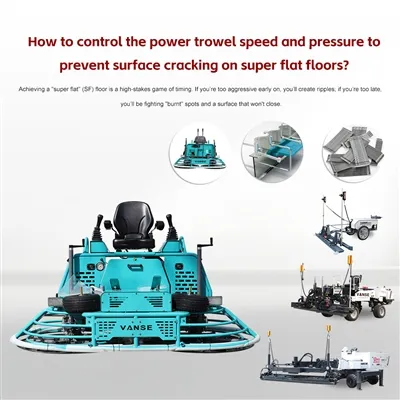
How to control the power trowel speed and pressure to prevent surface cracking on super flat floors?
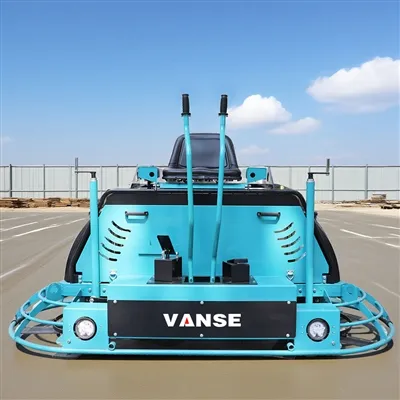
Achieving a "super flat" (SF) floor is a high-stakes game of timing. If you're too aggressive early on, you'll create ripples; if you're too late, you'll be fighting "burnt" spots and a surface that won't close. To prevent surface cracking-specifically crazing (fine spiderweb cracks) or plastic shrinkage cracks-you need to manage the relationship between the machine's RPM and the pitch of the blades. The general rule for super flat floors is: Slow and steady wins. High speeds create centrifugal force that can pull moisture to the surface prematurely or "tear" the paste. Initial Passes: Keep the engine at a low-to-medium throttle. You want just enough speed to move the machine smoothly without "digging in." Finishing Passes: Increase speed gradually as the slab hardens. However, on SF floors, avoid "redlining" the engine, as excessive vibration can interfere with the floor's levelness ($F_{L}$) and flatness ($F_{F}$) numbers. Uniformity: Maintain a consistent walking or riding speed. Sudden accelerations create "waves" in the concrete paste that are nearly impossible to flatten out later. Blade pitch is your primary tool for controlling how much pressure is exerted on the slab. Stage Blade Pitch Objective Panning (Float) Flat (0°) Use float pans to break open the surface, bring up "cream," and knock down high spots. First Power Trowel Slight Tilt (1-2°) Close the pores without tearing the surface. Late Finishing High Pitch (Increasing) Increase pressure to "burnish" or densify the surface. Pro Tip: If you notice "chatter marks" (rhythmic ripples), your pitch is likely too steep for the current hardness of the slab. Flatten the blades immediately. Cracking on super flat floors often happens because the surface dries faster than the base. Avoid "Dusting": Never throw dry cement or "shake" on a floor that has already lost its bleed water. This is a recipe for delamination and crazing. Watch the Wind: If you are working in an open bay, use windbreaks. Rapid evaporation is the #1 cause of plastic shrinkage cracks. The "Touch" Test: Do not start troweling until you can step on the slab and leave a footprint no deeper than 1/8 to 1/4 inch. For a high FF rating, your movement pattern is just as vital as your speed: Overlap: Ensure a 50% overlap on every pass. Direction: Always change your direction by 90 degrees on subsequent passes to "cross-cut" any minor ridges created by the previous pass. The "Sweet Spot": If the concrete begins to turn dark (the "burn"), you have reached maximum density. Stop pitching the blades higher, or you risk brittle surface cracking. Would you like me to create a checklist for the curing process to ensure those super flat specs hold up after the troweling is done? Contact us NOW Note: The parameters provided in this document are for reference only and are not mandatory. Due to differences in technical characteristics between different brands and models of laser levelers, please consult the manufacturer for a suitable solution before actual operation. This reference document assumes no responsibility for any issues arising from failure to follow the manufacturer's instructions.Analysis of the Causes & Treatment Measures for Black Smoke Emitted by the Power Trowel during operation
Black smoke emitted by a Power Trowel during operation is a typical malfunction phenomenon. The fundamental cause lies in incomplete fuel combustion, which leads to the direct discharge of tiny carbon particles. The following is a detailed analysis of the causes and handling measures, listed in the common order of investigation. Cause analysis: Engine combustion requires sufficient air. When the air filter is severely clogged with dust and debris, the intake volume is insufficient, resulting in the fuel injected into the cylinder not being able to mix with enough air, causing a "rich fuel" state. Unburned carbon particles then form black smoke. Handling measures Stop the machine immediately for inspection. Remove the air filter element. For paper filter elements, check by shining a flashlight. If the light transmission is poor or the surface is covered with dust, they need to be replaced. For sponge filter elements, they can be thoroughly cleaned with neutral detergent, completely dried, and then a few drops of engine oil should be added and kneaded evenly before being reinstalled. Note: In construction sites with a lot of dust, the air filter should be cleaned every day or every shift. Cause analysis: Excessive fuel supply or poor fuel quality. Handling measures Check the fuel: Use fresh and clean standard-grade gasoline. Inferior or deteriorated gasoline will affect combustion. Check the oil level: Pull out the oil dipstick and check if the oil level is between the upper and lower limits. Excessive oil filling will increase the pressure in the crankcase, causing the oil to seep into the combustion chamber and participate in combustion, generating blue-black smoke. Check the dampers: The dampers are used to thicken the mixed gas during cold machine startup. If the machine remains in the off state during hot operation or normal operation, it will cause the mixture to be too rich and black smoke to be emitted. Please ensure that after the machine is started and preheated, the choke door is fully opened to the "Running" position. Clean or inspect the carburetor: If all the above three points are normal, the problem is likely to lie with the carburetor itself. Excessive mixture: If the oil level in the float chamber inside the carburetor is too high, the main orifice is worn or blocked, or the needle valve is stuck, it can all lead to excessive fuel injection. Handling: The carburetor needs to be disassembled. Thoroughly clean all oil passages and measuring holes with carburetor cleaner. This is a highly technical operation. It is recommended that it be carried out by professional maintenance personnel or that the carburetor assembly be replaced directly. Cause analysis: Ignition system failure leads to incomplete combustion. Handling measures Check the spark plugs Remove the spark plug and observe the electrode part. If the carbon deposits are severe and appear black and velvety, it indicates poor combustion. Clean the carbon deposits with spark plug cleaner or a wire brush. Use a feeler gauge to check and adjust the electrode gap to the range specified in the equipment manual (usually 0.6-0.8mm). If the ceramic part of the spark plug is cracked or the electrode is severely eroded, please replace it with a new one directly. Cause analysis: When the concrete material is too soft, the operator presses down too deeply, or the flattening head is stuck by foreign objects, the engine will be forced to output more power due to a sharp increase in load. The control system will automatically thicken the mixture, and at this time, black smoke may be emitted briefly. Handling measures Master the correct construction timing: Start the smoothing operation when the concrete reaches the initial setting state (when a person stands on it and sinks by about 5-10mm). Standard operation: According to the hardening condition of the concrete, gradually switch from high speed and large Angle to low speed and small Angle to avoid excessive downward pressure in the initial stage. Safety Notice: All inspections and repairs must be carried out after the engine has been completely turned off and cooled down. Preventive maintenance recommendations Regular maintenance: Replace the air filter, engine oil, spark plugs and fuel filter strictly in accordance with the user manual. Use high-quality oils: Use clean gasoline and engine oil of the recommended grade. Form good habits: Conduct a simple visual inspection before each operation, pay attention to the engine sound during operation, and stop the machine immediately if any abnormality is found. By following the principle of starting from the simple to the complex for investigation, most black smoke problems can be solved by cleaning the air filter and checking the choke. Note: The parameters provided in this document are for reference only and are not mandatory. Due to differences in technical characteristics between different brands and models of laser levelers, please consult the manufacturer for a suitable solution before actual operation. This reference document assumes no responsibility for any issues arising from failure to follow the manufacturer's instructions.How to avoid concrete splashing when operating a concrete laser leveling?
When operating a concrete laser leveling, avoiding concrete splashing is an important safety measure to ensure the safety of workers and the efficient operation of the equipment. Here are specific methods and suggestions for avoiding concrete splashing when operating a concrete laser leveling: 1. Suitable concrete mix ratio and consistency The mix and consistency of concrete play a key role in avoiding concrete splashing. Operators should work closely with the concrete supplier to ensure that the concrete mix and consistency are suitable for the laser leveling's operating requirements. Proper consistency reduces the fluidity of the concrete during the leveling process, thereby reducing the potential for splashing. 2. Control pouring speed and distribution uniformity When pouring concrete, operators should control the pouring speed to avoid being too fast or too slow. Too fast a pouring rate can cause concrete to spatter during the leveling process. At the same time, the fabric should be even to avoid accumulation or shortage. Operators can achieve uniform distribution by adjusting the speed of the conveying equipment and the distribution method. 3. Reasonably adjust the operating parameters of the laser leveler The operating parameters of the laser leveling also have an important impact on concrete spatter. The operator should reasonably adjust the scraper height, vibration frequency, driving speed and other parameters of the leveler according to the consistency of the concrete and the working environment. With proper adjustment, the vibration and impact of the concrete during leveling can be reduced, thereby reducing the possibility of splashing. 4. Maintain appropriate working distance and angle When operating the laser leveler, the operator should maintain an appropriate working distance and angle. Too close a distance or too steep an angle can cause concrete to spatter during the leveling process. The operator should reasonably adjust the working distance and angle according to the consistency of the concrete and the performance of the leveling to ensure that the leveling can operate smoothly and evenly. 5. Regular inspection and maintenance of equipment Proper operation of equipment is critical to avoid concrete splashing. Operators should regularly inspect and maintain the laser leveling machine to ensure that all parts of the equipment are in good working order. Particularly easy-to-wear parts such as flat plates, vibrators and tracks should be replaced or repaired in time to maintain the normal operation and leveling effect of the equipment. 6. Improve operational skills and safety awareness Operator skill and safety awareness are equally important to avoid concrete splash. Operators should receive professional training and education to improve their operating skills and safety awareness. During the operation, operators should concentrate, abide by operating procedures and safety requirements, and avoid blind operations or illegal operations. 7. Take necessary protective measures When operating a laser leveling, operators can take some necessary protective measures to reduce the risk of concrete splashing. For example, wear personal protective equipment such as protective glasses, masks, and gloves to reduce damage to the body from splashes. In addition, baffles or fences can be set up around the work area to prevent splashes from spreading to the surrounding environment. 8. Pay attention to the working environment and weather conditions The working environment and weather conditions will also have an impact on concrete splashing. Operators should pay close attention to changes in the working environment and avoid working under unfavorable conditions such as high temperature, strong winds or moisture. Under high temperature conditions, concrete is prone to drying and hardening, which may Increased risk of splashing; in windy conditions, the wind may blow the concrete surface, causing splashing; in wet conditions, the concrete surface may slide, causing the leveling to become unstable, thereby increasing the possibility of splashing. 9. Clean and maintain the work area in a timely manner Cleaning and maintenance of the working area is equally important to avoid concrete splashing. Before operation, the operator should clean up debris and accumulated water in the working area to ensure that the working surface is flat and dry. After the operation is completed, the concrete surface should be maintained in time. and protection from surface cracking or breakage. Maintenance measures can include watering, covering with moisturizing materials, etc. to keep the concrete surface moist and stable. Summarize: Avoiding concrete splash is an important task when operating a concrete laser leveling. By controlling the mix ratio and consistency of concrete, adjusting the pouring speed and distribution uniformity, reasonably adjusting the operating parameters of the laser leveling, maintaining appropriate operating distances and angles, regularly inspecting and maintaining equipment, improving operating skills and safety awareness, and taking necessary measures Protective measures, paying attention to the working environment and weather conditions, and timely cleaning and maintenance of the working area can effectively reduce the risk of concrete splashing. Operators should comprehensively consider these factors and ensure that safety regulations and operating procedures are strictly followed during operation to ensure safe and efficient operations. At the same time, continuous learning and summarizing experience, improving operating skills and safety awareness are also the keys to avoiding concrete splashing.