Technical Knowledge
Main methods for leveling concrete pavement

There are several main methods for leveling concrete pavement
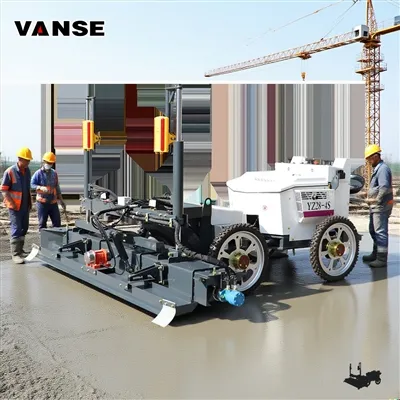
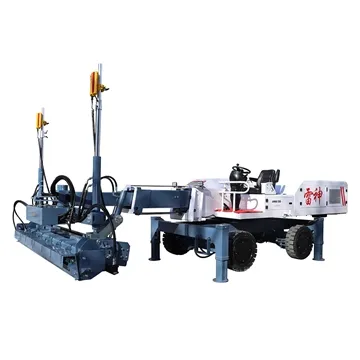
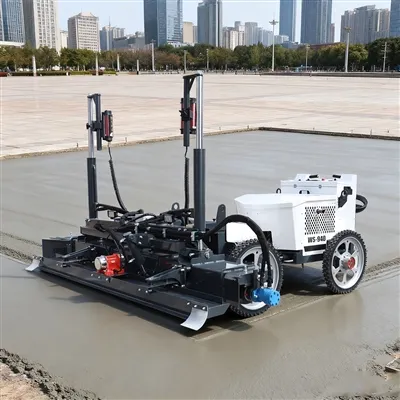
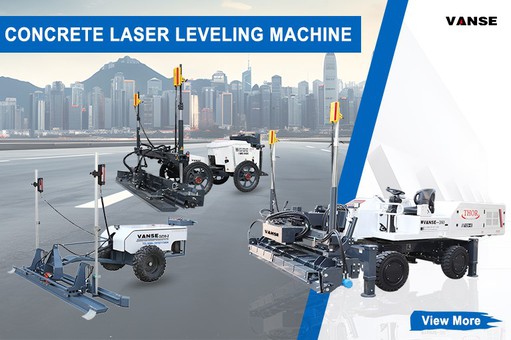
– Leveling with a laser concrete leveler
– Working principle:
The laser concrete leveler uses the laser beam emitted by the laser transmitter as the reference plane, receives the laser signal through the laser receiver, and automatically controls the scraper height of the leveler. During the leveling process, the scraper of the leveler is raised and lowered according to the height of the laser reference plane to accurately level the concrete, which can effectively control the flatness and levelness of the road surface.
– Operation points:
First, the laser transmitter should be reasonably arranged at the construction site to ensure that the laser beam it emits can cover the entire construction area and is not blocked by obstacles. Then, the operator drives the leveler at a constant speed on the concrete, and the machine will automatically adjust the scraper height according to the laser signal to level the concrete. During the construction process, pay attention to the working status of the laser receiver and the leveling effect of the machine. If there is any abnormality, stop the machine in time for inspection and adjustment. At the same time, for corners that are difficult for the leveler to reach, manual assistance is still required.
– Paver paving and leveling
– Working principle:
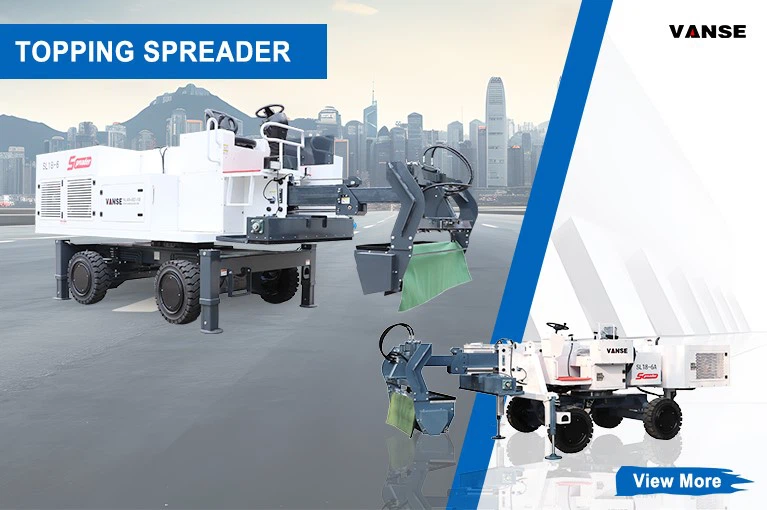
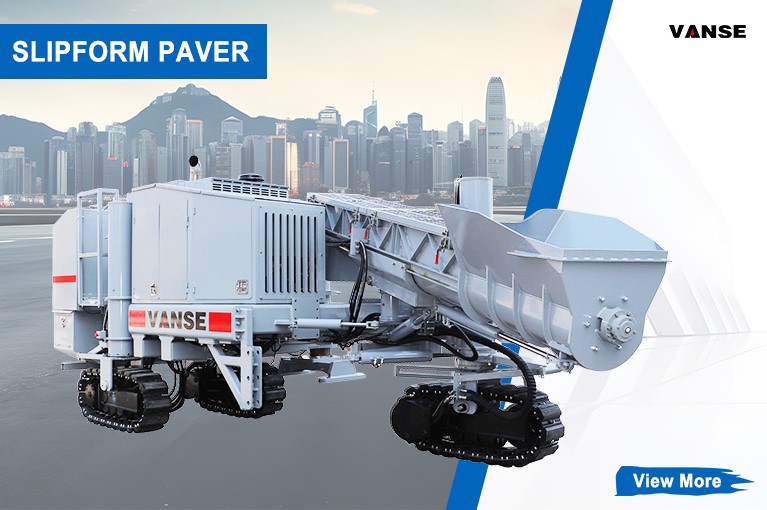
The paver evenly distributes concrete on the roadbed through the spiral distributor, and uses the vibrator to compact the concrete, forming a preliminary flat road surface during the process.
– Operation points:
Before construction, the paver parameters, such as the spiral distributor height, vibration frequency and amplitude, need to be adjusted according to the width and thickness of the road surface. During construction, the paver should be kept moving at a constant speed to ensure that the concrete paving thickness is uniform, thus laying the foundation for subsequent road leveling work.
– Vibration beam vibration leveling
– Working principle:
The vibration beam relies on its own vibration to squeeze and compact the aggregate particles in the concrete, and vibrate the cement mortar on the surface, so as to further level the road surface and improve the density.
– Operation points:
When using, the vibration beam needs to move slowly along the concrete road surface, and the vibration frequency and walking speed should be reasonably adjusted according to the slump of the concrete and the road surface conditions. For local uneven areas, the vibration beam can be manually assisted to carry out key treatment.
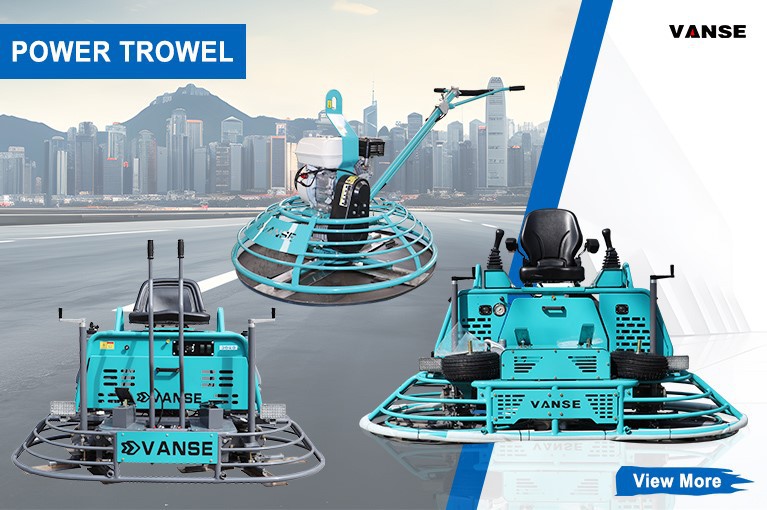
– Power trowel
– Working principle:
The disc or blade of the trowel squeezes and smears the concrete surface when rotating, making the surface smoother and more compact, and improving the density and wear resistance.
– Operation points:
The surface should be troweled after the water on the concrete surface is slightly dry, and the appropriate trowel operation speed should be selected according to the coagulation of the concrete. For large-area pavement, a driving trowel can be used to improve efficiency, and narrow areas such as corners can be carefully processed with a hand-held trowel.
– Manual leveling
– Working principle:
Construction workers use wooden trowels, iron trowels and other tools to carefully trim the pavement with experience and feel, and deal with local uneven areas that are difficult for equipment to take care of.
– Operation points:
Mainly fine-tune the corners of the pavement, around the construction joints, and the traces left by the equipment, requiring construction workers to be skilled and able to accurately judge and deal with uneven areas to achieve higher flatness requirements.
Thanks to All the Friends Who Support and Trust Shandong Vanse Machinery Technology Co., Ltd.
If you want to know more about Shandong Vanse Machinery Technology Co., Ltd. or have any questions, please feel free to contact us:
Our Factory
Shandong Vanse Machinery Technology Co., Ltd.
Share this article

About the Author: Shandong Vanse Machinery Technology Co., Ltd.
Shandong Vanse Machinery Technology Co., Ltd. is a high-tech manufacturer specializing in concrete construction machinery, including laser screeds and related equipment. The company integrates R&D, production, and global sales, with products exported to over 60 countries and widely used in infrastructure projects worldwide.
Previous Post
Next Post
Related Articles
You Might Also Like
How can maintenance standards for equipment used in concrete construction be improved?
In concrete construction, improving equipment maintenance standards requires focusing on the characteristics of core equipment (such as concrete laser screeds and trowels) and the demands of construction scenarios. A closed-loop system encompassing four key dimensions: system improvement, process refinement, technical empowerment, and personnel management, should be established to ensure the equipment maintains efficient and safe operation. The following is a specific implementation path: Concrete laser screeds (relying on laser systems, hydraulic devices, and screed blades) and trowels (focused on grinding discs, power systems, and clutches) have significantly different structures and vulnerable components. Therefore, it is necessary to establish maintenance systems tailored to each device and component to avoid a one-size-fits-all approach. Precision of equipment files Create an independent electronic file for each laser leveler and trowel machine to record key information: Basic Information: Equipment model (e.g., SXP-200 laser leveler, MG-36 trowel), serial number, purchase date, warranty period; Core Components: Laser leveler laser transmitter, receiver, and hydraulic pump models; Trowel disc material (diamond/alloy), motor power, and clutch brand; Maintenance History: Date of each maintenance/repair, component replacement records, and cause of failure (e.g., laser receiver interference with dust, trowel disc wear). Quantified Tiered Maintenance Standards The three-level maintenance system, "daily – regular – seasonal", clarifies the specific operating requirements for the two types of equipment to avoid ambiguity: Maintenance Level Period Core Requirements for Concrete Laser Leveling Machines Key Requirements for Trowel Machines Daily Maintenance Daily before and after construction 1. Clean the laser transmitter/receiver lens with a dust-free cloth (to avoid dust that could affect accuracy); 1. Clean any remaining concrete from the grinding disc (use a scraper to remove it to prevent it from sticking after hardening). 2. Check the hydraulic oil tank oil level (must be above 2/3 of the scale line) and observe whether the oil is turbid; 2. Check the grinding disc mounting bolts for looseness (torque must comply with the manufacturer's instructions, e.g., 25 N·m). 3. Test the leveling blade for flatness and straighten if deformed. 3. Run the machine for one minute to listen for any unusual motor noises and ensure the clutch engages and disengages smoothly. Regular Maintenance Every 50 hours (or weekly) 1. Replace the hydraulic oil filter and refill with anti-wear hydraulic oil (must match the model, such as L-HM46); 1. Check the motor carbon brushes for wear (replace if the remaining length is less than 5 mm). 2. Calibrate the laser system: Use a standard ruler to ensure the leveling error is ≤ 2mm/2m; 2. Replace the grinding disc (when the grinding disc thickness is less than 10 mm, avoid uneven grinding discs that can cause sanding on the floor). 3. Lubricate the travel wheel bearings (fill with lithium-based grease, such as ZL-3). 3. Clean the electrical box and tighten the terminals to prevent concrete dust from causing a short circuit. Seasonal Maintenance Before construction in winter/summer 1. Winter: Replace with low-temperature hydraulic oil (such as L-HV32) and install an insulation cover on the laser system to prevent freezing due to low temperatures; 1. In winter: Check the cable insulation to prevent low-temperature cracking. 2. Summer: Clean the hydraulic system heat sink (use compressed air to remove dust) and check the motor cooling fan. 2. In summer: Apply high-temperature grease (such as ZL-4) to the motor bearings to prevent high-temperature seizures. Equipment failures often stem from overlooking minor issues. Maintenance should be integrated into the entire construction process, especially for precision-sensitive components on laser levelers and high-frequency wear components on trowels. Laser levelers: Prioritize checking the laser system's "effectiveness"-after powering on the machine, test the receiver's sensitivity using a calibration plate. If a "flashing signal" is detected, check the lens cleanliness or battery level (the laser transmitter battery must be fully charged to avoid power outages that could cause leveling errors). Also, check the hydraulic lines for leaks (focusing on the joints; if oil is present, replace the seals). Smoothing machines: Focus on testing the "power and clutch"-after starting, allow the machine to idle for 30 seconds to observe whether the grinding disc rotates smoothly (without eccentricity or wobble). When the clutch handle is pulled, the grinding disc should start and stop immediately. If there is a delay, adjust the clutch cable tension (too loose can cause the grinding disc to "slip," while too tight can burn the clutch plate). Stop the machine for inspection every two hours: Laser screeds should be inspected for stuck scrapers (concrete clumps can cause scraper deformation). Trowels should be inspected for grinding disc wear (if the disc edge appears jagged, the machine should be stopped and replaced to avoid scratches). Intensified inspections during extreme conditions: When pouring large volumes of concrete (ambient temperature > 35°C), check the laser screed hydraulic oil temperature every hour (if it exceeds 65°C, stop the machine and cool it down to prevent damage to the hydraulic pump). Trowels operating on rapidly hardening concrete surfaces should frequently check motor load (if the motor is overheating, reduce the operating speed to avoid overload and burnout). Laser screed machines: Use a high-pressure water jet (pressure ≤ 0.8 MPa to avoid damaging laser components) to rinse the concrete on the machine body, focusing on cleaning the scraper and travel wheels. The laser transmitter must be disassembled and stored separately (in a dry, dust-proof box to prevent moisture from getting on the lens). The hydraulic system must be run at no load for 5 minutes to expel air from the lines, then the power must be turned off. Troweling machines: First, scrape away any remaining concrete from the grinding disc, then use a wire brush to clean the gaps between the discs. Wipe the motor housing with a damp cloth (avoid direct water on the electrical components). Finally, coil the cables neatly and store them in a dry, well-ventilated area to avoid contact with sharp objects and damage. Traditional "rule-of-thumb" maintenance is prone to oversights, requiring the use of technology for more precise maintenance, especially for the core precision components of laser screed machines. Installation of intelligent monitoring equipment Laser levelers: Install a hydraulic oil temperature sensor and laser signal detector to collect real-time data and synchronize it to a mobile phone (e.g., via Bluetooth). When the oil temperature exceeds a threshold (e.g., 70°C) or the laser signal strength falls below a specified value (e.g., <80%), an alert is automatically sent to prevent manual inspections from missing information. Trowel machines: Install a current sensor on the motor to issue an alert when the motor load current exceeds the rated value (e.g., if the rated current of a 10A motor exceeds 12A), prompting a prompt to reduce operating intensity and prevent motor overload. Specialized tools ensure maintenance quality Laser levelers: Calibrate the laser system with a laser level (accuracy ±0.1mm). Replace hydraulic filters with a filter wrench (to avoid damaging the filter housing). Trowelers: Remove the grinding disc with a dedicated socket wrench (matching the disc bolt size, such as M12). Adjust the clutch cable with a cable tension gauge (ensure the tension meets the manufacturer's specifications, such as 50N). The core of equipment maintenance is people. Training, assessment, and responsibility division are essential to prevent equipment damage caused by improper operation. Layered training covering "operation – maintenance – emergency" Basic Training (Operator): Focuses on laser leveling machine "laser system protection" (avoid hitting the lens with hard objects) and trowel machine "grinding disc replacement specifications" (bolts must be tightened diagonally to prevent uneven wear). Advanced Training (Maintenance): In-depth explanation of the principles of the laser leveling machine hydraulic system (e.g., common hydraulic pump troubleshooting: loud noise may indicate oil contamination) and trowel machine motor maintenance (e.g., carbon brush replacement procedures). Emergency Training: Develop emergency response procedures for sudden failures (e.g., laser leveling machine hydraulic line rupture, trowel machine motor smoke) (immediately shut down the machine, disconnect the power supply, and replace with backup equipment). Assign responsibilities to individuals and establish a "maintenance assessment mechanism." Implementing an "equipment-to-personnel" responsibility system: Each laser leveler and trowel machine is assigned a dedicated operator and maintenance person, who sign and confirm the equipment records, clearly stating "operator, responsible for daily maintenance, and maintenance, responsible for regular inspections." Performance-linked: Equipment availability (target ≥ 95%) and downtime (target ≤ 1 hour/day) are incorporated into performance appraisals. If equipment malfunctions due to inadequate maintenance (e.g., laser receiver accuracy deviation due to dust not being cleaned) are reported, the relevant personnel will be held accountable. Long-term trouble-free equipment performance is rewarded. Through the above measures, a closed loop can be formed from the four dimensions of "system, process, technology, and personnel" to specifically solve the maintenance pain points of concrete laser leveling machines and trowel machines, and ultimately achieve the goals of reducing equipment failure rates, extending service life, and stabilizing construction quality. Note: The parameters provided in this document are for reference only and are not mandatory. Due to differences in technical characteristics between different brands and models of laser levelers, please consult the manufacturer for a suitable solution before actual operation. This reference document assumes no responsibility for any issues arising from failure to follow the manufacturer's instructions.How to maintain concrete floors in different seasons?
HOW TO MAINTAIN CONCRETE FLOORS IN DIFFERENT SEASONS? -VANSE Machinery The current concrete floor is compacted with a concrete laser leveling machine, and there is almost no error. Concrete technology is becoming more and more important. Concrete has developed from the initial low-strength grade and ordinary concrete to today's high-strength grade and high performance. Sometimes the maintenance of concrete is often ignored in engineering construction, causing the surface of the concrete to shrink. , cracking, peeling and other phenomena, in order to make the concrete floor more sustainable and long-term use, it is necessary to pay special attention to the concrete curing method during construction. Different environments have different maintenance methods: During the high temperature and dry season, the moisture in concrete is easy to lose, so the following measures should be actively taken: 1. Cooling measures must be taken during construction, such as choosing to pour at night to avoid direct sunlight, and adjusting the concrete ratio in time. 2. At the same time, it must be noted that the temperature of the concrete formwork must be cooled, because if the temperature of the formwork is too high, the surface of the concrete will lose moisture quickly after pouring, resulting in defects such as sanding on the concrete surface. The maintenance of concrete in this season requires a lot of water, especially for the parts that are not easy to maintain, such as columns, cover beams, and beam webs, they should be tightly wrapped with geotextiles and sprinkled regularly. The surface of the concrete is always in a humid environment. In the early stage of curing, the concrete surface is sometimes dry and sometimes wet, because the strength of concrete that is sometimes dry and sometimes wet is easy to reduce, and it is easy to produce shrinkage cracks. Therefore, within 7 days of concrete pouring, it is necessary to prevent water evaporation and keep the concrete surface moist. In short, the focus of concrete maintenance in this season is moisturizing. If measures such as moisturizing and cooling are done well, problems such as early setting of concrete, plastic cracks, reduction of concrete strength and durability caused by high temperature will not appear. In the cold season when the temperature is lower than 5°C, the following measures should be taken for the maintenance of concrete: 1. After demoulding, cover and maintain the insulation. 2. The use of steam curing. 3. Improve the thermal insulation performance of the formwork. Most of the steel formwork used in bridge construction has good thermal conductivity and is easy to lose temperature. Therefore, insulation materials such as straw curtains should be wrapped outside the formwork or measures such as thickened formwork and double-layer formwork should be used. 4. Increase the mixing temperature of concrete. First of all, the heating treatment of the mixing water can be considered, and the aggregate can also be considered to be heated. The purpose is to ensure the initial cement hydration temperature and improve the early strength of the concrete. If the maintenance of concrete in the early cold period takes the above measures actively, the concrete will be prevented from freezing due to low temperature. After the concrete is frozen, its hydration will stop. After the temperature rises, although it can continue, the surface of the concrete has changed. Crisp, lose strength, and even larger cracks appear. Therefore, it is necessary to especially strengthen the early insulation and maintenance of concrete, and it must not be frozen before the concrete strength reaches 50% of the design strength.The Purpose and Significance of Management and Maintenance of Concrete Laser Leveling Equipment
As core equipment for high-precision, high-efficiency floor leveling in modern construction, the management and maintenance of Concrete Laser Levelings not only impacts the stable performance of the equipment but also directly impacts project quality, construction costs, and enterprise competitiveness. The following analysis examines the purpose and significance of Concrete Laser Leveling management and maintenance: Laser Leveling machines achieve millimeter-level precision control through their laser transmitters and receivers. Issues such as calibration deviations, sensor failure, or mechanical wear can directly result in substandard floor flatness, leading to rework and quality disputes. Regular maintenance ensures that key components, such as the laser system, vibration motor, and travel mechanism, are in optimal condition, ensuring that construction accuracy meets design requirements. Concrete construction is a harsh environment, and equipment is susceptible to cement corrosion, mechanical vibration, and dust abrasion. Through scientific management (such as standardized operating procedures and maintenance records) and preventive maintenance (such as regular cleaning, lubrication, and replacement of wearing parts), unplanned downtime can be reduced, equipment degradation can be delayed, and repair costs and the frequency of replacements can be significantly reduced. Equipment failure or performance degradation can lead to construction interruptions and reduced efficiency. For example, loss of laser system signal may require recalibration, which is time-consuming and impacts progress. Routine inspections and rapid maintenance can minimize downtime, ensure continuous and efficient equipment operation, and contribute to on-time project delivery. Laser Leveling machines involve high-speed rotating parts, hydraulic systems, and overhead work (such as telescopic boom models). Improper maintenance can lead to mechanical failure, hydraulic leaks, or even casualties. Regularly inspecting safety devices (such as emergency stop buttons and protective covers), hydraulic lines, and electrical systems can eliminate potential safety hazards and protect both operators and equipment. Surface flatness is a core indicator of concrete construction quality, directly impacting subsequent floor laying, equipment installation, and building aesthetics. Precise maintenance of the laser transmitter, receiver, and screed head ensures surface flatness within ±2mm, meeting the requirements of high-standard industrial plants, logistics warehouses, and other scenarios, while avoiding customer complaints or claims due to quality issues. Reduce direct costs: Preventive maintenance costs are far lower than repair costs. For example, regularly changing hydraulic oil can prevent system downtime caused by oil line blockage, saving tens of thousands of yuan in repair costs. Improve equipment utilization: By optimizing maintenance plans, equipment idle time can be reduced, increasing output per unit time and indirectly increasing company revenue. Enhance market competitiveness: Stable and reliable equipment performance is key to earning customer trust, helping companies establish a professional image and expand into the high-end market. Standardized equipment management (such as establishing a maintenance database and applying IoT monitoring technology) can accumulate extensive operational data, providing a basis for optimized equipment design, fault prediction, and intelligent maintenance, driving the industry's development towards digitalization and refinement. Furthermore, a comprehensive maintenance system helps standardize construction standards and elevate the industry's overall technical capabilities. Extending equipment lifespan and reducing resource waste are key aspects of green construction. Reducing equipment scrap rates through scientific maintenance can reduce the consumption of raw materials such as metals and plastics, lower carbon emissions, and help the construction industry achieve its "dual carbon" goals. The management and maintenance of Concrete Laser Leveling machines is crucial for ensuring construction quality, controlling costs, improving efficiency, and ensuring safety. Companies should establish a full lifecycle management system that prioritizes prevention and prioritizes maintenance. Incorporating intelligent monitoring technologies, these systems enable real-time monitoring of equipment status and optimal allocation of maintenance resources. This will help companies gain an advantage in the fiercely competitive market and promote high-quality development in the industry. Note: The parameters provided in this document are for reference only and are not mandatory. Due to differences in technical characteristics between different brands and models of laser levelers, please consult the manufacturer for a suitable solution before actual operation. This reference document assumes no responsibility for any issues arising from failure to follow the manufacturer's instructions.