Technical Knowledge
Main methods of road leveling
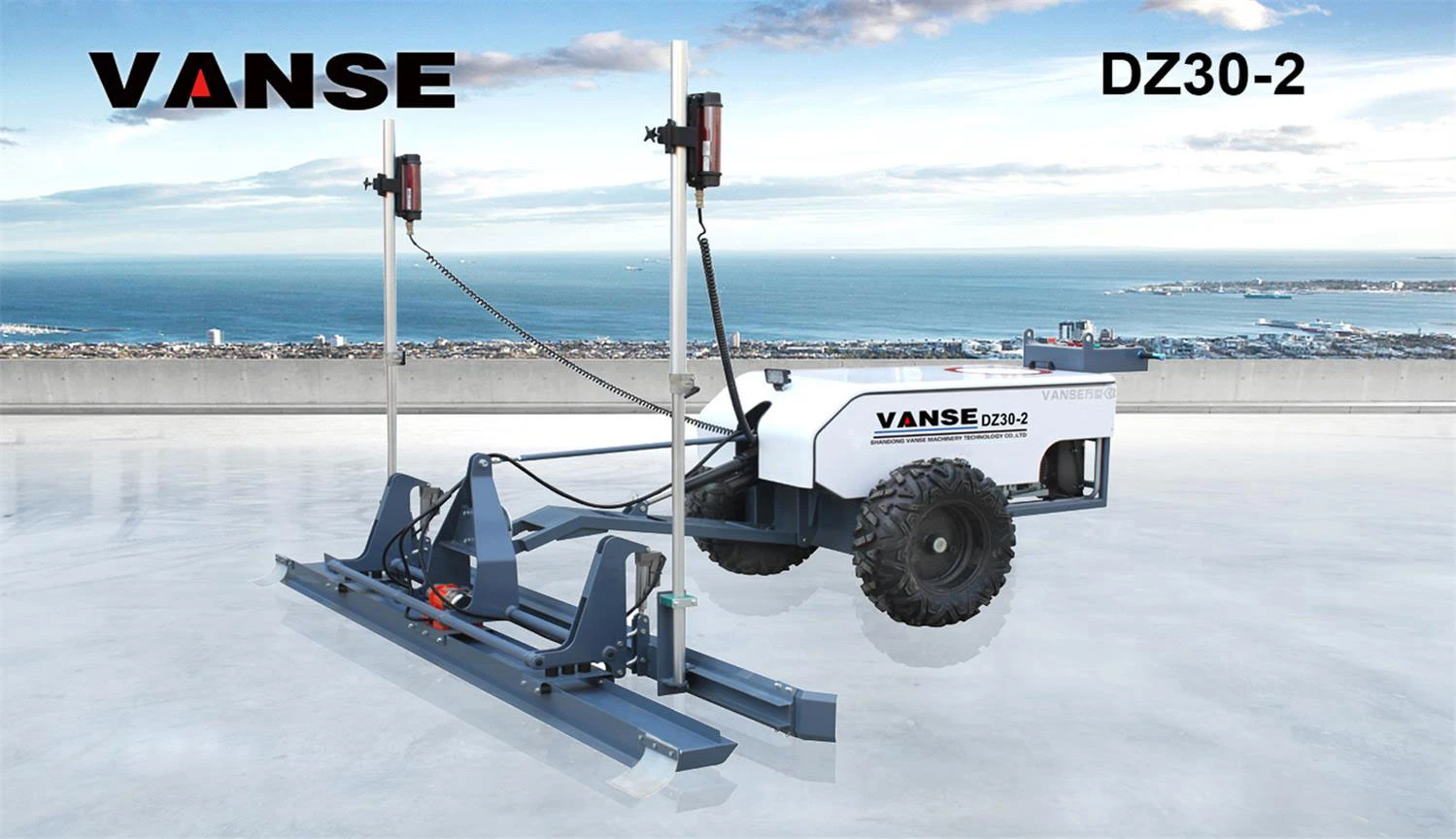
Pavement leveling is an important part of road construction and maintenance. Here are some main methods of pavement leveling:
Leveling with a grader
– A grader is a mechanical device specifically used for pavement leveling. It cuts and scrapes the pavement through a scraper and other devices. In roadbed construction, a grader can scrape the ground after filling or excavation to achieve the designed slope and elevation. In the construction of the pavement base and surface layer, a grader can also be used to initially level the paved materials to create conditions for subsequent compaction work.
Paving with a paver
– Pavers are mainly used for paving asphalt pavements or cement concrete pavements. In asphalt pavement construction, the paver spreads the hot-mixed asphalt mixture evenly on the pavement base, and distributes the mixture evenly in the width direction through devices such as spiral spreaders. At the same time, the paving thickness is controlled to ensure the flatness of the pavement. The cement concrete paver spreads the mixed cement concrete on the roadbed, and after vibration, screeding and other processes, a flat cement concrete pavement is formed.
Compacting and leveling with rollers
– Rollers play a key role in pavement construction. By applying pressure to pavement materials, the particles are squeezed and compacted to achieve the purpose of leveling the pavement and improving the pavement strength. In roadbed compaction, rollers can compact fill and reduce the settlement of the roadbed. In pavement surface construction, different types of rollers such as steel wheel rollers and rubber wheel rollers are used together to compact and level the asphalt pavement or cement concrete pavement so that the pavement meets the specified density and flatness requirements.
Manual assisted leveling
– In some local areas or small projects, manual leveling is an indispensable supplementary means. Workers use tools such as shovels and rakes to carefully trim the pavement to deal with corners that are difficult to reach by mechanical construction or local unevenness. For example, at the edge of the road, around the inspection well, etc., manual fine-tuning of the material can be done to make it smooth and connected with the overall pavement.
In actual road leveling operations, the above methods are usually used in combination according to factors such as road type, construction conditions, and engineering requirements to achieve the ideal road leveling.
Thanks to All the Friends Who Support and Trust Shandong Vanse Machinery Technology Co., Ltd.
If you want to know more about Shandong Vanse Machinery Technology Co., Ltd. or have any questions, please feel free to contact us:
Our Factory
Shandong Vanse Machinery Technology Co., Ltd.








Share this article

About the Author: Shandong Vanse Machinery Technology Co., Ltd.
Shandong Vanse Machinery Technology Co., Ltd. is a high-tech manufacturer specializing in concrete construction machinery, including laser screeds and related equipment. The company integrates R&D, production, and global sales, with products exported to over 60 countries and widely used in infrastructure projects worldwide.
Previous Post
Next Post
Related Articles
You Might Also Like
How to consider its practicality and ease of use when purchasing a laser receiver?
When purchasing a laser receiver, it is important to consider its practicality and ease of use. This is not only related to the performance of the equipment in daily work, but also affects the operator's experience and efficiency. Here are some specific considerations and suggestions regarding practicality and ease of use when purchasing a laser receiver: ◇◇◇ Practical considerations ◇◇◇ Application scene matching: First of all, it is necessary to clarify what scene the laser receiver will be used in. Different scenarios may require different performance parameters and features. For example. 1. Laser receivers in industrial environments may require stronger anti-interference capabilities and higher stability. 2. Performance requirements: According to the application scenario, determine the required performance parameters, such as receiving sensitivity, dynamic range, wavelength compatibility, etc. These parameters directly affect the practicality and working effect of the laser receiver. 3. Durability and reliability: Consider the durability and reliability of the equipment to ensure that it can operate stably for a long time in harsh working environments. Understand the materials, workmanship, and protection levels of your equipment to ensure it meets the needs of the actual application. 4. Compatibility and scalability: Consider the compatibility of the laser receiver with existing systems and possible future scalability. This helps ensure that the device integrates smoothly into existing systems and accommodates possible future technology upgrades and expansion needs. 5. Technical support and after-sales service: Understand the supplier's technical support and after-sales service policies. A good technical support and after-sales service team can help solve problems during use and ensure the continued stable operation of the equipment. ◇◇◇ Ease of use considerations ◇◇◇ 1. Operation interface and instructions: Ensure that the operation interface of the laser receiver is concise and clear, and the instructions are clear and easy to understand. This helps operators quickly become familiar with the equipment and reduce operational difficulty and error rates. 2. Installation and maintenance: Considering the difficulty of installation and maintenance of the equipment, the installation process of the equipment should be simple and clear, and the maintenance should also be convenient and fast, which will help reduce downtime caused by installation and maintenance problems. 3. User manual and training materials: Suppliers should provide detailed user manuals and training materials to help operators better understand and use the equipment. These materials should include basic operation of the equipment, performance parameters, FAQs, etc. 4. Training and technical support: Suppliers should provide necessary training and technical support to help operators better master the use skills and maintenance methods of the equipment. This ensures that the device will perform optimally in real-world applications. ◇◇◇ Comprehensive suggestions ◇◇◇ 1. Trial and evaluation: Before purchasing, strive for trial opportunities as much as possible to conduct a practical evaluation of the performance and ease of use of the laser receiver. This helps provide a more accurate picture of how the equipment will perform in actual work. 2. Refer to user feedback and reviews: Check the feedback and reviews of other users to understand the actual use of the device. This helps identify potential issues and deficiencies, allowing for more informed purchasing decisions. 3. Communicate with suppliers: Establish good communication channels with suppliers to understand the performance characteristics, usage skills and maintenance methods of the equipment. Maintaining close contact with suppliers can ensure timely technical support and assistance during use. To sum up, when purchasing a laser receiver, it is very important to consider practicality and ease of use. By clarifying application scenarios, understanding performance requirements, evaluating durability and reliability, considering compatibility and scalability, paying attention to technical support and after-sales service, and paying attention to operating interfaces and instructions, you can ensure that you purchase a laser that is both practical and easy to use. receiver. This will help improve the overall performance and user experience of the device, bringing convenience and efficiency to actual work.Four reasons for you to choose the laser leveling machine!
We chose the laser leveling machine because it is fast in leveling and highly automated. After the height is adjusted manually, the machine can operate automatically. It integrates leveling, leveling, tamping and compaction. All work can be completed at one time, which is very suitable for the leveling needs of large sites. (1) The leveling principle of the laser leveling machine is to use precision laser technology, closed-loop control technology and highly precise hydraulic system, which is realized under the automatic control of the computer. This is its most prominent feature that distinguishes it from other floor construction processes. (2) The leveling principle of the laser leveling machine is to rely on the hydraulically driven leveling head, cooperate with the laser system and computer control system to complete the leveling work while automatically leveling. The leveling head is equipped with an integrated scraper, vibrator and leveling plate, which integrates all leveling, leveling, vibrating and compacting work and completes it at one time. The computer control system automatically adjusts the elevation in real time 10 times per second, and the vibration frequency of the balanced vibrator reaches 3000 times/minute. (3) The laser transmitter used to control the ground elevation is arranged independently, so that the floor elevation is not controlled by the template and no cumulative error will be generated. (4) The laser leveling machine can also automatically control the longitudinal and transverse slopes, which is also completed by the laser system, computer system, hydraulic system, and mechanical system. For complex-shaped floors with high requirements such as drainage, a three-dimensional special-shaped floor processing system can also be selected to achieve it. The laser leveling machine is developed based on the increasing demand for floor quality such as strength, flatness, and levelness in modern industrial plants, large shopping malls, warehouses, and other large-area cement concrete floors. The cement concrete floor paved and leveled by the Shenlong laser leveling machine is much better than the floor paved by conventional methods – the flatness and levelness of the floor are improved by more than 3 times, and the density and strength are improved by more than 20%. At the same time, it can also improve work efficiency by more than 50% and save about 35% of labor. In addition, it can easily lay high-strength concrete, low-slump concrete, and fiber concrete. Its laser system is equipped with a variety of automatic control components, which monitor the elevation of the leveling head in real time at a frequency of 10 times per second to ensure that the flatness and levelness of the paved ground are effectively controlled. At the same time, its powerful vibrator has a vibration frequency of 3,000 times per minute to ensure that the concrete is vibrated and compacted, making the entire paved concrete matrix homogeneous and dense.How to ensure that the parameters and performance of the concrete laser leveling machine meet the requirements
To ensure that the parameters and performance of the concrete laser leveling machine meet the standards, the core is to establish " Source selection → Preoperative calibration → Intraoperative verification → Postoperative maintenance "The whole process is closed-loop controlled, and each link is closely linked to "parameter standards" and "matching of actual working conditions", avoiding single reliance on debugging or calibration. The factory parameters of the equipment itself are the performance bottom line and must be strictly checked upon purchase and arrival to avoid "innate deficiencies". Selection and benchmarking parameter standards: Clarify core parameter requirements: Based on construction requirements (such as ground flatness grade and working area), benchmark against national standards (such as "Concrete Laser Leveling Machine" GB/T 37497-2019), and lock in key parameters – laser system accuracy (≤±0.1mm/m), maximum leveling thickness (such as 100-300mm), travel speed (0-6m/min adjustable), and flatness error (≤3mm/2m) to ensure that the selected parameters cover construction requirements. Give priority to brands with "parameter traceability": require manufacturers to provide calibration certificates for laser transmitters and receivers (such as those issued by a third-party metrology agency) to confirm that the parameters of core components are within the validity period, and avoid purchasing equipment with "three no's" or ambiguous parameters. After unpacking, check the "document compliance" first: check the product certificate and instruction manual, and confirm that the standard values of each parameter (such as the effective distance of the laser signal and the working pressure of the hydraulic system) are clearly marked in the manual. Simple core performance test: Use a high-precision level (0.02mm/m) to check the levelness of the laser transmitter. After powering on, observe the signal stability of the receiver within a range of 5 meters (uninterrupted flashing). Manually push the leveler to check that the travel wheels are not stuck and the blade rises and falls smoothly, preliminarily eliminating mechanical faults. Calibration before use is the key to "making the equipment work according to the standard". The core system needs to be calibrated item by item according to the instructions and standards. Transmitter calibration: Place it on a stable base and adjust the bottom feet so that the built-in level bubble is centered (or the electronic level displays "0±0.1mm"). Set the "elevation reference" according to the instructions and use a tape measure to measure the height from the center of the transmitter to the ground. The deviation from the designed elevation must be ≤1mm. Receiver and mechanical linkage: Fix the receiver to the "zero point scale" of the lifting rod and ensure that the receiver sensing surface is flush with the bottom surface of the leveling blade (verify by placing a ruler close to the blade); start the equipment and let the receiver sense the laser signal. If the display on the operation panel is not "0", adjust it to zero using the "zero point calibration" button to ensure that "signal deviation = mechanical action deviation". Travel system: Mark a 10-meter straight line on the ground, start the leveling machine and move it along the straight line. After the line is drawn, use a tape measure to measure the deviation of the machine body. The requirement is ≤5mm/10m. If it exceeds the standard, use the "travel speed fine-tuning" function on the operation panel to calibrate the speed difference of the motors on both sides. Level the blade: Use a spirit level to press against both ends of the blade. If the bubble is offset, adjust the hydraulic cylinders on both sides of the blade until the spirit level shows level (deviation ≤ 0.02mm/m) to prevent the blade from tilting and causing a height difference on the ground. After calibration, performance needs to be verified through actual operation, and parameters must be monitored in real time during construction to avoid "calibration passed but operation failed". Pour 2-3㎡ concrete test blocks according to the normal process. After completion, use a 2-meter ruler + feeler gauge to check the flatness. The deviation is required to be ≤3mm/2m (in accordance with the "Concrete Structure Engineering Construction Quality Acceptance Code" GB 50204); use a laser altimeter to check the ground elevation. The deviation from the design value is ≤2mm. If it does not meet the standard, return for calibration. Test performance stability: Operate continuously for 30 minutes to observe whether the laser signal is continuously stable (the receiver indicator light does not flicker) and whether the blade raises and lowers in a timely manner (the blade moves within 0.5 seconds after the signal offset) to avoid parameter drift caused by long-term operation. For every 100 square meters of work, stop the machine and randomly check 3-5 points with a ruler. If the flatness deviation exceeds 3mm, stop the machine immediately to check whether the laser transmitter is shifted or the receiver is blocked by dust, and recalibrate in time. Pay attention to abnormal signals: If the operation panel displays errors such as "weak laser signal" or "low hydraulic pressure", stop the machine immediately for investigation to avoid operating with faults that may cause parameters to lose control. Equipment parameters will decay with use, and long-term maintenance is required to prevent performance degradation. The core is "regular inspection + recalibration upon expiration." Daily maintenance: preventing parameter drift After each use: Clean the lenses of the laser transmitter and receiver (wipe with a dust-free cloth to avoid scratches), and check whether the travel wheel and blade connecting bolts are loose (tightening torque is in accordance with the instructions, such as M16 bolt torque 40-50N·m). Weekly inspection: Check the hydraulic oil level (must be between the oil mark "MIN-MAX") and the circuit terminals for oxidation to avoid delayed operation due to insufficient hydraulic pressure or poor circuit contact. Perform a "simple recalibration" once a month: focus on calibrating the laser transmitter level and the receiver zero point to ensure that the parameters are within the standard range. Perform a "full recalibration" every 3 months or after 500 hours of operation: contact the manufacturer or a third-party metrology agency to conduct professional testing of the laser system's accuracy, travel linearity, and blade levelness, and issue a calibration report. If any parameters are out of tolerance, immediately adjust or replace components (such as aging laser modules). Ensuring that equipment parameters and performance meet requirements is essentially "Don't let standards remain on paperFrom benchmarking during model selection to precise calibration before use, real-time verification during operation, and regular maintenance, every step is based on measurable parameters, avoiding empirical judgment. Only by establishing a "traceable and verifiable" control system throughout the entire process can we continuously ensure leveling accuracy.