Technical Knowledge
How to inspect and accept the double-layer steel mesh after laying in the concrete pavement?
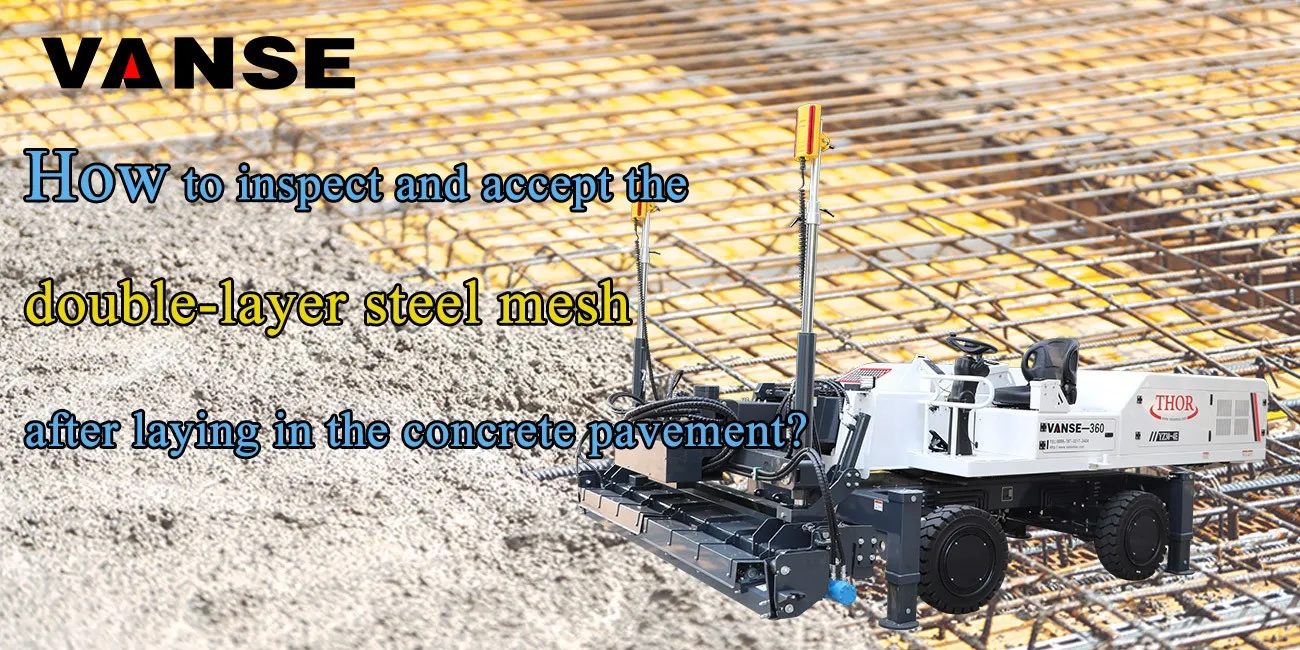
After the double-layer steel mesh is laid in the concrete pavement, it can be inspected and accepted from the following aspects:
Appearance inspection
– Steel mesh surface:
Observe whether there are obvious rust, oil stains, dirt and other pollutants on the surface of the steel mesh. If such conditions exist, it will affect the bonding between the steel bars and the concrete and needs to be cleaned.
– Mesh flatness:
Check whether the steel mesh is flat and whether there is warping or deformation. Observe with the naked eye or pull the wire to check. If the mesh is not flat, it may cause insufficient thickness of the local steel bar protective layer or uneven steel bar spacing during concrete pouring.
– Cross-point binding:
Check whether the steel bar intersection is firmly tied and whether the wire is loose or missing. It can be checked by manually pulling the steel bar intersection. For loose or missing parts, they should be re-tied in time.
Size and position inspection
– Steel bar spacing:
Use a steel tape measure to randomly select multiple parts to measure the spacing of steel bars, including the horizontal and longitudinal steel bar spacing of the same layer of steel mesh, and the spacing between the upper and lower layers of steel mesh. Check whether it meets the design requirements, and the allowable deviation is generally ±10mm.
– Rebar position:
Check whether the steel mesh is laid according to the design position, whether it deviates from the center line or exceeds the specified laying range. It can be determined by measuring the distance between the edge of the steel mesh and the control line drawn on the pavement base, and the deviation should be controlled within the allowable range.
– Protective layer thickness:
Use a steel bar protective layer thickness tester for detection, and measure at multiple points at different positions to ensure that the thickness of the concrete protective layer meets the design and specification requirements. Generally, the thickness of the steel bar protective layer of concrete pavement is between 30-50mm, and the allowable deviation is ±5mm.
Connection quality inspection
– Binding connection:
For steel mesh connected by binding, check whether the number and spacing of binding points meet the requirements. Generally, the wire buckles of adjacent binding points are required to be in an eight-shaped shape to prevent the mesh from being skewed and deformed. At the same time, check the specifications and strength of the binding wire to ensure that it can withstand the tension during concrete pouring.
– Welding connection:
If welding connection is used, check the welding quality, including the length, height, and fullness of the weld. The weld surface should be smooth, without obvious defects such as pores, slag inclusions, cracks, etc. Use ultrasonic or radiographic testing methods to perform non-destructive testing on welds in important parts to ensure that the welding quality meets the requirements.
Data inspection
– Material quality certification documents:
Check the quality certificate, inspection report and other materials of the steel bars to ensure that the variety, specification, performance, etc. of the steel bars meet the design requirements. At the same time, check the qualification certificate of the steel mesh processing manufacturer to ensure that the product quality is traceable.
– Construction records:
Check the construction records of the laying of the steel mesh, including the cutting size, processing process, laying time, laying personnel and other information of the steel mesh, to ensure that the construction process has detailed records for quality traceability and problem analysis.
– Concealed project acceptance records:
Check whether the concealed project acceptance records are complete and whether the acceptance personnel have signed and confirmed. The records should record in detail the laying of the steel mesh, the inspection results, and the rectification of existing problems.
During the inspection and acceptance process, if any problems are found, they should be recorded in time and the construction unit should be required to make rectifications. After the rectification is completed, acceptance will be carried out again until it meets the requirements. Only after acceptance can the next construction process be carried out.
Click the below to jump immediately!!!

AMOUR JOINT

CONCRETE LASER LEVELING MACHINE

LIGHT TOWER

POWER TROWEL

STEEL FIBER

Thanks to All the Friends Who Support and Trust Shandong Vanse Machinery Technology Co., Ltd.
If you want to know more about Shandong Vanse Machinery Technology Co., Ltd. or have any questions, please feel free to contact us:
Our Factory
Shandong Vanse Machinery Technology Co., Ltd.








Share this article

About the Author: Shandong Vanse Machinery Technology Co., Ltd.
Shandong Vanse Machinery Technology Co., Ltd. is a high-tech manufacturer specializing in concrete construction machinery, including laser screeds and related equipment. The company integrates R&D, production, and global sales, with products exported to over 60 countries and widely used in infrastructure projects worldwide.
Previous Post
Next Post
Related Articles
You Might Also Like
Key points for purchasing second-hand power trowel and common methods to avoid pitfalls
Selecting a second-hand polishing machine is a job that requires a lot of experience and skills. It can help you obtain a practical device at a lower cost, but if you make a wrong judgment, the subsequent maintenance and delayed construction period may cause you to lose more than you gain. The following is a detailed list of key points for choosing a second-hand polishing machine and common methods to avoid pitfalls. We hope it can be of great help to you. Fuselage structure Chassis (grinding disc) : This is the most crucial part. Check if it is flat and free of deformation. Slight wear and tear is normal, but if the wear is severe, there are pits or obvious deformation, it will lead to poor polishing effect and higher replacement cost. Blade (scraper) : Check if there is still sufficient thickness. If the metal substrate has been worn out, it needs to be replaced immediately, and this cost should be included in the cost. Protective cover: Check for any damage or severe deformation, as this is related to operational safety. Overall framework: Check for any signs of welding, cracks or repairs, which could be a sign of severe impact or drop. Engine (heart) Brand: Give priority to well-known brands such as Honda, Kohler, Briggs & Stratton, etc. Spare parts are easy to find and maintenance is convenient. Appearance: Check for any cracks in the engine casing, especially in the base and radiator sections. Check for obvious oil stains or carbon deposits. This might be a sign of oil leakage or poor maintenance. Air filter: You can ask to remove the air filter to have a look. If the inside is very dirty or even soaked with oil, it indicates that the previous owner might not have paid much attention to maintenance. Engine oil: You can pull out the oil dipstick to check. If the engine oil is black, viscous or contains metal debris, it indicates that the engine wear may be relatively severe and the maintenance condition is poor. Transmission system Gearbox: Check if there are any signs of oil leakage on the gearbox housing. Rotate the drive shaft by hand to feel if it is smooth, and if there is any jamming or abnormal noise. Belt/chain: Open the protective cover and check if the belt has cracks, wear or looseness. Check if the chain is loose and free of oil and rust. Be sure to ask the seller to start the machine for testing! Startup performance Cold start is the most illustrative. Observe whether the rope pulling is smooth and whether the machine can start smoothly within one to three rope pulls. If it is difficult to start, there may be problems (such as carburetors, spark plugs, insufficient compression, etc.). Engine sound After starting, listen to the sounds of the engine idling and accelerating. The operation should be smooth. A regular "tap-tap" sound is normal (valve sound). If there are loud "clicking" sounds, knocking sounds or irregular noises, it indicates that there is severe wear inside. Transmission system sound Let the trowel run idle and listen for any abnormal "clattering" sounds from the gearbox and transmission parts. The voice should be even and deep. Vibration condition When the machine is running, it should be smooth and the vibration should be within a reasonable range. If the vibration is abnormally severe, it may be due to deformation of the chassis, unbalanced installation of the blades or problems with the engine base Purchase time and source: Inquire about the specific year and channel of purchase of the machine to determine its service life. Usage frequency and scenarios: Is it for occasional household use or long-term high-intensity use by professional teams? The latter naturally wears out more severely. Maintenance and repair history: This is of Paramount importance. Has there been any major overhaul? (Such as engine cylinder opening, gearbox replacement When was the last time the engine oil, air filter and spark plugs were changed? Have there been any accidents (such as tipping over or collision)? A reliable seller will tell the truth, while a evasive one needs to be on guard. If possible, conduct a brief load test (such as grinding it on the ground). Observe after the load is applied: Whether the engine is prone to stall and whether the power is sufficient. Check for any slippage or abnormal noise in the transmission system. Whether the machine moves smoothly and if it deviates. Trap description: Merchants thoroughly clean and paint the machines to make their appearance look as good as new, thereby covering up internal wear and tear and malfunctions. Avoidance methods Pay special attention to the screws and interfaces: It is very difficult for a refurbished machine to have no signs of any screws being turned. Check whether there are any signs of wear on the engine fixing screws, chassis screws, etc. Paint surface consistency: The original factory paint surface is usually uniform. If you find that the paint color of some parts does not match the overall color or the paint layer is too thick, it might be due to later spraying. Don't judge a machine by its appearance: Don't be deceived by a clean exterior. The key is to check its operating status and internal wear. Trap description: The machine was once sold after its chassis and frame were deformed due to a fall or collision. It was sold after simple repairs. Avoidance methods Check the flatness: Place the machine on a flat ground and observe from the side whether the chassis is fully in contact with the ground and if there is any warping. Check the welding points: Carefully inspect each connection point of the rack to see if there are any irregular or rough welding points in the later stage. Running test: During no-load operation, observe whether the machine is stable and if there is any regular swinging. This might be a sign of an uneven chassis. Trap description: Piecing together a complete machine with "good" parts from different scrapped machines, which has poor compatibility and stability. Avoidance methods Brand consistency: Check whether the brand, model and newness of the main components such as the engine and fuselage match. Assembly machines often give the impression of being "mismatched". Check the nameplate: Whether the information on the body nameplate (such as model and production date) is consistent with the seller's description. Poor comprehensive operation: When the assembly machine is in operation, various minor problems may occur frequently, making it feel "not smooth". Trap description: The machine performs okay when it is cold or unloaded, but once it is heated up or loaded, problems become apparent (such as insufficient power, severe abnormal noises, and engine stalling). Avoidance methods Persist in long-term testing: Let the machine run for 10 to 15 minutes and observe whether the state is stable after warming up. Load testing is required: This is the best way to verify the true state of the machine. Check the engine oil: After warming up the machine, stop it immediately and check the engine oil. If there are many small bubbles (emulsions) in the engine oil, it might be that the cylinder gasket is being washed away, which is a big problem. Before deciding to purchase, quickly check the following list: Inspection items Qualification standard Be cautious/give up Fuselage chassis Smooth, evenly worn, and without deformation Deformation, cracks, wear limit Engine Well-known brand, smooth start-up, stable operation, pure sound, no oil leakage Difficult to start, severe abnormal noise, oil leakage, and heavy smoke Transmission system The rotation is smooth without any abnormal noise, and the belt/chain is not aged There is abnormal noise, jamming and oil leakage Seller Description Be honest, answer all questions, and keep clear maintenance records Vague and evasive, concealing history Price In line with market conditions (approximately 30% to 50% of a new model) Far below the market price (" There's no such thing as a free lunch ") Test run situation The hot and cold units start well and operate stably under no-load or load conditions Any test is unqualified Final suggestion: If possible, bring along an experienced master craftsman or mechanic. Their experience can help you discover many problems that beginners fail to notice. When making a purchase, it is best to sign a simple written agreement with the seller, clearly stating the condition of the machine, and keep the payment voucher for unexpected needs. Remember, the primary principle when purchasing second-hand equipment is "It's better to miss out than to buy wrongly." Wish you could find a sturdy and durable good machine! Note: The parameters provided in this document are for reference only and are not mandatory. Due to differences in technical characteristics between different brands and models of laser levelers, please consult the manufacturer for a suitable solution before actual operation. This reference document assumes no responsibility for any issues arising from failure to follow the manufacturer's instructions.Key points for daily maintenance of concrete laser leveling machine
Concrete laser leveling machines are crucial for efficient concrete paving and leveling. Daily maintenance directly impacts their accuracy, service life, and construction safety. The following are key points for daily maintenance, covering pre- and post-operation inspections, key component care, fluid management, and storage procedures: A comprehensive inspection before operation is the first line of defense to prevent failures, and the following should be paid special attention to: Inspect the machine body and frame for deformation, cracks, or looseness. Check that connecting bolts (such as those securing the scraper and vibrator) are tight. If loose, tighten them to the specified torque. Check the housings of precision components, such as the laser transmitter and receiver, for integrity and the lenses for stains, scratches, or damage to ensure signal reception is not interfered with. Before starting the engine, check that the fuel, engine oil, and coolant levels are within standard ranges. Use clean diesel fuel of the specified grade to prevent impurities from clogging the fuel lines. Check the quality of the engine oil. If the oil is found to be emulsified, blackened or contains impurities, the oil and oil filter must be replaced in time. Check the hydraulic oil tank level and inspect the hydraulic oil for clarity, foam, impurities, or discoloration (normal hydraulic oil is light yellow or amber). If contamination is severe, replace the hydraulic oil and filter. Inspect the hydraulic lines and joints for leaks and check for aging and wear. If any problems are found, replace seals or lines immediately. Test the transmission components (such as chains and gears) of the travel drive and leveling mechanisms for smooth operation, abnormal noise, and proper chain tension. Add grease if necessary. Check the laser transmitter for sufficient power and stable signal transmission. Calibrate the laser receiver's sensitivity to ensure leveling accuracy meets requirements. Check the control panel buttons and indicators for proper operation, and the wiring harness connections for security and damage or short circuit hazards. Test the emergency stop button to ensure it can immediately shut off power in an emergency, ensuring the safety of equipment and personnel. During operation, it is important to monitor the equipment's operating status in real time to prevent minor faults from escalating into further damage. Operating sound monitoring: During normal operation, the engine, hydraulic pump, and transmission components should produce no abnormal noise. If any unusual noises (such as metallic friction, banging, or high-frequency whistling) are detected, the machine must be immediately stopped for inspection to identify the source of the problem (such as bearing wear, component seizure, or abnormal hydraulic system pressure). Temperature monitoring: Observe the engine water temperature, engine oil temperature, and hydraulic oil temperature to ensure they are within the normal range (generally 80-95°C for engine water and 30-60°C for hydraulic oil). If temperatures are excessively high, the machine must be shut down for cooling and the cooling system must be checked (e.g., whether the radiator is clogged and the fan is functioning properly) to prevent component damage caused by overheating. Performance monitoring: Pay attention to travel speed, whether the leveling mechanism is rising and falling smoothly, and whether the vibration frequency is normal. If movement is sluggish, weak, or irregular, this may indicate a hydraulic system leak, insufficient pressure, or a transmission component failure, requiring prompt shutdown and inspection. After completing a job, thoroughly clean the equipment and perform targeted maintenance to prevent component damage from concrete solidification and impurity accumulation. Use a high-pressure water jet to rinse concrete residue from the machine body, leveling base, vibrator, scraper, and other components. Pay special attention to removing dust and stains from the laser receiver and sensor to ensure proper signal transmission. Clean dust and debris from the engine, hydraulic oil tank, and radiator to maintain proper heat dissipation. Inspect and clean the air filter element. Replace it if severely clogged to prevent insufficient engine air intake, resulting in reduced power or increased wear. According to the equipment manual, add the appropriate type of grease to all lubrication points (such as bearings, pins, chains, gears, and hydraulic cylinder piston rods) to ensure smooth operation of transmission components and reduce wear. Please focus on lubricating the moving joints of the travel mechanism and leveling mechanism. After lubrication, run the operating parts several times to ensure even distribution of the grease. Lower the leveling mechanism to the ground, retract all retractable components, turn off the laser transmitter, and store it properly to avoid damage from collisions. Check the bolts connecting all components for looseness and re-tighten key bolts (such as the leveling mechanism mounting bolts and hydraulic line connectors). Drain the fuel tank for water and sediment. Check the fuel filter for impurities and replace the filter element if necessary. Refill fuel, engine oil, and coolant to standard levels. If hydraulic oil is low, add the same type of hydraulic oil to avoid mixing different grades, which may cause performance degradation. In addition to daily maintenance, regular deep maintenance is required based on the equipment's age or workload. This is generally categorized as weekly, monthly, and quarterly/annual maintenance. Maintenance Cycle Maintenance Details Weekly Maintenance 1. Replace engine oil and oil filter; 2. Check hydraulic system pressure for normal operation and tighten hydraulic line joints; 3. Check chain and belt tension and wear, and adjust or replace if necessary; 4. Test laser system calibration accuracy and recalibrate if deviations are detected. Monthly Maintenance 1. Replace hydraulic oil and hydraulic oil filter, return filter, and suction filter; 2. Inspect hydraulic cylinder piston rod for scratches and deformation, and seals for leakage, and replace if necessary; 3. Check tires and tracks for wear and adjust tire pressure or track tension; 4. Clean or replace the fuel filter and inspect fuel lines for deterioration. Quarterly/Annual Maintenance 1. Thoroughly inspect internal engine components (e.g., valve clearance, piston ring wear), and perform repairs if necessary. 2. Inspect the performance of the hydraulic pump and motor, testing pressure and flow rates to ensure they meet specifications. Repair or replace any degraded performance. 3. Perform a comprehensive flaw detection on structural components, inspecting for cracks and deformation, especially welds, and perform reinforcement if necessary. 4. Calibrate the laser control system and replace any aging sensors, wiring harnesses, and other electrical components. If the equipment needs to be stored for an extended period (over 1 month), the following protective measures must be taken to prevent rust and aging of components: Park the equipment in a dry, ventilated indoor area. If stored outdoors, cover with a tarp to protect it from sunlight and rain. After thoroughly cleaning the equipment, apply anti-rust oil to all exposed metal surfaces (such as piston rods, pins, and chains) to prevent rust. Drain the fuel tank or add fuel stabilizer to prevent fuel deterioration and clogging of the oil lines. Replace the engine oil and hydraulic oil to prevent impurities in the oil from corroding components during storage. Raise the equipment so that the tires and tracks are off the ground to prevent deformation caused by prolonged stress. Raise the leveling mechanism to its highest position and loosen the hydraulic cylinder piston rod to prevent prolonged stress and aging of the seals. Disconnect the negative battery cable or charge the battery regularly to prevent battery damage due to low power. When storing the laser transmitter, remove the battery and store it separately in a dry place. Regularly (monthly) start the equipment and run it for 10-15 minutes to check the operation of all components and ensure that the lubricant is evenly distributed to prevent sticking. Proper Operation: Operators must undergo professional training and strictly follow the equipment manual. Avoid overloading, speeding, and illegal operation (such as forced steering on uneven surfaces or striking the leveling mechanism against hard objects) that may damage the equipment. Parts Management: When replacing parts, use genuine or qualified parts. Avoid using inferior parts that may degrade equipment performance or cause secondary failures. Record and Traceability: Maintain an equipment maintenance log to record the time, content, replaced parts, and troubleshooting of each maintenance session. This facilitates tracking of equipment status, identifies potential issues promptly, and develops targeted maintenance plans. Through the above daily maintenance measures, the failure rate of the concrete laser leveling machine can be effectively reduced, ensuring that the equipment is always in good operating condition, improving construction efficiency and leveling quality, and extending the service life of the equipment. ARMOUR JOINT CONCRETE LASER LEVELING MACHINE POWER TROWEL TOPPING SPREADERWhat are the specific advantages of concrete laser leveling machine in construction efficiency?
As a leading domestic laser leveling machine company, with a 60% market share and exported to more than 60 countries, we are well aware that the advantages in construction efficiency are crucial for customers to choose our products. The following is a specific analysis of the advantages of concrete laser leveling machines in construction efficiency. Introduction With the rapid development of the construction industry, the requirements for construction efficiency and project quality are increasing. As a high-tech construction equipment, concrete laser leveling machines have shown excellent performance in construction efficiency with their unique advantages. 1. Significant improvement in construction speed Compared with traditional manual leveling, the construction speed of concrete laser leveling machines has been significantly improved: High degree of automation: The laser leveling machine has achieved automated leveling, reduced manpower requirements, and greatly increased the construction speed. Continuous operation capability: The machine can operate continuously without being restricted by the workers' rest time, further accelerating the construction progress. 2. Strict control of construction accuracy Construction accuracy directly affects the quality of the project and the subsequent use effect: Laser positioning technology: Using laser positioning technology, ensure that the flatness and levelness of the concrete floor meet the design requirements. Precision control system: The precision control system equipped with the leveling machine can adjust the working parameters in real time to maintain construction accuracy. 3. Guarantee the consistency of construction quality Consistency of construction quality is an important indicator to measure construction efficiency: Standardized operation: The laser leveling machine operates according to the preset standards to ensure the consistency of construction quality. Reducing human factors: Reducing the uncertainty of human operation and avoiding quality problems caused by differences in workers' technical levels. 4. Effective reduction of construction costs Reducing construction costs is a direct reflection of improving construction efficiency: Reducing labor costs: Reducing dependence on workers, thereby reducing labor costs. Increasing material utilization: Accurately controlling the laying thickness of concrete, reducing material waste and improving material utilization. 5. Enhanced construction safety Construction safety is an important guarantee for construction efficiency: Reducing construction risks: Automated operations reduce the exposure time of workers at the construction site and reduce construction risks. Safety protection design: Laser leveling machines are usually equipped with safety protection designs, such as emergency stop buttons, guardrails, etc. 6. Adaptability to construction environment Adapting to different construction environments is the key to improving construction efficiency: Multiple terrain adaptation: The laser leveling machine can adapt to different terrain conditions, such as indoors, outdoors, slopes, etc. Different climatic conditions: The equipment design takes into account the influence of different climatic conditions, such as waterproofing and dustproofing. 7. Improved construction flexibility Flexibility during the construction process is crucial to cope with emergencies: Quick adjustment: The laser leveling machine can quickly adjust the leveling parameters according to construction needs. Versatility: Some laser leveling machines have multiple functions, such as leveling and compaction, which improves the flexibility of construction. 8. Intelligent management of construction data Intelligent management of construction data to provide decision support for construction efficiency: Construction data collection: The laser leveling machine can collect key data during the construction process. Data analysis and optimization: Through data analysis, optimize the construction plan and improve construction efficiency. 9. Continuous innovation of construction technology Technological innovation is the driving force for improving construction efficiency: R&D investment: Continuous investment in R&D, and continuous introduction of new technologies and new products. Industry cooperation: Cooperate with scientific research institutions and universities to jointly promote technological progress in the industry. 10. Future prospects Looking to the future, concrete laser leveling machines will make greater breakthroughs in intelligence, automation, green environmental protection, etc.: Intelligent development: Introduce more intelligent technologies, such as artificial intelligence, the Internet of Things, etc., to achieve intelligent management of the construction process. Green and environmental protection: Develop more energy-saving and environmentally friendly equipment to reduce the impact of construction on the environment. Conclusion The advantages of concrete laser leveling machines in construction efficiency are multifaceted, including the improvement of construction speed, the control of construction accuracy, the consistency of construction quality, the reduction of construction costs, the enhancement of construction safety, the adaptability of the construction environment, the improvement of construction flexibility, the intelligent management of construction data, the continuous innovation of construction technology and the prospect of future development. These advantages not only win us a leading position in the domestic market, but also make our products highly competitive in the international market.