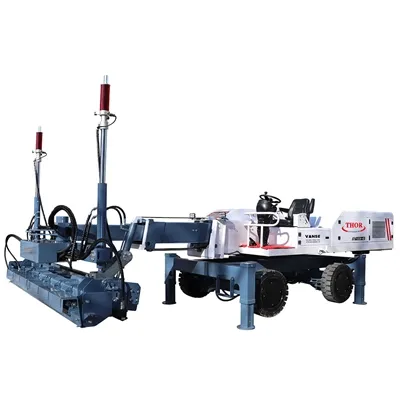
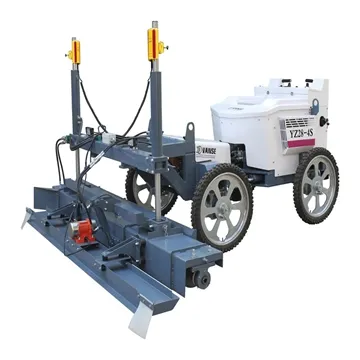
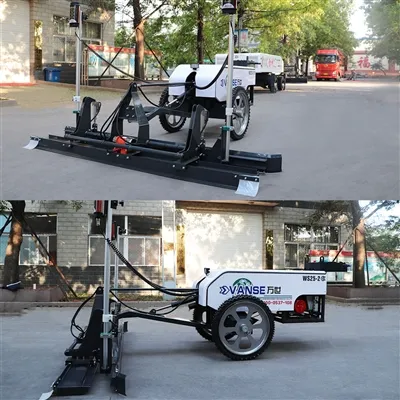
Technical Knowledge
How to evaluate the smoothness of concrete pavement through quality inspection?
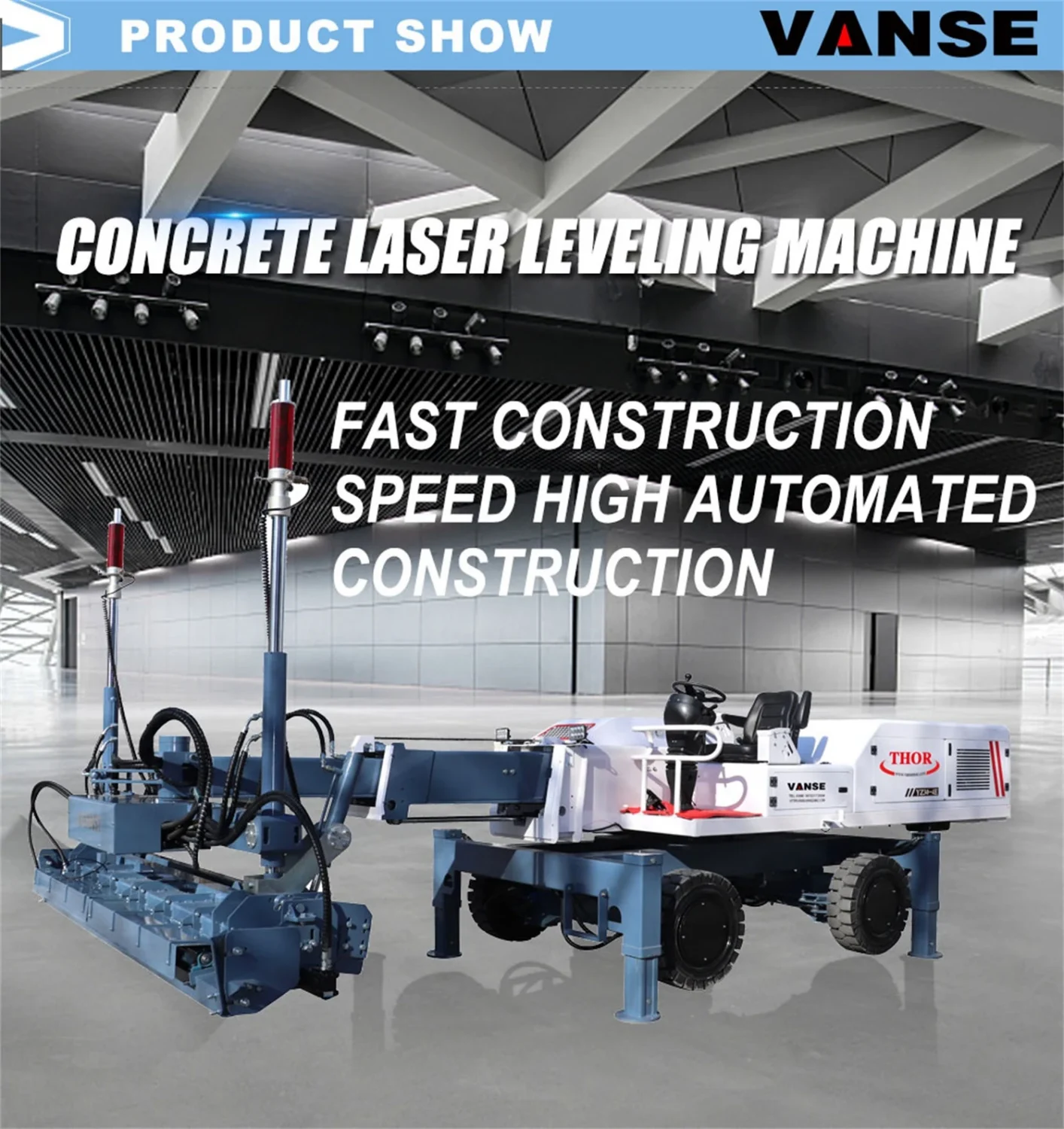
Assessing the smoothness of concrete pavements through quality testing
♢♢♢♢ Introduction
The smoothness of concrete pavement is one of the important indicators for evaluating its construction quality and performance. Good flatness not only improves the aesthetics of the road, but also helps ensure driving safety and extend the service life of the road. Therefore, it is crucial to inspect and evaluate the flatness quality of concrete pavement. This article aims to discuss how to evaluate the smoothness of concrete pavement through quality testing, including testing methods, evaluation standards, and improvement measures.
♢♢♢♢ Method for testing the flatness of concrete pavement
1. Ruler method
The ruler method is a common method for evaluating the flatness of concrete pavement. This method uses a ruler placed on the road surface and determines the smoothness of the road surface by observing the gap between the ruler and the road surface. The larger the gap, the worse the smoothness of the road surface. The ruler method is simple and easy to implement, but it is greatly affected by human factors and requires experienced inspectors.
2. Laser scanning method
The laser scanning method is an advanced flatness detection method. It uses the principle of laser ranging to scan the road surface with high precision through a laser scanner to obtain the three-dimensional topography data of the road surface. Through data processing and analysis, the smoothness index of the road surface can be obtained. The laser scanning method has the advantages of high precision and high efficiency, and is suitable for large-area, high-precision road surface smoothness detection.
3. Level method
The level method uses a level to measure the elevation of each point on the road surface, and determines the smoothness of the road surface by comparing the elevation differences between adjacent points. This method has high measurement accuracy, but requires more measurement points and complex calculation processes, and the detection efficiency is relatively low.
♢♢♢♢ Evaluation criteria for concrete pavement smoothness
The evaluation standards for concrete pavement flatness are usually formulated according to relevant national and regional specifications. Generally speaking, the evaluation criteria include the following aspects:
1. Maximum gap
The maximum gap refers to the maximum gap value between the ruler and the road surface in the ruler method detection. According to the specification requirements, the maximum gap value should be within a certain range. If it exceeds this range, the smoothness of the road surface will be deemed not to meet the requirements.
2. Smoothness index
Smoothness index is a comprehensive index obtained by counting and processing the elevation data of multiple measuring points on the road surface. This index can comprehensively reflect the smoothness of the road surface and is an important basis for evaluating the smoothness of the road surface.
3. Driving comfort
Driving comfort refers to the smoothness and comfort of a vehicle when driving on the road. A well-smooth road surface should ensure the smoothness and comfort of vehicle driving and reduce vehicle wear and driver fatigue.
♢♢♢♢ Measures to improve the smoothness of concrete pavement
1. Optimize construction technology:
Construction technology is one of the important factors affecting the smoothness of concrete pavement. Optimizing construction techniques, such as reasonably controlling the water-cement ratio and using efficient vibration equipment, can improve the compactness and uniformity of concrete, thereby improving the smoothness of the road surface.
2. Strengthen construction quality control:
Quality control during the construction process is the key to ensuring the smoothness of concrete pavement. Construction units should strictly carry out construction in accordance with design requirements and technical specifications, and strengthen control over raw materials, construction equipment, construction techniques, etc., to ensure that construction quality meets requirements.
3. Deal with pavement defects in a timely manner:
During and after construction, pavement defects, such as honeycombs, pitted surfaces, cracks, etc., should be discovered and dealt with in a timely manner. For minor defects, repair measures can be taken to deal with them; for serious defects, rework should be carried out to ensure the smoothness and flatness of the road surface.
4. Strengthen care and maintenance.
Concrete pavement will be affected by natural factors and traffic loads during use, causing the smoothness of the pavement to gradually decrease. Therefore, it is crucial to strengthen the maintenance and maintenance of road surfaces. Regular cleaning of the road surface, timely repair of damaged parts, and preventive maintenance can extend the service life of the road surface and maintain its smoothness and smoothness.
♢♢♢♢ Summary and Outlook
The flatness assessment of concrete pavement is a complex and important task involving multiple testing methods and evaluation standards. By rationally selecting testing methods and applying evaluation standards, the flatness of concrete pavement can be accurately evaluated, and corresponding improvement measures can be taken to improve the performance of the pavement. With the continuous advancement of science and technology and the emergence of new detection technologies, the evaluation method of concrete pavement flatness will be more accurate and efficient. In the future, we can look forward to the application of more intelligent and automated testing equipment and methods in concrete pavement flatness assessment, providing strong support for improving pavement construction quality and performance.
Thanks to All the Friends Who Support and Trust Shandong Vanse Machinery Technology Co., Ltd.
If you want to know more about Shandong Vanse Machinery Technology Co., Ltd. or have any questions, please feel free to contact us:
Our Factory
Shandong Vanse Machinery Technology Co., Ltd.








Share this article

About the Author: Shandong Vanse Machinery Technology Co., Ltd.
Shandong Vanse Machinery Technology Co., Ltd. is a high-tech manufacturer specializing in concrete construction machinery, including laser screeds and related equipment. The company integrates R&D, production, and global sales, with products exported to over 60 countries and widely used in infrastructure projects worldwide.
Previous Post
Next Post
Related Articles
You Might Also Like
Construction quality control and management of concrete laser leveling machine
The construction quality control and management of concrete laser leveling mainly involves the following aspects: 1. Equipment selection and calibration First of all, choosing a qualified concrete laser leveler is the basis for ensuring construction quality. It is necessary to ensure that the selected equipment can meet various requirements of construction, including accuracy, stability, durability, etc. After the equipment arrives at the construction site, it must be carefully unpacked and inspected to ensure that all parts are intact, and preliminary debugging and calibration must be carried out in accordance with the instructions. 2. Operator training Operating a concrete laser leveling requires professional skills and experience, so operators must be rigorously trained. The training content includes the basic principles of equipment, operating procedures, safety precautions, fault diagnosis and troubleshooting, etc. Only operators who have been trained and obtained certificates can perform actual operations. 3. Construction process quality control Pre-construction quality control: This includes inspection of the construction environment to ensure it is dry, ventilated and dust-free. At the same time, concrete raw materials must be strictly controlled to ensure that their quality meets construction requirements. Quality control during construction: This is mainly to control the operation process of the concrete laser leveling machine. Operators are required to strictly abide by operating procedures and carry out construction according to preset parameters. At the same time, a dedicated person must supervise the construction process to ensure correct operation. Post-construction quality control: After the construction is completed, the concrete surface should be inspected for quality, including surface flatness, smoothness, etc. Any areas that do not meet the requirements must be dealt with promptly and leveled again. 4. Acceptance standards Acceptance standards are an important basis for measuring construction quality. For concrete laser leveling machine construction, the acceptance criteria mainly include the following aspects: Concrete surface flatness: This is the most basic acceptance standard, which requires that the concrete surface has no obvious undulations and the overall flatness meets the design requirements. Concrete surface finish: Good finish can reduce friction on the concrete surface and improve performance. The concrete surface is required to be smooth and flawless during acceptance. Construction accuracy: For high-precision construction projects, the accuracy of the concrete laser leveler must meet the design requirements. During acceptance, the construction accuracy should be measured to see whether it meets the design standards. Equipment stability: The stability of the equipment must be checked during acceptance, including the operation stability and working status stability of the equipment. Equipment reliability: During acceptance, the reliability of the equipment should be checked to see whether the equipment is prone to failure and whether each component of the equipment can operate stably. Economy: Th e economy of using the concrete laser leveling is also an important acceptance criterion. Economical use mainly refers to whether the energy, material and other costs consumed by the equipment during the construction process are reasonable. During acceptance, the economics of the equipment should be evaluated to see whether it meets the requirements of economic benefits. Safety: During acceptance, the safety of the equipment must also be checked, including whether the safety protection measures of the equipment are complete and whether the operators have safety awareness. In addition, it should be ensured that the noise and vibration of the equipment are within an acceptable range and will not affect the surrounding environment and personnel. Environmental protection: The environmental performance of the equipment must also be considered during acceptance. Concrete laser levelings may produce pollution such as dust and noise during the construction process. Therefore, it is necessary to ensure that environmental factors are considered during the design process of the equipment to minimize environmental pollution. 5. Quality inspection and maintenance During and after the construction process, the concrete laser leveling machine should be regularly inspected and maintained for quality. Quality inspection mainly includes inspection of the equipment's operating status, working accuracy, concrete quality, etc. Maintenance mainly includes daily maintenance, regular inspection and repair of the equipment. 6. Recording and archiving During the construction process, various construction parameters, operating procedures, problems and solutions should be recorded. These records can provide a basis for acceptance and quality inspection, and are also an important reference for equipment maintenance and improvement. Records should be organized into files and properly preserved for subsequent review and reference. In summary, the construction quality control and management of concrete laser leveling machines need to be comprehensively considered and implemented from multiple aspects such as equipment selection, personnel training, construction process control, acceptance standard formulation, quality inspection and maintenance, and record archiving. Only in this way can the construction quality of the concrete laser leveling be ensured and the overall quality and efficiency of the project improved.Concrete laser leveling machine helps you overcome the labor shortage problem!
CONCRETE LASER LEVELING MACHINE HELPS YOU OVERCOME THE LABOR SHORTAGE PROBLEM! It is difficult to find labor force in the current market, especially for some industries that are tiring and often exposed to wind and sun. It is even more difficult to recruit people. What should we do in the market floor leveling industry facing a labor shortage? This situation had begun to emerge a few years ago, and VANSE, as a professional laser leveling machine manufacturer, developed a laser leveling machine that can replace manual labor, which greatly eased the current situation. For example, a construction company won 5 new bidding projects from January to February this year, a year-on-year increase of 66.0%. At the end of February, the surveyed companies had the largest number of construction projects in progress, 95. Despite the growth in business, there is still a shortage of skilled workers. The first reason is that there is a large market demand for skilled workers; the "demographic dividend" of low labor wages is gradually disappearing, and labor costs have greatly increased. But the construction industry has to continue to develop, so a better solution is to replace labor with machines. CONCRETE LASER LEVELING MACHINE HELPS YOU OVERCOME THE LABOR SHORTAGE PROBLEM! With the development of logistics and aviation industry, the golden age of floor construction has opened. Thousands of square meters of ground are only allowed to have a flatness error of 3 mm, which has become a new standard for floor construction. It is undoubtedly a dream to realize it by traditional manual labor. Owning a laser leveling machine has become an essential requirement for floor construction companies to undertake projects. CONCRETE LASER LEVELING MACHINE HELPS YOU OVERCOME THE LABOR SHORTAGE PROBLEM! 1. The leveling principle of the laser leveling machine is realized under the automatic control of the computer by using precision laser technology, closed-loop control technology and high-precision hydraulic system. This is the most prominent difference between it and other floor construction processes features. CONCRETE LASER LEVELING MACHINE HELPS YOU OVERCOME THE LABOR SHORTAGE PROBLEM! 2. The leveling principle of the precision laser leveling machine is to rely on the leveling head driven by hydraulic power, cooperate with the laser system and the computer control system to complete the leveling work while automatically leveling. The leveling head is equipped with an integrated scraper, vibrator and leveling plate, which integrates all leveling, leveling, vibration and compaction work, and completes it at one time. The computer control system automatically adjusts the elevation 10 times per second in real time, and the vibration frequency of the vibrator with a balanced design reaches 3000 times per minute. CONCRETE LASER LEVELING MACHINE HELPS YOU OVERCOME THE LABOR SHORTAGE PROBLEM! 3. The laser transmitter used to control the ground level is arranged independently, so that the level of the ground is not controlled by the template, and no cumulative error will occur. CONCRETE LASER LEVELING MACHINE HELPS YOU OVERCOME THE LABOR SHORTAGE PROBLEM! 4. The laser leveling machine can also automatically control the longitudinal and transverse slopes, which is also completed by the laser system, computer system, hydraulic system, and mechanical system. 5. There are many people in the construction of the traditional craft, which requires support formwork (channel steel), spotting, and paving. About 20 people are needed. The daily construction area is 2000㎡. The use of laser leveling machine can reduce the overall number of people to 4-8. Can be operated by one person. The daily construction area is increased to 3000㎡-5000㎡. Greatly reduced labor costs. In the long run, if we want to continue to develop in the flooring industry, we can only use laser leveling machines instead of labor. Now Shandong VANSE Machinery conforms to the needs of the development of the times.How environmentally friendly is a concrete laser leveling machine?
Environmental protection of concrete laser leveling machine I. Introduction With the global emphasis on environmental protection, the construction industry has begun to turn to green and sustainable construction methods. As a modern construction machinery and equipment, concrete laser leveling machine has been widely used around the world. This kind of mechanical equipment can not only improve construction efficiency, but also play an important role in reducing energy consumption and environmental pollution. This article will take an in-depth look at the environmental friendliness of concrete laser levelings and their importance in the construction industry. 2. Working principle of concrete laser leveling machine Concrete laser leveling machines mainly use laser alignment technology to level the concrete surface. The laser transmitter emits a laser beam, and by adjusting the angle and position of the reflector, the laser beam is accurately projected onto the receiver. When the height of the concrete surface changes, the receiver can detect the deviation of the laser beam and feed this information back to the control system. The control system adjusts the driving path of the leveler and the working status of the vibrator based on this information to ensure a smooth concrete surface. 3. Environmental protection analysis ◆Low energy consumption: The concrete laser leveler uses advanced laser technology, which consumes less energy than traditional manual or manual leveling machines. This helps reduce carbon emissions from the construction industry, thereby slowing the rate of global warming. ◆Reduce material waste: Because the concrete laser leveling machine has a high-precision leveling effect, it can reduce the amount of concrete used and also reduce the dependence on additional materials. This not only reduces construction costs but also helps reduce pressure on natural resources. ◆Reduce noise pollution: The noise generated by the concrete laser leveling during the working process is relatively low, and no strong vibration is generated during the working process. This can reduce the impact on the surrounding environment and create a more comfortable working environment for the construction team. ◆Improve construction efficiency: The concrete laser leveling machine has high efficiency and can complete a large amount of concrete leveling work in a short time. This helps shorten the construction period, thereby reducing impacts on surrounding communities and issues such as traffic congestion. ◆Strong adaptability: The concrete laser leveling machine has strong adaptability and can work in different construction environments. Whether it is a large construction project or a small residential area project, efficient and environmentally friendly construction can be achieved with a concrete laser leveling. ◆Predictability: By using a concrete laser leveling, precise control of the concrete surface can be achieved, reducing the need for rework and repairs. This not only helps save energy and resources but also reduces environmental impact. ◆Low maintenance cost: The maintenance cost of concrete laser leveling machine is relatively low. Thanks to its advanced laser technology, maintenance personnel can quickly detect and repair equipment faults to ensure normal operation. This low maintenance helps reduce operating costs in the construction industry while also helping to reduce environmental impact. ◆Promote sustainable development: By using concrete laser leveling machines, the construction industry can better achieve sustainable development goals. This kind of mechanical equipment can not only improve construction efficiency, but also play an important role in reducing energy consumption, reducing material waste, and reducing noise pollution. These characteristics make the concrete laser leveling one of the important tools to promote sustainable development. 4. Conclusion To sum up, the environmental protection of concrete laser leveling is mainly reflected in the following aspects: lower energy consumption, reduced material waste, reduced noise pollution, improved construction efficiency, strong adaptability, predictability, low maintenance cost and Promote sustainable development, etc. These characteristics make concrete laser leveling an efficient and environmentally friendly construction method, providing strong support for the construction industry to achieve sustainable development goals.