Technical Knowledge
Laser leveling machine manufacturers will fully popularize the misunderstandings of using equipment for you
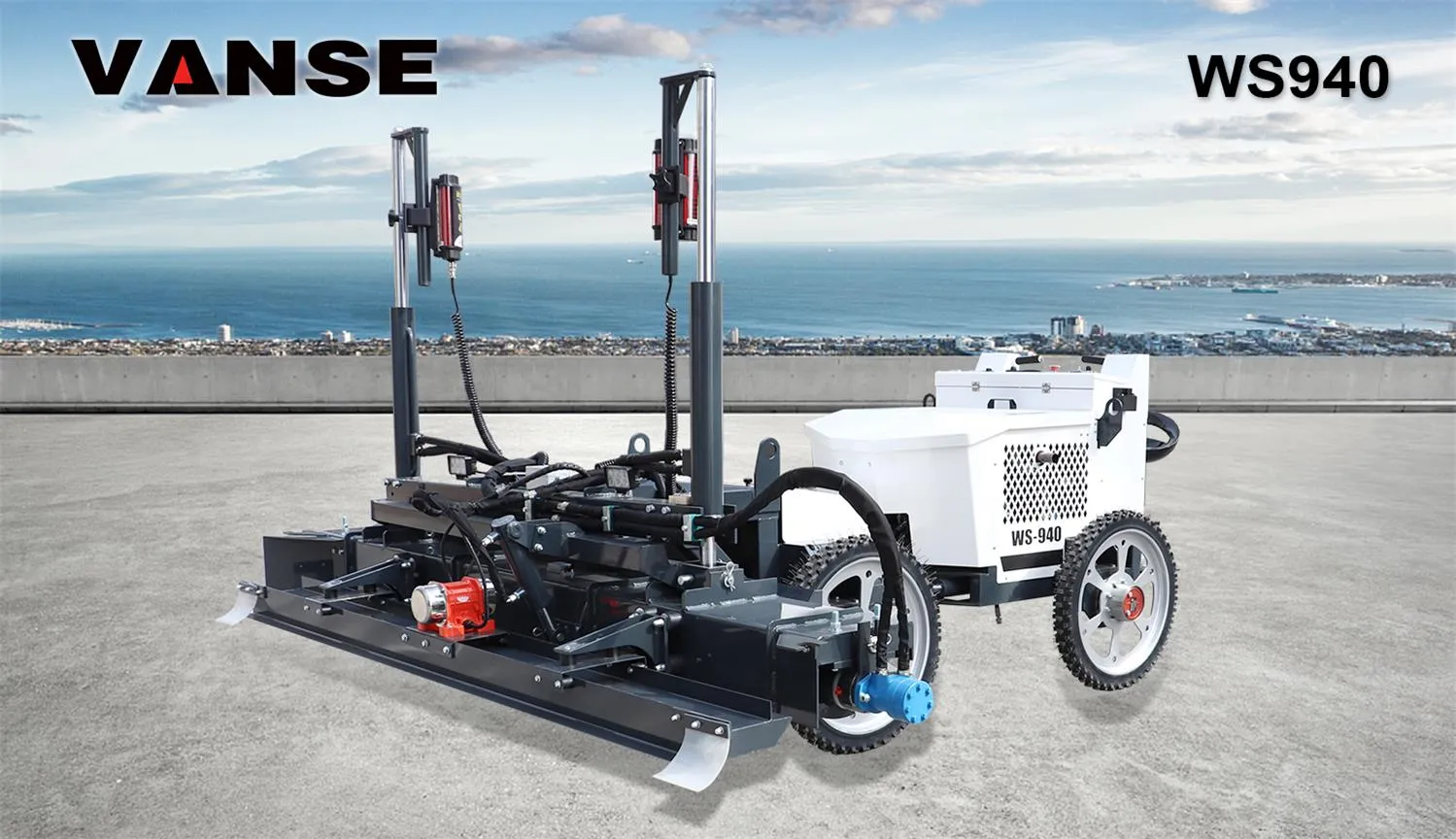
Before using the laser leveling machine, you should read the instruction manual carefully, which can effectively reduce the occurrence of misunderstandings. Secondly, you cannot use it only according to your own wishes. Incorrect use will seriously affect the working efficiency of the equipment, so we need to understand the use of the equipment in detail. The following laser leveling machine manufacturers share with you what misunderstandings exist when using the equipment.
✸ It is better to have more oil than less: We know that a small amount of laser leveling oil will cause insufficient oil supply and poor lubrication, leading to mechanical accidents. Therefore, when refueling, you should not "prefer to add more" for fear of insufficient oil. In fact, too much oil will not only increase the power consumption of the crankshaft due to increased rotational resistance, but also the oil is prone to bubbles, emulsification and leakage, resulting in poor lubrication.
✸ If the lubricating oil turns black, it means that the lubricating oil has deteriorated: Modern lubricating oils are added with appropriate amounts of various additives to improve their lubricating properties. It is normal for the lubricating oil of internal combustion machinery with detergent dispersants to turn black shortly after use. It cannot be easily replaced because the "oil has deteriorated". Lubricating oil with additives often makes the bearing surface turn black during use, which is also a normal phenomenon. Therefore, when we determine whether the lubricating oil has deteriorated, we cannot judge it by sight alone, but conduct a comprehensive analysis. When conditions permit, the oil should be tested and tested to ensure that the oil is changed according to quality.
✸ Oil with high viscosity is more beneficial to the engine than oil with low viscosity. If the viscosity grade of lubricating oil is too high, the pumping performance of the oil pump will be poor, the flow rate will be reduced, and its lubricity, washing and heat dissipation will deteriorate, which will easily cause semi-dry friction of the machine parts, causing failures such as burning and shaft seizure.
✸ Change the oil according to the oil grade required by the laser leveler: The oil grade specified in the laser leveler manual is for general working conditions. In the practice of machine oil change and maintenance, the actual use conditions must also be considered. If the actual use conditions are more stringent than the specified use conditions, a higher grade oil should be selected (through testing) or the oil change cycle should be shortened appropriately.
✸ Using high-viscosity engine oil can solve the problems of engine powerlessness and oil leakage: The engine powerlessness, oil consumption and oil leakage are external characteristics of the deterioration of the engine's technical condition. The basis for "using high-viscosity engine oil to solve the above problems" is insufficient. On the contrary, it will increase the starting resistance of the engine, deteriorate the lubrication performance, and aggravate the wear of the parts.
The knowledge about the misunderstandings shared by the laser leveler manufacturer for you is explained here. It is recommended that you do not use it according to the methods in the article when using it. Such misunderstandings will seriously affect the working efficiency of the equipment. Thank you for your continued attention and support.
Thanks to All the Friends Who Support and Trust Shandong Vanse Machinery Technology Co., Ltd.
If you want to know more about Shandong Vanse Machinery Technology Co., Ltd. or have any questions, please feel free to contact us:
Our Factory
Shandong Vanse Machinery Technology Co., Ltd.
Share this article

About the Author: Shandong Vanse Machinery Technology Co., Ltd.
Shandong Vanse Machinery Technology Co., Ltd. is a high-tech manufacturer specializing in concrete construction machinery, including laser screeds and related equipment. The company integrates R&D, production, and global sales, with products exported to over 60 countries and widely used in infrastructure projects worldwide.
Previous Post
Next Post
Related Articles
You Might Also Like
How to reduce the maintenance cost of concrete laser leveling machine?
Reducing the maintenance cost of concrete laser leveling requires a systematic management plan encompassing equipment use, routine maintenance, fault prevention, and spare parts management. This not only reduces the high repair costs associated with unexpected failures but also extends the equipment's lifespan. Specific implementation strategies are as follows: Many equipment failures stem from improper operation. Standardized operation is fundamental to reducing maintenance costs. Provide systematic training to operators to ensure they are familiar with the equipment structure (such as the laser system, hydraulic system, vibration motor, and other core components), the operating manual, and safety procedures. Develop an "Operational Procedures Manual" to clearly define pre-startup checks (such as laser transmitter battery level, hydraulic oil level, and tire pressure), precautions during operation (avoiding sudden stops under heavy loads, prohibiting forced vibration on hard surfaces, and preventing concrete from entering the motor or bearings), and post-operation cleanup (promptly removing any remaining concrete from the machine body and cleaning the laser receiver lens) to prevent component wear or damage due to operational errors. Overloading (such as exceeding the maximum leveling thickness or area) is prohibited, and the hydraulic system and engine should be kept under constant overload. Clear debris (such as rebar and rocks) from the site before work to prevent damage to the equipment chassis, scrapers, and other components. When working in muddy or flooded areas, lay down steel plates to reduce chassis rust and tire wear. Avoid prolonged continuous operation and set reasonable rest intervals according to the equipment manual to prevent engine and hydraulic pump aging due to overheating. The cost of preventive maintenance is far lower than the cost of repairs after a failure. A periodic maintenance plan should be established for key components. Regularly inspect and change oil: Replace engine oil and oil filter according to the manual (usually every 50-100 hours) to prevent oil impurities from abrading the cylinder block. Inspect the fuel filter to prevent impurities from entering the fuel injectors, causing blockage or damage (injector repairs are costly). Cooling System Maintenance: Check the coolant level weekly and clean the radiator and radiator every 200 hours to prevent poor heat dissipation and engine overheating. Overheating can cause serious problems such as cylinder head deformation. Air Filter Maintenance: In dusty operating environments, the air filter cleaning/replacement interval should be shortened (it is recommended to check every 20-50 hours. Clogged filters can lead to insufficient engine air intake and reduced power). Hydraulic Oil Management: Hydraulic oil needs to be replaced regularly (usually every 500-800 hours). During these changes, the hydraulic oil tank should be cleaned and the hydraulic oil filter replaced to prevent oil contamination and wear on the hydraulic pump and cylinder (hydraulic pump repair costs account for over 30% of total equipment maintenance costs). Leak Check: Before daily operation, inspect hydraulic lines and joints for leaks. If leaks are detected, promptly replace seals (O-rings, gaskets, etc.) to prevent hydraulic oil loss and air intrusion into the system (air intrusion can cause cavitation damage to hydraulic components). Hydraulic Oil Temperature Control: Monitor the hydraulic oil temperature during operation (normally below 80°C). If the temperature is too high, shut down the machine for cooling. Check the radiator for blockage or hydraulic pump malfunctions. Laser Transmitter and Receiver Maintenance: Clean the receiver lens and transmitter window daily to prevent dust from affecting signal reception. Regularly check the laser system battery level to prevent sudden power outages during operation that could cause leveling accuracy errors. Protect laser components from impact and moisture during storage. Circuit Inspection: Weekly check wire connectors for looseness and aging, especially at the vibrating and travel motor connections, to prevent short circuits or poor contact (circuit failures can easily cause motor burnout). Vibrating Plate and Scraper: Promptly remove residual concrete after operation to prevent unbalanced vibration after setting. Regularly check the lubrication of the vibrating bearings (grease every 100 hours) to prevent dry grinding and abnormal noise. Travel System: Check tire pressure and track tightness (for tracked equipment). Replace tires if severely worn to prevent deviation and uneven load on the chassis structure. Regularly lubricate the travel motor gearbox. Tighten connections: Check bolts and pins (such as the vibration frame connecting shaft and hydraulic cylinder mounting bolts) weekly for looseness, especially in high-frequency vibration areas, to prevent component loss or structural deformation. Select cost-effective spare parts. For core components (such as hydraulic pumps, engine filters, and laser receivers), original manufacturer parts are preferred. Although initially more expensive, they offer better compatibility and durability, reducing secondary failures. For non-core components (such as seals, bolts, and grease), reliable third-party brands can be selected to reduce costs. Buy frequently worn parts (such as filters, seals, and bearings) in bulk, establishing long-term relationships with suppliers to obtain discounts and avoid overpayments for emergency purchases. Extend the lifespan of spare parts. Repair repairable parts (such as minor scratches on cylinder piston rods and worn hydraulic line joints) with repair treatments (such as chrome plating and polishing) rather than direct replacement. Maintain spare parts replacement records, analyze wear patterns of wearing parts, and optimize maintenance intervals accordingly. (For example, if a batch of seals frequently fails, check the hydraulic fluid cleanliness or installation process.) Long-term idleness or improper storage will accelerate equipment aging and increase maintenance costs. Short-term Storage (1-3 months): Clean the concrete on the machine body and spray rust inhibitor on exposed metal parts (such as scrapers and chassis). Release the hydraulic system pressure and retract the cylinder piston rod to prevent rust. Stop the engine after idling for 5-10 minutes to prevent oil residue from causing cylinder rust. After disassembling the laser equipment, store it separately in a dry and ventilated area. Long-term Storage (3 months or more): Replace the engine oil and hydraulic oil to prevent oil deterioration. Fill the fuel tank with fuel stabilizer to prevent rust on the tank wall. Store the tires off the ground or rotate them regularly to prevent localized pressure deformation. Cover with a tarp to prevent sun and rain from moisture that could damage the circuitry and deteriorate rubber components. 5. Data Management and Fault Analysis Establish equipment maintenance records. Record each maintenance time, replaced parts, fault causes, and repair costs. Use data analysis to identify frequent fault points (e.g., a certain model of hydraulic pump is prone to wear) to optimize maintenance plans or stockpile spare parts in advance. Address minor faults promptly to prevent them from escalating. When minor equipment issues such as unusual noise, vibration, or oil leaks are discovered, immediately shut down the machine for inspection to prevent them from escalating into major repairs. (For example, ignoring a minor leak in a hydraulic line can cause the hydraulic pump to run out of oil and burn out, increasing repair costs by more than 10 times.) Develop professional maintenance personnel. Equip operators with basic maintenance skills (such as changing filters and cleaning laser components) to reduce reliance on external service providers and lower labor costs. Select reliable repair service providers. Work with experienced, manufacturer-authorized service providers to avoid unprofessional repairs that can lead to "repairs that worsen the situation" (e.g., improper hydraulic system repairs can introduce more impurities). Sign long-term maintenance agreements to secure parts discounts and priority service. Summary: The key to reducing maintenance costs for concrete laser leveling is "prevention first, standardized operation, and precise maintenance." By reducing human losses, extending component life, and controlling accessory costs, annual maintenance costs can be reduced by 30%-50%, while ensuring the construction efficiency and leveling accuracy of the equipment, achieving long-term cost optimization. Click the below to jump immediately!!! ARMOUR JOINT CONCRETE LASER LEVELING MACHINE LIGHT TOWER POWER TROWEL SLIPFORM MACHINE STEEL FIBER TOPPING SPREADER TRACKED MINI DUMPERCompared with traditional leveling machines, how much is the work efficiency improved by laser leveling machines?
Compared with traditional leveling machines, the improvement in work efficiency of laser leveling machines varies depending on the construction scenario, equipment model, construction process and other factors, and can usually be improved by 30%~50% or even higher. The following is a comparative analysis of the efficiency differences between the two from multiple dimensions: Comparison dimensions Traditional leveling machine Laser leveling machine Leveling basis Relies on manual wire drawing and leveling, with fixed elevation as the benchmark Based on the horizontal laser surface emitted by the laser transmitter, the leveling accuracy is automatically controlled in real time Power and operation mode Manually controls the scraper or roller, and adjusts the height based on experience Hydraulic drive + intelligent control system, automatic leveling and vibration compaction Construction coverage The width of a single operation is narrow (usually 1~3 meters), and it needs to be repeated back and forth The single operation width can reach 2~4 meters, or even wider, reducing the number of round trips Shandong Vanse Machinery Technology Co.,Ltd Construction speed: larger coverage area per unit time Traditional leveling machine: Frequent manual measurement of elevation and adjustment of equipment height are required, and the construction area per hour is about 100~200 square meters due to the limitation of manual operation accuracy. For example, when constructing in large areas (such as parking lots and factory floors), it is necessary to work back and forth multiple times, and it is easy to cause rework due to manual errors. Laser leveling machine: The laser system calibrates the height in real time, without frequent shutdown and measurement. The hydraulic system automatically adjusts the height of the leveling beam. It can construct 300~500 square meters per hour, and some large equipment can even reach more than 800 square meters. Taking a 10,000 square meter site as an example, traditional equipment takes about 50~100 hours, while laser equipment only takes 20~30 hours, and the efficiency is improved by 50%~100%. Precision control: reduce time spent on rework Traditional leveling machines: manual control errors are large (usually ±5~10 mm), prone to unevenness, requiring manual repair later, with a rework rate of about 10%~20%, and additional construction time. Laser leveling machines: laser positioning accuracy can reach within ±3 mm, with a high one-time molding pass rate and almost no need for rework. For example, when constructing industrial floors with high flatness requirements (such as warehouses and workshops), traditional equipment may be delayed by 2~3 days due to rework, while laser equipment can directly save this part of time. Labor costs: reduce labor dependence Traditional leveling machines: require multiple workers (such as surveyors, operators, and auxiliary workers), at least 3~5 people to collaborate, and require high worker experience. Laser leveling machines: only 1~2 operators are required (responsible for equipment control and laser system calibration), labor costs are reduced by 50%~70%, and efficiency fluctuations caused by labor fatigue are reduced. Adaptability to complex scenarios: shortening the time spent in special working conditions Traditional leveling machines: When working on slopes, curved surfaces or sites with large elevation differences, manual adjustments are required, which greatly reduces efficiency (may reduce by more than 30%). Laser leveling machines: can be programmed to adapt to a variety of terrains (such as slopes and curved surfaces), and the laser system automatically adjusts the elevation. The efficiency advantage is more obvious in complex scenarios, for example, the efficiency can be increased by 40%~60% when working on slopes. Shandong Vanse Machinery Technology Co.,Ltd Site scale: Small site (such as a few hundred square meters): The equipment debugging time of the laser leveling machine accounts for a high proportion, and the efficiency is improved by about 30%~40%. Large site (tens of thousands of square meters): The "scale effect" of laser equipment is significant, and the efficiency can be improved by more than 50%. Equipment model and configuration: Small laser leveling machine (such as hand-held): suitable for narrow areas, the efficiency is about 1.5~2 times that of traditional equipment. Large driving laser leveling machine: equipped with double vibrating device and wide leveling beam, the efficiency can reach 2~3 times that of traditional equipment. Construction process requirements: Ordinary floor (low flatness requirement): efficiency is improved by about 30%~40%. High-precision floor (such as ultra-flat floor): Laser equipment can meet the standard at one time, avoiding multiple leveling of traditional processes, and the efficiency is improved by more than 50%. Shandong Vanse Machinery Technology Co.,Ltd Case 1: Industrial plant floor construction For a 12,000 square meter plant, a traditional leveling machine was equipped with a team of 4 people and took 12 days to complete; the laser leveling machine was operated by only 2 people and completed in 6 days, with an efficiency increase of 50%, and the flatness error was reduced from ±8 mm to ±2 mm. Case 2: Municipal square construction A 5,000 square meter square contains a sloped terrain. Due to frequent measurement and adjustment, the traditional equipment can only construct 400 square meters per day; the laser leveling machine can only construct 800 square meters per day, with an efficiency increase of 100%, and the flatness of the slope transition meets the standard. Shandong Vanse Machinery Technology Co.,Ltd The laser leveling machine fundamentally reduces manual intervention and rework time through "automatic measurement + precise control + wide-width operation", and its advantages are particularly prominent in large-scale, high-precision construction scenarios. For projects that pursue construction period and quality, its efficiency improvement is not only reflected in time reduction, but also in the optimization of comprehensive costs by reducing manpower and reducing errors. If specific data is required, it can be further calculated based on the project scale and equipment model. Click the below to jump immediately!!! ARMOUR JOINT CONCRETE LEVELING MACHINE LIGHT TOWER POWER TROWEL SLIPFORM MACHINE STEEL FIBER TOPPING SPREADER TRACKED MINI DUMPERHow to determine the maintenance cycle of concrete laser leveling machine?
As an important equipment in modern construction, the efficient and precise leveling performance of concrete laser leveling machine greatly improves the quality and efficiency of the project. However, the long-term stable operation of any equipment is inseparable from scientific and reasonable maintenance. Therefore, determining the maintenance cycle of concrete laser leveling machine is a vital task. This article will discuss in depth how to determine the maintenance cycle of concrete laser leveling machine from the aspects of equipment use frequency analysis, working environment investigation, manufacturer recommended cycle, component wear inspection, maintenance record, maintenance cost analysis, and safety and performance evaluation. 1. Equipment use frequency analysis + – The use frequency of concrete laser leveling machine is one of the important factors affecting its maintenance cycle. The higher the frequency of equipment use, the faster the wear and aging of its internal mechanical parts, so more frequent maintenance is required. For equipment with high frequency use, the maintenance cycle should be shortened to ensure that the equipment is always in good working condition. On the contrary, for equipment with low frequency of use, the maintenance cycle can be appropriately extended Avoid unnecessary waste of resources. When conducting a frequency analysis, we need to carefully record each use of the equipment, including information such as usage time, workload, and working environment. Through the statistics and analysis of these data, we can derive the average frequency and characteristics of the equipment, which provides an important basis for determining the maintenance cycle. 2. Working environment inspection + – The working environment of the temperature-soluble soil laser leveling machine also has an important impact on its maintenance cycle. The equipment works in a harsh environment, such as dust, high temperature, etc., which will accelerate the corrosion and wear of its components. Therefore, when determining the maintenance cycle, the impact of the working environment must be fully considered. We should conduct on-site inspections of the working environment of the equipment to understand factors such as humidity, temperature, and dust concentration in the environment. At the same time, it is also necessary to pay attention to whether the equipment is often exposed to corrosive substances or subjected to strong mechanical shock during work. Based on this information, we can make appropriate adjustments to the maintenance cycle of the equipment to adapt to different working environments. 3. Manufacturer recommended cycle + – Equipment manufacturers usually give recommended maintenance cycles based on the design and manufacturing process of the equipment. These recommended cycles are usually based on the normal service life and expected wear of the equipment, and have certain reference value. When determining the maintenance cycle of the concrete laser leveling machine, we should refer to the recommended cycle provided by the manufacturer and make comprehensive considerations based on the actual use of the equipment and the working environment. If the equipment does not have any abnormal situation during use and the working environment is good, then maintenance can be carried out according to the cycle recommended by the manufacturer. However, if the equipment fails frequently or the working environment is bad, the maintenance cycle may need to be shortened. 4. Component wear inspection + – The various components of the concrete laser leveling machine will wear during use, and the different degrees of wear will directly affect the performance and life of the equipment. Therefore, regular wear inspection of the components of the equipment is an important basis for determining the maintenance cycle. When inspecting component wear, we should focus on the vulnerable parts and key components of the equipment, such as blades, bearings, seals, etc. By checking the wear of these components, we can understand the overall operating status of the equipment and then determine whether maintenance is needed. At the same time, according to the wear law of the components, the future wear trend can be predicted to provide a basis for formulating maintenance plans. 5. Maintenance records + – Maintenance records are important data reflecting the maintenance of equipment. By analyzing the maintenance records, we can understand the historical maintenance of the equipment and the operating status after each maintenance. This information is of great significance for determining the maintenance cycle. We should establish a complete maintenance record system to record the time, content, personnel and other information of each maintenance in detail. At the same time, we should also track and record the operation of the equipment after maintenance. Through the statistics and analysis of these records, we can find potential problems in the operation of the equipment, so as to carry out preventive maintenance in advance. 6. Maintenance cost analysis + – Maintenance cost is one of the important factors to be considered when determining the maintenance cycle of wet concrete laser leveling machine. Too frequent maintenance will increase maintenance costs, while too long maintenance cycle may lead to more equipment failures and increase the cost of overhaul or replacement of parts. Therefore, we need to conduct a comprehensive analysis of the maintenance cost of the equipment. This includes counting the cost of each maintenance and repair, and analyzing the relationship between the cost and the maintenance cycle. By finding the best balance point, we can reduce maintenance costs while ensuring the normal operation of the equipment. When conducting maintenance cost analysis, it is also necessary to consider the purchase cost and expected service life of the equipment. If the purchase cost of the equipment is high and the expected service life is long, then when determining the maintenance cycle, more attention should be paid to the long-term stable operation of the equipment and the reduction of long-term costs. 7. Safety and performance evaluation + – Safety and performance are key indicators for the operation of concrete laser leveling machines, and are also important bases for determining maintenance cycles. The safety of equipment includes the safety of operators and the safety of the equipment itself, while performance is directly related to construction quality and efficiency. Therefore, we need to regularly evaluate the safety and performance of the equipment. This includes checking whether the safety protection devices of the equipment are intact, whether the operation is convenient, and whether the operation is smooth. At the same time, it is also necessary to test and evaluate the performance indicators of the equipment, such as leveling accuracy and work efficiency. Based on the evaluation results of safety and performance, we can adjust the maintenance cycle. If the safety and performance of the equipment decline or fluctuate, the maintenance cycle should be shortened, and the problem should be checked and solved in time. On the contrary, if the safety and performance of the equipment are stable and good, the maintenance cycle can be appropriately extended. In summary, determining the maintenance cycle of the concrete laser leveling machine requires comprehensive consideration of equipment use frequency, working environment, manufacturer recommended cycle, component wear inspection, maintenance records, maintenance costs, safety and performance evaluation, and other aspects. Only by comprehensively considering these factors can we formulate a scientific and reasonable maintenance plan to ensure the long-term stable operation and efficient construction of the equipment. 8. Specific implementation of safety and performance evaluation + – When implementing safety and performance evaluation, it is necessary to first provide professional training to operators to ensure that they are familiar with the various safety operating procedures of the equipment and can correctly identify and deal with potential safety hazards. At the same time, the equipment manager or maintenance engineer also needs to conduct regular equipment inspections, focusing on whether the safety protection devices and warning signs of the equipment are complete and clear to ensure the safety of the operators. In terms of performance evaluation, professional testing equipment and methods can be used to quantitatively evaluate the various performance indicators of the concrete laser leveling machine. For example, by measuring the leveling accuracy and efficiency of the equipment, the performance status of the equipment can be intuitively understood. At the same time, the performance of the equipment can also be comprehensively evaluated in combination with the actual needs of the construction to determine whether it is necessary to adjust the maintenance cycle or take other improvement measures. In addition, with the continuous advancement of technology and the upgrading of equipment, we also need to pay attention to the safety performance and performance characteristics of the new concrete laser leveling machine. By comparing and analyzing the differences between new equipment and existing equipment, we can provide a reference for formulating a more scientific and reasonable maintenance cycle. 9. Dynamic adjustment of maintenance cycle + – It should be noted that the maintenance cycle of the concrete laser leveling machine is not static. With the increase of equipment use time, changes in working environment and technological progress, the maintenance cycle may need to be adjusted dynamically. Therefore, we should establish a dynamic maintenance cycle adjustment mechanism. This includes regular evaluation and analysis of the equipment's operating conditions, component wear, maintenance costs, etc., and timely adjustment of the maintenance cycle based on the evaluation results. At the same time, it is also necessary to pay attention to changes in industry standards and best practices, and promptly apply new experiences and practices to the maintenance of equipment. 10. Conclusion + – In summary, determining the maintenance cycle of concrete laser leveling machines is a complex and meticulous process that requires comprehensive consideration of multiple factors. Through scientific analysis, reasonable evaluation and dynamic adjustment, we can formulate a maintenance plan that meets the actual needs of the equipment, ensure the safe and stable operation of the equipment and efficient construction, and at the same time, this will also help reduce the maintenance cost of the equipment, extend its service life, and provide strong guarantees for the sustainable development of the enterprise. In future work, we should continue to deepen the research and practice of the maintenance cycle of warm concrete laser leveling machines, constantly explore new methods and means, improve the maintenance level and management efficiency of equipment, and at the same time strengthen exchanges and cooperation within the industry, share experience and resources, and jointly promote the progress and development of maintenance technology for concrete laser leveling machines.