Technical Knowledge
Concrete show south east Asia Indonesia & Construction Indonesia
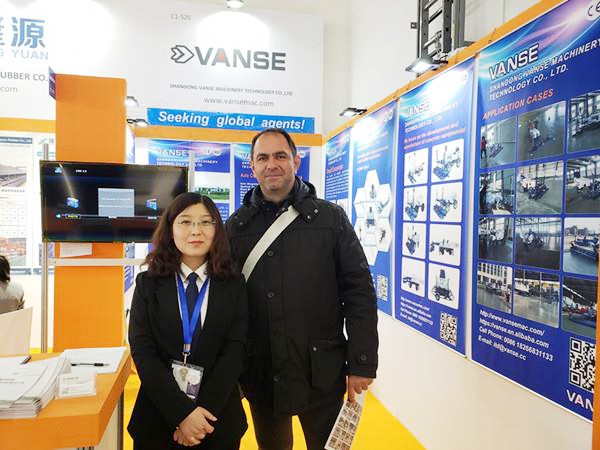
September 6, 2017

Concrete show south east Asia Indonesia & Construction Indonesia
time:13th Sep to 16th Sep, 2017
Booth: D2 HALL, C3-1
Will welcome the majority of friends visit the site visit
Thanks to All the Friends Who Support and Trust Shandong Vanse Machinery Technology Co., Ltd.
If you want to know more about Shandong Vanse Machinery Technology Co., Ltd. or have any questions, please feel free to contact us:
Our Factory
Shandong Vanse Machinery Technology Co., Ltd.


About the Author: Shandong Vanse Machinery Technology Co., Ltd.

Shandong Vanse Machinery Technology Co., Ltd. is a high-tech manufacturer specializing in concrete construction machinery, including laser screeds and related equipment. The company integrates R&D, production, and global sales, with products exported to over 60 countries and widely used in infrastructure projects worldwide.

Shandong Vanse Machinery
Leading manufacturer specializing in high-performance concrete laser screeds, telescopic arm flatwork handlers, and mechanical ride-on power trowels.
Post overview
Main PRODUCT Categories
Need Machine Guidance?
Speak directly with Shandong Vanse field specialists for tailored equipment quotes and site planning.
Contact Us TodayRelated Articles
You Might Also Like
April 6, 2023
Can artificially prolong the service life of laser leveling machine?
Can artificially prolong the service life of laser leveling machine? In many dangerous places, we can use laser leveling machines instead of manual paving, which undoubtedly reduces the risk of work, but mechanical products also have a certain service life. If they are not well maintained, the service life of the equipment will be greatly reduced. Therefore, the equipment needs to be cleaned and lubricated after use. After all, precise maintenance can increase the service life of the equipment to a certain extent. 1. After the work is completed, please use the arm lift button to manually lift the machine head, and then push it out of the construction site. It is forbidden to push the machine when the vibrating leveling part is in contact with the ground to avoid damage to the vibrating plate. 2. After the construction is completed, it is necessary to rinse the machine with a high-pressure water gun in time (it is strictly forbidden to flush the water gun directly at the mesh part of the fuselage, so as to prevent water from entering the inside of the fuselage and causing short circuits, etc.). 3. The place where the machine is placed must be kept dry, and sundries and flammable and explosive materials must not be piled up around. 4. The battery of the machine also needs to be paid attention to. If it is not used together for a long time, make sure to remove all batteries from the host and receiver and store them properly. The transmitter comes with a rechargeable battery with a charging time of eight hours 5. During the use of the machine, please try to charge the battery after the battery is fully used. When charging, try to ensure that it is fully charged for 8 hours at a time. The recommended charging time is 12 hours for the first time, and 8 hours for subsequent charging. In order to avoid damage to the battery and the transmitter, please unplug the power plug in time after it is fully charged. 6. If the laser signal is lost during the construction process and the machine needs to be restarted, the interval should be more than ten seconds. 7. If the machine is placed on a stable ground when it is not used for a long time, lubricating grease should be added to each bearing part once a week, and lubricating oil should also be added to each chain to maintain good lubrication. At the same time, attention should be paid to avoid sand and other sundries. chain to prevent premature chain failure. Generally, at the end of one month or every construction period, the machine should be fully inspected and maintained once. Always pay attention to the tightness of the V-belt and the chain, adjust it in time if it is too loose, and adjust the fastening bolts frequently to prevent loosening. During the construction process of the concrete laser leveling machine, the timely detection and repair of various faults and defects of the machine is the basic guarantee for the efficient operation of the machine and the extension of the service life. It is of great significance to improve the production efficiency of the leveling machine and reduce the cost of use and maintenance.Read More
August 1, 2024
How to deal with equipment failures during the construction of concrete laser leveling machines?
As a highly sophisticated construction equipment, concrete laser leveling machine may encounter various equipment failures during the construction process. If these failures are not handled in time, it will not only affect the construction progress, but may also cause safety accidents. Therefore, it is crucial to develop an effective equipment failure handling strategy to ensure the smooth progress of construction. The following is a detailed analysis of how to handle equipment failures that occur during the construction of concrete laser leveling machine. Concrete laser leveling machine may encounter various failures during the construction process, such as laser system failure, control system failure, mechanical failure, etc. These failures need to be diagnosed and handled in a timely and accurate manner to reduce construction delays and potential safety risks. 1. Fault prevention strategy Prevention is better than cure. The probability of equipment failure can be reduced by the following measures: – **Regular maintenance**: Regularly inspect and maintain the equipment according to the manufacturer's recommendations. – **Operation training**: Ensure that the operator receives professional training and understands the correct operation of the equipment. – **Use environment control**: Ensure that the equipment is used in a suitable environment and avoid extreme temperature and humidity conditions. 2. Fault diagnosis method Quickly and accurately diagnosing the fault is the first step in handling the fault: – **Visual inspection**: Check whether there is obvious damage or abnormality on the outside of the equipment. – **Auditory inspection**: Determine whether there is an abnormality by the sound when the equipment is running. – **Performance test**: Determine the scope of the fault by testing the various performance indicators of the equipment. 3. Common fault handling Develop corresponding handling methods for common faults that may occur during the construction of concrete laser leveling machines: – **Laser system failure**: Check the laser transmitter and receiver, clean the lens, check the power supply and connection lines. – **Control system failure**: Restart the control system, check the software settings, update the software or replace the control module if necessary. – **Mechanical failure**: Check the hydraulic system, transmission system, etc., and replace damaged parts. 4. Fault handling process Establish a standardized fault handling process to ensure the efficiency and effectiveness of fault handling: – **Fault report**: The operator reports the fault immediately when it is found, providing the fault phenomenon and occurrence time. – **Fault analysis**: The maintenance team responds quickly, analyzes the cause of the fault, and formulates a handling plan. – **Fault repair**: Repair the fault according to the handling plan to ensure that the equipment resumes operation as soon as possible. 5. Spare parts and tool preparation Prepare necessary spare parts and tools to shorten the troubleshooting time: – **Spare parts inventory**: Reserve vulnerable parts and key parts according to the equipment usage. – **Professional tools**: Prepare professional maintenance tools to improve maintenance efficiency. 6. Technical support and training Provide technical support and training to improve the troubleshooting ability of on-site personnel: – **Manufacturer support**: Establish a good cooperative relationship with equipment manufacturers and obtain technical support. – **Internal training**: Regularly train operators and maintenance personnel to improve fault diagnosis and handling skills. 7. Fault recording and analysis Record and analyze fault cases and continuously optimize the fault handling process: – **Fault recording**: Record the type, cause, handling method and time of each fault in detail. – **Case analysis**: Regularly analyze fault cases, summarize experience, and avoid the recurrence of similar faults. 8. Emergency plan formulation Formulate emergency plans for equipment failures and improve the ability to respond to emergencies: – **Emergency team**: Establish a special emergency maintenance team to be ready to handle equipment failures at any time. – **Emergency supplies**: Prepare necessary emergency supplies, such as spare equipment, quick repair tools, etc. 9. Technology upgrades and improvements Reduce the occurrence of equipment failures through technology upgrades and improvements: – **Software upgrades**: Regularly update the software of the equipment control system and fix known defects. – **Hardware improvements**: Improve the equipment hardware according to the results of fault analysis to improve reliability. 10. Conclusion Dealing with equipment failures during the construction of concrete laser leveling machines requires systematic management strategies and technical support. Through measures such as fault prevention, rapid diagnosis, standardized processing procedures, spare parts and tool preparation, technical support and training, fault recording and analysis, emergency plan formulation, and technology upgrades and improvements, the impact of equipment failures on construction can be effectively reduced and the smooth progress of construction can be ensured. LEARN MORERead More
July 23, 2025
How to reduce the failure rate of concrete laser leveling machine and improve equipment stability and efficiency?
Concrete laser leveling machine is a key equipment in concrete construction. Its failure rate, stability and efficiency directly affect the quality and progress of the project. The following details the methods to reduce the failure rate and improve stability and efficiency from multiple dimensions such as equipment selection, daily maintenance, operating specifications, and environmental adaptation: Matching project requirements Choose equipment power and model according to the construction area (large-area factory/small-area floor), concrete thickness (super-thick base/thin layer finishing), and ground flatness requirements (precision industrial floor/ordinary civilian floor). For example, large-scale leveling machines with telescopic arms are required for ultra-large-area construction to avoid overload failures caused by "small horses pulling big carts". Prioritize well-known brands, whose core components (laser transmitters, hydraulic systems, vibration motors) are more reliable in quality and after-sales parts are supplied in a timely manner. Pay attention to the configuration of key components Laser system: Choose brands with strong anti-interference ability (such as Swiss Leica) to avoid leveling accuracy errors caused by signal loss and reduce the frequency of equipment shutdown and debugging. Hydraulic system: Use imported pumps and valves to reduce common faults such as oil leakage and unstable pressure; check whether the hydraulic oil cooling system is suitable for high temperature environments (such as open-air construction in summer). Mechanical structure: Check whether the scraper and vibrator of the leveler are loose or worn. If the gap between the scrapers is too large, the concrete surface will be uneven and need to be adjusted or replaced in time. Check the wear degree and tire pressure of the track/tire. Insufficient track tension will cause walking deviation and increase mechanical load. Power and hydraulic system: Check the engine oil, fuel, coolant level, hydraulic oil tank oil level and oil cleanliness (if the oil is turbid, it may clog the filter element and cause abnormal pressure in the hydraulic system). Idle for 3-5 minutes before starting, observe whether the hydraulic pipeline is leaking oil, and listen to whether the engine running sound is abnormal (abnormal sound may indicate bearing wear or valve problem). Electrical and laser system: Test whether the laser receiver signal is stable and clean the dust on the receiver lens (avoid direct sunlight to interfere with the signal, and install a sunshade). Check whether the buttons and indicator lights on the control panel are normal to avoid malfunction due to failure of operating instructions. Cleaning equipment: Thoroughly clean the concrete attached to the machine body (especially the connection between the vibrator and the scraper, which will affect the movement accuracy after hardening). You can use a high-pressure water gun to rinse and then apply anti-rust oil. Clean the radiator and air filter (if clogged with dust, it will cause the engine to overheat and reduce power output). Targeted maintenance: Add grease to the hydraulic rod, bearings and other moving parts (according to the model specified in the manual, such as lithium-based grease, to avoid mixing different brands to cause lubrication failure). If the construction environment is dusty or muddy on the day, it is necessary to check the air filter and replace it if necessary (clogging the filter will cause insufficient engine air intake, incomplete combustion, increased fuel consumption and carbon deposits). Maintenance interval Key maintenance content Every 50 hours Replace the hydraulic oil filter, check the sealing of the hydraulic pipe joints, and clean the sediment of the fuel filter. Every 200 hours Replace the engine oil and filter, check the tightness of the belt (too loose will cause the generator and water pump to rotate insufficiently, and too tight will easily break). Every 500 hours Check the calibration accuracy of the laser system (you can use a level to check, and recalibrate if the error exceeds ±2mm), and replace the hydraulic oil. Extended downtime (>1 week) Drain the fuel (to avoid freezing at low temperatures or fuel deterioration), disconnect the negative terminal of the battery, cover with a rainproof cloth, and pad the tires to avoid deformation under pressure. Operator training Must be professionally trained before taking up the post and be familiar with the equipment operation process: for example, when starting, the laser system must be turned on before starting the vibration, and when stopping, the vibration must be turned off before the laser to avoid instantaneous load impact on the motor. Overload operation is prohibited: for example, if the vibrator is inserted into the concrete to a depth exceeding the design range (usually ≤30cm), the motor will be overloaded and burned; avoid hard objects such as steel bars and stones when walking to prevent damage to the scraper. Operation skills during construction Control the travel speed: adjust according to the slump of the concrete (walk slowly when the slump is large to avoid surface water seepage; walk at a constant speed when the slump is small to prevent insufficient vibration), and avoid mechanical shock caused by sudden stops and sudden turns. Laser system protection: turn off the laser transmitter when moving the equipment to avoid collision with the receiver; in case of heavy rain or strong electromagnetic interference (such as a large electric welder nearby), construction must be suspended to prevent signal disorder from causing equipment malfunction. Coping with extreme environments High temperature weather: shorten continuous working time (stop for 10 minutes every 2 hours), check the hydraulic oil temperature (stop and cool if it exceeds 60℃), and add antifreeze to the engine water tank (increase boiling point). Low temperature weather (<5℃): preheat the engine before starting (preheater can be used), and use low-temperature hydraulic oil to avoid system jamming caused by oil viscosity. Humid environment: wipe electrical components dry in time after construction, and regularly check whether the circuit connectors are rusted. Fault emergency treatment If the laser signal is lost, stop the machine immediately to check whether the receiver is blocked, and restart the laser transmitter; if it is lost frequently, it may be that the transmitter battery is low or there is a signal interference source nearby. When the hydraulic system leaks oil, stop the machine immediately and turn off the hydraulic pump, and replace the damaged oil pipe (it is forbidden to tighten the joints under high pressure to prevent oil spray and injury). Establish a "fault record ledger" to record the cause and treatment method of each fault (such as "2023.10.15 The vibrating motor made an abnormal noise and returned to normal after replacing the bearing") to facilitate the tracing of high-frequency fault points and improve maintenance strategies in a targeted manner. Develop a maintenance plan Develop a "weekly/monthly/quarterly maintenance table" according to the equipment manual, and clarify the responsible person (such as the operator is responsible for pre-shift inspection, and the mechanic is responsible for monthly deep maintenance) to avoid maintenance omissions. Reserve vulnerable parts (such as hydraulic filter elements, vibrator bearings, laser receiver batteries) to shorten downtime. Periodic performance calibration Ask the manufacturer's technicians to calibrate the laser leveling accuracy every 3 months (use a precision level to measure the flatness of the ground, and adjust the scraper angle if the error exceeds 3mm) to avoid mechanical deformation caused by long-term use that affects the construction quality, and indirectly reduce the secondary loss of equipment caused by rework. Through the above measures, the failure rate of laser leveling machines can be significantly reduced (according to statistics, standardized maintenance can reduce the failure rate by more than 40%), while improving equipment stability (continuous operation time extended by 20%-30%) and construction efficiency (leveling area increased by 10%-15% per hour), ultimately achieving two-way optimization of project quality and cost. Click the below to jump immediately!!! ARMOUR JOINT CONCRETE LASER LEVELING MACHINE LIGHT TOWER POWER TROWEL SLIPFORM MACHINE STEEL FIBER TOPPING SPREADER TRACKED MINI DUMPERRead More