Technical Knowledge
What problems will be caused by unstable installation of the laser transmitter of the concrete laser leveling machine?
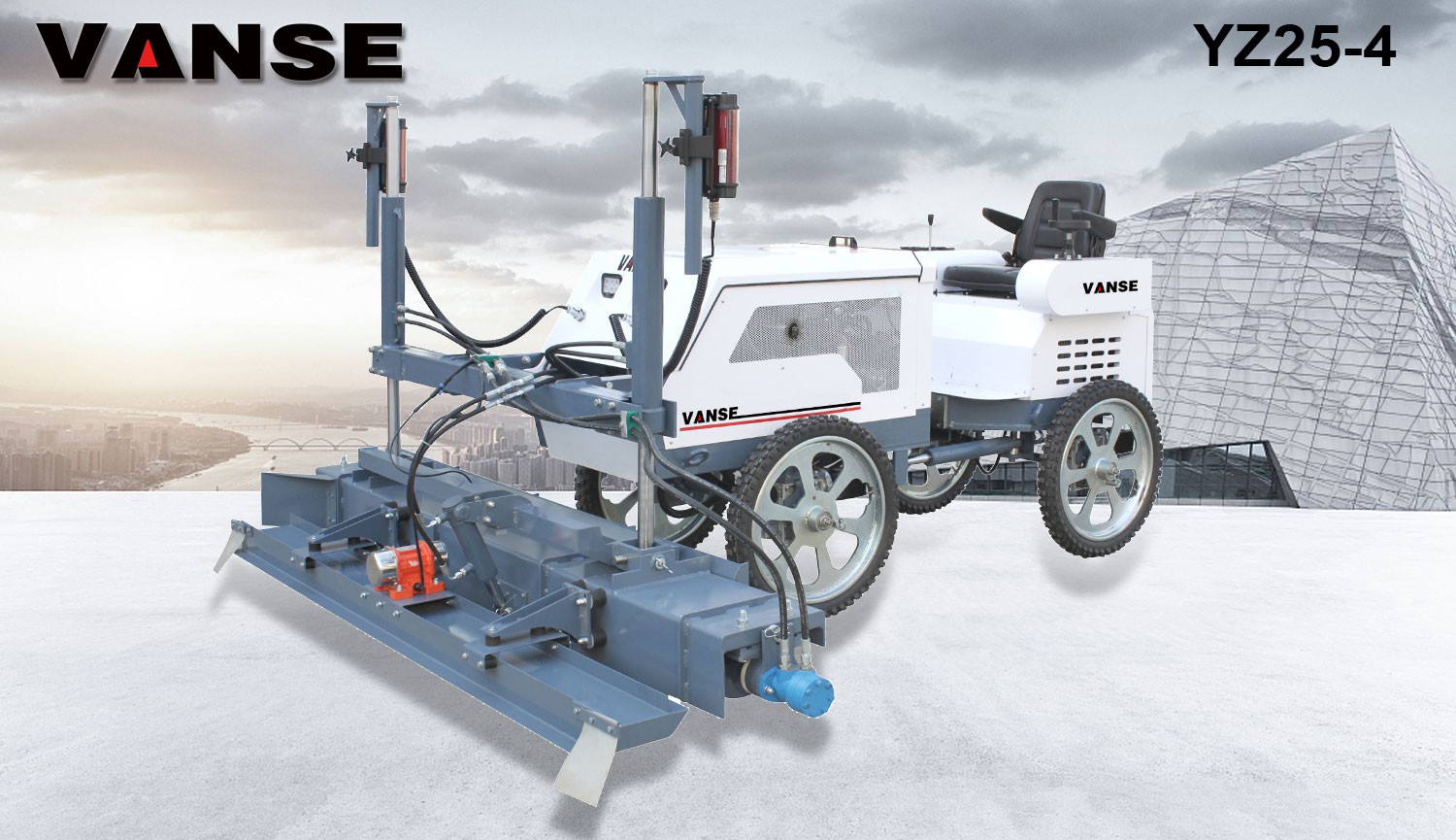
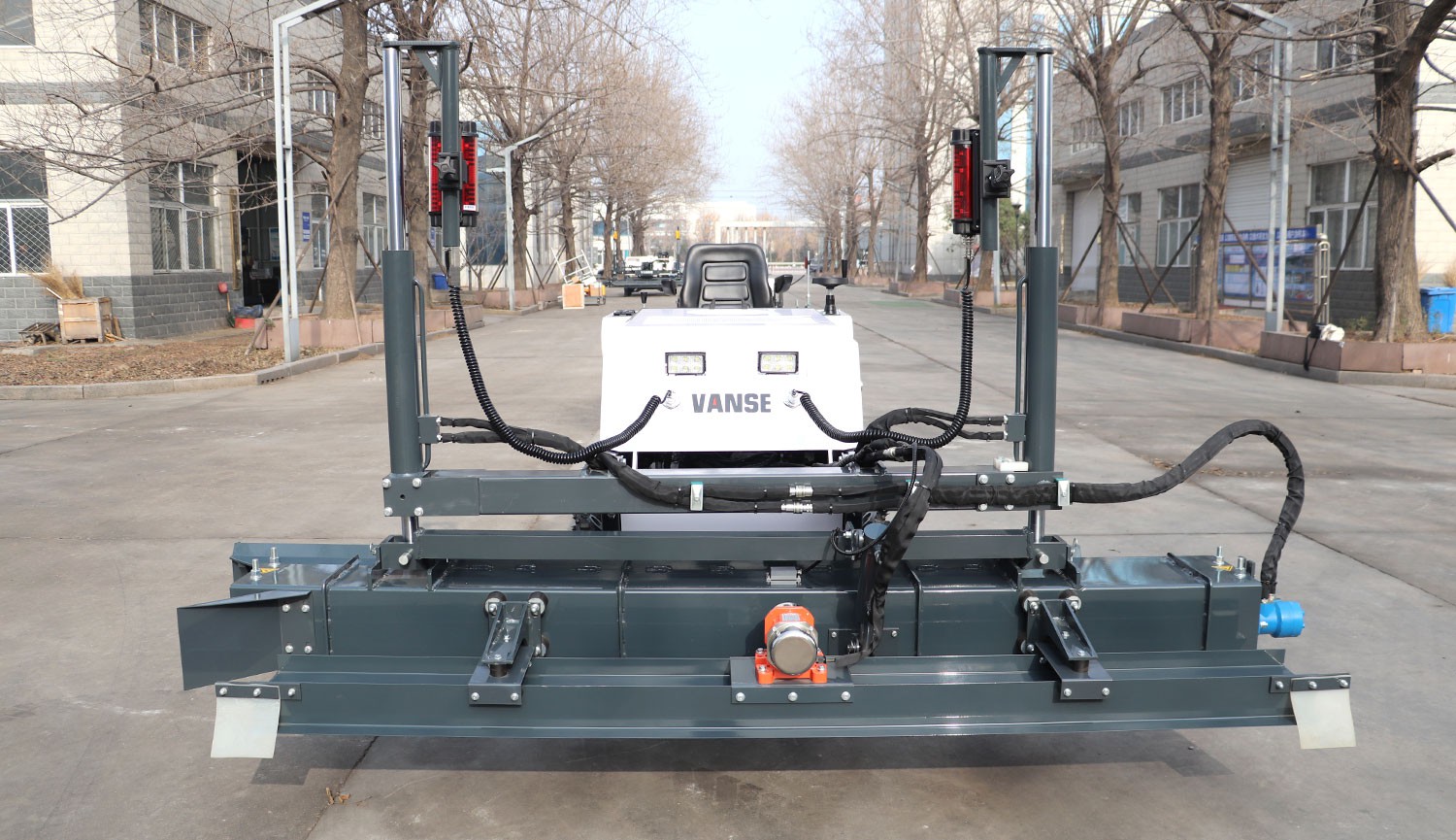
Unstable installation of the laser transmitter of the concrete laser leveling machine will cause problems in many aspects such as construction accuracy, equipment performance, construction efficiency and safety, as follows:
Impact on construction accuracy
– Flatness deviation:
If the laser transmitter is installed unstably, the baseline of the laser beam it emits will fluctuate or deviate. The leveling machine relies on laser signals to control the height and levelness of the scraper or leveling beam. Inaccurate baselines will cause height differences on the concrete surface at different locations, causing the flatness to exceed the allowable error range, affecting the overall quality and performance of the ground.
– Slope error:
For concrete construction with slope requirements, such as parking lots and roads, unstable installation of the laser transmitter will cause deviations in slope control. It may lead to poor drainage, water accumulation in low-lying areas, affecting the use function, and even causing long-term damage to the concrete structure.
Reduce equipment performance
– Increase mechanical wear:
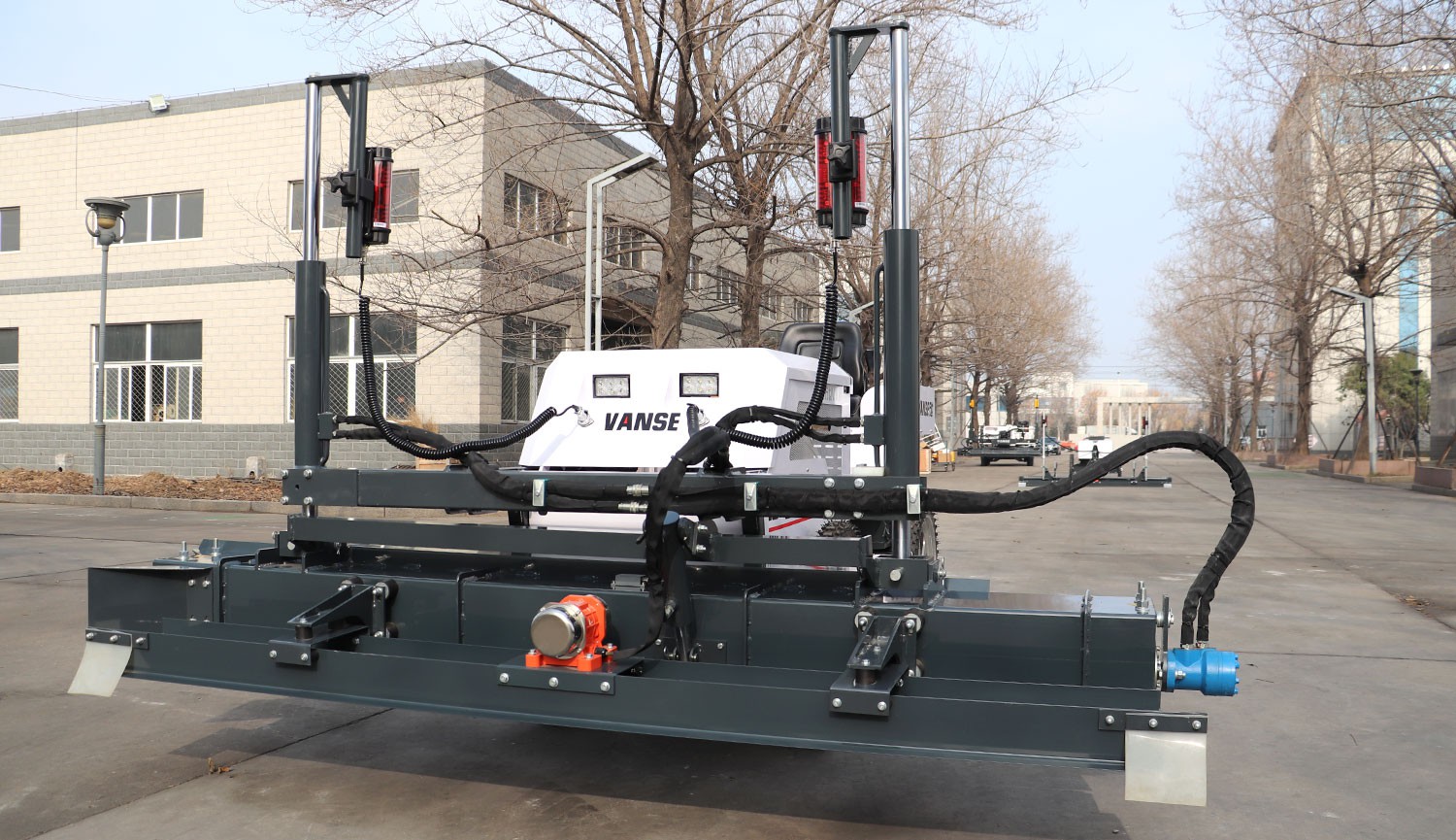
Due to the unstable installation of the laser transmitter, the leveling machine will frequently make unnecessary adjustments and corrections during operation, which will cause the mechanical parts of the equipment to bear additional stress and impact. Long-term operation will accelerate the wear of mechanical parts, such as scrapers, leveling beams, transmission devices, etc., reduce the service life of the equipment, and increase maintenance costs and downtime.
– Affect the life of electronic components:
Unstable installation may cause vibration and impact of the electronic components inside the laser transmitter, resulting in loose connections, solder joints falling off or circuit failures. At the same time, unstable working conditions can cause problems such as overheating of electronic components, shorten the service life of electronic components, and affect the overall performance and reliability of the laser transmitter.
Lead to reduced construction efficiency
– Increase construction time:
The construction accuracy problems caused by unstable installation of the laser transmitter require construction workers to spend more time on manual repairs and leveling. In addition, the decline in equipment performance may also cause failures and require downtime for maintenance, which will extend the overall construction time and affect the progress of the project.
– Reduce construction continuity:
Various problems caused by unstable installation will lead to frequent pauses and adjustments during the construction process, destroying the continuity and smoothness of the construction. This will not only affect the work efficiency and enthusiasm of construction workers, but may also have an adverse effect on the pouring quality of concrete, such as cold joints and loose concrete bonding.
Safety hazards
– Risk of equipment tipping:
Unstable installation of the laser transmitter may cause it to shake or tip during operation, posing a safety threat to surrounding construction personnel and equipment. Especially when working at heights or when there are dense personnel and equipment on the construction site, the tipping of the transmitter may cause serious safety accidents.
– Electrical safety issues:
Unstable installation may loosen the power cord, signal line and other connections of the laser transmitter, leading to electrical safety issues such as poor contact and short circuit. This may not only damage the equipment, but also cause safety accidents such as fire, threatening the safety of personnel and property on the construction site.
Thanks to All the Friends Who Support and Trust Shandong Vanse Machinery Technology Co., Ltd.
If you want to know more about Shandong Vanse Machinery Technology Co., Ltd. or have any questions, please feel free to contact us:
Our Factory
Shandong Vanse Machinery Technology Co., Ltd.
Share this article

About the Author: Shandong Vanse Machinery Technology Co., Ltd.
Shandong Vanse Machinery Technology Co., Ltd. is a high-tech manufacturer specializing in concrete construction machinery, including laser screeds and related equipment. The company integrates R&D, production, and global sales, with products exported to over 60 countries and widely used in infrastructure projects worldwide.
Previous Post
Next Post
Related Articles
You Might Also Like
The proper maintenance schedule for the hydraulic systems of the concrete laser leveling machine
The hydraulic system of the concrete laser leveling is its "heart" and "muscle", responsible for driving all key actions such as the lifting, vibration, movement of the leveling head and the extension and retraction of the boom. A scientific and rigorous maintenance plan for the hydraulic system is the core to ensuring the reliability, accuracy and long service life of the equipment. The following is a well-structured and highly operational correct maintenance plan for the hydraulic system of a concrete laser leveling: More than 70% of the faults in the hydraulic system are caused by oil contamination (particles, water, air) and excessively high oil temperature. Therefore, the maintenance plan should revolve around "keeping the oil clean and cool". Oil level check: When the equipment is parked on a level ground and all oil cylinders are retracted, check the oil level gauge of the hydraulic oil tank to ensure that the oil level is between the upper and lower limits marked. Low oil level can cause the pump to run dry, the system to overheat and components to be damaged. Visual inspection Leakage inspection: Quickly inspect the oil pump, valve block, cylinder piston rod, all pipe joints and hose surfaces for visible oil leakage or dripping. Pipeline inspection: Check for any abnormal bulges, wear, cracks or friction with adjacent components in the hydraulic hose. Start preheating: In cold weather, after starting the engine, it should be run at medium to low speed without load for 3 to 5 minutes to allow the hydraulic oil to circulate and heat up, improve fluidity, and prevent dry grinding of components. Cleaning and inspection: After the operation, check whether the oil filling port of the hydraulic oil tank, the vent valve (breather), and the surface of the hydraulic components are contaminated by cement mortar. Clean them in time to prevent contaminants from entering the system. Temperature perception: Before shutting down, use the back of your hand to sense whether the temperature of the fuel tank and the main valve blocks is abnormally hot to the touch (usually not exceeding 80℃). Continuous high temperatures will accelerate the oxidation and deterioration of the oil. This is the main body of the maintenance plan. It must be carried out strictly in accordance with the intervals in the manufacturer's manual and detailed records must be made. Maintain the project Period/Frequency Specific operations and standards Hydraulic oil replacement First replacement: 200 to 500 hours after a new machine or major overhaul. 1. Change the oil while it's still hot: Perform this when the equipment has just been shut down and the oil temperature is still hot. Regular replacement: Every 1,000 to 2,000 working hours or once a year (whichever comes first). 2. Thorough empting: Drain the old oil from the fuel tank and oil lines. If necessary, flush with fresh oil. The cycle needs to be shortened under harsh working conditions. 3. Clean the fuel tank: Use a non-fibrous cloth to clean the inner wall of the fuel tank and the magnetic drain plug. 4. Strict oiling: Add new hydraulic oil of the specified grade and viscosity level to the prescribed oil level through a high-precision filter. Replacement of the oil suction/return oil filter element Every 500 hours or simultaneously with each oil change. When replacing, pay attention to cleaning the area around the filter element seat to prevent dirt from falling in. 2. Never reuse the filter element after cleaning it. High-pressure pipeline filter (if any) Alarm according to the clogging indicator on the filter, or as stipulated in the manual (usually synchronized with the oil change cycle). Timely replacement and checking the type of residue on the filter element can help determine the internal wear condition of the system (for example, if there is a lot of metal shavings, there may be abnormal wear of components). Hydraulic oil quality testing Every 6 months to 1 year (applicable to high-value or high-intensity usage equipment). Samples are sent to a professional laboratory for oil spectral analysis to detect water content, contamination degree, acid value and metal wear particles. This is the most effective means of predictive maintenance, which can detect potential faults in advance. System tightening and inspection Monthly or every 250 hours. 1. Inspect and tighten all pipe joints, flanges and valve block installation bolts (in accordance with torque requirements). 2. Check all the piston rods of the oil cylinders for any scratches, rust or bends. Minor scratches should be repaired immediately with an oilstone. 3. Check the pre-charge pressure of the accumulator (if any). Cooling system cleaning Weekly or depending on the cleanliness of the environment. Clean the fins of the hydraulic oil radiator to ensure there is no blockage from dust, willow catkins, cement powder, etc., to guarantee the heat dissipation efficiency. This is the key to controlling the oil temperature. Overloading is strictly prohibited: Avoid the leveling machine operating at its maximum load for a long time, as this will cause excessive system pressure and a sharp increase in oil temperature. Avoid shock: Operate the control handle smoothly to reduce the shock load on the hydraulic system. Cylinder protection: During operation, pay attention to protecting the piston rod to avoid direct impact or scratches from concrete or crushed stones. Proper parking: When parked for a long time, all cylinders (especially the exposed piston rods) should be retracted to reduce corrosion and deformation. High-temperature environment: Enhance the cleaning of the radiator. Consider using hydraulic oil with higher viscosity (as recommended in the manual), and add auxiliary cooling if necessary. High humidity/water environment: Strengthen the inspection of oil level and water content in oil products, and keep the vent valve of the oil tank dry. The replacement cycle of the filter element can be shortened. In extremely cold environments: Use low pour point hydraulic oil. The equipment should be parked in a warm warehouse and fully preheated before startup. Park the equipment in a dry room and completely retract all the oil cylinders. Fill the fuel tank to the brim to reduce the formation of condensation on the inner walls. Start the engine every month and let the hydraulic system run idle for 10 to 15 minutes to lubricate all components and remove moisture. Slow and weak operation: It may be due to low oil level, pump wear, or malfunction of the main relief valve. Abnormal system noise (pump beeping) : It may be due to clogged oil suction filter element, excessively high oil viscosity, pump suction or cavitation. Abnormal increase in oil temperature: cooler blockage, severe internal leakage, improper oil level, and the set value of the relief valve being too high. Cylinder crawling or shaking: Air inside the system, leakage from the cylinder, or oil contamination causing the valve core to get stuck. Stop the machine immediately for inspection: If any of the above abnormalities occur, stop the machine immediately and start checking from the simplest aspects such as oil level, filter element, and leakage. Eliminate operating while faulty: Hydraulic system failures can deteriorate in a chain reaction, and minor issues can quickly turn into major overhauls. Professional maintenance: Complex operations such as pressure adjustment and disassembly of pumps and valves should be carried out by professional maintenance personnel. Before disassembling any hydraulic components, the system pressure must be completely released. Strictly adhere to the cycle: execute by the hour or calendar, and establish maintenance logs. Oil product management is at the core: only specified oil products are used, strictly filtered, and regularly replaced and tested. Cleanliness is the top priority: keep the oil clean, the refueling process clean, and the radiator clean. Pay attention to detailed inspection: Daily visual and tactile checks can detect most early problems. Equal emphasis on operation and maintenance: Standardized operation is the fundamental way to prevent abnormal stress in the hydraulic system. Ultimately, please be sure to take the manufacturer's regulations in your equipment's "User and Maintenance Manual" as the primary basis, and formulate and implement your maintenance plan in combination with your specific working conditions. Note: The parameters provided in this document are for reference only and are not mandatory. Due to differences in technical characteristics between different brands and models of laser levelers, please consult the manufacturer for a suitable solution before actual operation. This reference document assumes no responsibility for any issues arising from failure to follow the manufacturer's instructions.How to ensure construction quality of the laser leveling machine during construction?
The key to ensuring the quality of construction during the construction process of the laser leveling machine lies in its precise automatic control system and correct construction process. Here are some of the main steps and considerations to ensure the quality of construction: 1. **Site survey and planning**: Before construction, the site should be surveyed in detail to determine the scope of construction, check the ground conditions, assess whether there are potential obstacles or underground facilities, and confirm the type and proportion of concrete. 2. **Equipment calibration**: The laser leveling machine must be calibrated before use to ensure the accuracy of the laser transmitter. This includes horizontal calibration and intensity adjustment of the laser signal to ensure leveling accuracy. 3. **Template and boundary setting**: Set the template according to the design drawings, especially around the wall or equipment foundation, and manually set the boundary in advance to ensure that the areas that the laser leveling machine cannot reach can also meet the design requirements. 4. **Concrete pouring and initial leveling**: When pouring concrete, the pouring speed and amount should be controlled to maintain continuity and avoid cold joints. Before using the laser leveling machine, perform preliminary leveling by manual or small machinery to ensure that the surface is roughly flat. 5. **Laser leveling machine operation**: – **Laser signal reception**: The receiver on the laser leveling machine continuously monitors the laser signal and adjusts the height of the leveling head in real time to ensure that the concrete surface is consistent with the laser plane. – **Automatic adjustment**: The leveling machine automatically adjusts the electric push rod or hydraulic cylinder according to the deviation fed back by the receiver to control the height of the scraper to maintain the required flatness. 6. **Quality monitoring**: During the construction process, the flatness, slope and concrete density should be checked regularly to ensure that they meet the design requirements. If necessary, an independent laser rangefinder can be used for review. 7. **Construction path planning**: Reasonably plan the walking path of the leveling machine to avoid repeated construction and omissions, and ensure that the entire area is evenly stressed and leveled. Post-construction inspection and maintenance 8. **Final inspection**: After the construction is completed, a comprehensive quality inspection is carried out, including flatness and strength tests, to ensure that the specifications are met. 9. **Maintenance and maintenance**: Proper cleaning and maintenance of the laser leveling machine to ensure that the equipment is in good condition and extend its service life. 10. **Environmental adaptability**: Considering the influence of the construction environment (such as temperature and humidity), take corresponding measures, such as increasing the water retention of concrete during summer construction, and insulation measures may be required in winter. By following the above steps and precautions, the laser leveling machine can effectively ensure the construction quality during the construction process and achieve high-precision and efficient ground leveling operations.Quantitative evaluation of the single concrete laser leveling machines operating efficiency
The quantitative evaluation of single-machine operating efficiency for concrete laser leveling machines, such as those from Vanse Machinery, is primarily measured in the area of concrete leveled per unit of time, typically square meters per hour m^2/hr or square feet per minute (ft^2/min). Vanse's official efficiency metrics indicate a significant output compared to traditional methods, though the specific value is heavily dependent on the machine model and job site conditions. The operating efficiency is quantified using the following key productivity rates: This is the most direct measure of efficiency. Vanse Machine Type Typical Efficiency Range Implied Daily Output (8-Hour Shift) Basis for Rate Walk-Behind Models (e.g., DZ30-2) ≈500 sets/year (Manufacturer throughput) Not typically quantified by area per day. Small-area flexibility. Four-Wheel Ride-On (e.g., YZ28-4S) 600 to 1,050 m2/hr 4,800 to 8,400 m2/shift Average driving speed of 4 to 7 meters per minute. Telescopic Boom Models (e.g., YZ40-4E) 500 m2/hr or more Up to 4,000 m2 (specific claim) 4 meter leveling width and 6 meter telescopic arm reach. Note: The high range of 600 to 1,050 m^2 / hr (Source 2.1) is often cited as the theoretical peak performance under near-ideal conditions (large, open areas with consistent concrete supply). A critical quantitative advantage is the reduction in labor required: A laser leveling machine generally requires 2 to 3 workers (operator, laser checker, concrete placement crew) compared to 4 to 6 workers for traditional leveling and floating methods. This translates to up to 60% reduction in labor costs for the leveling process. The high efficiency of the single machine is due to integrated technical parameters: Operating Speed: The walking speed of the machine (e.g., 0-40 meters per minute for the DZ30-2 or 0-4.5km/h for the YZ28-4S) dictates how quickly the area is covered. Leveling Width: The width of the leveling head (e.g., 3 meters for the DZ30-2 or 4 meters for the YZ40-4E) determines the area covered in a single pass. The area output is calculated as: Efficiency ≈ Operating Speed × leveling Width The machine's accuracy is a qualitative feature that directly yields quantitative time savings. Leveling Accuracy: Vanse machines control ground elevation with high precision (e.g., ±1.5mm). Impact: This precision drastically reduces or eliminates the need for rework and post-pour correction, which can often add an entire shift or more to a traditional job, thus maximizing the single-machine operating time. The leveling head combines multiple manual steps into one pass: Spreading: A spiral conveyor (auger) on the head spreads the concrete. Leveling: The leveling plate strikes off the concrete to the laser-controlled grade. Vibrating/Compacting: A high-frequency vibrator (50Hz or more) consolidates the concrete in the same pass. By combining these steps, the machine maximizes the output of a single worker and piece of equipment. The actual on-site operating efficiency is constrained by factors outside the machine itself: Concrete Supply Rate: The single most critical factor. The machine can only work as fast as the concrete can be delivered and placed in front of its head. If the batch plant and pump cannot maintain flow, the leveling sits idle. Obstacles and Layout: Highly congested sites with many columns or fixed elements require the machine to spend more time maneuvering (especially for non-boom models), which lowers the effective m^2/hr rate. Operator Skill: A highly experienced operator can maintain steady, precise operation, which minimizes stops and restarts, ensuring the machine operates at its peak capacity. This video demonstrates the Vanse YZ40-4E machine operating on a job site, giving a visual context to its reach and speed: VANSE YZ40-4E Concrete Laser leveling Machine Mexico Construction Site. Note: The parameters provided in this document are for reference only and are not mandatory. Due to differences in technical characteristics between different brands and models of laser levelers, please consult the manufacturer for a suitable solution before actual operation. This reference document assumes no responsibility for any issues arising from failure to follow the manufacturer's instructions.