Technical Knowledge
Laser leveling machine manufacturers professional sharing: the correct way to use the equipment

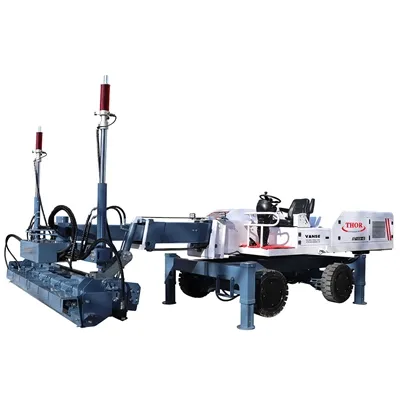
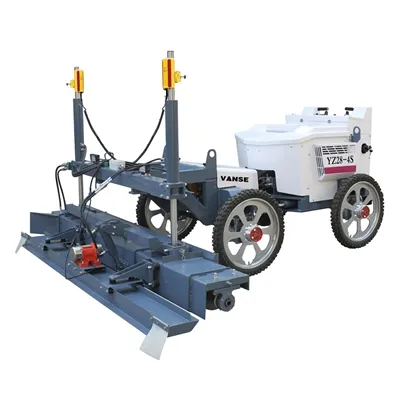
Laser leveling machine is an indispensable equipment in the construction industry. It is indispensable in the construction of large highways. In order to ensure the smooth progress of construction and the smoothness of the road surface, it is necessary to master the correct use of laser leveling machine. Secondly, you should read the instruction manual of the equipment before use, because this will make you familiar with the internal structure of the equipment as soon as possible, so as to achieve correct operation. The following laser leveling machine manufacturer will show you the correct use of laser leveling machine.
1. Laser leveling machine manufacturers explain from a professional perspective that it is important not to work under a load that exceeds the load that the machine can bear. The laser leveling machine should be used to the best of one's ability. As a laser leveling machine manager, when designating an operator, the laser leveling machine random data and operation manual should be handed over to the operator so that he can master the mechanical performance and operating procedures normally, and the relevant data should not be withheld at will.
2. Laser leveling machine manufacturers explain from a professional perspective that it is necessary to try to ensure the uniform addition and subtraction of the load of the laser leveling machine, so that the machine is in a relatively gentle load change. Specifically, it is necessary to add and subtract the throttle more evenly to prevent the ups and downs of the engine and working device.
3. Laser leveling machine manufacturers explain the scientific use of lubricants from a professional perspective. According to statistics, more than half of the leveling machine failures are caused by poor lubrication. Due to the precision of the various parts of the laser leveling machine, good lubrication can keep it in a normal working gap and a suitable working temperature, thereby reducing the degree of wear of the parts and reducing mechanical failures. Normal and reasonable lubrication is one of the effective measures to reduce mechanical failures. To this end, first, it is necessary to reasonably select lubricants. During use, neither low-grade lubricants nor other types of lubricants can be used as substitutes, let alone inferior products. Second, the quantity and quality of lubricants should be checked frequently.
4. Laser leveling machines should be maintained and repaired in a timely manner. Laser leveling machines will inevitably have various failures during use. Among these failures, some failures may have a very small impact on mechanical equipment, while some are more serious and may even cause major accidents of machine destruction and death.
The knowledge shared by the laser leveling machine manufacturer for you has basically come to an end here. If you have the intention to understand the equipment, you can contact us by phone, or log in to our official website and leave us a message. We will solve your problem as soon as we see it. Thank you for your reading.
Thanks to All the Friends Who Support and Trust Shandong Vanse Machinery Technology Co., Ltd.
If you want to know more about Shandong Vanse Machinery Technology Co., Ltd. or have any questions, please feel free to contact us:
Our Factory
Shandong Vanse Machinery Technology Co., Ltd.








Share this article

About the Author: Shandong Vanse Machinery Technology Co., Ltd.
Shandong Vanse Machinery Technology Co., Ltd. is a high-tech manufacturer specializing in concrete construction machinery, including laser screeds and related equipment. The company integrates R&D, production, and global sales, with products exported to over 60 countries and widely used in infrastructure projects worldwide.
Previous Post
Next Post
Related Articles
You Might Also Like
The reason why the laser leveling machine is efficient and fast
With the gradual improvement of the requirements of modern industrial floors, more and more floor construction equipment began to show their own power, and the laser leveling machine has been loved by the majority of users since it was launched, so it can be used in the leveling machine occupy a place in the market. Laser leveling machine manufacturers have always insisted on providing users with standardized equipment, and are committed to bringing more efficient construction to road construction. Laser leveling machine manufacturers will introduce some performance advantages of the leveling machine from the following, I hope you can understand. The laser leveling machine laser measurement and control system produced by the laser leveling machine manufacturer automatically controls the elevation. The design elevation of the top surface of the floor with the laser system imported from the United States is automatically controlled by the laser machine computer, which can ensure a very high leveling of the ground, and can directly achieve leveling on the concrete layer. The leveling of the ground is not affected by the vibration of the construction formwork, and no formwork is needed in the middle , Reduce artificial material input, reduce construction procedures, and speed up construction progress. The laser leveling machine is super flat and super economical. Since the 1990s, since the continuous promotion of "clear water concrete" (building) floor and colored wear-resistant (building) floor, after more than ten years of exploration and continuous improvement, through the upgrading of laser leveling machine equipment, the process flow The integration is perfect, so that the "three super" floors in the current "flat" product series have reached the domestic level. The laser leveling machine produced by the laser leveling machine manufacturer replaces the traditional manual leveling of concrete. The ground elevation can reach laser-level accuracy. Lasers are used to control the levelness and flatness of the ground, so as to achieve a super-flat floor in the sense. So how much is a laser leveling machine, you first understand the performance and then look at the price. The integral floor abandons the traditional method of separate construction of the concrete base and surface, thus eliminating the common quality problems of cracks and hollows caused by poor combination of the base and the surface, and is widely used in factories, warehouses, runways, docks and other projects more and more widely used. Using special leveling and polishing technology to process concrete into high-density and high-gloss floor, and naturally form a 3~5mm thick wear-resistant layer on the surface, without other chemical surface materials, meeting environmental protection requirements. The laser leveling machine is developed according to the increasing demand for ground quality such as strength, compactness, flatness, levelness, etc. of modern industrial plants, large shopping malls, warehouses and other large-area cement concrete floors. Laser leveling machine manufacturers specialize in the production of various types of leveling machines. The equipment produced is exquisite in craftsmanship, mature in technology, and stable in performance. We will provide customers with good after-sales service, allowing you to enjoy a relaxed and happy purchase process. Customers will use it later Problems encountered can be resolved in time to ensure the normal operation of the production line.Why is the price difference of laser leveling machines so big?
Compared with manual work, laser leveling machines are more efficient and effective, so more and more people are choosing laser leveling machines. So do you know why the price difference between laser leveling machines is so big? The editor will give you a brief introduction, let's take a look. The main reason why the prices of laser leveling machines vary in the market is the difference in quality and brand. Many products look very similar, but when you actually use them, you will find that these products actually seem to be somewhat different. Learn to conduct a comprehensive analysis of the quality of the products, so that you can better Make sure you end up buying a good product. Of course, you still have to make comparisons when faced with different prices. Features of an excellent laser leveler: 1. The leveling principle of the laser leveling machine is achieved by using precision laser technology, closed-loop control technology and a highly precise hydraulic system, under the automatic control of a computer. This is its most prominent feature that distinguishes it from other floor construction processes. . 2. The leveling principle of the laser leveling machine is to rely on the hydraulically driven leveling head to cooperate with the laser system and computer control system to complete the leveling work while automatically leveling. The leveling head is equipped with an integrated scraper, vibrator and leveling plate, which integrates all leveling, leveling, vibration and compaction work into one and completes it at one time. The computer control system automatically adjusts the height 10 times per second in real time, and the balanced designed vibrator has a vibration frequency of 3,000 times per minute. 3. The laser transmitter used to control the ground elevation is arranged independently. In this way, the floor elevation is not controlled by the template and does not produce cumulative errors. 4. The laser leveling machine can also automatically control the longitudinal and transverse slopes, which is also completed by the laser system, computer system, hydraulic system and mechanical system. For complex-shaped floors with high requirements such as drainage, a three-dimensional special-shaped ground treatment system can also be selected.Power trowel VS manual polishing—Which saves more cost?
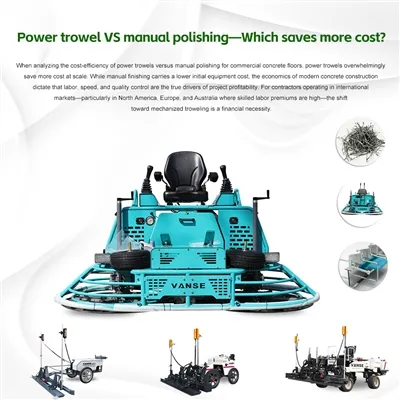
When analyzing the cost-efficiency of power trowels versus manual polishing for commercial concrete floors, power trowels overwhelmingly save more cost at scale. While manual finishing carries a lower initial equipment cost, the economics of modern concrete construction dictate that labor, speed, and quality control are the true drivers of project profitability. For contractors operating in international markets-particularly in North America, Europe, and Australia where skilled labor premiums are high-the shift toward mechanized troweling is a financial necessity. Here is a breakdown of where the actual costs and savings lie: Manual Polishing: Finishing a large commercial slab by hand requires a massive crew of skilled laborers working simultaneously to beat the concrete's curing clock. The hourly wages, overtime, and sheer number of personnel required make manual finishing financially unsustainable for anything larger than a residential driveway or tight edge-work. Power Trowels: A single operator on a ride-on power trowel can finish exponentially more square meters per hour than an entire manual crew. By drastically reducing the headcount required on the slab, contractors immediately slash their largest operational expense. The labor savings generated from just a few large-scale logistics or warehouse pours typically cover the entire initial purchase price of the machine. Manual Polishing: Manual work is slow and highly vulnerable to environmental factors. If the concrete sets faster than the crew can work, it leads to cold joints or poor surface finishing. This slows down the entire construction schedule. Power Trowels: Mechanized equipment allows for massive daily pour volumes. Faster surface finishing means the concrete contractor completes the job sooner, reducing on-site overhead costs and allowing the general contractor to advance the build schedule. Faster turnaround directly translates to higher annual revenue capacity for the contracting business. Manual Polishing: Human application is inconsistent. Achieving the strict Floor Flatness (FF) and Floor Levelness (FL) metrics demanded by modern automated warehouses is virtually impossible by hand. Failing to meet these specifications results in the hidden, catastrophic costs of remedial grinding, surface leveling, or even slab rejection. Furthermore, manual pressure cannot achieve the deep surface compaction needed to prevent future dusting and wear. Power Trowels: The mechanical weight and high-speed blade rotation of a power trowel compress the concrete matrix aggressively. This brings the cement paste to the top and drives the aggregate down, creating a dense, highly wear-resistant "burnished" finish. This precision guarantees that the high FF/FL numbers established during the laser leveling process are maintained, eliminating the cost of expensive post-pour corrections. Manual polishing only wins on Day 1 regarding Capital Expenditure (CapEx). However, when factoring in the total lifecycle cost of a commercial pour, power trowels deliver a massive cost advantage. They insulate contractors from labor shortages, eliminate the risk of specification failures, and drive the high-efficiency output necessary to compete in the global construction market. Note: The parameters provided in this document are for reference only and are not mandatory. Due to differences in technical characteristics between different brands and models of laser levelers, please consult the manufacturer for a suitable solution before actual operation. This reference document assumes no responsibility for any issues arising from failure to follow the manufacturer's instructions.