Technical Knowledge
Is the cost-effectiveness of concrete laser leveling machine really higher than that of labor force?

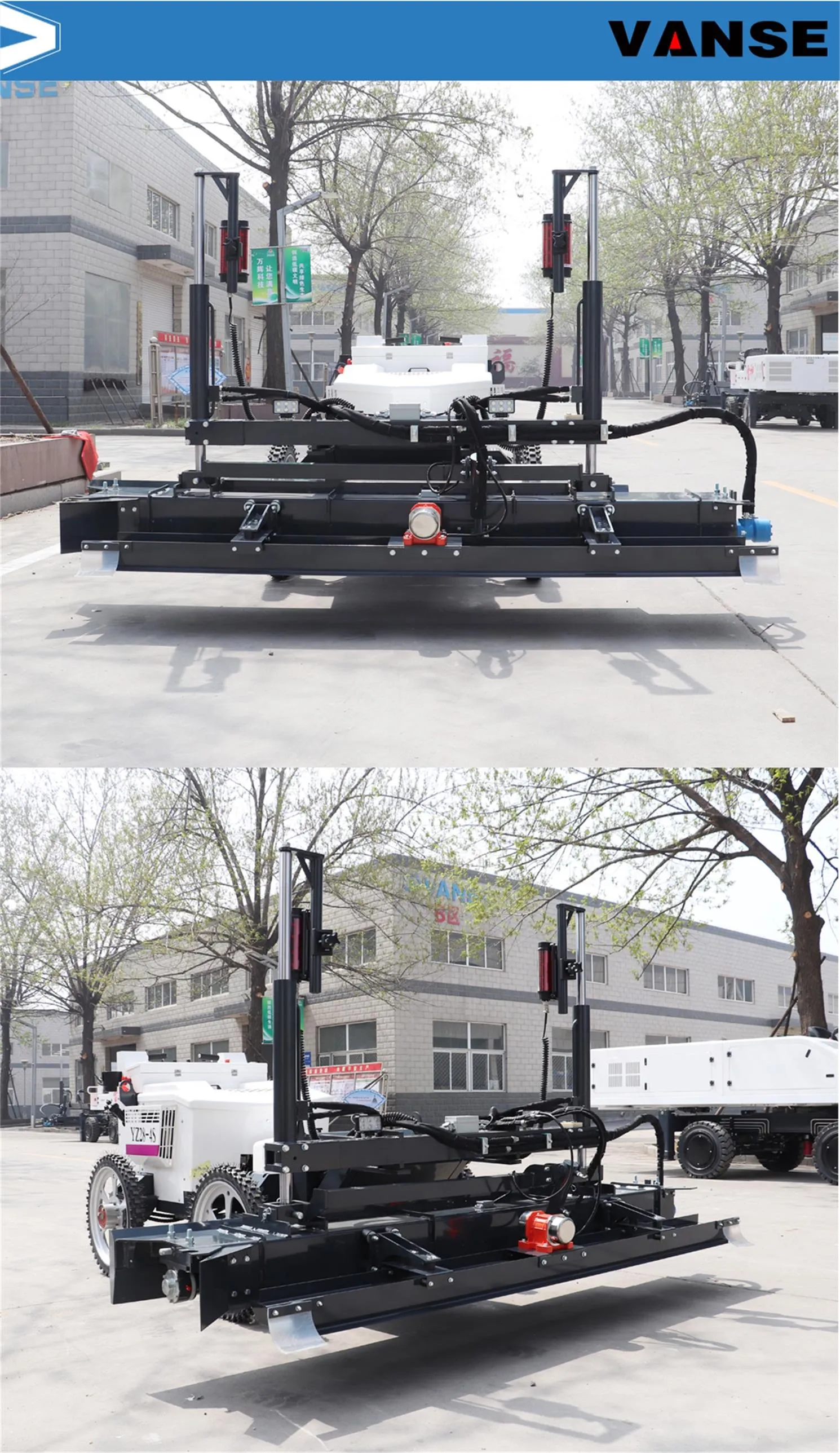
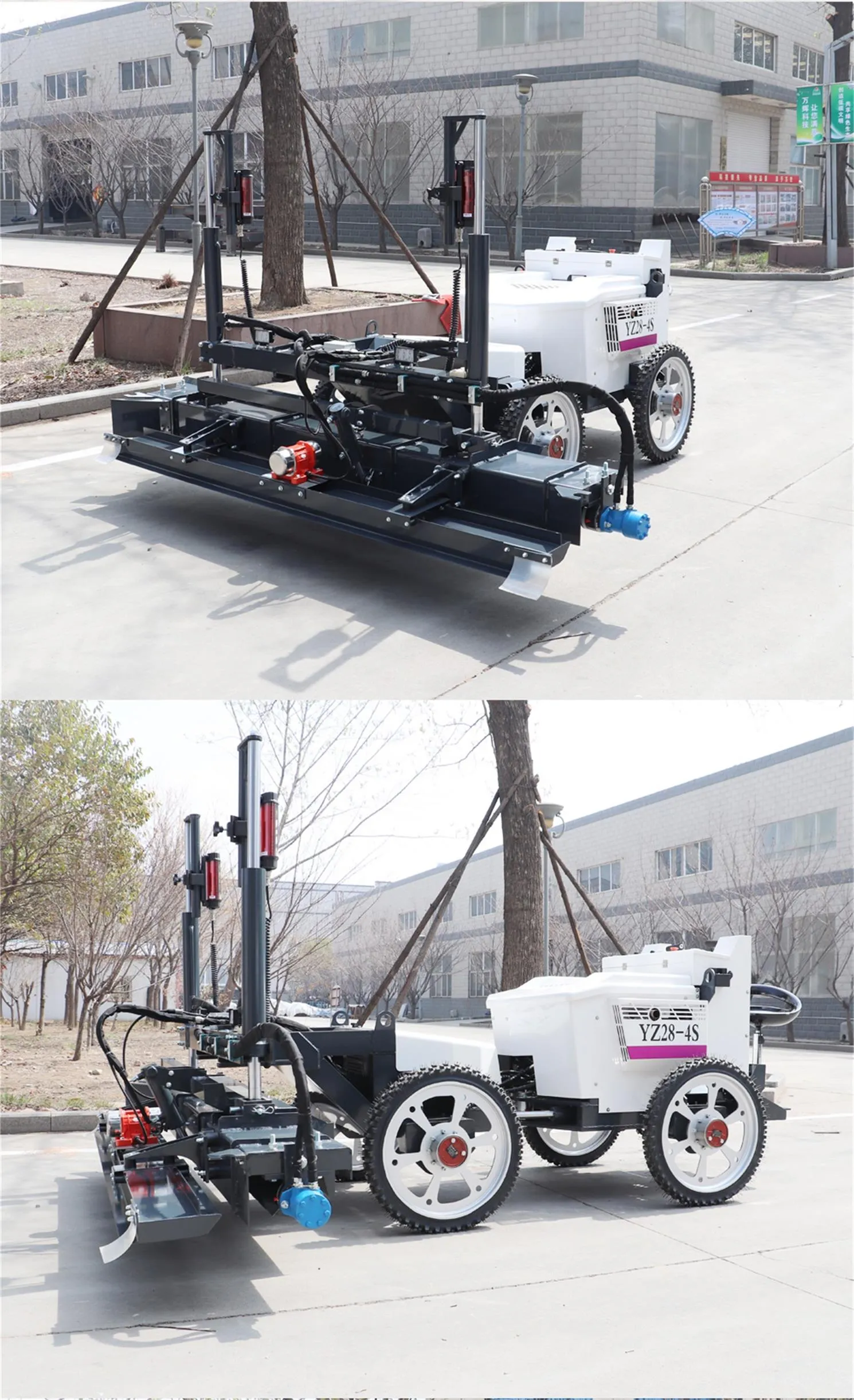
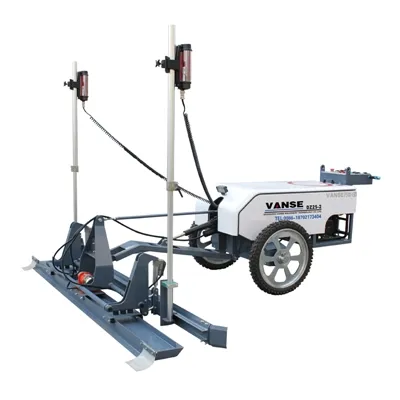
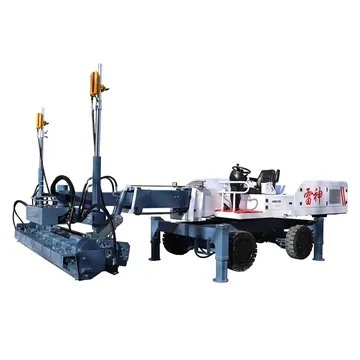
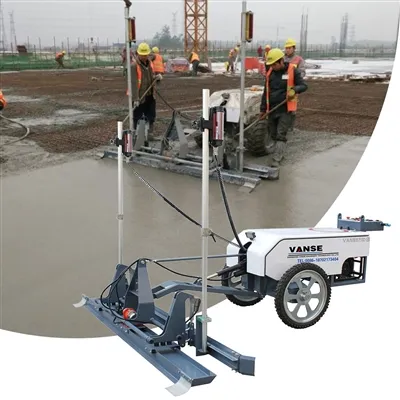
In terms of manpower for concrete laser leveling machines, the increase in the total number of migrant workers has begun to decline, but the demand is increasing. At the same time, the particularity of the flooring industry has also caused a new generation of young people to be reluctant to engage in this industry. Under the dual effects, many construction teams have experienced labor shortages. In terms of wages, workers' wages are increasing year by year. The salary of a worker now is equivalent to the salary of 3-4 people five years ago, and it is still increasing. But there is no such problem with machinery. A concrete laser leveling machine only needs to be equipped with 8 people. If there were originally a group of 15 people, nearly half of the labor force could be saved. Based on a worker's daily salary of 200-300 yuan, one piece of equipment can save about 2,000 yuan per day. One-time investment can not only solve the problem of manpower shortage, but also save a lot of labor cost investment.
In terms of construction efficiency, Sanren concrete laser leveling machine has unrivaled advantages. A piece of equipment can construct 600-1050 square meters per hour at a normal driving speed of 4-7 meters per minute. Based on 8 hours per shift, one piece of equipment can construct 4,800-8,400 square meters in one shift. Although this value will decrease depending on actual working conditions. But compared to manual construction, the efficiency is within 800 square meters per shift. Mechanical construction can undoubtedly greatly shorten the construction period and save construction costs.
Thanks to All the Friends Who Support and Trust Shandong Vanse Machinery Technology Co., Ltd.
If you want to know more about Shandong Vanse Machinery Technology Co., Ltd. or have any questions, please feel free to contact us:
Our Factory
Shandong Vanse Machinery Technology Co., Ltd.








Share this article

About the Author: Shandong Vanse Machinery Technology Co., Ltd.
Shandong Vanse Machinery Technology Co., Ltd. is a high-tech manufacturer specializing in concrete construction machinery, including laser screeds and related equipment. The company integrates R&D, production, and global sales, with products exported to over 60 countries and widely used in infrastructure projects worldwide.
Previous Post
Next Post
Related Articles
You Might Also Like
Large area floor laser leveling machine leveling construction method
Large area floor laser leveling machine leveling construction method 1. Laser transmitter The laser transmitter is one of the important components of the large-area floor laser leveling machine. It is responsible for emitting laser beams and providing positioning and navigation benchmarks for the leveling machine. The laser transmitter should have the characteristics of high precision, high stability and long life to ensure the accuracy and reliability of leveling construction. When selecting a laser transmitter, factors such as its power, wavelength, and beam quality should be considered to meet different construction needs. 2. Work head The leveling head is the core component of the large-area floor laser leveling machine. It is responsible for leveling and compacting concrete materials to form a smooth and flat floor. The design and manufacturing quality of the smoothing head directly affects the quality and appearance of the floor. The smoothing head is generally composed of a scraper, a pressing plate, a motor, etc. It has a variety of working modes and adjustment functions, and can be selected and adjusted according to different concrete materials and construction requirements. 3. Engine The engine is the power source of the large-area floor laser leveling machine and provides power for the operation of the leveling machine. The choice of engine should be based on the specifications and construction needs of the leveling machine. Generally, a diesel engine or an electric motor is used. Engine performance parameters such as power, fuel consumption, noise, etc. are also important factors in selection. 4. Control Panel The control panel is the control center of the large-area floor laser leveling machine. The operator can control the operation of the leveling machine and switch between various working modes through the control panel. The control panel generally has multiple functions, such as start, stop, speed adjustment, direction control, etc. It can also display the working status and fault information of the machine. The design of the control panel should be concise and clear, making it easy for operators to quickly grasp and operate. 5. Auxiliary equipment Large-area floor laser levelings also require some auxiliary equipment such as concrete mixers, transport trucks, water pumps, etc. to complete the entire construction process. The selection and use of these auxiliary equipment should be based on actual conditions to ensure the smooth progress of construction and improve construction efficiency.What is the leveling speed of the concrete laser leveling machine? How’s the effect?
What is the leveling speed of the concrete laser leveling machine? How's the effect? Concrete laser leveling machine is a kind of mechanical equipment for construction. Like many mechanical equipment, it is composed of multiple unit parts: motor, vibration head, body, etc. It is the reasonable combination of these parts that makes the performance of the whole machine become Like a powerful pressurized device, it is full of pressure. If we rely solely on manpower in our daily life, it takes a lot of experience and ability to deal with the smoothness of various grounds, bridge decks and construction equipment, so that people cannot do other things well. The performance of concrete laser leveling machine is as follows: 1. The combination of the equipment is good, it can be used in many coagulation projects, it is not affected by the environment and the size of the project, and has strong adaptability; 2. The concrete laser leveling machine has very good compression resistance. It can exert strong pressure on the working surface. This pressure is the main driving force for its work. Only when it can withstand these strong pressures can it be used for construction ; 3. This machine is made of high-quality steel, which has good resistance both in hardness and wear resistance, which is reflected in a long service life in use; 4. The cutting of this machine is smooth, the powerful laser processing is very fast, and the processing effect is also very good. Higher quality of flatness and levelness – the ground elevation can reach laser-level precision, the ground flatness and levelness are 2-3 times that of manual leveling, the concrete density is increased by more than 20%, and it is suitable for dry hard concrete , Fiber concrete and large aggregate concrete. Reduce the sub-bin seam, can achieve no sub-bin seam construction. Due to maintenance and formwork support, the sub-storage joints on the large-area concrete floor will have defects such as damage along the joints. These problems can be avoided by using laser leveling and joint cutting technology. The construction speed is faster – the work efficiency is increased by 100-300% (100-200 square meters of paving work can be completed per hour, and an average of 2000-3000 square meters can be completed per day), and labor is reduced by more than 30%, which is especially suitable for the construction period requirements Projects with compact size, large paving area and high quality requirements. Better ground integrity – it is very easy to achieve large-area overall pouring. On the one hand, this overall pouring technology can avoid problems such as easy hollowing and cracking caused by floor layered pouring, and on the other hand, it can reduce a lot of Construction joints make the integrity of the ground better. This is not easy to do with other construction techniques. It can reduce the post-maintenance cost of the ground – because the large-area overall paving can reduce the construction joints by more than 3 times – and the construction joints are easily damaged by the wheel load, thus reducing the post-maintenance cost of the ground. Long-term cooperation with supporting manufacturers has gone through a complete production process of R&D, manufacturing, and testing. It has the characteristics of high rigidity, high precision, high efficiency, and durability. It is mainly made of high-quality cast steel and is a product trusted by small and medium-sized enterprises. Adhering to the belief of "quality, reputation and service first", the company's VANSE laser leveling machine will be delivered in time within the time negotiated by both parties after confirming the customer's order. With strong technical strength, advanced and sophisticated processing equipment and strict Excellent management effectively guarantees the high quality and timely delivery of VANSE Laser Leveler.How to evaluate the flatness of concrete pavement through quality inspection?
The quality inspection of the flatness of concrete pavement is the core link in evaluating the construction effect, and the application of Concrete Laser Leveling Machine can not only improve the construction accuracy, but also provide data support for the inspection through its supporting digital functions. The following is an analysis from the aspects of inspection indicators, methods, equipment and data application, focusing on the relevant role of laser leveling machine in inspection: Standard Flatness tolerance Detection tool Applicable scenarios China GB 50666-2011 ≤3mm/3m (measured with a 3m ruler) 3m ruler, feeler gauge Municipal roads and highway surface US ASTM E1155 ≤2mm/m (measured by laser profiler) Laser profiler, inertial profiler Airport runway, industrial floor European Union EN 13036-1 International Roughness Index (IRI) ≤2.5m/km Laser flatness meter Expressways, urban trunk roads – The flatness error of the road surface constructed by laser leveling machine can usually be controlled within ±2mm/3m, which is better than the ±5mm/3m of traditional technology, and the international flatness index (IRI) can be as low as 1.5-2.0m/km, meeting the requirements of high-grade road surface. 🎨1. Traditional detection method: combination of manual and mechanical – 3m ruler method: – Operation: Place the 3m ruler perpendicular to the driving direction on the road surface, and use a feeler gauge to measure the maximum gap between the ruler and the road surface, measuring 2 places × 10 feet every 200m. – Limitations: Only reflects local flatness, cannot cover the entire section, and is greatly affected by human operation. – Laser leveling machine association: During construction, the real-time elevation data of the leveling machine can be used to predict the key areas of ruler detection (such as equipment joints and corner filling areas) and make corrections in advance. – Continuous Smoothness Tester Method: – Equipment: A trailer-type instrument with a sensor, which continuously measures at a speed of 5km/h, and calculates the standard deviation (σ) to evaluate the smoothness (the smaller the σ, the better the smoothness). – Data Comparison: The σ value of the road section constructed by the laser leveling machine is usually ≤1.2mm, while the σ value of the traditional process is ≥1.8mm, which is a significant difference. – Laser Profiler: – Principle: The laser transmitter emits multiple laser beams (such as 16), scans the longitudinal profile of the road surface, generates 3D elevation data, and calculates IRI, σ and other indicators (as shown in Figure 1). – Detection efficiency: 5-10km can be detected per hour, the data sampling interval is ≤10cm, and the accuracy is ±1mm. – Laser leveling machine data linkage: – The per square meter elevation data recorded during the leveling machine construction (stored in the equipment control system) can be directly imported into the detection software and compared with the measured data. The area with an error of more than ±3mm is automatically marked as "needing re-inspection". – For example: After a laser leveling machine was used for construction in an industrial plant, two elevation deviations (+5mm and -4mm) were found through the profiler detection. The construction record of the leveling machine was traced back to confirm that it was caused by the temporary occlusion of the sensor when the equipment turned, and it was repaired in time to meet the standard. – Inertial navigation flatness inspection vehicle: – Application scenarios: Suitable for long-distance inspections such as highways, integrating laser sensors and inertial navigation systems, driving at a speed of 60-80km/h, and generating real-time flatness cloud maps of the entire road section. – Pre-control value of laser leveling machine: Before construction, the inspection vehicle scans the old road surface and imports the data into the automatic leveling system of the laser leveling machine to achieve "feedforward control" – that is, adjust the leveling beam height in advance according to the deformation characteristics of the old road to reduce the impact of differential settlement in the later stage. – Linkage between laser transmitter and receiver: When the leveling machine is operating, the receiver continuously receives laser signals and updates the leveling beam height ≥10 times per second. If the local elevation deviation is detected to exceed ±4mm (preset threshold), the equipment automatically sounds and lights an alarm and stops moving, prompting the operator to check the concrete slump or foreign matter in the base. Case: During the construction of an airport runway, the receiver detected that the elevation of a continuous 3-meter area was 5mm lower. After the shutdown, it was found that there was loose backfill soil in the base that was not compacted. After timely rework, large-scale rectification was avoided in the later stage. – Intelligent construction report: Some high-end laser levelers (such as a German brand) can generate flatness process control reports, including: – Average elevation and maximum deviation value of each construction zone; – Correlation analysis between leveler travel speed and elevation fluctuation (as shown in Figure 2, the deviation rate increases by 20% when the speed is greater than 1.2m/min); – Comparison of concrete consumption with design value (flatness is more stable when the error is ≤±2%). – Preliminary detection of base layer flatness: Before construction, use the empty machine scanning function of the laser leveler (without paving concrete), drive at a speed of 0.5m/s, collect base layer surface data through the leveling beam sensor, generate a base layer flatness chromatogram (the red area indicates a deviation of >8mm), and guide base layer repair (as shown in Figure 3). – Data comparison: After the base layer flatness σ dropped from 5.0mm to 2.0mm, the surface layer flatness σ dropped from 2.5mm to 1.8mm, indicating that the base layer treatment has a significant impact on the final effect. – Use BIM+GIS technology to integrate test data, mark unqualified areas (such as sections with IRI>3.0m/km) in the 3D model, associate the construction trajectory of the laser screed machine, and analyze the causes of errors (such as vibration leakage in the overlapping area at the equipment handover). – Example: A municipal road inspection found that the IRI of a continuous 100m section was 3.2m/km. Tracing the screed machine data found that the slump in this area changed suddenly during construction (from 140mm to 180mm), resulting in the failure to adjust the screed machine speed in time and local accumulation of concrete. – Local repair: For areas with deviation ≤5mm, use a handheld laser leveler (small equipment, paving width 1-2m) with fine stone concrete for repair, and use built-in sensors to ensure that the elevation after repair is consistent with the original road surface. – Large area rework: If the deviation is greater than 8mm or IRI is greater than 4.0m/km, the original road surface needs to be milled and removed, and the laser leveler is used again for paving to avoid the "patch effect" caused by manual leveling. Advantages Dimensions Traditional technology Laser leveling machine technology Data traceability No data record of the construction process Traceable 10+ parameters including elevation per square meter, speed, slump, etc. Detection efficiency Manual sampling coverage ≤ 20% Process detection coverage is 100%, and finished product detection efficiency is increased by 3 times Error prediction capability Post-testing is the main method Real-time warning during construction, reducing the rate of defective products by more than 80% Cost-effectiveness Corrective cost accounts for 5-10% Corrective cost accounts for ≤2% The coordinate system of the testing instrument must be consistent with the positioning system of the laser leveling machine (such as GPS or total station) to avoid data distortion due to coordinate deviation. Testing should be avoided in high temperature (>35℃) or strong wind (>5 level) weather. At this time, the concrete surface evaporates too quickly and plastic cracks are easily generated, affecting the flatness test results. Technicians operating laser leveling machines need to master basic detection principles (such as IRI calculation logic) so that they can actively adjust parameters to match the detection standards during construction. The inspection and evaluation of the flatness of concrete pavement needs to run through the whole process of "pre-construction base pre-control – dynamic monitoring during construction – comprehensive inspection after construction", and the laser leveling machine has become the core link between construction and inspection through digital construction data and high-precision control capabilities. It is recommended to give priority to the use of advanced equipment such as laser profilers for full-section inspection, and make full use of the process data of the leveling machine for error tracing, to achieve the closed-loop management of "inspection-analysis-rectification", and ultimately ensure that the road surface flatness meets the design requirements and extends the service life. Click the below to jump immediately!!! ARMOUR JOINT LASER LEVELING MACHINE LIGHT TOWER POWER TROWEL SLIPFORM MACHINE STEEL FIBER TOPPING SPREADER TRACKED MINI DUMPER