Technical Knowledge
In what scenarios might a concrete laser leveling be more suitable?
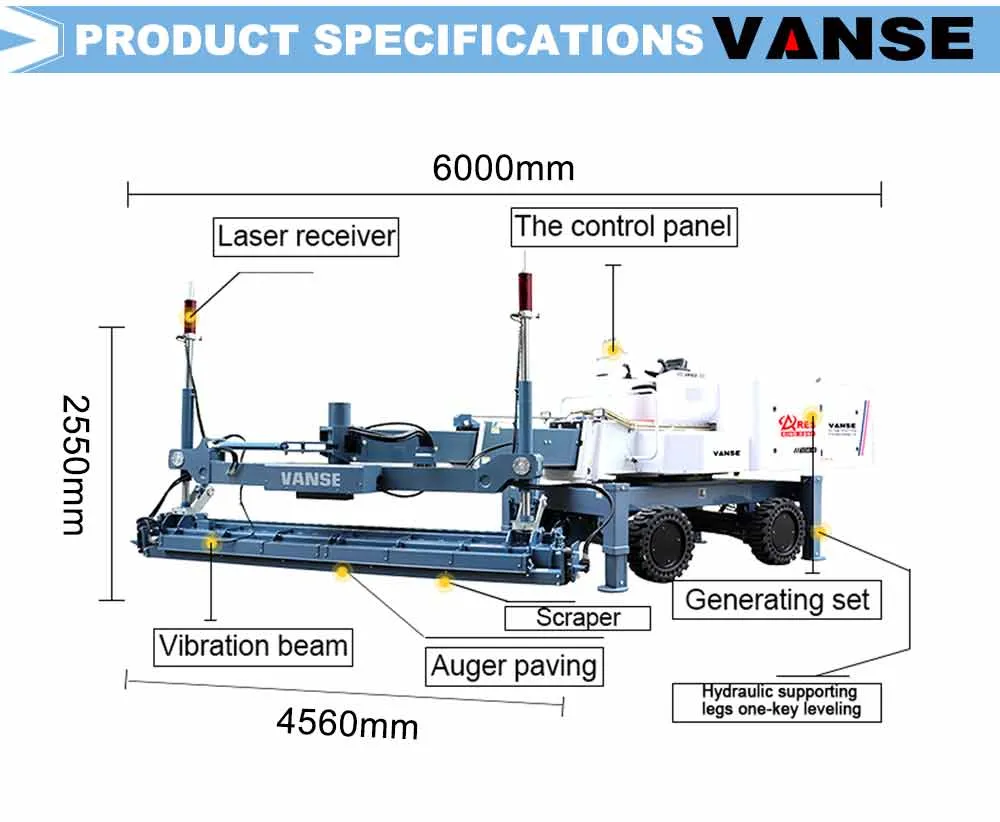
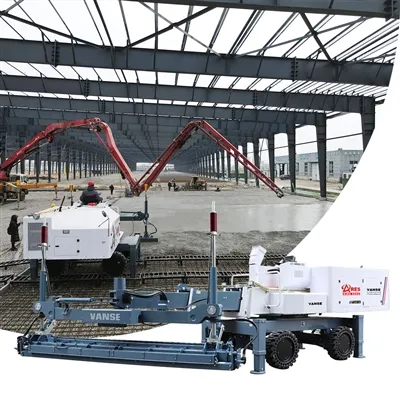
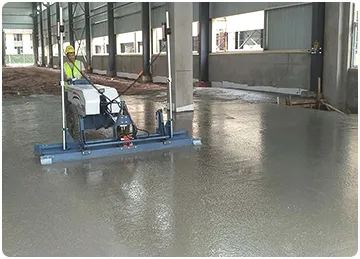
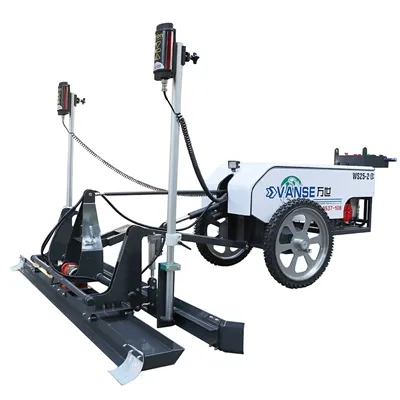
Concrete laser leveling machine is more suitable for the following scenarios:
1. Large industrial plants and workshops:
These places usually require large-area, high-precision cement floors, such as warehouses, parking lots, production workshops, etc. The concrete laser leveling can quickly and accurately complete large-area floor construction and improve production efficiency.
2. Clean factories such as electronic appliances, food materials, medicine, etc.:
These places have extremely high requirements for ground quality and require smooth and dust-free floors. Concrete laser levelings can meet these high standards through precise control of construction parameters.
3. Large warehouse supermarkets, logistics centers, convention and exhibition centers, etc.:
These places usually require large-area, high-bearing-capacity floors, such as warehouses, logistics centers, etc. The concrete laser leveling can improve the flatness and load-bearing capacity of the floor to meet the needs of logistics and warehousing.
4. Outdoor floors: such as docks, container yards, cargo yards, etc.
These places need to withstand large equipment and high-intensity loads, and have higher requirements for ground flatness and strength. Concrete laser leveling machines can provide high-strength, durable floors to meet the needs of outdoor industrial sites.
5. Airport runways, aprons, parking lots and other places require high-precision and high-bearing capacity floors to ensure the safe operation of aircraft and vehicles.
The concrete laser leveling machine can provide floors with high flatness and strong load-bearing capacity to meet the needs of these special places.
6. Squares, residential floors, municipal roads, etc.:
These places have high requirements on the aesthetics and flatness of the ground. The concrete laser leveling can provide high-quality construction results and improve the ground use experience.
In general, concrete laser leveling machines are suitable for places that require high-precision and high-efficiency floor construction, especially in large industrial plants, clean plants, outdoor floors, logistics centers and other places that need to withstand high-intensity loads. Advantage. It can provide floors with high flatness, high strength and good durability to meet the needs of various places.


Thanks to All the Friends Who Support and Trust Shandong Vanse Machinery Technology Co., Ltd.
If you want to know more about Shandong Vanse Machinery Technology Co., Ltd. or have any questions, please feel free to contact us:
Our Factory
Shandong Vanse Machinery Technology Co., Ltd.








Share this article

About the Author: Shandong Vanse Machinery Technology Co., Ltd.
Shandong Vanse Machinery Technology Co., Ltd. is a high-tech manufacturer specializing in concrete construction machinery, including laser screeds and related equipment. The company integrates R&D, production, and global sales, with products exported to over 60 countries and widely used in infrastructure projects worldwide.
Previous Post
Next Post
Related Articles
You Might Also Like
An analysis on how concrete laser leveling machines are applied in large-area floor construction
As a key equipment in modern floor construction, concrete laser leveling machines are widely used in large-area floor construction (such as industrial plants, logistics storage centers, large supermarkets, parking lots, etc.) due to their high efficiency and high precision. The following is a detailed analysis from the aspects of application advantages, core technology, construction process, applicable scenarios and precautions: Compared with traditional manual leveling (such as scraping with a ruler, vibrating with a vibrating rod) or small mechanical operations, concrete laser leveling machines show significant advantages in large-area construction: 1. Construction efficiency is greatly improved In large-area floor construction, concrete laser leveling machines can achieve continuous operation, and the average daily construction area of a single device can reach 800-2000㎡ (depending on the equipment model and concrete supply speed), which is 5-10 times the efficiency of manual construction. For example, a 100,000㎡ logistics warehouse floor can shorten the construction period by more than 30% and reduce labor costs by 40%-60% by using a concrete laser leveling machine. 2. Higher flatness and precision The concrete laser leveler forms a horizontal reference plane through the laser transmitter, combined with real-time sensor detection and automatic adjustment of the hydraulic system, which can control the flatness error of the floor within ±3mm/2m (far exceeding the ±5-10mm standard of traditional processes), meeting the high-precision requirements for large-area floors in the "Concrete Structure Engineering Construction Quality Acceptance Code", and is especially suitable for industrial floors that are sensitive to flatness (such as precision equipment workshops). 3. Reduce the risk of concrete cracking The integrated vibration system of the equipment (the spacing between the vibration rods is usually 20-30cm) can vibrate the concrete evenly, with a depth of 30-50cm, which can effectively discharge bubbles, reduce honeycomb surface, and avoid strength differences caused by uneven manual vibration. In addition, efficient construction can shorten the concrete pouring interval, reduce cold joints caused by segmented construction, and improve the integrity of the floor. 4. Reduce manual dependence and labor intensity Large-area floor construction requires a lot of manual cooperation (such as paving, leveling, and vibrating), while the laser leveling machine only needs 1-2 operators to cooperate with auxiliary workers (responsible for laying and edge processing) to complete the work, reducing the dependence on skilled workers and avoiding the labor intensity of long-term bending over. 1. Laser positioning system – The laser transmitter can form a 360° horizontal reference plane (covering a radius of 50-100m) above the construction area, which is not affected by the ups and downs of the ground, ensuring the overall horizontal consistency of large-area construction (traditional rulers can only ensure local flatness and are prone to cumulative errors). – Some high-end equipment is equipped with dual laser systems or laser radars, which can cope with complex environments (such as strong light, obstacles) and reduce signal interference. 2. Automatic control system The equipment detects the deviation between the concrete surface height and the reference surface in real time through sensors (response speed up to 0.1 seconds), and automatically adjusts the lifting and lowering of the scraper and vibrating mechanism to achieve "detection-adjustment-operation" closed-loop control to ensure uniform flatness at every location in large-scale construction. 3. High-efficiency vibration and paving mechanism – The frequency of the vibrating rod is adjustable (usually 3000-6000 times/minute), which can be adjusted according to the slump of concrete to ensure deep vibration and compaction; – The scraper width is mostly 2-4m, and the single paving area is large. With the equipment travel speed (adjustable from 0-10m/min), continuous and uniform paving is achieved. 1. Preliminary preparation – Base treatment: clean up the base debris and water accumulation, repair potholes, and ensure that the base flatness error is ≤5cm (use milling machine if necessary); – Laser system calibration: set the height of the laser transmitter according to the design elevation, and debug the matching degree of the equipment sensor and the reference surface; – Concrete preparation: Mix concrete according to the designed ratio (the slump is usually 120-200mm, and continuous supply is required to avoid construction interruption). 2. Concrete spreading and leveling – Spreading: Use a pump truck or a forklift to unload the concrete to the construction area, and manually level it initially (the thickness is slightly higher than the design elevation by 5-10cm); – Laser leveling: The equipment travels at a uniform speed in the longitudinal or transverse direction, the scraper scrapes the concrete surface, and the vibrator vibrates synchronously; if the area is too large, use the "block skipping method" construction (each block area ≤200㎡, leaving expansion joints) to avoid concrete shrinkage and cracking. 3. Subsequent treatment – Slurry raising and polishing: 1-2 hours after leveling (before the initial setting of concrete), use a polishing machine to raise the slurry and finish the surface (can be used in conjunction with the subsequent process equipment of the laser leveling machine, such as a four-disc polishing machine); – Maintenance: Cover with film or sprinkle water for maintenance, the maintenance period is ≥7 days to avoid surface cracking. – Industrial plant floor: such as automobile factories, electronic workshops, etc., which have high requirements for flatness (must meet the requirements of equipment installation and forklift driving) and strength, and laser leveling can reduce ground settlement and wear; – Logistics warehousing floor: The floor of large warehouses and distribution centers needs to withstand the rolling of heavy shelves and forklifts. The high precision of laser leveling can avoid the tilting of cargo stacking and the bumping of forklifts; – Transportation hub floor: such as airport aprons, high-speed railway station squares, etc., which have large areas and need to withstand vehicle loads for a long time, and require uniform overall strength of the floor; – Commercial and public building floor: such as large shopping malls and exhibition centers, which have high requirements for the aesthetics of the floor (flatness affects the subsequent epoxy and floor tile laying), and laser leveling can reduce the rework of later decoration. 1. Environmental adaptability – Strong light or rainy days may interfere with the laser signal, so a rain shelter or anti-interference laser system is required; – When the wind force is ≥ level 5, the laser transmitter may deviate, and construction needs to be suspended or the transmitter bracket needs to be reinforced. 2. Concrete quality control – The slump of concrete needs to be stable (fluctuation range ≤ 20mm), otherwise it is easy to cause sand or cracking on the surface after leveling; – Avoid interruption of concrete supply, otherwise cold joints will be formed, affecting the integrity of the floor. 3. Equipment operation and maintenance – The operator needs to be trained and familiar with laser system calibration and emergency handling (such as manual shutdown when the signal is lost); – Regularly clean the concrete residue on the vibrator and scraper to avoid affecting the accuracy of the equipment. 4. Cost consideration The purchase or rental cost of laser leveling equipment is relatively high (about 100,000-300,000 yuan for domestic equipment and about 500,000-1,000,000 yuan for imported equipment), but for large-scale construction of more than 10,000 square meters, the cost savings (labor and construction period) brought by its efficiency improvement are far higher than the equipment investment. The concrete laser leveling machine solves the pain points of "low efficiency, poor precision, and strong dependence on manual labor" in large-area floor construction through "laser reference + automatic control" technology, and has become the mainstream solution for modern floor construction. With the intelligent upgrade (such as unmanned driving and BIM technology integration), its application in large-area floor will be more efficient and more accurate, further promoting the development of floor construction towards industrialization and standardization. However, it is necessary to pay attention to the selection of equipment models in combination with scene requirements and strictly control the construction process to maximize its advantages. Click the below to jump immediately!!! ARMOUR JOINT CONCRETE LEVELING MACHINE LIGHT TOWER POWER TROWEL SLIPFORM MACHINE STEEL FIBER TOPPING SPREADER TRACKED MINI DUMPERLaser leveling Flooring – Shandong Vanse Machinery Technology Co., Ltd.
How do you make sure that a single, large, contiguous area of concrete floor is completely flat, completely level and without hollow drum, shelling, cracking and inequality on the ground? The answer is a laser leveling flooring. What is Laser leveling Concrete Flooring ? When you are in your own home and need to use concrete to pave a concrete area of one square meter or less, you only need to use nails and a strong string to achieve leveling, but when you need to level the entire room when paving a large area of the floor or even a garden, a laser concrete leveling machine is needed. You can see in the image below that the system comprises two components, a laser transmitter and a levelling machine. The laser transmitter is very similar to the laser system you see regularly being used on construction projects and public works. It transmits a laser beam across the area of the floor with exact precision. The levelling system consists of a laser sensor, a vibration unit and a scraper plate. The scraper plate is set at a fixed distance from the height of the laser sensor. The scraper is drawn across the freshly poured concrete levelling the surface with complete accuracy. The vibration unit follows behind making the concrete surface completely smooth.It improves the quality of floor. Effectively solve the problems of hollow drum, shelling, cracking and inequality on the ground, and the construction quality is more stable and smooth. There are two basic types of laser levelling machine; two wheeled walk behind system like DZ25-2/ DZ30-2/ WS25-2 laser leveling, or four wheeled, ride-on machine like the YZ25-4/ YZ28-4S/ WS-940/ WS980/ WS-740/ WS-840/ YZ25-4E laser leveling, ( Large telescopic arm type concrete laser leveling such as YZ40-4E, YZ40-4, YZ30-4, YZ27-4.) Our Product Advantages: A. Famous brand engine, brand quality assurance, superior performance, start easily. B. Gearbox large module design, aluminum alloy enclosure, free maintenance, long service life. C. Wipe the line-structure-light bracket, choose the strict heat treatment of large diameter carbon structural steel, strong and durable. D. Scientific design of the centrifugal clutch driving mechanism, transmission torque, long service life, maintenance is very convenient. E. Surface coating, rust corrosion.In what scenarios are concrete laser levelings widely used?
Concrete laser levelings are widely used in a variety of scenarios, mainly including the following aspects: 1. Industrial plants and workshops: These places often require large-area, high-precision concrete floors, such as large industrial plants, workshops and automated three-dimensional warehouses. Laser leveling machines can quickly and accurately complete the leveling work of these floors. 2. Electronic appliances and clean workshops: For places such as electronic appliances and clean workshops that require a highly clean environment, laser leveling machines also play an important role because they can provide precise floor flatness and meet cleanliness requirements. 3. Large warehouse supermarkets, logistics centers and exhibition centers: These places also require large areas of concrete floors and high flatness to ensure smooth transportation of goods and safe walking of personnel. 4. Outdoor floors: Outdoor places such as docks, container yards, freight yards, airport runways, aprons, parking lots, squares, residential floors, municipal roads and other outdoor places also require high-quality concrete floors. In these places, laser leveling machines can achieve high-quality leveling of outdoor floors through its high-precision measurement and control technology. In summary, concrete laser leveling machines are widely used in various fields because of their efficient and accurate leveling effects. Places that require high-quality concrete floors.