Technical Knowledge
What are the advantages and limitations of concrete laser levelings?
February 18, 2024
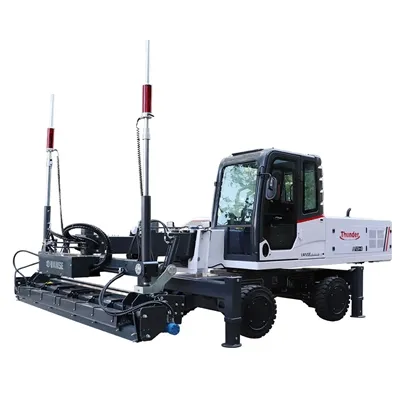
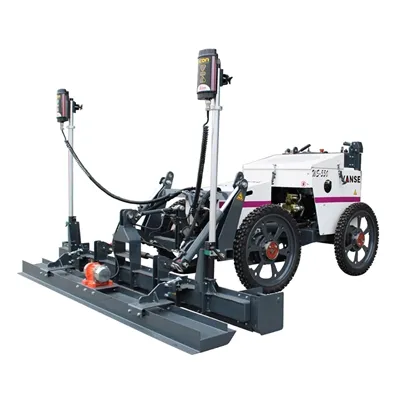
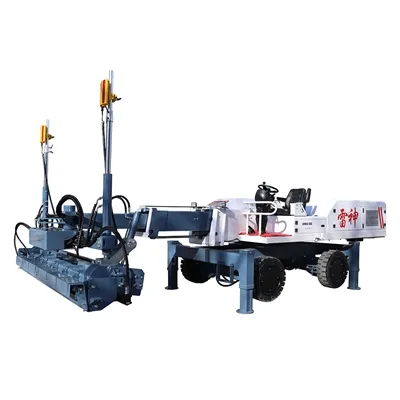
Concrete laser levelings offer many advantages, including
1. High flatness:
The concrete laser leveling machine uses laser technology, which can accurately control the height and slope of the ground to achieve high-precision ground leveling.
2. High efficiency:
Compared with the traditional manual leveling method, the concrete laser leveling machine can greatly improve the construction efficiency and shorten the construction period.
3. Reduce material waste:
Due to the high leveling accuracy, it can reduce the waste of concrete materials and reduce costs.
4. Easy to operate and maintain:
The concrete laser leveling machine is simple to operate and requires low skills of workers. At the same time, the equipment is also easier to maintain.
5. Applicable to various floors:
The concrete laser leveling machine can be applied to a variety of different floors, such as cement, asphalt, etc.
However, concrete laser levelings also have some limitations:
1. Higher cost:
The purchase and maintenance cost of a concrete laser leveling is higher, which may increase the total investment of the project.
2. Limited adaptability to terrain:
The concrete laser leveler has limited adaptability to terrain, and may not be able to level some special terrain or obstacles.
3. Professional operation and maintenance are required:
Although operation and maintenance are relatively simple, professionals are still required to operate and maintain the equipment to ensure the performance and life of the equipment.
4. Not suitable for small-area construction:
For small-area construction projects, it may not be cost-effective to use a concrete laser leveler because of its higher cost.
5. Not suitable for short-term construction projects:
Since concrete requires a certain amount of time to harden and stabilize, it may not be suitable to use a compact laser leveling for short-term construction projects.
In general, concrete laser leveling machines have significant advantages in improving construction efficiency and achieving high-precision ground leveling. They are especially suitable for large industrial plants, logistics centers, airports and other places that require high-precision and high-strength floors. However, limitations such as its high cost and limited adaptability to terrain also need to be considered in practical applications.
Thanks to All the Friends Who Support and Trust Shandong Vanse Machinery Technology Co., Ltd.
If you want to know more about Shandong Vanse Machinery Technology Co., Ltd. or have any questions, please feel free to contact us:
Our Factory
Shandong Vanse Machinery Technology Co., Ltd.


About the Author: Shandong Vanse Machinery Technology Co., Ltd.

Shandong Vanse Machinery Technology Co., Ltd. is a high-tech manufacturer specializing in concrete construction machinery, including laser screeds and related equipment. The company integrates R&D, production, and global sales, with products exported to over 60 countries and widely used in infrastructure projects worldwide.

Shandong Vanse Machinery
Leading manufacturer specializing in high-performance concrete laser screeds, telescopic arm flatwork handlers, and mechanical ride-on power trowels.
Post overview
Main PRODUCT Categories
Need Machine Guidance?
Speak directly with Shandong Vanse field specialists for tailored equipment quotes and site planning.
Contact Us TodayRelated Articles
You Might Also Like
September 12, 2025
How can maintenance of concrete laser leveling machines improve construction efficiency and quality
As a core piece of equipment for concrete surface leveling, the quality of a concrete laser leveling directly impacts construction efficiency and concrete quality. Scientific maintenance can directly and indirectly improve overall construction efficiency by reducing equipment failures, stabilizing operational performance, and extending equipment life. The specific mechanisms are as follows: Concrete construction is highly continuous and time-sensitive (for example, leveling must be completed before initial setting of concrete, otherwise construction joints and reduced strength are likely to occur). A laser leveling failure during construction not only interrupts the current process but can also delay subsequent steps (such as finishing and curing) and even result in wasted concrete material. Scientific maintenance can avoid such problems through "preventive maintenance", which is specifically reflected in: Regularly inspect key components, such as the laser transmitter's calibration accuracy, the hydraulic system's tightness (e.g., leaks in the oil pipes and cylinders), the wear of the travel wheels, and the lubrication status of the motor and reducer. This can proactively identify potential problems (such as insufficient hydraulic oil or laser head misalignment) and prevent sudden equipment downtime during construction. For example, if worn travel wheels are not replaced promptly, the equipment may stall. Leveling an area that normally takes one hour may take two to three hours, directly reducing construction efficiency. Complete maintenance records (recording equipment model, replacement cycles for wearing parts, and historical faults) help maintenance personnel quickly identify the cause of a fault. For example, if the hydraulic filter of a certain laser leveler needs to be replaced every 300 hours, stocking spare parts in advance and replacing them on schedule can avoid long downtime caused by waiting for spare parts. The core function of a laser leveling is to achieve high concrete surface flatness (error is typically required to be ≤3mm/2m) through laser positioning and hydraulic leveling. The stability of the equipment's performance directly determines the leveling quality, and maintenance is key to ensuring stable performance: The laser transmitter is the core benchmark for leveling accuracy. If it's not calibrated for an extended period, the laser line may deviate. Regularly calibrating the laser transmitter and checking its signal strength (for example, before daily construction and every 100 hours) ensures the laser line is always level, preventing uneven concrete surfaces caused by laser deviation. For example, a miscalibrated laser head on a project resulted in a 5mm uneven surface. This required manual grinding to correct the problem, increasing rework costs and potentially affecting the wear resistance and aesthetics of the concrete surface. The hydraulic system controls the lift and pressure of the leveling blades. If the hydraulic oil is contaminated or the oil lines are clogged, uneven lift speed and insufficient pressure can occur, leading to problems like sanding and denting on the leveling surface. Repair, maintenance, or adjustment of working components such as the roller and scraper blades is strictly prohibited while the equipment is operating. Regularly changing the hydraulic oil (usually every 500 hours, as recommended by the manufacturer), cleaning the hydraulic filter, and checking the oil line seals ensures stable hydraulic system pressure. This allows the scrapers to apply uniform pressure, ensuring even distribution of concrete aggregate and consistent surface density, thereby improving the strength and smoothness of the finished concrete. Uneven travel speeds (e.g., faster on one side and slower on the other) can cause inconsistent rubbing force from the leveling blades on the concrete, resulting in surface ripples. Regularly checking the travel motor speed, drive wheel engagement, and track tension will ensure a uniform travel speed and ensure a consistent and smooth surface. High-quality laser leveling machines are expensive (typically tens to hundreds of thousands of yuan). Extending equipment life through effective maintenance can reduce the frequency of equipment upgrades, lowering long-term investment costs and indirectly ensuring construction efficiency (avoiding process continuity issues caused by frequent equipment replacements due to aging). Reduce wear on core components: For example, regularly adding specialized lubricants to motors and reducers can reduce frictional losses in mechanical components. This can extend the lifespan of equipment from five years to seven to eight years through maintenance. Prevent minor problems from becoming major ones: Ignoring minor faults (such as minor oil leaks or unusual noises) can lead to escalating problems (e.g., hydraulic pump damage due to oil depletion), increasing repair costs from a few hundred yuan to tens of thousands of yuan, while also causing extended downtime and impacting the overall project schedule. Maintenance and repair priorities Impact on construction efficiency Impact on construction quality Laser system calibration Avoid rework due to precision issues, shortening construction time Ensures surface leveling tolerances meet specifications Hydraulic system maintenance Reduce downtime, ensuring process continuity Avoids surface dents and sanding, improving density Travel system inspection Ensure consistent equipment operation, improving individual machine efficiency Avoids surface ripples, ensuring flatness Regular replacement of wearing parts Shorten maintenance time, reducing unplanned downtime Maintains stable equipment output and consistent quality In summary, the maintenance of concrete laser leveling machines is not an "extra cost", but directly improves construction efficiency and ensures quality by "preventing failures, stabilizing performance, and extending life". It is an indispensable core link in concrete construction. Note: The parameters provided in this document are for reference only and are not mandatory. Due to differences in technical characteristics between different brands and models of laser levelers, please consult the manufacturer for a suitable solution before actual operation. This reference document assumes no responsibility for any issues arising from failure to follow the manufacturer's instructions.Read More
May 23, 2024
What Is The Purpose Of Maintenance Of Concrete Laser leveling Machine?
What is the purpose of maintenance of concr ete laser leveling machine? As an important equipment in modern building construction, concrete laser leveling machine's maintenance work has far-reaching significance. Maintenance is not only to repair existing problems, but also to prevent potential failures and ensure the continuous and stable operation of the equipment. This article will delve into the purpose of maintenance of concrete laser leveling machines from many aspects and provide guidance for practical operations. ☑ Extend the service life of equipment During the use of the concrete laser leveling, its parts will gradually wear out and age due to various factors. If timely maintenance is not carried out, these wear and aging will accelerate, eventually leading to equipment damage or scrap. Therefore, the primary purpose of maintenance is to extend the service life of the equipment. Through regular cleaning, lubrication, tightening and other operations, the wear rate of equipment can be slowed down and the service life of parts can be extended. At the same time, timely detection and handling of potential problems can prevent small problems from developing into big problems and avoid early scrapping of equipment due to minor failures. This not only saves the cost of replacing equipment, but also ensures the continuity and stability of construction. ☑ Ensure stable construction efficiency The concrete laser leveling is an important equipment at the construction site, and its stable performance directly affects the construction efficiency. If equipment malfunctions or performance degrades, it will directly hinder the construction progress and even cause delays in the construction period. Therefore, ensuring the stable operation of equipment is crucial to ensuring construction efficiency. One of the purposes of maintenance work is to ensure stable performance of the equipment. Through regular inspection, adjustment and maintenance of equipment, potential problems can be discovered and solved in time, ensuring that the equipment is always in optimal working condition. This will not only improve construction efficiency, but also reduce construction delays and cost increases caused by equipment failure. ☑ Improve work quality and effect The working quality of Wen Ning Shi laser leveling machine directly affects the construction effect. If there is a fault in the equipment or the component performance is poor, it will directly affect the leveling effect and project quality. Therefore, improving work quality and effect is also one of the important purposes of maintenance. Through the maintenance of equipment, the accuracy and stability of the equipment can be ensured and the leveling effect can be improved. At the same time, equipment faults can be discovered and solved in time to prevent the decline in construction quality caused by equipment problems. This will not only improve the quality of the project, but also enhance the competitiveness and credibility of the company. ☑ Reduce maintenance costs After equipment failure occurs, emergency repairs are often required, which not only affects the construction progress but also increases additional repair costs. Regular maintenance work can detect and deal with problems in advance before equipment failure, thereby avoiding emergency repairs and reducing maintenance costs. In addition, maintenance can also extend the service life of equipment and reduce replacement costs caused by equipment scrapping. Through reasonable maintenance strategies, companies can more effectively control equipment maintenance costs and improve economic benefits. ☑ Safe operation safeguards Safety is always the primary consideration during construction. As a large-scale construction equipment, the concrete laser leveling has certain safety risks during operation and use. Therefore, ensuring safe operation is one of the important purposes of maintenance. Through maintenance work, you can ensure that the safety devices and protective facilities of the equipment are intact and reduce the safety risks caused by equipment failure. At the same time, regular maintenance can also detect and deal with potential safety hazards in time to avoid accidents. This not only ensures the safety of operators, but also reduces economic losses and social impacts caused by safety accidents. ☑ Routine cleaning and inspection Routine cleaning and inspection are the basic tasks for maintenance of concrete laser leveling. Cleaning work includes removing dust, oil and other debris from the surface of the equipment to keep the equipment clean and hygienic. Inspection work includes detailed inspection of various components, connections, transmission devices, etc. of the equipment to ensure that they are in good working condition. Through routine cleaning and inspection, damage, looseness or abnormalities on the surface of the equipment can be discovered in time, and corresponding maintenance measures can be taken to deal with it. This can not only prevent small problems from gradually deteriorating into big problems, but also extend the service life of the equipment and improve work efficiency. efficiency. ☑ Regular maintenance and adjustments In addition to routine cleaning and inspection, concrete laser levelings also require regular maintenance and adjustments. Maintenance work includes replacing severely worn parts, tightening loose screws, cleaning filters and radiators, etc. The adjustment work is to calibrate and optimize the accuracy and stability of the equipment to ensure that the equipment is always in the best working condition. Regular maintenance and adjustment are important means to prevent equipment failure and improve equipment performance. Through regular work, potential problems can be discovered and solved in time to ensure the long-term stable operation of the equipment. This can not only reduce production losses caused by equipment failure, but also improve the economic benefits and market competitiveness of enterprises. To sum up, the purpose of maintenance of concrete laser leveling machines is diverse, but the core is to ensure the stable operation of the equipment, improve construction quality, reduce maintenance costs, ensure safe operation and extend the service life of the equipment. In order to achieve these goals, we need to perform regular cleaning and inspection, maintenance and adjustment work, and find and solve potential problems in a timely manner. At the same time, it is also necessary to strengthen the training and management of operators to improve their maintenance awareness and skill levels. Only in this way can we ensure the stable operation and efficient use of concrete laser leveling machines and contribute to the development of enterprises and the progress of society. It should be noted that maintenance work is not a once and for all process, but an ongoing process. As equipment is used and the environment changes, new issues and challenges may continue to arise. Therefore, we need to constantly summarize experience, learn new knowledge, and master new technologies to deal with various possible problems and challenges. At the same time, reasonable maintenance plans and strategies need to be formulated based on actual conditions to ensure that the equipment is always in optimal working condition. In short, the purpose of maintenance of concrete laser leveling is to ensure the stable operation of the equipment, improve construction quality, reduce maintenance costs, ensure safe operation and extend the service life of the equipment. By strengthening maintenance work, we can provide strong support and guarantee for the sustainable development of enterprises and the continuous progress of society.Read More
October 5, 2023
Construction quality control and management of concrete laser leveling machine
The construction quality control and management of concrete laser leveling mainly involves the following aspects: 1. Equipment selection and calibration First of all, choosing a qualified concrete laser leveler is the basis for ensuring construction quality. It is necessary to ensure that the selected equipment can meet various requirements of construction, including accuracy, stability, durability, etc. After the equipment arrives at the construction site, it must be carefully unpacked and inspected to ensure that all parts are intact, and preliminary debugging and calibration must be carried out in accordance with the instructions. 2. Operator training Operating a concrete laser leveling requires professional skills and experience, so operators must be rigorously trained. The training content includes the basic principles of equipment, operating procedures, safety precautions, fault diagnosis and troubleshooting, etc. Only operators who have been trained and obtained certificates can perform actual operations. 3. Construction process quality control Pre-construction quality control: This includes inspection of the construction environment to ensure it is dry, ventilated and dust-free. At the same time, concrete raw materials must be strictly controlled to ensure that their quality meets construction requirements. Quality control during construction: This is mainly to control the operation process of the concrete laser leveling machine. Operators are required to strictly abide by operating procedures and carry out construction according to preset parameters. At the same time, a dedicated person must supervise the construction process to ensure correct operation. Post-construction quality control: After the construction is completed, the concrete surface should be inspected for quality, including surface flatness, smoothness, etc. Any areas that do not meet the requirements must be dealt with promptly and leveled again. 4. Acceptance standards Acceptance standards are an important basis for measuring construction quality. For concrete laser leveling machine construction, the acceptance criteria mainly include the following aspects: Concrete surface flatness: This is the most basic acceptance standard, which requires that the concrete surface has no obvious undulations and the overall flatness meets the design requirements. Concrete surface finish: Good finish can reduce friction on the concrete surface and improve performance. The concrete surface is required to be smooth and flawless during acceptance. Construction accuracy: For high-precision construction projects, the accuracy of the concrete laser leveler must meet the design requirements. During acceptance, the construction accuracy should be measured to see whether it meets the design standards. Equipment stability: The stability of the equipment must be checked during acceptance, including the operation stability and working status stability of the equipment. Equipment reliability: During acceptance, the reliability of the equipment should be checked to see whether the equipment is prone to failure and whether each component of the equipment can operate stably. Economy: Th e economy of using the concrete laser leveling is also an important acceptance criterion. Economical use mainly refers to whether the energy, material and other costs consumed by the equipment during the construction process are reasonable. During acceptance, the economics of the equipment should be evaluated to see whether it meets the requirements of economic benefits. Safety: During acceptance, the safety of the equipment must also be checked, including whether the safety protection measures of the equipment are complete and whether the operators have safety awareness. In addition, it should be ensured that the noise and vibration of the equipment are within an acceptable range and will not affect the surrounding environment and personnel. Environmental protection: The environmental performance of the equipment must also be considered during acceptance. Concrete laser levelings may produce pollution such as dust and noise during the construction process. Therefore, it is necessary to ensure that environmental factors are considered during the design process of the equipment to minimize environmental pollution. 5. Quality inspection and maintenance During and after the construction process, the concrete laser leveling machine should be regularly inspected and maintained for quality. Quality inspection mainly includes inspection of the equipment's operating status, working accuracy, concrete quality, etc. Maintenance mainly includes daily maintenance, regular inspection and repair of the equipment. 6. Recording and archiving During the construction process, various construction parameters, operating procedures, problems and solutions should be recorded. These records can provide a basis for acceptance and quality inspection, and are also an important reference for equipment maintenance and improvement. Records should be organized into files and properly preserved for subsequent review and reference. In summary, the construction quality control and management of concrete laser leveling machines need to be comprehensively considered and implemented from multiple aspects such as equipment selection, personnel training, construction process control, acceptance standard formulation, quality inspection and maintenance, and record archiving. Only in this way can the construction quality of the concrete laser leveling be ensured and the overall quality and efficiency of the project improved.Read More