Technical Knowledge
In what fields does concrete laser leveling have broad application prospects?
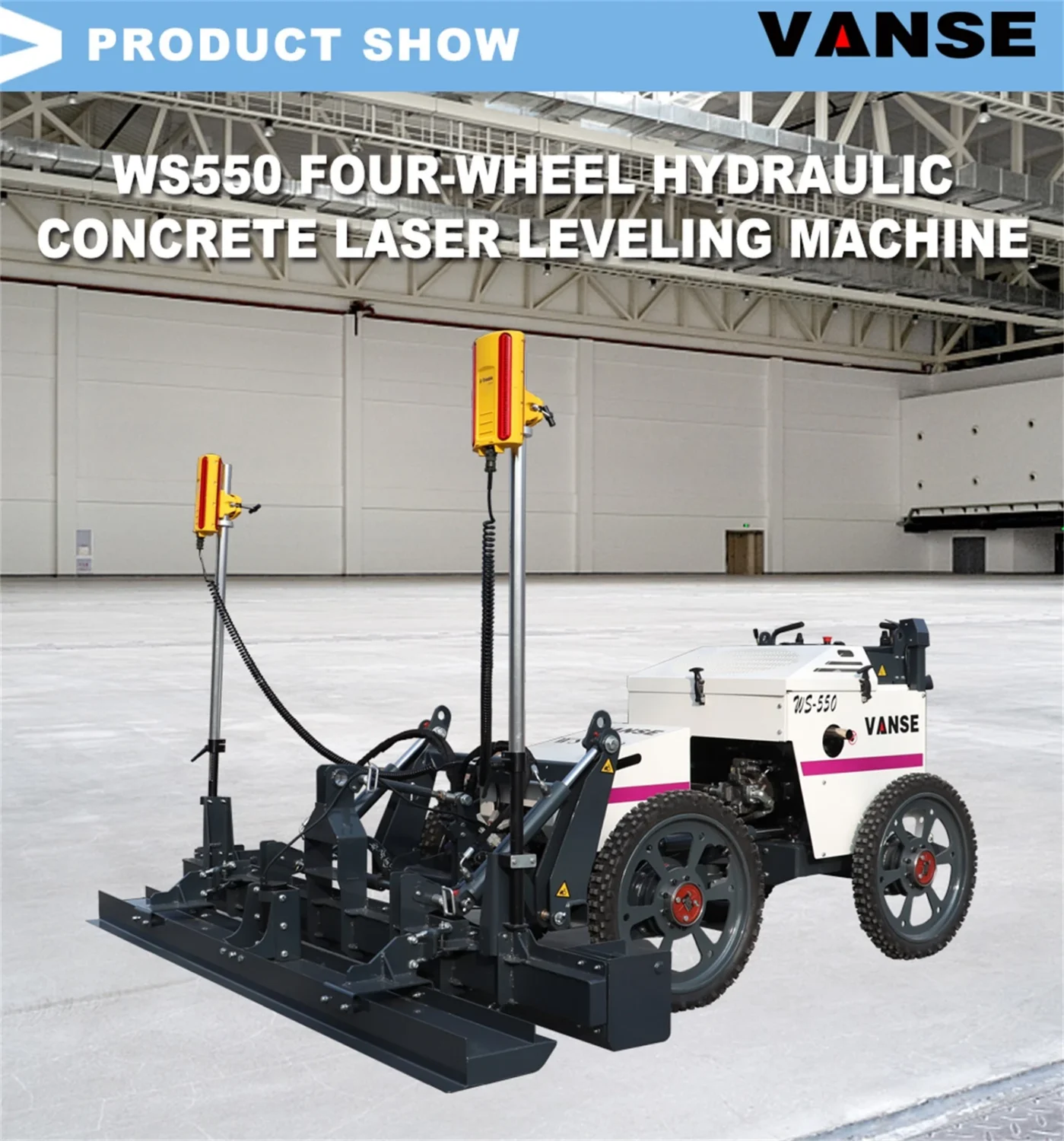
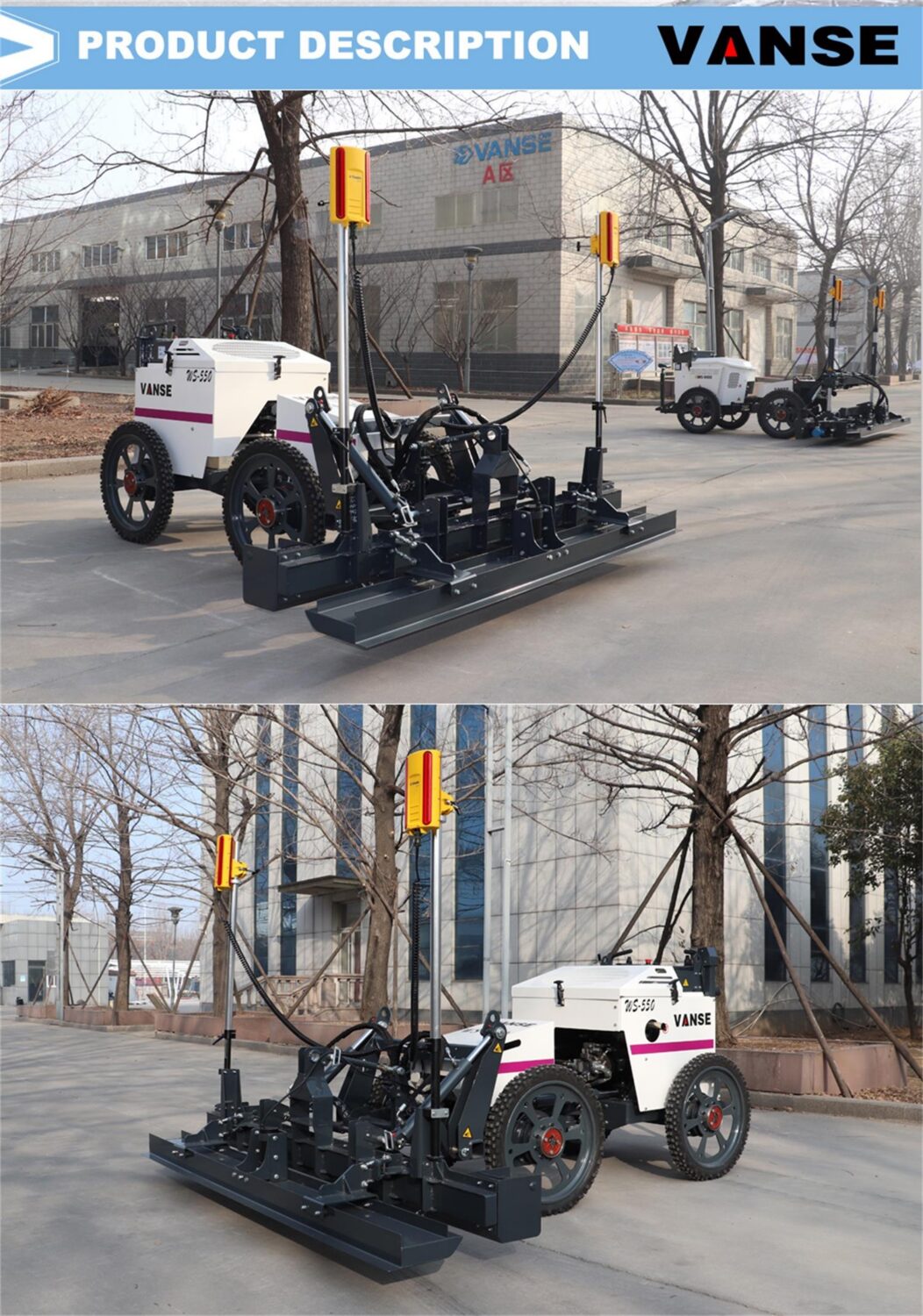
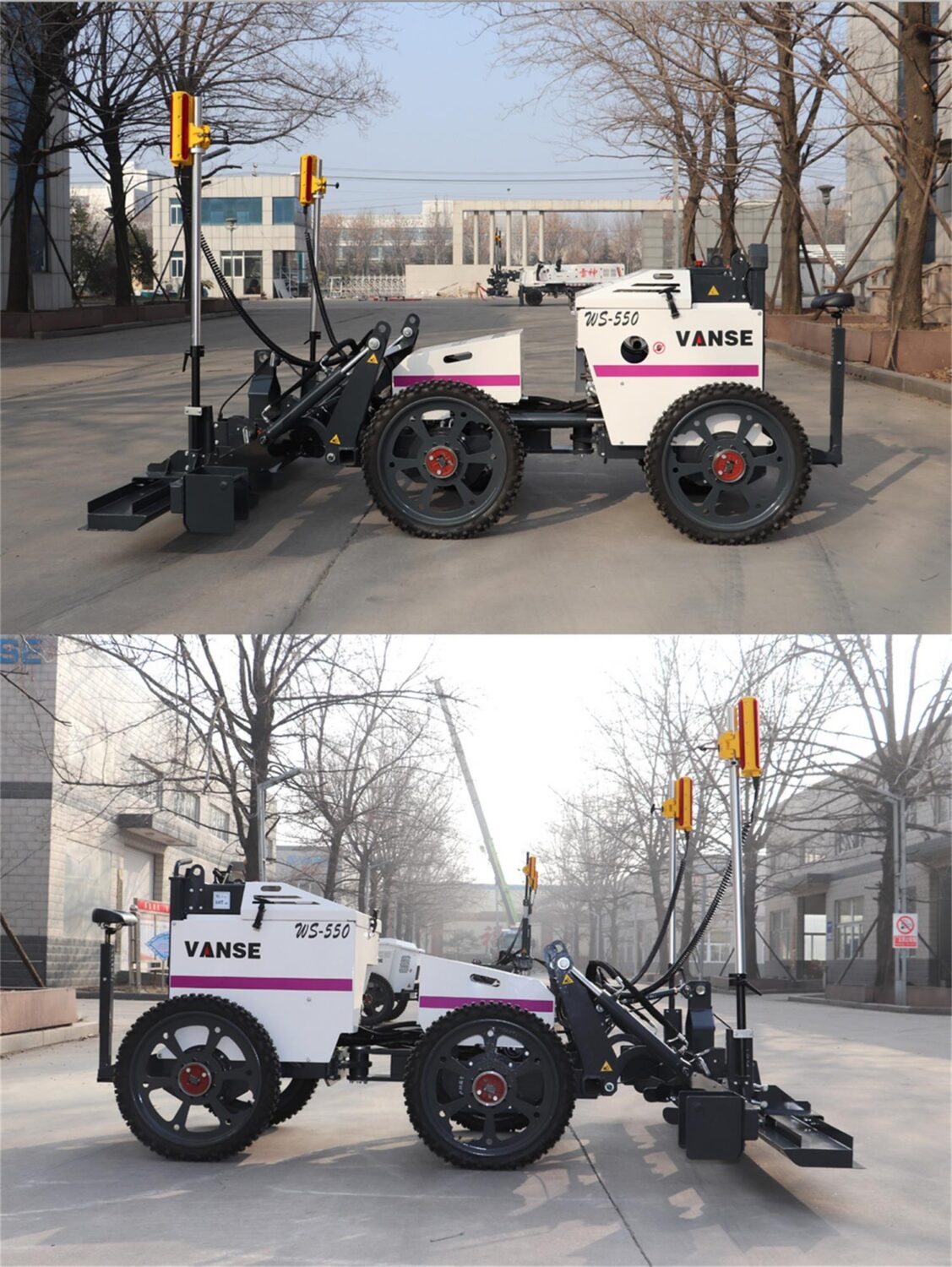
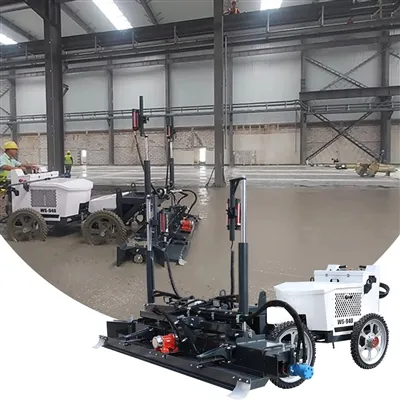
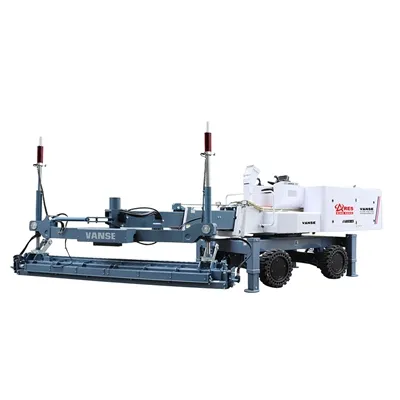
As an advanced construction machinery and equipment, concrete laser leveling machine has shown broad application prospects in many fields. The following are some possible application areas:
1. Road and bridge construction:
In road and bridge construction, concrete laser leveling machines can provide high-precision and efficient ground leveling solutions. The demand for this equipment will continue to grow as requirements for infrastructure quality increase.
2. Airport runway and apron construction:
Airport runways and aprons have extremely high requirements for flatness. Concrete laser leveling machines can ensure that the flatness of these areas reaches the highest standards, thereby improving the safety and operational efficiency of the airport.
3. Warehousing facilities and logistics centers:
With the rapid development of e-commerce and logistics industries, the demand for the construction of warehousing facilities and logistics centers is also increasing. Concrete laser leveling machines can provide efficient and accurate ground leveling solutions for these facilities to ensure smooth storage and transportation of goods.
4. Sports venues and convention and exhibition centers:
Large-scale stadiums and convention and exhibition centers usually require large areas of flat ground. Concrete laser levelings can meet the needs of these projects and provide high-quality levelinging results.
5. Green buildings and energy-saving buildings:
With the advancement of the concepts of green buildings and energy-saving buildings, the requirements for building materials and construction techniques are also constantly increasing. As an efficient and energy-saving construction technology equipment, the concrete laser leveling will play an important role in these fields.
6. Municipal infrastructure:
In the construction of municipal infrastructure, such as squares, sidewalks, parks and other areas, concrete laser leveling machines can also provide high-quality leveling solutions to enhance the city's image and improve citizens' living environment.
To sum up, concrete laser leveling machines have broad application prospects in many fields such as roads, bridges, airports, storage facilities, sports venues, convention and exhibition centers, green buildings, energy-saving buildings, and municipal infrastructure. With the advancement of technology and the growth of market demand, the application scope of this equipment will continue to expand.
Thanks to All the Friends Who Support and Trust Shandong Vanse Machinery Technology Co., Ltd.
If you want to know more about Shandong Vanse Machinery Technology Co., Ltd. or have any questions, please feel free to contact us:
Our Factory
Shandong Vanse Machinery Technology Co., Ltd.








Share this article

About the Author: Shandong Vanse Machinery Technology Co., Ltd.
Shandong Vanse Machinery Technology Co., Ltd. is a high-tech manufacturer specializing in concrete construction machinery, including laser screeds and related equipment. The company integrates R&D, production, and global sales, with products exported to over 60 countries and widely used in infrastructure projects worldwide.
Previous Post
Next Post
Related Articles
You Might Also Like
Analysis of factors causing uneven concrete pavement and measures to improve its smoothness
The factors that cause uneven concrete pavement are quite diverse, including construction materials, machinery, personnel operation, etc. The flatness can be improved by optimizing construction technology, strengthening quality control and other measures. The following is a detailed introduction: – Uneven settlement of roadbed: If the compaction degree of the roadbed is insufficient during the construction process, or there is a weak soil layer in the foundation that has not been effectively treated, after the concrete pavement is constructed, the roadbed will settle unevenly due to factors such as vehicle load, resulting in uneven pavement. – Unreasonable mix ratio: The improper proportion of cement, aggregate, water and other materials in the concrete mix ratio will affect the working performance and strength of the concrete. For example, if the water-cement ratio is too large, the concrete will shrink greatly during the solidification process, resulting in cracks and unevenness on the pavement; if the sand ratio is too high or too low, it will affect the workability of the concrete, making it difficult for the concrete to be evenly flat during the paving process. – Unstable raw material quality: Fluctuations in cement strength, poor aggregate particle size grading, excessive mud content, etc., will affect the performance of concrete. If the aggregate particle size is inconsistent, the coarse and fine aggregates will be unevenly distributed during the vibration process, affecting the smoothness of the road surface. – Concrete mixing and transportation: Insufficient or too long mixing time will cause uneven or over-mixing of concrete, affecting its performance. During transportation, if the concrete segregates or the slump loss is too large, it will also cause difficulties in paving and vibration, resulting in uneven road surface. – Paving and vibration: Uneven travel speed of the paver, inappropriate vibration frequency and amplitude of the vibrator, etc., will affect the density and smoothness of the concrete. Insufficient vibration will cause the concrete to be fully dense and a honeycomb surface will appear; excessive vibration will cause the concrete to be stratified and segregated, the coarse aggregate will sink, and the surface mortar will be too thick, resulting in poor road surface smoothness. – Surface finishing and roughening: Improper surface finishing time. If surface finishing is done too early, the cement mortar on the concrete surface will be squeezed out, affecting the surface strength and wear resistance; if surface finishing is done too late, it will be difficult to smooth the surface. If the depth and uniformity of roughening are not well controlled, it will affect the appearance and smoothness of the road surface. – Construction personnel factors: The technical level and operation proficiency of construction personnel have a direct impact on the smoothness of the road surface. For example, if the paver operator cannot master the operation skills of the paver and cannot adjust the parameters of the paver in time according to the road surface conditions; if the vibrator operator does not operate according to the specifications during vibration, and the vibration points are unevenly distributed, etc., the road surface will be uneven. – Ensure the compaction of roadbed: In roadbed construction, compaction operations should be carried out strictly in accordance with design requirements and construction specifications, and appropriate compaction machinery and compaction technology should be used to control parameters such as the number of compaction passes, compaction speed and water content to ensure that the compaction of the roadbed meets the design standards. – Treatment of weak foundation: For the weak soil layer in the foundation, it is necessary to adopt replacement and reinforcement methods according to the specific situation, such as replacement of ash soil and reinforcement of cement mixing piles, etc., to improve the bearing capacity of the foundation and reduce uneven settlement. – Strict control of raw material quality: Select raw materials such as cement and aggregates with stable quality, and conduct strict inspection and testing of the raw materials entering the site to ensure that their various performance indicators meet the requirements. – Optimization of mix ratio design: According to the design strength grade of concrete, construction environment and other factors, determine the reasonable mix ratio through experiments. Under the premise of ensuring the strength and durability of concrete, optimize parameters such as water-cement ratio and sand ratio to improve the working performance of concrete, make it easy to spread and vibrate, and ensure the flatness of the road surface. – Standardize concrete mixing and transportation: Mix in strict accordance with the concrete mix ratio, control the mixing time and mixing speed, and ensure that the concrete is mixed evenly. During transportation, use appropriate transportation equipment to prevent concrete segregation and slump loss, such as using a concrete mixer truck, and keep the tank rotating at a constant speed during transportation. – Improve the quality of paving and vibration: Select a paver with good performance and have it operated by skilled operators. During the paving process, keep the paver's driving speed uniform and stable, and reasonably adjust the paver's vibration frequency and amplitude according to the slump and paving thickness of the concrete. When vibrating, operate according to the vibration point spacing and vibration time required by the specification to ensure that the concrete is vibrated densely and evenly. – Fine finishing and roughening: Master the finishing time. Generally, finishing is carried out after the concrete surface absorbs water. The method of multiple finishing is used to make the road surface smooth and smooth. When roughening, the depth and uniformity of roughening must be controlled. Special roughening tools can be used, and roughening can be carried out in sections according to the width and length of the road surface to ensure consistent roughening effect. – Strengthen the training and management of construction personnel: Regularly organize technical training for construction personnel to improve their operating skills and quality awareness. For key processes in the construction process, experienced and skilled personnel should be arranged to operate, and on-site supervision and management should be strengthened to ensure that construction personnel strictly follow the specifications and operating procedures. ARMOUR JOINT CONCRETE LASER LEVELING MACHINE POWER TROWEL LIGHT TOWER STEEL FIBER TRACKED MINI DUMPERLaser leveling machine manufacturers talk about: New technology of large-area floor leveling construction
with the continuous improvement of the requirements of modern industrial plants for concrete floor flatness, Traditional Floor Leveling Construction Methods Can Not Fully Meet The Requirements Of Quality, Construction Period And Other Aspects, Therefore, The Introduction Of High-tech Laser Leveling Machine For Large-scale Floor Paving, Compaction, Leveling Is The Inevitable Trend Of The Present. Compared With The Traditional Construction Method Of Guideway Leveling Beam, The Application Of Laser Leveling Machine Can Not Only Effectively Solve The Problems Of Ground Hollow Drum And Cracking, But Also Help To Reduce Costs And Speed Up The Construction Progress. The Following Laser Leveling Machine Manufacturers On A Large Area Of Floor Construction Technology To Make A Simple Discussion. ☾ Construction site arrangement and management ☽ : In order to better complete the construction of a large area of the floor, it is necessary to organize and manage the construction site of a large area of the floor in all aspects, and fundamentally avoid the construction situation of misoperation when using the laser leveling machine construction technology. In the process of organizing and managing a large area of the floor construction site, the manufacturer of the laser leveling machine proposes to achieve it through the following aspects: 1. Remove obstacles at the construction site. In the actual construction process, it is necessary to remove all obstacles in the construction area, such as ditches, garbage, communication lines, etc., and migrate high-voltage lines or communication lines after being allowed by relevant departments. If obstacles that cannot be moved or removed are encountered, they need to be adjusted or avoided in time. 2. Measurement for the construction site. Before large-scale floor construction, it is necessary to measure and test each control point according to the requirements of the construction and the owner. After determining each coordinate point and elevation point, it is necessary to measure the horizontal point and plane control point to ensure that the construction parameters can fully comply with the construction design. ☾ Large area floor treatment work ☽ : When the formwork is fixed, it is necessary to use steel bars to fix it, and set the cement mortar pad to ensure that the formwork does not shift during the concrete pouring process and the thickness of the protective layer meets the requirements. Before large-scale floor concrete pouring, the concrete surface on both sides should be chiseled, the steel bar should be removed and the position should be corrected, and the garbage should be cleaned. Under normal circumstances, the floor and the casting belt adopt an independent support system that is supported separately from the bottom formwork, which can effectively control the floor compared with the whole formwork, because the deflection caused by mold removal increases, and because no secondary formwork is required, manual use is reduced, which has good economic benefits. The pouring time of the expansion post pouring belt is generally carried out 60d after the completion of the concrete pouring in the adjacent parts, and watering and wetting treatment should be done 24h in advance before construction. The concrete used is micro-expansive concrete with a strength grade higher than the corresponding structural position to prevent cracks. In the process of construction, the laser leveler manufacturer recommends the use of C35 concrete mixed with 12%SY-G. After the completion of concrete pouring, the construction site should be covered with moisturizing curing treatment within 12h, and the curing time should not be less than 28d. Watering net is strictly prohibited when the average temperature of the day is below 5℃. ☾ Concrete paving work ☽ : When the large-scale floor concrete paving work, many factors such as the position of the formwork and the supporting condition should be strictly checked. When the concrete is dumped after the inspection, it should be carried out according to the guidance of the professional of the laser leveling machine manufacturer to ensure that the concrete is dumped to the specified position. If there is any fault in the large-area floor paving, it is necessary to immediately suspend the construction for more than 1 hour. For example, when the mixing material cannot be vibrated, it is necessary to install construction joints on the floor after the completion of the floor paving, and discard the mixing material that cannot be vibrated. When the plug-in vibrator vibrates the mixture, it is necessary to lift the pulp and scrape it with a laser leveler. Two vibrators should be installed on the vibrator in a large area of the floor, so as to form a transverse vibratory group on the ground and carry out continuous vibratory work along the cross section. In the vibration work, it is necessary to pay attention to the position of the bottom of the board on the ground, and the problem of under-vibration or missing vibration must not occur in the position of the interior and corners. The vibration time is about 30 seconds, and the relevant personnel should supplement the material beside the vibration real-time, and strictly supervise and manage the tension rod and effect of the template transmission rod of the vibration. When deformation, leakage displacement and loosening occur, it should be corrected immediately. The above three aspects of the construction site management, floor treatment, paving of large area floor leveling construction technology are discussed in detail. In order to effectively improve the quality and efficiency of floor construction, laser leveling machine manufacturers suggest that: in the actual construction process, the operator also needs to fully grasp the characteristics of the leveling machine, and combine it with the construction, so as to achieve a more ideal construction standard.Ride-on power trowel 12 paddle and 8 paddle under the 3 mm FF requirement, how much difference in leveling time?
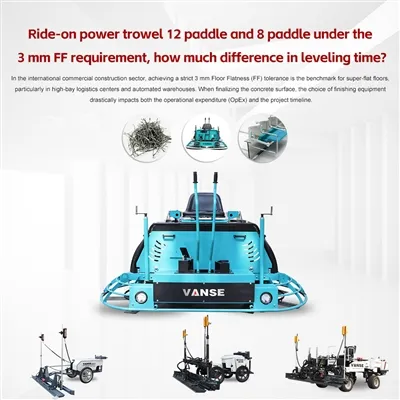
In the international commercial construction sector, achieving a strict 3 mm Floor Flatness (FF) tolerance is the benchmark for super-flat floors, particularly in high-bay logistics centers and automated warehouses. When finalizing the concrete surface, the choice of finishing equipment drastically impacts both the operational expenditure (OpEx) and the project timeline. A frequent debate among concrete contractors is whether to utilize an 8-paddle (dual 4-blade rotors) or a 12-paddle (dual 6-blade rotors) ride-on power trowel. When racing against the concrete curing clock to secure a 3 mm FF rating, the 12-paddle machine significantly reduces leveling and finishing time. Here is a comprehensive, technical breakdown of the time differences and mechanical efficiencies between the two configurations, featuring integrated solutions from Shandong Vanse Machinery Technology Co., Ltd. (www.vansemac.com). The primary difference between an 8-paddle and a 12-paddle ride-on trowel is the surface contact area per revolution. 8-Paddle Trowels: With four blades per rotor, there are wider gaps between the blades as they spin. While effective for standard commercial applications, these gaps mean the machine must make more passes over the same area to achieve deep compaction and a uniform burnish. 12-Paddle Trowels: A 12-paddle machine (six blades per rotor) provides 50% more blade contact per revolution. This increased surface contact acts like a broader, more consistent smoothing plane. The densely packed blades bridge minor surface undulations much more effectively than a 4-blade rotor, physically preventing the machine from dipping into micro-depressions and thereby actively preserving the 3 mm FF tolerance. When aiming for a super-flat 3 mm specification, contractors cannot simply rush the machine; they must rely on the mechanical efficiency of the equipment. The Time Savings: In practical field applications on large-area pours, a high-performance 12-paddle ride-on power trowel typically reduces the final polishing and finishing time by 20% to 30% compared to an 8-paddle machine. Fewer Passes Required: Because the 12-blade configuration imparts more friction, heat, and downward pressure simultaneously, it draws the cement paste to the surface and densifies the matrix much faster. An area that might require four passes with an 8-paddle machine to achieve a mirror-like, 3 mm compliant finish may only require two or three passes with a 12-paddle unit. Risk Mitigation: Concrete sets quickly, especially in high temperatures or strong winds. Saving 20-30% of your finishing time means the entire slab is burnished and sealed well within the optimal curing window, completely eliminating the risk of cold joints or a dull, porous finish. It is critical to note that no ride-on power trowel-whether 8-paddle or 12-paddle-can create a 3 mm FF floor from a poorly poured slab. The trowel's job is to compact, burnish, and preserve the levelness. To achieve world-class E-E-A-T (Experience, Expertise, Authoritativeness, and Trustworthiness) standards in industrial flooring, the 3 mm tolerance must be established during the initial strike-off phase. As demonstrated by the equipment ecosystem at Vanse Machinery, achieving this requires a two-step mechanized process: Initial Laser Leveling: The concrete must first be placed and struck off using an advanced telescopic boom concrete laser Leveling, such as the Vanse YZ30-4E or the high-efficiency YZ40-4E. These machines utilize aviation-grade aluminum leveling heads and high-frequency 4,000 RPM vibration to establish a flawless, super-flat base. High-Speed Finishing: Once the bleed water dissipates, a heavy-duty ride-on concrete power trowel (such as the Vanse VS836 or the versatile VS1046) is deployed. By utilizing equipment with overlapping, multi-blade configurations, contractors can rapidly lock in the precise grade established by the laser Leveling before the concrete sets. For contractors targeting strict 3 mm FF requirements on massive commercial or industrial slabs, upgrading to a 12-paddle ride-on power trowel is a highly profitable investment. The 20% to 30% reduction in finishing time dramatically lowers labor costs, expands daily pour capacity, and ensures that the precision grade achieved by your Vanse laser Leveling is permanently locked into a dense, wear-resistant surface. Note: The parameters provided in this document are for reference only and are not mandatory. Due to differences in technical characteristics between different brands and models of laser levelers, please consult the manufacturer for a suitable solution before actual operation. This reference document assumes no responsibility for any issues arising from failure to follow the manufacturer's instructions.