Technical Knowledge
In addition to municipal engineering,in what other fields are laser leveling machines also used?

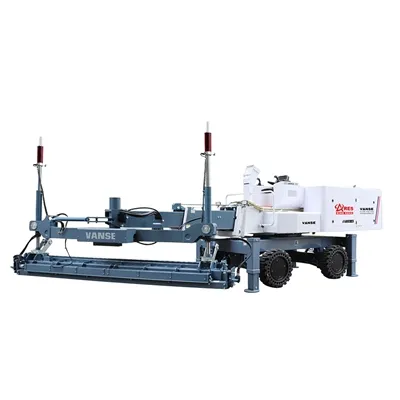
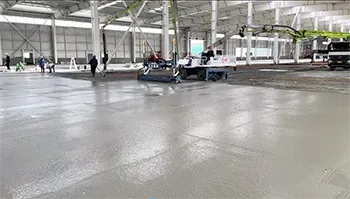
Laser leveling machines are widely used in many fields due to their high precision and high efficiency. In addition to municipal engineering, they also include but are not limited to the following fields:
1. **Commercial and retail facilities**:
– Ground construction in large shopping malls, supermarkets, and shopping centers requires the ground to be flat and without bumps to facilitate the passage of carts and pedestrians, and is also conducive to cleaning and maintenance.
2. **Industrial plants**:
– Modern industrial plants, especially those that require the use of heavy machinery and production lines, the flatness of the ground directly affects the installation and operation efficiency of the equipment.
3. **Warehouses and logistics centers**:
– Logistics warehouses and distribution centers, ground flatness is essential for automated warehousing systems and forklift operations, which can improve cargo handling efficiency and safety.
4. **Airports and runways**:
– The aprons, runways, and taxiways of airports require extremely high flatness and strength to withstand the take-off and landing and taxiing of aircraft.
5. **Sports venues**:
– Floors of indoor and outdoor sports venues, such as basketball courts, volleyball courts, tennis courts, etc., flat floors help athletes to perform and prevent injuries.
6. **Parking lots**:
– Underground and above-ground parking lots, flat floors not only facilitate vehicle access, but also extend the service life of the floor and reduce maintenance costs.
7. **Exhibition centers**:
– Exhibition centers and conference halls, flat floors are convenient for arranging booths and activities, providing a good visiting experience.
8. **Educational institutions**:
– Indoor gymnasiums, libraries and classroom floors of schools and universities, flat floors are conducive to furniture placement and daily activities.
9. **Medical facilities**:
– Hospitals, clinics and laboratories, flat floors are very important for sanitation and barrier-free access.
10. **Residential buildings**:
– Public areas of high-end residential areas and apartment buildings, such as lobbies, corridors and underground parking lots, flat floors improve living comfort and aesthetics.
11. **Historical Relic Restoration**:
– In the restoration of historical buildings or sites, laser leveling machines are sometimes needed to restore the original state of the ground.
12. **Agricultural Facilities**:
– In the construction of large greenhouses, livestock houses or agricultural warehouses, a flat ground helps mechanized operations and animal welfare.
The application range of laser leveling machines is wide, covering almost all construction projects that require high-quality concrete floors. It can improve construction efficiency and reduce labor costs, while ensuring the flatness and strength of the ground to meet various high-standard engineering needs.
Thanks to All the Friends Who Support and Trust Shandong Vanse Machinery Technology Co., Ltd.
If you want to know more about Shandong Vanse Machinery Technology Co., Ltd. or have any questions, please feel free to contact us:
Our Factory
Shandong Vanse Machinery Technology Co., Ltd.








Share this article

About the Author: Shandong Vanse Machinery Technology Co., Ltd.
Shandong Vanse Machinery Technology Co., Ltd. is a high-tech manufacturer specializing in concrete construction machinery, including laser screeds and related equipment. The company integrates R&D, production, and global sales, with products exported to over 60 countries and widely used in infrastructure projects worldwide.
Previous Post
Next Post
Related Articles
You Might Also Like
Frequent mistakes in the maintenance of concrete laser leveling machines. Is the wrong method used?
When the concrete laser leveling machine fails, it needs to be repaired. Generally speaking, maintenance is a good way to help the leveling machine to restore health, but some leveling machines still have a lot of small problems after maintenance. What is this ? In fact, because some maintenance personnel in the maintenance of concrete laser leveling machine, the error caused by the error, the following error in the maintenance of concrete laser leveling machine when do not make it again.How to strengthen the concrete soil floorto to control the cracking
Reinforced rebar and welding mesh control the crack width on non-structural soil flooring. Most of the earthen floors do not do enhanced treatment, or simply do nominal enhancement measures to control the width of the cracks. When reinforced rebar is placed in the upper or top position of the floor thickness, it can limit the width of random cracks caused by concrete shrinkage, temperature stress, foundation subsidence, external loads, and other problems. This type of enhancement is often referred to as a shrinkage and temperature enhancement device. Most soil layers do not be reinforced, or simply do nominal enhancement measures to control the width of the cracks. When the rebar is placed in the upper or top position of the floor thickness, the width of random cracks caused by concrete shrinkage, temperature stress, foundation subsidence, external loads, and other problems can be limited. This type of enhancement is often referred to as a shrinkage and temperature enhancement device. Basic principle Since there are many optional enhancements to non-structural soil flooring, this article will focus on controlling the crack width through reinforcement and mesh enhancement. Reinforced rebar and welding mesh do not prevent cracking. Before the concrete cracking, the function of the enhancement device is basically dormant. Once cracking occurs, the function is activated and its width is controlled by limiting the development of the crack. If the concrete slab is paved on a high-quality base and ensures good support, while using low-shrink concrete material, seam spacing is set at 4.5 meters or less and installed correctly, there is generally no need to take enhancement measures. In general, there is little random or non-seam cracking. If random cracks do occur, the crack width should also be kept smaller due to the relationship between smaller seam spacing and low shrink ingress to concrete materials, thus avoiding the problem of subsequent repairs or maintenance. Once this happens, the edge of the crack is exposed and the edge is likely to burst, especially when the concrete slab is crushed by wheels, especially high-level forklifts with hard wheels. Once the phenomenon of bursting occurs, the crack width of the surface will increase and the damage of the concrete slab along the crack site will deteriorate rapidly. Shrinking and temperature enhancement methods are required when shrink seams are not allowed in the field and are not installed. Sometimes this method is also known as continuously enhanced or seamless flooring, which allows for a large number of tightly distributed (90 to 180 cm) small cracks. Methods of crack control In general, there are 2 ways to control cracks: (1) to control the position of the crack by installing a shrink seam (no control over the width of the crack), or (2) to control the crack width by installing an enhancement device (uncontrollable of the crack position). Method 1, we can control the cracking position of the concrete slab, the width of the shrink seam or the cracking in the seam is largely controlled by seam spacing and concrete shrinkage. As seam spacing and concrete shrinkage increase, so does the seam width. Similar to cracks, if the seam width is close to about 0.9 mm, the efficiency of locking and conducting loads between the aggregates and avoiding vertical displacement between seams is greatly reduced. With this in mind, many designers use load conduction designs such as force levers, force transfer sheets, or continuity reinforcements in the shrink seam position to ensure good load transfer and limit vertical displacement between seams. Method 2, we allow the concrete slab to crack randomly, but use reinforced steel or welded mesh to control the crack width. In general, this method is not used when setting the shrink seam. Cracking occurs randomly, forming numerous small, interlaced cracks. Due to appearance considerations, this type of crack control method needs to be communicated with the owner in advance.How to clean a laser/ leveling/ leveled oil tank ?
The fuel tank of the laser leveling machine is also an important part. It is used to support the action of the equipment. If there is no fuel tank, the equipment still cannot move normally. It is as important as the engine. Many users will be concerned about the fuel tank when using it. There are a lot of questions about cleaning. When cleaning, we should be careful not to wash off the protective film in the fuel tank, which will affect the normal use of the equipment. 1. Why should the oil tank of the laser leveling machine be cleaned regularly? As the laser leveling machine is used longer, the precipitated impurities in gasoline will accumulate more and more in the fuel tank. These impurities first settle at the bottom of the fuel tank. When there are too many sediments, they will enter the car engine along with the fuel. severe wear and tear on the engine, As long as you clean the fuel tank once, the owners will find how necessary it is to clean the fuel tank regularly. During the cleaning process, not only particles, colloids, but even tin foil, plastic sheets and other incredible things will be washed out. The owner of the machine does not know how many things get into the fuel tank. If these wastes are not cleaned up in time, the impact on the engine of the laser leveling machine can be imagined. 2. How to clean the fuel tank of the concrete laser leveling machine? Fuel tank cleaning is divided into two steps, internal and external. When cleaning the engine fuel system, use the engine non-disassembly cleaning agent, because the non-disassembly cleaning agent does not need to disassemble the fuel system. On the one hand, it can start to clean the fuel system thoroughly. , On the other hand, it is beneficial to protect the fuel system of the engine. When cleaning, you can use a clean cloth to block the nozzle of the fuel pipe, and then change the position and direction of the plastic pipe to avoid rubbing the oil level sensor as much as possible. , to release gasoline, at this time the impurities in the gasoline will flow out together. It should be noted that the fuel released from the fuel tank should be used after 72 hours of precipitation. When cleaning the outside of the fuel tank of the laser leveling machine, it is necessary to check whether there is any depression or oil leakage in the fuel tank, oil pipes, joints, etc. Also check whether the fixing screws of the fuel tank bracket are tightened. When cleaning the inside, open the fuel tank port, take out the filter barrel, suck the oil out, and then insert the cleaned plastic pipe from the fuel filler port to the bottom of the fuel tank, and gently blow the bottom of the fuel tank gasoline, make it tumble to achieve the cleaning effect. The above are many questions about cleaning the laser leveling machine. You can learn more about it and it will help you. Secondly, you should pay attention to regular maintenance and maintenance when using it. This can also reduce the occurrence of equipment failures. Thank you Your attention and support all the time.