Technical Knowledge
List of Common Quality Defects and Countermeasures in Super Flat Floor Construction
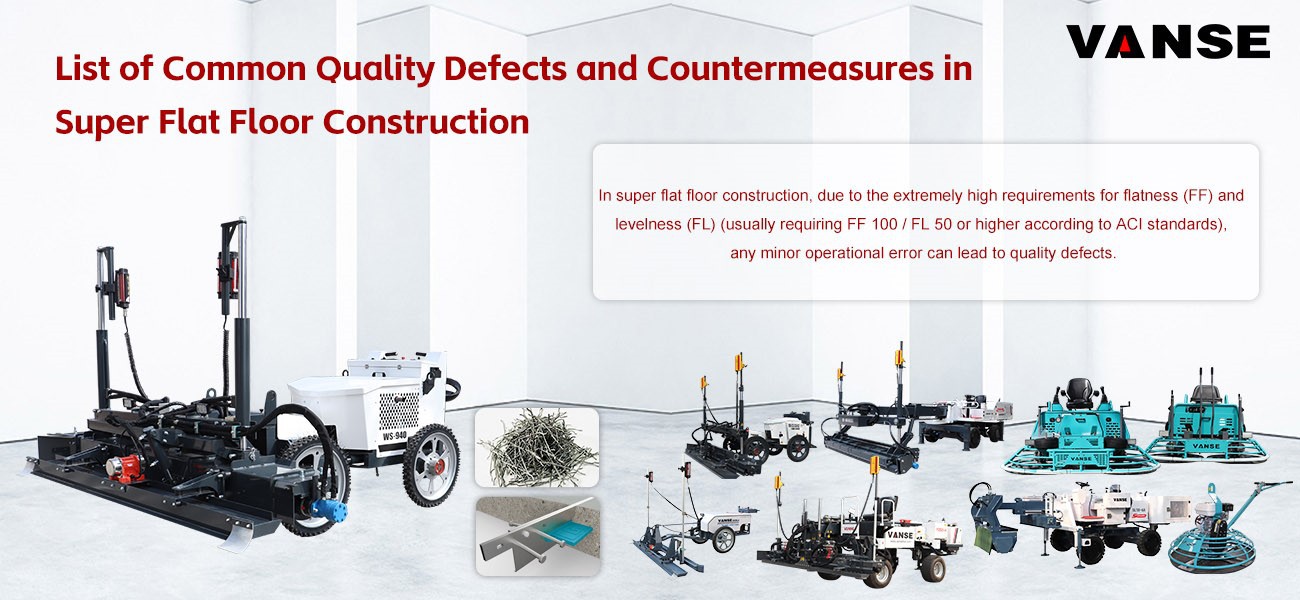
In super flat floor construction, due to the extremely high requirements for flatness (FF) and levelness (FL) (usually requiring FF 100 / FL 50 or higher according to ACI standards), any minor operational error can lead to quality defects.
The following is a list of common quality defects and their countermeasures in super flat floor construction:
1. Failure to meet flatness and levelness standards (FF/FL)
This is the most critical quality issue for super-flat floors.
Phenomenon: The floor surface has excessive undulations, preventing the smooth operation of narrow-aisle forklifts (VNA).
Reasons:
Unstable installation of side forms (channel steel) or errors in elevation control.
Laser Leveling signal interference or inaccurate sensor calibration.
Excessive fluctuations in concrete slump, leading to uneven shrinkage during the hardening process.
Countermeasures:
High-precision formwork: Use high-rigidity channel steel and use a total station and level to re-measure, controlling the error within ± 1mm.
Digital monitoring: Use an F-Number measuring instrument (such as a Dipstick) for real-time monitoring during construction.
Material consistency: Strictly control the slump of concrete delivered to the site; the fluctuation range should be within ± 20mm.
2. Concrete Surface Cracks (Shrinkage Cracks)
Phenomenon: Irregular cracks or deep penetrating cracks appear on the surface several days or weeks after construction.
Causes:
Excessive water-cement ratio.
Delayed saw cutting, leading to concentrated release of internal stress.
Inadequate curing, resulting in rapid evaporation of surface moisture.
Countermeasures:
Optimize the mix design: Increase aggregate size, reduce cement paste volume, and add shrinkage-reducing admixtures.
Timely saw cutting: Use a "early-age saw cutting machine" (Soff-Cut) immediately after the concrete reaches initial setting strength (usually within 4-12 hours).
Strengthen curing: Immediately after finishing the surface, spray a high-concentration curing agent, or cover with a film for water curing for at least 7 days.
3. Surface Dusting and Peeling (Insufficient Surface Strength)
Phenomenon: Surface powdering occurs after forklift traffic, or the top layer of the hardening agent peels off.
Causes:
Excessive bleeding during the Leveling process, resulting in a high water-cement ratio on the surface.
Premature or uneven application of wear-resistant material.
High humidity in the construction environment or construction during rainy periods.
Countermeasures:
Bleeding treatment: Use a rubber squeegee to promptly remove surface bleeding water; do not sprinkle dry cement on the undried surface.
Staged application: The wear-resistant material should be applied in two stages; apply 2/3 first, and then apply the remaining portion after the first application has absorbed moisture.
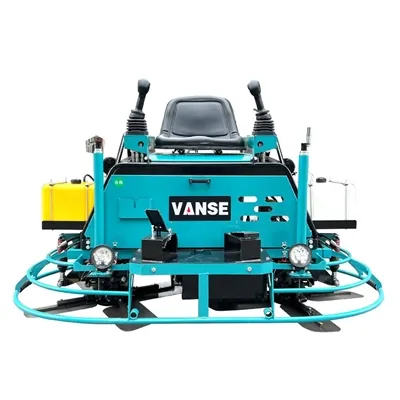
Mechanical finishing: Adjust the blade angle and rotation speed of the ride-on power trowel according to the concrete setting degree.
4. Steps at Joints (Jumping at Joints)
Phenomenon: The height difference between the two sides of the construction joint causes the forklift to jump when passing over it.
Causes:
The dowel bars are not installed vertically, leading to restricted expansion and contraction of the slabs and differential settlement.
The construction interval between adjacent slabs is too long.
Countermeasures:
Dowel bar sleeves: Use high-precision dowel bar supports and ensure the sleeves are properly installed, allowing for horizontal movement of the slabs but restricting vertical movement.
Edge reinforcement: Use rigid joint protectors (such as Armor Joint) at the joints to prevent edge spalling under heavy loads.
5. Uneven Color (Patchy Appearance)
Phenomenon: The surface exhibits varying shades of color, affecting its aesthetic appeal.
Causes:
Inconsistent polishing frequency of the polishing machine, leading to localized overheating and discoloration.
Uneven application of curing agent.
Countermeasures:
Standardized operation: Standardize the polishing machine's movement path and pressure settings.
Controlled curing: Ensure the curing film is applied evenly and adheres properly to prevent color differences caused by localized condensation.
Summary Checklist
| Common quality defects | Key Control Points |
| Poor flatness | Template rigidity + Laser precision calibration |
| Cracking | Early saw cutting + Strict water-cement ratio |
| Surface disintegration (sanding) | Bleeding water treatment + Wear-resistant materials applied in two stages |
| Uneven joints | Dowel bar accuracy + Steel edge protection |
Would you like me to provide you with a more detailed checklist for "construction joint treatment" or "laser leveling machine operation procedures"? Contact us NOW
Note: The parameters provided in this document are for reference only and are not mandatory. Due to differences in technical characteristics between different brands and models of laser levelers, please consult the manufacturer for a suitable solution before actual operation. This reference document assumes no responsibility for any issues arising from failure to follow the manufacturer's instructions.
Thanks to All the Friends Who Support and Trust Shandong Vanse Machinery Technology Co., Ltd.
If you want to know more about Shandong Vanse Machinery Technology Co., Ltd. or have any questions, please feel free to contact us:
Our Factory
Shandong Vanse Machinery Technology Co., Ltd.








Share this article

About the Author: Shandong Vanse Machinery Technology Co., Ltd.
Shandong Vanse Machinery Technology Co., Ltd. is a high-tech manufacturer specializing in concrete construction machinery, including laser screeds and related equipment. The company integrates R&D, production, and global sales, with products exported to over 60 countries and widely used in infrastructure projects worldwide.
Previous Post
Next Post
Related Articles
You Might Also Like
YZ28-4S Concrete Level Machine Summer Construction Considerations
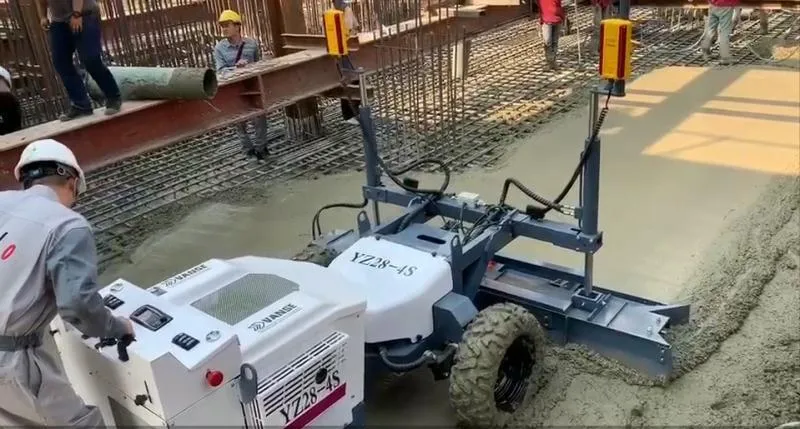
The laser leveling machine plays a vital role as the main equipment for floor construction. When the summer comes, the floor construction will gradually enter the peak season, and it is very important to ensure the working condition of the equipment. High temperature construction in summer is also a test for concrete and concrete laser levelers. Do a good job in equipment maintenance and work to maximize the efficiency of the equipment. Learning equipment maintenance is not only related to the construction quality of the floor, but also related to the service life of the concrete laser leveling machine and construction safety. Do a good job in machine maintenance and guarantee your investment. This issue brings you the summer maintenance micro-classroom of the YZ28-4S/ YZ28-4. These two equipments are two four-wheel drive YZ28-4S that been developmented by VANSE or many years. YZ28-4S concrete leveling machine. two devices follow the excellent quality of the Hummer model, and the product development habits and requirements of domestic customers are fully considered in the product development process. Therefore, in addition to the performance guarantees of these two new products, the customer operating experience has also been significantly improved. Precautions: * Avoiding the engine too hot. Under normal circumstances, the temperature of the engine should not exceed 95°. If the temperature is too high, you should choose a cooler position to stop the cooling. When the machine is stopped, the hood can be ventilated and cooled. * To detect the amount of cooling water in time. When the water radiator reaches 100°, do not rush to add cooling water. Instead, stop the engine immediately after idling and then add coolant. * Clean the radiator timely. Includes coolant radiator / oil radiator / hydraulic oil radiator to prevent poor heat dissipation. * The construction temperature in summer is very hot, so it's better to check the wheels air pressure and temperature. If the temperature of the wheels too hot, . If the temperature of the tire is too high, stop it in time and place it in a cool place to cool down. Avoiding use the wrong method of deflation or cold water to cool down. * Maintenance-free batteries need to be checked frequently for their working conditions. The observation hole shows that green represents normal. * Prevent engine knocking .Before entering the summer, the carbon deposits in the combustion chamber, valve top and other parts should be completely removed to maintain good heat dissipation and normal compression ratio; it is necessary to check and adjust the fuel supply advance angle to prevent engine deflagration. * Always check the temperature of the hydraulic oil and hydraulic transmission oil . If the temperature is too high, stop it and stop it. Do not operate at high temperatures. * In summer, the concrete solidifies at a faster speed, so it is necessary to clean the equipment in time, otherwise it will cause damage to the machine. If yoour machine happen somethings wrong, do not worry! When choose VANSE, also choose the 100% perfect after-sales system, "zero-distance" of VANSE and our equipment, We offer 24 hours and 365 days safty after-sales, if your machine had something wrong on the working, welcome to contact us at anywhere and anytime! Our after- sales engineer will get in touch with you at first.Precision Setting Techniques for Concrete Laser Leveling Machines in Super-Flat Floor Construction
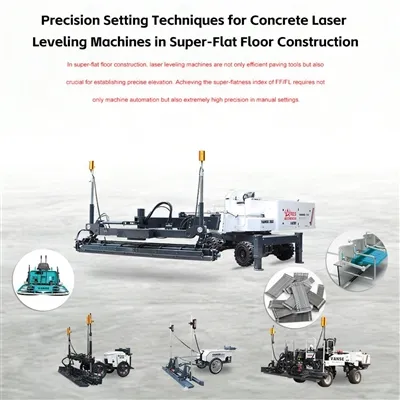
In super-flat floor construction, laser leveling machines are not only efficient paving tools but also crucial for establishing precise elevation. Achieving the super-flatness index of FF/FL requires not only machine automation but also extremely high precision in manual settings. The following are precision setting and operation techniques for laser leveling machines to achieve super-flatness: Avoid interference sources: The transmitter must be installed outside the concrete paving area and away from crane vibrations, passing vehicles, and airflow interference (the support structure needs to be reinforced in windy conditions). Height coverage: Ensure that the transmitter's signal plane covers the entire work area and is not obstructed by on-site columns or equipment. Dual transmitter verification: For extra-large areas, it is recommended to set up two transmitters for mutual verification to ensure that signal attenuation or drift during long-distance transmission is detected in a timely manner. Before the start of each shift, the physical elevation of the top of the formwork must be compared with the signal elevation of the laser transmitter using the same handheld laser receiver rod. Error limit: The error between the measured elevation of the formwork and the laser signal elevation must be controlled within ±1 mm. Technique: Adjust the sensitivity of the hydraulic sensor based on the concrete slump. If the concrete is stiffer, the sensitivity should be appropriately reduced to prevent the leveling head from frequently bouncing due to resistance; if the concrete is thinner, increase the sensitivity to ensure immediate correction of small height differences. Screw Feeder Setting: The lower edge of the screw feeder should be slightly higher than the design elevation (approximately 3-5 mm), using the rear vibrating beam to compact the material to the design position. Material Excess: Always maintain a suitable amount (approximately 2-5 cm) of concrete accumulation in front of the leveling head. Too little material will result in "empty scraping," and too much material will create pushing waves. Operation: Each paving pass should overlap the previously completed pass by 200-300 mm. Technique: Set the hydraulic control on the overlapping side to "manual" and the non-overlapping side to "automatic". This allows the screed to use the completed pavement as a reference, ensuring consistent elevation at the joint and eliminating noticeable "joint ridges". At the end of each paving pass (when the machine retracts its arm), the travel speed should be slightly reduced to prevent the suction created when the screed lifts from pulling up the concrete and causing low spots at the edges. Factors Factors affecting accuracy Troubleshooting Techniques: Wind speed Wind can cause the laser beam to shake. Use windproof supports or add a filtering function to the laser receiver. Concrete slump The consistency (dryness/wetness) of each batch of material varies. Assign a dedicated person to monitor at the discharge point and strictly prohibit spreading material with a slump error exceeding ±20 mm. Tire pressure The amount of tire deflection changes. Check the tire pressure of the leveling machine before starting work each day to ensure symmetry and consistent pressure on both sides. The **first pass with a long-handled straightedge (Highway Straightedge)** after the laser Leveling is completed is crucial: Operation: While the concrete is still plastic, the operator should use an aluminum alloy straightedge of more than 3 meters in length, following the Leveling machine and performing reciprocating leveling perpendicular to the paving direction. Purpose: To eliminate the small marks left by the laser Leveling when changing lines or turning. Note: The parameters provided in this document are for reference only and are not mandatory. Due to differences in technical characteristics between different brands and models of laser levelers, please consult the manufacturer for a suitable solution before actual operation. This reference document assumes no responsibility for any issues arising from failure to follow the manufacturer's instructions.In addition to the angle, what other factors will affect the performance of the power trowel?
Slump: Slump reflects the fluidity of concrete. If the slump is too large, the concrete is too thin and soft, and it is easy to seep water and slurry when troweling, making it difficult to form a solid surface, and cracks are easy to appear on the surface after troweling; if the slump is too small, the concrete is too dry and hard, and it is difficult for the trowel blade to effectively trowel it, which will cause uneven surface and increase the workload of the trowel. Setting time: The setting time of concrete is crucial for troweling. If troweling is performed before the initial setting of concrete, the concrete is still in a plastic state and can be easily smoothed by the trowel, but troweling too early may damage the internal structure of the concrete and affect its strength; if troweling is performed after the final setting, the concrete has hardened, and it is difficult for the trowel to operate it effectively, leaving trowel marks on the surface, and it is impossible to achieve the ideal flatness and finish. Speed: The speed of the trowel directly affects the troweling effect. If the speed is too low, the blade will not be able to vibrate and smooth the concrete surface enough, and the cement slurry on the concrete surface cannot be evenly distributed, resulting in poor surface finish; if the speed is too high, the concrete surface will be subjected to excessive centrifugal force, which may cause cement slurry splashing, and will also increase the wear and energy consumption of the machine. Power: The power determines the working capacity of the trowel. If the power is insufficient, when encountering large concrete resistance during the troweling process, the trowel may be underpowered, resulting in unsmooth rotation of the blade, affecting the troweling effect; if the power is too high, it may cause energy waste, and it is easy to cause excessive vibration and damage to the concrete surface if the operation is improper. Operation technique: The operator's operation technique has a great impact on the troweling effect. Skilled operators can reasonably control the travel speed, direction and troweling time of the trowel according to the state of the concrete and the performance of the trowel, so that the concrete surface can achieve a flat and smooth effect; while unskilled operators may encounter problems such as uneven travel speed, overlapping or missing troweling areas, resulting in poor troweling quality. Judgment ability: Experienced operators can accurately judge the setting time and state of concrete and choose the right time to perform the troweling operation. They can also adjust the parameters and operation methods of the troweling machine in time according to the problems that occur during the troweling process, such as bubbles and trowel marks on the surface; while inexperienced operators may not be able to accurately judge these situations, thus affecting the troweling effect. Temperature: The ambient temperature has a significant impact on the setting time and troweling effect of concrete. In a high temperature environment, the moisture of concrete evaporates quickly, the setting time is shortened, the troweling operation time window becomes smaller, and surface shrinkage cracks are prone to occur; in a low temperature environment, the setting time of concrete is prolonged, and the troweling quality may be affected by the freezing of the internal moisture of the concrete during troweling, and it will also increase the difficulty of starting the troweling machine and energy consumption. Humidity: If the ambient humidity is too high, the moisture on the concrete surface is not easy to evaporate, which will delay the setting time of the concrete, resulting in water seepage on the surface after troweling; if the humidity is too low, the moisture on the concrete surface evaporates too quickly, and problems such as surface dryness and peeling are prone to occur, affecting the troweling effect. Wind speed: Higher wind speed will accelerate the evaporation of moisture on the concrete surface, causing uneven drying of the concrete surface, increasing the difficulty of polishing, and may also cause cracks on the polished surface.