Technical Knowledge
What are the special adjustment methods of laser leveling machines in different construction environments?
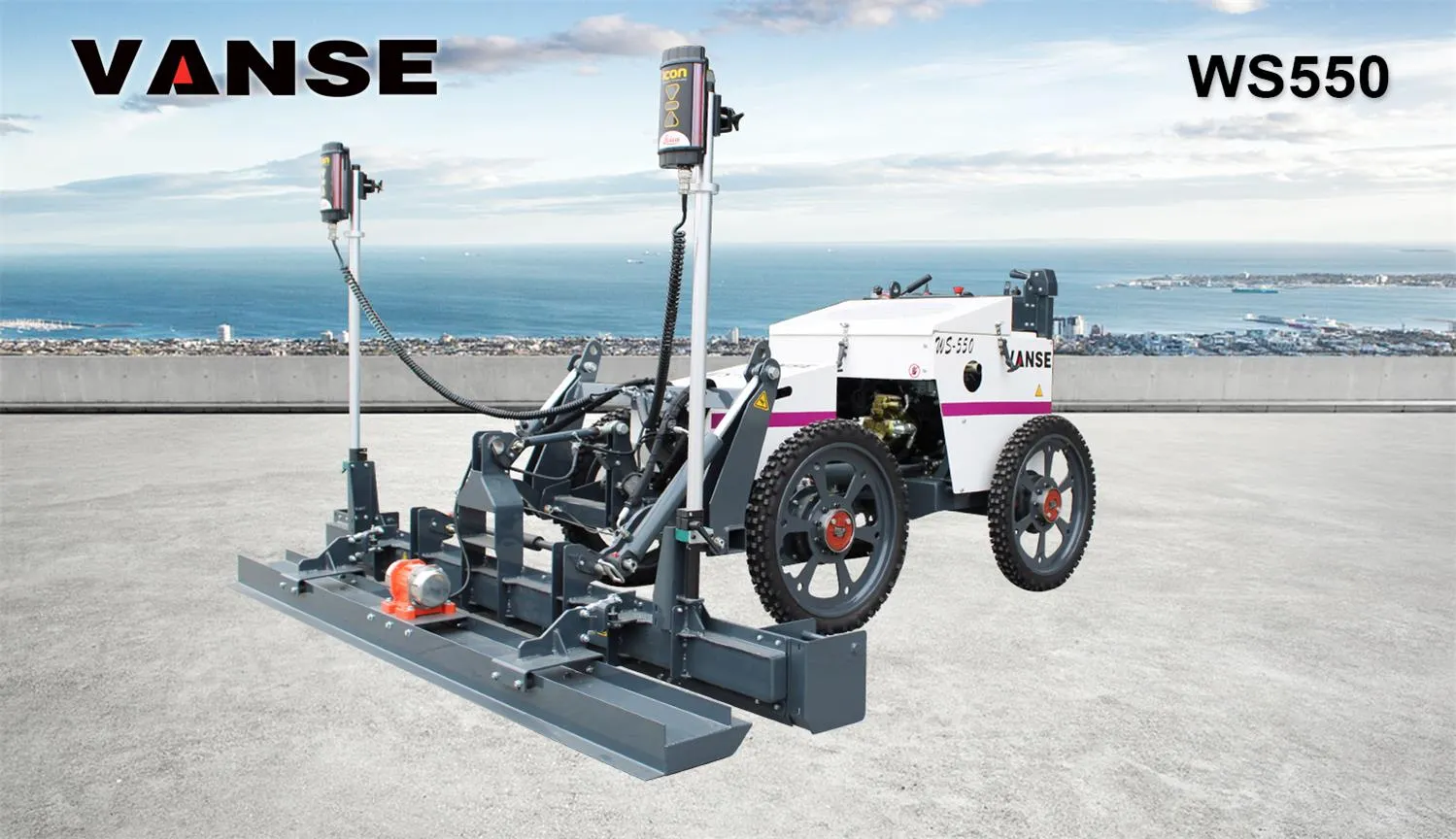
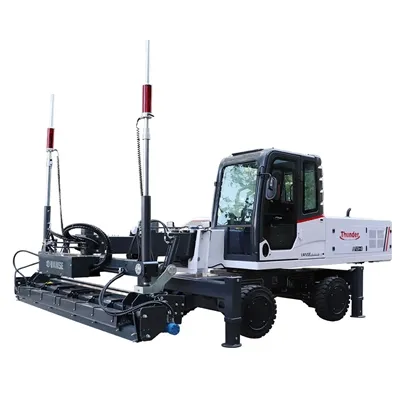
Laser leveling machine is a professional equipment used for large-area concrete construction such as concrete floors and ground, which can greatly improve the flatness and construction efficiency of concrete. In different construction environments, laser leveling machines need to make some special adjustments to adapt to environmental changes. The following are some common adjustment methods:
1. Ground slope adjustment: When constructing on a sloped ground, the laser leveling machine needs to be slope adjusted. This can be achieved by adjusting the angle sensor on the machine or using a dedicated slope meter.
2. Laser signal intensity adjustment: When there are obstacles or other interference sources at the construction site, the transmission of the laser signal may be affected. At this time, it is necessary to adjust the power of the laser transmitter or change the emission direction to ensure that the laser signal can be accurately transmitted to the receiver.
3. Height adjustment: When constructing on floors of different heights, the height of the laser leveling machine needs to be adjusted. This can be achieved by adjusting the lifting mechanism on the machine or using a dedicated bracket.
4. Temperature compensation: Since temperature changes will affect concrete materials, temperature compensation of the laser leveling machine is required when constructing in high or low temperature environments. Compensation can be made by adjusting the temperature sensor inside the machine or using a dedicated thermometer.
5. Ambient light adjustment: When working in a dark or bright environment, the brightness of the laser leveler needs to be adjusted. This can be achieved by adjusting the brightness control knob on the machine or using a dedicated light shield.
The above are some special adjustment methods for laser levelers in different construction environments. The specific operations should be carried out according to the actual situation and the equipment manual. At the same time, regular maintenance should be paid attention to during use to ensure the good operation of the equipment.
Thanks to All the Friends Who Support and Trust Shandong Vanse Machinery Technology Co., Ltd.
If you want to know more about Shandong Vanse Machinery Technology Co., Ltd. or have any questions, please feel free to contact us:
Our Factory
Shandong Vanse Machinery Technology Co., Ltd.








Share this article

About the Author: Shandong Vanse Machinery Technology Co., Ltd.
Shandong Vanse Machinery Technology Co., Ltd. is a high-tech manufacturer specializing in concrete construction machinery, including laser screeds and related equipment. The company integrates R&D, production, and global sales, with products exported to over 60 countries and widely used in infrastructure projects worldwide.
Previous Post
Next Post
Related Articles
You Might Also Like
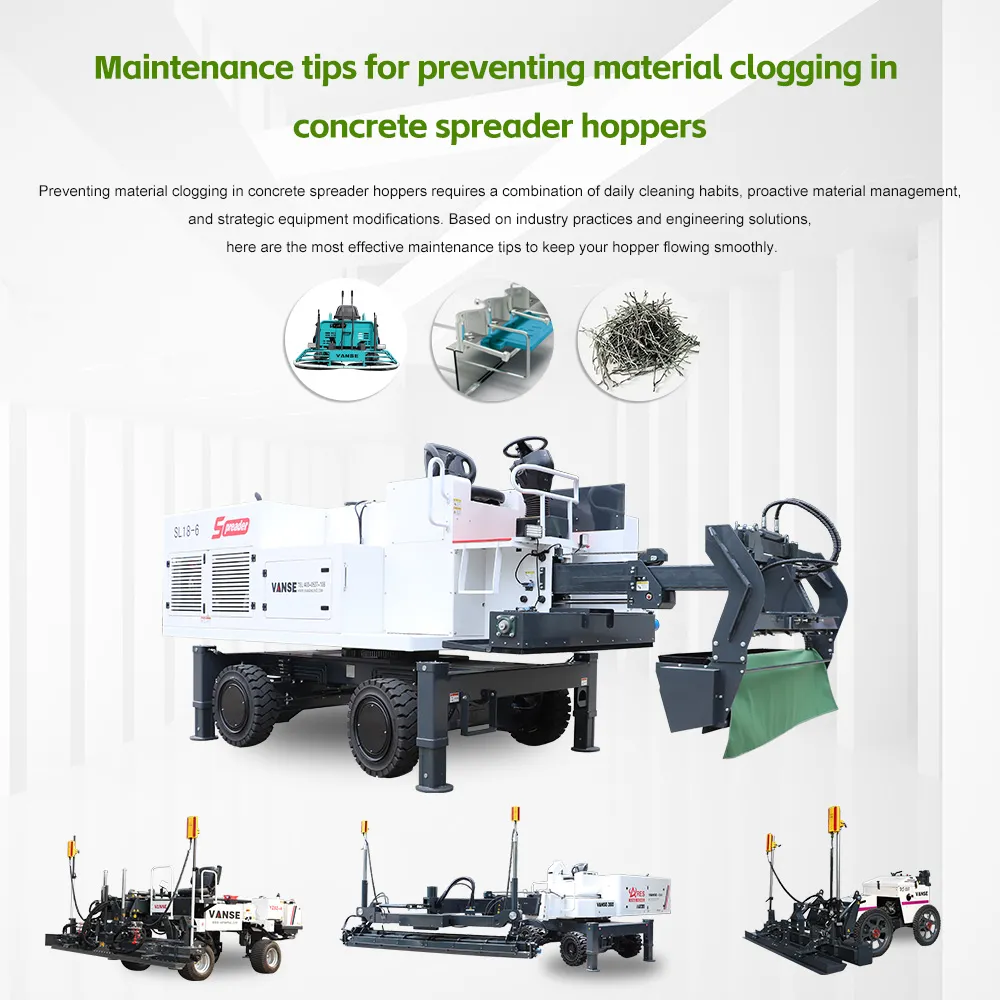
Maintenance tips for preventing material clogging in concrete spreader hoppers
Preventing material clogging in concrete spreader hoppers requires a combination of daily cleaning habits, proactive material management, and strategic equipment modifications. Based on industry practices and engineering solutions, here are the most effective maintenance tips to keep your hopper flowing smoothly. The foundation of clog prevention is a consistent routine that stops concrete from hardening in the first place. Empty the Hopper After Each Use: Never leave residual material in the hopper. Storing leftover concrete in its bag or returning it to the mixer is always preferable to letting it sit and harden in the equipment . Rinse Immediately: Use a high-pressure washer (at least 2000 PSI recommended) to rinse off all concrete residue from the hopper interior, conveyor belts (if applicable), and discharge areas before it dries . Manual Scraping: For stubborn deposits, use wire brushes and scrapers (like a putty knife or specialized concrete scraper) to remove buildup from corners and edges . Pay special attention to the discharge point and any corners where material tends to accumulate . Maintain Flow: Avoid unnecessary towing or idling with material in the hopper when the discharge is closed, as this can allow the material to compact and settle . Consistent Operation: Regular, consistent use helps prevent material from sitting and hardening. If you have intermittent production, be aware that material left dormant can become compacted and difficult to remove . If clogging persists despite good cleaning habits, consider these long-term modifications to create a "non-stick" surface. Install Anti-Stick Liners: Retrofitting your hopper with specialized liners is one of the most effective solutions. These create a low-friction surface that concrete struggles to adhere to. Polymer-Based Liners: Materials like TIVAR 88-2 (UHMW-PE) or PUCEST® slide plates (with PTFE or UHMW layers) are designed to eliminate flow restriction and material buildup . They provide excellent wear protection and a very low friction coefficient. Rubber Liners: A simple and cost-effective solution is lining the hopper with thick conveyor rubber. This has been proven in industrial settings to drastically reduce semi-dry concrete buildup, often to the point where a simple tap on the side dislodges any accumulation . Add Mechanical Agitation: For persistent sticking, especially in critical areas like the discharge cone, active mechanical devices can be very effective. External Vibrators: Install vibration motors on the outside of the hopper, particularly on the tapered discharge section. The vibration helps dislodge material as it moves . Air Cannons: For heavy, sticky materials, air cannons can be strategically placed to fire blasts of compressed air into the hopper, breaking up bridges and "ratholes" . Modern systems can even be automated to fire based on material flow, ensuring continuous operation. Install a Scraping Mechanism: For a more mechanical approach, consider retrofitting a sliding unloading plate inside the hopper. This plate, often with a curved front edge to reduce resistance, can be driven by an external mechanism to scrape adhered concrete off the bottom . Use a "Poker" or Agitator: For particularly troublesome spots, a manual or automated poking device can be installed through the hopper wall to break up clogs at the discharge . Prevention also means catching small issues before they lead to big clogs. Regular Hopper Inspection: Frequently check the hopper interior for any signs of hardened concrete buildup, cracks, or damage to the surface. The sooner you remove a small buildup, the easier it is . Inspect Liners and Coatings: If you have installed liners, regularly check them for wear or damage and replace worn sections promptly . Lubricate Moving Parts: Keep all moving parts related to discharge (like gates or augers) well-lubricated to ensure they operate smoothly and don't provide a place for material to catch . Maintenance Category Specific Actions Daily Habits Empty hopper completely after use. Rinse with high-pressure washer. Scrape off stubborn deposits with wire brushes. Material & Operation Avoid leaving material idle in hopper. Ensure consistent flow during operation. Surface Solutions Install low-friction liners (UHMW, PTFE, rubber). Inspect liners regularly for wear. Active Devices Add external vibrators on discharge cones. Install automated air cannons for heavy buildup. Periodic Checks Inspect for cracks and buildup. Lubricate all gates, hinges, and drive mechanisms. By combining diligent daily cleaning with the right anti-stick technologies, you can virtually eliminate clogs, reduce labor-intensive cleanup, and keep your concrete placement running smoothly. What type of spreader are you using, and is the clogging happening more with fresh concrete or with semi-dry mixes? Knowing this can help in choosing between a liner or a vibration solution. Contact us NOW Note: The parameters provided in this document are for reference only and are not mandatory. Due to differences in technical characteristics between different brands and models of laser levelers, please consult the manufacturer for a suitable solution before actual operation. This reference document assumes no responsibility for any issues arising from failure to follow the manufacturer's instructions.How to adjust power trowel settings for concrete floors with integrated heating systems
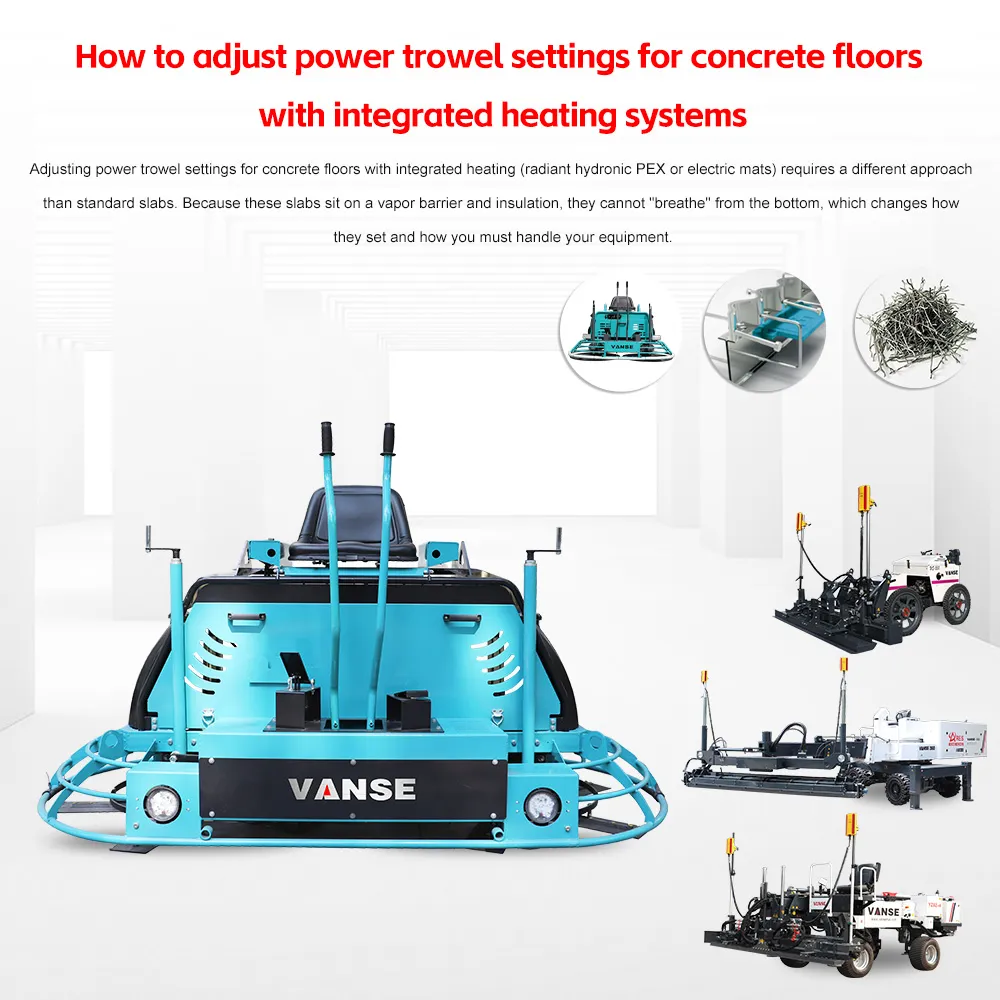
Adjusting power trowel settings for concrete floors with integrated heating (radiant hydronic PEX or electric mats) requires a different approach than standard slabs. Because these slabs sit on a vapor barrier and insulation, they cannot "breathe" from the bottom, which changes how they set and how you must handle your equipment. The following guide outlines how to manage your pitch, speed, and timing to ensure a dense finish without causing delamination or "crusting." The "floating" phase is about leveling and embedding aggregate. For radiant slabs, the presence of insulation below means all bleed water must travel to the top. Timing: Wait for the "Footprint Test." The concrete should support the machine and an operator, leaving a depression no deeper than 3–6 mm (1/8" to 1/4"). Blade Pitch: Flat (0° to 2°). Use float pans or combination blades set completely flat. Rotor Speed: Low (60–80 RPM). Strategy: Keep the machine moving. Because the slab is "unbonded" (sitting on insulation), it is more prone to shifting or "curling" if you dwell in one spot too long. Once the surface sheen (bleed water) has disappeared, you move to the intermediate passes. This is where the risk of "crusting" is highest. Blade Pitch: Slight Pitch (5° to 10°). Increase the angle by about two turns of the hand crank. Rotor Speed: Medium (80–110 RPM). The "Crust" Warning: Because the bottom of the slab stays wet (due to the vapor barrier) while the top dries, you may experience a "crust" where the top seals while the inside is still plastic. Adjustment: If you see the surface peeling or "tearing," reduce your pitch and slow down. You need to let more moisture escape before sealing the surface. This stage creates the hard, polished look typical of modern concrete floors. Blade Pitch: Steep (15° to 25°). As the concrete gets harder, the blades should be tilted sharply to apply high pressure to a small surface area. Rotor Speed: High (120–150+ RPM). Blade Choice: If the floor is to remain as exposed polished concrete, consider plastic or composite blades for the final passes. Steel blades can leave "burnish marks" (dark streaks) which are more visible on heated slabs due to the way they cure. Pass Stage Blade Pitch (Angle) Rotor Speed (RPM) Purpose Float Flat (0°–2°) 60–80 (Low) Leveling & Agg. Embedding Intermediate 5°–10° (Moderate) 90–110 (Medium) Closing the surface Finish 15°–25° (Steep) 120–150 (High) Polishing & Densifying Keep the Heat OFF: Never have the radiant heating system running during the pour or the finishing process. The heat will cause "flash setting" on the bottom of the slab while the top remains wet, leading to severe curling and cracks. Monitor "Cover Depth": Ensure your heating elements are at least 40–50 mm (1.5" to 2") below the surface. If the PEX is too shallow, a heavy ride-on trowel or a high-pitch blade can "chatter" against the high spots, potentially damaging the tubes. Weight Matters: For radiant slabs, walk-behind trowels are often preferred over heavy ride-ons for the first pass. The insulation layer (EPS/XPS) can compress slightly under extreme weight, causing the slab to deflect while it's still green. Pressure Test Throughout: Keep the heating system pressurized with air (typically 20–30 PSI) during the troweling. If a blade accidentally clips a shallow tube, you will hear the air escaping immediately, allowing for a repair before the concrete hardens. Would you like me to find a specific concrete mix recommendation (slump or additives) that helps reduce the "crust" formation on radiant floors? Contact us NOW Note: The parameters provided in this document are for reference only and are not mandatory. Due to differences in technical characteristics between different brands and models of laser levelers, please consult the manufacturer for a suitable solution before actual operation. This reference document assumes no responsibility for any issues arising from failure to follow the manufacturer's instructions.With the advent of laser leveling machines, are you still using the old vibrating leveler to vibrate the beam?
With the advent of laser leveling machines, are you still using the old vibrating leveler to vibrate the beam? When it comes to construction, everyone knows that only with a short construction period and high quality can we save costs, improve efficiency and increase profits. If you want to save costs quickly during construction, construction tools are a very important choice. An efficient, convenient and fast tool will make construction work more effective with half the effort! On the contrary, choosing inappropriate tools will extend the construction period, increase costs, and reduce profits. Take the floor construction under construction as an example! The flatness of the floor is more difficult to grasp. Leveling is usually done manually. Even if you use an old-fashioned floor machine, the effect and cost are not particularly ideal. The emergence of a laser leveling machine has greatly solved many problems that arise during construction. During the construction process, it can solve the problems of hollowing, shelling, cracking, and uneven ground after general construction. It can make the final effect exceed Party A's floor quality requirements, reduce costs, and Improved work efficiency. Many industries require factories, as well as shopping malls, large warehouses and other construction sites that require large areas of ground, to have much higher standards. Attention has been greatly increased to the strength, flatness and level of the ground quality. It is difficult to meet the requirements using old-fashioned flooring methods, and labor costs will increase exponentially. The construction principle of the laser leveler is very simple and clear. It can perform several construction processes such as leveling and vibration at the same time, further ensuring the quality of the construction and completely saving labor costs. The advantage of construction is that the construction speed is fast and the quality is high, ensuring that the overall integrity of the ground is good and cracks are not prone to occur. The amount of support and disassembly is reduced compared with the traditional method. Moreover, the reduction in the number of workers ensures an increase in final profits.